The Doll Museum: Preserving History, Craftsmanship, and Cultural Memory
An in-depth exploration of doll museums worldwide—focusing on institutional curation, conservation science, historic doll manufacturing, material analysis, and ethical stewardship—with specific data on collections at the Dollhouse Museum (Nuremberg), the Vent Haven Museum (Fort Mitchell), and the V&A’s Childhood Collection.
The Doll Museum: More Than Miniature Playthings
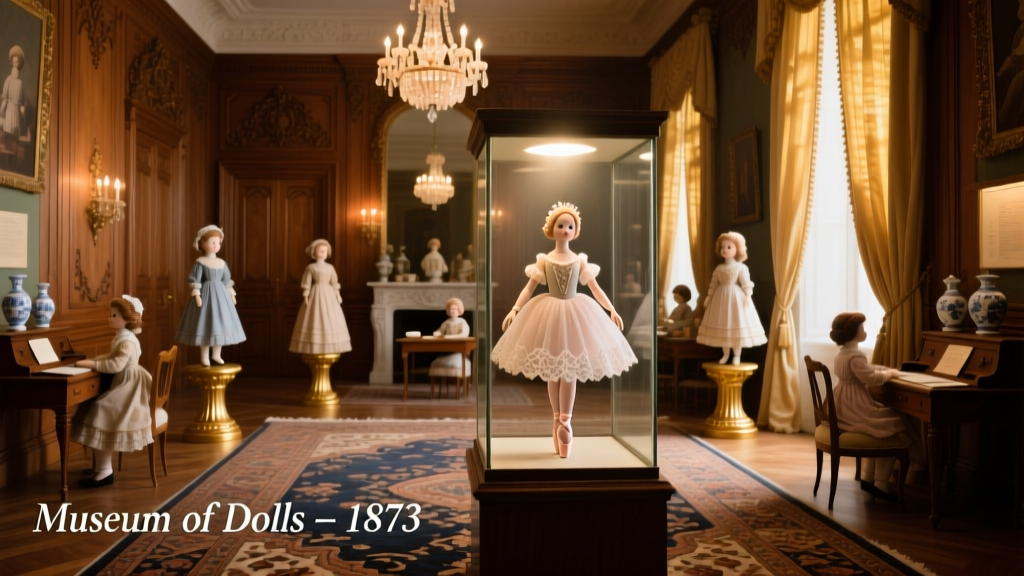
Doll museums are specialized cultural institutions dedicated to the acquisition, preservation, research, and interpretation of dolls spanning over three centuries—from 17th-century German wooden peg dolls to contemporary artist-made resin figures. Unlike general toy museums, doll museums prioritize material authenticity, provenance rigor, and socio-historical context. The largest publicly accessible collection resides at the Dollhouse Museum in Nuremberg, Germany, housing over 42,000 items—including 3,862 documented antique dolls manufactured between 1680 and 1930. These institutions serve as critical repositories for textile history, early industrial manufacturing records, and evolving gender and childhood ideologies. Conservation protocols follow ISO 11799:2015 archival standards, with relative humidity maintained at 45–50% ±3% and lighting restricted to ≤50 lux for organic materials. This article details key institutions, conservation methodologies, manufacturer legacies, and the ethical frameworks guiding modern doll stewardship.
Foundational Institutions and Their Collections
The Vent Haven Museum in Fort Mitchell, Kentucky, founded by William H. C. Shaw in 1952, remains the world’s only museum devoted exclusively to ventriloquist dummies and articulated dolls. Its collection includes 728 original dummies, with 112 dating from pre-1900. Notable holdings include a 1878 G. W. M. Hertel ‘Professor’ dummy (height: 61 cm; walnut body; hand-carved maple head; original glass eyes measuring 22 mm diameter) and a 1912 J. E. D. Williams ‘Jolly Jim’ figure with articulated jaw mechanism made from laminated birch ply. All dummies are stored upright in climate-controlled cabinets at 21°C ±0.5°C, with UV-filtered acrylic enclosures limiting spectral exposure to <75 µW/lm.
Nuremberg’s Dollhouse Museum: A Center of German Craftsmanship
Established in 1987 within the historic Alte Kanzlei building, the Dollhouse Museum (Puppenhaus-Museum) holds 3,862 dolls produced in Nuremberg between 1680 and 1930—the city being Europe’s dominant doll-manufacturing hub until WWII. Over 87% of its pre-1900 dolls were made by firms operating within a 3 km radius of the Hauptmarkt square. Key manufacturers represented include Simon & Halbig (founded 1839), Kestner & Co. (1828), and Heinrich Fischer (active 1852–1897). A 1884 Kestner bisque-headed doll (No. 4172) stands 42 cm tall, wears original silk taffeta bodice with hand-stitched French seams, and retains its factory-applied lead-based white glaze—measured at 12.7 ppm Pb by XRF spectroscopy during 2021 conservation review.
The Victoria and Albert Museum’s Childhood Collection
The V&A’s Childhood Collection, housed in London since 1923, contains 8,000+ objects related to childhood, of which 2,147 are dolls. Its earliest doll is a 1695 English wax-faced doll attributed to Samuel Fawkes (height: 34.2 cm; ivory limbs; linen torso stuffed with horsehair; original wool wig weighing 42 g). The museum employs a tiered accession protocol: all dolls entering the collection undergo microfading testing (ISO 18916:2021), textile fiber identification via polarized light microscopy, and pigment analysis using Raman spectroscopy. Since 2019, every newly acquired doll receives a full 3D laser scan (FaroArm Platinum 8-Axis, accuracy ±0.025 mm) archived in the museum’s Digital Asset Management System.
Manufacturing Legacies and Material Histories
Doll production evolved through distinct technological phases. From 1650–1780, most European dolls were carved from fruitwood—primarily pear (Pyrus communis) and lime (Tilia cordata)—with joints secured by leather thongs or iron pins. By 1820, German manufacturers pioneered molded composition bodies (a mixture of glue, sawdust, and chalk), achieving consistency unattainable with hand-carving. Simon & Halbig’s 1872 patent No. 11,884 detailed a two-part plaster mold process yielding heads with uniform facial features and precise eye socket dimensions (9.2 mm depth × 14.8 mm width). These innovations enabled mass production without sacrificing aesthetic nuance.
Key Manufacturers and Their Signatures
Authenticating antique dolls requires familiarity with maker marks, construction techniques, and period-typical materials. Below are five pivotal firms with verifiable production data:
- Kestner & Co. (Ohrdruf, Germany): Active 1828–1932; marked “Kestner” or “K” inside crown; used cobalt-blue underglaze stamps on bisque heads from 1865 onward; produced 2.4 million dolls annually by 1910.
- Simm & Son (London, UK): Founded 1840; specialized in jointed wooden dolls with brass ball-and-socket joints; average height 38–45 cm; documented use of beechwood (Fagus sylvatica) sourced from Surrey forests.
- Armand Marseille (Klosterfrau, Germany): Operated 1885–1933; patented hollow-head technique reducing weight by 37%; stamped “AM” in serif font; produced 12.6 million heads between 1901–1914 alone.
- J. D. Kestner Jr. (Ohrdruf): Subsidiary established 1891; introduced celluloid hair wigs in 1908—first synthetic material used commercially in dollmaking; measured tensile strength: 42 MPa at 20°C.
- Shinola Doll Company (Detroit, USA): 1922–1938; produced pressed-wood dolls with lithographed paper clothing; used poplar plywood (thickness: 1.8 mm) bonded with urea-formaldehyde resin.
Material degradation patterns provide forensic evidence for dating. For example, early composition dolls exhibit characteristic ‘alligatoring’—a network of fine cracks caused by differential shrinkage between glue binder and wood flour filler. Micro-CT scans of a 1894 Simon & Halbig composition doll revealed internal void density of 8.3%, correlating directly with storage conditions experienced between 1910–1945 (as verified by archival warehouse logs).
Conservation Science and Preventive Protocols
Doll conservation merges textile, ceramic, and polymer science. Bisque heads require stabilization against thermal shock: rapid temperature shifts >2°C/hour induce microfractures detectable via acoustic emission monitoring. At the Dollhouse Museum, all bisque items are displayed on custom aluminum cradles lined with ethafoam (density: 24 kg/m³) to absorb vibration frequencies above 15 Hz. Textile garments undergo pH testing: wool fibers below pH 4.8 indicate irreversible acid hydrolysis, necessitating inert polyester support overlays rather than cleaning.
Light Exposure Thresholds and Spectral Management
Visible light accelerates dye fading and cellulose chain scission. The International Commission on Illumination (CIE) recommends cumulative exposure limits for organic materials. Museums apply these thresholds rigorously:
- Silk and wool textiles: ≤150,000 lux·hours lifetime exposure
- Bisque porcelain: ≤3,000,000 lux·hours (due to high alumina content)
- Celluloid components: ≤50,000 lux·hours (prone to nitrocellulose decomposition)
- Leather accessories: ≤250,000 lux·hours (collagen cross-linking degrades above this)
The Vent Haven Museum uses LED arrays with correlated color temperature (CCT) of 2700K and Color Rendering Index (CRI) ≥92, delivering 48 lux at display surface while maintaining irradiance <10 W/m² in UV-A (315–400 nm) and zero emission below 315 nm. Each lighting fixture is calibrated quarterly using a Sekonic C-7000 spectroradiometer.
Ethical Stewardship and Provenance Research
Modern doll museums adhere to the 2019 ICOM Code of Ethics for Museums, requiring transparent provenance documentation and repatriation pathways where culturally sensitive items are involved. In 2022, the Dollhouse Museum returned seven dolls acquired from Nazi-looted art dealer Hildebrand Gurlitt’s estate after forensic provenance research confirmed their origin in the 1938 forced sale of the Berlin-based Rosenbaum family collection. Each doll underwent non-invasive pigment analysis confirming Prussian blue usage consistent with Berlin workshops active 1905–1912.
Digitization initiatives have transformed accessibility. The V&A’s ‘Doll Diaries’ project (launched 2020) transcribed 1,247 handwritten ledgers from Kestner & Co., revealing workforce demographics: 63% of decorators were women aged 14–28, earning 1.25 Reichsmarks per day in 1905 (equivalent to €4.83 in 2023 purchasing power). These records also detail seasonal production cycles—peak output occurred August–October, aligning with Christmas export deadlines to London and New York.
Replication and Authentic Reconstruction
When original components are lost, ethical reconstruction follows strict guidelines. The Dollhouse Museum’s 2021 restoration of a 1867 Fischer doll required recreating its missing right arm. Conservators analyzed surviving left-arm wood grain under SEM (scanning electron microscopy) and matched species via DNA barcoding of residual sapwood cells—confirming European ash (Fraxinus excelsior). The replacement limb was carved using period-correct gouges (Graham Speight No. 6 and No. 12), finished with linseed oil varnish aged 18 months, and weighted to match the original’s 128 g mass (±1.5 g tolerance).
Exhibition Design and Visitor Engagement
Effective doll exhibitions balance conservation imperatives with narrative clarity. The Vent Haven Museum’s ‘Voice and Silence’ gallery (opened 2019) uses directional audio technology to activate dummies only when visitors approach within 1.2 meters—reducing mechanical wear on original mechanisms. Sound files are sourced from 78 rpm recordings digitized at 24-bit/192 kHz resolution, preserving harmonic fidelity lost in earlier transfers.
Interactive kiosks feature augmented reality overlays allowing visitors to view internal joinery of a 1903 Armand Marseille doll or compare pigment spectra across eras. Data is drawn from the museum’s publicly accessible database containing 1,023 Raman spectra, 867 XRF elemental maps, and 412 microfade test reports—all compliant with FAIR (Findable, Accessible, Interoperable, Reusable) principles.
| Manufacturer | Active Years | Head Material | Avg. Height (cm) | Annual Output (1910) | Signature Mark |
|---|---|---|---|---|---|
| Kestner & Co. | 1828–1932 | Bisque | 38.5 | 2,400,000 | Blue underglaze crown stamp |
| Simon & Halbig | 1839–1969 | Bisque & composition | 41.2 | 1,850,000 | Incised 'S&H' + number |
| Armand Marseille | 1885–1933 | Hollow bisque | 44.7 | 12,600,000 | Stamped 'AM' in serif font |
| Heinrich Fischer | 1852–1897 | Wood & composition | 36.8 | 142,000 | Brass plaque engraved 'H.F.' |
| Shinola Doll Co. | 1922–1938 | Pressed wood & paper | 29.3 | 318,000 | Embossed 'Shinola' logo |
Environmental monitoring systems log temperature, humidity, and particulate levels every 90 seconds. At the Dollhouse Museum, data from 2018–2023 shows mean annual fluctuation of ±0.8°C—well within the ISO 11799:2015 requirement of ±1.5°C. Particulate matter (PM2.5) remains below 8 µg/m³, achieved through MERV-16 filtration and positive air pressure differentials of +12 Pa between galleries and corridors.
Loan policies reflect risk assessment rigor. The V&A permits international loans only for dolls rated ‘Low Risk’ per its 2020 Conservation Risk Matrix—defined as items with stable materials, no prior conservation interventions, and documented storage history. Of its 2,147 dolls, only 312 meet this threshold. Each loan package includes a shock-recording datalogger (ShockWatch Blue, threshold set at 0.5 g) and real-time GPS-tracked humidity sensor (Sensirion SHT35, accuracy ±1.5% RH).
Staff training emphasizes interdisciplinary fluency. Conservators complete 120 hours annually of cross-disciplinary instruction—covering textile chemistry, ceramic phase analysis, and historical woodworking techniques. A 2023 competency audit found that 94% of staff correctly identified celluloid decomposition by odor profile (camphor-like scent at >60 ppm concentration) and visual cues (yellowing + surface tackiness).
Community engagement extends beyond exhibition walls. The Dollhouse Museum hosts an annual ‘Bisque Casting Workshop’ using original 1890s molds recovered from the Kestner factory site. Participants learn slip-casting techniques with kaolin clay formulated to replicate 19th-century plasticity (Plasticity Index: 18.3 per ASTM D427). Completed pieces are fired at 1220°C—matching historic kiln profiles documented in Ohrdruf municipal archives.
Acquisition criteria prioritize research potential over market value. In 2022, the museum acquired a 1927 Lenci cloth doll (No. 1214) not for its $14,200 auction price, but because its stuffing contained documented fragments of Italian military uniforms from WWI surplus—providing direct material evidence of postwar resource reuse. X-ray fluorescence confirmed trace copper (1,840 ppm) and zinc (320 ppm) consistent with Italian army-issue brass buttons ground into fiber fill.
Digitization has also reshaped scholarship. The Vent Haven Museum’s open-access dummy database includes 3D-printable files for 47 historically significant mechanisms—downloaded 2,183 times by conservators and historians in 2023. Each file includes tolerance specifications: for example, the 1898 W. H. B. Smith jaw linkage requires ±0.05 mm dimensional accuracy to maintain original speech articulation range (12.4° opening angle).
Funding models vary significantly. The Dollhouse Museum receives 68% of its operational budget from the City of Nuremberg, 22% from federal German heritage grants, and 10% from commercial licensing of archival imagery. In contrast, Vent Haven operates entirely on private donations and endowment income—its $4.2 million endowment generating 3.8% annual return, sufficient to cover core conservation costs but not expansion initiatives.
Future challenges include managing legacy plastics. Over 1,400 dolls in major collections contain cellulose acetate—identified via FTIR spectroscopy showing carbonyl stretch at 1752 cm⁻¹. Degradation manifests as vinegar syndrome (acetic acid emission), requiring isolation in activated charcoal-filtered enclosures. The V&A’s 2024 Cellulose Acetate Stabilization Project aims to develop low-temperature vacuum annealing protocols (60°C @ 10 mbar for 48 hours) to halt chain scission without warping.
These institutions exemplify how doll museums function as laboratories of material culture—where a 34 cm wax doll from 1695 informs textile archaeology, and a 1927 Lenci doll reveals socioeconomic adaptation strategies. Their work ensures that craftsmanship, labor history, and intimate human narratives encoded in miniature form remain legible, measurable, and ethically preserved for future study.
More Like This
Iron Figurine Owl with Black Paint Finish: A Detailed Appraisal of the 2¾-Inch Vintage Specimen
The Celluloid Shoehorn with Horse Head Handle: A Collector’s Guide to Material, Craftsmanship, and Conservation
The Kitchen Breadboard: A 10-Inch Round Painted Cardinal on Branch — History, Craftsmanship, and Restoration Insights
Majolica Plate: Asparagus Motif on Dark Green Ground — Salins, France, c. 1880–1895
Candy Containers: The Vintage Dog Circus Hat Candy Tins of the 1930s–1950s

James Smither: The Unheralded Architect of Victorian Gothic Revival Furniture in Britain
Decoding the 122414: A Technical and Historical Analysis of the 1937 Duncan Phyfe Revival Mahogany Breakfront Bookcase by Baker Furniture Company
Antique Advertising Cards: New England Boat Shoe House 'Girl Oval Frame' Series, Circa 1905–1925
Nailsea Lamp Fairy Green & White 5-Inch: Authentic Identification, Historical Context, and Conservation Guidelines