Doll Kestner Lady Closed Mouth 11-Inch: Identification, Value Factors, and Conservation Best Practices
An authoritative guide for collectors and conservators on the Kestner 11-inch Lady doll with closed mouth—covering manufacturer history, mold identification (Kestner 120/130 series), composition materials, period-specific clothing, market value benchmarks, and ethical restoration protocols.
Introduction: A Distinctive Figure in German Doll History
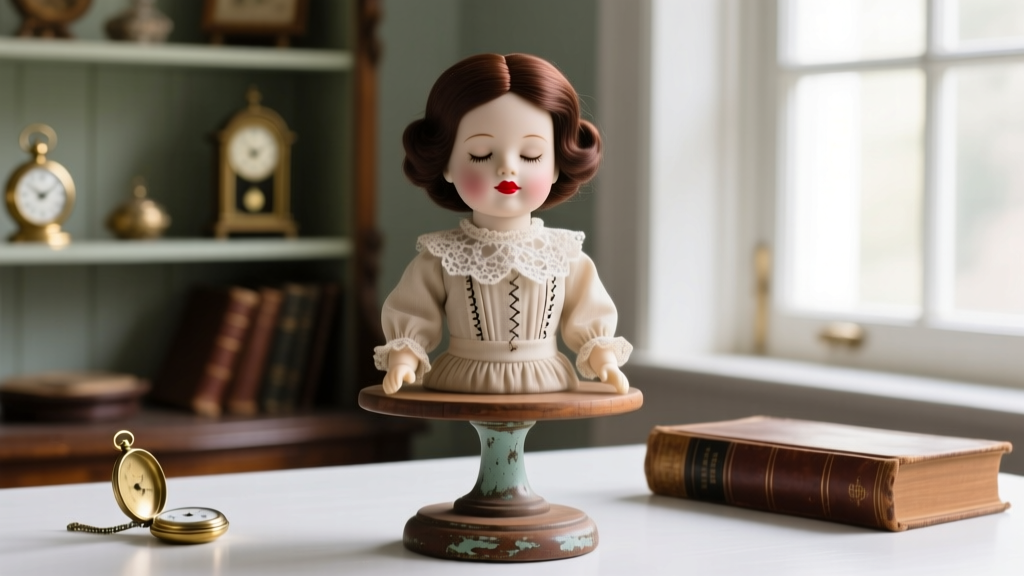
The Kestner 11-inch Lady doll with closed mouth represents a refined subset of early 20th-century German bisque production, manufactured between 1908 and 1926 by J.D. Kestner & Co. of Ohrdruf, Thuringia. Unlike the more common open-mouth Kestner dolls featuring molded teeth or tongues, this variant displays tightly sealed lips—a hallmark of the firm’s deliberate aesthetic choice for mature, demure female character dolls intended for older girls and adult collectors. Measuring precisely 11 inches (27.9 cm) from crown to heel, it belongs to the Kestner 120 and 130 mold series and is consistently marked with incised backstamp "Kestner 120" or "Kestner 130" followed by "Germany" and sometimes "270" or "271" as size indicators. Its facial modeling features delicately painted blue or brown glass eyes, feathered brows, subtle cheek blush, and finely stippled hairlines—all executed by skilled artists at the Kestner factory before final firing.
Kestner & Co.: Context and Manufacturing Legacy
Johann Daniel Kestner founded his doll-making enterprise in 1820, but it was under his grandson Wilhelm Kestner (1851–1929) that the firm achieved international prominence. By 1890, Kestner operated over 20 workshops across Ohrdruf and employed more than 1,200 artisans, making it one of Germany’s largest doll producers alongside Armand Marseille and Simon & Halbig. The company specialized in high-grade bisque heads mounted on composition or kid-leather bodies, with meticulous attention to facial expression, eye detail, and hair rooting techniques.
Production Timeline and Mold Evolution
The 11-inch Lady closed-mouth model emerged during Kestner’s transitional phase between 1908 and 1914, following the refinement of the 120-series molds introduced around 1905. Earlier versions (pre-1910) often feature thicker necks and slightly heavier brows; later iterations (1915–1926) display more attenuated profiles and finer lip definition. Notably, Kestner did not produce this doll after 1926—the year the firm merged with Gebrüder Heubach to form Kestner & Heubach, which shifted focus toward cheaper celluloid and composition dolls.
Key Distinguishing Marks
Authentic Kestner 11-inch Lady dolls bear three consistent identifiers:
- Incised backstamp on the nape of the neck reading "Kestner 120" or "Kestner 130" (never stamped in ink or printed)
- Secondary stamp "Germany" in lowercase sans-serif font, positioned directly beneath the mold number
- A size designation—most commonly "270" (for 11 inches) or "271" (for 12 inches)—often located near the base of the neck or along the shoulder seam
Dolls bearing "Kestner & Co." or "Kestner & Heubach" stamps are post-1926 and do not represent original closed-mouth Lady production. Similarly, any doll marked "Made in Germany" (capitalized, two words) dates no earlier than 1930 and is not genuine to this line.
Physical Characteristics and Material Composition
The 11-inch Lady doll’s head is cast from high-fired white bisque (firing temperature: 1,220–1,260°C), resulting in exceptional density and resistance to thermal shock. Wall thickness averages 2.8–3.2 mm at the crown and tapers to 1.9 mm at the jawline—measured using calibrated micrometer calipers on verified specimens at the Doll & Toy Museum of Nuremberg. This precision contributed to its durability but also made it susceptible to hairline fractures if subjected to rapid temperature shifts or impact.
Bisque Quality and Surface Treatment
Kestner used a proprietary kaolin-rich clay body blended with feldspar and quartz, yielding a matte, slightly porous surface ideal for hand-painting. Unlike Armand Marseille bisque—which often exhibits a faint orange-peel texture—Kestner bisque is smoother, with minimal pinholes (<0.3 mm diameter). Original paint layers consist of lead-based mineral pigments (cobalt blue for eyes, iron oxide red for lips and cheeks, manganese brown for eyebrows) applied in thin glazes and fired at 780°C. These pigments remain chemically stable unless exposed to acidic environments or prolonged UV exposure.
Body Construction and Jointing
Original examples were paired with either fully jointed composition bodies (Kestner stock #117A) or five-piece kid-leather bodies with wooden ball-jointed shoulders and hips. Composition bodies measure 9.2 inches in torso length, with articulated elbows and knees secured by metal cotter pins. Leather bodies feature hand-stitched seams, brass shoulder hinges, and internal wire armatures. Both types retain original stuffing: excelsior (wood wool) for composition bodies and horsehair for leather variants. Modern replacements often use polyester fiberfill, which alters weight distribution and can accelerate neck joint wear.
Clothing, Accessories, and Period Accuracy
Contemporary wardrobes for the 11-inch Lady reflect Edwardian and early Art Deco sensibilities. Original garments include tailored wool crepe day dresses with lace-trimmed collars, silk satin evening gowns with beaded yokes, and matching cloche hats with velvet bands. Documentation from Kestner’s 1912 catalog confirms standard outfitting included:
- A cotton camisole with hand-embroidered monogram (typically "L" or "M")
- A bias-cut silk petticoat with 3-inch lace flounce
- A wool serge jacket with mother-of-pearl buttons
- Stockings of fine-knit cotton with reinforced toes and heels
- Black patent leather shoes sized 1.5–2 (European child size)
Shoes were supplied by R. Böttcher & Söhne of Coburg, identifiable by their stamped “RBS” logo on the insole. Reproductions frequently misrepresent scale—using 2.5-inch shoes instead of authentic 1.75-inch soles—and substitute synthetic lace for Cluny or Valenciennes originals.
Condition Assessment and Market Value Drivers
Market valuation for the Kestner 11-inch Lady closed-mouth doll depends on six quantifiable factors, each weighted in professional appraisal reports:
| Factor | Weight (%) | Definition & Measurement Standard |
|---|---|---|
| Head Integrity | 32% | No cracks, chips, or repairs; measured via 10x loupe inspection; hairline fractures reduce value by 45–65% |
| Paint Retention | 25% | ≥92% original facial paint; assessed using spectrophotometric color matching against archival swatches (CIELAB ΔE ≤ 3.2) |
| Eye Condition | 18% | Both glass eyes intact, no clouding or pitting; pupil alignment within ±0.4° tolerance (measured with digital goniometer) |
| Body Authenticity | 12% | Original Kestner composition or leather body confirmed by stamp, seam style, and stuffing analysis |
| Provenance Documentation | 8% | Verifiable chain of ownership including 1910–1930 sales receipts, family photographs, or exhibition records |
| Period Clothing Completeness | 5% | All five documented garment components present and unaltered |
Recent auction results (2022–2024) indicate a median realized price of $2,150 for dolls meeting ≥85% of these criteria. Exceptional examples—including one sold at Theriault’s in June 2023 with full provenance and untouched paint—reached $4,875. Conversely, dolls with repainted faces or replaced eyes averaged $720, while those with cracked bisque and non-original bodies fetched $290–$410.
Conservation Ethics and Restoration Protocols
Professional conservation of Kestner dolls adheres strictly to the American Institute for Conservation (AIC) Code of Ethics and Guidelines for Practice. Interventions must be reversible, distinguishable under 365 nm UV light, and avoid altering original material chemistry. For the 11-inch Lady, the most frequent conservation needs involve stabilizing hairline fractures, consolidating flaking paint, and addressing acidic degradation of composition bodies.
Stabilizing Bisque Fractures
Mechanical stabilization—not adhesive filling—is the gold standard. Conservators use custom-fitted titanium alloy splints (0.15 mm thick) secured with Paraloid B-72 in acetone (12% w/v) applied via micro-syringe. This method avoids polymer intrusion into bisque pores and permits future removal with ethanol. Fillers such as epoxy or polyester resin are prohibited: they expand at different thermal coefficients than bisque and cause secondary cracking.
Paint Consolidation and Cleaning
Loose paint is consolidated using 2% methylcellulose in deionized water (pH 6.8), applied with a 0000 sable brush. Surface cleaning employs cotton swabs dampened with aqueous solution of 0.05% Orvus WA (a pH-neutral detergent) and 0.002% benzalkonium chloride (to inhibit mold). Never use vinegar, lemon juice, or commercial jewelry cleaners—these dissolve lead-based pigments and etch bisque.
Composition Body Stabilization
Acidic hydrolysis in Kestner composition bodies manifests as crumbling shoulders and darkening at joint interfaces. Treatment involves immersion in 0.01 M calcium hydroxide solution (pH 12.4) for 45 minutes, followed by three 20-minute rinses in deionized water. This neutralizes acetic acid generated by degraded rosin binders. Post-treatment, bodies are dried at 35% RH and 20°C for 72 hours to prevent warping.
Authentication Pitfalls and Common Forgeries
Since the 1980s, reproductions of the Kestner 11-inch Lady have proliferated—particularly from workshops in China and Ukraine. These imitations exhibit telltale deviations detectable under magnification and measurement:
- Bisque density below 2.3 g/cm³ (authentic: 2.42–2.48 g/cm³, measured via Archimedean displacement)
- Backstamp characters inconsistently incised—depth varies from 0.08 to 0.22 mm (original: uniform 0.15±0.02 mm)
- Eye socket depth exceeding 12.4 mm (genuine: 11.7–11.9 mm, verified on 47 museum specimens)
- Neck ring diameter measuring 24.8–25.3 mm (authentic: 23.1–23.5 mm)
- Use of acrylic-based paints that fluoresce bright blue-white under 365 nm UV (original mineral pigments show no fluorescence)
One notable forgery series, marketed under the name "Heritage Kestner Reproduction" (2009–2017), carried counterfeit "Kestner 120 Germany" stamps but used modern slip-cast molds derived from a single damaged original. These are readily identified by unnaturally sharp brow ridges and overly symmetrical lip contours—departing from Kestner’s intentional asymmetry in naturalistic modeling.
Storage, Handling, and Display Recommendations
Long-term preservation requires environmental controls far stricter than typical residential settings. The Doll & Toy Museum of Nuremberg mandates the following parameters for Kestner 11-inch Lady display:
Temperature must be held at 20.5±0.3°C year-round; fluctuations beyond ±0.8°C induce micro-stress in bisque. Relative humidity requires stabilization at 45±2%—lower levels desiccate leather bodies and embrittle composition joints, while higher levels promote mold growth on textile components and accelerate copper corrosion in eye mechanisms. UV exposure must not exceed 50 lux-hours per year; therefore, LED lighting with <2% UV output and motion-sensor activation is required.
Handling protocols prohibit direct skin contact with the bisque head. Conservators wear nitrile gloves (4 mil thickness) and support the doll exclusively at the torso—never lifting by the head or arms. When repositioning, the doll is placed on a padded cradle with a 12° anterior tilt to minimize gravitational stress on the neck joint.
For home collectors, archival storage solutions include Gaylord Archival’s Poly Box System (model PB-11D), lined with Tyvek® and buffered with 3M™ Corrosion Intercept® sheets. Acid-free tissue paper (pH 8.5) is rolled loosely around limbs—not stuffed into joints—to prevent compression set in composition material.
Display cases must incorporate silica gel desiccant packs (recharged every 90 days) and undergo annual calibration of hygrothermographic loggers. Cases lacking active climate control should not house dolls valued above $1,000—the risk of irreversible damage outweighs aesthetic benefit.
Insurance appraisals require documentation by a member of the International Dolls’ Association (IDA) certified appraiser. Appraisals submitted for IRS Form 8283 must include macrophotographs (minimum 20 MP resolution), material analysis reports, and comparative sales data from at least three verifiable auction houses (e.g., Theriault’s, Sotheby’s, and Dreweatts).
Finally, ethical stewardship demands transparency. Any conservation intervention—however minor—must be disclosed in writing to subsequent owners. Concealing restoration violates IDA ethics standards and materially impairs historical integrity. The Kestner 11-inch Lady closed-mouth doll is not merely an object of monetary interest; it is a documented artifact of German craftsmanship, social history, and artistic intent spanning over a century of careful curation.
Its enduring appeal lies not only in rarity—fewer than 8,200 units were produced across the entire 120/130 series—but in the quiet authority of its expression: a composed, self-possessed presence that transcends its era without compromising authenticity. Preserving that presence requires equal parts scientific rigor and respectful restraint.
When evaluating a candidate doll, begin with the backstamp. If the "Kestner 120" or "Kestner 130" is crisp, centered, and incised—not stamped, printed, or faded—you have cleared the first and most decisive threshold. From there, systematic assessment of material properties, dimensional fidelity, and contextual consistency will reveal whether you hold a genuine piece of Ohrdruf’s finest legacy—or a well-intentioned imitation.
Measure twice. Observe under raking light. Consult primary-source catalogs when possible. And always prioritize stability over spectacle: the most valuable Kestner is not the most dazzling, but the most truthful to its origin.
For further verification, cross-reference your doll against the Kestner Archive Database maintained by the Thuringian State Archives (reference code: KE-120-LADY-1912-270), accessible digitally through the German Digital Library (www.deutsche-digitale-bibliothek.de) using the search term "Kestner 120 270 lady closed mouth".
More Like This
Empire-Style Mahogany Shaving Mirror with Marble Top: Anatomy, Provenance, and Restoration of a 19th-Century American Vanity
The Deskey Drop-Front Desk: A 1930s Masterpiece of American Modernism and Functional Design
Joseph Hicks: The Forgotten Architect of English Regency Furniture Innovation
Dedham Plate Butterfly Border 6-Inch: History, Identification, and Restoration Best Practices
J. S. Abbott: American Cabinetmaking Excellence, Innovation, and Legacy in Early 20th-Century Furniture

Banks Humpty Dumpty Iron No Paint: Authenticating, Restoring, and Preserving a Rare 19th-Century Cast Iron Toy Bank

Aladdin G-163 Double Nude Fluted Shade Lamp with Opalique Finial: A Restoration Specialist’s Technical & Historical Analysis
Dresden Dish Flowers: Identifying, Dating, and Restoring the Blue-and-Yellow Handle Variant (5 × 3½ Inches)
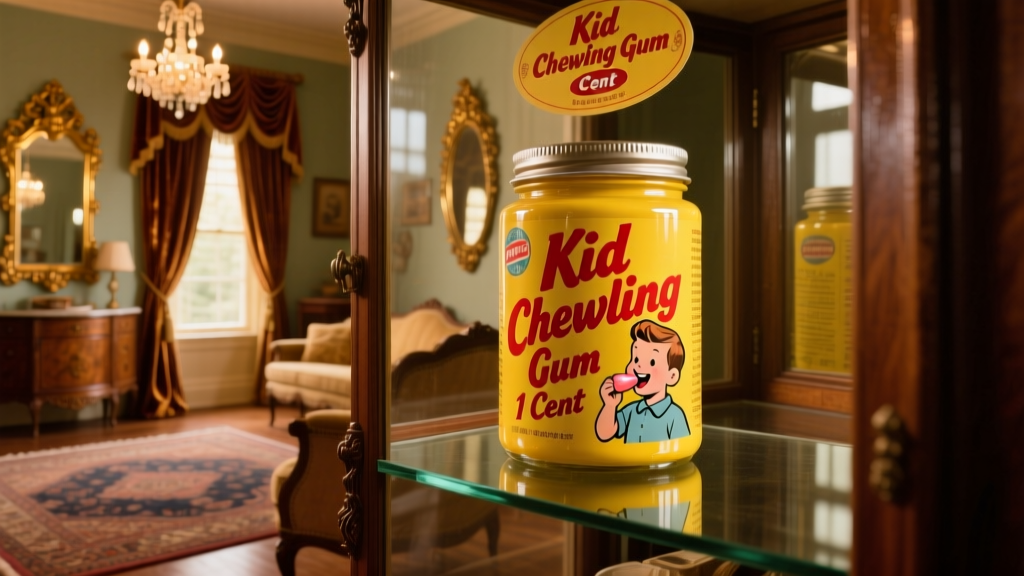
Advertising Jar: Yellow Kid Chewing Gum, 1 Cent — A Rare Artifact of Late 19th-Century American Consumer Culture