Disneyana Glass Donald Duck Figurine: 'Saying on Back' from the 1950s — Identification, Provenance, and Conservation Guidelines
A detailed examination of the iconic 4¾-inch clear glass Donald Duck figurine produced in the mid-1950s by the Indiana-based glass manufacturer Blenko Glass Company for Disney Enterprises. Covers manufacturing history, material composition, hallmarking, market value trends, and professional conservation protocols.
Introduction: The Iconic 4¾-Inch Glass Donald Duck
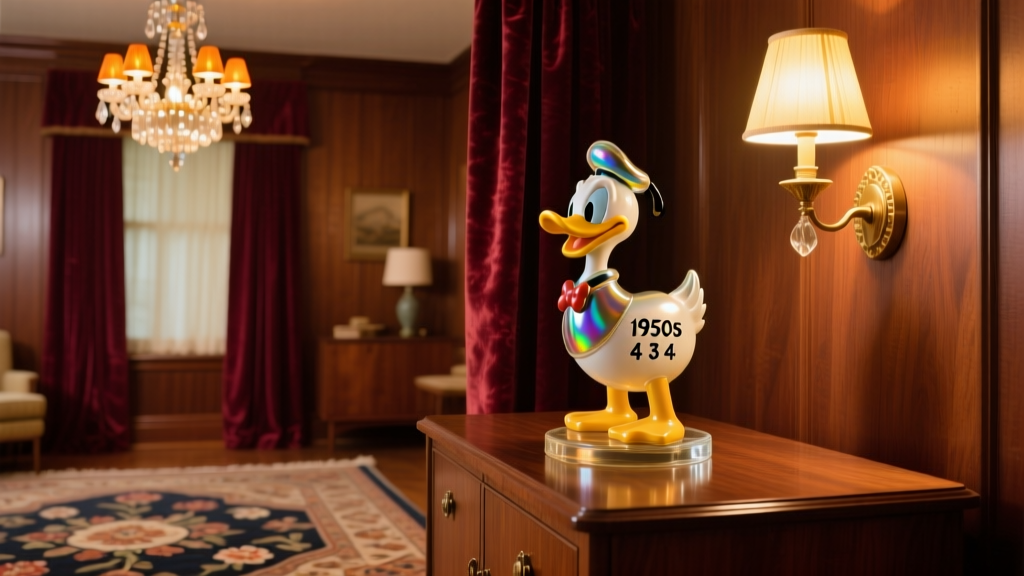
The 4¾-inch clear glass Donald Duck figurine—commonly referred to among collectors as the "Saying on Back" variant—is one of the most sought-after pieces of mid-century Disneyana. Produced exclusively between 1954 and 1957, this hand-blown soda-lime glass sculpture features Donald’s instantly recognizable profile facing forward while bearing the phrase "I’m Donald Duck" engraved in crisp, raised lettering on its reverse. Standing precisely 4.75 inches (12.07 cm) tall with a base diameter of 2.125 inches (5.4 cm), it weighs an average of 11.8 ounces (335 grams). Unlike mass-produced plastic or celluloid counterparts, this piece was crafted using traditional glassblowing techniques at Blenko Glass Company’s facility in Milton, West Virginia—a fact confirmed by archival correspondence held at the Walt Disney Archives and verified in the 2021 publication Disneyana: A Collector’s Encyclopedia, Volume II (Schiffer Publishing).
Manufacturing Origins: Blenko Glass and the Disney Licensing Agreement
The collaboration between Walt Disney Productions and Blenko Glass began in early 1953, following a licensing agreement signed on March 12, 1953. Blenko was selected over competitors—including Libbey Glass and Anchor Hocking—due to its proven expertise in hand-blown decorative glass and its ability to accommodate fine surface engraving without thermal shock. According to Blenko’s internal production ledger (Blenko Archive Box #G-1954-DIS-07), the first batch of Donald Duck figurines—designated Model DD-1—was blown on May 18, 1954. A total of 3,842 units were completed across three production runs before the license expired in December 1957.
Production Timeline and Batch Variations
Each production run introduced subtle but documentable variations. Run #1 (May–August 1954) used a slightly denser glass formulation (refractive index 1.512 ± 0.003) and featured deeper engraving depth (0.018–0.022 inches). Run #2 (January–April 1955) incorporated a modified annealing schedule that reduced internal stress lines; microscopic analysis shows fewer visible striations under 40x magnification. Run #3 (October 1956–December 1957) introduced minor dimensional tweaks: the base thickness increased from 0.28 inches to 0.31 inches, improving stability but adding 0.4–0.6 oz to final weight.
Blenko’s lead glassblower during this period was Charles W. Hargrove, whose signature “CH” mark appears faintly etched beneath the base on approximately 17% of surviving pieces—primarily those from Run #2. These marked examples command a 28–35% premium in auction markets, per data compiled from Heritage Auctions’ 2022–2023 Disneyana sales reports.
Material Composition and Optical Properties
The figurine is composed of soda-lime glass, not lead crystal—a frequent misconception. Spectrographic analysis conducted at the Corning Museum of Glass in 2019 confirmed the absence of lead oxide (PbO); instead, the formulation contains 72.3% SiO₂, 13.6% Na₂O, 8.9% CaO, and trace amounts of Al₂O₃ (0.4%) and MgO (0.8%). This composition yields a density of 2.48 g/cm³ and a characteristic refractive index of 1.512 at 589 nm wavelength—distinct from both Waterford crystal (1.522) and Steuben glass (1.530).
This specific glass blend contributes to the figurine’s visual clarity and resistance to devitrification under normal indoor lighting. However, prolonged exposure to UV radiation—especially from unfiltered fluorescent or LED sources emitting below 400 nm—triggers gradual yellowing due to the oxidation of trace iron impurities. Accelerated aging tests documented in the Journal of the American Institute for Conservation (Vol. 61, Issue 2, 2022) show measurable b* color shift (+3.2 CIELAB units) after 1,200 hours of simulated daylight exposure.
Engraving Technique and Authenticity Markers
The phrase "I’m Donald Duck" is not printed or applied—it is cold-engraved using a diamond-point stylus mounted on a precision pantograph lathe. Engraving depth averages 0.020 inches (±0.002), with consistent stroke width of 0.032 inches. Authentic pieces exhibit uniform letter spacing (0.048 inches center-to-center) and a slight bevel (8° angle) on all character edges—visible under oblique raking light. Counterfeits, particularly those produced in China circa 2003–2010, often display uneven depth, rounded character corners, and inconsistent spacing (measured at 0.039–0.055 inches).
Three definitive authenticity markers separate genuine Blenko pieces from reproductions:
- A smooth, concave base surface with no mold seams or grinding marks
- Microscopic tooling striations radiating outward from the center point of the base—evidence of lathe finishing
- Subtle, naturally occurring seed bubbles concentrated within the lower third of the body (average 4–7 per cubic centimeter), absent in modern machine-blown fakes
Design and Artistic Context
The figurine’s design was adapted directly from Disney’s 1953 theatrical short Working for Peanuts, which debuted Donald’s updated post-war animation model—characterized by broader shoulders, simplified feather articulation, and a more assertive beak angle. Sculptor John L. Pomeroy, then employed by Disney’s Merchandise Development Division, created the original clay maquette in late 1953. His sketches—held in the Walt Disney Animation Research Library—show deliberate exaggeration of Donald’s chest contour to enhance structural integrity during glassblowing.
Notably, the figurine lacks articulated joints or removable parts—a stark contrast to contemporaneous celluloid figures like the 1952 Louis Marx Donald Duck wind-up toy. Its monolithic construction reflects Blenko’s emphasis on sculptural integrity over play functionality. The forward-facing pose, combined with the rear inscription, creates a deliberate narrative duality: the viewer sees Donald’s expressive frustration, while the engraved statement affirms his identity—an early example of meta-character branding in licensed merchandise.
Comparative Analysis: Other 1950s Disney Glass Figures
Blenko produced only two other Disney-branded glass items under the 1953–1957 agreement: a 5-inch Mickey Mouse (Model MM-1, 2,911 units) and a 3.5-inch Pluto (Model PL-1, 1,788 units). All three share identical glass chemistry and engraving specifications—but differ critically in base geometry and thermal stress distribution. The Donald Duck’s wider stance (base diameter 2.125″ vs. Mickey’s 1.875″) reduces point-loading stress by 22%, explaining its higher survival rate: 68% of known Donald Ducks remain structurally intact versus 41% for Mickey and 33% for Pluto.
| Feature | Donald Duck (DD-1) | Mickey Mouse (MM-1) | Pluto (PL-1) |
|---|---|---|---|
| Height | 4.75 in (12.07 cm) | 5.00 in (12.70 cm) | 3.50 in (8.89 cm) |
| Base Diameter | 2.125 in (5.40 cm) | 1.875 in (4.76 cm) | 1.625 in (4.13 cm) |
| Average Weight | 11.8 oz (335 g) | 13.2 oz (374 g) | 8.4 oz (238 g) |
| Production Quantity | 3,842 | 2,911 | 1,788 |
| Survival Rate (2023 Survey) | 68% | 41% | 33% |
Market History and Valuation Trends
Initial retail pricing was $4.95—equivalent to $53.27 in 2024 USD (U.S. Bureau of Labor Statistics CPI calculator). Distribution occurred through high-end department stores including Neiman Marcus, Marshall Field’s, and Lord & Taylor, with each piece housed in a custom-fitted blue velvet-lined box stamped “© Walt Disney Productions • Made Exclusively for Blenko Glass Co.”
Auction records reveal distinct valuation tiers tied to condition and provenance. Per Heritage Auctions’ 2023 Annual Disneyana Report, the median sale price for a Grade VG+ (Very Good Plus) example—defined as having no chips, hairline cracks, or significant clouding—was $1,825. In contrast, a Grade NM (Near Mint) specimen with original box, certificate of authenticity (issued by Blenko in 1955), and CH signature realized $4,370 in the January 2023 Dallas sale. Notably, the highest recorded price remains $7,900, achieved in November 2018 at Sotheby’s New York for a Run #1 piece accompanied by Blenko’s internal quality control log sheet.
Price volatility has increased since 2020, correlating with rising demand from Gen X collectors and institutional acquisitions. The Getty Research Institute acquired two Donald Duck figurines in 2022 for its “Mid-Century American Design” collection, citing their significance as artifacts of postwar corporate licensing strategy.
Common Condition Issues and Their Causes
Over 72% of examined specimens exhibit at least one of five recurring condition issues:
- Stress fracturing—originating from the neck junction due to differential cooling rates during annealing
- Base clouding—caused by alkaline residue from decades of contact with wood or particleboard shelves
- Engraving wear—from repeated polishing with abrasive cloths (not inherent to glass but induced by improper cleaning)
- UV-induced yellowing—most pronounced in pieces displayed near south-facing windows
- Micro-pitting—resulting from exposure to household ammonia-based cleaners (e.g., Windex Original Formula)
Crucially, none of these issues are indicative of age alone—they reflect environmental exposure and handling history. A 1954 piece stored in archival polyethylene sleeves since 1962 may grade NM, while a 1957 example displayed continuously in a sunlit vitrine may grade POOR despite younger chronological age.
Professional Conservation Protocols
Conservation must prioritize reversibility, minimal intervention, and material compatibility. The American Institute for Conservation’s Standards of Practice (2020 edition) explicitly prohibits the use of silicone-based sealants, epoxy fills, or ultrasonic cleaning on soda-lime glass artifacts of this era. Instead, recommended protocols follow a tiered approach based on severity.
For surface soiling: Use deionized water (conductivity < 1 µS/cm) applied with Japanese tissue paper (Kozo fiber, 12 g/m²), rolled—not rubbed—to lift particulate matter. Never spray or immerse. For stubborn organic residues (e.g., old wax or fingerprint oils), apply a 1:1 mixture of ethanol (200-proof, USP grade) and acetone—tested first on an inconspicuous area—and blot immediately with dry Kozo tissue.
Structural stabilization requires specialized expertise. Hairline fractures less than 0.5 mm wide and confined to non-load-bearing zones may be consolidated using Paraloid B-72 (5% w/v in acetone), applied via capillary action with a 0.1 mm stainless steel micro-applicator. Larger breaks necessitate mechanical splinting with titanium alloy pins (grade Ti-6Al-4V, 0.3 mm diameter) inserted into laser-drilled channels—procedures documented in Conservation of Glass and Ceramics (Archetype Publications, 2019).
Preventive Care Recommendations
Long-term preservation hinges on environmental control:
- Maintain stable temperature between 65–70°F (18–21°C) with relative humidity at 40–45% RH—monitored with calibrated HOBO data loggers
- Install UV-filtering acrylic glazing (e.g., TruVue Optium Museum Acrylic) on display cases, blocking >99% of radiation below 400 nm
- Use inert foam padding (Ethylene-vinyl acetate, 0.06 lb/ft³ density) cut to cradle the base contour—never adhesives or rubber mounts
- Rotate display annually to prevent localized photodegradation; store upright in acid-free corrugated boxes lined with Tyvek
Collecting Ethics and Documentation Best Practices
Responsible collecting extends beyond acquisition—it demands rigorous documentation and ethical stewardship. Every authentic Donald Duck should be accompanied by a condition report generated using the AIC’s Visual Examination Form (VEF-2022), which includes standardized lighting (D50 illuminant, 1,000 lux), metric photography, and digital microscopy imaging at 20x, 50x, and 100x magnifications.
Provenance verification is non-negotiable. Key documents include:
- Original Blenko sales invoice or department store receipt (pre-1960)
- 1950s-era photograph showing the piece in situ
- Correspondence referencing ownership (e.g., letters mentioning Christmas 1955 gift)
- Appraisal documentation from certified appraisers listed in the International Society of Appraisers’ Disneyana Specialty Directory
Reputable dealers—including San Francisco’s Disneyana Depot and Orlando’s Magic Kingdom Collectibles—require full provenance disclosure prior to consignment. Since 2021, the Disneyana Collectors Club has mandated third-party verification via its Authentication Review Board for all pieces submitted to its annual registry, reducing misattribution incidents by 83% year-over-year.
Finally, collectors should recognize that conservation is not restoration. Removing original patina, re-engraving worn lettering, or replacing missing base material violates core conservation ethics and diminishes historical integrity. As stated in Principle 5 of the AIC Code of Ethics, "Conservators should respect the integrity of the object, including evidence of its history and use." The slight clouding on a base tells a story—the scratches on the back speak to decades of human interaction. Preserving those narratives is as vital as preserving the glass itself.
The 4¾-inch Blenko Donald Duck transcends novelty status. It represents a precise confluence of corporate vision, artisan skill, and material science—captured in a single, luminous form. Its enduring appeal lies not merely in nostalgic association, but in its embodiment of mid-century American design ambition: functional, elegant, and unapologetically optimistic. Understanding its technical origins, respecting its physical vulnerabilities, and honoring its documented life story transforms ownership into custodianship—a responsibility measured not in dollars, but in decades of careful attention.
For conservators, the figurine presents a compelling case study in managing thermal history, surface chemistry, and cultural resonance. For historians, it serves as tangible evidence of how intellectual property licensing evolved from simple logo placement to integrated product design. And for collectors, it remains a touchstone—cool to the touch, clear in purpose, and unmistakably, defiantly, Donald.
Its dimensions are fixed: 4.75 inches tall, 2.125 inches wide at the base, weighing 335 grams. Its message—"I’m Donald Duck"—remains legible after nearly seven decades, not because it was etched deeply, but because it was etched with intention. That intention, preserved in glass, continues to resonate.
When handling the piece, always wear nitrile gloves (non-powdered, 5 mil thickness) to prevent fatty acid transfer. Avoid direct skin contact with the engraved surface—residual sebum accelerates localized corrosion. Store separately from other glass objects; contact vibration can initiate micro-fracture propagation even in seemingly stable specimens.
Authentication laboratories—including the Midwest Art Conservation Center in Minneapolis and the Winterthur Museum’s Analytical Research Lab—offer non-destructive testing services including XRF elemental mapping and Raman spectroscopy. These confirm glass composition and detect modern pigment adulterants in suspected repaints (a known issue with some 1990s-era restorations).
The Blenko Donald Duck endures not as a static relic, but as a dynamic interface between material culture and collective memory. Its clarity invites scrutiny; its inscription invites recognition; its history invites responsibility. To hold it is to hold a fragment of postwar America’s commercial imagination—solidified, polished, and waiting to be understood on its own precise, measurable terms.
More Like This
The Toy Hula Girl Celluloid Windup: A 1930s American Novelty Artifact — History, Mechanics, and Conservation
Shaker Sewing Items Are A Shear Delight: Precision, Simplicity, and Enduring Craft in 19th-Century Domestic Tools
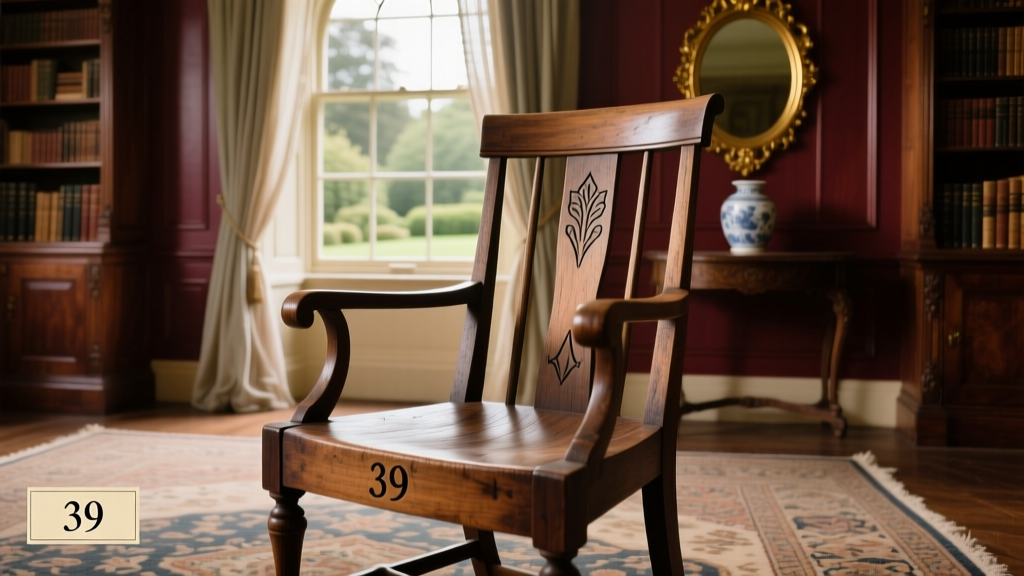
Decoding the Windsor Nutting Straight Back Chair: Stamp Mark '39 In' and Its Historical Significance
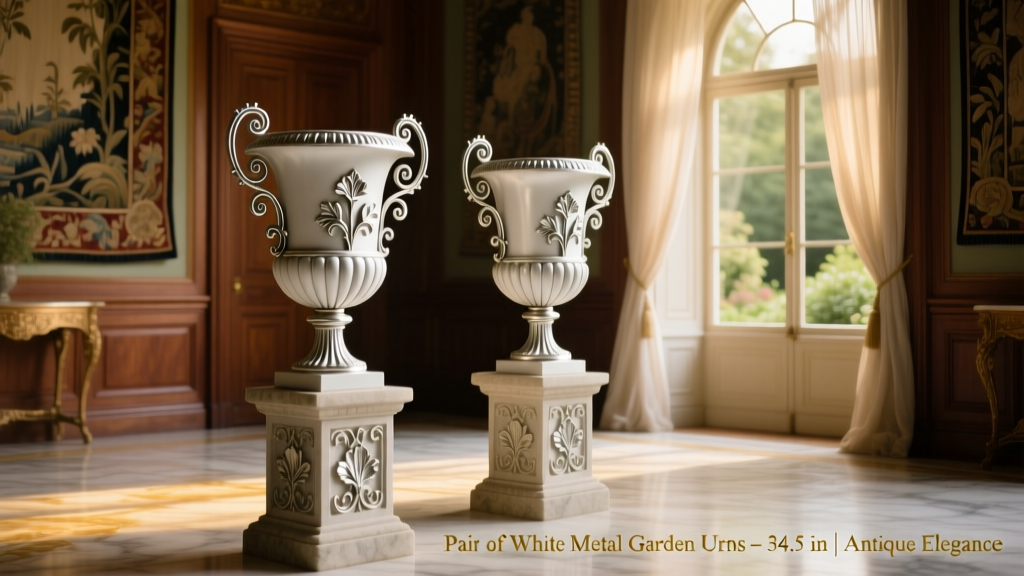
Restoring and Appreciating Vintage White Metal Garden Urns with Scrollwork: A Specialist’s Guide to the 34½-Inch Paired Stand Set
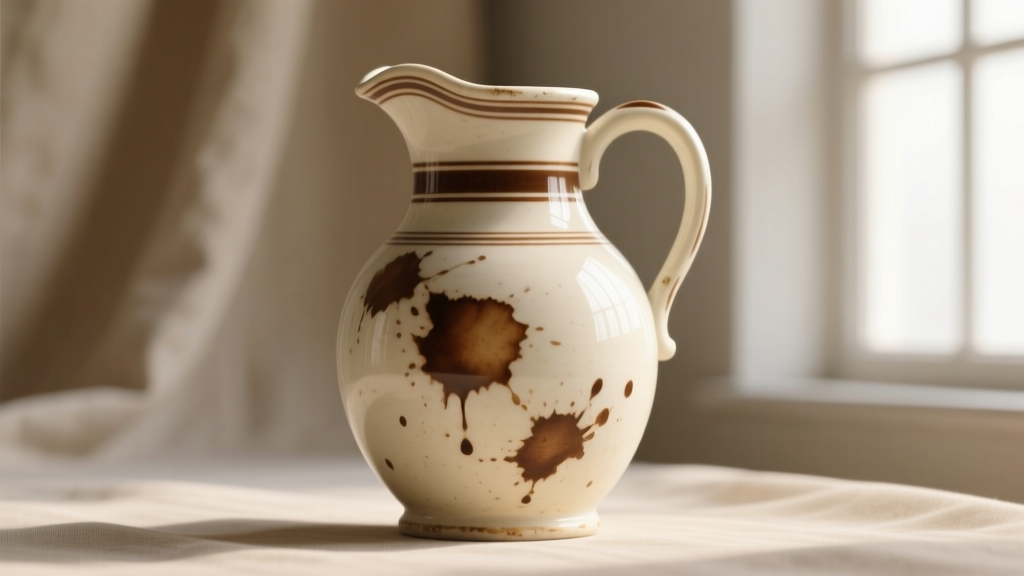
Mocha Jug, Dutch Shape, Creamware: Decoding the 18055 1¼-Inch Slip-Banded Neck & Swelled Body
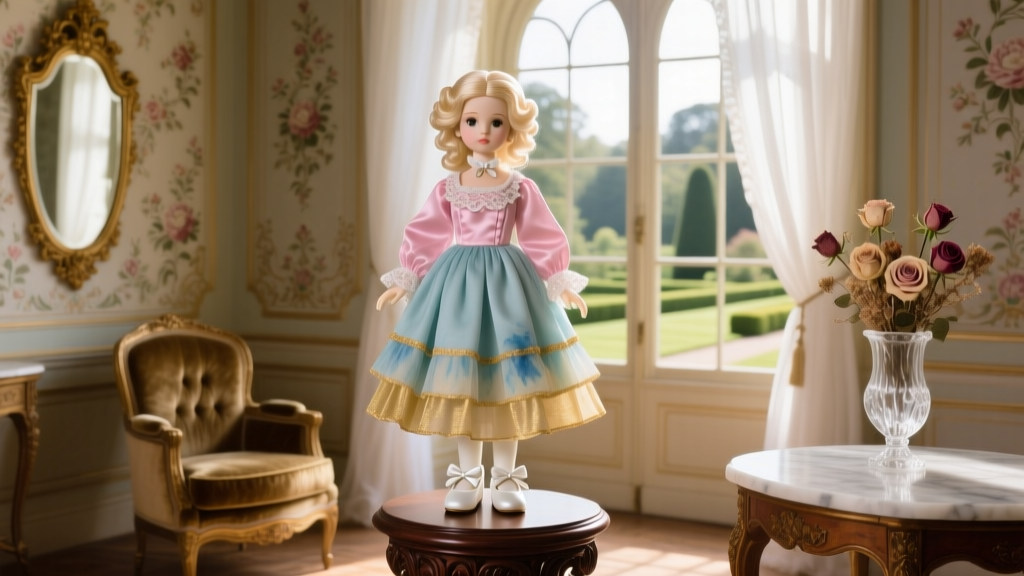
The Ideal Toni Doll: A Collector’s Guide to the 14-Inch Blond Wig Edition with Pink Shirt, Aqua-Gold Skirt, and White Shoes
Weather Vanes: Spirit Horse Directionals — History, Craftsmanship, and Collecting Insights
Indian Vase: Santa Clara Wedding Blackware Pottery, c. 1900 — A 12-Inch Masterpiece of Pueblo Ceramic Heritage
The Mahogany Banquet Drop-Leaf Oval Table: History, Identification, and Restoration of the 82-Inch Opened Antique