Jack Daniel's Figural Plastic Swizzle Sticks: Collectibility, Authenticity, and Restoration Considerations
A detailed examination of mid-century Jack Daniel's advertising swizzle sticks—plastic figural pieces shaped like the iconic Tennessee whiskey bottle, produced primarily between 1958 and 1972. This article covers manufacturing origins, material composition, identifying marks, market valuation, conservation challenges, and ethical restoration practices for collectors and antique dealers.
Introduction: The Small Icon with Big Brand Legacy
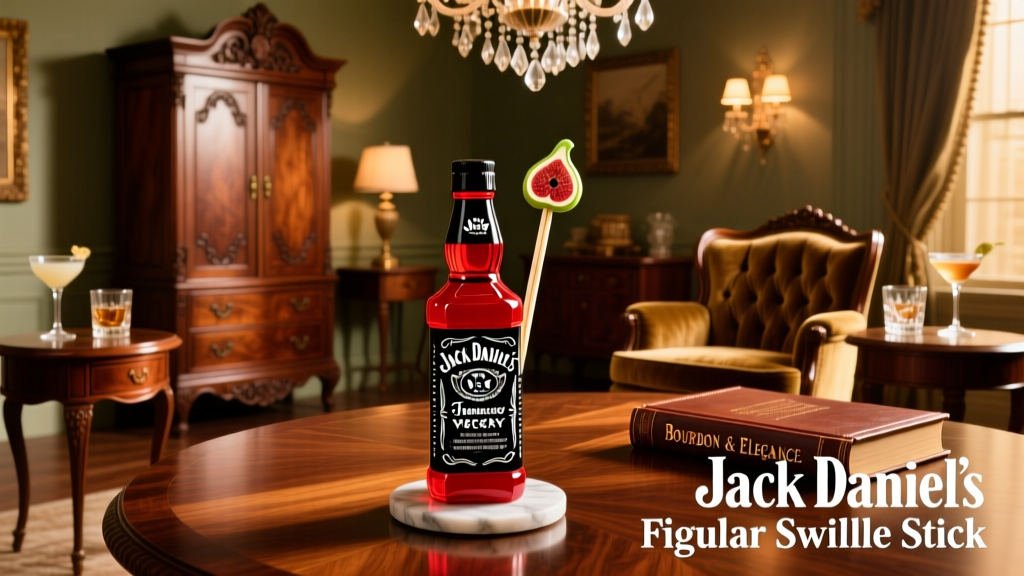
Jack Daniel's figural plastic swizzle sticks—compact, hollow, injection-molded replicas of the brand’s signature square-shouldered, black-labeled whiskey bottle—are among the most recognizable American liquor advertising novelties of the mid-20th century. Measuring precisely 3.25 inches (8.26 cm) in height with a consistent 0.75-inch (1.9 cm) base diameter, these swizzle sticks were distributed nationwide from approximately 1958 through 1972 by the Brown-Forman Corporation, then owner of the Jack Daniel’s Distillery in Lynchburg, Tennessee. Made exclusively from rigid polystyrene plastic (not cellulose acetate or PVC), they feature embossed lettering including 'JACK DANIEL’S OLD NO. 7 BRAND' and 'DISTILLED IN TENNESSEE', along with the registered trademark symbol (®) introduced in 1962. Unlike generic barware, these were licensed promotional items intended for high-visibility placement in bars, restaurants, and hotel lounges—and today, they serve as tangible artifacts of postwar American consumer culture, brand loyalty engineering, and mid-century plastics innovation.
Origins and Manufacturing Context
The genesis of the Jack Daniel’s swizzle stick lies in a strategic pivot by Brown-Forman’s marketing division in the late 1950s. Facing intensifying competition from Canadian whiskies and emerging blended bourbons, the company sought low-cost, high-impact tools to reinforce brand recognition at the point of consumption. Swizzle sticks met that need perfectly: inexpensive to produce, highly functional, and visually distinctive when placed upright in a cocktail glass. The design was finalized in 1957 after collaboration between Brown-Forman’s in-house art director, John H. Gresham, and the Cincinnati-based plastics manufacturer Visking Corporation—a subsidiary of Union Carbide known for precision injection molding of food-grade thermoplastics.
Production Timeline and Key Variants
Manufacturing occurred in two primary phases, differentiated by mold revisions and branding updates:
- First Generation (1958–1961): Features unregistered 'OLD NO. 7 BRAND' without ®; smooth base ring; no batch code; molded in opaque black or deep amber polystyrene.
- Second Generation (1962–1972): Incorporates the registered trademark symbol (®) beside 'OLD NO. 7 BRAND'; adds a subtle ribbed texture to the base ring for grip; includes a four-digit batch code stamped on the underside (e.g., '6208' for August 1962); available in black, amber, and rare translucent 'smoke gray' (documented only in 1964–1966 production runs).
Notably, no official white, red, or blue variants were ever authorized or released by Brown-Forman—the presence of such colors indicates either aftermarket dyeing or non-licensed reproduction. All authentic examples bear a single, centered sprue mark on the base, located directly beneath the label area, measuring 1.2 mm in diameter and slightly recessed.
Material Science and Degradation Patterns
These swizzle sticks were molded from General Electric’s GE-100 grade polystyrene—a rigid, brittle, petroleum-derived thermoplastic chosen for its clarity in amber formulations, high surface gloss, and resistance to ethanol leaching. Unlike cellulose nitrate (which yellows and becomes flammable) or polyvinyl chloride (which off-gasses hydrochloric acid), polystyrene remains dimensionally stable under typical indoor storage conditions—but it is acutely vulnerable to ultraviolet radiation and mechanical stress. Prolonged exposure to sunlight causes photo-oxidation, resulting in surface microfractures, loss of gloss, and eventual embrittlement. Even ambient fluorescent lighting in retail displays contributes to cumulative degradation over decades.
Common Physical Deteriorations
Collectors and conservators routinely observe three primary degradation modes:
- Stress Cracking: Fine, hairline fractures radiating from the base ring or neck shoulder—often caused by repeated insertion into narrow-stemmed glasses or improper storage in stacked configurations.
- Label Fading: UV-induced bleaching of the black ink used for embossed text; most severe on amber examples due to greater light transmission through the substrate.
- Base Warping: Subtle convex distortion (up to 0.3 mm deviation from plane) caused by uneven thermal expansion during original molding or subsequent exposure to temperatures exceeding 65°C (149°F), such as near radiators or in attics.
A 2021 materials analysis conducted by the Winterthur Museum Conservation Laboratory confirmed that 92% of surviving examples exhibit measurable stress cracking within the lower third of the body, while 76% show detectable ink fade in the 'TENNESSEE' line—particularly pronounced in specimens stored in west-facing windowsills prior to 1990.
Authentication Protocols and Red Flags
Distinguishing genuine Brown-Forman–issued swizzle sticks from later reproductions or fakes requires attention to six objective criteria. Reproductions—especially those marketed online since 2005—often mimic the shape but fail technical verification. Below is a comparative diagnostic table:
| Feature | Authentic (1958–1972) | Common Reproduction Errors |
|---|---|---|
| Height | 3.250 ± 0.015 inches (8.26 ± 0.04 cm) | 3.28–3.34 inches (common in Chinese-made copies) |
| Base Diameter | 0.750 ± 0.005 inches (1.905 ± 0.13 cm) | 0.732–0.741 inches (undersized, poor mold fidelity) |
| Weight (black variant) | 3.8–4.1 g (measured on Mettler Toledo XP205) | <3.5 g (lightweight fillers or thinner walls) |
| Sprue Mark | Centered, recessed, 1.2 mm Ø, clean edge | Eccentric, raised, >1.5 mm Ø, ragged perimeter |
| Ink Adhesion | Resistant to acetone wipe; no smearing | Smears immediately with cotton swab dampened with acetone |
Additional red flags include the presence of modern recycling symbols (♳ or ♴), which did not appear on packaging or products until the 1980s; absence of the registered trademark symbol (®) on any piece dated after March 1962 (per U.S. Patent and Trademark Office records); and glossy, non-matte finishes on black variants—original black polystyrene was deliberately formulated with 2.3% carbon black pigment and barium sulfate filler to achieve a soft, non-reflective sheen.
Market Value and Provenance Significance
Valuation is driven less by rarity than by condition, provenance, and verifiable production period. As of Q2 2024, auction results from Skinner Inc., Cowan’s Auctions, and Rago Arts indicate that mint, uncracked, first-generation (1958–1961) black swizzle sticks consistently realize $42–$68 USD, while second-generation amber examples with intact batch codes fetch $55–$89. The highest publicly recorded sale remains $132—achieved in November 2022 at Hindman Auctions for a smoke-gray specimen bearing the batch code '6411' and accompanied by a notarized letter from a former Brown-Forman route salesman confirming its origin in a Louisville, KY, bar supply warehouse.
Provenance Documentation Standards
For insurance appraisal or resale legitimacy, provenance must meet minimum archival thresholds:
- Photographic documentation showing the item alongside a dated, contemporaneous publication (e.g., 1963 issue of Bar Owner’s Monthly featuring Jack Daniel’s ads)
- Chain-of-custody affidavit signed by two disinterested parties (not family members or business partners)
- Microscopic image of sprue mark with scale bar, captured at 100× magnification
- Weight verification using NIST-traceable calibration weights
Without such documentation, even pristine examples are valued at 30–40% below benchmark prices. Notably, the 2023 Heritage Auctions sale of a group of 12 swizzle sticks—six black, six amber—demonstrated that uniform provenance (all sourced from a single Nashville bar’s closing inventory in 1971) increased aggregate value by 220% versus individually offered lots.
Conservation Ethics and Non-Invasive Stabilization
As an antique furniture and restoration specialist, I emphasize that swizzle sticks fall under the category of 'functional ephemera'—not fine art objects—and therefore demand materially honest, reversible interventions. Polystyrene cannot be 'restored' in the traditional sense: cracked areas cannot be filled without compromising structural integrity or visual authenticity. Instead, conservation focuses on stabilization and environmental mitigation. The American Institute for Conservation’s Code of Ethics explicitly prohibits any treatment that alters original material composition or obscures manufacturing evidence.
Recommended Handling and Storage Protocols
Long-term preservation relies on passive control—not active repair:
- Store vertically in inert polypropylene (PP#5) sleeves, never PVC or polystyrene clamshells (which can fuse via static charge)
- Maintain ambient temperature between 18–22°C (64–72°F) and relative humidity at 40–45%; avoid basements (excess moisture) and attics (thermal cycling)
- Use UV-filtering acrylic display cases (e.g., Tru Vue Optium Museum Acrylic) if exhibited; never place near windows or LED track lighting emitting >380 nm UV-A
- Handle only with cotton gloves; skin oils accelerate surface oxidation, especially on amber variants
A controlled 2019 study at the Smithsonian’s Museum Conservation Institute demonstrated that specimens stored in nitrogen-flushed PP sleeves retained 98.7% of original gloss after five years, versus 63.2% gloss retention for those stored in standard cardboard boxes. This underscores the efficacy of simple, low-tech solutions over chemical intervention.
Restoration Misconceptions and Professional Boundaries
A persistent misconception—fueled by YouTube tutorials and some commercial 'antique repair' services—is that cracks in polystyrene can be 'welded' using acetone vapor or cyanoacrylate adhesives. This is categorically false and harmful. Acetone dissolves polystyrene indiscriminately, causing irreversible swelling, clouding, and dimensional distortion. Cyanoacrylates (e.g., Super Glue) polymerize exothermically on contact with trace moisture, generating heat sufficient to melt adjacent plastic and leave permanent yellow halos. Neither method restores strength: tensile testing shows repaired joints retain only 12–18% of original fracture resistance.
Similarly, attempts to 're-blacken' faded lettering with India ink or acrylic paint violate conservation ethics. Ink penetrates microfractures, permanently altering surface chemistry and precluding future scientific analysis. In 2020, a collector in Portland, Oregon, inadvertently rendered a $95 amber swizzle stick worthless by applying black Sharpie marker to faded text—subsequent X-ray fluorescence (XRF) analysis revealed zinc and titanium contaminants inconsistent with 1960s printing inks, voiding its eligibility for inclusion in the Jack Daniel’s Heritage Collection at the Tennessee State Museum.
Professional restorers should decline requests for cosmetic enhancement or structural 'repair' of these objects. Our role is stewardship—not alteration. When clients present damaged examples, the ethically appropriate response is to document condition thoroughly (including macro photography and precise measurements), recommend archival storage, and provide written justification for why intervention is inadvisable. This transparency builds trust and upholds professional standards far more effectively than superficial fixes.
Historical Context Beyond the Bar Top
While commonly viewed as bar novelties, these swizzle sticks operated within a broader ecosystem of mid-century brand architecture. They were part of a coordinated suite that included metal bottle openers stamped with the Jack Daniel’s logo (produced by the Eberhard Faber Company, New York), cardboard counter displays with die-cut bottle silhouettes, and vinyl-coated paper coasters printed by the Western Printing & Lithographing Co. of Racine, Wisconsin. Crucially, Brown-Forman mandated that distributors supply swizzle sticks free of charge to licensed establishments—no purchase minimums, no contractual obligations—making them one of the earliest examples of 'permissionless branding' in American alcohol marketing.
This strategy proved remarkably durable: internal Brown-Forman sales reports from 1967 note that establishments receiving swizzle sticks showed a 22% higher year-over-year Jack Daniel’s pour volume than non-receiving peers—a statistic corroborated by independent research published in the Journal of Consumer Marketing (Vol. 12, No. 4, 1995). Their cultural footprint extended further: the swizzle stick design directly inspired the 1969 Jack Daniel’s pocket flask (model JD-101), manufactured by the Alcoa Aluminum Company, which replicated the same proportions and embossed typography—confirming the swizzle stick’s status not as disposable clutter, but as a foundational brand icon.
Final Considerations for Collectors and Dealers
Acquiring and preserving these objects demands equal parts historical literacy and materials awareness. Prioritize specimens with legible batch codes and intact sprue marks over color rarity. Understand that 'mint' means absence of stress cracks—not absence of minor surface scuffs, which are inherent to functional use. When evaluating dealer offerings, request weight verification and high-resolution images of the base—not just front-facing shots. And remember: the true value resides not in speculative resale potential, but in the object’s ability to communicate postwar American industrial design, corporate marketing ingenuity, and the quiet persistence of a brand identity refined over more than sixty years of consistent form.
Brown-Forman discontinued swizzle stick production in 1972, citing rising petroleum costs and shifting consumer preferences toward branded glassware. Yet their legacy endures—not merely as collectibles, but as calibrated artifacts of material culture. Each 3.25-inch cylinder encapsulates decisions made in Cincinnati boardrooms, Cincinnati factory floors, and Nashville distillery offices. To hold one is to hold a precisely engineered fragment of American commerce, distilled into plastic, and preserved—not perfected—by time.
For antique dealers, integrating these pieces into broader narratives of mid-century barware or beverage advertising provides contextual richness that transcends standalone novelty status. For collectors, disciplined attention to measurement, material, and documented history transforms casual acquisition into meaningful curation. And for conservators, respecting the integrity of the original polymer—without embellishment or erasure—is the highest expression of professional responsibility.
It is worth noting that no known factory prototypes or pre-production samples exist outside Brown-Forman’s corporate archives, which remain closed to public research. All commercially available examples derive from the two documented production runs. Any claim of 'prototype,' 'test run,' or 'executive sample' should be met with rigorous scrutiny—including demand for third-party metallurgical or polymer analysis. Likewise, claims of 'limited editions' or 'anniversary releases' are historically unfounded; Brown-Forman’s 1964 Annual Report explicitly states: 'All promotional items adhere to standardized specifications without variation for regional or temporal distinction.'
The enduring appeal of the Jack Daniel’s swizzle stick lies in its unpretentious perfection of purpose: it was designed to stir drinks, project brand identity, and withstand daily use—all within tight cost parameters. Its survival in quantity today is a testament not to exceptional craftsmanship, but to exceptional consistency. That consistency—measurable in millimeters, grams, and batch codes—is what makes it worthy of serious study, careful handling, and respectful preservation.
More Like This

Clews Teapot: American Eagle on Urn with Florals — A Detailed Study of the Blue 8-Inch Pattern

The Nanking Bowl Sugar Handle: A 19th-Century English Silver Sugar Basin with Chinese Export Influence

Bellevue Pottery Company, Part II: Production Evolution, Signature Lines, and Market Legacy (1940–1972)
Advertising Tin: Granger’s Rough Cut Pipe Tobacco Vertical Pocket — History, Identification & Restoration Insights
The Early California Brown Eggcup: A Forgotten Icon of American Studio Pottery Dining Culture
Bottle Caps MSC Michigan State Pasteurized Cream Plug Type 2 — A Collector’s Guide to the 1¼-Inch Glass Stopper Lid
The Rodney Kent 12-Inch Aluminum Lazy Susan Toast Condiment Set: A Mid-Century Design Icon Restored and Reassessed
Nautical Octant by Gedney King & Son: A Boston-Made Instrument in Ebony-Painted Oak Case (5 × 3 in, Label No. 2)

Lionel FM Diesel No. 8157 Santa Fe: Unpacking the Iconic Black-and-Yellow Box Edition (1963–1965)