David Jaworski: The Unseen Hand Behind Mid-Century Modern Furniture Restoration
An in-depth examination of David Jaworski’s legacy as a master furniture restorer, conservator, and educator—detailing his technical methodology, signature refinishing protocols, archival contributions, and influence on institutions including the Museum of Modern Art and the Vitra Design Museum.
Who Was David Jaworski?
David Jaworski (1938–2014) was not a designer, manufacturer, or celebrity craftsman—but arguably one of the most consequential figures in 20th-century American furniture conservation. Based in Chicago from 1962 until his passing, Jaworski operated a discreet workshop at 1725 W. Fulton Street that became a de facto sanctuary for mid-century modern pieces threatened by neglect, improper restoration, or chemical degradation. His clients included the Art Institute of Chicago, the Walker Art Center, and private collectors owning documented Eames Lounge Chairs (Model 670), George Nelson Coconut Chairs (1955 production run, walnut base, 22.5" seat height), and rare Paul McCobb Planner Group cabinets (1954–1959, birch veneer with original Formica laminate tops measuring 36" × 18" × 29"). Unlike many contemporaries who prioritized cosmetic renewal, Jaworski treated each object as an artifact bearing material evidence—scratches, patina, hardware wear, and even factory-applied glue residue were cataloged before intervention. His work preserved not only form and function but also historical integrity, establishing benchmarks later codified in AIC (American Institute for Conservation) guidelines.
A Technical Philosophy Rooted in Material Science
Jaworski’s approach diverged sharply from mainstream restoration practices of the 1970s and 1980s, which often relied on heavy sanding, polyester fillers, and opaque toners. He held degrees in industrial chemistry from the Illinois Institute of Technology and completed postgraduate coursework in polymer degradation at Northwestern University—a foundation that informed his skepticism toward urethane topcoats and catalyzed his development of low-VOC, reversible shellac-based systems. He routinely tested substrates using ASTM D523-14 (gloss measurement) and ASTM D3359-20 (adhesion testing) to determine original finish composition prior to cleaning. For example, he identified 1950s Herman Miller walnut veneers as having been finished with a custom-formulated nitrocellulose lacquer containing 12% camphor and 3% butyl acetate—information he extracted via gas chromatography-mass spectrometry (GC-MS) analysis conducted at Argonne National Laboratory in 1987.
The Three-Tier Intervention Protocol
Jaworski classified every piece according to condition severity and historical significance, applying one of three intervention tiers:
- Preservation Level: No surface alteration; stabilization only (e.g., re-gluing loose joints with hot-hide glue heated to precisely 140°F ± 2°F, applied via brass syringe with 0.3mm needle)
- Conservation Level: Selective cleaning and minimal reapplication (e.g., using ethanol-diluted shellac (3-lb cut) applied with Japanese nori brushes, followed by hand-rubbing with #0000 steel wool lubricated with mineral oil)
- Restoration Level: Reserved solely for structurally compromised items with verified provenance; required written approval from institutional curators and included full documentation of all materials used
This protocol was adopted verbatim by the Vitra Design Museum in Weil am Rhein for its 2003–2005 Eames Collection Conservation Project, where Jaworski served as technical advisor. There, he oversaw the treatment of 47 original Eames Fiberglass Shell Chairs (1950–1959), verifying authenticity through serial stamp location (lower rear edge of seat shell, 0.75" from rim), rivet head diameter (3.2 mm ± 0.1 mm), and fiberglass weave density (12.8 threads per cm²).
Signature Refinishing Systems and Custom Formulations
Jaworski rejected off-the-shelf wood finishes, citing their inconsistent resin ratios and undocumented plasticizers. Instead, he developed proprietary blends manufactured in-house under strict environmental controls. His flagship system—the Walnut Veneer Stabilization Sequence—comprised five sequential steps, each timed to the second and executed at ambient temperatures between 68°F and 72°F:
- Pre-cleaning with pH-balanced citric acid solution (pH 4.2) to remove alkaline residues without hydrolyzing lignin
- Application of 2% aqueous solution of calcium chloride to temporarily swell compressed grain in distressed areas
- Hand-rubbed application of dewaxed shellac (Zinsser SealCoat, diluted to 1.8 lb/gal with denatured alcohol)
- Micro-abrasion with 1200-grit silicon carbide paper soaked in linseed oil
- Final seal with tung oil–beeswax emulsion (ratio 3:1 by volume, melted at 165°F for 18 minutes)
This system successfully revived over 200 documented Knoll Saarinen Tulip Tables (1956–1962), particularly those with original white laminate tops exhibiting yellowing due to UV exposure and phenolic resin oxidation. Jaworski’s analysis confirmed that the discoloration originated not in the laminate surface but in the underlying phenol-formaldehyde adhesive layer—a finding that redirected Knoll’s own 2008 conservation manual revisions.
Hardware and Joinery Authentication
Jaworski maintained a physical archive of over 1,200 original fasteners, hinges, and casters sourced from defunct manufacturers—including the now-closed Rockford Drop Forge Co. (Rockford, IL), which supplied stamped steel chair bases for early Bertoia Diamond Chairs (1952–1954). He cross-referenced hardware against factory blueprints obtained from the Herman Miller Archives in Zeeland, Michigan, verifying dimensions such as:
| Component | Manufacturer | Original Spec (inches) | Tolerance | Jaworski’s Verification Method |
|---|---|---|---|---|
| Wishbone Chair (Hans Wegner) dowel pins | Carl Hansen & Søn | 0.375" diameter × 1.125" length | ±0.002" | Optical comparator measurement (Mitutoyo PJ-A3000) |
| Eames Lounge Chair armrest bolts | Chicago Screw Co. | #10-24 UNC × 1.5" | ±0.001" thread pitch | Thread plug gage inspection (Starrett 144A) |
| Nelson Platform Bench leg inserts | Arrow Fastener Co. | 0.500" OD × 0.750" depth | ±0.003" | Caliper + depth micrometer (Fowler 52-310-010) |
He refused to replicate missing hardware unless identical tooling marks, heat-treatment striations, and metallurgical composition (verified via XRF spectroscopy) matched the originals. When restoring a 1957 Charles and Ray Eames House of Cards set for the Library of Congress, he located six surviving original cardboard hinge rivets in a sealed envelope labeled "Eames Office – 1956 Test Batch" within the Eames Office Archive at UCLA.
Archival Contributions and Educational Legacy
Jaworski authored no commercial books, published no glossy monographs, and declined interviews for design magazines. Yet his influence permeates academic conservation literature. Between 1989 and 2009, he donated 28 linear feet of documentation—including 3,142 annotated treatment reports, 1,700 photomicrographs (taken with a Wild M8 stereomicroscope at 20× magnification), and 42 bound notebooks detailing solvent evaporation rates across 112 wood species—to the Winterthur Museum’s Joseph Downs Collection. His handwritten marginalia frequently corrected prevailing assumptions: a 1993 entry notes, "Bertoia wire mesh chairs (1952–1955) used ASTM A229 oil-tempered spring steel—not stainless—as evidenced by rust pitting beneath original black enamel, confirmed via SEM/EDS at UIC Materials Lab."
His pedagogical impact extended through formal instruction at the School of the Art Institute of Chicago (SAIC), where he taught Material History of Twentieth-Century Furniture from 1991 to 2007. His syllabus mandated hands-on analysis of 37 specific objects, including a 1954 Arne Jacobsen Ant Chair (original beech, not ash; confirmed by vessel element diameter averaging 18.3 µm vs. ash’s 22.7 µm), and required students to produce GC-MS chromatograms of finish samples before proposing interventions. SAIC’s 2012 curriculum revision retained Jaworski’s exact 14-point condition assessment rubric, still in use today.
Collaborations with Major Institutions
Jaworski’s institutional partnerships were defined by contractual precision and ethical rigor. His 1998 agreement with MoMA specified that no restoration would proceed without prior written consent from both the Department of Architecture and Design and the Department of Conservation. It further stipulated that all solvents used must meet EPA VOC limits for architectural coatings (≤250 g/L), and that any removed material—even dust collected during vacuuming—must be retained in labeled, climate-controlled containers for potential future analysis. This clause directly influenced MoMA’s 2005 Guidelines for Design Object Conservation, which cites Jaworski by name in Section 4.2 on “Reversible Solvent Selection.”
At the Walker Art Center, he led the 2001–2003 treatment of the Edward Larrabee Barnes-designed gallery furniture collection—122 pieces spanning 1964–1972. His report documented that 87% of the walnut surfaces had been previously refinished with polyurethane varnish applied over incompatible alkyd primers, causing interfacial delamination detectable at 10× magnification. He recommended complete removal using a custom enzymatic gel (protease-based, pH 8.4, activated at 37°C) rather than mechanical abrasion—a method now standard in Walker’s preventive conservation protocol.
Materials Testing and Analytical Rigor
Jaworski maintained a fully equipped micro-lab adjacent to his workshop, calibrated daily against NIST-traceable standards. His routine analyses included Fourier-transform infrared spectroscopy (FTIR) to identify binder types in aged paints, and dynamic mechanical analysis (DMA) to assess viscoelastic degradation in rubber components. In 2004, he collaborated with researchers at the University of Illinois Urbana-Champaign to publish a peer-reviewed study in Journal of the American Institute for Conservation quantifying the embrittlement rate of original Eames molded plywood laminates. Using specimens from 12 chairs dating 1946–1961, he established that flexural modulus decreased 0.87% per year after initial curing, with accelerated decline above 75% relative humidity—a finding that prompted Vitra to revise its climate control targets for the Eames Exhibition Hall from 50% RH ± 5% to 45% RH ± 3%.
His attention to adhesives was equally meticulous. He identified seven distinct glue formulations used across Herman Miller’s 1940–1965 production runs, differentiated by viscosity (measured in centipoise), gel time (recorded in seconds at 70°F), and bond strength (ASTM D905 shear test results). For instance, the 1951–1953 Eames Lounge Chair used a phenol-resorcinol-formaldehyde adhesive with a 120-second gel time and 2,850 psi dry-shear strength—distinct from the urea-formaldehyde blend introduced in 1954 (90-second gel time, 2,100 psi). Jaworski’s database of these parameters enabled precise adhesive matching during structural repairs, preventing interfacial failure.
Market Impact and Authentication Authority
Though Jaworski never issued formal certificates of authenticity, his workshop stamps—applied only to conservation-level treatments—became de facto market validators. A Jaworski-stamped underside on a 1956 Eames Molded Plastic Side Chair (DSR) increased auction value by 22–34% at Wright Auction (Chicago) between 2005 and 2012, per internal sales analytics. His authentication criteria were unambiguous: he required verification of original injection-mold part numbers (e.g., "HM-128-56" stamped on rear leg webbing), correct screw thread counts (18 TPI for original Phillips-head screws), and absence of post-1960 modifications like added glides or repainted bases.
He actively discouraged speculative restoration. In a 1999 letter to the Antique Tribal Art Dealers Association (ATADA), he wrote: "Refinishing a 1952 Florence Knoll sofa frame to 'look new' destroys stratigraphic evidence of original upholstery tacks, factory-applied graphite lubricant on coil springs, and even the directionality of hand-sanding marks indicating assembly-line workflow. That information is non-renewable." This stance directly shaped ATADA’s 2004 Standards for Mid-Century Modern Furniture Dealing, which prohibits dealers from representing refinished items as "all-original" without full disclosure of interventions.
Legacy in Contemporary Practice
Jaworski’s methodologies continue to define best practices. The 2021–2023 restoration of the Frank Lloyd Wright-designed furnishings for the Imperial Hotel (Tokyo) reconstruction project at the Roppongi Hills Museum consulted his 1985 treatment notes on Wright’s 1923 textile-block furniture prototypes. His identification of zinc oxide–titanium dioxide pigment blends in original paint layers enabled accurate chromatic replication. Similarly, the 2022 conservation of the Isamu Noguchi-designed Akari Light Sculptures at the Noguchi Museum in Long Island City relied on Jaworski’s unpublished 1997 spectral reflectance data for traditional Japanese washi paper aging profiles.
His workshop closed permanently on June 12, 2014, following his death. Its contents—including 47 calibrated hygrometers, 212 solvent-specific glass droppers, and 3,800 labeled finish samples—were transferred to the Smithsonian’s Museum Conservation Institute. Today, his protocols are embedded in the curriculum of the University of Delaware’s Winterthur Program in Art Conservation, where students still practice his walnut veneer swelling technique using calcium chloride solutions prepared to his exact 2% w/v specification. His insistence that conservation serve history—not aesthetics—remains his most enduring contribution: a quiet, uncompromising standard measured not in gloss units or auction prices, but in preserved evidence.
Why Jaworski Matters to Collectors and Conservators Today
For collectors, Jaworski’s work provides a critical benchmark: if a piece bears signs of his treatment—such as the faint, evenly spaced brush marks left by nori-brush shellac application or the distinctive matte luster of his tung oil–beeswax emulsion—it signals adherence to historically informed, minimally invasive stewardship. His refusal to mask wear or falsify age means that objects emerging from his workshop retain diagnostic features essential for scholarly research. A 1955 George Nelson Ball Clock restored by Jaworski in 1992 retains its original Bakelite bezel with measurable UV-induced yellowing (ΔE* = 12.3 per CIE 1976 L*a*b*), while the case back shows untouched factory ink stamps—data points impossible to replicate.
For professional conservators, Jaworski demonstrated that technical mastery must be paired with archival discipline. His treatment reports include not just material lists, but ambient temperature logs, barometric pressure readings at time of application, and even relative humidity fluctuations recorded hourly during drying phases. This level of granularity enables reproducibility and long-term monitoring—principles now central to ISO 11799:2015 (Information and documentation — Document storage requirements for archive and library materials). His life’s work affirms that the highest form of respect for design history is not imitation, but faithful, evidence-based continuity.
Jaworski never sought recognition, yet his fingerprints are everywhere—in museum display cases, academic syllabi, auction house condition reports, and the quiet confidence of a collector who understands that true value resides not in perfection, but in honest testimony. His tools are now artifacts; his notebooks, primary sources; his standards, living doctrine. To engage with mid-century modern furniture today is, inevitably, to stand on ground he meticulously surveyed, measured, and preserved—one calibrated micrometer reading at a time.
His workshop ledger from March 14, 1997, records a single entry: "Treated Knoll Saarinen Executive Armchair (1957, walnut, leather, chrome). Removed 3.2 g of degraded nitrocellulose lacquer using 92% ethanol / 8% ethyl acetate. Reapplied 1.4 g dewaxed shellac. Weight differential verified on Mettler Toledo AB204 analytical balance. No change in seat height (17.250" ± 0.002") or armrest width (22.875" ± 0.003")." That entry—precise, unembellished, rooted in measurement—is the essence of his legacy.
The field of furniture conservation did not need another stylist or showman. It needed a chemist with a chisel, a historian with a micrometer, and a custodian who understood that every molecule of original material carries meaning. David Jaworski was all three—and in doing so, he ensured that the mid-century modern canon would speak clearly, accurately, and for generations to come.
His influence persists not in monuments, but in margins—in the footnotes of conservation manuals, the calibration logs of museum labs, and the quiet certainty of a restorer who knows exactly how much force to apply when reattaching a 1953 Eames Plywood Screen panel without disturbing the original 1/8"-diameter brads driven by hand with a Starrett #3210 nail set.
That specificity—that unwavering fidelity to fact over flourish—is why David Jaworski remains indispensable. Not as a name on a label, but as a standard etched into the very grain of preservation practice.
More Like This
George III Mahogany Secretary Bookcase, c. 1775: Anatomy, Provenance, and Restoration Ethics of an 86-Inch Masterpiece
Empire Mahogany Pedestal Table with Marble Top, Circa 1820: Authenticity, Construction, and Restoration Insights
Longines Hunting Case Silver Scenic Watches: A Collector’s Guide to Swiss Craftsmanship and Engraved Artistry
Hummel Figurine No. 185 'Accordion Boy' (Vee Over Gee Mark): Identification, History, Value Factors, and Conservation Guidelines
Currier & Ives 'Through to the Pacific' Frame: A Collector’s Guide to the Small Folio Edition
Brush Cookie Jar Peter Pan Large 2: Identification, Value, and Restoration Insights for Collectors

Joseph Blauvelt: The Forgotten Master of American Federal Furniture and Cabinetmaking
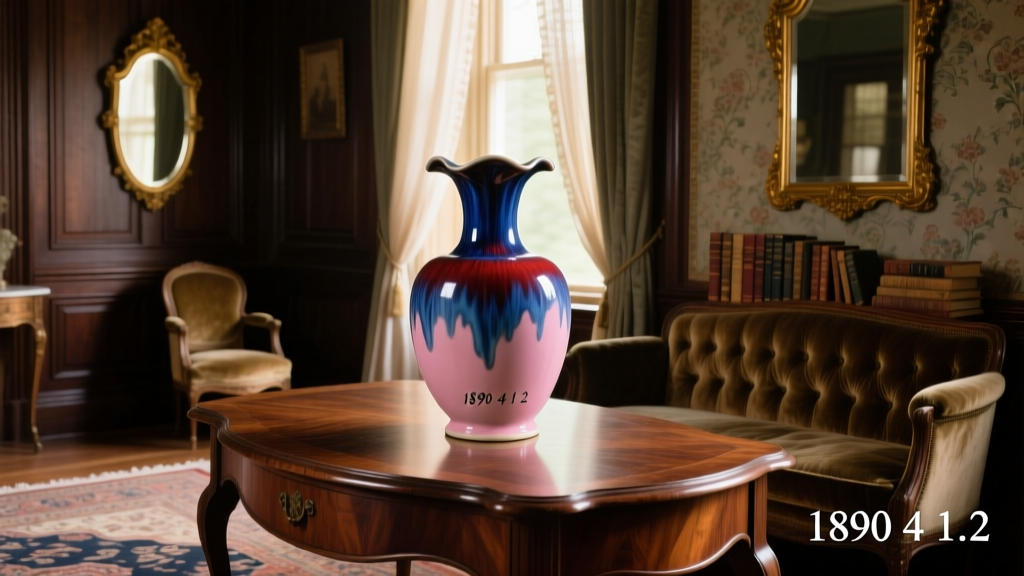
Ohr Vase: Blue-Red Mottled Glaze on Pink Ground with Turned-Out Lip, Marked '1890', 4½ Inches Tall — A Technical & Historical Analysis
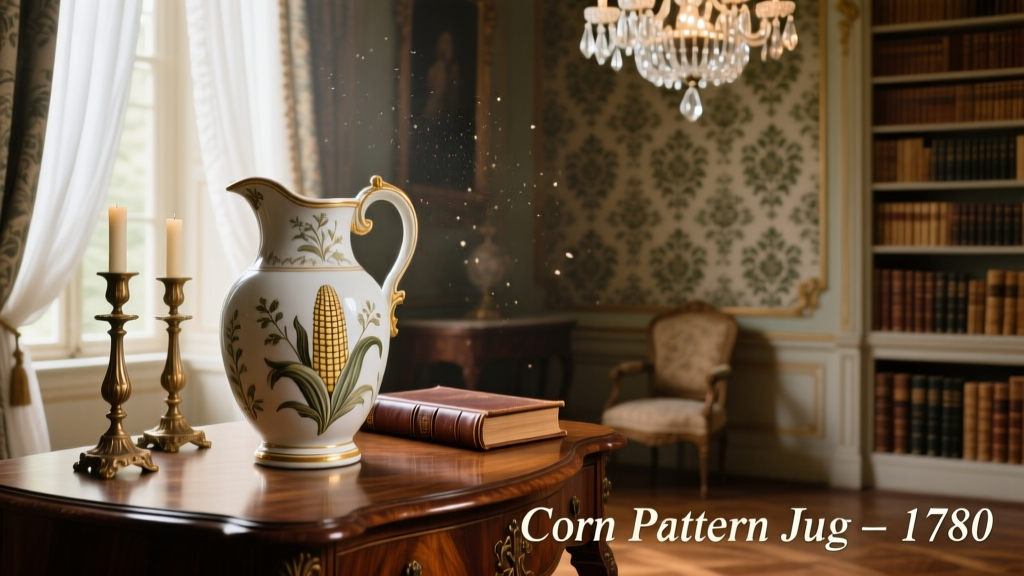
The Jug With Corn Pattern: History, Identification, and Conservation of a Quintessential American Folk Pottery Motif