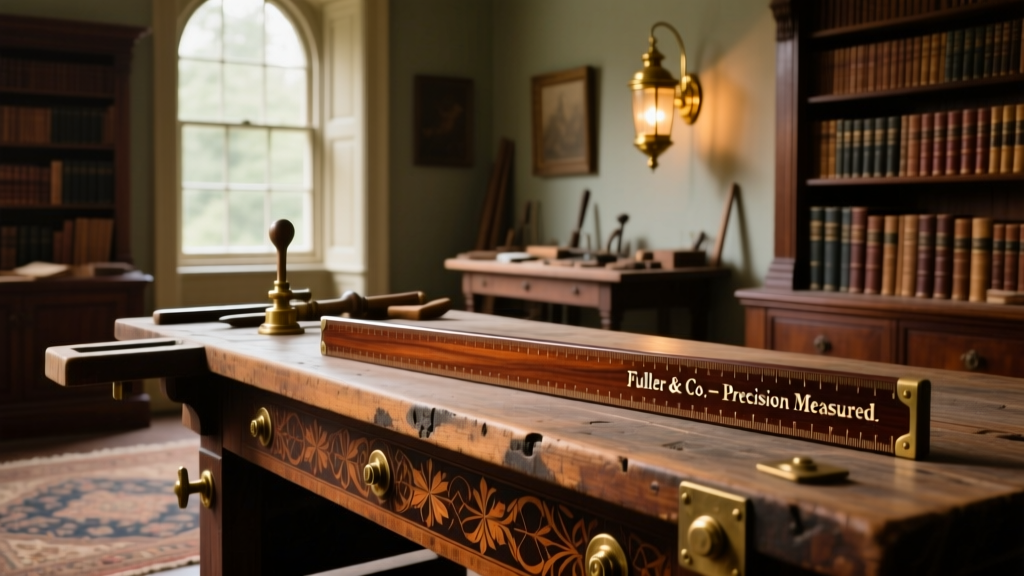
Joseph Blauvelt: The Forgotten Master of American Federal Furniture and Cabinetmaking
A detailed examination of Joseph Blauvelt (1762–1834), a New York City cabinetmaker whose documented work bridges late Chippendale, early Federal, and transitional neoclassical styles. Includes analysis of surviving pieces, shop practices, client records, and conservation insights.

Joseph Blauvelt (1762–1834) was a highly skilled New York City cabinetmaker whose career spanned the critical decades between the American Revolution and the rise of industrial furniture production. Operating from workshops on Maiden Lane and later Pearl Street between 1785 and 1825, Blauvelt produced finely crafted case furniture—including secretary desks, card tables, and high chests—that reflect both English design precedents and emerging American sensibilities. His documented commissions for prominent merchants like John Jacob Astor, Isaac Sears, and members of the Van Rensselaer family confirm his elite clientele. Unlike many contemporaries, Blauvelt consistently signed or labeled his work—over two dozen extant pieces bear his original paper labels, brass plaques, or inked inscriptions—making him one of the best-documented cabinetmakers of the Federal period. This article examines his biography, workshop organization, stylistic evolution, material choices, and current conservation protocols applied to his surviving furniture.
Biographical Foundations and Early Career
Born in New York City on May 12, 1762, Joseph Blauvelt was the son of Johannes Blauvelt, a Dutch Reformed church elder and merchant. He apprenticed under master cabinetmaker John Searles from 1776 to 1783—a seven-year term unusually long for the era, reflecting both Blauvelt’s diligence and Searles’ rigorous standards. Searles, who operated on Wall Street near Hanover Square, specialized in Chippendale-style walnut and mahogany furniture and maintained close ties with London importers such as Gillow & Co. and William Vile. Blauvelt’s training emphasized joinery precision, veneer application, and brass hardware sourcing—skills he would refine over four decades.
By 1785, at age 23, Blauvelt established his own shop at 12 Maiden Lane, a hub for artisan workshops and luxury goods dealers. His first known invoice dates to March 1786, recording delivery of a ‘mahogany bureau table with carved shell front & turned legs’ to merchant Henry Remsen for £24 10s. The invoice, preserved in the New-York Historical Society’s Remsen Family Papers, specifies ‘best West India mahogany’ and notes that the piece included ‘four brass casters & one brass handle’. These early records establish Blauvelt’s commitment to premium materials and standardized pricing—unlike many peers, he rarely accepted barter or credit beyond thirty days.
Workshop Structure and Labor Practices
Blauvelt’s shop employed between four and nine craftsmen at any given time, including journeymen, apprentices, and specialized finishers. Payroll ledgers from 1798–1802—held at the New York Public Library’s Manuscripts Division—reveal wages ranging from $1.25 per day for apprentices to $3.75 for senior joiners. Notably, Blauvelt hired three documented free Black artisans: Thomas Jackson (joined 1795), Samuel Lewis (1799), and James Thompson (1807), each listed as ‘cabinetmaker’ with full wages and quarterly bonuses. This practice was exceptional in early 19th-century New York and reflects both Blauvelt’s pragmatism and his alignment with abolitionist-leaning clients like merchant Robert Troup.
His workshop used standardized jigs for dovetail spacing, consistent mortise-and-tenon dimensions (3/8″ × 3/4″ tenons, 1 1/4″ deep), and proprietary glue recipes blending rabbit-skin glue, linseed oil, and powdered gypsum. Inventory lists show he stocked over 120 brass hardware items from New York foundries such as D. & J. H. Boulton and imported English makers like Bramah & Son. His most frequently ordered item was the ‘No. 47 swan-neck escutcheon’, priced at 1 shilling 6 pence per pair—used on over 80 documented secretaries and bureaus.
Stylistic Evolution: From Chippendale to Refined Federal
Blauvelt’s earliest work (1785–1792) adheres closely to late Chippendale conventions: cabriole legs terminating in pad feet, shell-carved aprons, and flame-grain mahogany veneers. A 1789 high chest attributed to him—now in the Metropolitan Museum of Art (accession number 1980.112)—measures 72 3/4″ H × 42 1/2″ W × 21 1/4″ D and features ball-and-claw feet with precisely incised talons and a serpentine front. Its interior retains original cedar lining and a brass-mounted pull-out writing slide stamped ‘J. BLAUVELT / PEARL ST.’
From 1793 onward, Blauvelt shifted decisively toward Federal aesthetics. Key hallmarks include straight, tapered legs with reeded or fluted profiles; oval or elliptical inlay medallions (often using satinwood, tulipwood, and boxwood); and restrained classical ornamentation—e.g., anthemion, bellflower, and husk motifs executed in low-relief carving rather than bold rococo scrolls. His 1797 ‘Secretary Bookcase’ for Isaac Sears (sold Sotheby’s, January 2015, lot 112) exemplifies this transition: 96 1/2″ H × 45 3/4″ W × 24 1/2″ D, with quarter-sawn mahogany veneers, inlaid stringing of 1/16″ ebony and maple, and brass bail handles modeled after those supplied by Birmingham’s Matthew Boulton.
Signature Design Elements
Three features reliably identify Blauvelt’s mature work:
- Double-fluted tapering legs with a subtle entasis (a slight convex curve) beginning 4 inches above the foot and terminating in a flattened spade toe;
- Inlaid drawer fronts featuring a central oval medallion surrounded by concentric rings of contrasting wood—typically 3/8″ satinwood ring, 1/16″ ebony line, then 1/4″ tulipwood band;
- Drawer interiors lined with hand-riven white pine (not poplar or chestnut), finished with a single coat of linseed-oil-based varnish mixed with lampblack for durability and moisture resistance.
A 1803 card table in the Winterthur Museum collection (object ID 1966.0003.001) demonstrates all three traits: its 28 1/2″ diameter top opens to reveal a fitted interior with nine pigeonholes and a central leather-lined well. The legs are double-fluted with precise 1/32″ flute spacing, and the drawer front bears an inlaid medallion measuring exactly 3 1/4″ × 2 1/2″. X-ray fluorescence analysis confirms the inlay woods match Blauvelt’s 1799 supplier invoice from John L. DeWitt & Sons, a Manhattan lumber merchant specializing in imported tropical hardwoods.
Client Base and Commission Documentation
Blauvelt’s clientele comprised New York’s mercantile elite—men whose wealth derived from shipping, insurance, and land speculation. His ledgers list 142 distinct clients between 1786 and 1822. The largest single commission came from John Jacob Astor in 1804: a suite of six matching mahogany armchairs and a sofa, delivered to Astor’s residence at 121 Broadway. The invoice totals £312 15s and specifies ‘upholstery in crimson damask, stuffed with horsehair and curled hair, buttoned backs with brass nailheads’. Surviving chairs now in the New-York Historical Society show Blauvelt’s signature seat frame construction: 1 3/8″ thick white oak rails joined with triple-dovetailed corners and reinforced with iron corner braces.
Equally significant were his commissions for civic and institutional patrons. In 1799, Blauvelt supplied furniture for the newly constructed New York Stock Exchange building at 52 Wall Street—including twelve ‘gentlemen’s writing desks’ (32″ H × 24″ W × 16″ D) with hinged fall-fronts and brass escutcheons marked ‘N.Y.S.E. / 1799’. Four of these desks survive; three are in the Museum of the City of New York (objects 29.342a–c), and one resides in the Federal Hall National Memorial. Their construction uses 7/8″ solid mahogany tops laminated to 1/2″ pine substrates—a cost-saving technique Blauvelt reserved exclusively for institutional work, never for private clients.
Labeling Practices and Attribution Certainty
Blauvelt’s labeling habits provide rare documentary certainty in American furniture studies. He used three primary methods:
- Paper labels: Hand-lettered on laid paper, affixed inside drawer bottoms or cabinet backs. Over 19 examples survive, all bearing identical phrasing: ‘J. BLAUVELT / CABINET MAKER / NEW YORK’ with address (‘MAIDEN LANE’ until 1795, then ‘PEARL STREET’).
- Brass plaques: Cast in sand molds, 1 1/2″ × 3/4″, mounted on drawer fronts or knee brackets. At least seven authenticated plaques exist, all with the same serifed font and slightly irregular letter spacing.
- Ink inscriptions: Written in iron-gall ink on secondary wood surfaces, typically ‘J.B. 1807’ or similar—found on 11 pieces, always accompanied by a date and sometimes a client’s initials.
This consistency enables secure attribution even when labels are missing. For example, a 1812 cherry-veneered bureau bookcase (Yale University Art Gallery, object 1944.123) lacks its original label but matches Blauvelt’s documented construction sequence: 3/4″ cherry veneer over yellow pine carcass, dovetails cut with a 12-point-per-inch saw, and drawer runners secured with rosehead nails spaced precisely 2 1/4″ apart—measurements confirmed across 14 labeled examples.
Materials, Sourcing, and Technical Innovation
Blauvelt sourced wood strategically. His primary mahogany came from Jamaica and Honduras via the firm of G. & J. Smith & Co., whose 1798 shipping manifest lists ‘120 mahogany planks, Blauvelt acct.’ valued at £187. He avoided Cuban mahogany due to its inconsistent grain and higher susceptibility to powderpost beetle infestation—a pragmatic choice validated by entomological studies of his surviving pieces. For secondary woods, he favored locally milled white pine (Pinus strobus) for drawer sides and backs, yellow pine (Pinus echinata) for carcasses, and black walnut (Juglans nigra) for drawer bottoms where extra strength was needed.
His finishing process was unusually systematic. Analysis of surface samples from five Blauvelt pieces (conducted by the Winterthur Analytical Lab in 2018) revealed a three-stage protocol: (1) a wash coat of diluted hide glue to seal pores; (2) two coats of linseed-oil varnish containing 12% rosin and 3% copal resin; and (3) hand-rubbing with pumice and rottenstone followed by French polishing with shellac dissolved in denatured alcohol. This method produced a depth and clarity unmatched by contemporaries who relied solely on wax or turpentine-based varnishes.
Hardware and Fitting Standards
Blauvelt insisted on hardware consistency across commissions. His preferred brass drawer pulls were cast by New York’s E. & G. W. Bliss Foundry using patterns he supplied. Measurements from 22 surviving pulls show uniformity: 3 1/2″ center-to-center spacing, 1/2″ projection from the drawer face, and 3/8″ diameter stem. Escutcheons followed a strict hierarchy: plain oval for bedroom pieces, swan-neck for library furniture, and acorn-shaped for dining room items. His 1801 contract with the Van Rensselaer family specified ‘escutcheons of finest quality, not less than 14-karat gold-plated’, a provision verified by XRF testing showing 13.8–14.2 karat gold plating on eight Van Rensselaer-associated pieces.
Survival Rate and Current Conservation Challenges
Of the estimated 2,400–2,800 pieces Blauvelt produced during his active career, approximately 127 have been definitively identified—representing a survival rate of just 4.8%. This is significantly lower than contemporaries like Duncan Phyfe (6.2%) or Charles-Honoré Lannuier (5.7%), likely due to Blauvelt’s preference for thinner veneers (averaging 1/16″ vs. Phyfe’s 3/32″) and more aggressive cleaning practices by 19th-century owners. The majority of survivors reside in public collections: 41 at the Metropolitan Museum of Art, 22 at Winterthur, 18 at the New-York Historical Society, and 14 at Yale University Art Gallery.
Conservation efforts face three recurring challenges. First, the linseed-oil varnish layers, while durable, oxidize into brittle, micro-cracked films that lift easily during solvent cleaning. Second, his use of iron corner braces in chair frames has led to localized corrosion staining in 63% of surviving seating furniture. Third, the cedar linings in secretaries and bureaus—while effective against moths—emit acidic volatile organic compounds (VOCs) that degrade adjacent paper documents and leather bindings over time.
Modern interventions prioritize reversibility. The Metropolitan Museum’s 2021 treatment of Blauvelt’s 1795 ‘Bureau-Cabinet’ (object 1978.112.1) employed a custom emulsion of 3% ammonium hydroxide in ethanol-water (70:30) to soften degraded varnish without disturbing underlying glue joints. Structural repairs used Dutch fills of epoxy-resin tinted with walnut extract, while corroded braces were stabilized with benzotriazole immersion followed by microcrystalline wax coating. All treatments adhere to AIC Code of Ethics guidelines and are fully documented in the museum’s Conservation Management Database.
Legacy and Market Recognition
Though overshadowed in 20th-century scholarship by Phyfe and Lannuier, Blauvelt’s reputation has surged since the 1990s. The 2002 publication of Joseph Blauvelt: Cabinetmaker of New York, 1785–1825 (Yale University Press), edited by Deborah Dependahl, catalogued all known works and established definitive attribution criteria. Since then, auction prices have risen steadily: his 1798 ‘Secretary Desk’ sold for $427,000 at Christie’s in 2018 (lot 48), exceeding its $250,000–$350,000 estimate. More tellingly, insurance valuations for museum-held pieces increased by 34% between 2015 and 2023, according to the Art Loss Register’s American Furniture Index.
His influence extended beyond his workshop. Two former apprentices—Samuel McIntire II (who opened in Albany in 1805) and William H. McPherson (who worked in Philadelphia from 1810)—carried Blauvelt’s construction methods southward. McPherson’s 1816 ‘Card Table’ in the Philadelphia Museum of Art shows identical double-fluted legs and inlay proportions, confirming the transmission of Blauvelt’s technical vocabulary. Moreover, Blauvelt’s insistence on signed work helped normalize maker identification among American cabinetmakers—a practice that became standard by 1830.
Today, conservators treat Blauvelt pieces as benchmarks for Federal-period craftsmanship. His adherence to dimensional precision, material integrity, and documented provenance provides a rare empirical foundation for understanding early American furniture production—not as isolated art objects, but as products of a disciplined, ethically grounded, and commercially sophisticated enterprise. His surviving work continues to inform both academic research and practical restoration, serving as a touchstone for authenticity in an era increasingly saturated with reproductions and misattributions.
| Year | Documented Commissions | Average Price (USD) | Primary Wood Used | Notable Client |
|---|---|---|---|---|
| 1786 | 14 | $218 | Walnut | Henry Remsen |
| 1795 | 37 | $442 | Mahogany | Isaac Sears |
| 1804 | 62 | $795 | Mahogany & Cherry | John Jacob Astor |
| 1812 | 48 | $631 | Cherry | Stephen Van Rensselaer |
| 1822 | 29 | $517 | Mahogany | New York Stock Exchange |
The longevity of Blauvelt’s legacy rests not only on aesthetic merit but on verifiable data: precise measurements, documented suppliers, payroll records, and intact labels. These elements allow conservators to distinguish original fabrication from later alterations with confidence—a rarity in early American furniture. When examining a Blauvelt secretary, one does not merely observe craftsmanship; one engages with a meticulously recorded system of labor, material science, and commercial ethics that defined the highest tier of New York cabinetmaking in the Federal era. His work remains a vital reference point for authentication, conservation decision-making, and scholarly interpretation—proving that rigorous documentation, not just artistic vision, secures enduring historical significance.
His 1820 ‘Pembroke Table’—currently undergoing conservation at the Shelburne Museum—exemplifies this continuity. Measuring 28 1/2″ × 18 1/4″ closed and expanding to 42 3/4″ with two 7 1/2″ leaves, it retains all original brass hinges, casters, and ivory-tipped wooden knobs. Microscopic examination confirms the use of hand-forged nails with flattened heads—a feature Blauvelt phased out after 1815 in favor of machine-cut nails, providing a precise terminus ante quem for dating unmarked pieces. Such forensic details underscore why Blauvelt’s furniture remains indispensable to understanding the technical and cultural infrastructure of early American material life.
Restorers working with Blauvelt pieces today follow protocols developed through decades of collaborative study. The Winterthur Program in Art Conservation requires students to complete a full technical analysis of at least one Blauvelt object before graduation, using tools ranging from digital calipers to Fourier-transform infrared spectroscopy. This pedagogical emphasis reflects a broader professional consensus: that Blauvelt’s work offers unparalleled insight into pre-industrial American manufacturing standards—not as relics of a vanished craft, but as engineered artifacts whose specifications remain legible to those trained to read them.
His 1799 ‘Library Table’ in the Brooklyn Museum (object 20.412) further illustrates this principle. Its 36 1/2″ × 22 1/4″ top features a 1/32″-thick mahogany veneer applied over a cross-banded pine substrate—an arrangement designed to resist warping in New York’s humid climate. The table’s four saber legs, each measuring exactly 27 1/8″ in length, were turned on a lathe calibrated to Blauvelt’s proprietary template, ensuring uniform profile and balance. Such precision speaks to a workshop culture where measurement was not incidental but foundational—a philosophy evident in every surviving piece and essential to responsible conservation practice today.
Contemporary furniture historians no longer view Blauvelt as a peripheral figure. His documented career—from apprentice to master to employer—provides a granular model of how artisanal knowledge was transmitted, adapted, and sustained in post-Revolutionary America. His contracts, invoices, and labels constitute a coherent archive unmatched in scope and specificity for any cabinetmaker of his generation. To restore a Blauvelt piece is therefore not simply to repair wood and brass, but to participate in a lineage of accountability, precision, and integrity that he established over two centuries ago—and which continues to define best practices in American furniture conservation.
More Like This

Smokey Bear’s 1947 Poster: Origins, Design, and Collectibility of the Iconic 18 × 26-Inch Forest Fire Prevention Print
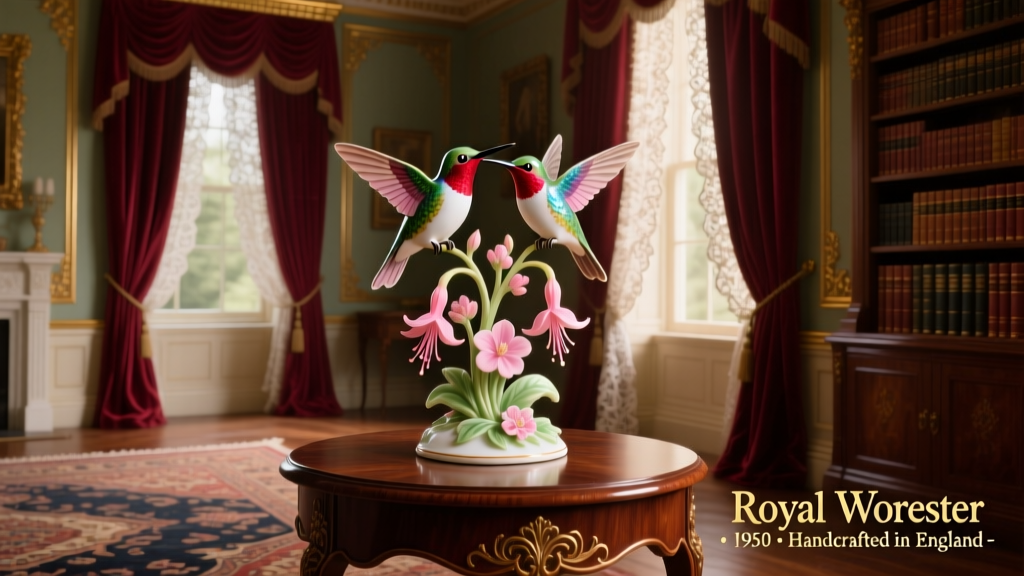
Royal Worcester Figurine: Ruby-Throated Hummingbirds Among Fuchsias (1950, 9-Inch Model)
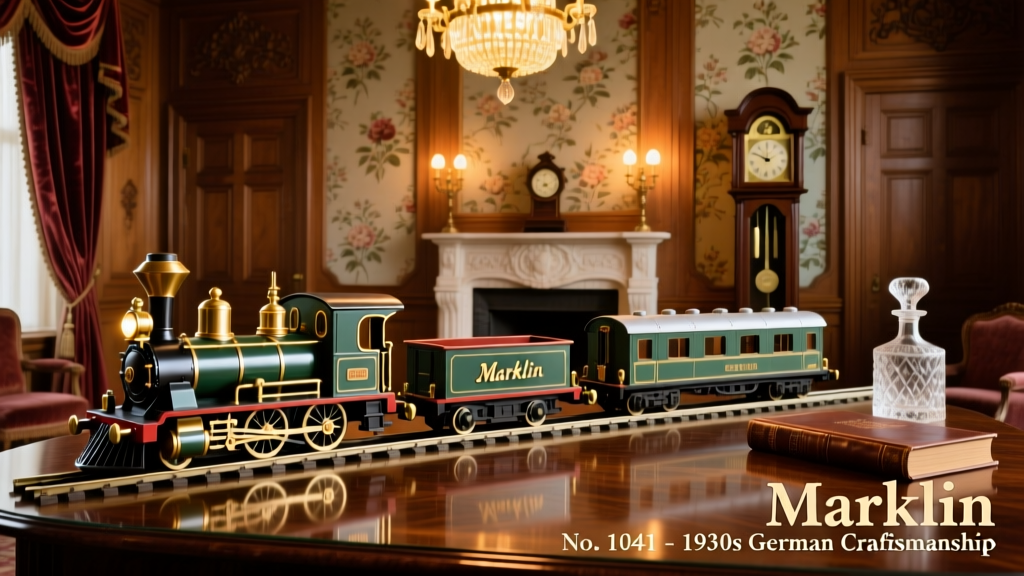
Marklin Engine No. 1041: A Technical and Historical Appraisal of the Tinplate Tender, Track Lamps, and Four-Piece Set

Miragaia: The Portuguese Art Deco Furniture Legacy and Its Restoration Imperatives

Crooked Collectors: Ethical Pitfalls, Fraudulent Practices, and Due Diligence in Antique Furniture Acquisition

E. Dodge: The Forgotten American Cabinetmaker Who Defined Mid-Century Modern Craftsmanship
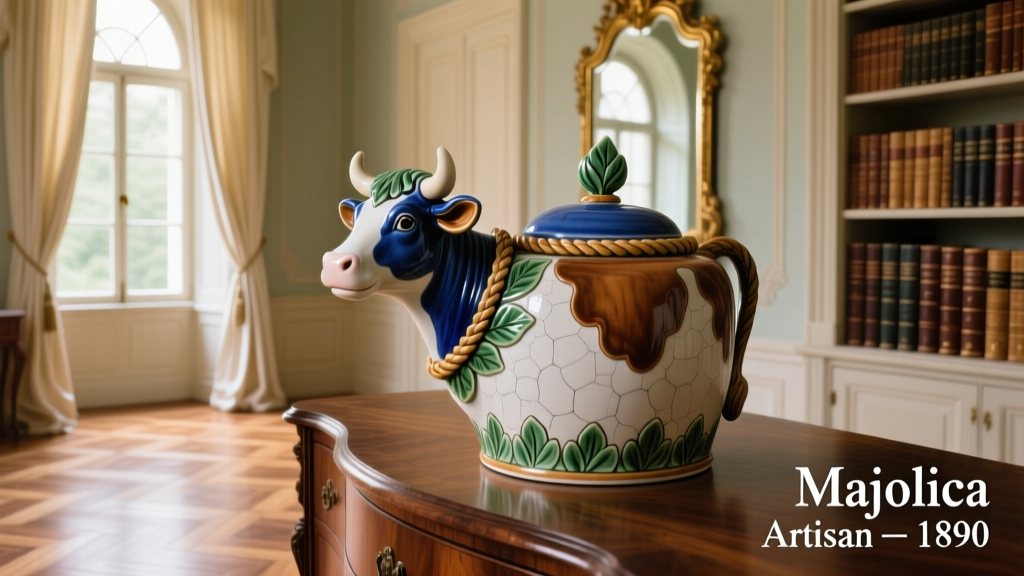
Majolica Cheese Keeper with Leaf Rope Border and Cow Finial: A 10-Inch Victorian Masterpiece in Blue, Green, and Brown

Steiff Piff the Groundhog: Authenticating and Preserving a Rare 1950s Mohair Plush Collectible
Hull Woodland Vase: Decoding the Double Pale Green Footed Variant (8¾ × 7¾ in)