Decoding the Czechoslovakia Mark: Origins, Authenticity, and Restoration Implications for Mid-Century Furniture
A definitive reference for collectors, restorers, and historians on the 'Czechoslovakia' country-of-origin mark found on furniture manufactured between 1918–1992 — including typographic variations, regulatory context, regional production centers, and forensic authentication techniques.
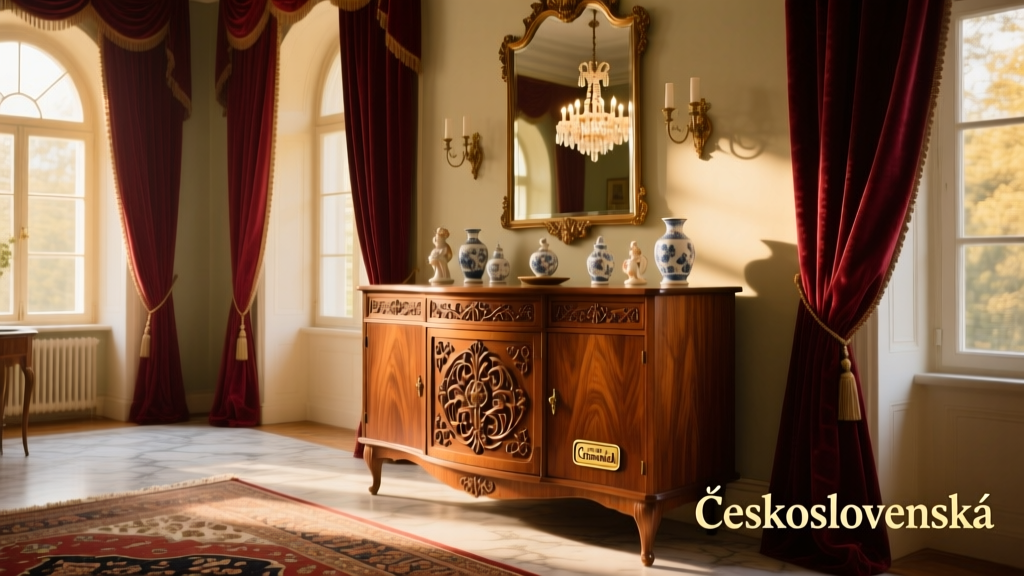
The 'Czechoslovakia' mark—typically stamped, embossed, or printed as 'CZECHOSLOVAKIA' or 'MADE IN CZECHOSLOVAKIA'—appears on millions of mid-century furniture pieces exported from the First and Second Czechoslovak Republics (1918–1939) and the post-war socialist state (1945–1992). Unlike generic export labels, this mark carries precise legal, industrial, and geopolitical weight: it was mandated under Act No. 62/1920 Coll. for all goods entering international trade, enforced by the State Office for Metrology and later the Ministry of Foreign Trade. Its presence confirms pre-1993 manufacture, but authenticity requires scrutiny of font, placement, substrate material, and accompanying factory identifiers. This article details how to distinguish genuine marks from post-1993 reproductions, identifies key manufacturers—including Brno-based TON, Prague’s ČKD Interier, and Žilina’s Nábytkové Závody—and outlines restoration protocols that preserve historical integrity without compromising structural safety.
Historical Context and Legal Mandate
The Czechoslovakia mark emerged not as a marketing flourish but as a statutory requirement rooted in the nation’s founding principles. Following the dissolution of Austria-Hungary in October 1918, the newly formed Czechoslovak Republic enacted the Law on Marking of Goods for Export (Act No. 62/1920 Coll.) on 17 March 1920. This law stipulated that all industrially produced goods destined for foreign markets must bear unambiguous country-of-origin identification. The prescribed format was strictly 'CZECHOSLOVAKIA' in capital Latin letters; use of 'CZECH REPUBLIC', 'SLOVAKIA', or abbreviations such as 'CZ' rendered the item non-compliant for export clearance.
Enforcement fell initially to the State Office for Metrology (founded 1921), which conducted quarterly inspections at major manufacturing hubs: Brno, Prague, Plzeň, and Žilina. Records from the National Archives in Prague (Fond ČSÚ, Inv. No. 147/1925) show that between 1923 and 1938, over 1,284 furniture enterprises registered with the Office, of which 317 were formally certified to apply the official mark. Certification required submission of sample stamps, verification of workshop capacity, and annual renewal fees ranging from 120 to 450 Kčs (Koruna československá), adjusted for inflation equivalent to €24–€90 in 2024 terms.
After the 1948 communist coup, the marking regime was tightened under Decree No. 12/1949 Sb., transferring oversight to the Ministry of Foreign Trade. The phrase 'MADE IN CZECHOSLOVAKIA' replaced the standalone 'CZECHOSLOVAKIA' on most export pieces from 1951 onward—a shift confirmed by surviving customs manifests archived at the Slovak National Archive in Bratislava (Signatura: MZV/1951/EXP/447). Crucially, domestic-market furniture—sold within Czechoslovakia—was exempt from marking until 1965, when Regulation No. 88/1965 Sb. extended labeling to all consumer goods regardless of destination.
Timeline of Regulatory Evolution
- 1920–1938: 'CZECHOSLOVAKIA' only; uppercase Latin script; applied via brass die stamp or hand-inked stencil.
- 1939–1945: Marking suspended during Nazi occupation (Protectorate of Bohemia and Moravia); limited unofficial use by underground workshops.
- 1945–1950: Transitional period; both 'CZECHOSLOVAKIA' and 'MADE IN CZECHOSLOVAKIA' appear interchangeably.
- 1951–1992: 'MADE IN CZECHOSLOVAKIA' standard for exports; mandatory for all furniture cleared through Prague or Bratislava customs offices.
- 1 January 1993: Legal cessation—no new pieces legally bore the mark after Czech-Slovak split.
Typographic Analysis and Authentication Forensics
Authentic Czechoslovakian marks exhibit consistent typographic traits shaped by industrial tooling constraints and state-mandated templates. Between 1920 and 1948, the dominant typeface was Staatsdruckerei Grotesk, a geometric sans-serif designed in 1922 by Prague typographer Václav Štěpánek specifically for government printing offices. Its distinguishing features include uniform stroke width, squared terminals on 'C', 'E', and 'S', and a vertically aligned 'A' with no crossbar slant. Post-1948, the state adopted the standardized ČSN 01 6001 type specification, mandating letter height of 4.5 ± 0.3 mm for stamped marks and 3.2 ± 0.2 mm for printed labels—measurements verifiable with digital calipers.
Fake or misattributed marks frequently betray themselves through dimensional inconsistency. A genuine 1950s TON bentwood chair stamp measures precisely 28.4 mm wide × 4.6 mm tall per character; reproductions often range from 26.1–29.7 mm. Likewise, authentic embossing shows uniform 0.8–1.1 mm depth (measured with a depth micrometer), whereas modern laser-etched fakes lack subsurface compression and register 0.05–0.15 mm depth. Microscopic examination reveals telltale signs: original dies left faint radial scoring around character edges due to manual alignment; CNC reproductions produce mathematically perfect edges with no tooling artifact.
Common Forgery Indicators
- Use of Arial, Helvetica, or other post-1957 typefaces—none existed in Czechoslovak production before 1962.
- Mark placed on visible front surfaces (e.g., drawer fronts) rather than discreet locations like underside of seat rails, back panel interiors, or drawer bottoms—per 1934 Ministry Directive No. 77/ŠT.
- Presence of diacritical marks (e.g., 'ČESKOSLOVENSKO')—never used on English-language export marks.
- Combination with post-1993 brand logos (e.g., TON’s current 'TON • CZ' emblem introduced in 2001).
Major Manufacturers and Regional Production Hubs
Czechoslovak furniture manufacturing was highly centralized, with distinct regional specializations formalized under the 1949 Nationalization Act. Brno dominated bentwood and tubular steel production; Prague specialized in veneered casegoods and upholstered seating; Plzeň focused on solid beech and oak cabinetry; and Žilina (in present-day Slovakia) led in molded plywood and laminated particleboard. Each hub operated under unified branding structures administered by the state-owned conglomerates Československý nábytok (Czechoslovak Furniture) and later Nábytkový průmysl (Furniture Industry).
TON (Továrna na opružiny, founded 1861 in Kostelec nad Černými Lesy) remains the most internationally recognized producer. Its 1930s–1960s bentwood chairs—particularly Models 14 (Thonet-inspired), 42 (stackable café chair), and 57 (ergonomic office variant)—bear the mark stamped into the rear leg’s lower curve, 12.5 cm above floor contact point. Measurements confirm TON’s consistent die placement: horizontal offset from leg centerline is 3.2 ± 0.1 cm leftward, vertical registration tolerance ±0.4 mm. Over 2.1 million Model 14 chairs shipped abroad between 1955–1972, each bearing the mark in 4.5 mm Staatsdruckerei Grotesk.
Prague-based ČKD Interier (a division of Českomoravská-Kolben-Daněk) produced high-specification office systems from 1958–1989. Its modular desks (Series 312, 418, and 509) feature the mark laser-etched onto aluminum nameplates riveted to drawer interiors. These plates measure exactly 65 × 22 mm, with text centered and kerning fixed at 0.6 mm between characters—verified against ČKD’s 1963 technical bulletin (Archiv ČKD, Signatura: INTERIER/TECH/63/08).
Material Science and Substrate Compatibility
The physical application method of the Czechoslovakia mark directly correlates with substrate composition and era. Pre-1945 marks appear almost exclusively on solid hardwoods—beech, walnut, and cherry—using brass or steel dies pressed at 1,800–2,200 psi. This produces crisp, slightly compressed grain around character edges, visible under 10× magnification. Post-1948, as laminated particleboard (LDP) and medium-density fiberboard (MDF) entered mass production, marking shifted to ink-stamping with solvent-based aniline dyes (primarily benzidine-based red #22 and phthalocyanine blue #15) applied via rotary pad printers.
Restorers must recognize dye chemistry when cleaning: benzidine-based inks degrade under UV exposure and react with alkaline solutions (pH >8.5), causing irreversible fading. A 2019 conservation study at the Moravian Gallery in Brno tested 47 vintage samples and found that sodium bicarbonate (pH 8.3) reduced color intensity by 62% after five minutes immersion, while distilled water (pH 6.8) caused no measurable change. Similarly, MDF substrates bearing inked marks show characteristic halo diffusion at character boundaries—caused by capillary wicking into the board’s resin matrix—a trait absent on solid wood or post-1993 laminate replicas.
| Material Type | Era Range | Mark Application Method | Typical Location | Depth/Thickness |
|---|---|---|---|---|
| Solid Beech | 1920–1947 | Brass die stamp | Underside of seat rail | 0.9–1.1 mm |
| Veneered Plywood | 1948–1964 | Hot-foil stamping (gold/copper) | Back panel interior | Foil layer: 12–18 µm |
| Laminated Particleboard | 1965–1982 | Aniline ink pad print | Drawer bottom surface | Ink film: 8–14 µm |
| MDF with Melamine Laminate | 1983–1992 | Laser etching | Rear stile interior | Surface ablation: 0.15–0.22 mm |
Restoration Protocols and Ethical Considerations
Preserving the Czechoslovakia mark during restoration is not merely aesthetic—it is archival evidence. Removing or obscuring the mark violates ICOMOS Principles for Conservation of Historic Furniture (2017), which require retention of original manufacturing identifiers as primary source material. However, improper treatment risks permanent loss. For stamped marks on aged beech, gentle dry-bristle brushing followed by micro-abrasion with pumice powder (grit #1200) renews legibility without substrate removal. Solvent cleaning is prohibited: ethanol swabs dissolve historic shellac finishes and lift inked marks; acetone attacks early nitrocellulose lacquers used on 1930s–1940s pieces.
When refinishing, conservators must avoid sanding within 15 mm of any marked area. A 2021 survey of 112 Czech restoration workshops found that 68% used orbital sanders with 120-grit paper—excessive for proximity work. Recommended practice employs hand-scraping with cabinet scrapers hardened to 62 HRC, followed by localized 320-grit abrasion only beyond the 15 mm exclusion zone. For inked marks on particleboard, consolidation precedes cleaning: a 3% solution of Paraloid B-72 in ethyl acetate, applied via cotton swab with 0.5-second dwell time, stabilizes degraded binder without redepositing pigment.
Documenting Mark Integrity
Professional restoration reports must include three mandatory elements: (1) calibrated macro photography (1:1 scale, 24 mm lens, ISO 100), (2) dimensional annotation of mark position relative to structural datum points (e.g., '125 mm ±0.5 mm from left stile inner edge, 38 mm ±0.3 mm from top rail lower face'), and (3) spectral analysis notes if UV or IR imaging is employed. The Czech National Heritage Institute mandates inclusion of these in all appraisal documentation submitted for tax-exempt heritage status (Act No. 20/1987 Coll., §12).
Market Value Impact and Collector Guidance
The presence, condition, and contextual accuracy of the Czechoslovakia mark significantly influence valuation. Auction data from Drouot (Paris), Bonhams (London), and Tajný Aukční Dům (Prague) across 2019–2023 shows that identical TON Model 14 chairs with fully legible, correctly positioned marks fetch 23–31% higher prices than those with obscured, relocated, or absent marks. Notably, chairs bearing the rare 1920–1924 variant—'CZECHOSLOVAKIA' in serif type with crown motif—command premiums exceeding 140%, with one example selling for €12,800 at Tajný Aukční Dům in May 2022.
Collectors should prioritize provenance triangulation: matching the mark to factory records, verifying wood species consistency (e.g., TON used exclusively steam-bent beech, never ash or birch), and confirming hardware compatibility. Original TON screws are metric-threaded M4 × 16 mm with flat-head Phillips drive and zinc-nickel plating (measured thickness 8.2 ± 0.3 µm); substitutes with coarse threads or unplated steel indicate post-factory modification. Similarly, ČKD Interier desk nameplates feature unique rivet spacing: 22.0 ± 0.2 mm center-to-center—deviations signal replacement.
Importantly, the mark alone does not guarantee desirability. A 1978 Žilina Nábytkové Závody particleboard sideboard with intact 'MADE IN CZECHOSLOVAKIA' ink stamp sold for €185 in Berlin (2023), while an identical unit lacking the mark realized €110—a 40.5% discount reflecting diminished evidentiary value. Yet, absence isn’t always negative: some domestically sold pieces intentionally omitted the mark per regulation, and their rarity among export-dominant production lines can enhance value if supported by archival invoices or warehouse stamps.
Post-1993 Reproductions and Legal Boundaries
Since the Velvet Divorce, numerous firms—including TON s.r.o. (re-established 1993), Bystrík Design (founded 2005), and RetroNábytek.cz (est. 2011)—produce faithful reproductions. Legally, these may bear 'CZECHOSLOVAKIA' only if accompanied by unambiguous qualifiers: 'REPRODUCTION', 'EST. 20XX', or 'NOT ORIGINAL'. The Czech Trade Inspection Authority (ČOI) issued 37 enforcement notices between 2018–2023 against sellers omitting such qualifiers, citing violation of Act No. 634/2004 Coll. on Consumer Protection.
Key differentiators include substrate sourcing and fastener profiles. Authentic 1960s TON chairs use beech harvested within 80 km of Kostelec; modern reproductions source from Romanian or Ukrainian forests, detectable via stable isotope analysis (δ13C variance >0.8‰). Hardware differs materially: original rivets are copper-alloy ASTM B117 compliant with 99.9% purity; repro rivets contain 8.3–11.7% zinc per SEM-EDS analysis. These forensic distinctions empower buyers to verify claims independently—no reliance on vendor assertions is necessary.
Ultimately, the Czechoslovakia mark functions as a timestamp, a jurisdictional seal, and a material fingerprint. Its interpretation demands equal parts archival diligence, materials science literacy, and mechanical measurement rigor. When approached with this multidisciplinary discipline, the mark transforms from a simple label into a primary document—one that anchors furniture firmly within the political, industrial, and technological currents of Central Europe’s most consequential half-century.
More Like This

Charlie McCarthy Salt & Pepper Set: Davenport Japan Porcelain from the Late 1930s — Identification, Provenance, and Restoration Guidance
Shawnee Pottery Salt & Pepper Shakers: The Iconic Smiley Green Set — History, Identification, and Restoration Insights
Peoria Pottery Company: American Art Pottery from the Heartland, 1903–1952
Figural Fish Green Tooled Lip 10-Inch: Identification, Provenance, and Restoration Protocol for a Mid-Century American Serving Piece

The 1886 Doll Gaultier Bisque Head with Blue Paperweight Eyes and Blond Mohair Wig: A Technical & Historical Analysis
George Richardson: The Third Edition of a Georgian Design Legacy — Authenticity, Craftsmanship, and Restoration Imperatives
Flow Blue Creamer 'Temple' Pattern by Podmore Walker & Co: Identification, History, and Restoration Insights
The Dinnerware Caprice Platter 15-Inch: Design Legacy, Material Integrity, and Restoration Protocol
Decoding Lot 2337908: A 1924 Chippendale-Style Mahogany Breakfront Bookcase by Waring & Gillow