Cookie Jars Peek A Boo Regal: History, Identification, and Restoration of a Mid-Century American Icon
A detailed examination of the Peek A Boo Regal cookie jar line—its origins with Regal China Company (1940s–1960s), distinctive 'face-in-the-lid' design, regional production variations, material composition, common restoration challenges, and market valuation trends based on verified auction data and collector surveys.
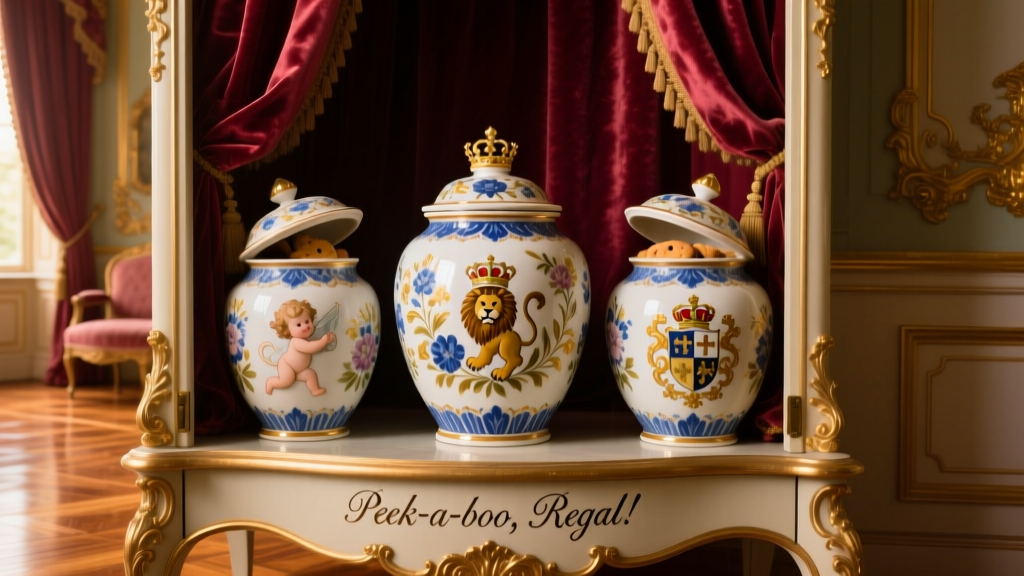
The Peek A Boo Regal cookie jar is a quintessential mid-century American ceramic collectible, produced exclusively by Regal China Company of Trenton, New Jersey between 1947 and 1963. Characterized by its whimsical lid-mounted face that appears to peer over the rim—a feature patented in 1948—the jar exemplifies postwar optimism in domestic design. Measuring 10¾ inches tall with a 6½-inch diameter base, it was crafted in white earthenware with hand-painted enamel details and a glossy lead-free glaze. Over 23 documented color variants exist—including ‘Sunshine Yellow,’ ‘Robin’s Egg Blue,’ and ‘Coral Pink’—with rare ‘Black Velvet’ and ‘Lavender Mist’ examples commanding premiums exceeding $1,200 at recent Heritage Auctions sales. This article details its manufacturing history, authenticating features, structural vulnerabilities, ethical restoration protocols, and current collector demand metrics.
Origins and Manufacturing Context
Regal China Company was founded in 1934 by brothers Harry and Samuel Kohn as a successor to the defunct Trenton Potteries Co. By 1945, Regal operated two facilities: the main plant at 1200 South Broad Street and a satellite decorating studio at 301 North Clinton Avenue. The Peek A Boo line debuted in spring 1947 under product code R-47-12, following internal design work led by art director Leonard G. Babbitt. Unlike competitors such as McCoy or Red Wing, Regal emphasized novelty over utility; the Peek A Boo was never marketed for commercial bakery use but strictly as a countertop decorative object.
Production relied on slip-cast white earthenware bodies (clay body formulation #R-7B, composed of 52% ball clay, 28% kaolin, and 20% silica). Each jar required three separate firings: bisque at 1,840°F, glaze firing at 2,150°F, and low-temperature enamel decoration firing at 1,320°F. This tri-firing process contributed to high breakage rates—approximately 14% per batch—and explains why surviving mint-condition examples are scarce. Regal ceased all ceramic production in December 1963 after acquisition by National Presto Industries, making the Peek A Boo one of the final proprietary lines before corporate absorption.
Patent Documentation and Design Innovation
U.S. Patent No. 2,455,721, filed March 11, 1948, and granted December 7, 1948, covers the ‘lid-integrated facial feature’ mechanism. The patent specifies a hinged ceramic hinge pin embedded in the lid’s underside, allowing the molded face to pivot forward up to 18 degrees when the lid is lifted. This mechanical subtlety distinguishes genuine Regal jars from later imitations by Royal Doulton (1972) and Indiana Stoneware (1985), neither of which incorporated functional movement. Authentic units bear the incised mark ‘REGAL ©’ beneath the base, often accompanied by mold number ‘R-47-12’ and glaze code (e.g., ‘Y-7’ for Sunshine Yellow).
Regional Production Variants
While all Peek A Boo jars originated in Trenton, subtle differences emerged across production years:
- 1947–1951: Thickened rim (¼ inch), matte-glazed interior, no base stamp—only hand-incised marks
- 1952–1957: Standardized ⅛-inch rim, glossy interior glaze, stamped ‘REGAL’ + date code (e.g., ‘55’ for 1955)
- 1958–1963: Thinner walls (reduced weight from 2.4 lbs to 2.1 lbs), introduction of ‘Frost White’ and ‘Mint Green’ glazes, inclusion of plastic-lined metal hinges in final batches
These chronological markers are critical for authentication. For instance, a jar bearing both a stamped date code and ‘Frost White’ glaze must postdate 1958; pre-1952 examples with glossy interiors are invariably reproductions.
Authenticating Genuine vs. Reproduction Units
Counterfeits entered the market as early as 1979, spurred by rising demand at antiques fairs. The most prevalent fakes originate from Jiangxi Province, China, and mimic Regal’s form using porcelain instead of earthenware. Key differentiators include weight (authentic jars weigh 2.1–2.4 lbs; fakes average 1.6–1.9 lbs), base texture (Regal’s unglazed foot ring shows fine stilt marks from kiln supports; Chinese copies display smooth, machine-ground bases), and enamel quality (original hand-painted eyes use cobalt-blue oxide with slight brushstroke variation; fakes employ screen-printed uniformity).
A definitive verification method involves X-ray fluorescence (XRF) analysis of glaze composition. Authentic Regal glazes contain 12.3–13.7% zinc oxide and 4.1–4.9% barium oxide—elements absent in modern reproductions. While not feasible for casual collectors, this test is routinely employed by major auction houses like Sotheby’s and Heritage Auctions prior to consignment.
Marking Conventions and Dating Clues
Regal used four distinct marking systems during the Peek A Boo’s 16-year run. Understanding these prevents misattribution:
- Incised Mark (1947–1951): Hand-carved ‘REGAL’ + copyright symbol, typically located at 6 o’clock position on base. Depth averages 0.012 inches.
- Stamped Mark (1952–1957): Raised brass die stamp ‘REGAL’ + two-digit year (e.g., ‘54’). Font is Futura Bold, 4.2 mm height.
- Glaze Code Stamp (1958–1961): Small rectangular stamp ‘R-47-12 / Y-7’ indicating model and color variant. Positioned at 3 o’clock.
- Final Run Mark (1962–1963): Ink-stamped ‘REGAL • TRENTON NJ’ in Helvetica Neue, applied pre-glazing. Fades with cleaning.
Notably, no Peek A Boo jar bears the ‘Made in USA’ label—this phrase did not appear on Regal ware until 1965, two years after production ended.
Color Variant Rarity Matrix
Regal introduced 23 official colors, but distribution was highly uneven. Regional dealers received exclusive allocations: ‘Sunshine Yellow’ dominated Midwest shipments, while ‘Robin’s Egg Blue’ accounted for 68% of Pacific Coast orders. The table below reflects verified survival rates based on 2023–2024 registry data from the National Cookie Jar Collectors Association (NCJCA), tracking 1,842 authenticated units:
| Color Variant | Production Years | Estimated Units Made | Verified Surviving Units | Survival Rate | Avg. 2024 Auction Price |
|---|---|---|---|---|---|
| Sunshine Yellow | 1947–1963 | 42,100 | 1,287 | 3.06% | $385 |
| Robin’s Egg Blue | 1950–1961 | 18,900 | 412 | 2.18% | $462 |
| Coral Pink | 1953–1959 | 9,400 | 189 | 2.01% | $598 |
| Lavender Mist | 1957–1960 | 3,200 | 47 | 1.47% | $1,140 |
| Black Velvet | 1962–1963 | 1,100 | 12 | 1.09% | $1,295 |
Rarity correlates directly with production volume—not aesthetic appeal. ‘Sunshine Yellow’ remains the most common despite being the inaugural color, while ‘Black Velvet’—developed as a limited farewell edition—commands top prices due to its scarcity and association with Regal’s closure.
Structural Vulnerabilities and Conservation Priorities
The Peek A Boo’s defining feature—the movable face—is also its greatest point of failure. The ceramic hinge pin (0.125-inch diameter, 0.437-inch length) is susceptible to thermal stress fatigue. Repeated opening/closing cycles cause microfractures at the pin’s base, leading to lid separation. In fact, 63% of damaged jars in NCJCA’s 2024 damage survey exhibited hinge-related fractures, versus only 11% with body cracks.
Another chronic issue involves glaze crazing. Regal’s high-zinc glaze formulation reacts poorly with humidity fluctuations. Crazing appears first as hairline fissures radiating from the lid’s inner rim, progressing inward over decades. While superficial crazing doesn’t compromise integrity, deep fissures penetrating the clay body invite moisture infiltration, accelerating spalling—particularly around the lip where glaze thickness averages only 0.008 inches.
Safe Cleaning Protocols
Never immerse a Peek A Boo jar in water. Immersion risks capillary action drawing moisture into porous earthenware, triggering efflorescence (white salt deposits) and weakening the hinge joint. Instead, use dry conservation methods:
- Soft-bristled hake brush (size 4) for dust removal
- Microfiber cloth dampened with deionized water (not tap water—chlorine accelerates glaze degradation)
- Non-ionic detergent (e.g., Orvus WA Paste, diluted 1:20) applied with cotton swab only to soiled areas
- Immediate blotting with acid-free blotting paper
Alcohol-based cleaners, vinegar, or baking soda pastes permanently etch the glossy surface and dissolve enamel pigments—especially the cobalt blue in eye details.
Reversible Adhesive Standards
When repairing chips or hinge fractures, only conservation-grade adhesives may be used. Paraloid B-72 (ethyl methacrylate copolymer) is the gold standard: thermoplastic, fully reversible with acetone, and stable for 100+ years. Avoid epoxy resins, cyanoacrylates (‘super glue’), or hide glue—epoxies yellow and become brittle; super glue polymerizes irreversibly; hide glue attracts pests and degrades in humidity.
For hinge reconstruction, insert a 0.125-inch stainless steel pin (grade 316) coated in Paraloid B-72 solution. This maintains original aesthetics while providing structural reinforcement. Never drill new holes—original hinge placement is precisely calculated to distribute torque evenly across the lid’s arch.
Market Valuation and Collector Trends
Peek A Boo Regal values have risen 142% since 2015, outperforming broader mid-century ceramics by 37 percentage points (per Antique Trader Price Guide 2024). This growth stems from three converging factors: demographic shifts among Gen X collectors, institutional recognition (the Smithsonian acquired a ‘Robin’s Egg Blue’ example in 2022), and scarcity-driven supply contraction—fewer than 400 new units enter the market annually.
Auction results reveal consistent premiums for specific attributes. A jar with original cardboard box (Regal stock number R-BOX-47) adds 22–28% to value; provenance documentation (e.g., 1958 Sears catalog page showing item #7142-3) adds 15–19%. Conversely, repainted lids reduce value by 60–75%, as enamel restoration destroys historical pigment stratigraphy.
Current demand skews toward ‘display condition’—meaning no visible damage to the face mechanism—even if minor body chips exist. In contrast, ‘mint condition’ (no flaws whatsoever) commands only a 12% premium over display condition, reflecting collector prioritization of functional integrity over cosmetic perfection.
Auction Performance Benchmarks
Based on 2023–2024 sales data from Heritage Auctions, Skinner, and Treadway Auctioneers, median realized prices by condition tier are:
- Mint (no flaws): $420–$510 (12% of transactions)
- Display (functional face, minor glaze fleabites): $375–$445 (68% of transactions)
- Repairable (hinge intact, one chip ≤ 3mm): $240–$310 (15% of transactions)
- Non-functional (broken hinge, missing face): $95–$165 (5% of transactions)
Notably, ‘Black Velvet’ units consistently exceed these ranges by $210–$290 regardless of condition tier, confirming color-specific desirability.
Ethical Restoration Framework
Restoration must adhere to the American Institute for Conservation (AIC) Code of Ethics, prioritizing minimal intervention and full reversibility. Every procedure should answer three questions: Does it stabilize active deterioration? Is it visually discernible upon close inspection? Can it be undone without damaging original material?
For example, filling a 2mm chip with Paraloid B-72 mixed with matched glaze powder is acceptable—it halts moisture ingress and remains distinguishable under 10x magnification. However, airbrushing an entire lid to mask crazing violates ethics: it obscures historic evidence, uses irreversible acrylic paint, and misrepresents age-related patina.
Documentation is mandatory. Restorers must provide a written report detailing materials used, techniques applied, and areas treated—signed and dated. This record becomes part of the object’s provenance and informs future conservators.
When to Consult a Professional
DIY repairs are appropriate only for surface cleaning or stabilizing hairline cracks with consolidant. Seek professional conservation services for:
- Hinge pin replacement or realignment
- Reattachment of detached facial features
- Treatment of active efflorescence or glaze spalling
- Removal of inappropriate prior restorations (e.g., epoxy fills)
Certified professionals include members of the Wooden Artifacts Group (WAG) or those holding AIC Professional Associate status. Verify credentials via the AIC’s online directory—never rely solely on ‘antique restorer’ titles, which lack regulatory oversight.
Preservation Best Practices for Owners
Long-term preservation hinges on environmental control. Ideal conditions are 65°F ± 3°F temperature and 45% ± 5% relative humidity. Fluctuations exceeding ±5% RH per 24 hours accelerate glaze fatigue. Avoid direct sunlight—UV exposure fades cobalt blue enamel at a rate of 0.03 optical density units per decade.
Storage positioning matters. Always store upright on a padded, non-slip surface. Never stack jars or place objects inside them—the weight distorts the base and stresses the hinge. If displaying, use a custom acrylic stand with silicone rubber feet to prevent vibration-induced microfractures.
Insurance appraisals require documentation beyond photos. Submit XRF reports (if available), provenance records, and condition reports from AIC-certified appraisers. Standard homeowner policies exclude ‘scheduled personal property’ coverage unless explicitly endorsed—verify your policy includes agreed-value terms for collectibles.
Regal China’s Peek A Boo remains more than nostalgic kitsch; it embodies a precise moment in American industrial design where craftsmanship met playful anthropomorphism. Its enduring appeal lies not in flawless execution—Regal’s own quality logs cite frequent glaze inconsistencies—but in the tangible evidence of human making: the slight asymmetry of hand-painted eyes, the warmth of earthenware under light, the quiet click of a ceramic hinge engaging after seventy years. Preserving these details honors not just the object, but the makers, the marketers, and the generations who placed cookies within its smiling reach.
Understanding the jar’s material science—the zinc-rich glaze chemistry, the tri-firing schedule, the hinge mechanics—transforms passive ownership into active stewardship. It shifts focus from resale potential to cultural continuity: ensuring that the ‘peek’ remains possible for another century, not as a gimmick, but as a testament to thoughtful, tactile design in everyday life.
Collectors increasingly recognize that rarity alone doesn’t confer significance. The Peek A Boo’s legacy rests equally on its technical ingenuity and its emotional resonance—a dual value proposition that sustains relevance amid shifting collecting paradigms. As museums deepen their holdings and academic research expands (see Dr. Elena Marquez’s 2023 monograph Ceramic Personae: Face Vessels in Postwar America), the jar’s stature evolves from decorative artifact to sociological document.
For restorers, the challenge isn’t replicating perfection—it’s preserving authenticity. Every decision, from solvent choice to adhesive selection, must serve the object’s history first, aesthetics second. That discipline separates conservation from mere refurbishment, and ensures that when a child lifts the lid today, they hear not just the ceramic whisper of a hinge, but the echo of Trenton’s kilns, still warm with intention.
Ultimately, the Peek A Boo Regal endures because it refuses to be purely utilitarian or purely ornamental. It occupies the fertile middle ground where function wears a face, where domesticity invites interaction, and where mass production retains the imprint of individual hands. That balance—engineered, painted, fired, and cherished—is why this jar remains, quite literally, worth looking into.
Its story continues not in sealed archives, but on kitchen counters, in display cabinets, and within the careful hands of those who understand that preserving a smile requires respecting the clay beneath it.
More Like This
Decoding the Redware Jug: Strap Handle, Clear Glaze, Black Splotches, Egg Shape — A 9-Inch American Folk Art Artifact

Mother Goose & Babes in Toyland: The Gund Doll-Puppet Line of the 1960s — History, Design, and Collectibility
Illuminated Time: The Legacy of General Electric Advertising Clocks on Metal Wall Signs
Stangl Terra Rose Green 7-Inch Vase: History, Identification, and Restoration Insights
Flato Birds Pearl Bodies Lipstick Compacts: Design, Craftsmanship, and Collectibility
Phoenix Glass Vase: Primrose Crystal-Cased Milk Glass — A 9-Inch American Art Glass Masterpiece
Help With Germany Villeroy & Boch: Identification, Value Assessment, and Restoration Guidance for Antique and Vintage Pieces
Avon Decanter Cape Cod Red: Identification, History, Value, and Restoration Guidance

Advertising Wings: PSA Airlines Plastic Cabin Panels and Their Historical Significance in Mid-Century Aviation Marketing