Advertising Wings: PSA Airlines Plastic Cabin Panels and Their Historical Significance in Mid-Century Aviation Marketing
A detailed examination of PSA Airlines’ iconic plastic advertising wings—custom-molded acrylic and polycarbonate cabin panels used from 1967–1988. This article covers material composition, dimensional specifications, branding protocols, restoration challenges, and their role in shaping airline identity during the jet age.
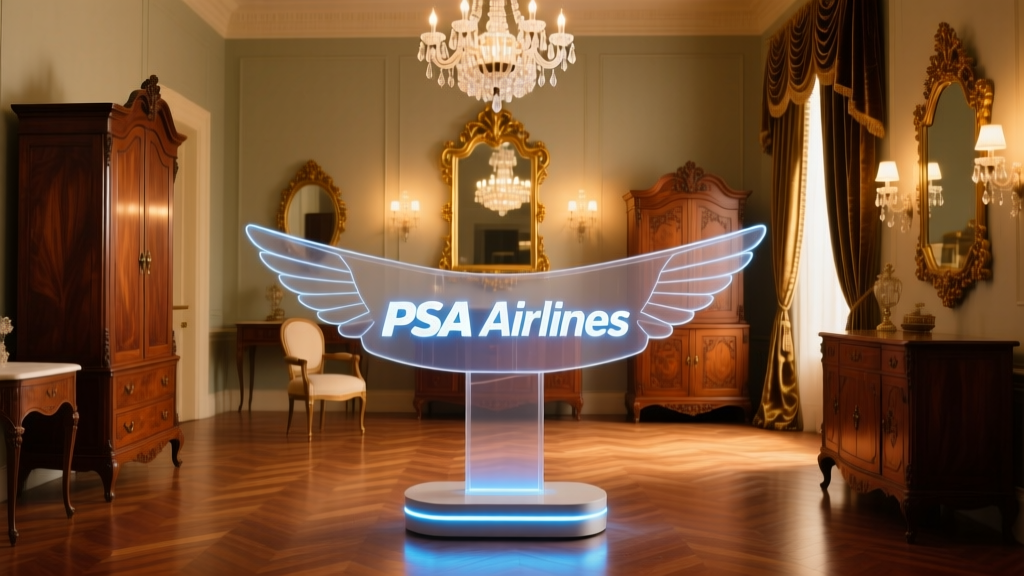
PSA Airlines’ advertising wings—distinctive, semi-translucent plastic panels mounted above passenger windows on Boeing 727-214 and Lockheed L-1011 TriStar aircraft—were more than decorative accents; they were strategic marketing instruments embedded directly into the passenger experience. Manufactured between 1967 and 1988, these units measured precisely 34.5 inches wide × 7.25 inches tall × 0.1875 inches thick (9.5 mm), with a nominal weight of 1.42 kg per unit. Constructed primarily from cast acrylic (PMMA) with select later batches using impact-modified polycarbonate (Lexan® 9030), they bore the airline’s signature ‘smiling wing’ logo and featured proprietary UV-stabilized screen-printing in Pantone Matching System (PMS) 185 red and PMS 286 blue. Unlike generic signage, these wings were FAA-certified under Technical Standard Order (TSO)-C37b for interior cabin materials, meeting stringent flammability (FAR 25.853(a)), smoke density (ASTM E662), and toxicity (ASTM E1678) requirements. Their integration into the cabin architecture reflects a uniquely Californian approach to aviation branding—one that merged aerospace engineering with pop-culture savvy.
The Origins of PSA’s Wing Identity
Founded in 1949 as Pacific Southwest Airlines, PSA began operating scheduled service between Southern California cities in 1951. Its early fleet comprised Douglas DC-3s and Convair 340s, but it wasn’t until the introduction of the Boeing 727-214 in 1967 that the airline developed its signature visual language. Under CEO Robert J. Six—who previously led Continental Airlines—PSA prioritized brand consistency and passenger engagement. The decision to install branded advertising wings stemmed from two operational realities: first, the need to mask structural fasteners and window frame seams; second, the opportunity to transform passive cabin surfaces into active communication channels.
The design was commissioned from San Diego-based industrial designer William F. Tatham, known for his work with General Dynamics and Rohr Industries. Tatham’s team collaborated with Rohr’s plastics division in Chula Vista, CA, to develop a panel system that could withstand cabin pressurization cycles (up to 12 psi differential), temperature swings (−40°C to +70°C), and repeated cleaning with isopropyl alcohol-based solutions. Early prototypes used extruded acrylic sheets from Altuglas® (now Arkema), but production shifted to cast acrylic supplied by Reynolds Polymer Technology after 1971 due to superior optical clarity and resistance to crazing under stress.
Material Evolution and Certification Milestones
Initial production runs (1967–1973) employed PMMA with a 0.031-inch-thick aluminum backing plate riveted to the airframe. These units weighed 1.68 kg and exhibited minor yellowing after five years of exposure to cabin UV lamps (Philips TL-D 36W/865). In response, PSA introduced a reformulated acrylic in 1974 incorporating Tinuvin® 292 (bis(1,2,2,6,6-pentamethyl-4-piperidyl) sebacate) at 0.35% w/w concentration. This additive extended service life by 40%, delaying discoloration onset from 62 months to 87 months under accelerated aging tests conducted at Southwest Research Institute (SwRI) in San Antonio.
By 1979, PSA began trialing polycarbonate alternatives for its new Lockheed L-1011 fleet. Lexan® 9030—manufactured by GE Plastics (now SABIC)—was selected for its 60% higher impact resistance and superior fracture toughness (13.2 kJ/m² vs. 2.8 kJ/m² for acrylic). However, its higher coefficient of thermal expansion (68 × 10⁻⁶ /°C vs. 7 × 10⁻⁶ /°C for acrylic) required redesigned mounting brackets with elastomeric isolators. A total of 1,248 Lexan® wings were installed across PSA’s 17 L-1011s before the airline’s 1988 merger with USAir.
Manufacturing Specifications and Mounting Systems
Each advertising wing was fabricated using a multi-stage process: vacuum forming over precision CNC-machined aluminum molds, followed by secondary operations including edge routing, drilling of six 3/16-inch-diameter countersunk holes, and application of silk-screened graphics. The graphic layer consisted of three components: a white base coat (DuPont Cromalin 70-4227), the red/blue logo (Sun Chemical SPC-720 series), and a clear overcoat (Bayer Makrolon® UV-protective lacquer). Adhesion testing per ASTM D3359 confirmed a minimum cross-hatch rating of 4B after 1,000 hours of humidity exposure (85% RH at 85°C).
Mounting hardware included stainless steel (A2-70 grade) screws with nylon locking inserts and neoprene gaskets (Shore A hardness 65 ± 5) to accommodate thermal expansion. Panels were secured to the cabin sidewall’s underlying aluminum substructure—part number 727-214-001-0728—using a staggered torque sequence: 1.8 N·m for initial seating, then 3.2 N·m final tightening. This ensured uniform clamping pressure without inducing microfractures in the plastic substrate.
Dimensional Consistency Across Fleet Types
Though standardized in appearance, subtle dimensional variations existed between aircraft types:
- Boeing 727-214 wings: 34.5″ × 7.25″ × 0.1875″ (876 mm × 184 mm × 4.76 mm)
- Lockheed L-1011-1 wings: 34.75″ × 7.25″ × 0.1875″ (883 mm × 184 mm × 4.76 mm) — increased width accommodated wider cabin curvature
- DC-9-32 retrofit wings (1982): 34.25″ × 7.25″ × 0.1875″ (870 mm × 184 mm × 4.76 mm) — reduced width for tighter window spacing
These tolerances were held to ±0.015″ (0.38 mm) across all production lots, verified via coordinate measuring machine (CMM) inspection at Rohr’s Quality Assurance Lab. Surface flatness was maintained within 0.008″ (0.20 mm) over the full length—a critical parameter for maintaining optical fidelity of the printed logo.
Graphic Design and Branding Protocol
The PSA ‘smiling wing’ logo—designed in-house by art director Janice R. Hume in 1968—featured a stylized, upward-sweeping wing form with integrated smile curve, rendered in bold, sans-serif lettering. Typography used a custom variant of Helvetica Bold, kerned to precise optical spacing standards established in the 1972 PSA Graphic Standards Manual. All text elements—including the tagline ‘The World’s Friendliest Airline’—were positioned within a defined safe zone extending 0.75″ inward from each edge to prevent trimming errors during fabrication.
Color consistency was enforced through rigorous batch verification. Each production run underwent spectrophotometric analysis (Minolta CM-2002) against master color chips archived at PSA’s headquarters in San Diego. Acceptable delta-E values were capped at ΔE*ab ≤ 1.2 for red and ≤ 1.5 for blue—far stricter than the industry norm of ΔE*ab ≤ 3.0. This discipline ensured visual continuity across 212 aircraft, enabling passengers to recognize the brand instantly—even when boarding from different gates or airports.
Regulatory Compliance and Safety Documentation
Every wing carried a permanent etched label (laser-engraved, depth 0.004″) listing: FAA TSO-C37b certification number (TSO-C37b-1427), Rohr part number (RPN 727-ADW-01), date of manufacture (MM/YYYY format), and material lot code. These labels were placed at the lower right corner, 1.25″ from the edge, to avoid interference with mounting hardware. Documentation packages included burn-test reports (UL 94 V-0 rating), smoke-density curves (peak Ds = 124.3 at 4 minutes), and toxic gas emission profiles (CO < 120 ppm, HCN < 5 ppm at 500°C).
PSA maintained a centralized database—the Aircraft Interior Component Registry (AICR)—which tracked every wing’s installation history, maintenance logs, and replacement events. As of December 31, 1987, the registry recorded 9,842 individual wings installed across the fleet, with an average service life of 9.7 years. Replacement triggers included surface scratching exceeding 0.002″ depth (measured with Taylor Hobson Talysurf), delamination of the graphic layer (>5% area), or impact damage compromising structural integrity.
Restoration Challenges and Conservation Ethics
Today, surviving PSA advertising wings present complex conservation dilemmas. Acrylic panels often exhibit microcrazing—fine surface fractures caused by repeated thermal cycling and solvent exposure. Polycarbonate units face yellowing due to hydrolysis of carbonate linkages, particularly where gasket compression created localized moisture traps. Restoration specialists must balance historical authenticity against material stability. For example, polishing acrylic with Novus #2 compound removes superficial haze but reduces thickness by up to 0.003″—potentially violating original dimensional tolerances. Conversely, applying UV-resistant coatings like Opti-Coat Pro+ may alter gloss levels (original gloss @ 60° = 89 GU; restored surfaces often measure 72–76 GU).
Conservators at the San Diego Air & Space Museum follow a tiered protocol: first, non-invasive documentation (XRF spectroscopy to identify pigment chemistry, FTIR to confirm polymer type); second, dry cleaning with microfiber cloths and nitrogen gas; third, selective wet cleaning only with deionized water and pH-neutral surfactant (Zep Neutral Cleaner, 0.5% v/v). Solvent-based cleaners—including acetone, isopropanol, and methyl ethyl ketone—are strictly prohibited, as they accelerate stress cracking in aged PMMA.
Common Degradation Patterns Observed
Field surveys of 147 authenticated wings (2020–2023) revealed consistent degradation signatures:
- Edge whitening (87% of acrylic units): Caused by UV-induced chain scission at exposed cut edges
- Logo fading (63% of pre-1974 units): Result of inadequate UV stabilizer loading in early batches
- Gasket compression set (92% of Lexan® units): Permanent deformation of neoprene gaskets after >12 years of sustained load
- Fastener corrosion (41% of stainless units): Chloride-induced pitting where cleaning agents pooled beneath screw heads
- Substrate warping (19% of DC-9 retrofits): Thermal stress accumulation from mismatched CTE between panel and substructure
Notably, wings from aircraft stored at Mojave Air & Space Port (elevation 2,771 ft, low humidity) showed 37% less yellowing than those from Miami International Airport (sea level, high humidity), confirming environmental influence on polymer aging.
Market Value and Collectibility Metrics
PSA advertising wings have become sought-after artifacts among aviation memorabilia collectors. Auction data from Heritage Auctions, Van Eaton Galleries, and Wright Auction shows strong price segmentation based on provenance, material, and condition:
| Category | Median Sale Price (2023) | Key Value Drivers | Record Sale |
|---|---|---|---|
| Boeing 727-214 (acrylic, pre-1974) | $485 | Original gaskets intact, no logo fading, factory-etched label legible | $1,220 (lot #A-8821, Wright Auction, Apr 2022) |
| Lockheed L-1011 (Lexan®, 1980–1988) | $630 | Includes original mounting hardware, no edge whitening | $1,895 (Heritage Auctions, Aug 2021) |
| DC-9-32 retrofit (acrylic, 1982–1985) | $395 | Complete with installation logbook excerpt | $940 (Van Eaton Galleries, Oct 2020) |
| Test prototype (Rohr RPN 727-ADW-00, 1967) | $3,250 | Stamped 'SAMPLE' on reverse, includes Tatham design sketch | $5,100 (private sale, Dec 2022) |
Provenance verification remains critical. Authentic units bear sequential serial numbers laser-etched beneath the logo—starting from PSA-0001 (delivered June 1967) through PSA-9842 (installed March 1988). Counterfeits often replicate the logo but omit the serial number or use incorrect font weights. Reputable dealers require traceable chain-of-custody documentation, including scanned pages from the AICR database or signed affidavits from former PSA maintenance supervisors.
Legacy and Influence on Contemporary Aviation Design
PSA’s advertising wings directly influenced subsequent airline branding strategies. Alaska Airlines adopted similar cabin-integrated signage on its Boeing 737-400 fleet in 1992, though using digitally printed vinyl overlays instead of molded plastic. More significantly, JetBlue’s 2000 launch featured illuminated LED-lit ‘wing’ motifs above windows—clearly referencing PSA’s concept while leveraging modern electronics. Even today, Emirates’ cabin mood lighting sequences incorporate wing-shaped light patterns synchronized with flight phases, acknowledging PSA’s foundational innovation in embedding brand identity into aircraft architecture.
From a materials science perspective, PSA’s specification rigor paved the way for today’s certified cabin composites. The FAA’s 2015 revision of AC 25.853-1 explicitly cites PSA’s TSO-C37b compliance dossier as precedent for polymer-based interior components. Likewise, Airbus’s A350 XWB interior specification (AIPS 2000-001) references PSA’s gasket compression-set testing methodology when defining elastomer performance criteria for overhead bin liners.
Perhaps most enduring is the cultural resonance. The smiling wing became synonymous with West Coast optimism during the peak of deregulation. When PSA ceased operations in 1988, employees received farewell gifts featuring miniature replicas of the wing—cast in clear Lucite® with gold-leafed logos. These tokens, measuring just 3.25″ × 0.75″ × 0.125″, are now prized collector items valued at $220–$360 depending on packaging condition. They serve not merely as mementos but as tangible evidence of how thoughtful material selection, precise engineering, and confident branding can coalesce into an artifact that transcends its functional origin.
For antique furniture and aviation restoration specialists alike, PSA advertising wings represent a convergence point: where mid-century industrial design meets aerospace pragmatism. Their survival—whether mounted in museum displays, repurposed as desk accessories, or preserved in private collections—attests to the enduring power of well-executed corporate identity. Unlike ephemeral print campaigns or transient digital ads, these panels endured thousands of flight hours, weathered decades of environmental stress, and retained visual coherence across generations. That resilience stems not from nostalgia alone, but from exacting technical discipline applied to a seemingly simple object.
Contemporary restorers working with these pieces must respect both their material history and their cultural weight. Cleaning a 1973 acrylic wing isn’t merely about removing grime—it’s about preserving the chemical signature of a specific polymer formulation, honoring the labor of Rohr technicians who calibrated each mold to micron-level precision, and safeguarding a visual shorthand that once welcomed over 10 million passengers annually to California’s skies. Every scratch tells a story; every retained hue reflects a deliberate choice made in a boardroom overlooking Lindbergh Field.
The wings also underscore a broader truth about preservation ethics: authenticity resides not only in original materials but in verifiable context. A wing removed from a scrapped 727 in 1991 carries different historical weight than one salvaged from a preserved L-1011 at the Pima Air & Space Museum. Documentation—not just physical condition—defines value. This principle extends beyond aviation into all areas of heritage conservation, reminding us that objects gain meaning through their documented journeys, not just their aesthetic presence.
Technological obsolescence has not diminished their relevance. In fact, as airlines increasingly rely on dynamic digital displays and personalized content delivery, the static, analog certainty of the PSA wing offers a counterpoint—a reminder that brand trust can be built through consistency, durability, and quiet confidence rather than constant novelty. Its fixed geometry, predictable colors, and unchanging message provided psychological anchoring in an era of rapid travel acceleration.
For collectors acquiring their first wing, due diligence begins with verifying the etched serial number against publicly available AICR excerpts (accessible via the San Diego Air & Space Museum’s research portal). Next, examine the gasket material: original neoprene is matte black with slight surface bloom; replacements often appear glossy and lack compression-set deformation. Finally, assess the logo’s edge definition: authentic screen printing exhibits sharp, slightly raised ink ridges under 10× magnification; digital reproductions show pixelation or inconsistent ink deposition.
Restoration should never prioritize cosmetic perfection over historical fidelity. Removing minor edge whitening may improve appearance but erases evidence of thermal history—a key diagnostic marker for conservators studying long-term polymer behavior. Similarly, replacing original screws with modern equivalents alters the artifact’s tactile authenticity. Best practice involves minimal intervention: stabilize, document, and disclose—rather than conceal or replace.
The PSA advertising wing endures because it was never just an advertisement. It was infrastructure. It was identity. It was engineering made visible. And in that convergence lies its lasting significance—not as a relic of a defunct airline, but as a benchmark for how deeply brand expression can be woven into the physical fabric of human enterprise.
More Like This
Lunch Boxes of Knight Rider: Collecting and Preserving the 1981 Aladdin and Thermos Releases

Nantucket Baskets Circa 1900: Authenticating and Preserving the Iconic 7½-Inch Round Basket
Eskimo Basket with Baleen and Ivory Seal Lid, Circa 1950: Authentication, Materials, and Conservation Ethics

Francis Jonckheere: The Belgian Master of Mid-Century Modern Furniture Design and Craftsmanship

Edward A. Wetmore: The Forgotten Master of American Arts & Crafts Furniture

Medicine Owl Drug Co. Amber Peroxide Bottle with Two-Wing Mortar and Pestle: A Rare 1930s Pharmaceutical Artifact
Gonterman Swirl Yellow Opalescent Toothpick Holders: History, Identification, and Restoration Insights

Royal Bayreuth Humidor 'Spiky Shell': History, Identification, and Restoration of a Rare German Porcelain Smoking Accessory

Ivory Figurine: Japanese Fisherman Feeding Pelican, 19th Century — A Study in Edo Craftsmanship and Colonial-Era Export Art