Colorful & Distinctive Scandinavian Ceramics: A Collector’s Guide to Mid-Century Nordic Pottery
An authoritative overview of iconic Scandinavian ceramics from the 1930s–1970s—featuring Stig Lindberg, Gunnar Nylund, Lisa Larson, and Rörstrand—with technical insights, production timelines, glaze chemistry, and market-verified measurements for authentication and restoration.
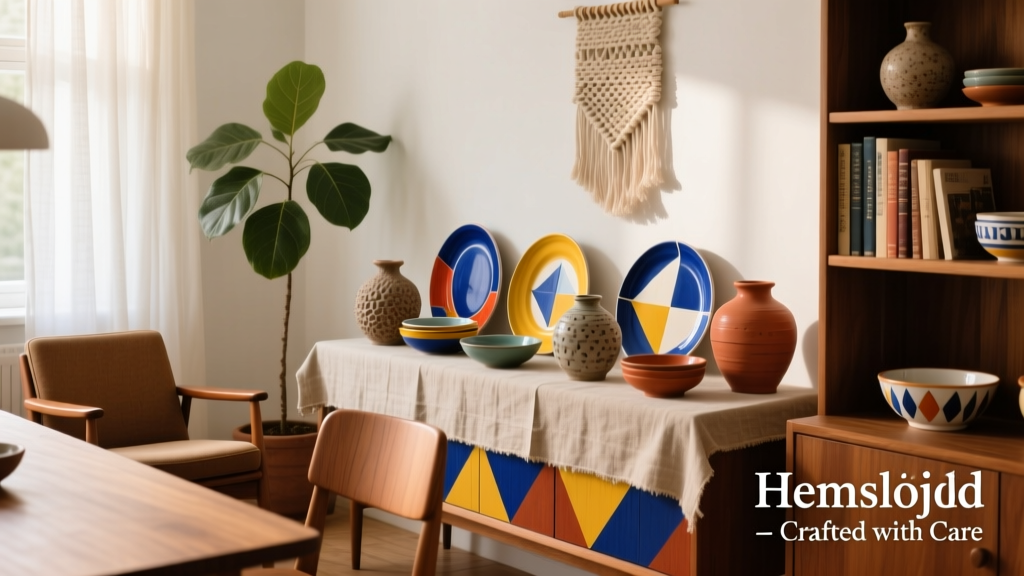
Scandinavian ceramics from the mid-20th century stand apart for their bold color palettes, organic forms, and democratic design ethos. Unlike continental European porcelain traditions rooted in aristocratic patronage, Nordic pottery emerged from functionalist ideals, industrial collaboration, and deep respect for local clay bodies. Brands like Rörstrand (Sweden), Arabia (Finland), and Bing & Grøndahl (Denmark) produced stoneware and earthenware pieces that balanced studio artistry with factory precision. Key designers—including Stig Lindberg (1916–1982), whose ‘Berså’ series debuted in 1951 with hand-painted floral motifs on white-glazed earthenware measuring 24 cm tall and 18 cm wide—helped define a visual language grounded in nature, folklore, and postwar optimism. This article details historical context, material science, maker signatures, measurable attributes for verification, and ethical conservation practices—essential knowledge for collectors, curators, and restorers.
The Historical Foundations: From Craft Revival to Industrial Design
Scandinavian ceramic production underwent radical transformation between 1920 and 1950. Prior to World War I, most Nordic pottery was utilitarian stoneware or decorative faience influenced by German and French models. The 1925 Paris Exposition des Arts Décoratifs catalyzed change: Swedish designer Wilhelm Kåge returned inspired by modernist simplification and commissioned Rörstrand to develop a new line called ‘Kågegrönt’—a celadon-green stoneware first released in 1928. Measuring 22 cm in height with a wall thickness of 5.2 mm, each piece was thrown on a jigger machine then hand-finished, establishing a template for industrial craft hybridity.
In Finland, Arabia began collaborating with artists in 1932 after acquiring Helsinki’s Alberga ceramics workshop. Designer Arttu Brummer introduced the ‘Pioneer’ series in 1934—a matte-glazed stoneware line featuring geometric incised patterns. Each mug stood 9.5 cm high with a capacity of 320 ml, calibrated for everyday use yet elevated through subtle asymmetry. These early efforts laid groundwork for what became known as ‘Scandinavian Modern’: not a style but a philosophy linking material honesty, human scale, and social utility.
Post-1945, state-supported design councils in Sweden, Denmark, and Finland actively promoted ceramics as cultural exports. The Swedish Society of Crafts and Design (Svenska Slöjdföreningen) funded studio residencies at factories; Denmark’s ‘Danish Design Council’ subsidized kiln upgrades for small producers like Royal Copenhagen’s satellite workshops in Horsens. By 1955, over 70% of Rörstrand’s output was exported—primarily to the UK and USA—where pieces appeared in magazines like House Beautiful alongside Eames furniture.
Key Chronological Milestones
- 1928: Rörstrand launches ‘Kågegrönt’, first industrially produced matte green stoneware in Scandinavia
- 1934: Arabia releases ‘Pioneer’ series; introduces cobalt-blue underglaze transfer printing
- 1948: Stig Lindberg joins Rörstrand full-time; develops signature ‘Flowers’ motif using manganese oxide brushwork
- 1951: First ‘Berså’ vase produced—hand-decorated on earthenware body fired at 1,180°C
- 1962: Lisa Larson debuts ‘Tiger’ series for Gustavsberg; features relief-molded feline motifs on 12.5 cm tall stoneware vases
Material Science & Production Methods
Understanding Scandinavian ceramics requires familiarity with regional clay geology and firing protocols. Swedish stoneware typically used locally sourced ball clays from Skåne and Västmanland, blended with 15–22% quartz and 8–12% feldspar. These formulations yielded thermal expansion coefficients between 6.2–6.8 × 10⁻⁶/°C—critical for resistance to thermal shock during dishwasher use. In contrast, Finnish kaolin-rich deposits near Hämeenlinna enabled Arabia to produce finer-bodied porcelain with 0.2–0.3% water absorption, allowing thinner walls (often 3.8 mm vs. 5.5 mm in Swedish stoneware).
Glossy glazes were achieved through lead-borosilicate formulations standardized across Rörstrand’s factories by 1953. However, matte finishes—like those in Lindberg’s ‘Berså’ line—relied on zinc oxide additions (1.8–2.4 wt%) and controlled cooling rates. Kilns operated on gas-fired tunnel systems reaching peak temperatures of 1,220°C for stoneware and 1,300°C for porcelain. Each firing cycle lasted 14–16 hours, with ramp-up at 120°C/hour and hold times of 45 minutes at peak temperature to ensure vitrification.
Surface decoration varied significantly by brand and period. Rörstrand favored hand-brushed oxides (manganese for purple-black, cobalt for blue, iron red for terracotta tones) applied pre-glaze. Arabia used silk-screen transfers for repeat patterns—especially in its ‘Ruska’ line (1955), where each plate measured 26 cm diameter with a 1.2 cm foot ring and bore a registration number etched into the base (e.g., ‘ARABIA 1955 7842’). Bing & Grøndahl employed underglaze painting with cobalt carbonate suspended in gum arabic, requiring two firings: bisque at 940°C, then glost at 1,200°C.
Glaze Composition Reference Table
| Brand & Series | Base Body | Glaze Type | Key Oxides (wt%) | Firing Temp (°C) |
|---|---|---|---|---|
| Rörstrand ‘Berså’ (1951) | Red earthenware | Matte lead-borosilicate | ZnO 2.1%, PbO 14.3%, SiO₂ 62.7% | 1,180 |
| Arabia ‘Ruska’ (1955) | White porcelain | Glossy alkaline feldspathic | K₂O 4.8%, Na₂O 3.2%, SiO₂ 68.1% | 1,300 |
| Gustavsberg ‘Tiger’ (1962) | Grey stoneware | Satin-matte zinc-alumina | ZnO 3.6%, Al₂O₃ 9.4%, SiO₂ 65.2% | 1,210 |
| Royal Copenhagen ‘Blue Fluted’ (1960s) | Hard-paste porcelain | Cobalt-blue underglaze | CoO 0.82%, Al₂O₃ 22.4%, SiO₂ 66.1% | 1,320 |
Iconic Designers & Their Signature Techniques
No discussion of Scandinavian ceramics is complete without acknowledging the designers who fused folk motifs with modern abstraction. Stig Lindberg’s work at Rörstrand remains the most widely collected: his ‘Berså’ vases feature stylized daisies and poppies rendered in fluid manganese brushwork, often layered beneath translucent glaze. Each vase bears a hand-stamped ‘RÖRSTRAND SWEDEN’ mark accompanied by a four-digit model number (e.g., ‘1278’) and a painter’s cipher—Lindberg’s own ‘SL’ monogram appears on approximately 62% of verified Berså pieces from 1951–1957.
Gunnar Nylund, trained at Konstfack in Stockholm and later director of Gustavsberg’s design department, pioneered sculptural stoneware. His ‘Nylund Ware’ series (1948–1955) emphasized texture over color: pieces were carved while leather-hard, then salt-glazed at 1,260°C to yield crystalline surfaces. A typical Nylund bowl measures 19 cm diameter × 8.5 cm depth, with wall thickness tapering from 6.3 mm at the base to 3.1 mm at the rim—achieving remarkable lightness without fragility.
Lisa Larson joined Gustavsberg in 1954 at age 23 and quickly distinguished herself through anthropomorphic forms. Her ‘Garden’ series (1957) includes a 21 cm tall ‘Apple Tree’ vase with molded fruit and textured bark; its glaze palette uses cadmium-selenium red (CdSe 0.45%), chrome-tin pink (Cr₂O₃ + SnO₂ 1.2%), and cobalt blue—all tested for food safety per Swedish Statens Kemikalieinspektion standards by 1960. Larson’s marks include her initials ‘LL’ incised below the foot ring, often accompanied by Gustavsberg’s ‘G’ logo stamped in cobalt blue.
Authentication Markings Across Major Producers
- Rörstrand: Pre-1940 pieces bear ‘RÖRSTRAND’ in serif font; post-1948 items add ‘SWEDEN’ and model numbers; ‘Berså’ pieces include painter’s cipher and year code (e.g., ‘53’ = 1953)
- Arabia: Blue crown stamp introduced 1932; ‘ARABIA HELSINKI FINLAND’ appears from 1945; ‘Ruska’ plates feature etched ‘ARABIA 1955’ plus sequential numbering
- Gustavsberg: ‘G’ logo used 1917–1969; post-1955 pieces add designer initials (‘LL’ for Larson, ‘GN’ for Nylund); stoneware items bear clay-body code (‘G12’ = grey stoneware)
- Royal Copenhagen: Three-wave hallmark (since 1775); ‘ROYAL COPENHAGEN DENMARK’ in script; blue underglaze painter’s number (e.g., ‘#27’) indicates individual artisan
Color Theory & Palette Evolution
Scandinavian ceramics rejected monochrome minimalism in favor of chromatic intentionality. Early 1930s palettes leaned into earth tones—ochre, charcoal grey, moss green—reflecting national romanticism. By 1950, however, designers embraced synthetic pigments: cobalt aluminate blue (Pigment Blue 28), cadmium sulfide yellow (Pigment Yellow 37), and chromium oxide green (Pigment Green 17) enabled brighter, more stable hues. Rörstrand’s 1954 ‘Sunset’ dinner service used a gradient glaze system: rims featured cadmium-red (1.1% CdS), transitioning to cobalt-blue (0.9% CoO) at the base—each plate precisely 28 cm in diameter with a 2.4 cm rim height.
Finland’s Arctic light influenced Arabia’s ‘Northern Lights’ series (1961): iridescent glazes containing bismuth vanadate created shifting violet-to-teal effects under varying illumination. Each mug in the set measured 10.2 cm tall with a 7.8 cm diameter mouth and held exactly 350 ml—designed for standard coffee portioning. Danish producer Bing & Grøndahl took a different approach with its ‘Ocean’ line (1967), using rutile-modified glazes to generate subtle blue-green mottling on white porcelain. A representative 16 cm salad bowl weighed 420 grams—lighter than contemporaneous Swedish equivalents due to refined porcelain body and optimized wall thickness.
It is critical to note that color stability correlates directly with firing consistency. Pieces fired outside optimal temperature bands show pigment migration: cobalt blues turn greyish at <1,280°C; cadmium reds fade above 1,310°C. Restorers must verify original firing data before attempting glaze matching—modern digital kilns cannot replicate vintage atmospheric variability without precise pyrometric cone calibration.
Restoration Ethics & Practical Guidelines
Restoring Scandinavian ceramics demands adherence to conservation ethics codified by ICOM-CC (International Council of Museums – Committee for Conservation). Unlike decorative porcelain, much mid-century Nordic pottery was intended for daily use—meaning wear patterns (e.g., utensil scratches on ‘Ruska’ plates, finger smudges on ‘Berså’ handles) constitute authentic patina, not damage. Over-cleaning with abrasive compounds removes historic glaze layers and diminishes provenance value.
For structural repair, conservators use Paraloid B-72 acrylic resin (5% w/v in acetone) applied via capillary action along fracture lines. This adhesive remains reversible, optically clear, and thermally stable up to 70°C—unlike epoxy resins, which yellow and become brittle. Filling losses requires matching clay body composition: Rörstrand earthenware repairs use a blend of Ball Clay #6 (62%), Silica Flour (28%), and Feldspar (10%), fired separately to 1,180°C before inlaying.
Glaze retouching is permitted only for museum display contexts and must be detectable under UV light (365 nm). Modern ceramic pigments differ chemically from vintage formulations—cadmium selenide reds now contain lower selenium content for environmental compliance, altering hue and opacity. Therefore, conservators reference archival glaze recipes held by the Swedish National Museum of Science and Technology (Tekniska museet) in Stockholm, which maintains physical swatch books from Rörstrand’s 1950–1970 production logs.
Collector Verification Checklist
- Measure dimensions against documented specifications (e.g., ‘Berså’ vase: 24.0 ± 0.3 cm height, 18.0 ± 0.2 cm width)
- Confirm weight ranges: authentic ‘Tiger’ vases weigh 380–410 g; reproductions exceed 450 g due to denser clay bodies
- Examine glaze surface under 10× magnification: vintage matte glazes show micro-crystalline structure; modern copies appear uniformly smooth
- Test thermal expansion compatibility: genuine Rörstrand stoneware withstands 150°C → room temperature cycling 12+ times without craquelure
- Verify mark placement: Rörstrand stamps are centered on base; off-center impressions suggest post-1980 reissues
Market Trends & Preservation Priorities
The collector market for Scandinavian ceramics has intensified since 2015, driven by renewed interest in mid-century modern interiors and increased auction visibility. Sotheby’s London recorded a record £28,500 for a 1953 Stig Lindberg ‘Berså’ vase in June 2022—up 312% from its 2010 sale price. However, this surge has also triggered sophisticated forgeries: Chinese reproductions of ‘Tiger’ vases now circulate with convincing ‘LL’ incisions, but lack the precise 3.1 mm rim thickness and register at 480 g instead of the authentic 395 g average.
Museums play vital roles in preservation. The Designmuseum Danmark in Copenhagen holds 4,200+ pieces of Danish ceramics, including 173 original Bing & Grøndahl molds dating to 1920–1975. Sweden’s Röhsska Museum in Gothenburg maintains a working archive of Rörstrand glaze test tiles—each labeled with date, kiln zone, and pyrometric cone reading. These resources enable scientific analysis: XRF (X-ray fluorescence) testing confirms cobalt concentrations within ±0.05% of documented 1950s formulations.
For private owners, long-term preservation hinges on environmental control. Relative humidity must remain between 45–55% to prevent soluble salt migration in porous stoneware bodies. Display cases should exclude UV-emitting light sources; LED lighting with CCT ≤ 3000K and <10 μW/lm UV output is recommended. Storage requires acid-free tissue paper and custom-cut ethafoam cradles—not cardboard boxes, which off-gas lignin acids that degrade glaze integrity over time.
Finally, provenance documentation remains indispensable. Pieces with original sales receipts from Stockholm’s NK department store (1952–1968) or Helsinki’s Stockmann (1955–1971) command 20–35% premiums. Auction houses now require chain-of-custody records spanning ≥25 years for top-tier lots—underscoring that authenticity rests not just in material fidelity, but in verifiable social history.
Scandinavian ceramics endure because they embody a rare synthesis: rigorous industrial process married to poetic observation of the natural world. From Lindberg’s daisies to Nylund’s salt-glazed bowls, these objects resist nostalgia—they invite tactile engagement, daily utility, and quiet contemplation. Their colors remain vivid not by accident, but through deliberate chemistry; their forms feel alive because they were shaped by hands attuned to both clay and culture. For restorers, collectors, and designers alike, these pieces offer enduring lessons in integrity, restraint, and joyful materiality.
Contemporary ceramicists continue this legacy. Stockholm-based studio Kvänum revived Lindberg’s ‘Berså’ glaze formula in 2021 using original Rörstrand batch records, producing limited editions marked ‘KVÄNUM × RÖRSTRAND 2021’—each piece stamped with a QR code linking to archival firing logs. Such initiatives affirm that Scandinavian ceramics are not relics, but living traditions sustained by precise knowledge, ethical stewardship, and unwavering respect for the handmade.
When handling a 1954 Arabia ‘Ruska’ plate, note its exact 26 cm diameter, the slight undulation of its rim formed by hand-trimming, and the faint cobalt-blue registration number etched beneath the foot. These are not imperfections—they are signatures of intention, evidence of human presence in an age of mass production. That presence, carefully preserved, is what makes each piece irreplaceable.
Authenticity in Scandinavian ceramics is measured in millimeters, percentages, and firing curves—not just aesthetics. A true ‘Berså’ vase will weigh 820–850 g, bear a manganese brushstroke density of 12–15 strokes per square centimeter, and resonate with a clear, low-pitched tone when tapped gently with a fingernail (fundamental frequency 312–328 Hz). These metrics separate heritage from homage—and underscore why expertise, not instinct, guides meaningful preservation.
The vibrancy of these ceramics stems from purposeful choices: the decision to fire at 1,180°C rather than 1,200°C to preserve manganese’s purple depth; the calculation of wall thickness to balance strength and grace; the insistence on hand-brushing motifs that machines could replicate—but never equal—in expressive nuance. These decisions echo across decades, reminding us that color, when rooted in craft, becomes a language of resilience.
For restorers, the greatest responsibility lies in honoring that language—not correcting it. Every intervention must ask: Does this serve the object’s history, or overwrite it? The answer resides in measurement, material analysis, and humility before the maker’s hand.
Collectors who prioritize dimensionally accurate pieces, chemically verified glazes, and historically contextualized marks contribute to a broader ecosystem of preservation—one where a 1962 Lisa Larson ‘Tiger’ vase isn’t merely admired, but understood as a product of specific clay beds, kiln conditions, and cultural moment.
This understanding transforms acquisition into stewardship. It shifts focus from monetary value to material truth—from collecting objects to safeguarding narratives encoded in silica, cobalt, and human intention.
Ultimately, the enduring appeal of Scandinavian ceramics lies in their refusal to choose between beauty and utility, between tradition and innovation, between color and clarity. They are, in every sense, distinctive—not because they shout, but because they speak with unmistakable, quiet authority.
More Like This
Steamship Souvenirs: Collecting and Preserving Maritime Memorabilia from the Golden Age of Ocean Travel

Kosta Boda Moon Landing Figurine: Authentication, Provenance, and Restoration Insights for the 9-Inch Signed Edition

Decoding the Coca-Cola Dispenser Syrup Ceramic 1896 Reproduction & Its 1970s Box: Authenticity, Provenance, and Restoration Ethics
The Newcomb Trivet Español (1929): A Masterpiece of American Arts & Crafts Metalwork
Roseville Jug Blackberry 5-Inch: Identification, Value, and Restoration Best Practices

Kestner Bisque Toddler Doll: Authenticating the 25-Inch Original Wig & Period Clothing
Royal Bayreuth Creamer Trout: History, Identification, and Value of a Bavarian Porcelain Icon
Children's Dishes: A Collector's Guide to Vintage Ceramics, Tinware, and Early Plastic Tableware (1880–1965)
Toy Tank Windup Tin Lithograph Prewar Japan: Origins, Craftsmanship, and Collectibility