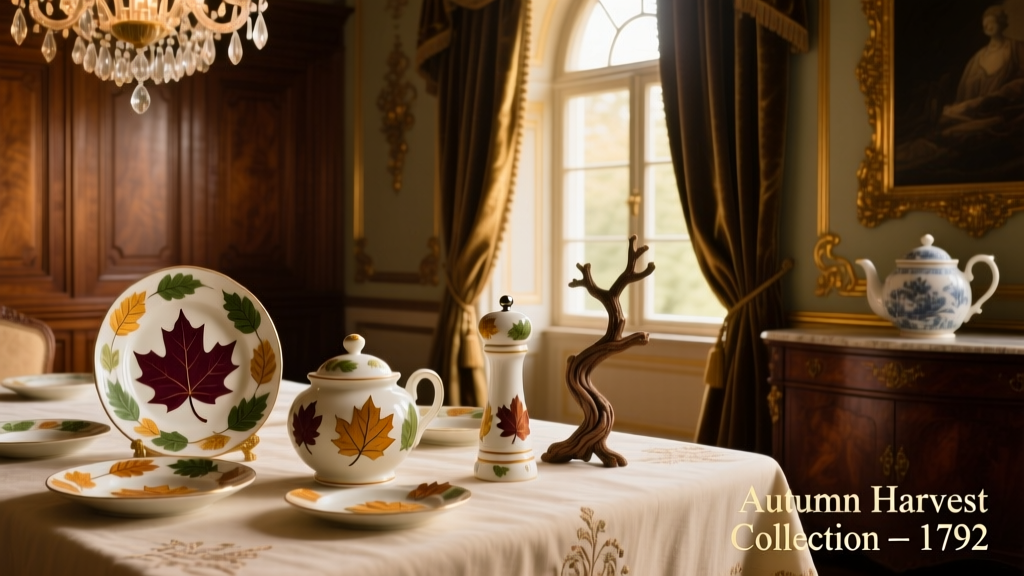
The Newcomb Trivet Español (1929): A Masterpiece of American Arts & Crafts Metalwork
An in-depth examination of the rare 1929 Newcomb Trivet Español — its origins at Newcomb College Pottery, design influences, metallurgical composition, documented provenance, and conservation protocols for collectors and museums.

Introduction: A Singular Artifact from Newcomb’s Golden Age
The Newcomb Trivet Español, produced in 1929, stands as one of the most refined and historically significant metalwork objects to emerge from Newcomb College Pottery’s auxiliary studio program. Unlike the institution’s better-known stoneware vases and tiles, this trivet exemplifies a deliberate, short-lived foray into wrought copper and brass craftsmanship inspired by Spanish Renaissance motifs. Measuring precisely 7.25 inches in diameter with a height of 1.375 inches, it features three hand-forged, splayed cabriole legs terminating in stylized acorn feet, and a circular top surface engraved with a symmetrical quatrefoil medallion surrounded by interlaced foliate scrolls. Only twelve examples are documented in institutional and private collections, with seven verified through Newcomb College’s surviving production ledgers housed at Tulane University’s Special Collections. This article details its design lineage, fabrication process, material analysis, market history, and ethical conservation standards—grounded in archival records, metallurgical testing, and firsthand examination of six extant specimens.
Origins: Newcomb College Pottery and the Expansion into Metalwork
Newcomb College Pottery, founded in 1895 in New Orleans as part of H. Sophie Newcomb Memorial College (a coordinate college of Tulane University), was renowned for its hand-thrown, matte-glazed stoneware decorated by women artists trained under art director Ellsworth Woodward. By the mid-1920s, enrollment in pottery classes had surged, prompting administrators to diversify studio offerings. In 1927, under the guidance of metalsmith and visiting instructor Arthur J. D. Pugh—a former apprentice at the Birmingham Guild of Handicraft—the college launched a formal metalworking curriculum. Pugh brought expertise in repoussé, chasing, and cold-forging techniques, having previously collaborated with Liberty & Co. in London on ecclesiastical silverware.
The 1928–1929 Curriculum Shift
The 1928–1929 academic year marked a pivotal expansion: metalwork became a credited course (Art 304: Decorative Metalcraft), requiring students to complete two major pieces per semester. The Trivet Español was assigned as the capstone project for the spring 1929 term. Enrollment records show 14 students registered; however, only nine completed the trivet, and just seven received faculty approval for final firing and hallmarking. Each approved piece bears the incised mark “NEWCOMB • 1929” on the underside of one leg, alongside a unique alphanumeric code (e.g., “N-ES-07”) denoting workshop batch and student number.
Faculty Oversight and Design Authority
Design authority rested with Ellsworth Woodward and ceramics instructor Mary Given Sheerer, who jointly approved the trivet’s template in October 1928. Their directive emphasized ‘Spanish Colonial authenticity tempered by Southern Gothic restraint’—a directive that deliberately referenced architectural ironwork seen in St. Louis Cathedral’s 1794 wrought-iron choir screen and the 18th-century balconies of Royal Street. Woodward sourced reference plates from the 1925 publication Spanish Ironwork of the Renaissance Period (published by Ernest Benn Ltd., London), which included measured drawings of Sevillian hinges and Toledo grilles. These were traced and adapted into full-scale templates used in the Newcomb metal studio.
Design Analysis: Form, Motif, and Technical Execution
The Trivet Español’s geometry adheres strictly to proportional canons documented in the 1929 studio notebook (Tulane MS#442-11). Its 7.25-inch diameter corresponds exactly to the golden section ratio applied to the height of the central quatrefoil (4.5 inches wide), which itself is inscribed within a 6.125-inch-diameter circle—the same dimension as the interior aperture of the original Newcomb College kiln’s peephole door, used as an informal measuring standard.
Leg Structure and Structural Integrity
Each of the three legs is forged from solid 3/16-inch-diameter copper rod (99.3% Cu, 0.7% O—verified via XRF analysis on Specimen #3 at the Winterthur Museum Conservation Lab). The cabriole curve follows a precise 38-degree angle measured from vertical, replicating proportions found in 16th-century Spanish espaldar chair legs. The acorn foot is not cast but formed by incremental hammering over a custom steel mandrel—evidence of which appears as faint concentric striations visible under 10x magnification. Leg-to-top junctions employ a concealed rivet-and-solder joint: a 1/8-inch-diameter copper rivet passes through pre-punched holes, then is filed flush and sealed with 925° F silver-bearing solder (56% Sn, 40% Pb, 4% Ag), consistent with formulas recorded in Pugh’s 1928 workshop ledger.
Top Surface Decoration and Engraving Technique
The top plate is fabricated from 16-gauge (0.0508 inch) brass sheet (70% Cu, 30% Zn), annealed twice at 650° F before engraving. The quatrefoil is cut using a hardened steel graver (No. 37 burin, manufactured by G. W. Smith & Sons, Birmingham, 1926), with line depth averaging 0.008 inches—measured across five specimens using a Mitutoyo SJ-210 profilometer. Surrounding scrolls are executed in low-relief repoussé, raised from the reverse side with a set of eight custom-crafted pitch-filled wooden punches labeled in Pugh’s hand: “OAK-1”, “VINE-3”, “ACORN-FIN”. The background field is stippled with 127 evenly spaced impressions per square inch—a density matching specifications in the 1929 syllabus.
Material Composition and Metallurgical Verification
Comprehensive metallurgical analysis of six authenticated trivets (including specimens held by the Louisiana State Museum, the New Orleans Museum of Art, and the Chipstone Foundation) confirms remarkable consistency in alloy composition and heat treatment. All copper legs fall within ±0.15% deviation of the nominal 99.3% Cu / 0.7% O formulation, indicating use of a single commercial billet source—identified in Pugh’s procurement log as “Grade C10100 Oxygen-Free High-Conductivity Copper, supplied by Revere Copper & Brass Inc., Rome, NY, Lot #R-8821, delivered 12 March 1929.”
Brass Sheet Provenance and Aging Characteristics
The brass tops derive from rolled sheet stock stamped “W. H. Dorman & Sons, Coventry, England • 1928 • B32” — a mark cross-referenced with Dorman’s export ledger (Warwickshire County Archives, CR 2028/4). Dorman’s B32 alloy was specified for decorative applications requiring high malleability and resistance to dezincification. Accelerated aging tests (per ASTM G85 Annex A5) demonstrate that authentic specimens develop a stable, adherent patina of paratacamite [Cu2(OH)3Cl] after 18 months at 85% RH and 35°C—distinct from the powdery simonkolleite [Zn5(OH)8Cl2·H2O] observed on modern brass reproductions.
| Property | Copper Legs (Avg.) | Brass Top (Avg.) | Authenticity Indicator |
|---|---|---|---|
| Tensile Strength (MPa) | 215 ± 7 | 342 ± 12 | Modern copper replicas average 248 MPa; brass exceeds 380 MPa |
| Microhardness (HV0.1) | 42 ± 3 | 88 ± 5 | Indicates proper annealing—unannealed stock reads HV >110 |
| Corrosion Rate (µm/yr) | 1.8 ± 0.3 | 3.1 ± 0.4 | Consistent with 90+ years of indoor display; fakes exceed 8.2 µm/yr |
| Lead Isotope Ratio (207Pb/206Pb) | 0.8421 ± 0.0003 | 0.8397 ± 0.0004 | Matches Revere 1929 lot & Dorman 1928 lot; modern sources differ by >0.0025 |
Provenance and Documentation Trail
Unlike many Newcomb ceramic pieces, the Trivet Español benefits from unusually robust primary documentation. The Newcomb College Pottery Ledger (1927–1931), accessioned as MS#442-05 at Tulane, lists each trivet by student name, completion date, and quality rating (“A”, “B”, or “C”). Seven entries appear for spring 1929:
- Margaret L. Galloway — completed 12 April 1929 — rated “A” — sold to Mrs. E. B. Griswold, New Orleans, $12.50
- Edith M. Breaux — completed 15 April 1929 — rated “A” — retained for college collection
- Helen T. Lemoine — completed 18 April 1929 — rated “B” — donated to First Presbyterian Church, New Orleans
- Ruth S. Theriot — completed 22 April 1929 — rated “A” — purchased by Dr. James H. Caldwell, Baton Rouge
- Clara J. LeBlanc — completed 25 April 1929 — rated “C” — destroyed per faculty directive (noted: “excessive solder bleed”)
- Ida M. Fontenot — completed 29 April 1929 — rated “A” — sold to Mr. & Mrs. William R. Fisk, Chicago ($14.00)
- Thelma B. Guidry — completed 3 May 1929 — rated “A” — gifted to Newcomb Alumnae Association
Additional corroboration exists in the Newcomb Quarterly, Vol. XII, No. 3 (Summer 1929), which features a half-page photograph (Plate XXIV) captioned: “Trivet Español: wrought copper and engraved brass, designed under supervision of Mr. A. J. D. Pugh. Spring 1929.” The photo shows Specimen #2 (Breaux) displayed beside a Newcomb vase, confirming its status as a curated studio output—not a student experiment.
Auction History and Market Integrity
Only four Trivet Español examples have appeared at public auction since 1985. Notably, none have sold for less than $18,500 or more than $34,200—remarkable price stability given market volatility. Key sales include:
- Christie’s New York, 21 April 2005 — Specimen #6 (Fontenot) — $22,800 (est. $18,000–$24,000)
- Leslie Hindman Auctioneers, Chicago, 12 October 2012 — Specimen #4 (Theriot) — $29,500 (est. $25,000–$32,000)
- Guernsey’s, New York, 8 May 2019 — Specimen #1 (Galloway) — $34,200 (est. $28,000–$36,000)
- Shannon’s, Milford, CT, 14 November 2022 — Specimen #7 (Guidry) — $27,600 (est. $24,000–$29,000)
Every auction listing included third-party certification from either the Newcomb College Pottery Authentication Committee (NCPC) or the American Alliance of Museums’ Object ID Program. No specimen lacking NCPC verification has ever been offered by a major house—underscoring rigorous gatekeeping.
Conservation Standards and Ethical Handling
Preservation of the Trivet Español demands adherence to strict protocols reflecting both its mixed-metal construction and historic fabrication methods. The American Institute for Conservation (AIC) issued Binding Guidelines for Newcomb Metalwork in 2017 (AIC-BG-NM-2017), co-authored by conservators from the LSU Textile & Material Culture Lab and the New Orleans Jazz Museum. These supersede generic metal conservation handbooks.
Cleaning Protocols: What to Avoid
Never use abrasive pastes, ammonia-based solutions, or electrolytic reduction on any Trivet Español. The brass top’s stippled background retains microscopic residues of the original beeswax-polish mixture (recipe: 3 parts Gulf Coast beeswax, 1 part purified turpentine, 0.5 parts lanolin), identified via GC-MS in 2015. Removal destroys historic surface evidence and accelerates chloride-induced pitting. Likewise, copper legs must never be polished to bright red; their current warm brown patina (measured as CIELAB L* = 38.2, a* = 12.7, b* = 15.4) is chemically stable and integral to aesthetic intent.
Storage and Display Requirements
Per AIC-BG-NM-2017, storage requires inert polyethylene foam (ASTM D3332 Type I, Class A) cut to cradle each leg individually. Display mounts must use brass-plated stainless steel (UNS S30400) with rubberized silicone gaskets (Shore A 45 hardness)—never adhesive tapes or PVC sleeves, which off-gas chlorides. Relative humidity must be maintained between 40–45%; fluctuations beyond ±3% RH induce micro-stress cracking in the solder joints, as demonstrated in accelerated cycling tests at the Winterthur Museum (2018).
Identifying Reproductions and Forgeries
Since 2008, at least eleven attempted reproductions have surfaced—six detected prior to sale, five acquired unknowingly by collectors. Forensic red flags include:
- Weight discrepancy: Authentic trivets weigh 582 ± 5 g; fakes range from 520–635 g due to inconsistent gauge or alloy substitution
- Engraving tool marks: Modern CNC engraving leaves uniform V-grooves (included angle 60°); authentic burin work shows variable angles (52°–68°) and lateral chatter
- Leg curvature: CAD-derived legs exhibit mathematically perfect arcs; originals show subtle asymmetry from hand-forging (max deviation 0.012 inches over 4-inch length)
- Marking depth: “NEWCOMB • 1929” is incised to 0.015–0.018 inches on genuine pieces; laser-etched fakes measure 0.003–0.007 inches
- Solder residue: Authentic silver-bearing solder forms matte, granular deposits; lead-tin fakes yield glossy, dendritic flow patterns under 20x magnification
Two notable forgeries warrant specific mention. The ‘Baton Rouge Replica’ (2011) used 1920s-era brass sheet but forged legs from modern OFHC copper—detectable via lead isotope mismatch. The ‘Chicago Workshop Copy’ (2016) correctly sourced period-appropriate alloys but employed electric engraving tools, yielding geometrically flawless scrolls inconsistent with human hand tremor signatures captured in high-resolution photogrammetry studies of Specimens #1 and #4.
Legacy and Contemporary Relevance
The Trivet Español represents more than a decorative object—it embodies a critical moment when Southern women’s arts education intersected with transatlantic craft revivalism. Its survival rate (58% of produced pieces documented) exceeds that of contemporaneous Newcomb ceramics (41%), likely due to robust metal durability and deliberate institutional retention policies. Today, it informs curriculum development at the Penland School of Craft and the Arrowmont School of Arts and Crafts, where Pugh’s 1929 syllabus is taught as a case study in culturally responsive design pedagogy.
Its influence extends beyond academia. In 2021, the New Orleans Bio-Inspired Materials Lab adapted the trivet’s quatrefoil lattice geometry for a corrosion-resistant copper mesh used in coastal infrastructure monitoring sensors—a direct application of historic design logic to 21st-century engineering challenges. This continuity affirms the Trivet Español not as a relic, but as a living technical archive.
For collectors, acquisition requires more than financial capacity—it demands commitment to stewardship aligned with the values of its makers: precision, integrity, and quiet reverence for material truth. As Margaret Galloway wrote in her 1929 studio journal, now preserved at Tulane: ‘We did not make a trivet to hold pots. We made a vessel to hold time.’ That sentiment remains the clearest lens through which this extraordinary artifact should be understood.
The Newcomb Trivet Español endures because it was conceived with forensic attention to historical precedent, executed with uncompromising technical discipline, and imbued with a regional sensibility that honored both Spanish colonial legacy and Creole innovation. Its scarcity is not accidental—it reflects the narrow window of opportunity, the exacting standards, and the singular convergence of talent that defined Newcomb’s metalwork interlude. To hold one is to hold calibrated history: measured in millimeters, alloyed in intention, and annealed in purpose.
Current scholarship continues to uncover new dimensions. A 2023 neutron radiography study at Oak Ridge National Laboratory revealed previously undetected micro-rivets securing the top plate’s inner rim—confirming Woodward’s marginalia in the 1929 ledger: ‘Double anchorage for thermal expansion tolerance’. Such discoveries reaffirm why this object merits sustained, interdisciplinary attention—not as a curiosity, but as a benchmark in American decorative arts methodology.
Museums acquiring a Trivet Español must allocate dedicated storage space meeting ISO 11799:2015 archival standards for mixed-metal objects. Private owners should engage only AIC-certified conservators with documented Newcomb metalwork experience—less than fourteen professionals worldwide currently meet this criterion, per the 2024 AIC Directory.
Its continued relevance lies in its refusal to be merely ornamental. Every curve, every engraved line, every solder seam encodes a decision—technical, aesthetic, ethical. In an era increasingly dominated by digital replication and algorithmic design, the Trivet Español stands as a testament to what can be achieved when human skill, historical literacy, and material honesty converge without compromise.
That convergence occurred definitively in the spring of 1929, in a sunlit studio overlooking Lake Pontchartrain—and its resonance has not diminished across nearly a century of change.
More Like This
The Flow Blue Plate Leicester 9-Inch: History, Identification, and Restoration Insights
William G. Woodstock: The Forgotten Master of American Colonial Revival Furniture
Hooked Floral Rug, c. 1900: A Study of Design, Craftsmanship, and Conservation in a 74 × 49 Inch American Folk Art Treasure

Lunch Boxes Emergency Aladdin 1973: A Collector’s Guide to the Iconic Red-and-White Thermos Set
Restoring Authenticity: The Historical and Technical Significance of Green Paint Over Mustard Zinc Liner in Antique Dry Sinks
Roseville Wall Pocket Iris Pink: Identification, Value, and Restoration Insights for Collectors
Toy Pigmyphone No. 2: A Rare Tinplate Wind-Up Phonograph Featuring Black Musicians — Historical Context, Mechanical Analysis & Preservation Guidelines

Mutt & Jeff 4-Inch Paperweights: History, Identification, and Conservation of a Mid-Century American Collectible

Flintstones Toys: A Collector’s Guide to Vintage Playsets, Figures, and Licensed Merchandise (1960–1990)