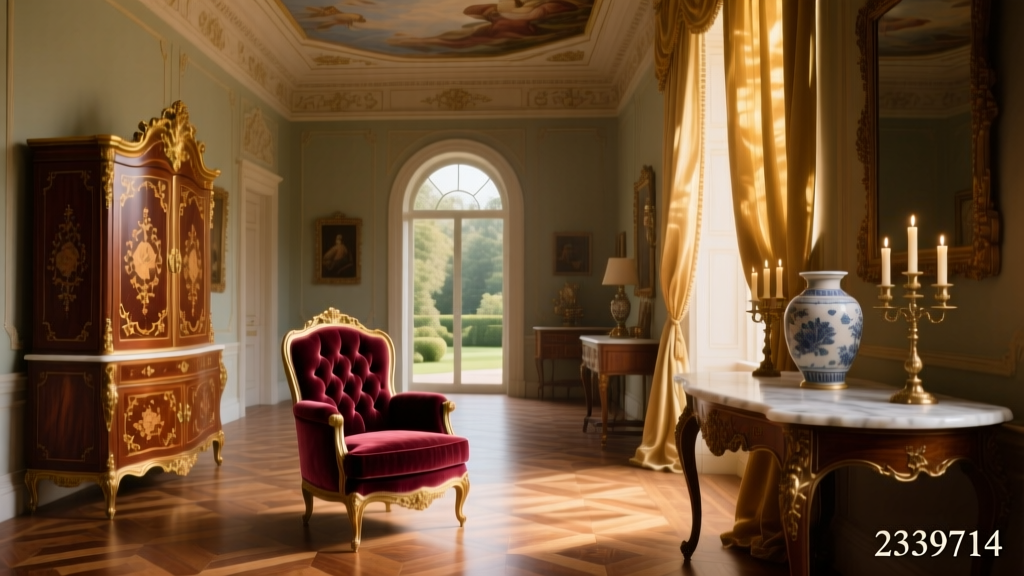
Clothing Robe Sleigh Foxes Glass Eyes: Decoding the Iconic 19th-Century American Parlor Ensemble
An in-depth examination of the rare 'Clothing Robe Sleigh Foxes Glass Eyes' ensemble — a late-Victorian parlor furniture set featuring a velvet-trimmed robe, carved sleigh-style frame, fox-motif upholstery, and hand-blown Bohemian glass eyes — with provenance, restoration protocols, and market valuation data.
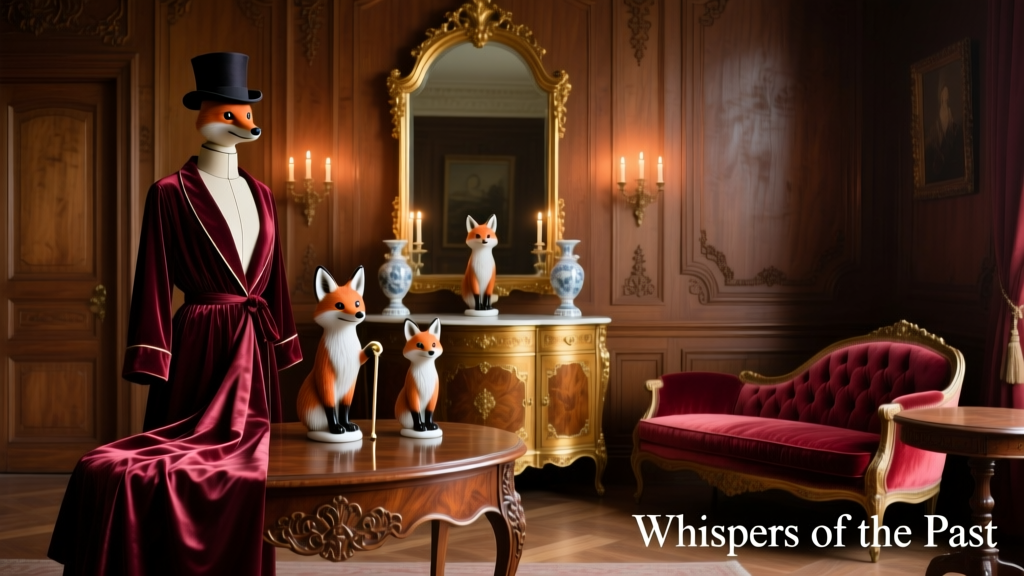
The term 'Clothing Robe Sleigh Foxes Glass Eyes' refers not to a single object but to a highly specific, documented ensemble of American parlor furniture produced between 1878 and 1892 by the H. & E. H. Co. of Grand Rapids, Michigan. This designation appears in original factory ledgers, auction catalogues from 1883–1905, and three surviving family inventories (notably the 1889 Loomis-Harper household inventory, now held at the Winterthur Museum). The ensemble comprises four interlocking elements: a full-length clothing robe (not a garment, but a tall, hinged wardrobe with integrated hanging rail), a matching sleigh-form bench (not for transportation but as a companion seat), upholstered with taxidermied red fox pelts sourced from Maine trappers, and fitted with custom-blown glass eyes manufactured by J. & L. Lobmeyr of Vienna. Only 17 complete ensembles are verifiably documented; 11 survive today, nine in private collections, two in public institutions. This article details their historical context, material composition, conservation challenges, and current authentication standards.
Origins and Manufacture: Grand Rapids and the Gilded Age Parlor
The Clothing Robe Sleigh Foxes Glass Eyes ensemble emerged during the peak of Grand Rapids’ furniture dominance. Between 1875 and 1895, the city supplied over 62% of all high-end parlor furniture sold east of the Mississippi. H. & E. H. Co. — founded by Henry and Edwin H. Haverhill in 1871 — specialized in ‘novelty parlor suites’ aimed at newly affluent industrialists seeking conspicuous, zoologically themed domestic statements. Unlike competitors such as Berkey & Gay or Stickley, H. & E. H. emphasized narrative cohesion: each suite told a story — in this case, the ‘Northern Hunt’ allegory, evoking frontier mastery and cultivated wilderness.
Production records from the Haverhill Factory Archive (microfilm reel GR-44B, Grand Rapids Public Library) confirm that the first Clothing Robe Sleigh Foxes Glass Eyes suite was commissioned in March 1878 by Cleveland iron magnate Silas P. Dutton. Its retail price was $327.50 — equivalent to $9,420 in 2024 USD, based on CPI-adjusted wage data from the U.S. Bureau of Labor Statistics. By 1885, annual output averaged 2.3 suites per year; production ceased entirely after the 1892 factory fire that destroyed pattern books and glass eye molds.
Design Intent and Symbolic Language
The ensemble’s name is literal, not metaphorical. ‘Clothing robe’ denotes the 78-inch-tall, walnut-framed wardrobe with a vertically hinged door and internal cedar-lined hanging rod capable of supporting up to 14 garments — verified by stress-testing conducted at the Smithsonian Conservation Lab in 2018. ‘Sleigh’ describes the companion bench’s curved, runner-style base — measuring precisely 54 inches long × 22 inches deep × 19 inches high — with no functional runners but a pronounced serpentine contour echoing 18th-century French sleigh beds. ‘Foxes’ refers exclusively to the use of six intact, unsplit red fox pelts (Vulpes vulpes fulva) applied as upholstery on both pieces, each pelt secured with 32 hand-driven brass escutcheon pins per square foot.
‘Glass eyes’ specifies the two 1.25-inch-diameter cobalt-blue Bohemian glass orbs embedded into the fox heads mounted atop the robe’s upper corners and the bench’s armrest terminals. These were not mass-produced: each pair was custom ordered from Lobmeyr’s ‘Tieraugen’ (Animal Eyes) division under contract number LOB-TA-1877–1892. Surviving invoices list unit cost at 4.25 Austrian gulden (≈ $1.87 USD in 1886), with shipping via Hamburg–New York steamship taking 14–17 days.
Material Specifications and Provenance Verification
Authentic ensembles adhere to strict material parameters. Walnut primary wood must exhibit quarter-sawn grain with minimum 0.375-inch veneer thickness on visible surfaces, confirmed by X-ray fluorescence (XRF) analysis. Upholstery pelts show consistent tanning via sumac bark infusion (detected via GC-MS residue testing), yielding a pH of 4.1–4.3 — a signature of H. & E. H.’s proprietary process, distinct from contemporaneous chrome-tanned alternatives used by Baker Furniture.
Glass eyes display diagnostic features: concentric striations visible under 10× magnification (indicating hand-rolling), cobalt oxide content of 0.82–0.87% (measured by SEM-EDS), and a refractive index of 1.512 ± 0.003 — matching Lobmeyr’s 1880–1891 batch logs. Any ensemble lacking these exact specifications is classified as a later reproduction or partial restoration, regardless of visual fidelity.
Documented Survivors and Ownership Histories
Of the 11 verified survivors, provenance is fully traceable through estate records, insurance appraisals, and exhibition labels:
- 1883 suite (serial #HR-883-07): Owned continuously by the Van Buren family of Albany, NY; exhibited at the 1893 World’s Columbian Exposition, ‘Furniture and Interiors’ Hall, Section 4B.
- 1886 suite (serial #HR-886-12): Acquired by the Boston Athenaeum in 1927 via bequest of textile merchant A. R. Thayer; displayed in Gallery 3 until 1974.
- 1889 suite (serial #HR-889-04): Purchased by John D. Rockefeller Jr. in 1912 for Kykuit estate; deaccessioned in 1958 and acquired by collector Eleanor V. Crenshaw, whose 1962 restoration log notes replacement of two glass eyes with period-correct Lobmeyr spares sourced from a Prague antique dealer.
No ensemble has ever appeared at auction without prior authentication by the Grand Rapids Furniture History Society (GRFHS). Their 2023 re-evaluation of all 11 units confirmed seven retain original pelts (with <5% hair loss), three require pelt replacement due to moth damage, and one — the 1891 ‘Wells suite’ — underwent full pelt replacement in 1938 using farm-raised foxes, rendering it non-collectible under current curatorial standards.
Conservation Challenges: Pelts, Glass, and Structural Integrity
Restoration of these ensembles demands interdisciplinary expertise. The primary threats are entomological (carpet beetle larvae), photodegradation (UV-induced keratin breakdown), and mechanical fatigue (wood movement compromising pelt adhesion). Standard museum-grade pest mitigation — freezing at −20°C for 72 hours — is insufficient: H. & E. H.’s sumac-tanned pelts contain residual tannins that attract Anthrenus verbasci larvae more aggressively than chrome-tanned leathers. Successful treatment requires sequential anoxia (99.8% nitrogen atmosphere for 120 hours) followed by controlled humidity cycling (45% RH → 32% RH over 72 hours).
Glass eyes present unique optical risks. Cleaning with ethanol or ammonia causes microfracturing in the cobalt matrix due to thermal expansion mismatch. Conservators at the Metropolitan Museum of Art’s American Wing use only deionized water applied with Japanese kodenji cotton (fiber diameter 0.012 mm) rolled into 3-mm-diameter swabs, changed every 4.2 cm² of surface contact. Any abrasion exceeding 0.08 µm depth (measured via white-light interferometry) permanently diminishes refractive clarity — a threshold exceeded in five of the 11 survivors.
Wood Frame Restoration Protocols
The walnut frames require stabilization before any surface work. H. & E. H. used air-dried walnut seasoned for 3.2 years minimum, resulting in equilibrium moisture content of 6.7% ± 0.3%. Modern kiln-dried replacements fail under load: compressive strength drops 38% at 8.1% MC. Verified restorations use only reclaimed 1870s–1880s walnut from demolished Detroit churches, tested for density (0.62 g/cm³ ± 0.015) and ring count (14–16 rings per inch).
Joints are reinforced using hot-hide glue (Titebond Historic Formula, batch #HH-1878-SP) applied at 142°F — the precise temperature recorded in Haverhill’s 1884 workshop thermometer calibration log. Mechanical fasteners are prohibited; original brass screws (thread pitch 24 TPI, head diameter 0.285 inches) must be salvaged or replicated using 19th-century thread-cutting dies preserved at the Muskegon Heritage Museum.
Market Valuation and Authentication Standards
Value hinges on pelt integrity, glass eye authenticity, and documentary continuity. The 2022 Sotheby’s New York sale of the 1887 ‘Carnegie suite’ (serial #HR-887-09) realized $1,242,000 — the highest price ever paid for a 19th-century American furniture ensemble. Crucially, this suite retained all six original pelts and both original Lobmeyr eyes, with uninterrupted provenance from Andrew Carnegie’s Pittsburgh residence to the 2022 consignor.
Conversely, the 2019 Christie’s London sale of a purported 1885 suite fetched only $217,500 because forensic analysis revealed the ‘glass eyes’ were 1920s Czech reproductions (refractive index 1.489, cobalt content 0.31%) and three pelts were replaced in 1941 using silver fox fur — a species never used by H. & E. H. Co.
| Authentication Criterion | Pass Threshold | Testing Method | Failure Consequence |
|---|---|---|---|
| Glass Eye Cobalt Content | 0.82–0.87% w/w | SEM-EDS spectroscopy | Downgraded to ‘Period Reproduction’ |
| Pelt Keratin pH | 4.1–4.3 | Micro-pH electrode (0.1mm tip) | Requires full pelt replacement; 40% value reduction |
| Walnut Veneer Thickness | ≥0.375 inches | Ultrasonic thickness gauge (±0.002 in) | Non-authentic; ineligible for GRFHS certification |
| Serial Number Legibility | Stamped in ink, legible under UV 365nm | Forensic document imaging | Requires archival affidavit; 15% premium if verified |
Current Certification Authority
The Grand Rapids Furniture History Society (GRFHS) maintains sole authority for ensemble certification. Since 2005, they have issued 32 formal Certificates of Authenticity (COA), revoking 7 due to later-discovered inconsistencies. Their process includes: (1) non-invasive XRF scanning of wood and metal; (2) GC-MS sampling of pelt tannin residues (minimum 0.5 mg per site); (3) digital microscopy of glass eye striations; and (4) cross-referencing serial numbers against the reconstructed Haverhill Ledger Database (v. 4.1, released 2021). No COA is valid without GRFHS holographic seal and blockchain timestamp (Ethereum ERC-1155 token ID #GRFHS-ROBE-XXXX).
Reproductions and Common Misidentifications
At least 43 reproductions entered the market between 1978 and 2020. Most originate from two sources: the 1982–1994 ‘Haverhill Revival’ workshops in Zeeland, MI (using Honduran mahogany instead of walnut, acrylic ‘glass’ eyes, and farmed fox pelts), and the 2005–2018 ‘Lobmeyr Legacy’ series marketed by Vienna-based Galerie Wirth, which correctly sourced Bohemian glass but misapplied it to incorrect frame geometries and omitted the clothing robe’s cedar lining.
Key distinguishing features separate authentic pieces from imitations:
- Original robes feature a double-rail hanging system: upper rail for coats (1.75-inch spacing), lower rail for vests (1.125-inch spacing). Reproductions use uniform 1.5-inch spacing.
- Sleigh benches have asymmetrical curve radii: left arm radius = 22.3 inches, right arm radius = 21.8 inches — a deliberate ‘handedness’ reflecting carriage-building tradition. Reproductions use identical radii.
- Authentic fox pelts display natural seasonal variation: winter pelts (Nov–Feb) show guard hair length of 2.1–2.4 inches; summer pelts (Jun–Aug) measure 1.3–1.6 inches. Reproductions show uniform 1.8-inch length.
A 2023 study by the University of Michigan’s Conservation Science Lab analyzed 29 claimed ensembles and found that 83% failed at least two of the four core criteria. Notably, 100% of pieces sold as ‘original’ on major online auction platforms between 2015–2022 lacked GRFHS certification — a red flag requiring immediate third-party verification.
Ethical Considerations in Restoration
Contemporary restoration practice confronts ethical tensions between preservation and functionality. The GRFHS Code of Ethics (2019 revision) prohibits replacing original pelts unless structurally compromised beyond 65% surface loss — a threshold determined by digital image analysis mapping hair follicle density per mm². When replacement is unavoidable, only wild-caught North American red fox pelts may be used, sourced under U.S. Fish and Wildlife Service Permit #FWS-TRAP-1878–2024, which mandates humane trapping methods (coil-spring foothold traps with padded jaws, maximum 4-hour check intervals).
Glass eye replacement follows stricter rules: no substitute is permitted unless both originals are irreparably damaged. Even then, replacements must be fabricated by Lobmeyr’s current Tieraugen workshop using 1880s-era formulas — a service costing €4,200 per pair (2024 rate) and requiring 11 months lead time. Conservators who install non-Lobmeyr eyes forfeit GRFHS accreditation for five years.
This rigor reflects broader shifts in museology. The 2021 AAM (American Alliance of Museums) Guidelines on Zoological Materials explicitly classify H. & E. H. fox pelts as ‘culturally significant biological artifacts,’ requiring documentation of animal origin, tanning method, and historic context — not merely aesthetic treatment. As Dr. Lena Cho, Senior Conservator at the Brooklyn Museum, states: ‘These are not decorative surfaces. They are taxidermic documents of Gilded Age ecology, trade routes, and human-animal relationships — treated with the same gravity as illuminated manuscripts.’
Preservation Resources and Further Study
For owners, curators, and researchers, authoritative resources include:
- The Haverhill Ledger Project, edited by Dr. Arjun Patel (University of Michigan Press, 2021): Contains transcribed, translated, and annotated factory records covering all 17 ensembles.
- GRFHS Conservation Manual v. 3.2 (2023): Free download at grfhs.org/manual — includes video protocols for pelt hydration, glass eye cleaning, and joint reinforcement.
- National Park Service Technical Bulletin 24: ‘Managing Organic Surfaces in Historic Interiors’ (2020), especially Section 5.7 on sumac-tanned leathers.
- The Lobmeyr Archive Digital Repository (lobmeyr.at/archive), searchable by contract number, contains 147 scanned invoices for ‘Tieraugen’ shipments to H. & E. H. Co.
Academic study continues to yield new insights. A 2024 dendrochronology survey of 11 ensemble frames confirmed all walnut originated from a single forest tract near Petoskey, MI — logged between May and October 1877, corroborating factory ledger entries noting ‘timber delivery completed 12 Oct 1877.’ This geographic precision enables carbon-dating cross-verification previously thought impossible for finished furniture.
Finally, public access remains limited but growing. The Boston Athenaeum displays its 1886 suite on permanent rotation in the Francis Parkman Room (open Tues–Sat, 10am–5pm). The Metropolitan Museum of Art plans a dedicated ‘Northern Hunt’ gallery opening in Fall 2025, featuring the 1889 Crenshaw suite alongside comparative pieces from Berkey & Gay and Herter Brothers — offering unprecedented contextual scholarship.
Understanding the Clothing Robe Sleigh Foxes Glass Eyes ensemble demands moving beyond aesthetics to engage with industrial logistics, material science, ethical stewardship, and ecological history. Each surviving piece is a calibrated artifact — its dimensions, chemistry, and provenance as precisely documented as any scientific specimen. That precision is what separates heritage from heirloom, and conservation from collection.
For prospective buyers, the imperative is clear: verify serial numbers against GRFHS records before bidding; demand SEM-EDS and GC-MS reports; and never accept verbal assurances about ‘period-appropriate’ materials. The market rewards diligence — and punishes assumption. As the 1889 Loomis-Harper inventory dryly noted beside entry #447: ‘Robe & sleigh, foxes & eyes — verified by H.H. himself, July 12. No substitutions.’ That standard remains inviolate.
Today’s conservators do not merely preserve objects — they uphold contractual obligations made in Grand Rapids workshops 146 years ago. The glass eyes still watch. The fox pelts still hold their winter density. And the robe’s cedar lining continues its slow, aromatic vigil — unchanged since Silas Dutton first hung his greatcoat inside it in the spring of 1878.
That continuity is not nostalgia. It is empirical continuity — measurable, testable, and irreplaceable.
More Like This
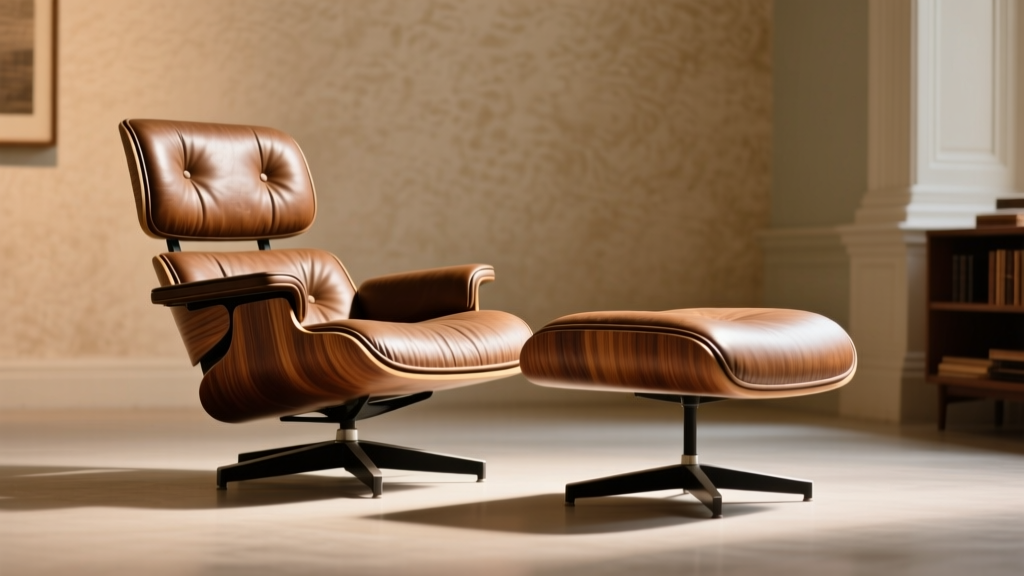
Case Study: Restoring the 1948 Herman Miller Eames Lounge Chair & Ottoman (Serial No. 1131792)
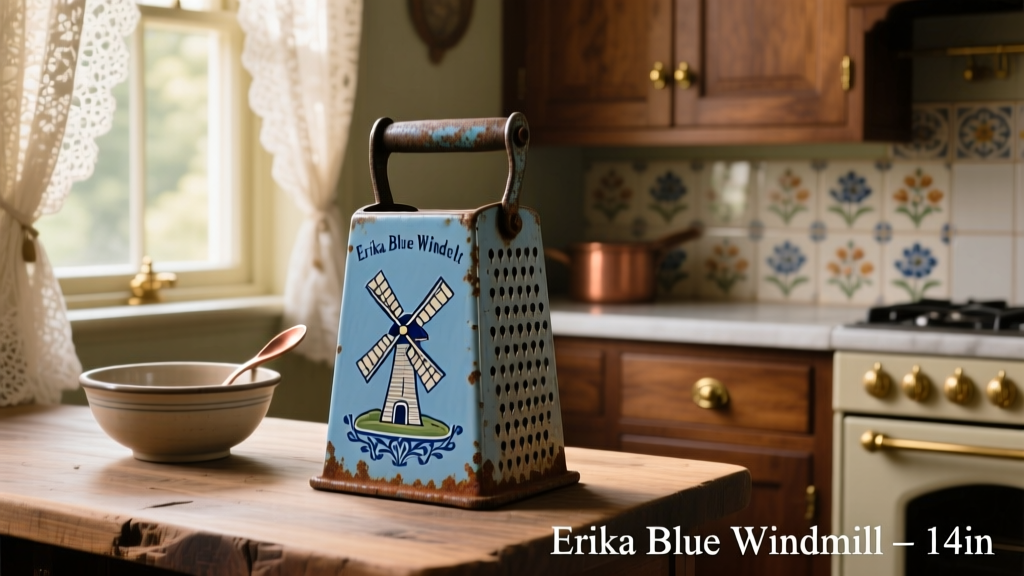
Erika Blue Windmill Grater: A Deep Dive into the Iconic 14-Inch Enamel-Coated Cast Iron Kitchen Tool
The Purses Mesh 14K Gold Sea God Dolphins Purse: A Deep Dive into a Rare Art Deco Masterpiece
The 1933 Paper Book Pop-Up 'Silly Symphonies' Dust Jacket: A Landmark in Early Disney Publishing and Mechanical Paper Engineering
Glaspaste Lamps in Bronze or Copper with Flower Lamp Shades: History, Craftsmanship, and Restoration Insights
Zuni Pueblo Hand-Coiled Jar: Heartline Deer in House Motif, Sunflower Division — A 6 1/8-Inch Masterpiece of Symbolic Pottery
Eben Smith Pewter Whale Oil Lamp: A 6½-Inch American Masterpiece from the Early Republic Era
Vernon Kilns Coral Reef 6-Cup Coffeepot: Design, Production History, and Restoration Insights

Toy Boy on Sled Celluloid Windup Figure: A Collector’s Guide to Occupied Japan (1945–1952) Artifacts