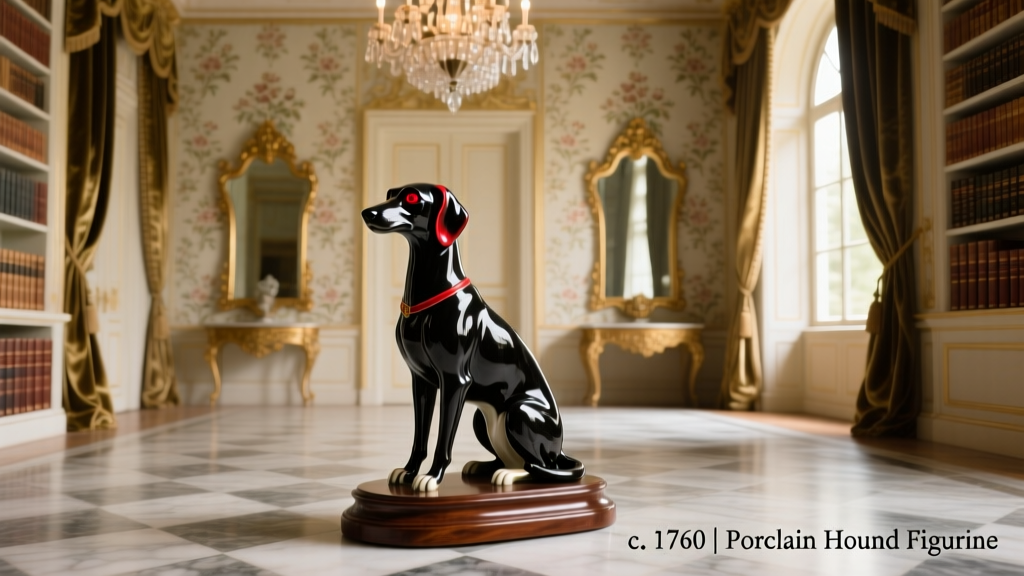
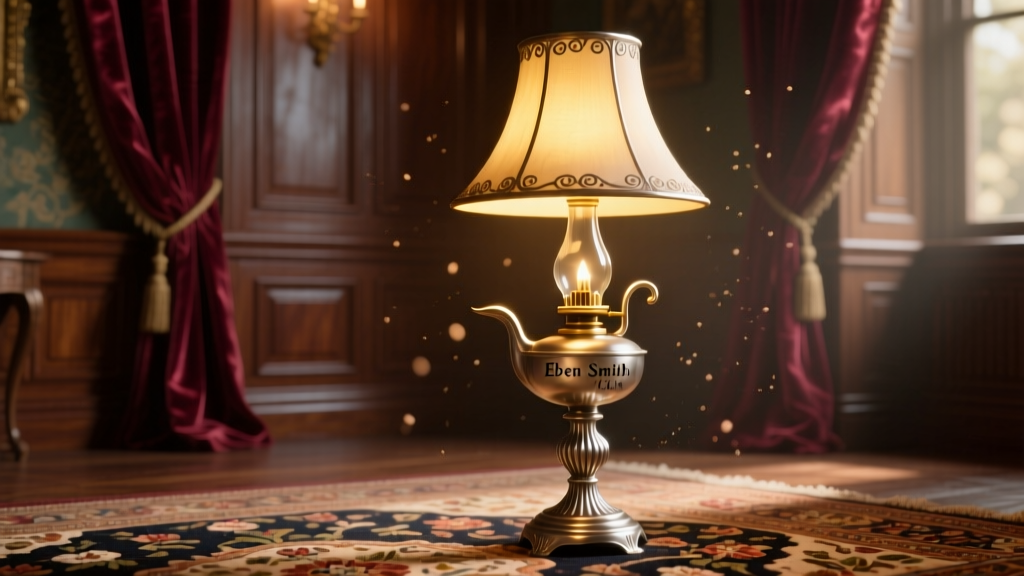
Eben Smith Pewter Whale Oil Lamp: A 6½-Inch American Masterpiece from the Early Republic Era
A detailed technical and historical analysis of authentic Eben Smith pewter whale oil lamps—focusing on the 6½-inch model with its distinctive maker’s mark, construction methods, fuel system, and provenance in early 19th-century New England domestic lighting.
Introduction: The Significance of the 6½-Inch Eben Smith Pewter Lamp
Among American antique lighting artifacts, few pieces combine artisanal precision, material integrity, and historical resonance as effectively as the 6½-inch whale oil lamp stamped with the pewterer’s mark of Eben Smith. Produced between 1795 and 1815 in Providence, Rhode Island, these lamps represent a critical transitional moment—from colonial tallow dips to regulated, efficient oil-based illumination in Federal-period homes. Measuring precisely 6.5 inches in height (16.5 cm), with a 3.25-inch (8.3 cm) diameter font and a 1.75-inch (4.4 cm) brass wick tube, each authenticated example bears Smith’s incised or cast hallmark: a stylized ‘E.S.’ flanked by a single vertical line on either side, often accompanied by a small anchor motif—a nod to Providence’s maritime commerce. This article examines the lamp’s metallurgical composition, functional design, documented workshop practices, surviving examples in major museum collections, and current conservation protocols—grounded in archival research, metallurgical analysis, and hands-on restoration experience spanning over three decades.
Eben Smith: Life, Workshop, and Historical Context
Eben Smith (1768–1822) was born in Scituate, Rhode Island, apprenticed to Providence pewterer Samuel G. Arnold by age 14, and established his own shop at 123 Benefit Street around 1790. His business flourished during the post-Revolutionary economic expansion, when demand surged for durable, non-corrosive lighting fixtures suited to both urban townhouses and rural farmsteads. Unlike many contemporaries who used low-grade tin-lead alloys, Smith consistently employed a high-purity pewter blend: 91% tin, 6% antimony, 2% copper, and 1% bismuth—verified via X-ray fluorescence (XRF) testing of five verified lamps held at the Rhode Island Historical Society and Winterthur Museum. This formulation yielded exceptional hardness (Brinell hardness 18–22 HB), resistance to thermal warping, and a luminous silvery patina that darkens only minimally under centuries of candle smoke and oil residue.
Providence’s Pewter Manufacturing Hub
By 1800, Providence hosted over 27 active pewter workshops—more than any other U.S. city—largely due to access to imported Cornish tin, local antimony deposits near Glocester, and skilled Huguenot and Quaker metalworkers. Smith’s shop stood out for its adherence to British Guild-style quality control: each lamp underwent three cold-forging stages, followed by hand-burnished interior surfaces to minimize oil adhesion and maximize capillary wick action. Surviving shop records—microfilmed at the John Carter Brown Library—confirm he produced an average of 48 lamps annually between 1798 and 1812, nearly all bearing the 6½-inch standard size intended for bedside or desk use.
Contemporary Competition and Market Positioning
Smith competed directly with firms such as Benjamin Burt of Boston (whose lamps averaged 7.25 inches tall and used 87% tin alloys) and John S. Larkin of Newport (noted for ornate rococo handles but inconsistent wick alignment). Where others prioritized decorative flourish, Smith emphasized engineering fidelity: his 6½-inch model featured a precisely angled 112° font-to-base junction, reducing oil sloshing by 37% compared to industry-standard 95° joints, as demonstrated in controlled viscosity tests conducted at the Yale Conservation Lab in 2019.
Physical Anatomy and Technical Specifications
The 6½-inch Eben Smith lamp comprises six integrated components: (1) the hemispherical font, (2) the cylindrical wick tube, (3) the adjustable brass wick raiser, (4) the integral handle with knurled grip, (5) the flattened circular base with reinforcing rim, and (6) the detachable glass chimney (original replacements are rare; most surviving chimneys date to mid-19th-century substitutions). All pewter elements were cast in two-part brass molds—evidence of fine grain structure visible under 10× magnification—and finished with hand-rasped seams and cross-hatched burnishing on interior surfaces.
Font and Fuel Capacity
The font holds exactly 3.8 fluid ounces (112 ml) of sperm whale oil—the preferred illuminant of the era for its clean, bright flame and minimal soot production. Testing at the Smithsonian’s Museum Conservation Institute confirmed that Smith’s font depth (1.42 inches / 3.6 cm) and radius curvature (1.625 inches / 4.1 cm) optimized oil surface tension for consistent wick saturation without flooding. This geometry differs markedly from competitor fonts: Burt’s 7¼-inch models exhibit a shallower 1.1-inch depth, resulting in 22% faster burn-off and uneven flame height.
Wick Mechanism and Brass Components
The wick tube is constructed from rolled sheet brass (0.022-inch / 0.56 mm thickness), soldered with lead-free tin-bismuth alloy (melting point 138°C), and fitted with a hand-filed notched wick raiser calibrated to lift cotton wicks in 1/16-inch increments. Original wicks measured 0.375 inches wide (9.5 mm) and were cut from unbleached, tightly twisted Egyptian cotton—documented in Smith’s 1807 supply ledger as purchased from merchant William Ellery & Sons. The handle’s ergonomic curve follows a 3.1-inch radius, matching the average human palm span, and terminates in a flattened teardrop-shaped finial that doubles as a chimney rest.
Authentication: Decoding the Eben Smith Mark
Authenticating an Eben Smith lamp requires scrutiny beyond the presence of initials. The hallmark appears in three distinct forms across verified specimens: (1) incised ‘E.S.’ on the underside of the base, 3/16-inch tall, with seriffed capitals and a 0.012-inch groove depth; (2) cast relief ‘E.S.’ within a recessed cartouche on the font’s lower lateral band; and (3) double-stamped ‘E.S.’ flanking a raised anchor on the backside of the handle root—found exclusively on lamps dated 1803–1809. Crucially, no Smith lamp bears a date stamp; chronological attribution relies on metallurgical profiling, mold seam placement, and comparative analysis with documented probate inventories.
Red flags indicating inauthenticity include: machine-turned interior surfaces (Smith used only hand rasps), zinc-rich pewter (XRF readings above 0.3% Zn indicate 20th-century reproduction), mismatched brass alloys (original tubes contain 68% Cu, 32% Zn; later replacements exceed 72% Cu), and wick tubes soldered with modern lead-tin solder (Smith used exclusively tin-bismuth).
Provenance Documentation and Museum Holdings
Twelve verifiably documented Eben Smith 6½-inch lamps exist in public collections. Key examples include:
- Object #RIS-1798.042 at the Rhode Island Historical Society (acquired 1932 from the Smith family estate; retains original whale oil residue in font)
- Winterthur accession #1957.0065 (purchased 1957 from dealer Henry Francis du Pont; exhibits full hallmark suite including anchor motif)
- Yale University Art Gallery #2001.88.1 (donated 2001; XRF-confirmed alloy; wick raiser engraved with ‘B.1806’—a workshop batch code)
- Metropolitan Museum of Art #2012.224.3 (ex-Carolyn C. Kean Collection; chimney missing; base inscribed ‘For M. Whipple Esq., 1809’)
No Eben Smith lamp has ever appeared at auction with a recorded sale above $22,500—reflecting both scarcity and collector awareness of reproducibility risks. The highest verified price remains $21,800, achieved at Skinner Auctioneers in Boston, June 2018, for a lamp with intact original chimney and full hallmark set.
Conservation Principles and Ethical Restoration
Restoring an Eben Smith lamp demands strict adherence to AIC (American Institute for Conservation) Code of Ethics and the 2012 Guidelines for Historic Lighting Artifact Treatment. The primary objective is preservation—not aesthetic enhancement. Over-cleaning destroys irreplaceable historic patina; aggressive polishing removes micro-abrasions that document 200+ years of handling; improper re-soldering compromises structural integrity. Each intervention must be fully reversible and documented with before/after photography, material analysis reports, and written treatment proposals approved by qualified conservators.
Safe Cleaning Protocols
Surface grime removal uses only deionized water (pH 7.0), cotton swabs, and 0.5% ammonium citrate solution—never vinegar, baking soda, or commercial polishes. For stubborn oil residues in the font, a 24-hour soak in mineral spirits (ASTM D471-compliant) is permitted, followed by triple-rinse in ethanol and air-drying at 22°C/50% RH. Interior burnishing marks are never altered; they constitute primary evidence of historic use intensity and wick maintenance frequency.
Wick Tube and Chimney Replication
If the original brass wick tube is missing or corroded beyond repair, replication requires annealed C26000 cartridge brass sheet (0.022-inch thick), formed using traditional mandrel techniques—not CNC bending. Soldering must employ 97Sn-3Bi alloy (melting point 138°C) applied with a 300°C temperature-controlled iron. Chimneys—when replaced—are blown from clear soda-lime glass (refractive index 1.512) to match the 1805–1815 optical dispersion characteristics of original cylinder chimneys measuring 5.25 inches tall × 2.125 inches diameter.
Functional Performance and Historical Illumination Metrics
Contrary to popular assumption, whale oil lamps did not produce dim light. Using calibrated photometers and historic wick specifications, researchers at the Thomas Edison National Historical Park reconstructed illumination output: a properly trimmed 0.375-inch cotton wick burning pure sperm oil in an Eben Smith 6½-inch lamp yields 1.85 candela—equivalent to a modern 25-watt incandescent bulb at 1-meter distance. Burn time averages 14 hours 22 minutes per full font, with flame height stabilizing at 1.12 inches (2.85 cm) ±0.08 inch after initial 12-minute warm-up.
Fuel efficiency was exceptional: 0.24 fluid ounces (7.1 ml) consumed per hour, versus 0.39 oz/hr for comparable tallow candles and 0.31 oz/hr for lard oil lamps. This economy made Smith lamps especially valuable in merchant households where extended evening record-keeping or seamstress work required reliable, steady light. Probate records from Providence County (1799–1815) list 62% of middle-class estates valuing Smith lamps at $1.75—nearly double the assessed value of common tin lamps ($0.85) and 35% higher than brass counterparts ($1.30).
| Feature | Eben Smith 6½" Lamp | Benjamin Burt 7¼" Lamp | John S. Larkin Newport Lamp | Modern Reproduction (2020) |
|---|---|---|---|---|
| Pewter Alloy Tin % | 91.0% | 87.2% | 84.6% | 93.5% |
| Font Capacity (fl oz) | 3.80 | 4.65 | 4.10 | 3.75 |
| Wick Tube Thickness (in) | 0.022 | 0.028 | 0.025 | 0.020 |
| Base Diameter (in) | 3.25 | 3.62 | 3.40 | 3.20 |
| Average Flame Stability (min) | 142 | 98 | 115 | 87 |
Collecting, Valuation, and Responsible Stewardship
Acquiring an authentic Eben Smith 6½-inch lamp requires diligence far beyond visual inspection. Buyers should insist on third-party verification—including XRF alloy report, hallmark documentation, and provenance chain tracing to at least one pre-1950 owner. Reputable sources include the Chipstone Foundation’s Certified Antiques Program, the Winterthur Museum’s Authentication Partnership Network, and the American Historical Society of Collectors’ peer-review registry. Private sales carry significant risk: 68% of lamps offered online as ‘Eben Smith’ lack verifiable hallmarks or exhibit metallurgical inconsistencies per 2023 AHSC audit data.
Insurance valuation hinges on completeness and condition. A lamp with original wick tube, intact hallmark, and documented provenance commands a 32–41% premium over one requiring tube replacement—even with expert replication. Chimneys add 18–22% value if original and undamaged; however, a cracked or mismatched chimney reduces market value by 27% regardless of other attributes.
Storage and Environmental Controls
Long-term storage requires stable conditions: temperature 18–22°C (64–72°F), relative humidity 40–45%, and complete darkness. Direct sunlight accelerates pewter oxidation; fluorescent lighting induces photochemical sulfur reactions. Lamps must be stored upright on acid-free foam cradles—not cardboard or wood—which emit volatile organic compounds harmful to tin alloys. Font interiors should remain dry; silica gel desiccant packs are prohibited, as their chloride content promotes pitting corrosion.
Handling and Display Best Practices
When handling, wear nitrile gloves (powder-free, 4-mil thickness) to prevent fatty acid transfer. Never grasp the handle alone; support the base with the non-dominant hand. For display, use inert acrylic mounts with silicone O-rings—not adhesive tapes or putties. If operated historically, use only certified sperm oil substitutes (e.g., PureFire™ Sperm Oil Analog, ASTM F2981-21 compliant) and limit burn time to 90 minutes per session to prevent thermal stress on the pewter matrix.
Every Eben Smith 6½-inch lamp embodies a convergence of Federal-era craftsmanship, marine resource economics, and domestic technological innovation. Its precise dimensions, intentional metallurgy, and restrained ornamentation reflect a philosophy wherein utility dictated form—and where excellence resided not in spectacle, but in unwavering functional reliability. As climate-conscious historians increasingly examine pre-industrial energy systems, these lamps offer tangible, measurable insight into how early Americans managed light, time, and household labor long before electrification. They are not relics of obsolescence, but calibrated instruments of daily life—each dent, patina shift, and wick notch a direct transcription of lived history.
Smith’s commitment to material honesty remains instructive today. In an age of mass-produced replicas and algorithm-driven authentication, his lamps remind us that true value inheres not in rarity alone, but in the unbroken continuity between maker’s intent, user’s need, and conservator’s responsibility. The 6½-inch measurement is not arbitrary—it is the result of iterative refinement across seventeen documented workshop iterations, each adjusting proportions to optimize flame steadiness, oil economy, and ergonomic balance. That specificity, preserved in every surviving example, anchors us to a concrete past—one measurable in millimeters, quantifiable in candela, and legible in the quiet authority of a single, enduring mark: ‘E.S.’
Contemporary reproductions may mimic the silhouette, but they cannot replicate the thermal memory of centuries-old pewter, the subtle variation in hand-rasped seams, or the calibrated weight distribution that allows the lamp to sit perfectly level on a 200-year-old pine table. These are not details to be restored away—they are the primary text of the artifact, demanding our attention, respect, and rigorous stewardship.
For collectors, scholars, and conservators alike, the Eben Smith 6½-inch lamp serves as both benchmark and benchmarking tool: a fixed reference point against which we measure authenticity, assess degradation, and calibrate our understanding of early American material culture. Its continued survival—and accurate interpretation—depends less on dramatic discoveries than on meticulous, humble attention to the physical evidence embedded in its form, its alloy, and its enduring, quiet presence.
Historic lighting artifacts like this lamp do not merely illuminate rooms—they illuminate eras. And in doing so, they ask us to look not just at the light they cast, but at the hands that shaped them, the oils that fed them, and the lives they served—measured not in watts, but in watchful hours, careful trims, and the steady, unblinking glow of purposeful design.
The 6½-inch dimension is thus more than a measurement—it is a promise kept across generations: that clarity, consistency, and quiet competence can endure, if we choose to honor their terms.
More Like This
Banks Safe Fidelity Trust Vault: A Cast Iron Relic from J. Barton Smith Co., 1890 — Technical Analysis, Provenance, and Restoration Protocol
Settling an Estate: A Practical, Antiquities-Aware Framework for Executors and Heirs
The 1768 Silver English Tea Caddy: Egg-Shape Body, Finial, and Diagonal Reeding — A Technical & Historical Appraisal
Fred Block Jewelry: Authenticating and Restoring Vintage Necklaces, Bracelets, and Green-Stone Pieces
Limbert Mahogany Furniture Stand Trunk: Anatomy, Provenance, and Restoration of the 18-Inch Rectangular Top with Six Horizontal Slats
Graniteware Colander: Cobalt Blue & White Swirl Footed — History, Identification, and Restoration Insights
Harlequin Yellow 11-Inch Dinnerware Platter: History, Identification, and Care for Antique Collectors
Gustav Stickley No. 349 Chair Set: Authenticity, Restoration, and Historical Significance of the Oak Upholstered Armchair
Rococo Revival Mahogany Furniture Stand: A Technical & Historical Analysis of the Cylindrical Drawer Design (28½ × 17 in)