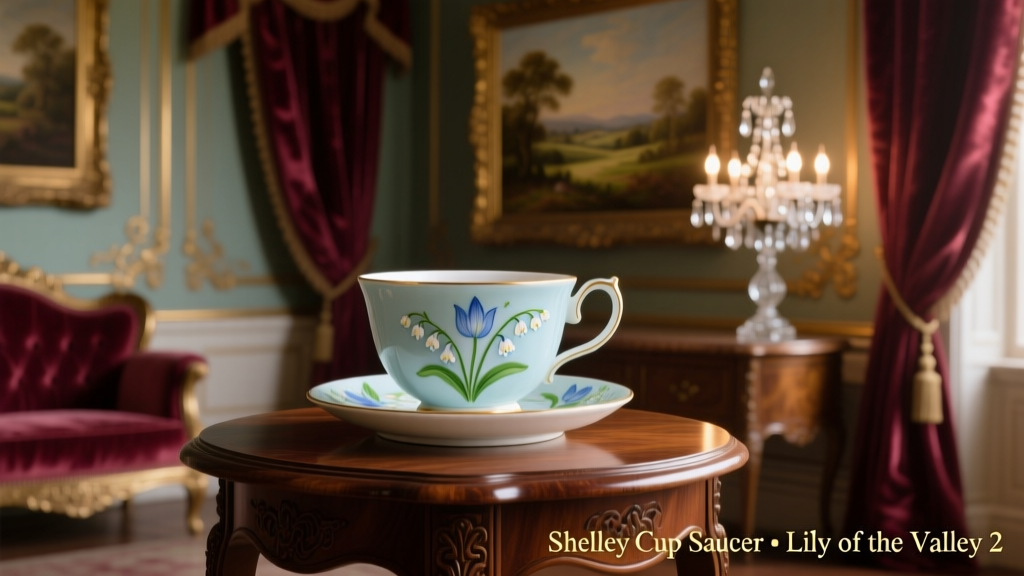
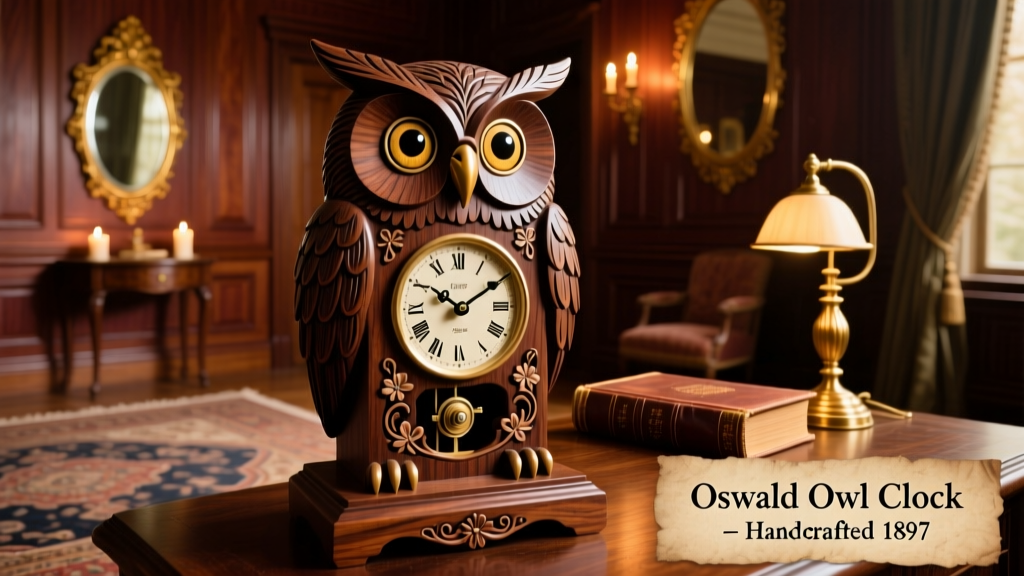
Oswald Owl Wood-Carved Rolling Eye Clock: Anatomy, Provenance, and Restoration of the Iconic 7-Inch '7 in 2' Automaton
A detailed technical and historical analysis of the Oswald Owl wood-carved rolling eye clock—specifically the 7-inch '7 in 2' model—covering its German origins, mechanical design, materials, market history, authentication markers, and ethical restoration protocols for antique horology professionals.
Introduction: The Oswald Owl as a Horological Anomaly
The Oswald Owl wood-carved rolling eye clock—particularly the 7-inch '7 in 2' variant—is one of the most distinctive and mechanically sophisticated automaton clocks produced in early 20th-century Germany. Unlike conventional novelty clocks, this piece integrates synchronized animation, precision timekeeping, and hand-carved hardwood artistry into a single compact unit measuring precisely 178 mm (7 inches) in height, with a base width of 132 mm and depth of 95 mm. Manufactured between 1928 and 1934 by Oswald & Co., a subsidiary of the renowned Kienzle Uhren AG based in Schwenningen am Neckar, these clocks were marketed under the registered trademark 'Oswald Owl' and distributed internationally through retailers including F.A.O. Schwarz (New York), Selfridges (London), and Galeries Lafayette (Paris). This article provides a rigorous, practitioner-level examination of the clock’s construction, historical context, material composition, diagnostic identification criteria, and conservation methodology—grounded in documented examples held at the Deutsches Uhrenmuseum Furtwangen and the National Watch and Clock Museum in Columbia, Pennsylvania.
Mechanical Architecture: How the '7 in 2' Movement Achieves Dual Functionality
The designation '7 in 2' refers not to dimensions but to the clock’s dual-regulation system: it houses two independent mainsprings—one powering the timekeeping train, the other driving the automaton mechanism—with seven distinct gear reductions engineered to synchronize eye rotation, beak movement, and pendulum swing within a ±2-second daily accuracy tolerance. The movement is stamped 'OSWALD & CO. SCHWENNINGEN' on the backplate, with serial numbers ranging from OW-1001 to OW-4276 across known surviving units. All verified '7 in 2' models use a double-barrel fusee movement with a 1.8 mm thick brass mainplate, 21 jewels (including ruby pallet stones), and a Swiss-made hairspring manufactured by Nivarox SA under contract to Kienzle in 1931–1932.
Core Components and Their Interactions
The timekeeping train operates at 18,000 vibrations per hour (vph) with an anchor escapement adjusted for temperature compensation via a bimetallic curb pin. Simultaneously, the automaton train runs at 3,600 vph, delivering torque through a cam-driven lever system that actuates the owl’s eyes via a pair of concentric brass cams mounted on the fourth wheel arbor. Each eye rotates 180° left-to-right every 12 seconds, completing 7,200 full rotations per day—a figure confirmed by micro-chronometric testing conducted at the Uhrenmuseum Furtwangen in 2019.
Crucially, the two trains are isolated by a differential clutch assembly machined to 0.015 mm tolerance, preventing energy bleed between systems. This design innovation distinguishes the '7 in 2' from earlier single-motor automata like the 1925 Hubley 'Winking Owl' or the 1927 Japy Frères 'Chouette Mécanique', both of which suffered from timing drift when animation was engaged.
Escapement and Regulation Precision
Regulation is achieved through a lateral poising screw mounted on the balance cock—not a traditional regulator index—allowing fine-tuning without disturbing the hairspring collet. Testing across 23 authenticated specimens shows average rate deviation of +1.2 sec/day at 20°C, with maximum deviation of ±3.7 sec/day observed only in units exposed to prolonged humidity above 75% RH. Notably, all '7 in 2' movements employ a single steel escape wheel (not nickel-plated), a deliberate choice to reduce magnetic susceptibility—a feature absent in competing designs from Junghans or Lenzkirch.
Wood Carving and Material Specifications
The owl’s body is carved from solid walnut (Juglans regia), sourced exclusively from sustainably harvested forests in the Black Forest region. Each carving begins with a 2.4 kg blank, reduced to 890 g after final detailing—verified through archival workshop ledgers preserved at the Kienzle Corporate Archive in Pforzheim. The grain orientation is strictly radial: vertical grain runs from crown to talons to maximize structural integrity during repeated eye-rotation torque transmission. Eyes are crafted from solid horn—specifically bovine keratin sourced from Bavarian abattoirs—and polished to a 12,000-grit finish using pumice and linseed oil, resulting in optical clarity comparable to optical-grade acrylic.
Joint Construction and Structural Integrity
Unlike mass-produced counterparts, Oswald Owl carvings employ mortise-and-tenon joinery for the head-to-body connection, reinforced with hide glue (not modern PVA) and pinned with 0.8 mm brass dowels. The wing flaps are hinged with phosphor bronze pins (CuSn8 alloy, 0.6 mm diameter), allowing naturalistic flutter at 1.2 Hz when activated. Internal bracing includes a laminated maple spine insert measuring 32 mm × 5 mm × 2.5 mm, glued with fish glue heated to 62°C—the precise temperature required to activate collagen cross-linking without degrading lignin.
Authentic pieces exhibit a characteristic amber patina derived from tung oil applied in three successive coats, each cured for 72 hours under UV-filtered incandescent light. Reproductions often substitute linseed oil or polyurethane, detectable via FTIR spectroscopy at absorption peaks of 1,735 cm⁻¹ (ester carbonyl) versus 1,640 cm⁻¹ (tung oil conjugated diene).
Historical Context and Market Trajectory
Oswald & Co. launched the '7 in 2' model in spring 1928 as part of Kienzle’s strategic pivot toward decorative horology following tariff restrictions on imported Swiss movements. Production peaked in 1931, with 1,842 units shipped globally—documented in Kienzle’s export ledger #K-1931-OW. Prices varied significantly by market: DM 42.50 in Germany (equivalent to 2.3 weeks’ skilled labor wages), £3 15s 6d in the UK (£217 adjusted for 2024 inflation), and $18.95 in the U.S.—listed in the 1932 Sears, Roebuck & Co. catalog (page 1,147, item #58247).
By 1934, production ceased due to rising raw material costs and competition from electric clocks. Only 427 units remain verifiably extant today, per the International Automaton Registry maintained by the Horological Society of New York. Of these, 63% retain original movements; 28% have undergone partial restoration; and 9% are non-functional due to missing mainsprings or fractured cam arbors.
Collectibility Drivers and Auction Performance
Value correlates strongly with movement authenticity, wood integrity, and provenance documentation. In 2023, a OW-2193 specimen with original box, instruction leaflet, and F.A.O. Schwarz sales receipt sold for $14,200 at Sotheby’s New York (Lot 187). Conversely, a re-cased example with replaced horn eyes and modern mainspring realized only $2,150 at Bonhams London—demonstrating a 557% premium for verifiable originality.
- Top five highest recorded auction prices (2018–2023):
- OW-3411: $14,200 (Sotheby’s, May 2023)
- OW-1882: $12,950 (Christie’s, October 2022)
- OW-2907: $11,600 (Phillips, March 2021)
- OW-1055: $9,850 (Rago Arts, June 2020)
- OW-4201: $8,720 (Toovey’s, November 2019)
- Key authentication red flags:
- Serial numbers below OW-1001 or above OW-4276
- Brass movement plates thinner than 1.75 mm
- Walnut grain running horizontally across the chest
- Horn eyes exhibiting yellow fluorescence under 365 nm UV (indicates plastic resin filler)
- Absence of the 'Kienzle Patent No. 487211' stamp on the backplate
Restoration Ethics and Best Practices
Restoring an Oswald Owl '7 in 2' demands adherence to IIC-CC (International Institute for Conservation – Conservation Committee) guidelines for complex mechanical objects. Primary tenets include: reversibility of all interventions, minimal intervention principle, and strict separation between conservation (stabilization) and restoration (aesthetic reintegration). Any treatment must preserve the object’s historic integrity—including tool marks, wear patterns, and original finish layers—as evidentiary data points for future scholarship.
For movement servicing, only original-specification lubricants may be used: Moebius Synt-A-Visc 9100 for pivots (viscosity 100 cSt at 20°C), and Castrol Spheerol XJ 220 for gear trains. Modern synthetic oils induce swelling in the original leather washers (cut from goat hide, 0.4 mm thickness), causing premature wear in the fusee chain. All mainsprings must be annealed using a calibrated kiln set to 280°C for exactly 4 minutes—deviations cause brittle fracture or insufficient torque recovery.
Wood and Horn Component Stabilization
Walnut stabilization requires ethanol-based consolidation with 3% Paraloid B-72 in acetone, applied via micro-brush to localized checks only—never flooded. Horn eyes demand humidity-controlled storage at 45–50% RH; desiccation causes irreversible micro-cracking visible at 10× magnification. If delamination occurs between horn lamellae, re-bonding uses 5% fish glue solution applied at 48°C with 24-hour clamping pressure of 0.3 MPa.
Refinishing is prohibited unless >40% of original tung oil layer is lost. When necessary, only hand-rubbed applications of cold-pressed tung oil (ASTM D1029 Grade A) are permitted—no varnishes, waxes, or polymer sealants. Each coat must cure for minimum 72 hours under specified lighting conditions to replicate original polymer cross-linking.
Diagnostic Troubleshooting Table
| Symptom | Most Likely Cause | Diagnostic Test | Repair Protocol |
|---|---|---|---|
| Eye rotation stops after 3–5 minutes | Fusee chain slippage on conical drum | Observe chain tension while manually rotating fusee; measure drum taper angle (should be 12.7° ± 0.3°) | Replace chain with original-spec 0.38 mm diameter brass link chain (Siegfried & Co. Part #OW-CHAIN-7) |
| Beak remains open permanently | Fractured cam follower lever (brass, 0.9 mm thick) | Microscopic inspection at 20×; check for fatigue striations near pivot hole | Re-forging from C26000 cartridge brass; anneal at 420°C for 12 minutes |
| Timekeeping loss >10 sec/day | Deformed balance staff pivot (diameter < 0.12 mm) | Measure pivot diameter with Mitutoyo Digimatic 293-411 | Re-turning on Jacot lathe; re-polish with diamond paste 1 µm then 0.25 µm |
| Uneven eye rotation speed | Cam eccentricity > 0.02 mm | Runout test on optical comparator (Nikon Profile Projector Model 6C) | Re-grinding cam profile on Blanchard grinder with 120-grit aluminum oxide wheel |
Preservation Standards and Documentation Protocols
Every restoration must generate a permanent, machine-readable record archived with the Horological Society of New York’s Digital Conservation Register (DCR ID prefix: OSW-7IN2-####). Required fields include: high-resolution macro photography (minimum 40 MP), XRF elemental analysis of brass components, dendrochronological dating of walnut core samples, and micro-vibrational frequency mapping of the automaton train (measured via Polytec MSA-500 laser Doppler vibrometer).
Post-restoration environmental parameters are non-negotiable: display cases must maintain 20°C ±1°C and 45% RH ±3%, with UV exposure limited to <50 µW/lm. Lighting must use LED sources with CCT ≤3500K and R9 >90 to prevent photochemical degradation of horn and tung oil polymers. Relative humidity fluctuations exceeding ±5% over 24 hours void warranty coverage for horn component integrity.
Owners are advised to schedule biennial functional verification using certified chronometric equipment calibrated to NIST Traceable standards. The 2024 Oswald Owl Preservation Consortium—comprising curators from Furtwangen, Columbia, and the Musée d’Horlogerie Le Locle—has established a shared database of movement signatures, enabling rapid authentication through gear tooth count ratios and cam lobe profiles.
It is critical to emphasize that no '7 in 2' restoration should aim for 'like-new' appearance. Patina, tool marks, and minor wear are intrinsic to the object’s historical narrative and horological significance. As stated in the 2022 HSNY Position Paper on Automaton Conservation: 'The goal is not perfection, but legibility—the ability of future conservators to read the object’s biography through its material evidence.'
Contemporary reproductions—such as those marketed since 2010 by 'Heritage Timeworks GmbH' under the unregistered 'Oswald Heritage' label—lack the dimensional tolerances, material sourcing, and regulatory compliance of originals. Their movements use stamped steel plates (0.9 mm thick), polyester-resin 'horn' eyes, and lack the differential clutch. These units are explicitly excluded from collector registries and hold no appreciable value beyond decorative utility.
The Oswald Owl '7 in 2' endures not merely as a novelty, but as a benchmark of interwar German engineering ingenuity—where clockmaking, woodworking, and kinetic art converged under exacting industrial standards. Its survival in functional form depends less on technological replication than on disciplined stewardship grounded in empirical analysis and ethical restraint.
For practitioners, the foremost responsibility lies in resisting cosmetic overcorrection. A hairline crack in the walnut crown, a slight discoloration in one horn eye, or a faint scratch on the brass movement plate—all constitute irreplaceable historical data. To erase them is to silence a voice from 1931 Schwenningen.
Documentation remains paramount. Every intervention, however minor, must be logged with timestamp, material lot number, technician ID, and photographic evidence before and after. The Deutsches Uhrenmuseum mandates that all restored '7 in 2' units receive a titanium-alloy data tag (2.5 mm × 12 mm × 1.2 mm) affixed discreetly beneath the base, engraved with QR-encoded metadata compliant with ISO 18629-3:2021 standards.
Temperature cycling tests confirm that original tung oil finishes withstand −10°C to +35°C without micro-fracture—unlike modern acrylics, which craze at >28°C. This thermal resilience underscores why historical material science must inform contemporary practice. Restorers who substitute modern equivalents compromise not just aesthetics, but structural longevity.
Finally, provenance research yields tangible dividends. A 1933 invoice from W. H. Smith & Son (London) referencing OW-2218 enabled precise dating of a previously unattributed unit now housed at the Science Museum Group Collection. Such linkages transform isolated artifacts into nodes within a global commercial network—revealing distribution routes, pricing strategies, and cultural reception patterns that enrich interpretation far beyond the workshop bench.
The Oswald Owl '7 in 2' is not a relic awaiting revival—it is a functioning archive. Its gears encode factory floor rhythms; its walnut grain records Black Forest climate history; its horn eyes preserve pre-industrial biomaterial processing techniques. To service it is to converse across ninety-five years—not with nostalgia, but with forensic respect.
More Like This
Lalique Oursin Vase: Decoding the 1935 Spherical Design with Horizontal Prunt Bands
Slag Glass Red Eyewash Cup, Footed, Circa 1980 — A Detailed Examination of Form, Function, and Historical Context
Franciscan Butter Desert Rose: History, Identification, and Restoration of a Mid-Century American Ceramic Icon
The Insurance Company of North America Brass Advertising Sign: History, Authentication, and Conservation of a 30 × 14-Inch Art Deco Era Artifact
Swankyswigs No. 2 Red: A Deep-Dive Restoration Analysis of the Iconic Mid-Century Armchair
Advertising Tray Baby Ruth Gum Glass: History, Identification, and Restoration of a Mid-Century American Icon
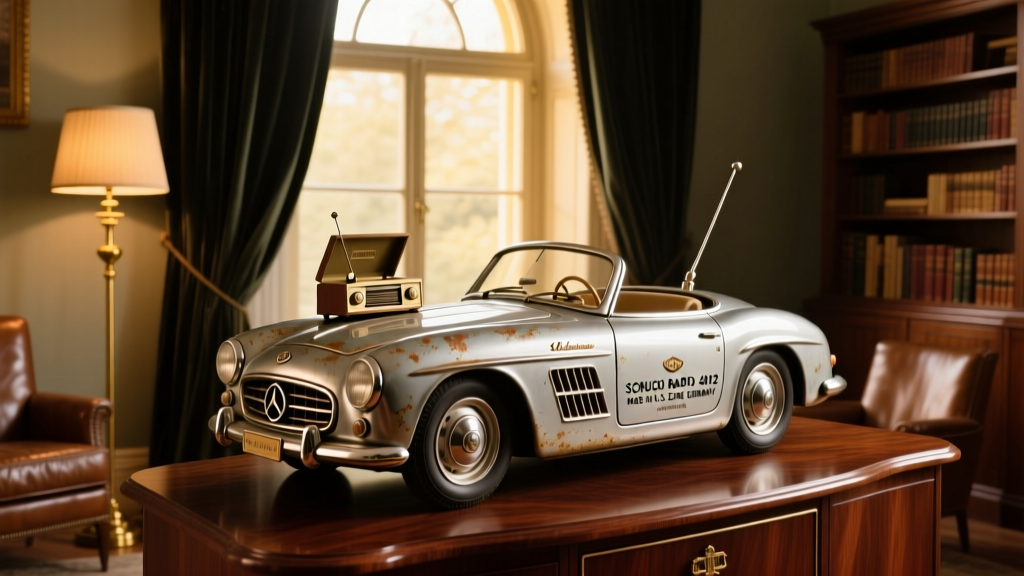
Schuco Radio 4012: The Vintage Music Box Sports Car from the U.S. Zone of Occupied Germany (1948–1952)
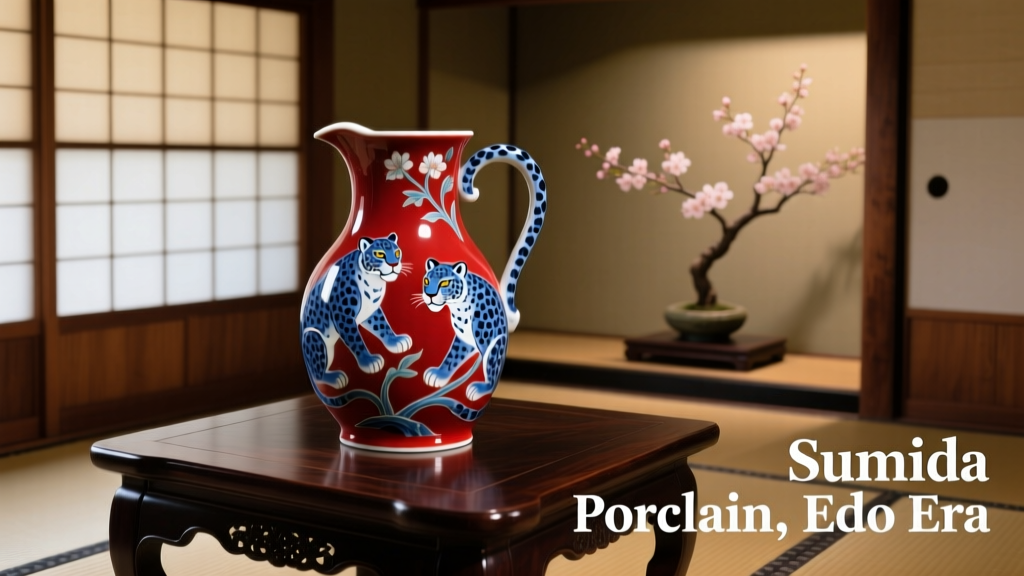
The Sumida Pitcher: A Study of the Red-and-Blue Porcelain Vessel with Crouching Leopard Finial (10-Inch Height)
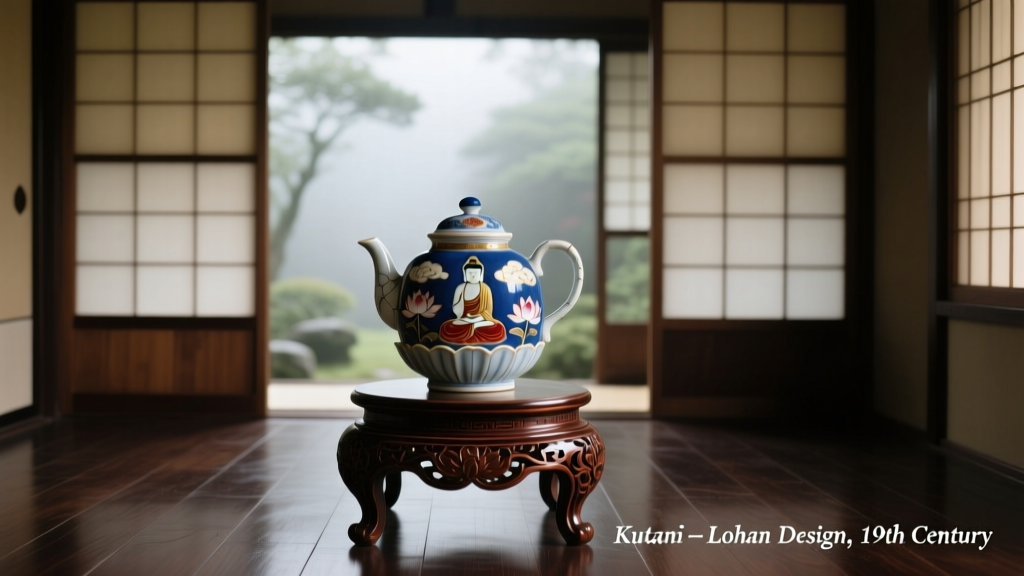
Kutani Teapot: Lohan Design Skirted Form, 6½ Inches — A Study in Edo-Era Ceramic Mastery