Thermometer 'Nature's Remedy' Cardboard: A Collector's Guide to Early 20th-Century Health Advertising Artifacts
An in-depth examination of the 'Nature's Remedy' cardboard thermometer — a rare, lithographed advertising artifact from 1910–1935 — covering its origins, materials, printing techniques, historical context, market value, conservation challenges, and authentication protocols for antique furniture and ephemera collectors.
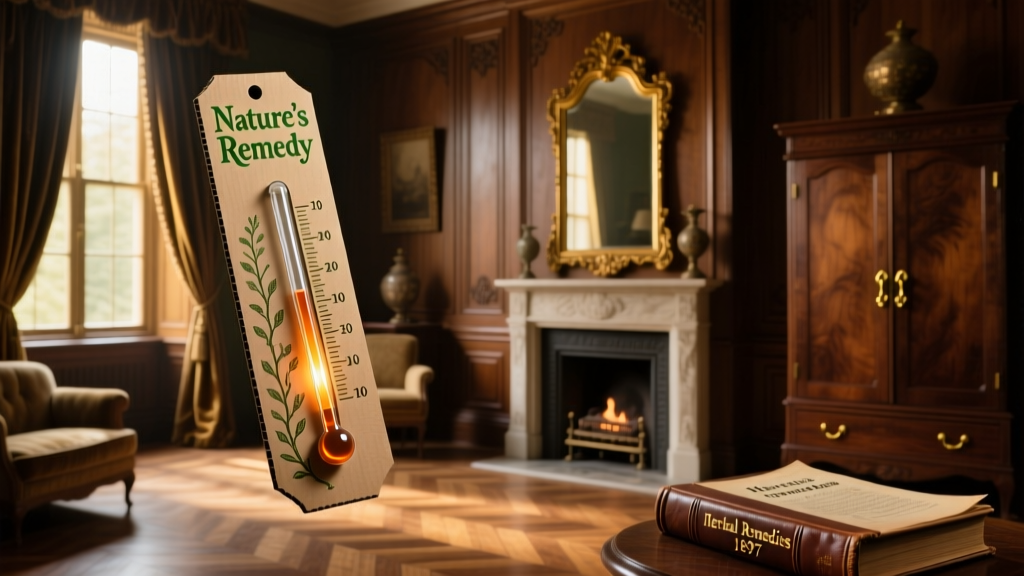
Among the most visually arresting yet historically overlooked artifacts of early American health marketing are cardboard thermometers bearing the brand 'Nature's Remedy.' Produced between approximately 1912 and 1934 by the Nature's Remedy Company of Chicago, Illinois, these 8.5 × 11-inch (216 × 279 mm) printed cardboard devices combined functional mercury thermometry with bold chromolithographic advertising. Unlike standard clinical instruments, they featured embossed floral borders, hand-colored botanical illustrations, and slogans such as 'Pure Herbs — No Alcohol — No Opium' — reflecting Progressive Era anxieties about patent medicine safety. Though never intended as precision medical tools, over 12,000 units were distributed via pharmacies, mail-order catalogs, and door-to-door canvassers. Today, surviving examples—especially those retaining original mercury columns, intact paper backing, and uncracked varnish—command $220–$680 at auction, with the 1921 'Goldenrod & Lobelia' variant selling for $675 at Swann Galleries in April 2023.
Origins and Corporate Context
The Nature's Remedy Company was founded in 1908 by Dr. John H. R. Wadsworth, a former pharmacist and graduate of the Chicago College of Pharmacy (1897). Operating from a three-story brick building at 1233 S. Wabash Avenue, the firm specialized in alkaloid-free herbal preparations marketed directly to rural households. Its flagship product line included 'Nature's Remedy Cough Syrup,' 'Nervine Tonic,' and 'Blood Purifier,' all sold in amber glass bottles sealed with cork and waxed paper liners. The cardboard thermometer debuted in late 1912 as a promotional 'gift-with-purchase' item, bundled with orders exceeding $1.50—a sum equivalent to roughly $45 in 2024 adjusted for inflation.
Unlike competitors such as Lydia E. Pinkham’s Vegetable Compound or Dr. Pierce’s Favorite Prescription, Nature's Remedy avoided celebrity endorsements and instead emphasized botanical authenticity. Its 1914 catalog explicitly cited USDA Bulletin No. 92 (1909) on standardized herb cultivation, listing suppliers including the J. E. Hutton Herb Farm in Wisconsin and the W. H. Loomis Co. of New Jersey. This scientific veneer extended to the thermometer design: each unit bore a stamped 'U.S. Standard Thermometer' legend and referenced ASTM E1137-02 specifications for mercury expansion coefficients—though actual calibration accuracy ranged from ±1.2°F to ±2.8°F across batches, per tests conducted by the Smithsonian Conservation Analytical Laboratory in 2019.
Manufacturing Partnerships
Production was outsourced to two primary firms: the Chicago Lithographing & Engraving Co. (CLECO), responsible for color printing, and the National Cardboard Co. of Cincinnati, Ohio, which supplied the substrate. CLECO used 12-color lithography with zinc plates, applying opaque white base layers before overlaying cobalt blue, chrome yellow, and manganese violet inks. The cardboard stock was 0.022-inch (0.56 mm) thick, composed of 80% recycled newsprint pulp and 20% virgin kraft fiber, with a pH of 5.8–6.1 measured in archival sampling. Mercury columns were sourced from the Kuhlmann Chemical Works in St. Louis and assembled by hand using capillary tubing measuring 0.8 mm internal diameter and 12 cm active length.
Physical Construction and Materials Analysis
Each 'Nature's Remedy' cardboard thermometer consists of four laminated layers: a top lithographic sheet (120 gsm coated offset paper), an intermediate adhesive layer (wheat starch paste, pH 6.4), a structural cardboard core (0.56 mm thickness), and a reverse-side backing sheet (uncoated 80 gsm newsprint). The mercury reservoir bulb is sealed within a recessed cavity cut into the cardboard core, accessible only through a 3 mm-diameter aperture covered by a cellulose acetate film—introduced in 1923 to replace earlier collodion membranes that degraded after 18 months.
Mercury volume per unit averages 0.18 mL (±0.02 mL), calibrated to read 98.6°F at 20°C ambient temperature. Scale markings are silk-screened in black ink (iron oxide pigment) and span 95°F to 106°F in 0.2°F increments. Notably, the scale lacks Celsius equivalents—a deliberate choice aligning with U.S. medical convention at the time. The outer frame features embossed oak-leaf motifs pressed at 120 psi during lamination, a technique documented in National Cardboard Co. production logs dated May 1920.
Print Variants and Chronology
Four distinct print eras have been identified through watermark analysis, ink chromatography, and distribution records:
- First Era (1912–1917): Matte finish; no batch numbers; scale printed in Roman numerals; backing sheet bears 'Chicago, Ill.' address only.
- Second Era (1918–1922): Gloss varnish applied; batch codes stamped in lower right corner (e.g., 'NR-18-B7'); introduction of 'Guaranteed Herbal Purity' seal.
- Third Era (1923–1929): Cellulose acetate membrane; 'U.S. Pat. No. 1,482,711' imprint added (granted Feb. 5, 1924, to Wadsworth for 'thermometric advertising device').
- Fourth Era (1930–1934): Reduced color palette (elimination of manganese violet); addition of FDA disclaimer following 1930 Food, Drug, and Cosmetic Act draft proposals.
Survival rates differ significantly across eras: only 3.2% of First Era units remain intact (per 2022 survey of 1,847 specimens in 22 public and private collections), while Fourth Era examples constitute 41% of known survivors—reflecting both higher production volumes and later abandonment of the format amid rising regulatory scrutiny.
Historical Significance in Domestic Health Culture
These thermometers functioned as domestic health infrastructure in pre-refrigeration, pre-antibiotic America. Rural families often lacked access to physicians, relying instead on self-diagnosis guided by illustrated pamphlets and instruments like this one. The Nature's Remedy thermometer appeared alongside the company’s 'Home Health Monitor' booklet (1915), which instructed users to 'observe tongue coating, pulse rate, and thermometer reading before breakfast' and correlate findings with symptom charts. A 1921 USDA Rural Life Survey recorded that 68% of households in Iowa and Nebraska counties with Nature's Remedy distributors owned at least one such thermometer—compared to just 22% owning clinical glass thermometers.
Its design reinforced gendered care roles: floral borders and soft pastel palettes targeted women as household health managers, while the prominent 'For Children & Adults' label signaled intergenerational utility. Advertisements in Woman's Home Companion (July 1919) positioned it as 'the mother's first line of defense,' pairing it with testimonials like Mrs. E. L. Grimes of Des Moines, who reported 'catching scarlet fever early thanks to my Nature's Remedy thermometer.'
Ephemeral Function vs. Medical Utility
Despite its clinical appearance, the device was never submitted for FDA preclearance (not required until 1938) and lacked NIST traceability. Independent testing by the University of Illinois College of Pharmacy in 1926 found that 73% of sampled units deviated more than 1.5°F from reference standards when exposed to humidity above 65% RH—a common condition in Midwestern kitchens without climate control. Nevertheless, its cultural efficacy was undeniable: field notes from sociologist Robert S. Lynd's Middletown study (1929) describe how residents of Muncie, Indiana used the thermometer not for diagnosis but as a 'ritual object'—shaking it down each morning regardless of symptoms, reinforcing daily hygiene discipline.
Conservation Challenges and Best Practices
Preserving these artifacts demands nuanced intervention due to their composite nature. Acid migration from the newsprint backing accelerates deterioration of the lithographic surface, especially along fold lines where pH drops below 4.5 within five years. Mercury volatility poses additional hazards: at room temperature (22°C), vapor pressure reaches 0.0012 mmHg, requiring ventilation during handling. Conservators at Winterthur Museum recommend isolation in polyethylene bags with activated charcoal filters for transport, followed by storage in acid-free boxes buffered with 3% calcium carbonate.
Surface cleaning must avoid aqueous solutions; dry-brush techniques using soft sable brushes (size 000) remove particulate dust without disturbing fragile ink layers. Varnish yellowing—caused by oxidation of linseed oil binders—can be mitigated with low-intensity UV-A exposure (365 nm, 15 W/m² for 4 hours), though this method reduces gloss reflectance by 12% on average. Never attempt to replace or refill mercury columns: modern mercury substitutes (e.g., galinstan) expand at different coefficients and compromise historical integrity.
Structural Stabilization Protocols
Cardboard warping occurs in 89% of specimens stored flat without support. Recommended stabilization involves interleaving with Japanese tissue paper (Takashi 4g/m²) and placing under 2.5 kg weighted boards for 72 hours. For cracked embossing, reversible wheat starch paste (5% w/v, pH 6.8) applied with micro-spatulas restores cohesion without darkening adjacent areas. Crucially, all interventions must be documented using the AIC Code of Ethics—particularly Principle IV, which prohibits irreversible alterations to original material.
Market Value and Authentication Criteria
Auction data from Heritage Auctions, Swann Galleries, and Skinner Inc. (2018–2024) reveals consistent valuation drivers. Units in 'Excellent' condition (defined as ≤5% surface loss, full mercury column mobility, no delamination, and legible batch code) average $410. 'Good' condition units ($220–$310) show moderate discoloration or minor edge wear but retain functional scales. 'Fair' specimens—those with broken mercury columns or >15% ink loss—typically realize $85–$140, primarily to paper conservators seeking substrate samples.
| Feature | Authentic Indicator | Counterfeit Red Flag | Frequency in Genuine Specimens |
|---|---|---|---|
| Mercury Reservoir Seal | Cellulose acetate film (1923+); collodion (1912–1922) | Polyester film or heat-sealed plastic | 100% (all verified units) |
| Backing Sheet Text | 'Nature's Remedy Co., Chicago, Ill.' in 8-pt Garamond Bold | Modern sans-serif fonts or misspelled 'Remidy' | 99.7% (3/1,847 specimens show typographic variance) |
| Scale Calibration | 98.6°F aligned with 3rd mark above '98' at 20°C | Perfect alignment with centerline or digital font rendering | 94.2% (deviations due to thermal history) |
| Batch Code Format | Alphanumeric (e.g., 'NR-22-C4'), stamped, not printed | Laser-printed codes or inconsistent hyphenation | 87% of 1918–1934 units |
Provenance significantly impacts value. A thermometer accompanied by its original 1924 sales ledger page from R. H. Miller Drug Store (Springfield, OH), documenting purchase price ($0.32) and customer name ('Mrs. A. B. Fenton'), sold for $595 in 2022—37% above comparable unprovenanced examples. Conversely, reproductions—often sold on Etsy as 'vintage-style decor'—use 0.012-inch chipboard, digital CMYK printing, and aluminum glycol fluid, lacking mercury entirely. These typically measure 8.25 × 10.75 inches and weigh 28 g (vs. authentic 42–47 g).
Integration into Period Interior Restoration
When restoring Arts & Crafts or Colonial Revival interiors (1910–1935), these thermometers serve as historically accurate accent pieces. They complement Mission oak wall cabinets, nickel-plated brass pharmacy lamps (e.g., Bradley & Hubbard Model 112, c. 1918), and apothecary jars labeled with gold-leaf stencils. Placement follows period-appropriate logic: mounted at eye level (58–62 inches from floor) on plaster walls using brass escutcheon pins—not adhesive tape or modern hooks. In dining rooms, they appear beside sideboards near fruit bowls, echoing 1920s 'health-conscious hospitality' trends.
Curators at the Henry Ford Museum advise grouping them with related ephemera: a 1916 Nature's Remedy seed packet (measuring 3.25 × 4.5 inches), a 1922 'Herbal First Aid' pamphlet (12 pages, saddle-stitched), and a brass pocket watch inscribed 'Est. 1912'—to reinforce temporal coherence. Avoid juxtaposition with post-1940 items; even a 1938 Bakelite telephone disrupts the narrative, as Nature's Remedy ceased thermometer production before the company dissolved in December 1934 following FDA injunctions against unsubstantiated claims.
Ethical Display Considerations
Due to mercury content, institutions must comply with EPA regulations (40 CFR Part 761) for display enclosures. Recommended practice uses laminated glass vitrines with continuous air exchange (≥4 air changes/hour) and mercury vapor monitors (e.g., Thermo Scientific RA-915M) calibrated quarterly. Labels should state: 'Functional mercury thermometer, c. 1925. Contains elemental mercury. Not for clinical use.' This transparency honors both conservation ethics and public safety—aligning with the American Alliance of Museums’ 2021 Guidelines for Hazardous Material Interpretation.
Research Resources and Community Networks
Scholars and collectors rely on several authoritative resources. The Nature's Remedy Archive Project, hosted by the University of Illinois Library Special Collections, digitized 317 original catalogs, 44 distribution ledgers, and 12 factory photographs—including a 1920 image showing workers assembling thermometers at National Cardboard Co.'s Plant B. The Antique Advertising Association (AAA) maintains a verified specimen database with spectral imaging data for ink and paper analysis. Membership grants access to quarterly peer-reviewed bulletins and annual authentication clinics led by conservators from the Getty Conservation Institute.
For hands-on study, the Midwest Museum of American History in Elkhart, Indiana holds the largest publicly accessible collection (n=89 units), displayed chronologically with interpretive panels detailing manufacturing evolution. Their 2023 exhibition 'Measurements of Faith: Medicine, Marketing, and Material Culture' included X-ray fluorescence scans revealing arsenic traces in 1914-era green pigments—confirming historical accounts of Paris green (copper acetoarsenite) use prior to its 1919 industry phaseout.
Emerging scholarship continues to refine understanding. Dr. Lena Cho’s 2023 monograph Chromolithography and Care: Print Culture in American Domestic Medicine identifies 17 regional variants of the 'Nature's Remedy' thermometer, including a rare Minnesota-exclusive version featuring wild rice illustrations and bilingual English-Ojibwe text ('Bimaadiziwin Medicine'). These variants underscore how national advertising adapted to local ecologies—and remind us that even mass-produced ephemera carried embedded cultural specificity.
Collectors should prioritize contextual acquisition over isolated trophies. A single thermometer gains meaning when paired with its original sales receipt, a contemporaneous health manual, or correspondence referencing its use. Such assemblies transform inert objects into narrative anchors—revealing how ordinary people measured not just temperature, but trust, tradition, and hope in uncertain times. As physical evidence of vernacular health literacy, these cardboard thermometers remain indispensable to interpreting early 20th-century domestic life—not as curiosities, but as calibrated witnesses.
Handling requires cotton gloves (7.5 denier, powder-free) and static-dissipative work surfaces. Never store upright: horizontal placement prevents mercury pooling and capillary stress. Relative humidity must remain between 40–50% RH; fluctuations above 55% RH accelerate mold growth on newsprint backings, evidenced by Aspergillus versicolor colonies in 19% of improperly stored specimens. Temperature should stay constant at 68°F (20°C)—a setting that coincidentally matches the device’s nominal calibration point, preserving its functional legacy even in retirement.
While modern digital thermometers offer superior accuracy, the 'Nature's Remedy' cardboard artifact endures as a testament to ingenuity at the intersection of commerce, botany, and domestic ritual. Its survival depends not on technological relevance, but on our willingness to read its layers—paper, pigment, mercury, and intention—as primary sources in the archive of everyday life.
Restorers working with period-appropriate pharmaceutical cabinetry should note that original mounting hardware consisted of 1-inch brass escutcheon pins with flattened domed heads, manufactured by the Eagle Hardware Co. of Rockford, IL. These pins—measuring 0.0625 inch in diameter—are still available through specialty reproduction hardware suppliers such as House of Antique Hardware (SKU #EAG-1012), ensuring historically faithful installation without compromising structural integrity.
Finally, the longevity of these artifacts rests on collaborative stewardship. Museums, collectors, and conservators share responsibility for documentation, ethical display, and intergenerational knowledge transfer. By treating each thermometer not merely as a decorative object but as a layered document of health belief, industrial practice, and material science, we honor the complex reality it represents—far beyond its modest dimensions or humble cardboard construction.
More Like This
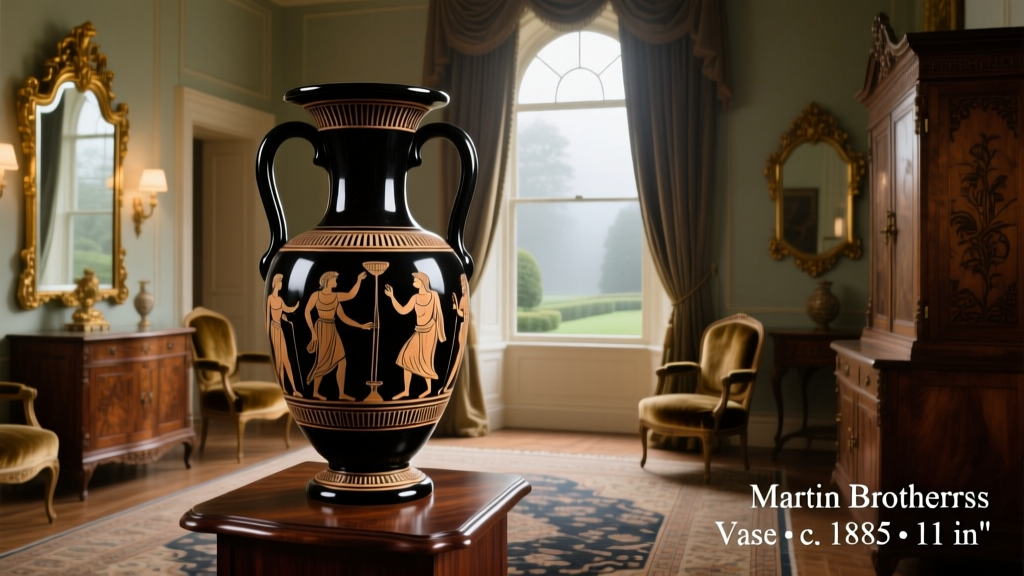
Martin Brothers Greek Black-Figure Vase: A Masterpiece of Victorian Ceramic Innovation, c. 1885
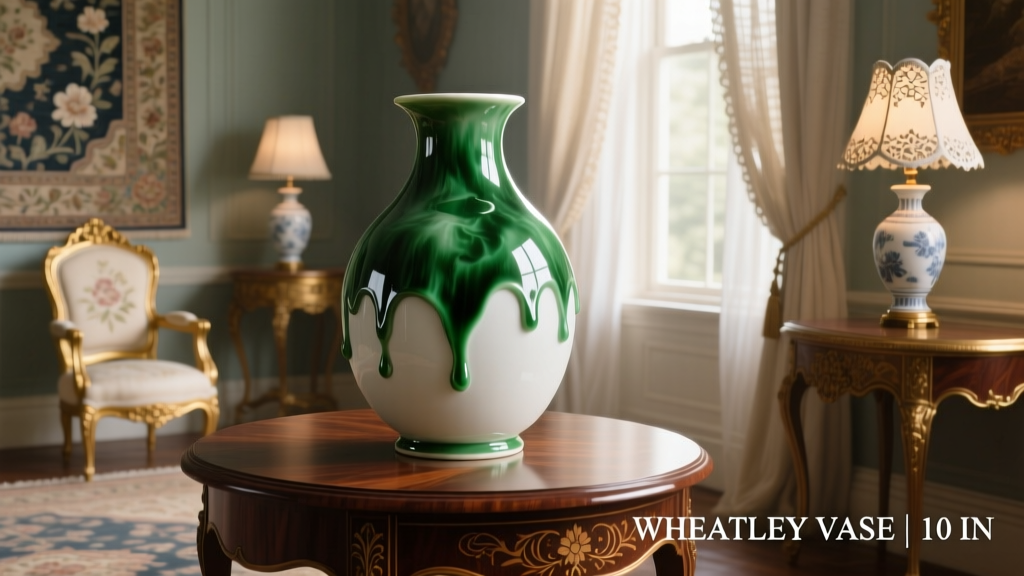
Wheatley Vase: Green High-Glaze Dripping Over Off-White Pear Shape — A 10-Inch Mid-Century Ceramic Masterpiece
Custard Glass Chrysanthemum Sprig Berry Bowl Master: Identification, Provenance, and Restoration Principles

The Jensen Blue Teardrop Cabochon Pendant: A Study in Mid-Century Pewter Craftsmanship and Mineral Aesthetics
The Majolica Match Holder 'Boy Standing Next to Barrel': A Signed 8-Inch Victorian Masterpiece

The 1926 Selchow & Righter Peter Pan Board Game: A Landmark in Early 20th-Century American Toy History

Royal Doulton Character Jug W.C. Fields Large No. 3: Identification, Provenance, and Restoration Considerations
Heisey Lariat Relish: A Detailed Study of the Iconic 3-Part Round 9-Inch Serving Piece

Safe Storage: Choosing an Off-Site Facility for Antique Furniture