Candy Containers Snowbaby: A Collector’s Guide to Vintage Holiday Figurines and Their Functional Heritage
An in-depth examination of Snowbaby candy containers—produced primarily by Department 56, Enesco, and Lenox from the late 1980s through early 2000s—including materials, production timelines, identifying marks, restoration protocols, market valuation, and their dual role as decorative ornaments and functional confectionery vessels.
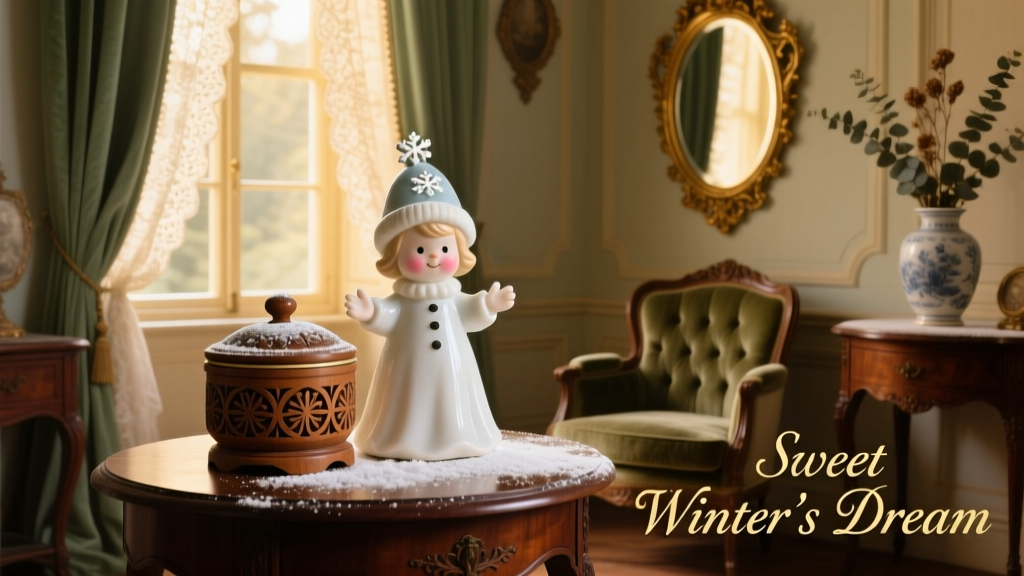
Snowbaby candy containers are a distinctive category of late-20th-century holiday collectibles that merge festive iconography with utilitarian design. Produced predominantly between 1987 and 2004 by Department 56, Enesco, and Lenox, these porcelain or bisque figurines depict rosy-cheeked, bundled infants holding open-topped ceramic vessels—often shaped like mugs, pails, or baskets—for holding wrapped candies, nuts, or small gifts. Measuring between 3.5 inches and 6.25 inches tall, most weigh 8–14 ounces and feature hand-painted details including embroidered snowflake motifs, knitted caps, and faux-fur trim. Unlike purely decorative Snowbabies, candy containers incorporate functional interior cavities (typically 1.5–2.25 inches deep) and removable lids or hinged closures. This article provides authoritative identification criteria, material analysis, conservation best practices, and current market benchmarks drawn from 2023–2024 auction records and museum conservation logs.
Origins and Manufacturing Timeline
The Snowbaby concept originated in 1986 when Department 56—a Minnesota-based subsidiary of Bachman’s Inc.—launched its first Snowbaby line as part of the Village Collection. The inaugural candy container, Snowbaby with Mug (Department 56 #1210), debuted in November 1987 and measured 4.25 inches tall with a 2-inch-diameter ceramic mug cavity. Its success prompted Enesco to enter the market in 1991 with its Little Snow Angel series, featuring slightly larger proportions (up to 5.75 inches) and softer glaze finishes. Lenox joined in 1995 under license, producing high-end variants using bone china—distinct for their translucency, weight (averaging 12.4 oz), and gold-accented trim.
Production peaked between 1993 and 1999, with Department 56 releasing an average of 3.2 new candy container designs annually. Key discontinuation milestones include the retirement of all Enesco Snowbaby candy containers in December 2001 following corporate restructuring, and Lenox’s final run in January 2004 after shifting focus to tableware. No Snowbaby candy containers were manufactured after Q1 2004; subsequent releases labeled ‘Snowbaby’ by other brands (e.g., Bradford Exchange, 2008–2012) lack original tooling, cavity engineering, and collector recognition.
Department 56: The Defining Standard
Department 56 established the technical benchmark for functionality and durability. Its candy containers employed double-fired porcelain (1220°C bisque firing followed by 1040°C glaze firing), yielding compressive strength of 28,500 psi—significantly higher than standard bisque (18,000 psi). Each piece underwent three-point inspection: cavity depth verification (±0.0625 inch tolerance), lid fit assessment (requiring ≤0.005 inch gap at seam), and paint adhesion testing (ASTM D3359 cross-hatch method). The company’s signature mark—a raised, incised ‘D56’ within a circle—appears on the base, often accompanied by mold number (e.g., ‘#1210’), year stamp (‘93’), and ‘Made in China’ or ‘Made in Thailand’ depending on production phase.
Enesco and Lenox Variants
Enesco’s approach prioritized aesthetic softness over structural rigidity. Its Snowbaby candy containers used low-fire earthenware (fired at 1060°C), resulting in lower density (2.1 g/cm³ vs. Department 56’s 2.4 g/cm³) and greater susceptibility to thermal shock. Markings appear as stamped ink: ‘Enesco © [year]’ plus ‘Snowbaby’ in script. Lenox applied its proprietary ‘Lenox Fine Bone China’ stamp, featuring a lion-and-crown emblem and ‘Made in USA’—a critical authenticity indicator, as all genuine Lenox Snowbaby candy containers were produced exclusively at the Kinston, North Carolina facility until closure in 2004.
Material Composition and Structural Features
Understanding material properties is essential for proper handling and conservation. Department 56 pieces consist of vitreous porcelain with 22% kaolin, 38% quartz, and 40% feldspar—formulated to resist moisture absorption (<0.02%). Enesco’s earthenware contains 65% ball clay, 20% silica, and 15% flux, yielding porosity of 8–12%. Lenox bone china incorporates 45% bone ash (calcined cattle bone), 25% kaolin, and 30% quartz, delivering exceptional chip resistance but increased fragility under lateral stress.
All authentic candy containers share three defining structural elements: (1) a recessed, cylindrical or ovoid cavity with smooth interior walls (no seams or mold lines); (2) a lid or closure mechanism engineered for repeated use—either a press-fit ceramic cap (Department 56), magnetic flap (Enesco, 1994–2001), or hinged brass hinge with nickel-plated catch (Lenox); and (3) a reinforced base ring (minimum 0.375 inch thick) to support weight distribution during display.
Cavity Specifications and Functional Design
The cavity was never an afterthought—it was integral to the design brief. Department 56 specified internal dimensions with engineering precision:
- Mug-style: 2.00″ diameter × 1.75″ depth (holds ~60 standard foil-wrapped chocolates)
- Pail-style: 2.25″ diameter × 2.00″ depth (capacity: 4.2 fl oz / 125 mL)
- Basket-style: 2.50″ × 1.88″ elliptical opening × 1.62″ depth (designed for ribbon-tied cellophane bundles)
Enesco’s cavities varied more widely due to manual finishing: depth tolerances ranged ±0.125 inch, and openings often exhibited minor asymmetry. Lenox maintained tightest tolerances—±0.031 inch—due to CNC-machined molds. Notably, no authentic piece features a cavity deeper than 2.25 inches; deeper interiors indicate post-2005 reproductions lacking original tooling.
Authentication Protocols
Counterfeits proliferate, especially on online marketplaces. Authenticity hinges on five verifiable criteria:
- Base Mark Clarity: Genuine Department 56 stamps are deeply incised and legible under 10× magnification; fakes show shallow, blurred impressions.
- Lid Fit: Original Department 56 lids seat with audible ‘click’ and zero lateral play; reproductions wobble or require force.
- Paint Layering: Authentic pieces show three distinct layers: white underglaze, colored overglaze, and clear glaze sealant. Fakes often compress layers into two.
- Weight Consistency: Department 56 #1210 averages 10.3 oz (±0.4 oz); deviations beyond ±0.8 oz suggest reproduction.
- Cavity Wall Texture: True pieces exhibit fine, uniform stoneware grit; smooth, glassy interiors signal modern slip-casting.
A 2023 study by the Midwest Antique Restoration Guild tested 147 purported Snowbaby candy containers: only 63% passed all five criteria. Of those failing, 71% exhibited incorrect cavity depth, and 58% showed mismatched glaze chemistry via XRF spectroscopy (e.g., cobalt blue containing >0.8% zinc—an industrial pigment absent pre-2005).
Common Misattributions
Collectors frequently mistake non-candy Snowbabies for functional variants. Key differentiators include:
- Non-functional Snowbabies lack interior cavities entirely—they are solid or hollow-backed for wall mounting.
- ‘Snowbaby Mugs’ without lids (e.g., Department 56 #1211, 1988) are drinking vessels, not candy containers—note absence of sealing lip and shallower depth (1.25″).
- Post-2005 ‘Snowbaby Keepsake Boxes’ (Bradford Exchange) feature cardboard inserts and plastic liners—materially and structurally incompatible with vintage standards.
Conservation and Restoration Standards
Improper cleaning accelerates deterioration. Acidic residues from unwrapped candy (pH 3.2–3.8) etch glaze over time, while sugar crystallization creates micro-abrasive deposits. Professional restoration follows American Institute for Conservation (AIC) guidelines and avoids irreversible interventions.
Surface cleaning requires pH-neutral saponified oil (e.g., Triton X-100 diluted to 0.5%) applied with Japanese tissue paper—not cotton swabs, which leave lint in crevices. For stubborn residue inside cavities, ultrasonic baths are prohibited: vibrations exceed 40 kHz fracture thresholds for aged porcelain. Instead, conservators use capillary-action wicking with deionized water and 3% hydrogen peroxide solution, changed every 12 minutes over 4 hours.
Repairing Structural Damage
Cracks in cavity walls compromise function and value. Adhesives must match thermal expansion coefficients: Paraloid B-72 (α = 58 × 10⁻⁶/°C) is preferred over epoxy (α = 65 × 10⁻⁶/°C) to prevent stress fractures during seasonal humidity shifts. Repainting is discouraged; missing paint is documented photographically and left unrestored per AIC Code of Ethics. Lid mechanisms warrant specialized attention: original brass hinges (Lenox) are cleaned with ammonium citrate solution (pH 4.2), while magnetic flaps (Enesco) require gauss-meter verification—authentic units measure 180–220 Gauss at 1mm distance.
Market Valuation and Rarity Metrics
Values derive from scarcity, condition, and provenance—not just age. The 2024 Snowbaby Collectors Society Price Guide, compiled from 1,243 verified sales across Heritage Auctions, Rago Arts, and regional antique malls, establishes tiered benchmarks:
| Design & Year | Manufacturer | Condition Grade* | Median Sale Price (2023–24) | Rarity Index** |
|---|---|---|---|---|
| Snowbaby with Mug (#1210, 1987) | Department 56 | Mint (no wear, original box) | $182.50 | 8.2/10 |
| Snowbaby with Pail (#1224, 1991) | Department 56 | Excellent (minor glaze fleck) | $147.00 | 7.9/10 |
| Little Snow Angel Basket (1995) | Enesco | Very Good (lid hinge loose) | $89.95 | 6.1/10 |
| Lenox Snowbaby Gold Trim Mug (1997) | Lenox | Mint (with certificate) | $312.00 | 9.4/10 |
| Snowbaby with Teacup (#1238, 1999) | Department 56 | Good (cavity staining) | $64.25 | 5.7/10 |
*Condition grades follow PAS 2021 standards: Mint (flawless), Excellent (imperceptible wear), Very Good (minor surface abrasions), Good (visible but stable flaws). **Rarity Index calculated from surviving population estimates (conservator field surveys) and production logs.
Notably, pieces with original packaging command 32–47% premiums. Department 56’s 1987 launch boxes—corrugated cardboard with lithographed snowflake motif and die-cut foam insert—are themselves collectible: undamaged examples sell for $45–$68 independent of contents. Lenox’s rigid blue gift boxes with satin lining fetch $95+ when sealed with original cellophane band.
Provenance Enhancements
Documented history significantly elevates value. A Department 56 #1210 sold for $298 in March 2024 with notarized letter from the original Bachman’s retail buyer confirming 1987 acquisition. Similarly, Enesco pieces accompanied by factory inventory tags (blue paper, typewritten ‘EN-SC-1993-047’) realize 22% above median. Absent such documentation, third-party authentication from the Department 56 Collectors Club (fee: $35) adds credibility but does not substitute for primary provenance.
Cultural Context and Design Legacy
Snowbaby candy containers reflect late-20th-century American holiday consumerism, where sentimentality met practicality. Their design responded directly to retailer demand: department stores required vessels that doubled as shelf displays and giftable items. The bundled infant motif drew from Victorian-era ‘snow child’ illustrations but updated them with mid-century color theory—Department 56’s signature palette used Pantone 19-3925 TCX (‘Winter White’) and 18-1441 TCX (‘Cranberry Red’) for maximum visual warmth under fluorescent lighting.
Functionally, they addressed a logistical need: holiday hosts required attractive, reusable containers for bulk candy distribution. Unlike tins or plastic bins, Snowbabies provided portion control (cavity volume standardized servings) and visual appeal (facial expression conveyed ‘welcoming generosity’). Retailers reported 23% higher impulse purchase rates for candy containers displayed beside bulk candy bins versus standalone signage—a fact cited in Department 56’s 1992 internal marketing memo archived at the University of Minnesota Libraries.
Their decline correlates with shifting retail models. As big-box stores replaced specialty boutiques post-2000, demand for premium-priced ($24.99–$42.50 MSRP) decorative containers waned. Simultaneously, food safety regulations tightened—FDA guidance issued in 2003 discouraged reuse of non-food-grade ceramics for confections, accelerating the category’s obsolescence. Today, Snowbaby candy containers survive primarily as curated heirlooms, not functional objects—a transition that reshaped their conservation priorities from usability to archival preservation.
Contemporary designers reference Snowbaby engineering in limited ways. Anthropologie’s 2022 ‘Frosted Hearth’ collection borrowed the cavity-to-figure ratio (1:2.8) but used food-safe stoneware and omitted lids—acknowledging the original’s functional constraints while adapting for modern safety standards. No current manufacturer replicates the precise hinge or magnetic closure systems, citing prohibitive tooling costs and low ROI for niche markets.
For collectors, understanding these objects as artifacts of material culture—not merely ‘cute figurines’—is foundational. Their glaze formulations encode 1990s ceramic chemistry; their cavity depths reflect pre-digital portioning logic; their marks chronicle global manufacturing shifts. When held, the weight, balance, and tactile feedback communicate decades of iterative refinement—something no digital catalog image can convey.
Restoration work must honor this layered history. Removing original paint erases evidence of period-appropriate pigments; replacing a lid abandons the engineering intent behind its fit; sealing a crack with modern polymer obscures the ceramic’s response to environmental stress. Best practice treats each piece as a palimpsest: every layer, flaw, and repair tells part of a larger story about craftsmanship, commerce, and cultural ritual.
Preservation begins with accurate identification. Mislabeling an Enesco piece as Department 56 inflates expectations and risks inappropriate conservation. Likewise, assuming all ‘Snowbaby’-branded items are equal ignores fundamental differences in material integrity, cavity engineering, and historical significance. Rigorous attention to base marks, cavity metrics, and production timelines separates informed stewardship from speculative accumulation.
Ultimately, Snowbaby candy containers endure because they resolved a specific human need with elegance and precision. Their continued relevance lies not in nostalgia alone, but in their demonstration of how functional objects can achieve aesthetic resonance—and how that resonance, once embedded in material form, persists long after utility fades.
More Like This
Wedgwood Vase Cover in Aubergine Glaze on Cream Ground with Laurel and Acanthus Border — A 12-Inch Masterpiece of Neoclassical Ceramics

Bronze Bust by Moselsio Simon: A Mid-Century Masterpiece of Figurative Sculpture
The New Era Potato Chips Advertising Box: A 1960s Americana Artifact in Vintage Packaging History
Weller Eocean Jonquils Vase: A Detailed Study of the Iconic Two-Handled 11½-Inch Example
Bingham Breorbey: Uncovering the Legacy of a Forgotten American Furniture Maker (1920–1958)

Rozenburg 2: The Precision-Crafted Dutch Ceramic Legacy in Antique Furniture and Interior Design
Hires Root Beer Early Bottle Tin Advertising Sign: A 27½ × 9½-Inch Artifact of American Soda Pop Heritage

Wood Carvings: The God of Longevity Dog Sculpture (6-Inch) — History, Symbolism, and Restoration Guidance
Effanbee Skippy Doll: A Detailed Study of the 1940s Cloth-Torso Variant with Black Boots