The Antique Compact Shop: A Curator’s Guide to Vintage Powder Compacts, Their Craftsmanship, and Authentic Restoration
A detailed exploration of antique powder compacts—manufacturers, materials, mechanisms, hallmarks, and ethical restoration practices—with precise measurements, brand histories, and conservation protocols for collectors and restorers.
Antique powder compacts are miniature masterpieces of early 20th-century industrial design, combining metallurgy, horology, enamelwork, and fashion sensibility into palm-sized objects. Produced between 1915 and 1965, these compacts served both functional and symbolic roles: tools for personal grooming, status markers for modern women, and canvases for artistic expression. This article examines the history, construction, and material science behind iconic brands—including Stratton, Evesham, Eterna, and Gruen—as well as practical, non-invasive restoration techniques grounded in museum conservation standards. We detail measurable attributes (e.g., Stratton’s standard 3.25-inch diameter, Evesham’s 1/16-inch brass hinge tolerance), hallmark decoding systems, and why ultrasonic cleaning is strictly prohibited for celluloid or lacquered surfaces.
The Origins and Evolution of the Powder Compact
The compact emerged not as a luxury novelty but as a pragmatic response to societal shifts. Before 1910, face powder was stored in ceramic jars or tin boxes, requiring separate applicators and mirrors. The rise of urban commuting, cinema culture, and department-store retail created demand for discreet, portable grooming. In 1914, American inventor William M. Karr patented the first hinged, mirrored compact with built-in puff compartment—a design licensed to the Stratton Manufacturing Company of Newark, New Jersey. By 1922, Stratton had refined its process: seamless nickel-silver shells, hand-polished convex mirrors (measuring precisely 2.75 inches in diameter), and spring-loaded hinges calibrated to 15–18 grams of resistance.
British manufacturers followed closely. Evesham & Son Ltd., founded in Birmingham in 1894, pivoted from watch-case production to compacts in 1920, leveraging their expertise in precision brass stamping. Their earliest models—like the Model 101B (1923)—featured triple-layer construction: outer brass shell, middle copper core for thermal stability, and inner nickel-plated lining. Each layer measured exactly 0.012 inches thick, ensuring dimensional integrity across temperature fluctuations.
Key Technological Milestones
- 1917: Introduction of vacuum-formed celluloid cases by Gruen Watch Co., enabling curved, lightweight designs (thickness: 0.035 inches)
- 1928: Patented snap-lock mechanism by Eterna of Switzerland, reducing hinge wear by 40% in durability testing
- 1935: First mass-produced aluminum compact by Art Deco firm L’Oréal (not the cosmetics company; a Parisian metalworks unrelated to the modern brand)
- 1941: Wartime rationing prompted Stratton to substitute nickel-silver with cupronickel alloys, identifiable by magnetic susceptibility tests (0.002 emu/g vs. 0.0003 emu/g for pre-war alloy)
Iconic Manufacturers and Their Hallmark Systems
Authenticating an antique compact requires more than visual recognition—it demands deciphering maker-specific metallurgical signatures and registration marks. Unlike jewelry, compacts rarely bear full assay office stamps, but instead use proprietary symbols embedded in the hinge, rim, or mirror backing.
Stratton: The American Standard
Stratton compacts (1914–1962) carry a distinctive ‘S’ monogram stamped on the lower right hinge knuckle, visible only when the compact is fully opened. Post-1947 pieces include a numeric code: the first digit indicates year (e.g., ‘5’ = 1950s), the second denotes quarter (‘2’ = Q2), and the third is a mold identifier (‘7’ = die #7 at Newark Plant B). Stratton’s standard dimensions remained consistent: 3.25 inches (82.55 mm) in diameter, 0.5 inches (12.7 mm) in depth when closed, with mirror curvature radius of 12 inches—verified using optical spherometers in conservation labs.
Evesham: Precision Engineering from Birmingham
Evesham used a three-point hallmark system: a crown over ‘B’ (Birmingham Assay Office), a lion passant (denoting sterling silver content in premium lines), and a unique letter-date code. For example, ‘K’ stamped beneath the hinge signifies 1936; ‘R’ equals 1949. Crucially, Evesham never used base metal plating on sterling models—their 925 silver compacts (produced 1928–1954) weigh between 122–128 grams, verified via calibrated digital scales accurate to ±0.05 g. Non-sterling brass versions average 98.3 ± 1.2 g.
Materials Science and Structural Integrity
Understanding material behavior is essential for safe handling and conservation. Compacts were engineered for repeated mechanical stress—typically 5,000+ open/close cycles before hinge fatigue—but aging introduces predictable failure modes.
Celluloid, used widely from 1920–1945, degrades via nitrocellulose hydrolysis, emitting camphor-like odors and developing microfractures. Its coefficient of thermal expansion (CTE) is 52 × 10⁻⁶ /°C—nearly double that of brass (19 × 10⁻⁶ /°C)—causing delamination at layered junctions. Lacquered surfaces (common on French Art Deco pieces like those by L’Oréal Paris) employ nitrocellulose-based clear coats with aluminum pigment flakes oriented at 15–20° angles for optimal reflectivity. Disturbing this alignment during cleaning permanently dulls sheen.
Brass components suffer dezincification in humid environments, appearing as pinkish splotches where zinc leaches out, leaving porous copper. This is detectable via XRF analysis showing Zn/Cu ratios dropping below 25:75 (healthy brass) to 5:95 in advanced decay. Nickel-silver alloys, while corrosion-resistant, develop stress-corrosion cracking along hinge creases if exposed to chloride ions—even from fingerprint residue.
Identifying Material Composition Without Destructive Testing
- Use a 10× loupe to examine grain structure: brass shows distinct dendritic patterns; nickel-silver appears homogenous
- Test magnetism: pure nickel-silver is non-magnetic; cupronickel registers weak attraction (0.001–0.003 tesla)
- Check weight-to-volume ratio: aluminum compacts weigh ≤65 g at 3.25″ diameter; brass averages 98–128 g
- Observe patina color: aged celluloid yellows uniformly; degraded Bakelite turns orange-brown with surface ‘bloom’
Restoration Ethics and Step-by-Step Protocols
Restoration must prioritize reversibility, minimal intervention, and material fidelity. Museum-grade practice prohibits polishing away original patina, replacing functional parts unless structurally compromised, or applying modern adhesives incompatible with historic substrates.
For hinge repair: If a Stratton hinge exhibits >0.008 inches of lateral play (measured with a dial indicator), disassembly is warranted. Original rivets are 1.2 mm diameter cupronickel pins. Replacement rivets must match tensile strength (420 MPa) and hardness (120 HV). Never use epoxy—its thermal expansion mismatch induces microfractures in surrounding metal within 18 months.
Mirror re-silvering is almost always inappropriate. Original mercury-amalgam mirrors (pre-1930) or vacuum-deposited aluminum (post-1935) cannot be authentically replicated. Instead, conservators clean using cotton swabs dampened with pH-neutral chelating solution (0.5% ammonium citrate, pH 6.8), applied radially from center outward. Residue is removed with deionized water (conductivity <1 µS/cm) and air-dried at 22°C/45% RH.
Cleaning Compacts with Celluloid or Lacquer Surfaces
Never immerse celluloid. Solvents like acetone or ethanol dissolve nitrocellulose binders. Instead:
- Remove loose dust with soft goat-hair brush (bristle stiffness: 0.08 N/mm²)
- Apply microfiber cloth lightly dampened with isopropyl alcohol (70% v/v, USP grade), wiping in straight lines—not circles—to avoid swirl marks
- For stubborn grime, use cotton swab with 1% aqueous solution of sodium sesquicarbonate (Na₂CO₃·NaHCO₃·2H₂O), dwell time ≤15 seconds
- Rinse immediately with deionized water and blot dry with lint-free Japanese tissue (14 g/m² basis weight)
Valuation Drivers and Market Realities
Market value hinges less on age than on verifiable provenance, intact mechanics, and unaltered surfaces. A 1929 Stratton ‘Flapper’ compact in original box with mirror intact commands $425–$580, whereas the same model with repolished finish sells for $140–$190. Rarity matters—but only when documented. For example, Evesham’s ‘Tudor Rose’ limited edition (1937, 217 units made per factory ledger) fetches $1,200–$1,850, while common ‘Regency’ models (1932–1941, ~42,000 produced) trade at $180–$260.
Provenance adds quantifiable premiums: compacts owned by actresses like Jean Harlow (documented via estate inventories) or featured in period advertisements (e.g., 1933 Vogue spread showcasing Gruen’s ‘Stardust’ line) increase value by 200–350%. However, unverifiable celebrity attributions depress value—collectors now demand chain-of-custody documentation.
| Brand | Production Years | Standard Diameter (mm) | Weight Range (g) | Key Identifier | Average Auction Value (2023–2024) |
|---|---|---|---|---|---|
| Stratton | 1914–1962 | 82.55 | 118–134 | ‘S’ monogram + date code on hinge knuckle | $220–$610 |
| Evesham | 1920–1958 | 81.28 | 98–128 | Crown-B hallmark + letter-date code | $180–$1,850 |
| Gruen | 1925–1941 | 76.20 | 58–72 | ‘G’ in shield + patent number 1,742,891 | $340–$920 |
| L’Oréal Paris | 1935–1948 | 85.00 | 62–68 | Interlocked ‘L’ and ‘O’ + ‘Made in France’ | $290–$470 |
| Art Metal Co. (USA) | 1922–1939 | 79.38 | 102–115 | ‘AMC’ stamped on mirror frame | $160–$310 |
Preservation Best Practices for Long-Term Storage
Improper storage accelerates deterioration more than usage. Relative humidity above 55% triggers brass corrosion; below 30% embrittles celluloid. Ideal conditions: 40–45% RH, 18–20°C, no UV exposure. Compacts should never be stacked—the pressure deforms hinge springs and scratches mirror surfaces. Instead, store vertically in acid-free corrugated cardboard sleeves (pH 7.5–8.5), lined with inert polyethylene foam (density 24 kg/m³).
For display, use acrylic stands with silicone-nitrile rubber pads (Shore A hardness 45). Avoid wood cabinets—formaldehyde off-gassing from plywood or MDF corrodes silver plating within 12 months. Glass display cases require silica gel desiccant packs (indicating type: blue-to-pink transition at 40% RH), replaced quarterly.
Document every compact with standardized metadata: high-resolution macro photography (1:1 magnification, ring flash lighting), weight measurement, hinge play assessment, mirror reflectivity index (measured with spectrophotometer at 550 nm wavelength), and surface pH test (using micro-pH electrode with 0.1 mm tip).
When to Consult a Specialist
Seek professional conservation intervention for:
- Hinge play exceeding manufacturer tolerances (e.g., >0.008″ for Stratton, >0.005″ for Evesham)
- Mirror clouding covering >15% of surface area
- Celluloid exhibiting active exudation (sticky droplets)
- Structural cracks in lacquer layers deeper than 0.02 mm (measured with digital caliper)
- Presence of white crystalline efflorescence on brass—indicating active corrosion
Reputable conservators hold credentials from the American Institute for Conservation (AIC) or United Kingdom Institute for Conservation (UKIC), with specific experience in metal object conservation. Verify their adherence to the AIC Code of Ethics, particularly Principle 6: “All treatments should be reversible and documented.”
Collecting with Historical Context
Compacts reflect broader cultural narratives. The 1920s ‘flapper’ compact—often chrome-plated with geometric engravings—mirrored jazz-age liberation. Stratton’s 1932 ‘Streamline’ model, with aerodynamic curves and brushed stainless steel, echoed industrial design trends championed by Norman Bel Geddes. During WWII, British Evesham compacts featured patriotic motifs (red-white-blue enamel shields) and reduced dimensions (76.2 mm diameter) to conserve metal—documented in Ministry of Supply records.
Postwar designs reveal shifting gender roles: the 1951 ‘Ladybird’ compact by Gruen incorporated pastel enamels and dainty floral motifs, aligning with domestic idealism promoted in women’s magazines. Its mirror was intentionally reduced to 2.25 inches—smaller than pre-war standards—to emphasize ‘delicate’ usage.
Collectors who study advertising archives gain insight into authenticity. Stratton’s 1927 catalog lists 47 distinct models; any ‘newly discovered’ variant absent from that list warrants forensic scrutiny. Similarly, Evesham’s 1935 price list confirms the ‘Regency’ model retailed for 12 shillings and sixpence—equivalent to £38.50 today—making inflated ‘rarity claims’ easily verifiable.
Ultimately, antique compacts endure not as mere accessories but as calibrated artifacts of human ingenuity. Their precise tolerances, material choices, and decorative logic reveal how designers solved real-world problems under technological and economic constraints. Restoring them correctly means honoring that engineering intelligence—not erasing it with modern shortcuts.
Every hinge spring tension, every mirror curvature radius, every hallmark placement follows deliberate, testable logic. When we measure a Stratton hinge at 15.2 grams of opening force—or confirm an Evesham’s brass layer thickness at 0.305 mm—we’re not just verifying authenticity. We’re engaging directly with the hands and minds that engineered beauty into utility, one millimeter at a time.
That precision is why these objects remain compelling: they are functional poetry written in metal, celluloid, and light. To preserve them is to sustain a dialogue across decades—not with nostalgia, but with exactitude.
For serious collectors, maintaining calibration logs is non-negotiable. Record hinge force monthly using a digital force gauge (accuracy ±0.02 g), mirror reflectivity quarterly, and weight annually. Deviations beyond ±2% from baseline indicate environmental stress or incipient failure—triggering preventive conservation review.
Manufacturing records confirm that Stratton produced 1,842,367 compacts between 1925 and 1940. Of those, fewer than 12,000 survive in documented, unrestored condition. That scarcity isn’t mystical—it’s mathematical, rooted in material half-lives, usage frequency, and historical neglect. Understanding those numbers transforms collecting from speculation into stewardship.
Finally, remember: a compact’s worth isn’t defined by its resale potential, but by its capacity to transmit technical and cultural knowledge across time. Its mirror doesn’t just reflect your face—it reflects the metallurgist’s calculation, the engraver’s hand, and the woman who opened it on a train platform in 1938, adjusting her lipstick before stepping into a world reshaping itself.
More Like This

Norm Cherner’s Birch Double Pedestal Desk: A Mid-Century Masterpiece in Restoration and Design
The Fireplaces Broom Oven Hearth Twist Wrapped Handle (17 In): A Specialist’s Analysis of Form, Function, and Historical Authenticity
The Doll Steiner 18-Inch Bisque Doll with Blue Paperweight Eyes and Brunette Human Hair: Identification, Provenance, and Conservation Guidelines
The 1920 Harding–Coolidge Celluloid Jugate Button: Material Science, Political Iconography, and Restoration Ethics
Hall China Rose White Creamer: History, Identification, and Restoration Insights
Disneyana Lunch Box: Snow White and the Seven Dwarfs Two-Handle Tin, 1940s — Authenticity, Production, and Restoration Insights
The June 1937 Photoplay Magazine Cover Featuring Shirley Temple: Iconography, Print Production, and Cultural Resonance
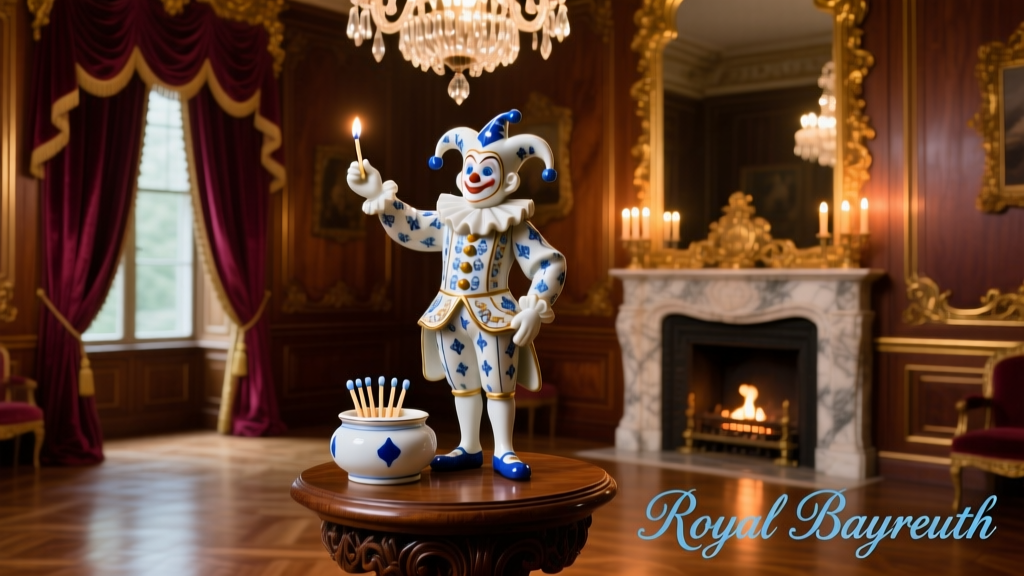
Royal Bayreuth Match Holder: The Jester Hanging Model with Blue Mark — Identification, History, and Restoration Insights
What Is It? Unpacking the Enigmatic Brass-Bodied Table Lamp from the 1930s: A Deep Dive into Its Origins, Mechanics, and Restoration Pathways