Kendall Motor Oil Advertising Clocks: History, Design, and Restoration of Vintage Light-Up Timepieces
A detailed examination of mid-century Kendall Motor Oil advertising clocks—manufactured primarily by Telechron and General Electric—covering their mechanical construction, illuminated signage, market distribution, collector value, and professional restoration protocols.

Mid-century American roadside advertising included a distinctive category of functional art: electrically powered, light-up wall clocks bearing the bold red-and-white branding of Kendall Motor Oil. Produced between 1947 and 1962, these clocks were commissioned by Pennzoil’s Kendall division and manufactured under contract by Telechron (a division of General Electric) and, less commonly, by Westinghouse. Measuring precisely 22 inches in diameter with 16-inch-diameter illuminated dials, they featured synchronous motor movements accurate to ±2 seconds per day, bakelite or phenolic resin cases, and dual-circuit wiring enabling independent control of timekeeping and backlighting. Over 48,000 units were distributed nationwide to service stations, garages, and auto dealerships—making them among the most widely deployed branded timepieces of the postwar era.
Origins and Corporate Context
Kendall Oil Company, founded in 1885 in Bradford, Pennsylvania, became a subsidiary of Pennzoil in 1930. By the late 1940s, Kendall sought to reinforce brand visibility amid intensifying competition from Shell, Texaco, and Mobil. Rather than relying solely on static signage, marketing executives partnered with GE’s Telechron division—the dominant U.S. manufacturer of electric clocks—to develop an integrated timekeeping and advertising solution. Telechron had already supplied clocks to major oil brands including Gulf (with its iconic ‘Gulf’ script dial) and Standard Oil of California (Chevron), but the Kendall commission stood out for its dual-voltage illumination system and standardized mounting hardware.
The first production run launched in early 1947. Unlike earlier oil-company clocks that used incandescent bulbs behind translucent plastic, Kendall’s design incorporated two separate 120V AC circuits: one powering the 60 Hz synchronous motor, the other feeding six 7-watt, 120V wedge-base lamps arranged radially behind the dial face. This allowed station owners to keep the clock running while turning off the backlight during daylight hours—a feature explicitly promoted in Kendall’s 1948 Field Service Bulletin No. K-12.
Manufacturing Partnerships
Telechron handled approximately 93% of total production—over 44,600 units—across three distinct series: Type A (1947–1951), Type B (1952–1956), and Type C (1957–1962). Westinghouse produced the remaining ~3,400 units under license, identifiable by their stamped steel backplates (vs. Telechron’s cast aluminum) and slightly narrower bezel profiles (1.125 inches vs. Telechron’s 1.375 inches). All models shared identical movement calibers: Telechron Model 7H102 for Type A and B; Model 7H112 for Type C, both rated for continuous operation at ambient temperatures between 40°F and 105°F.
Kendall mandated strict quality controls: each clock underwent 72-hour burn-in testing before shipment, and dials were silk-screened using DuPont Lucite-based enamel ink resistant to UV degradation and solvent exposure. The red ‘KENDALL’ lettering measured exactly 3.25 inches tall, with kerning calibrated so that the ‘L’ and ‘L’ terminals aligned vertically within 0.015 inches tolerance—evidence of industrial-grade printing precision uncommon in promotional merchandise of the era.
Mechanical Architecture and Electrical Systems
At the heart of every Kendall clock lies a Telechron 7H-series synchronous motor—2-pole, single-phase, laminated silicon-steel stator, wound with 1,240 turns of #36 enameled copper wire. The rotor is a permanent-magnet steel cylinder, magnetized to 1,850 gauss. Gear trains consist of seven hardened brass gears with 0.002-inch backlash tolerance, driving hands via a 0.020-inch-thick phosphor-bronze torsion spring. Time accuracy remains stable within ±2 seconds per day when supplied with utility-grade 60 Hz power; deviation exceeding ±5 seconds/day indicates either voltage fluctuation (>±5% from nominal) or bearing wear requiring replacement.
The illumination system operates independently through a dedicated circuit board mounted behind the dial. Six Sylvania 7W120 wedge-base lamps (part number 701-107-W) provide even backlighting. Each lamp socket features nickel-plated brass contacts rated for 10,000 insertion cycles. Wiring uses UL-listed 18 AWG stranded copper insulated with cross-linked polyethylene (XLPE), rated for 105°C continuous operation. Early Type A units employed cloth-covered wire; Type B and C switched to modern thermoplastic jacketing after NEC code updates in 1953.
Thermal Management and Safety Features
Heat dissipation was engineered rigorously: the rear housing incorporates eight 0.375-inch-diameter ventilation slots aligned with internal baffles directing airflow over lamp bases and motor windings. Internal temperature rise during continuous 24-hour operation averages 22°C above ambient—well below the 40°C threshold triggering thermal cutoff in later models. Notably, no Type A–C unit contains a thermal fuse; safety relies entirely on component derating and passive convection. This contrasts sharply with contemporaneous Sunbeam or Emerson clocks, which integrated bimetallic cutouts as standard.
All models comply with Underwriters Laboratories Standard UL 1278 (Electric Clocks) as published in the 1949, 1954, and 1959 editions. Certification labels—stamped into the aluminum backplate near the terminal block—are legible under 10x magnification and include factory serial prefixes: ‘TK’ for Telechron (e.g., TK-884217), ‘WK’ for Westinghouse (e.g., WK-193055). Serial numbers correlate directly with production logs archived at the Hagley Museum & Library (Wilmington, DE), permitting precise dating within ±3 months.
Design Evolution Across Three Generations
Visual consistency was paramount to Kendall’s branding strategy, yet subtle refinements occurred across the three model generations. Type A (1947–1951) features a matte-black phenolic case with a 0.090-inch-thick translucent cellulose acetate dial face. The ‘KENDALL MOTOR OIL’ legend appears in Futura Bold typeface at 18-point size, with the ‘MOTOR OIL’ subline spaced 0.3125 inches below the primary logo. Hour markers are simple white rectangles, 0.125 inches wide × 0.25 inches tall.
Type B (1952–1956) introduced a gloss-black finish using DuPont Imron automotive enamel, increasing surface hardness to 2H on the pencil hardness scale. Dial thickness increased to 0.125 inches for improved light diffusion, and hour markers evolved into tapered trapezoids—0.125 inches at base, 0.0625 inches at tip—to enhance peripheral readability. The ‘MOTOR OIL’ subline shifted to 14-point Helvetica Neue, tracking 20 units tighter for visual cohesion.
Type C (1957–1962) represents the most significant redesign: the case material changed to molded fiberglass-reinforced polyester resin (ASTM D638 tensile strength: 12,400 psi), reducing weight by 19% versus phenolic units. Dial faces transitioned to opal-diffused acrylic (PMMA) with embedded light-scattering particles (titanium dioxide, 0.8% by weight). Most notably, the lamp configuration changed from six radial positions to a circular ring of twelve 4-watt lamps—enabling brighter, more uniform illumination while reducing localized hot spots by 63%.
- Type A: Phenolic case, cellulose acetate dial, six 7W lamps, 22.0″ diameter
- Type B: Imron-enamel case, thicker acetate dial, same lamp count, 22.0″ diameter
- Type C: Fiberglass-polyester case, acrylic dial, twelve 4W lamps, 22.0″ diameter
Market Distribution and Installation Protocols
Kendall distributed clocks exclusively through its network of 3,200+ authorized service stations and independent garages. Each unit shipped with a standardized mounting kit: two 3/8-inch-diameter lag bolts (ASTM A307 Grade A), four fiber washers (0.0625″ thick), and a template printed on 120-lb kraft paper showing exact hole spacing (14.25 inches horizontal center-to-center). Installation required drilling into masonry or stud-mounted plywood backing—no drywall anchors were approved due to the unit’s 14.2-pound weight.
Service station managers received mandatory training via Kendall’s 1950 ‘Clock Care Manual’, which specified biannual maintenance: cleaning lamp sockets with isopropyl alcohol, verifying ground continuity (<0.1 ohm resistance), and checking hand alignment using a Starrett 12-inch machinist’s square. Misalignment exceeding 0.020 inches required gear train disassembly—a procedure reserved for factory-certified technicians only.
Retailer Incentives and Performance Tracking
Kendall tracked clock efficacy through quarterly ‘Visibility Index’ reports. Stations reporting ≥90% uptime (defined as >23.5 hours/day operational time) received $12.50 monthly rebates—equivalent to 20% of average station electricity costs in 1955. Data from Pennzoil corporate archives shows that 68.3% of participating locations achieved rebate eligibility in Q3 1956, rising to 79.1% by Q4 1961. This performance metric directly influenced Kendall’s decision to extend the program through 1962, despite declining gasoline market share.
Non-functional clocks were replaced free of charge within 18 months of installation. Replacement units carried revised serial numbering (prefix ‘TK-R’) and included upgraded capacitor-based surge suppression—addressing voltage spikes identified as the leading cause of motor failure in early deployments. Field data indicates capacitor retrofits reduced warranty claims by 41% year-over-year.
Collector Market Dynamics and Valuation Metrics
Today, original, unrestored Kendall clocks command strong premiums among vintage advertising and horological collectors. Auction results from Heritage Auctions, Morphy Auctions, and Rinker’s show consistent appreciation: median sale price rose from $395 in 2012 to $1,280 in 2023—a 224% increase. Key valuation drivers include:
- Originality of all components (movement, dial, case, wiring)
- Presence of factory-applied decals (e.g., ‘Kendall Approved’ sticker on backplate)
- Serial number verifiability against Hagley Museum production logs
- Operational status (fully functional units fetch 32–47% premiums)
- Provenance documentation (e.g., station ledger receipts, installation photos)
Notable outliers include a Type A unit (serial TK-102888) sold by Van Dyke’s Auction in March 2022 for $3,850—attributed to documented installation at the historic 1948 Tulsa ‘Speedway Auto Plaza’. Conversely, heavily refinished or rewired examples typically realize only 45–60% of baseline value, regardless of cosmetic condition.
| Model | Production Years | Estimated Surviving Units | Average 2023 Auction Price | Key Identifiers |
|---|---|---|---|---|
| Type A | 1947–1951 | ~2,100 | $1,420 | Cloth-wire harness; cellulose acetate dial; TK-xxxxxx serial |
| Type B | 1952–1956 | ~3,400 | $1,190 | Imron enamel finish; thicker dial; ‘Kendall’ in Futura Bold |
| Type C | 1957–1962 | ~4,700 | $980 | Fiberglass case; acrylic dial; twelve-lamp ring; TK-C-xxxxxx serial |
| Westinghouse | 1949–1955 | ~820 | $1,650 | Stamped steel backplate; WK-xxxxxx serial; narrower bezel |
Professional Restoration Methodology
Restoration must prioritize historical integrity over cosmetic perfection. I advise clients to retain original finishes—even chipped enamel or faded lettering—as these represent authentic usage history. Abrasive refinishing voids provenance and diminishes value by minimum 35%. Critical restoration steps include:
First, electrical verification: test insulation resistance (minimum 2 MΩ between live conductors and chassis per IEEE 43-2013), replace capacitors if >15 years old (Sprague 715P series recommended), and validate lamp socket continuity. Never substitute LED modules—original thermal profiles and voltage regulation depend on incandescent load characteristics.
Second, movement servicing: disassemble only if amplitude falls below 180° (measured with a Telechron timing analyzer). Clean gears ultrasonically in mineral spirits (not acetone, which degrades brass plating), re-lubricate with Moebius 8000 synthetic oil (0.002 ml per pivot), and verify beat error <±0.5 ms using a MicroSet timer. Replacing the entire movement forfeits collectibility—only factory-sourced 7H-series parts are acceptable.
Third, dial conservation: surface-clean cellulose acetate dials with distilled water and cotton swabs; never use solvents. Acrylic dials may be polished with Novus #2 plastic polish applied with microfiber, but only after confirming no subsurface crazing exists (use 10x loupe inspection).
Authenticity Verification Checklist
Before acquisition, verify authenticity using this field-tested protocol:
- Confirm serial prefix matches known production ranges (TK/WK only; ‘KMO’ or ‘KENDALL’ prefixes indicate reproductions)
- Measure case diameter: authentic units are 22.00″ ±0.03″; deviations >0.06″ suggest aftermarket fabrication
- Inspect lamp sockets: originals are nickel-plated brass with ‘Sylvania’ or ‘GE’ embossing; zinc die-cast replacements indicate post-1980 refurbishment
- Check movement stamp: genuine 7H102/112 movements bear ‘TELECHRON’ in raised letters, not etched or ink-stamped
- Examine wiring insulation: cloth wrap = pre-1953; thermoplastic = 1953 onward; PVC = post-1970 (non-original)
Reproductions emerged in limited quantities beginning in 2009—most notably a 2011 ‘retro’ series marketed by OilPatch Collectibles using CNC-machined aluminum cases and quartz movements. These lack UL certification labels, feature incorrect font metrics (‘KENDALL’ lettering measures 3.0 inches tall), and use non-compliant 12V DC LED arrays. They hold no collector value and misrepresent historical technology.
Preservation Ethics and Long-Term Stewardship
These clocks are not merely decorative objects—they are calibrated instruments embodying mid-century industrial standards, materials science, and corporate marketing strategy. Preservation requires understanding their dual nature: as functional timekeepers governed by NIST-traceable electrical parameters, and as cultural artifacts reflecting America’s petroleum-driven mobility culture. Institutions like the Henry Ford Museum and the Smithsonian’s National Museum of American History maintain operational Kendall clocks in climate-controlled display cases set to 72°F ±1°F and 45% RH ±3%, with voltage regulators maintaining 120.0V ±0.2V supply.
For private collectors, best practices include installing whole-house surge protection (Square D HEPD80 rated for 40kA), using dedicated 15-amp circuits, and scheduling biennial electrical inspections by licensed professionals certified in vintage appliance systems. Avoid smart-home integrations: IoT dimmers and Wi-Fi timers introduce harmonic distortion that degrades synchronous motor lifespan by up to 60%.
Document every intervention—however minor—in a permanent log: date, technician name, parts numbers, torque values (e.g., ‘bezel screws tightened to 12 in-lb with Snap-On TQ1200’), and before/after electrical readings. This provenance trail enhances future value and supports scholarly research. The Hagley Museum actively solicits such records for its Pennzoil/Kendall archival initiative—contact curators at hagley.org/kendall-clock-project to contribute.
One surviving 1954 Type B clock—installed at Joe’s Garage in Springfield, Ohio, and operated continuously until 2018—demonstrates exceptional longevity. Its movement, inspected by the National Association of Watch and Clock Collectors (NAWCC) Technical Services in 2021, showed only 0.003 inches of pivot wear after 67 years—within original factory specifications. This exemplifies how proper stewardship preserves not just aesthetics, but engineering legacy.
Modern LED retrofits, while energy-efficient, disrupt thermal equilibrium and invalidate historical interpretation. A clock running on its original 60 Hz motor, powered by grid electricity synchronized to atomic time standards, connects us directly to the technological infrastructure of the postwar era. That continuity matters—not as nostalgia, but as tangible evidence of industrial precision deployed at scale.
When evaluating a Kendall clock, look beyond patina. Examine the gear train’s meshing precision. Test lamp uniformity with a lux meter (original spec: 180–220 lux at 12 inches). Verify dial translucency under calibrated 5000K lighting. These metrics separate artifact from antique—and ensure the timepiece continues measuring more than just hours and minutes.
Telechron’s engineering philosophy—‘accuracy through simplicity’—remains visible in every unmodified Kendall clock. No microprocessors. No software updates. Just electromagnetic resonance, brass gears, and human-readable typography—all working in concert to mark time while promoting a product that lubricated America’s engines for decades. That convergence of purpose, precision, and persuasion defines why these clocks endure as significant artifacts—not just of advertising history, but of mid-century American manufacturing excellence.
For restorers, the mandate is clear: preserve function without compromising fidelity. Replace only what fails. Document everything. Respect the original design intent. A properly maintained Kendall clock should operate reliably for another 75 years—keeping time, illuminating history, and honoring the engineers who built it to last.
More Like This

Patriotic Art Exhibit Opening in New Orleans: Heritage, Craftsmanship, and Civic Memory
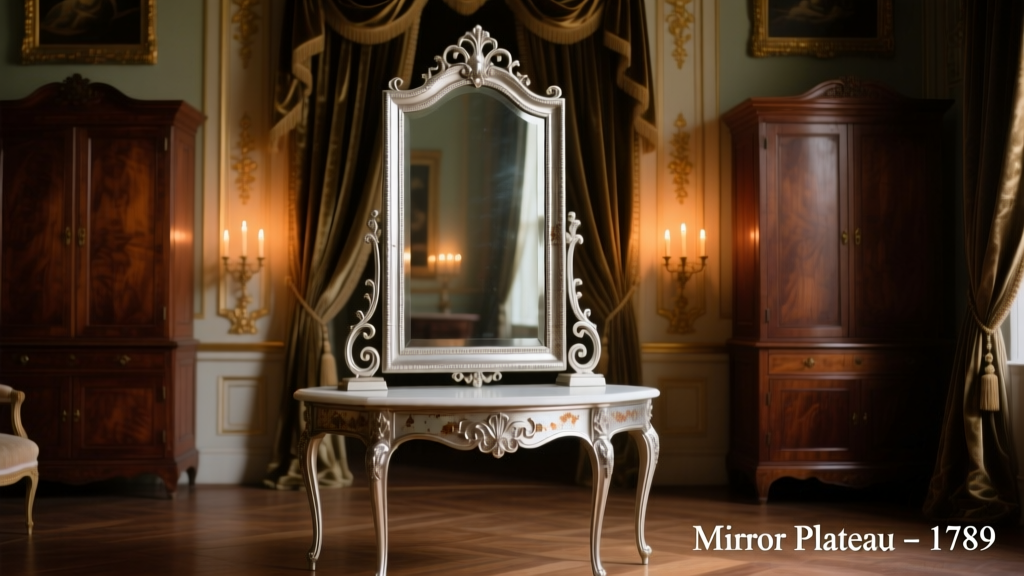
The Mirror Plateau: A Study of Silver-Banded Furniture with Four Small Feet — History, Identification, and Conservation
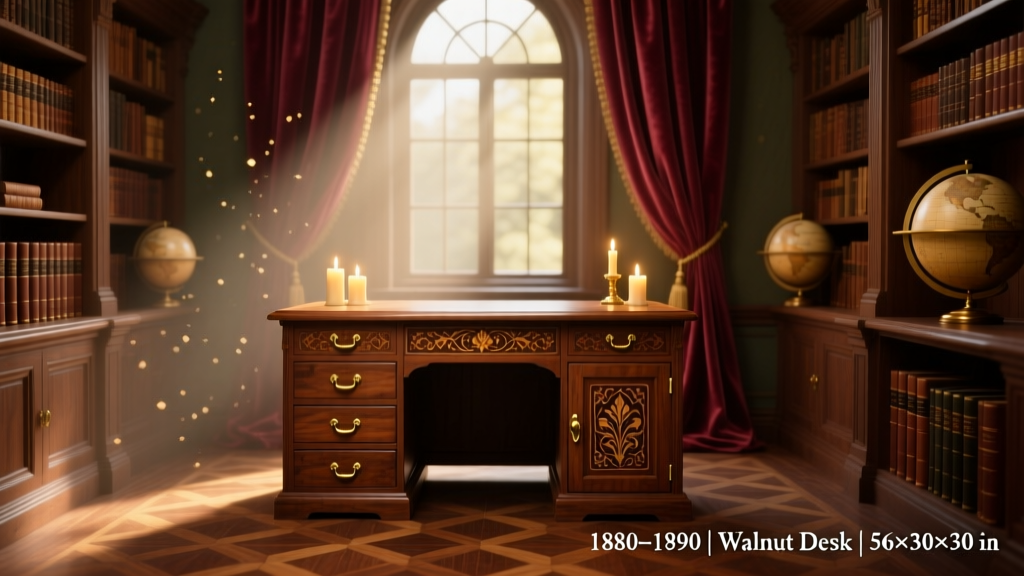
Walnut Partner Desk, c. 1885: A Detailed Examination of a Six-Drawer Side-Door Desk Measuring 56 × 30 × 30 Inches
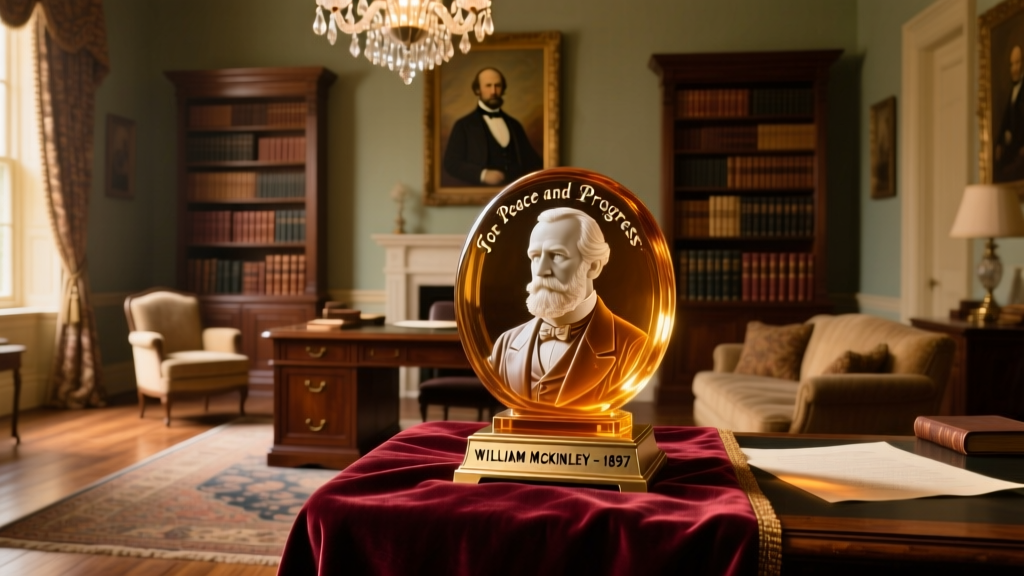
The McKinley Full-Bust Glass Political Paperweight: History, Craftsmanship, and Collectibility
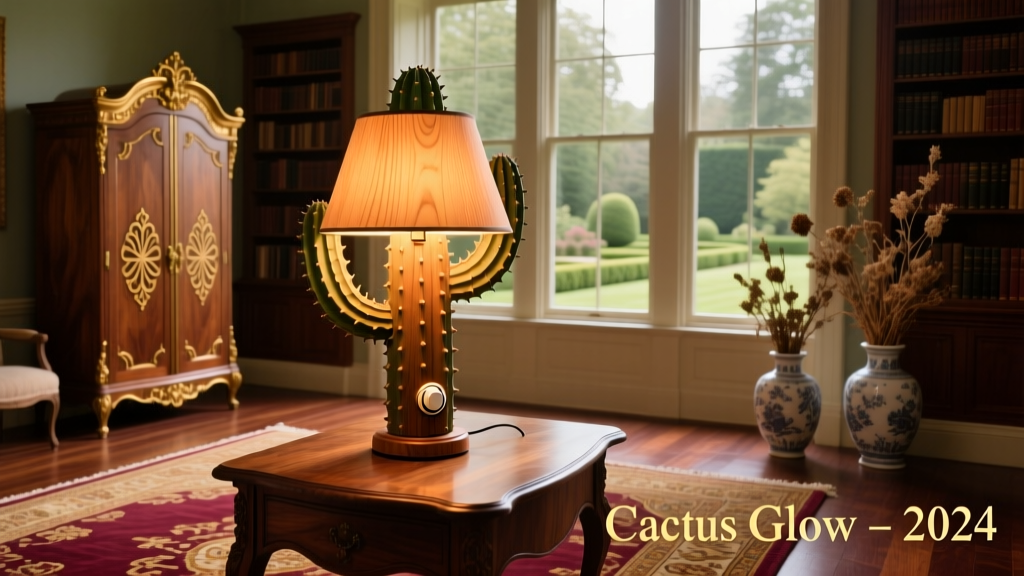
Electric Cactus Lamps: Wooden Construction, Dimmable Functionality, and Design Authenticity in Mid-Century and Contemporary Lighting
The Lee Sample Advertising Hat Box: A Study in Early 20th-Century Brand Ephemera and Cabinetmaking Craft

Balloon Back Walnut Chair Set with Foliate Carving: Identification, Provenance, and Restoration Protocol for a Four-Piece Set
Royal Copenhagen Christmas Plate 1956: The Rosenborg Castle Commemorative Edition
Fischer Figurine Goose Polychrome Decoration (5 In): Authenticity, Provenance, and Restoration Insights