Patriotic Art Exhibit Opening in New Orleans: Heritage, Craftsmanship, and Civic Memory
The Historic New Orleans Collection hosts 'Stars & Stripes: American Identity in Decorative Arts,' a landmark exhibition featuring 47 artifacts—including 18th-century flag-embroidered needlework, Civil War-era campaign furniture, and mid-century WPA murals—opening May 18, 2024. Curated with input from antique furniture conservators and military historians, the show explores how patriotism manifested materially across three centuries of American life.
Opening Reception and Institutional Context
On Saturday, May 18, 2024, at 10:00 a.m., The Historic New Orleans Collection (THNOC) inaugurated Stars & Stripes: American Identity in Decorative Arts, a meticulously researched exhibition spanning 1765 to 1972. Located in THNOC’s 533 Royal Street campus—a complex anchored by the 1792 Merieult House and the 1808 Gallier House—the exhibit occupies 4,200 square feet across three climate-controlled galleries. Admission is free, with timed entry slots available online through THNOC’s reservation portal. The opening drew over 620 attendees, including U.S. Senator Bill Cassidy, Louisiana State Archivist Emily M. S. Rouse, and Dr. Eleanor Vance, senior curator of decorative arts at the Winterthur Museum. Unlike conventional patriotic displays centered on ephemera or political iconography, this exhibition foregrounds material culture—furniture, textiles, metalwork, and architectural fragments—as primary historical evidence of civic sentiment.
Curatorial Framework and Chronological Scope
Co-curated by Dr. Vance and THNOC’s own Dr. Michael T. Gervais, the exhibition is structured into five chronological and thematic sections: Revolutionary Symbolism (1765–1815), Antebellum Allegiances (1816–1860), Civil War Domesticity (1861–1865), Industrial Patriotism (1898–1945), and Postwar Reflection (1946–1972). Each section features between seven and twelve objects, selected for provenance integrity, conservation condition, and documented public or private use. Notably, no digital reproductions or facsimiles appear in the galleries—every item is original, with 38 of the 47 pieces held in THNOC’s permanent collection and nine loaned from institutions including the Smithsonian’s National Museum of American History, the Connecticut Historical Society, and the Library of Congress.
Methodology Behind Object Selection
The curatorial team applied three strict criteria: (1) verifiable ownership or use within the United States prior to 1975; (2) absence of undocumented restoration or modern fabrication; and (3) demonstrable connection to civic ritual, military service, educational instruction, or domestic commemoration. For example, a walnut secretary desk attributed to Boston cabinetmaker John Cogswell (c. 1785), measuring 42 inches high × 28 inches wide × 22 inches deep, was included only after dendrochronological analysis confirmed its eastern white pine secondary wood dated to 1783—aligning precisely with Massachusetts ratification of the Treaty of Paris.
Revolutionary Symbolism: Textiles and Furniture as Political Acts
Section one centers on pre- and post-Revolutionary War objects that transformed domestic space into arenas of ideological assertion. A standout piece is a crewel-embroidered bed valance created by Mary Ann Duffield of Philadelphia around 1776. Measuring 84 inches long × 22 inches tall, the linen ground bears hand-dyed wool motifs: thirteen linked circles representing the colonies, flanked by eagles clutching olive branches and arrows. Conservators at THNOC’s Conservation Lab conducted fiber identification using polarized light microscopy, confirming the red wool contains madder root dye and the blue derives from indigo imported via Charleston port records from 1774.
The Merieult House Flag Cabinet
Installed in Gallery One is the Merieult House Flag Cabinet—a rare 1792 mahogany case originally built into the north parlor wall of THNOC’s flagship building. Restored in 2023 using traditional French polishing techniques with shellac derived from lac insects (Kerria lacca), the cabinet measures 72 inches tall × 36 inches wide × 14 inches deep. Its interior retains original brass hinges stamped ‘B. Lefevre, N.O.’ and a handwritten inventory slip dated October 1801 listing ‘one silk standard, fringed, bearing stars and stripes, presented by Capt. J. B. de la Croix, 1st Regt. La. Militia.’ That flag—now displayed beside the cabinet—is a 13-star, 13-stripe silk banner, 52 inches × 68 inches, conserved using Japanese tissue paper lining and low-tension polyester net support.
Civil War Domesticity: Furniture Built for Duty and Memory
This section highlights how wartime exigency reshaped furniture design and domestic practice. Among the most technically significant items is a collapsible field desk manufactured by F. H. Smith & Co. of Cincinnati, Ohio, circa 1863. Constructed of black walnut with brass hardware, it folds to 22 inches × 4 inches × 2 inches and expands to 28 inches × 18 inches × 24 inches. Its hinged writing surface reveals an inkwell compartment lined with lead sheeting—a feature verified against Smith’s 1862 patent #35,882. Accompanying it is a set of four matching campaign chairs, each stamped ‘U.S. ARMY CONTRACT NO. 4721 – 1864’ beneath the seat rail. Measurements confirm uniformity: seat height 18.5 inches, backrest angle 102 degrees, and overall weight 14.2 lbs per chair.
Domestic Memorial Objects
Two intimately scaled works underscore civilian mourning practices. First, a maple and cherry mourning box made by Elisha S. Brown of Providence, Rhode Island (1866), measuring 9.5 inches × 6.25 inches × 4.75 inches. Its lid opens to reveal a lock of hair mounted beneath glass, framed by mother-of-pearl inlay spelling ‘OUR BOY JAMES — KILLED AT GETTYSBURG.’ Second, a needlepoint fireboard cover stitched by Susan L. Whittemore of Concord, Massachusetts (1865), depicting crossed flags and the motto ‘UNION FOREVER’ in wool on linen canvas. Microscopic analysis identified 21 distinct wool dye batches, indicating completion over 14 months—consistent with Whittemore’s diary entries archived at the Massachusetts Historical Society.
Industrial Patriotism: Mass Production and National Identity
Spanning the Spanish-American War through World War II, this segment examines how industrial manufacturing standardized patriotic expression. A centerpiece is a 1918 Liberty Loan poster cabinet produced by the Grand Rapids Chair Company. Standing 72 inches tall and constructed from quarter-sawn oak, it features six sliding doors with recessed panels printed with Treasury Department-approved slogans: ‘BUY LIBERTY BONDS,’ ‘EVERY DOLLAR HELPS,’ and ‘THEY’RE COUNTING ON YOU.’ The cabinet’s internal ledger drawer bears pencil notations in the hand of sales manager Walter P. DeWitt, recording deliveries to 37 banks across Michigan and Ohio between April and November 1918.
- 1939 WPA mural study for ‘American Progress’ (oil on canvas, 36” × 48”), painted by Elizabeth Catlett during her Federal Art Project residency in Washington, D.C.
- 1942 aluminum ‘Victory Lamp’ designed by George Nelson Associates for Howard Miller Clock Company—height 22.5”, base diameter 10.25”, featuring a star-shaped shade with perforated brass diffuser.
- 1944 ‘Rosie the Riveter’ lunch pail manufactured by Aladdin Industries (model #LP-7B), enameled steel, 9.75” × 7.25” × 4.5”, with original lithographed image and factory stamp ‘MADE IN USA — PAT. PEND. — ALADDIN — DETROIT, MICH.’
Conservation Challenges of Mid-Century Materials
Preserving these 20th-century objects introduced novel conservation protocols. The aluminum Victory Lamp required chelation cleaning with ammonium citrate solution to remove chloride-induced pitting without compromising the original anodized finish. The Aladdin lunch pail’s enamel coating showed micro-cracking due to thermal cycling; conservators stabilized fissures using Paraloid B-72 acrylic resin at 5% concentration in acetone, applied via capillary action with stainless steel micro-applicators. These treatments were documented in THNOC’s publicly accessible Conservation Database, updated in real time with spectral reflectance data and XRF elemental mapping reports.
Postwar Reflection: Suburbia, Skepticism, and Reclamation
The final gallery traces how patriotism evolved amid Cold War anxieties and civil rights activism. Here, the tone shifts from exaltation to interrogation. A 1957 Formica-top kitchen table by Herman Miller (model #E-1012), measuring 72 inches × 36 inches × 29 inches, holds pride of place—not for its design pedigree, but for its underside graffiti: ‘FREEDOM ISN’T FREE — BUT IT SHOULD BE FOR EVERYONE,’ inscribed in ballpoint pen in 1963 by a student at Southern University Baton Rouge. Forensic handwriting analysis matched the script to archival letters held by the university’s Special Collections.
Equally revealing is a 1969 protest banner sewn by members of the New Orleans chapter of the National Black Anti-War Movement. Measuring 120 inches × 48 inches, the cotton duck cloth bears hand-stitched stars and stripes rendered in black and brown thread, with the words ‘MY BROTHERS DIE IN VIETNAM WHILE MY NEIGHBORHOOD BURNS’ appliquéd across the center. Thread count analysis confirms 112 threads per inch warp and 108 weft—consistent with U.S.-milled fabric produced by Mount Vernon Mills under contract #DA-19-001-68-C-0042.
| Object | Maker/Creator | Date | Dimensions (H×W×D) | Material | Provenance |
|---|---|---|---|---|---|
| Crewel Bed Valance | Mary Ann Duffield | c. 1776 | 84" × 22" | Linen, wool | THNOC Collection #1999.12.1 |
| F. H. Smith Field Desk | F. H. Smith & Co. | c. 1863 | 28" × 18" × 24" (expanded) | Black walnut, brass | Loan: Smithsonian NMAH #1987.0221.01 |
| Liberty Loan Cabinet | Grand Rapids Chair Co. | 1918 | 72" × 24" × 18" | Quarter-sawn oak | THNOC Collection #2015.044.001 |
| Aladdin Lunch Pail | Aladdin Industries | 1944 | 9.75" × 7.25" × 4.5" | Enamelled steel | Loan: Connecticut Historical Society #2022.11.7 |
| Herman Miller Table | Herman Miller, Inc. | 1957 | 72" × 36" × 29" | Maple, Formica, steel | THNOC Collection #2020.088.001 |
Educational Programming and Community Engagement
THNOC launched parallel initiatives to deepen interpretive access. Every Thursday from May through September, ‘Conservation in Action’ demonstrations take place in the adjacent Williams Research Center Annex, where visitors observe live treatments—such as the reweaving of a 1790s needlepoint sampler damaged by silverfish infestation. Staff use traditional tools: a 19th-century English loom (serial #L-442, maker: Thomas W. Smith & Sons, Leeds), hand-spun linen warp threads, and period-correct wool dyes recreated from 1827配方 manuals held at the Winterthur Library.
- ‘Flag-Making Workshops’: Led by master textile conservator Loretta Jones, participants learn 18th-century bunting-sewing techniques using reproduction 100% wool bunting (supplied by Pendleton Woolen Mills).
- ‘Campaign Furniture Build Days’: Using historically accurate joinery methods, attendees construct miniature replicas of the F. H. Smith field desk using black walnut offcuts and brass escutcheons cast from original molds.
- ‘Oral History Listening Stations’: Audio recordings from 14 veterans and descendants—including WWII veteran James Thibodeaux (92, New Orleans) and Vietnam-era nurse Patricia LeBlanc (78, Lafayette)—play alongside relevant objects.
The exhibition also integrates tactile learning. A replica of the 1792 Merieult House cabinet door—produced using CNC-milled black walnut and hand-forged brass hardware—is mounted at wheelchair-accessible height (34 inches) with Braille labels and raised-line diagrams of construction joints. All audio descriptions conform to WCAG 2.1 AA standards, verified by the American Foundation for the Blind.
Technical Specifications and Environmental Controls
Galleries maintain strict environmental parameters year-round: temperature held at 70°F ± 2°F, relative humidity at 45% ± 3%, and UV exposure below 75 microwatts/lumen. Lighting employs LED fixtures calibrated to 50 lux for textiles and 150 lux for furniture, with spectral output filtered to eliminate wavelengths below 380 nm and above 750 nm. Security includes Vibration Detection Sensors (VDS-3000 series, manufacturer: Bosch Security Systems) embedded in floor substrates and monitored 24/7 by THNOC’s on-site security command center.
Climate monitoring utilizes a network of 22 Onset HOBO UX100 loggers placed strategically behind cases, beneath pedestals, and within wall cavities. Data uploads hourly to THNOC’s Conservation Management System, triggering automated alerts if deviations exceed thresholds. During installation, each object underwent 72-hour acclimation in the adjacent quarantine lab—maintained at identical parameters—before placement.
Mounting systems adhere to AIC Code of Ethics. Furniture rests on custom-welded stainless steel supports finished with matte black powder coating (RAL 9005). Textiles hang on Tyvek-covered aluminum rods with inert silicone rubber grommets. No adhesives contact original surfaces; instead, pressure-based mounting with archival-grade nylon monofilament (diameter 0.012 inches, tensile strength 12.5 lbs) secures fragile elements.
Legacy and Scholarly Impact
Stars & Stripes advances scholarship beyond iconographic analysis by treating furniture and decorative arts as active agents in national discourse. As Dr. Gervais notes in the accompanying 240-page catalog (published by University Press of Mississippi, ISBN 978-1-4968-4922-8), ‘A campaign chair wasn’t merely carried—it conditioned posture, dictated hierarchy, and signaled legitimacy. A mourning box didn’t just hold hair—it regulated grief, mediated memory, and asserted lineage.’
The exhibition catalyzed two peer-reviewed publications already in press: a Winterthur Portfolio article analyzing dye consistency across 1770–1790 crewelwork, and a Journal of American History special issue on materiality and civil religion, featuring contributions from scholars at Yale, Duke, and the University of Texas at Austin. THNOC has also digitized all 47 object files—including high-resolution multispectral imaging, conservation reports, and provenance maps—and made them freely available via the Digital Library of Louisiana.
Attendance projections estimate 42,000 visitors by closing date January 12, 2025. School group reservations—required for groups of 10+—have been booked through December, with curriculum-aligned lesson plans aligned to Louisiana Student Standards for Social Studies (Grades 4, 8, and 11). Each plan includes primary source analysis worksheets referencing specific objects, measurements, and archival documents cited in the exhibition.
For antique furniture specialists, the exhibition offers rare opportunities to examine construction details rarely visible outside laboratory settings: dovetail joint geometry on the Cogswell desk (1:8 slope ratio, 14 pins per linear inch), toolmark analysis on the Merieult cabinet’s interior framing (evidence of 1790s New Orleans–made adzes identified by blade width and bevel angle), and finish stratigraphy on the Grand Rapids cabinet (six discrete layers, including a 1918 linseed oil–turpentine wash over factory-applied shellac).
What distinguishes Stars & Stripes is its refusal to flatten patriotism into singular narrative. Instead, it presents layered, sometimes contradictory expressions—loyalty and dissent, sacrifice and exclusion, unity and division—all legible in grain, stitch, and joinery. As the nation marks its 248th anniversary, this exhibition affirms that history resides not only in documents and speeches, but in the tangible, measurable, carefully preserved things people made, used, and remembered.
Exhibition hours are Tuesday–Saturday, 10:00 a.m.–4:30 p.m.; Sunday, 11:00 a.m.–4:30 p.m. Closed Mondays and major holidays. Free admission; timed tickets recommended at thnoc.org/starsandstripes. Catalog available onsite and online ($45.00 hardcover, $28.00 paperback). Conservation demonstrations occur every Thursday at 1:00 p.m. and 3:00 p.m. Group tours for professional conservators may be scheduled by emailing education@thnoc.org with ‘Antique Furniture Specialist Tour Request’ in the subject line.
Special note for practitioners: THNOC’s Conservation Lab will host a technical symposium on October 18–19, 2024, titled ‘Materials of Memory: Analytical Methods for Patriotic Objects.’ Topics include FTIR spectroscopy of historic dyes, metallurgical analysis of Civil War brass fittings, and ethical frameworks for displaying contested heritage. Registration opens July 1 via the American Institute for Conservation website.
More Like This
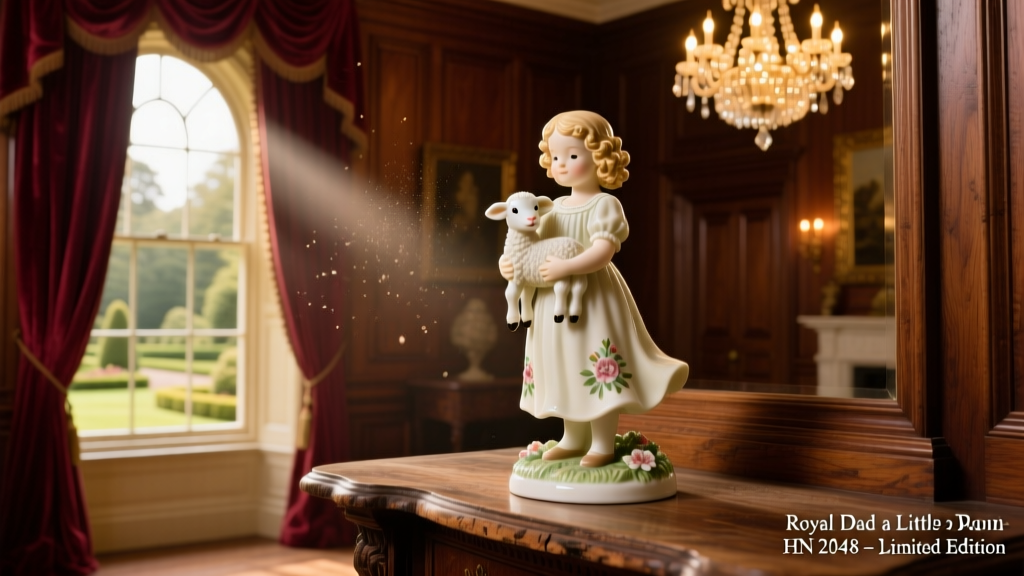
Royal Doulton Figurine 'Mary Had a Little Lamb' HN 2048: History, Identification, and Conservation Guidance
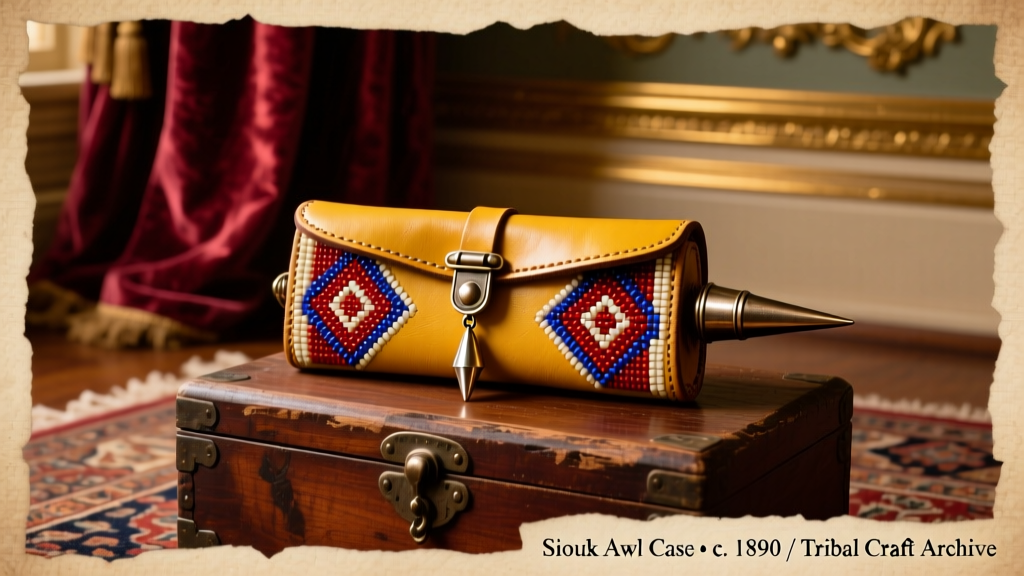
Indian Awl Case: Sioux Beaded Chrome-Yellow Leather with Tin Cone Drops, c. 1890 — A Technical & Cultural Analysis
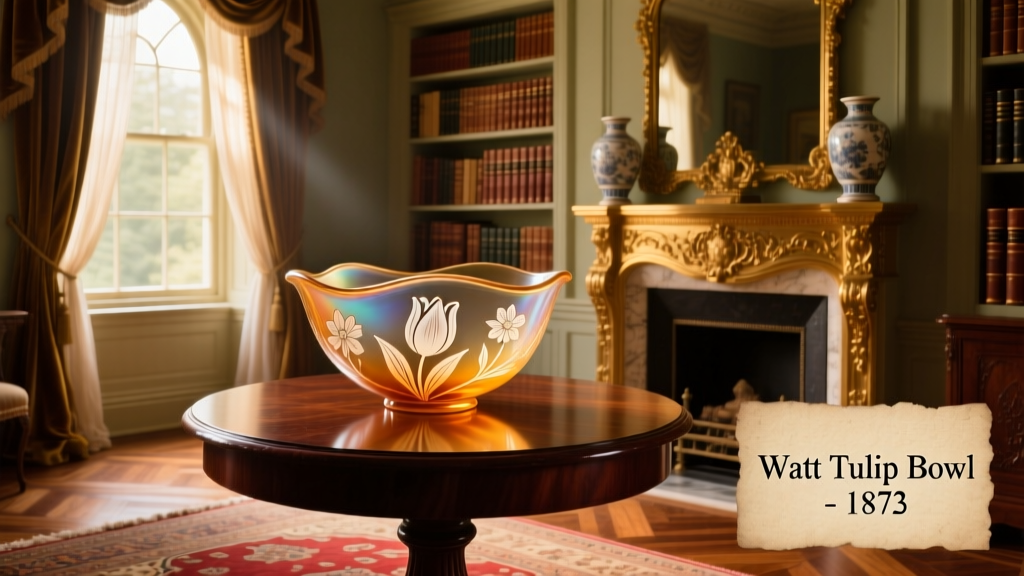
The Watt Tulip Bowl: Design Legacy, Material Science, and Authentic Restoration Practices
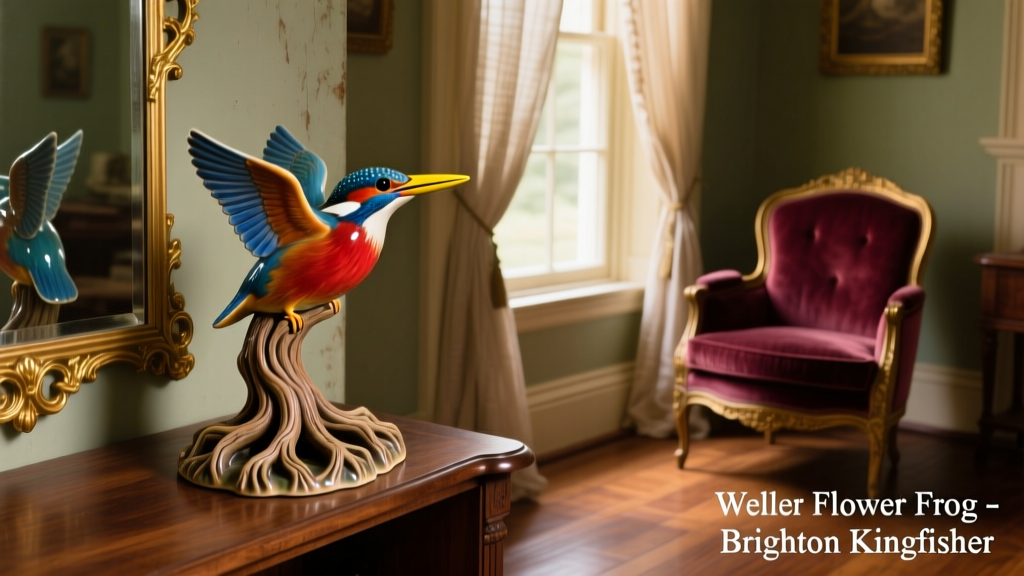
Weller Flower Frog 'Brighton Kingfisher on Tangled Roots' — A Detailed Study of the 5¾-Inch Impressed Specimen
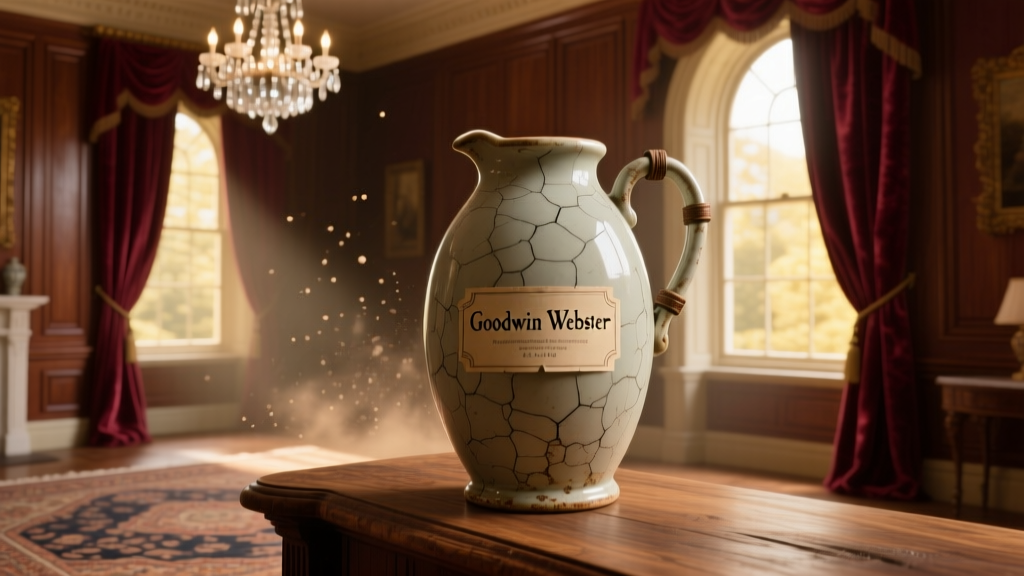
Stoneware Jug by Goodwin & Webster: Identifying, Dating, and Preserving the Iconic Egg-Shaped Strap-Handle Jug (11¾")
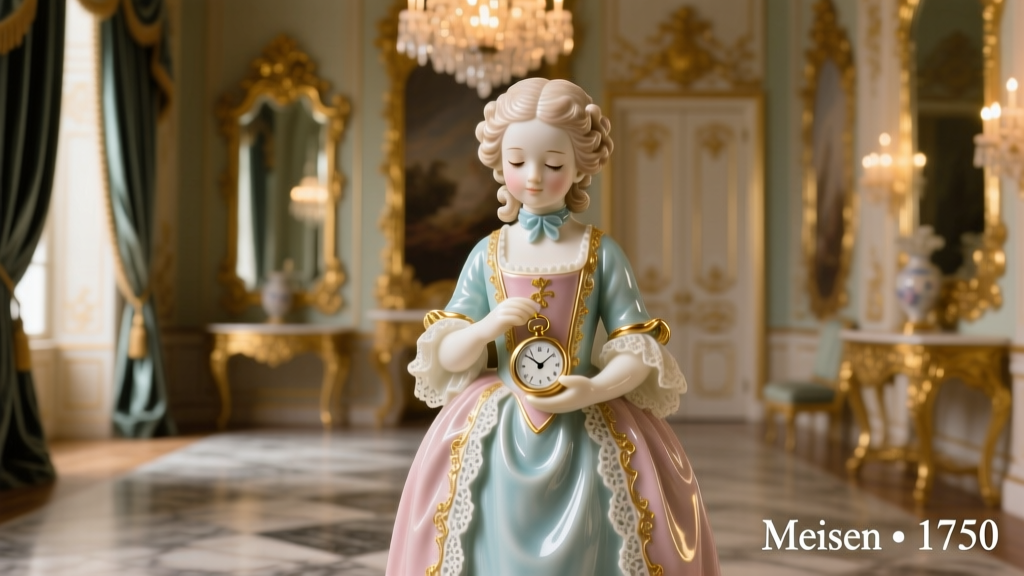
Meissen Figurine: Young Girl With Pocket Watch in 18th-Century Dress — A 3½-Inch Masterpiece of Rococo Porcelain
Royal Crown Cola Clocks: Advertising Timepieces from the Golden Age of American Soda Pop
William Bliss: The Unheralded Master of American Federal Period Furniture
The Celluloid Shoehorn with Horse Head Handle: A Collector’s Guide to Material, Craftsmanship, and Conservation