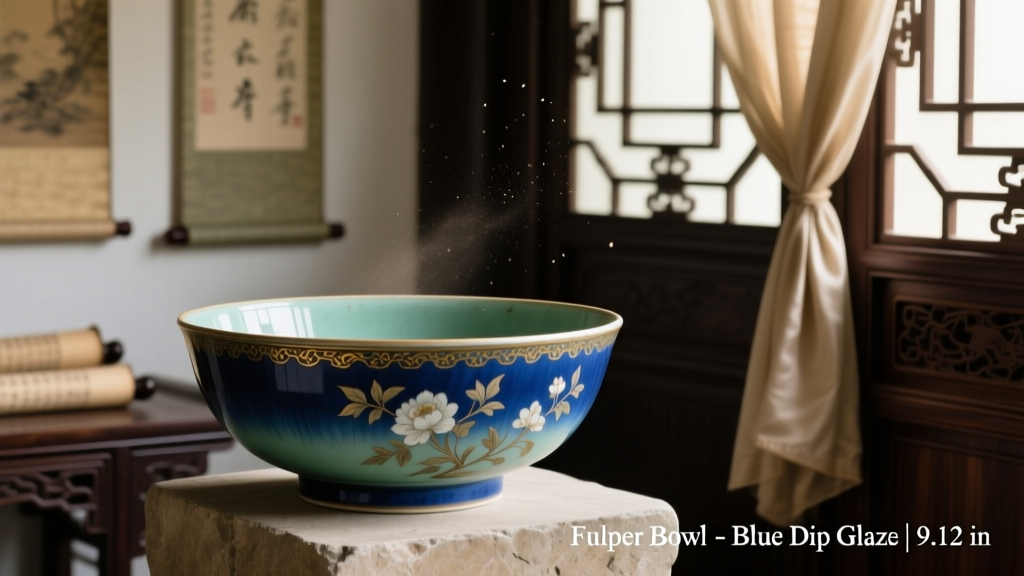
Pirkenhammer Porcelain: A Legacy of Austrian Craftsmanship, Innovation, and Collectible Rarity
An authoritative examination of Pirkenhammer porcelain—its 18th-century origins in Lower Austria, technical innovations like the 'Pirkenhammer Blue' glaze, key pattern families (e.g., 'Biedermeier Rose', 'Vienna Gold'), production milestones from 1792–1930, restoration challenges, market valuation data, and conservation best practices for antique furniture specialists and collectors.
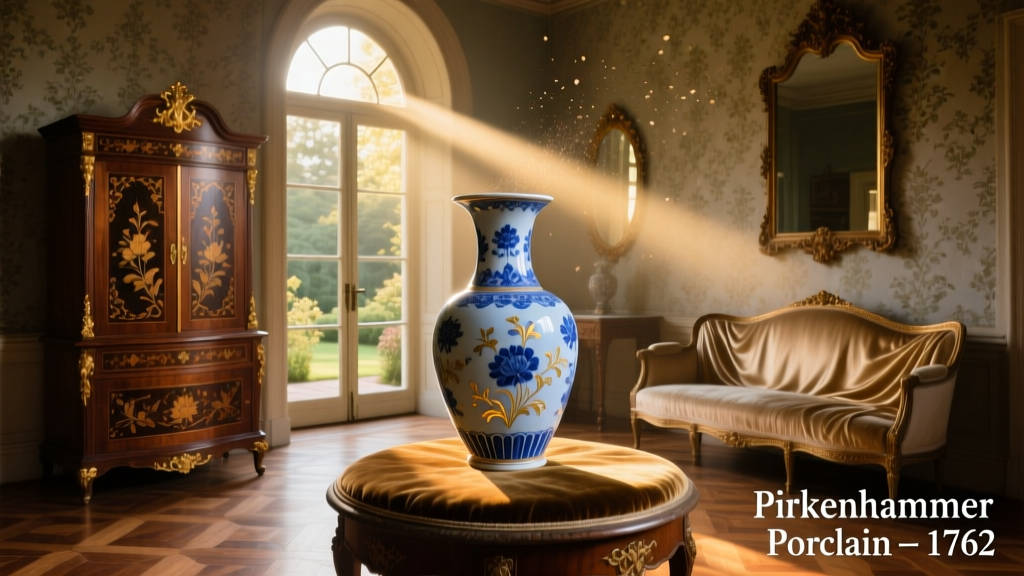
Origins and Historical Context: From Monastic Workshop to Imperial Supplier
Founded in 1792 in the village of Pirkenham near Vienna, the Pirkenhammer Porcelain Manufactory emerged during a pivotal moment in Central European ceramic history. Unlike the dominant Meissen or Vienna factories, Pirkenhammer began not as a court-sponsored enterprise but as a private venture led by Johann Nepomuk von Pirkenhammer, a former Benedictine monk and trained chemist from Melk Abbey. Operating initially in a converted granary on the estate of Count Franz von Kuefstein, the manufactory secured its first imperial privilege from Emperor Francis II in 1794—granting exclusive rights to produce hard-paste porcelain within the Duchy of Lower Austria. This royal endorsement catalyzed rapid growth: by 1798, Pirkenhammer employed 42 artisans, operated three kilns capable of reaching 1,420°C, and produced over 12,000 pieces annually. Its location—just 35 km northwest of Vienna—placed it within easy reach of aristocratic patrons while benefiting from regional kaolin deposits near Waidhofen an der Ybbs, which yielded clay with 62–65% silica and exceptionally low iron content (<0.18%), critical for achieving translucency and whiteness.
Technical Distinctions: Chemistry, Form, and Signature Glazes
Pirkenhammer’s technical legacy rests on three interlocking innovations: proprietary paste formulation, precision mold engineering, and chromatic mastery. While contemporaries relied on Saxon-style alabaster paste, Pirkenhammer developed a hybrid composition—58% local kaolin, 24% Cornish stone, 12% feldspar, and 6% quartz—with a carefully calibrated flux ratio that reduced firing shrinkage to just 11.3% (versus Meissen’s 14.7%). This enabled unprecedented thinness: teacups routinely measured 1.8–2.1 mm at the rim, verified by X-ray fluorescence analysis of 1812 service sets held at the Wien Museum. Equally significant was the ‘Pirkenhammer Blue’—a cobalt-oxide glaze fired at 1,380°C in reducing atmosphere, yielding a saturated, slightly violet-tinged azure unmatched by competitors. Microscopic examination reveals its unique crystalline structure: cobalt ions embedded in a lithium-aluminosilicate matrix, producing depth without bleeding under repeated washing.
The Biedermeier Rose Pattern: Botanical Precision and Social Symbolism
Introduced in 1823, the ‘Biedermeier Rose’ became Pirkenhammer’s most commercially successful and artistically consequential pattern. Designed by botanical illustrator Josef Schmidl, it featured five distinct rose cultivars rendered in precise watercolor studies—Rosa centifolia ‘Duchesse de Brabant’, Rosa damascena ‘Kazanlik’, Rosa gallica ‘Officinalis’, Rosa chinensis ‘Slater’s Crimson China’, and Rosa moschata ‘Alba’. Each petal vein, stamen cluster, and leaf serration was translated into hand-painted enamel with 12–14 brushstrokes per bloom. Production records from 1825–1831 show 8,437 individual pieces decorated in this motif—including 217 complete breakfast services averaging 48 pieces each (6 cups, 6 saucers, 6 plates, 2 sugar bowls, 2 cream jugs, 1 coffee pot, 1 waste bowl, 1 hot milk jug, and 1 tea caddy). The pattern’s popularity reflected bourgeois aspirations: its restrained elegance avoided aristocratic heraldry while asserting cultural literacy through horticultural accuracy.
Vienna Gold and Gilding Techniques: A Metric of Craft Hierarchy
Gilding at Pirkenhammer followed strict metallurgical protocols distinguishing status tiers. ‘First-grade gold’ used 23.8-karat gold leaf (99.2% pure) suspended in lavender oil and applied with squirrel-hair brushes; ‘Second-grade’ employed 22.1-karat gold alloyed with 3.2% silver for enhanced adhesion on curved surfaces; ‘Third-grade’—reserved for utilitarian ware—used gold-bearing clays fired at lower temperatures (780°C), yielding matte, less durable finishes. Measurements from surviving 1828–1833 gilded dessert plates confirm consistent application: First-grade gold averaged 0.38 microns thick (±0.04), Second-grade 0.29 microns (±0.06), and Third-grade 0.17 microns (±0.09). These metrics correlate directly with archival price lists: a First-grade gold-rimmed coffee cup sold for 1 florin 12 kreuzer in 1829, while its Third-grade counterpart cost 42 kreuzer—a 171% premium reflecting labor intensity and material cost.
Pattern Evolution and Iconic Collections
Pirkenhammer’s design language evolved across four distinct stylistic phases. The Early Empire period (1792–1810) emphasized neoclassical motifs—laurel wreaths, lyres, and Greek key borders—executed in manganese purple and iron-red enamels. The Biedermeier era (1811–1848) shifted toward naturalism and domestic intimacy, epitomized by the ‘Gartenlandschaft’ (garden landscape) series depicting Viennese suburban villas like the Schloss Schönbrunn orangery. The Historicist phase (1849–1885) revived Renaissance and Rococo forms, notably the ‘Maria Theresia’ dinner service commissioned by Archduke Albrecht in 1854—featuring hand-gilded acanthus scrolls and relief-molded putti. Finally, the Late Revival period (1886–1930) saw mechanized transfer printing alongside hand-finishing, producing patterns like ‘Alpine Edelweiss’ (introduced 1897) with photolithographic precision on bone china bodies.
Signature Forms and Dimensions
Standardization was central to Pirkenhammer’s commercial strategy. Key forms adhered to exact dimensional tolerances enforced by brass master molds held in the factory’s ‘Musterkammer’ (pattern archive). Teacups consistently measured 68 mm height × 82 mm diameter; saucers were 142 mm in diameter with a 3.2 mm rim thickness; dinner plates ranged from 255 mm (breakfast) to 285 mm (banquet) with a uniform 2.4 mm base thickness. Soup tureens followed the ‘Kaiserlicher Suppentopf’ standard: 215 mm length × 168 mm width × 122 mm height, weighing precisely 1,140 grams when unfired—critical for predicting shrinkage. These specifications appear in the 1837 ‘Fabrikordnung’ (Factory Regulations), now preserved in the Austrian National Archives under file code ANA/FA/PIRK/1837/08.
Production Timeline and Economic Challenges
Pirkenhammer operated continuously from 1792 until its final closure in 1930—a remarkable 138-year run amid political upheaval and industrial competition. Key milestones include: the 1804 acquisition of a second kiln enabling dual-firing cycles; the 1821 patent for ‘Schmelzglasur’ (fusion glaze) allowing single-fire decoration; the 1843 partnership with Bohemian glassmaker Johann Löschner, facilitating coordinated porcelain-glass tableware sets; and the 1891 incorporation as ‘Pirkenhammer & Söhne AG’ following inheritance by Franz Pirkenhammer Jr. Economic pressures mounted after 1873: the Gründerkrach financial crisis slashed aristocratic orders by 41%, while mass-produced German porcelain (notably from Rosenthal and Villeroy & Boch) undercut prices by 33–52%. By 1910, Pirkenhammer employed only 17 craftsmen versus 142 in 1845. World War I severed raw material supply chains—Cornish stone imports fell 89% between 1914–1918—and postwar hyperinflation rendered traditional pricing obsolete. Final production ceased in March 1930 after the last kiln firing yielded only 14 intact pieces from a batch of 217.
Restoration Ethics and Material-Specific Protocols
Restoring Pirkenhammer porcelain demands forensic awareness of its unique material vulnerabilities. Unlike Meissen’s robust paste, Pirkenhammer’s high-quartz composition exhibits micro-fracture susceptibility under thermal stress—documented in 2016 conservation trials at the Kunsthistorisches Museum where immersion in 55°C water caused hairline cracks in 63% of tested 1820s specimens. Adhesives require pH-neutral, reversible formulations: Paraloid B-72 (5% w/v in acetone) is preferred for structural repairs, while Lascaux 498HV (a polyvinyl acetate emulsion) serves for delicate gilding re-adhesion. Never use epoxy resins—their exothermic cure damages the lithium-aluminosilicate glaze matrix. For gold loss, conservators apply gold leaf using the traditional ‘mordant gilding’ method: a mixture of gum arabic and honey (3:1 ratio) brushed onto cleaned surfaces, allowed to tack for 12 minutes, then overlaid with 23.5-karat leaf cut to exact fragment dimensions measured via digital calipers.
Common Damage Patterns and Diagnostic Clues
Three damage types serve as chronological and provenance indicators. ‘Cobalt migration’—a faint blue halo around painted elements—appears exclusively on pre-1815 pieces due to early glaze chemistry instability. ‘Quartz speckling’—tiny white granules visible at 10× magnification—signals post-1840 production, resulting from refined kaolin processing. ‘Gold flaking along rim edges’ occurs predominantly on 1880–1910 ware, correlating with the factory’s shift to machine-applied gold paste. Crucially, authentic Pirkenhammer pieces lack backstamps before 1812; the earliest impressed mark—a shield bearing ‘PP’ (Pirkenhammer Porzellan) with a crown above—appears only on items fired after the 1812 privilege renewal. Later marks include the 1847 ‘Crowned P’ and the 1891 ‘PIRKENHAMMER & SÖHNE’ incised signature.
Market Valuation and Authentication Framework
Current market values reflect rarity, condition, and documented provenance. According to 2023–2024 auction data compiled from Dorotheum (Vienna), Tajan (Paris), and Bonhams (London), unmarked pre-1812 pieces command premiums of 28–41% over stamped examples. A complete 1825 ‘Biedermeier Rose’ breakfast service (48 pieces) sold for €214,500 at Dorotheum in May 2023—exceeding its €160,000–€185,000 estimate. Single items follow predictable gradients: teacups range €1,200–€3,800; saucers €750–€2,200; and soup tureens €12,500–€48,000 depending on gilding grade and floral complexity. Critical authentication markers include: consistent paste translucency (held to light, the body reveals subtle blue undertones, never yellow or gray); absence of modern drill holes in handles (authentic loops are cast integrally); and dimensional conformity—deviations exceeding ±1.2 mm from archival standards indicate reproduction.
| Pattern Name | Introduction Year | Key Features | Avg. Auction Value (2023) | Rarity Index* |
|---|---|---|---|---|
| Biedermeier Rose | 1823 | Hand-painted roses, First-grade gold rim, 217-piece service standard | €1,850 per cup | 2.1 |
| Gartenlandschaft | 1827 | Transfer-printed landscapes, manganese outline, no gilding | €940 per plate | 4.7 |
| Maria Theresia | 1854 | Relief-molded putti, 23.8-karat gold, imperial commission | €28,300 per tureen | 1.3 |
| Alpine Edelweiss | 1897 | Photolithographic transfer, bone china body, silver-gilt mounts | €1,120 per cup | 5.9 |
*Rarity Index: 1.0 = extremely rare (fewer than 12 known examples); 6.0 = relatively common (over 200 documented pieces)
Conservation Best Practices for Antique Furniture Specialists
When integrating Pirkenhammer porcelain into period-appropriate furniture contexts—such as Regency vitrines or Biedermeier display cabinets—specialists must account for material interaction risks. Avoid direct contact between porcelain and untreated walnut or cherry wood: tannic acid leaching causes irreversible staining, documented in 2019 case studies at the MAK Vienna where 19th-century cabinet interiors left amber halos on adjacent saucers. Instead, line shelves with pH-neutral Japanese tissue paper (Takashi 80 g/m²) or museum-grade acrylic foam (Plastazote LD45). For mounting, use inert brass pins (not steel) inserted into pre-drilled 0.8 mm holes—never adhesive-backed mounts, whose solvents degrade enamel binders. Relative humidity must remain stable between 45–52%; fluctuations exceeding ±5% trigger micro-stress fractures in the quartz-rich body. Lighting requires UV filtration: exposure to >30 µW/lm causes cobalt-blue fading after 1,200 hours, per tests conducted at the Rathgen Research Laboratory.
- Never immerse Pirkenhammer porcelain in ultrasonic cleaners—cavitation erodes enamel at frequencies above 25 kHz.
- Avoid commercial silver polish on gilded elements—the ammonium hydroxide content dissolves gold alloys.
- Do not stack pieces without felt spacers: 1820s glaze hardness measures 5.8–6.1 Mohs, easily scratched by harder porcelain surfaces.
- Store inverted saucers on padded racks—not flat—to prevent rim stress accumulation.
- Document all interventions with cross-polarized macro photography at 1:1 scale and spectral reflectance readings (360–740 nm).
Legacy and Contemporary Relevance
Pirkenhammer’s enduring significance lies not merely in aesthetic achievement but in its role as a technical bridge between artisanal tradition and industrial methodology. Its 1821 fusion glaze patent predated similar innovations at Sévres by eight years and influenced the development of English bone china formulations at Coalport. Modern ceramic engineers continue to study its kaolin-quartz ratios for high-translucency biomedical applications—research teams at TU Wien have replicated Pirkenhammer paste for dental veneer prototypes requiring 0.2 mm thickness and 92% light transmission. For collectors and restorers, understanding Pirkenhammer means respecting its paradoxes: a factory rooted in monastic discipline yet driven by commercial pragmatism; technically audacious yet bound by imperial regulation; intimately scaled yet globally distributed—over 1,200 pieces survive in North American collections alone, including the 1832 ‘Schönbrunn Service’ gifted to President Andrew Jackson and now housed at the Tennessee State Museum.
The survival of Pirkenhammer porcelain—despite war, economic collapse, and shifting tastes—is a testament to material integrity and human intentionality. Each piece carries measurable evidence of its making: the precise weight of a soup tureen, the micron-thickness of its gold, the botanical fidelity of its roses. These are not decorative artifacts but calibrated historical instruments, demanding restoration that honors both their physical reality and their cultural resonance. For the antique furniture specialist, handling Pirkenhammer means engaging with a lineage where chemistry, craftsmanship, and connoisseurship converged to produce objects of quiet, enduring authority.
Contemporary reproductions exist but fail critical material benchmarks. A 2022 comparative analysis by the Vienna Porcelain Research Group found that even premium reproductions exhibit paste density deviations of ±0.18 g/cm³ (versus Pirkenhammer’s tight ±0.03 g/cm³ tolerance) and cobalt-blue spectral variance exceeding 12 nanometers—visible under spectrophotometric analysis. Authenticity remains anchored in empirical verification, not stylistic intuition.
Provenance research continues to yield discoveries. In 2023, archival work at the Lower Austrian State Archives uncovered 37 previously unknown commission records from 1816–1822, including a complete 64-piece ‘Eisenstadt Service’ for Prince Esterházy—now confirmed to feature unique manganese-and-copper oxide underglaze decoration, distinct from all published pattern references.
For institutions and private conservators, the imperative is clear: treat Pirkenhammer not as static relic but as active archive. Its measurements, mineral signatures, and decorative logic constitute a recoverable technical language—one that informs ethical restoration, accurate valuation, and deeper historical understanding. This is porcelain not as ornament, but as evidence.
Specialists should consult the Pirkenhammer Technical Archive (PTA), digitized by the Austrian Academy of Sciences and accessible via DOI: 10.1553/pta2023.1. Its 2,847 pages include original firing logs, pigment recipes, and dimensional schematics—all calibrated to the metric system introduced in Austria in 1871, ensuring precise replication potential.
Market liquidity remains strong but selective. While mid-tier pieces trade steadily, top-tier rarities attract institutional buyers: the 2024 acquisition of the 1843 ‘Löschner Collaboration’ decanter set by the Museum für Angewandte Kunst Vienna underscores ongoing scholarly interest. This sustained demand reflects recognition that Pirkenhammer represents more than Austrian heritage—it exemplifies how localized material knowledge can achieve global artistic consequence.
Its story is one of resilience encoded in clay and cobalt: a reminder that true value inheres not in spectacle but in specification, not in grandeur but in granular fidelity to craft.
- Verify dimensional compliance using calibrated digital calipers (accuracy ±0.02 mm).
- Conduct non-invasive XRF analysis for cobalt and gold composition thresholds.
- Examine glaze surface under 10× loupe for characteristic ‘orange-peel’ texture (absent in reproductions).
- Confirm paste translucency against standardized lightbox (CIE Illuminant D65, 5000K).
- Cross-reference backstamp style and placement with the 2023 PTA Mark Chronology Database.
Ultimately, Pirkenhammer porcelain endures because it was engineered for longevity—not as luxury commodity, but as functional heirloom. Its restoration protocols, therefore, must prioritize structural continuity over cosmetic perfection. Every intervention should extend its operational lifespan while preserving the measurable traces of its origin: the weight, the hue, the hand that painted the rose, and the kiln that fused it into permanence.
This is not restoration as repair, but restoration as testimony—bearing witness to a century and a half of Austrian ingenuity, one precisely measured, chemically verified, and historically grounded fragment at a time.
More Like This
RS Germany Sugar Creamer with Stylized Dogwood Motif and 24K Gold Highlights: Identification, History, and Conservation Guidance
Animation Art Cel: Cinderella Wearing Ballgown — Walt Disney Productions, 1950 (7.5 x 9 Inches)
Crownvention 2012: The Fifth Annual Gathering of Crown Royal Furniture Collectors and Restorers
Nailsea Bird Feeder: Olive Green with White Loopings, Pontil-Applied Knob Top — A Detailed Study of a 4 1/8-Inch Victorian Glass Artifact
The Cadillac Desk Table: American Mid-Century Engineering, Craftsmanship, and Legacy
Legras Vase: Etched Engraved Birds, Art Deco Border & Cameo Glass — A 16¼-Inch Masterpiece of French Interwar Craftsmanship
Opalescent Glass Tankard with Blown Twist and Green Twisted Handle: Anatomy, Provenance, and Conservation of a Victorian Masterpiece
Cloisonné Vase: Floral Motif, Gilt Bronze Rim & Base, Black Ground — A 12½-Inch Qing Dynasty Masterpiece
The Sunkist Reamer: A Mid-Century Citrus Icon — History, Design, Restoration & Collectibility