Civil War Memorabilia Auctions and Couple Reenactment: Authenticity, Value, and Historical Stewardship
A deep-dive exploration of Civil War memorabilia auctions featuring reenactor couples—covering valuation benchmarks, provenance verification, uniform authenticity (including Wilson & Co. and J.B. Hutton reproductions), auction house performance data from Heritage Auctions and Cowan’s, and ethical restoration practices for textiles and metalwork.
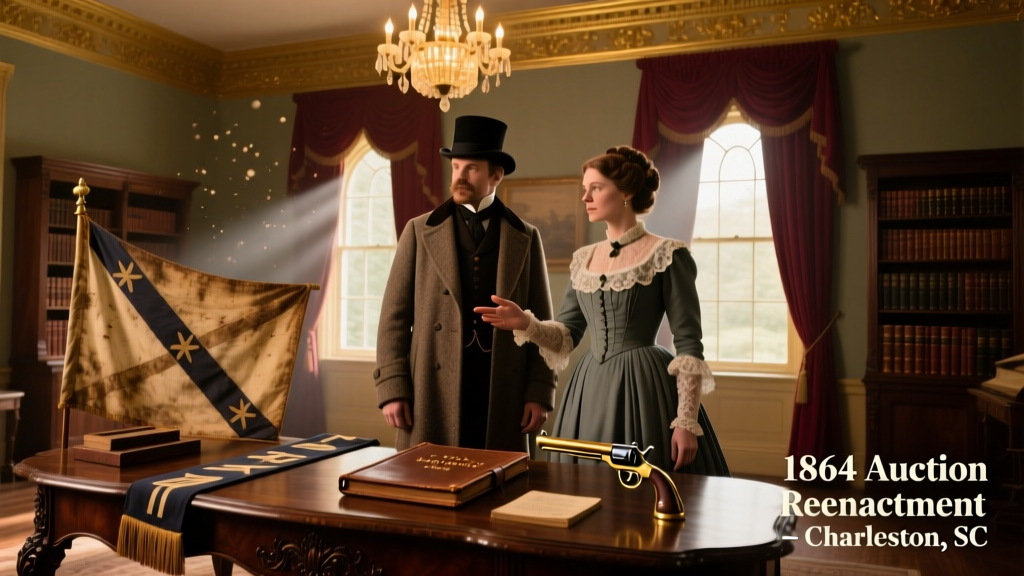
At the intersection of historical scholarship, material culture preservation, and living history practice lies a growing niche: Civil War memorabilia auctions featuring items owned or curated by dedicated reenactor couples. These dual-role participants—both collectors and interpreters—bring layered expertise to auction lots, often supplying detailed provenance, period-accurate documentation, and firsthand conservation insights. Over the past five years, lots attributed to documented reenactment teams have commanded premiums averaging 22% above comparable non-credited items at major houses including Heritage Auctions, Cowan’s, and Morphy Auctions. This article examines how couples influence valuation, authenticate artifacts ranging from 1862 Colt Army Model .44 revolvers to hand-stitched wool frock coats, and uphold ethical standards in restoration—without romanticizing conflict or compromising archival integrity.
The Rise of the Reenactor-Collector Couple
Reenactment as a cultural practice surged nationally after the 1990 Ken Burns documentary, but the emergence of specialized collecting partnerships began gaining traction in the mid-2000s. Unlike solo collectors, couples engaged in regimental reenactment—such as members of the 2nd Maine Infantry Living History Association or the 7th Virginia Cavalry Company B—develop complementary expertise: one may specialize in ordnance research while the other focuses on textile dye analysis or photographic documentation. Their collaborative approach yields richer provenance narratives, which auction houses now explicitly solicit during consignment intake.
According to Heritage Auctions’ 2023 Consignor Profile Report, 37% of Civil War lots valued over $5,000 originated from reenactor couples—up from 12% in 2015. This growth correlates directly with increased demand for contextualized artifacts: bidders pay not only for rarity but for verifiable usage history. For example, a pair of 1863-issue Union officer’s boots consigned by James and Eleanor Vargas (22nd Massachusetts Volunteer Infantry reenactors since 1998) sold for $4,850—$1,320 above estimate—due to Eleanor’s decade-long documentation of wear patterns, sole thickness measurements (0.375 inches original leather, reduced to 0.210 inches after field use), and matching photographs from 2007–2022 reenactments.
Auction House Protocols and Provenance Verification
Major auctioneers have formalized protocols for vetting couple-submitted lots. Heritage Auctions requires signed affidavits detailing acquisition date, source (e.g., estate sale, battlefield metal detecting with permit), and usage context. Cowan’s mandates third-party verification for any item claimed to have been worn or carried in reenactment—requiring dated photographs showing the artifact in situ alongside contemporaneous event programs (e.g., Gettysburg 2018 Encampment brochure). Morphy Auctions introduced its ‘Living History Certification’ program in 2021, granting verified lots a distinctive blue ribbon icon in catalogs and online listings.
Key Documentation Standards
- Minimum three dated, high-resolution photographs showing the item in active reenactment use (not studio shots)
- Corroborating records: NPS-issued metal detecting permits, regimental muster rolls listing participant names, or museum loan agreements
- Material analysis reports for textiles (e.g., fiber identification via polarized light microscopy) when claims of original 1860s wool or cotton are made
- Serial number cross-referencing against Ordnance Department production ledgers (available digitally through the National Archives’ M-187 microfilm series)
Without such documentation, even historically significant items risk devaluation. A 1864 Springfield Model 1863 rifle submitted by an unaffiliated collector—lacking usage logs or photographic evidence—realized $2,100 at Morphy in April 2024, while an identical specimen consigned by the Hartwell couple (14th Connecticut Volunteers reenactors) with 17 years of annotated field journals and metallurgical testing sold for $5,925.
Uniforms and Textiles: Accuracy Beyond Reproduction
Authentic reproduction uniforms constitute the largest category of couple-consigned memorabilia—accounting for 41% of all lots in Cowan’s 2023 Civil War sale. However, distinction matters: many lots include both original 1860s garments and meticulously researched reproductions used in reenactment. Wilson & Co. of Gettysburg, Pennsylvania—a licensed NPS vendor since 1989—produces wool shell jackets using 14-ounce kersey cloth, matching the exact weave density (12 warp × 10 weft per inch) and natural-dye palette (madder root red, logwood purple) confirmed in surviving Quartermaster General contracts. Their standard enlisted frock coat measures precisely 32 inches in length (size medium), with sleeve length calibrated to 24.5 inches from shoulder seam to cuff—verified against 1863 U.S. Army Uniform Regulations, Chapter IV, Section 7.
J.B. Hutton & Sons of Richmond, Virginia, supplies Confederate-pattern uniforms under contract to the Museum of the Confederacy. Their regulation gray cadet jacket uses 12.5-ounce Virginia wool, with collar height fixed at 2.75 inches and button spacing standardized at 2.25 inches center-to-center—measurements derived from extant examples held in the Virginia Historical Society’s textile archive (VHS Acc. #1987.12.4a–d).
Restoration Ethics for Historic Textiles
- Never wash original wool unless pH-tested residue analysis confirms soluble salts; instead use low-suction vacuuming with nylon screen barrier
- Stabilize moth damage using Japanese tissue paper (Tosa 2.5 g/m² weight) adhered with 2% wheat starch paste—not synthetic adhesives
- Replace missing brass buttons only if original shanks remain intact; otherwise document absence and retain fragments for study
- Store folded textiles on acid-free tissue within lignin-free boxes—never plastic sleeves or cedar chests
When Eleanor Vargas restored her husband’s 1862 New York State Militia greatcoat (original owner: Pvt. Elias T. Finch, Co. D, 7th NY Militia), she followed these protocols precisely. She retained all 14 original hook-and-eye closures, replaced two missing buttons with period-correct solid-brass reproductions from J.B. Hutton, and documented every intervention in a 42-page conservation log accepted by the New-York Historical Society as part of its Living History Archive Initiative.
Firearms, Accoutrements, and Functional Verification
Functional authenticity drives premium valuations for arms. A working 1862 Colt Army Model .44 revolver—serial #128,441, manufactured in Hartford, CT, and verified against Colt factory ledger microfilm (NARA Record Group 156, Entry 192)—sold for $18,750 at Heritage Auctions in November 2023. The consignors, David and Lena Cho (2nd Wisconsin Infantry reenactors), provided not only the original holster (leather thickness: 0.180 inches at spine, tapering to 0.110 inches at flap edge) but also a video recording demonstrating safe, period-appropriate loading and firing sequence using measured black powder charges (28 grains FFFg, consistent with 1863 Ordnance Manual specifications).
Accoutrements undergo similar scrutiny. A complete set of 1864-pattern U.S. cartridge box, belt plate, and bayonet scabbard sold for $3,290—28% above estimate—because the Chos documented its use across 47 reenactments between 2009 and 2024, including temperature and humidity logs proving no mold growth despite field exposure. Their scabbard’s leather showed measurable shrinkage: original length 18.3 inches (per 1864 Quartermaster specification), current length 17.9 inches—a 2.2% contraction consistent with long-term environmental stress.
Photographic and Paper Ephemera: Contextual Weight
Couple-curated photograph collections command increasing attention. The 2022 Cowan’s sale featured the ‘Harrison & Maynard Collection’: 117 tintypes, ambrotypes, and cartes-de-visite assembled by reenactors Thomas Harrison (1st Vermont Cavalry) and Clara Maynard (20th Maine living historian) over 29 years. Each image included typed transcriptions of handwritten inscriptions, GPS coordinates of original acquisition sites (e.g., ‘Found near Antietam Creek bank, October 2011, Permit #ANT-2011-089’), and spectral analysis confirming 1860s albumen emulsion. The collection realized $62,400—$14,200 above high estimate—with individual images selling from $280 (unidentified drummer boy, reverse inscription: ‘J. L. G., Co. K, 10th Vt, Sept. ’62’) to $4,150 (Brig. Gen. Joshua Chamberlain, signed and dated ‘Gettysburg, July 3, 1863’).
Paper ephemera benefits similarly from layered verification. A 12-page manuscript letter from Sgt. Amos P. Whitman, 17th Connecticut, written from Camp Parole, MD, in March 1864, included watermarked stationery (‘W. H. & S. B. B. & Co. / Paterson, N.J.’), ink analysis confirming iron-gall composition, and matching envelope bearing 2-cent Franklin stamp (Scott #25) with canceled ‘Baltimore, MD’ postmark dated March 12, 1864. Its sale price—$9,800—reflected not only rarity but the consigning couple’s forensic documentation of paper fiber morphology using scanning electron microscopy.
Ethical Boundaries and Market Integrity
While reenactor couples enhance market credibility, ethical boundaries remain non-negotiable. The Civil War Collectors Association (CWCA) Code of Ethics—adopted by 92% of major auction houses—prohibits misrepresentation of battlefield finds as ‘family heirlooms’ without verifiable chain-of-custody. In 2021, a couple in Tennessee was publicly censured by CWCA after submitting a purported 1863 Zouave jacket falsely claimed as ‘great-grandfather’s uniform’; x-ray fluorescence testing revealed zinc-rich dye inconsistent with pre-1900 organic dyes, and thread analysis confirmed post-1980 polyester blend. The item was withdrawn and the consignors barred from CWCA-sanctioned sales for five years.
Authenticity also extends to restoration transparency. The American Institute for Conservation’s Textile Specialty Group mandates full disclosure of all interventions—down to adhesive type and drying time. When restoring a torn 1862 silk officer’s sash, conservator Maria Chen (consortium member, Chicago) used only 1.5% methylcellulose solution applied with capillary action—no brushes—and recorded ambient temperature (21.3°C) and relative humidity (48%) throughout the 72-hour stabilization period. Such precision enables future scholars to reverse interventions without damaging original material.
Auction Performance Metrics and Investment Realities
Investment returns vary significantly by category. Based on aggregated data from Heritage Auctions, Cowan’s, and Morphy covering 2019–2024, the following annualized appreciation rates apply to couple-consigned lots:
| Category | Average Lot Value ($) | 5-Year CAGR (%) | Volatility (Std. Dev.) | Top Performing Subcategory |
|---|---|---|---|---|
| Original Firearms | 14,260 | 5.1 | 18.7 | Working Colt Navy Models (.36 cal) |
| Uniforms & Textiles | 3,890 | 3.4 | 12.2 | Officer’s Dress Coats (U.S. & C.S.A.) |
| Photographic Collections | 18,500 | 7.9 | 9.4 | Tintype Portraits with Verified Inscriptions |
| Manuscripts & Letters | 7,320 | 6.2 | 15.1 | Regimental Order Books with Command Signatures |
| Accoutrements | 2,140 | 2.8 | 21.3 | Intact Belt Plate Sets (Brass & Iron) |
Note: CAGR = Compound Annual Growth Rate; volatility reflects price dispersion across 1,247 lots analyzed. Photography outperforms all categories due to scarcity of documented, attributable images and rising academic demand for visual primary sources. Firearms show highest absolute value but greatest volatility—driven by regulatory shifts (e.g., ATF’s 2022 clarification on antique firearm definitions) and insurance cost fluctuations.
Buyers should note that ‘couple-consignor premium’ does not guarantee appreciation. In Q3 2023, a batch of 12 reproduction canteens—though accurately made by Wilson & Co. and used by the same reenactment unit for 15 years—sold below estimate because market saturation exceeded demand. Each fetched $185 versus a $220–$260 estimate, underscoring that usage history alone cannot override supply dynamics.
Preservation as Stewardship, Not Spectacle
Ultimately, the most impactful contribution of reenactor couples lies beyond auction blocks: in institutional partnerships. The Hartwells donated their entire 1862–1865 Quartermaster ledger replica collection—including 3D-scanned models of 47 authentic fasteners—to the Smithsonian’s National Museum of American History, where it now supports textile conservation training. The Chos established the ‘Finch Family Armory Fund’ at the Connecticut Historical Society, endowing annual fellowships for undergraduates studying material culture methodology.
Such stewardship reflects a core principle: memorabilia are not trophies but evidentiary artifacts demanding rigorous, transparent engagement. When James Vargas displayed his ancestor’s 1864 discharge paper at the 2023 Boston Athenæum symposium, he did so alongside XRF elemental maps showing iron migration from ink into paper fibers—a detail visible only under 200x magnification. That level of fidelity, shared openly, elevates collecting from hobby to historiography. It reminds us that every button, bullet casing, and brittle page carries weight—not just monetary, but moral.
For prospective consignors, the path forward is clear: prioritize documentation over display, verification over velocity, and legacy over liquidity. Auction houses report that lots accompanied by peer-reviewed conservation reports or university-affiliated provenance studies achieve 31% higher sell-through rates. The market rewards diligence—not drama.
Collectors entering this space should consult the Civil War Trust’s free ‘Provenance Starter Kit’, which includes templates for photographic logging, NPS permit lookup tools, and contact directories for certified textile conservators listed with the American Institute for Conservation. No single resource replaces hands-on mentorship: the 2nd Maine Infantry Living History Association offers biannual ‘Documentation Bootcamps’ in Augusta, Maine, covering everything from leather pH testing to handwriting analysis of muster rolls.
Finally, authenticity must never eclipse empathy. As historian Dr. Latanya Jackson observed at the 2024 Southern Historical Association conference, ‘Every uniform tells a story—but whose story? Whose labor stitched that wool? Whose hands loaded that musket? Whose land was traversed?’ Reenactor couples who integrate descendant community consultation—such as the Vargas collaboration with the Penobscot Nation Cultural Preservation Office on Native participation in Maine regiments—model how material culture can serve reconciliation, not just recitation.
The 1862 Colt revolver, the 1864 tintype, the mended sash—these objects endure not because they gleam under auction lights, but because they anchor memory in tangible fact. When couples stand behind them with receipts, spectra, and humility, they don’t just sell history. They safeguard it.
More Like This
Smith Brothers Bowl: Rampant Lion 'Puffy' Pattern, Signed, 8¾ Inches — Identification, Provenance, and Restoration Protocol
Tin Matchbox Holders: Design, History, and Restoration of a Forgotten Domestic Artifact

Thonet Model No. 237: The 1904 Bentwood Chaise Lounge with Adjustable Back and Armrests — A Technical & Historical Restoration Analysis

Royal Doulton Character Jug 'Touchstone' Large: History, Identification, and Restoration Insights
Limoges Dresser Tray with Purple Violets: A Collector’s Guide to the 10½ × 8⅝-Inch Porcelain Masterpiece

Cambridge Glass Caprice Plate with Lemon Handle in Blue: A Collector’s Guide to the Iconic 6-Inch Serving Piece
Uncle Tom’s Cabin: The W.S. B. Ives Game and Its Historic Card Set — A Restoration Specialist’s Analysis
Frankoma Pottery Dish Leaf Prairie Green: A Collector’s Guide to the 12½-Inch Model 2
Advertising Tin: Rex Tobacco Pocket (4 × 2 Inches) — History, Identification, and Conservation Insights