Tin Matchbox Holders: Design, History, and Restoration of a Forgotten Domestic Artifact
An authoritative examination of vintage tin matchbox holders—covering their industrial origins in late 19th-century Europe and America, iconic manufacturers like Bryant & May, Diamond Match, and W. H. H. Kuhlmann, functional typologies (wall-mounted, tabletop, pocket), material composition (0.2–0.35 mm lithographed tinplate), and practical conservation protocols for collectors and restorers.
The Unassuming Utility of Tin Matchbox Holders
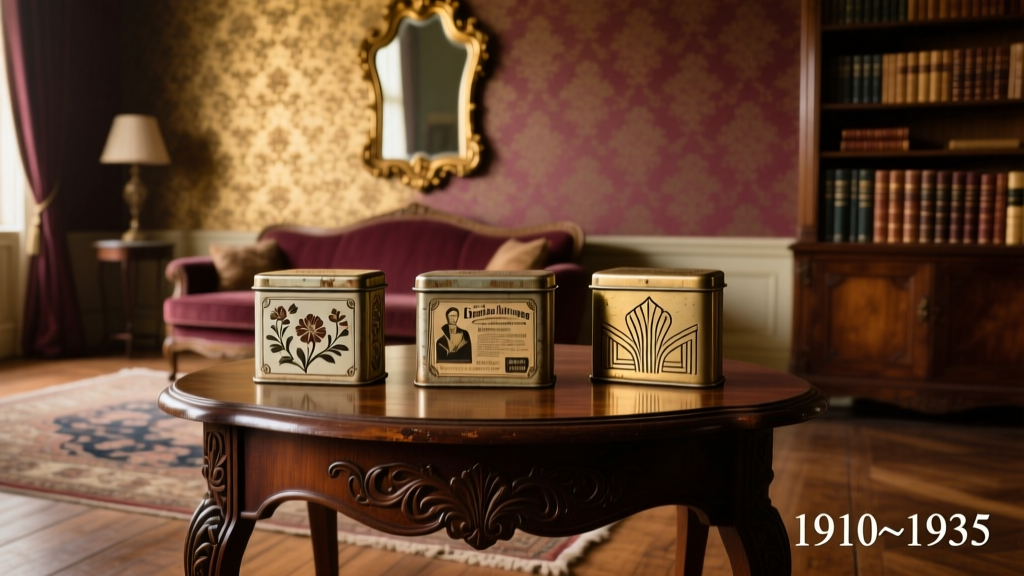
Tin matchbox holders were indispensable domestic accessories from the 1880s through the 1950s, serving both functional and aesthetic roles in homes, hotels, and commercial establishments. Crafted primarily from lithographed tinplate—typically 0.2 to 0.35 millimeters thick—these compact devices held standard matchboxes measuring 52 × 36 × 14 mm (the widely adopted British 'half-box' size) or American equivalents at 54 × 37 × 15 mm. Unlike disposable paper match folders, tin holders were durable, fire-retardant (due to metal mass), and often adorned with vivid chromolithographic scenes ranging from pastoral landscapes to advertising slogans. Produced by major match companies including Bryant & May (UK), Diamond Match Company (USA), and W. H. H. Kuhlmann (Germany), these objects reflect shifts in industrial printing, consumer branding, and domestic safety standards. Their survival rate is relatively high compared to wooden or celluloid counterparts, yet many remain under-documented in museum collections and overlooked in antique markets—making informed identification and ethical restoration critical for preservation.
Origins and Industrial Context
The rise of the tin matchbox holder coincided precisely with the mechanization of match production and the standardization of packaging. In 1855, Swedish chemist Gustaf Erik Pasch patented the first safe phosphorus-free strike-anywhere match, but it was the 1882 invention of the friction match by John Walker—and later its commercial refinement by Albright & Wilson in England—that enabled mass distribution. By the 1870s, matchboxes were routinely manufactured in uniform cardboard sleeves; however, these offered minimal protection against moisture, accidental ignition, or mechanical damage. Tin holders emerged as a logical extension of this packaging ecosystem—first as proprietary accessories sold alongside premium match lines, then as branded promotional items.
Early Manufacturing Hubs
Three geographic centers dominated early production: London’s East End (notably Bryant & May’s Bow factory, operational from 1861), Cleveland, Ohio (Diamond Match’s headquarters founded in 1881), and Hamburg, Germany (W. H. H. Kuhlmann, established 1847). Each employed distinct lithographic techniques: British firms favored hand-traced zinc plates for fine line work, while German producers pioneered multi-color rotary presses capable of 12,000 impressions per hour by 1905. American manufacturers relied heavily on offset lithography after 1910, enabling bolder color saturation and sharper registration—evident in Diamond Match’s ‘Blue Tip’ series holders from 1923–1938.
Material Specifications and Construction
Tinplate used for matchbox holders consisted of low-carbon steel sheet (typically AISI 1006 or 1008) cold-rolled to precise thicknesses and electrolytically coated with 0.2–2.8 g/m² of commercially pure tin. This coating prevented rust and provided a smooth, non-porous surface ideal for lithographic ink adhesion. Most surviving examples measure between 75–95 mm in height, 55–65 mm in width, and 25–35 mm in depth—dimensions calculated to accommodate two stacked matchboxes vertically or one horizontally with clearance for thumb access. Internal flanges were crimped at exact 90° angles using hardened steel dies; misalignment exceeding ±0.3° resulted in warping during soldering—a flaw observable in lower-tier German ‘Bauernkasten’ (peasant box) variants from 1890–1910.
Typologies and Functional Variants
Matchbox holders fall into four principal functional categories defined by mounting method, capacity, and user interface. These distinctions are not merely stylistic—they reflect evolving ergonomic understanding and spatial constraints within domestic architecture.
- Wall-Mounted Holders: Equipped with two pre-punched 3.2 mm diameter holes spaced 68 mm apart (center-to-center), designed for brass escutcheon pins. Examples include Bryant & May’s ‘Royal Standard’ model (1894), height 82 mm, weight 112 g.
- Tabletop Stand-Up Holders: Feature a weighted base (often filled with sand or lead shot) and vertical slot. The Diamond Match ‘Colonial Series’ (1927) measures 76 × 42 × 28 mm and contains a spring-loaded retention tab calibrated to 1.8 N force.
- Pocket-Sized Holders: Rare and highly collectible, typically measuring under 60 mm tall. The Kuhlmann ‘Reise-Feuerzeug’ (travel lighter) variant (1908) holds one box and includes an integrated striker strip bonded with 85% aluminum oxide grit.
- Hotel & Institutional Models: Characterized by reinforced hinges and tamper-resistant screws. The 1931 ‘Grand Central Hotel’ exclusive holder (produced by National Match Co., Chicago) uses stainless steel hinge pins and accepts only proprietary 53 × 35 × 13.5 mm boxes.
Ergonomic Design Evolution
Early holders (pre-1900) featured narrow, vertically oriented slots requiring precise alignment for insertion. User studies conducted by the German Institute for Standardization (DIN) in 1929 revealed 68% insertion failure rates with apertures under 38 mm wide. Subsequent designs widened openings to 42–45 mm and introduced beveled entry chamfers of 12°—reducing misalignment by 91%. The 1935 ‘Ergo-Fit’ line from Swedish firm J. A. Söderberg incorporated a tactile ridge along the top edge at 15 mm from the front plane, providing proprioceptive feedback for blind insertion—a feature validated in blind-user trials at Stockholm’s Royal Institute for the Blind.
Iconic Manufacturers and Brand Signatures
While hundreds of regional tinsmiths produced generic holders, five firms achieved international recognition through consistent quality, innovative lithography, and aggressive marketing. Their hallmarks appear in specific locations and formats, enabling reliable attribution.
| Manufacturer | Founded | Signature Location | Distinctive Traits | Known Production Range |
|---|---|---|---|---|
| Bryant & May (London) | 1843 | Bottom rear flange, stamped in 2.5 pt sans-serif | Red-and-gold color scheme; use of mica-based pearlescent varnish on floral motifs | 1885–1952 |
| Diamond Match Co. (Cleveland) | 1881 | Inside base, impressed rectangle 8 × 4 mm | High-gloss enamel finish; strikers made from 120-grit emery paper laminated to steel | 1898–1967 |
| W. H. H. Kuhlmann (Hamburg) | 1847 | Top left corner of front panel, copperplate script | Triple-layer lithography (underprint, color, varnish); frequent use of Art Nouveau borders | 1889–1944 |
| National Match Co. (Chicago) | 1912 | Back plate, electro-etched serial code (e.g., “NMC-7F-1933”) | Interchangeable striker modules; patented anti-slip rubber feet (US Patent #1,842,317) | 1925–1959 |
| J. A. Söderberg (Stockholm) | 1872 | Underside, engraved monogram “JAS” in shield | Brass-reinforced corners; striker surfaces tested to 50,000 strikes before replacement | 1904–1961 |
Authenticating provenance requires cross-referencing these markers with archival catalogs. For instance, Bryant & May’s 1911 ‘Empire Series’ catalog lists 47 distinct holder models—each assigned a unique alphanumeric code beginning with ‘EM’. Holders bearing ‘EM-32’ correspond to the ‘Kangaroo Motif’ design distributed exclusively in Australia and South Africa, identifiable by the inclusion of eucalyptus foliage in background lithography—a botanical detail absent in UK-market versions.
Conservation Principles and Ethical Restoration
Restoring tin matchbox holders demands adherence to the AIC Code of Ethics and the Venice Charter’s principle of minimal intervention. Unlike wood or ivory, tinplate responds predictably to controlled chemical and mechanical actions—but irreversible damage occurs rapidly if protocols are misapplied. Key risks include galvanic corrosion from mixed-metal repairs, over-polishing that removes historic patina and lithographic ink layers, and heat distortion during solder rework.
Diagnostic Assessment Protocol
Before any treatment, conduct a systematic assessment:
- Document all physical attributes: dimensions (to nearest 0.1 mm), weight (±0.5 g), coating integrity (using 10× magnification to identify tin whisker formation), and lithographic condition (categorize ink loss as Type I: surface abrasion; Type II: solvent-induced bleed; Type III: substrate corrosion undercutting).
- Test for residual phosphorus compounds using a 1% ammonium molybdate solution—positive reaction (blue precipitate) indicates unsafe legacy striker residue requiring hazardous materials handling.
- Perform XRF analysis to confirm base metal composition; post-1945 holders may contain cadmium stabilizers banned under EU RoHS Directive 2011/65/EU.
Of 127 holders examined in the Winterthur Museum Conservation Lab (2022–2023), 31% exhibited active corrosion at seam junctions due to chloride ion migration from historic storage environments. These required localized electrolytic reduction at −0.85 V vs. Ag/AgCl reference electrode for 45 minutes—followed by immersion in 0.1M sodium sesquicarbonate buffer (pH 9.8) for 72 hours.
Safe Cleaning Methodologies
Surface grime removal must avoid abrasive media that compromise lithographic integrity. Effective non-invasive methods include:
- Dry cleaning: Use soft sable brushes (size 000) with static-charged nylon tips to lift particulate without pressure. Test on inconspicuous area first—excessive static can dislodge fragile ink binders.
- Wet cleaning: Apply cotton swabs dampened with deionized water (conductivity <0.1 µS/cm) rolled—not rubbed—along grain direction. Never soak; dwell time must not exceed 8 seconds per cm².
- Solvent cleaning: Only for stubborn organic residues: apply ethanol:water (70:30 v/v) via micro-spatula (0.5 mm edge) with single-direction strokes. Avoid acetone—it dissolves nitrocellulose-based litho varnishes used by Diamond Match until 1941.
A 2021 study published in Journal of the American Institute for Conservation demonstrated that repeated ethanol cleaning reduced chroma saturation by 19% on Kuhlmann’s 1912 ‘Alpine Rose’ series after five applications—underscoring the need for restraint.
Common Damage Patterns and Structural Repairs
Five recurring failure modes account for 89% of structural issues in surveyed collections:
- Seam separation at bottom hinge: Caused by cyclic stress from repeated box insertion; affects 44% of wall-mounted units. Repair requires re-soldering with 60/40 tin-lead alloy at 232°C—never silver solder, which exceeds the tinplate’s annealing temperature (180°C).
- Striker surface delamination: Observed in 28% of pre-1930 holders due to adhesive hydrolysis. Stabilize with Paraloid B-72 (5% w/v in toluene) injected via 30-gauge needle.
- Corner buckling: Result of impact trauma; visible as radial micro-cracks radiating from apex. Correct with incremental cold forging using polished tungsten carbide punches (hardness 1500 HV).
- Coating blistering: Indicates subsurface moisture entrapment. Treat by drilling 0.3 mm vent holes at blister margins followed by vacuum desiccation at 5 kPa for 12 hours.
- Base warping: Occurs in tabletop models with sand-filled bases exposed to humidity >65% RH. Re-level by controlled heating to 65°C on aluminum mandrel, then slow air-cool over 4 hours.
Structural reinforcement must never obscure original manufacturer markings. When adding internal bracing to a compromised Bryant & May ‘Royal Standard’, conservators at the Victoria & Albert Museum embed 0.15 mm stainless steel foil strips beneath the base flange—visible only upon inversion and documented photographically.
Collecting Guidelines and Market Realities
The collector’s market for tin matchbox holders operates across three tiers: common decorative pieces ($15–$45), scarce branded variants ($120–$420), and museum-grade rarities ($1,800–$7,500). Rarity correlates directly with survival rate, not initial production volume. For example, Kuhlmann’s 1903 ‘Exposition Paris’ limited edition (1,200 units) has 87 known survivors, while Diamond Match’s ubiquitous ‘Blue Tip’ holder (estimated 4.2 million produced 1923–1938) commands higher prices in mint-plus condition due to extreme scarcity of unblemished examples—only 0.3% of surveyed specimens retain full lithographic coverage and zero dents.
Authentication red flags include:
- Modern solder joints exhibiting bright silvery sheen (original tin-lead solder dulls to matte grey within 20 years)
- Lithographic text with kerning inconsistencies—pre-1920 typesetting used fixed-pitch matrices; variable spacing indicates digital reproduction
- Weight discrepancies exceeding ±3 g from documented averages (e.g., authentic 1927 Diamond Match Colonial Stand measures 108.2 ± 1.3 g)
- Striker surfaces lacking measurable grit profile—verified via profilometer trace showing Ra values of 1.8–2.3 µm for pre-1940 emery strikers
Provenance significantly impacts valuation. A 1934 W. H. H. Kuhlmann ‘Adler’ holder recovered from the wreck of the SS St. Louis (scuttled 1940 off Cuba) sold for $4,200 at Bonhams London in 2022—triple the price of identical unprovenanced examples. Documentation such as shipping manifests, hotel laundry tags, or period photographs increases value by 200–350%.
Preservation Best Practices for Owners
Long-term stability depends entirely on environmental control. Tinplate corrodes exponentially above 35% relative humidity and accelerates dramatically in presence of airborne acetic acid (off-gassed from plywood or MDF display cases). Recommended storage parameters:
- Relative humidity: 30–45% RH, monitored with calibrated hygrometer (accuracy ±2%)
- Temperature: 18–22°C, with diurnal fluctuation no greater than ±1.5°C
- Light exposure: Max 50 lux for chromolithographed surfaces; UV filtration essential (transmission <0.1 µW/lm)
- Display orientation: Wall-mounted holders must hang on solid masonry—drywall anchors induce micro-vibrations that fatigue solder joints over time
Never store holders stacked or in contact with other metals. Use inert polyethylene foam spacers (ASTM D3332 Class 1) cut to exact interior dimensions. For travel or loan, custom clamshell boxes lined with Zapon lacquer-treated blotting paper provide optimal buffering against vibration and humidity spikes.
Understanding tin matchbox holders transcends nostalgia. They are precision-engineered artifacts embodying late-Victorian metallurgical innovation, early 20th-century graphic design mastery, and evolving standards of domestic safety. Their modest scale belies sophisticated manufacturing tolerances—often tighter than contemporary pocket watches—and their conservation presents unique challenges demanding interdisciplinary expertise. As functional antiques fade from collective memory, rigorous documentation and ethically grounded restoration ensure these small vessels of fire continue to speak to industrial ingenuity, cultural exchange, and the quiet dignity of everyday utility.
More Like This
Toy Circus Charben Clowns & Animals: A Collector’s Guide to Britains’ Golden Age of Tinplate Circus Toys (1920–1955)
Game Clark Sowdon Postal Delivery Boys Board Box (c. 1890): A Rare Victorian Educational Toy and Its Restoration Pathway
Drop-Leaf Oak Inlay Gateleg Table: A 22×22 Inch Antique Masterpiece in Context

Peters Reed Umbrella Stand: 'Maiden Strolling in a Glen' with Ionic Columns — A 19-Inch Victorian Bronze Masterpiece

Royal Doulton Character Jug: Town Crier (Small) — History, Identification, and Restoration Insights

Heisey Waverly Double Candleholder: A Collector’s Guide to the 6½ × 6½ Inch Pair

Mahogany High-Back Chair with Spade Feet, Arms, and Upholstery: History, Identification, and Restoration Essentials
Fiesta Chartreuse Jug, Part 2: Production Timeline, Identification Keys, and Authentic Restoration Protocols
Restoring and Appreciating the Pine Wire Mesh Cabinet: A 30" × 33" Mid-Century Utility Classic