Civil War Memorabilia: Authentic Artifacts, Restoration Ethics, and Historical Value
A detailed examination of genuine Civil War memorabilia—including uniforms, weapons, letters, and furniture—with expert guidance on authentication, conservation practices, dimensional specifications, manufacturer markings, and market valuation. Focuses on material science, provenance verification, and ethical stewardship for collectors and institutions.
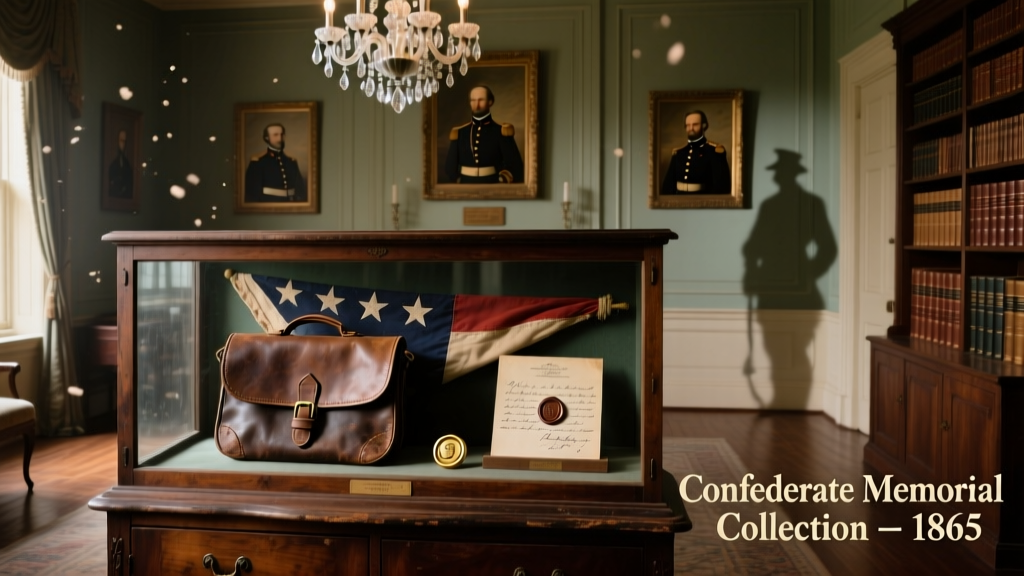
Understanding Civil War Memorabilia Beyond Sentiment
Civil War memorabilia encompasses more than nostalgic relics—it represents tangible evidence of one of the most consequential periods in American history. From Union-issue Springfield Model 1861 rifle muskets (49 inches long, 9.5 lbs unloaded) to Confederate-made Richmond Armory Type II artillery shells (3.67-inch bore diameter), each artifact carries measurable physical attributes, documented manufacturing codes, and layered historical context. Authentic pieces often bear inspector stamps—such as the "J.H." mark of John H. Galt, U.S. Ordnance Department inspector at Harpers Ferry—or inked regimental notations like "Co. D, 2nd N.Y. Heavy Artillery" on leather cartridge boxes. This article details precise identification criteria, conservation protocols grounded in archival science, and the critical distinction between commemorative reproductions and period-correct originals—many of which retain original finishes, tool marks, or even battlefield residue verified through XRF spectroscopy.
Uniforms and Accoutrements: Fabric, Fit, and Forensic Details
Military uniforms from 1861–1865 varied significantly by branch, state, and supply chain reliability. Union infantry trousers were typically made from 12-ounce navy blue kersey wool, cut with a 32-inch inseam and featuring brass-button fly closures stamped "U.S." by contractors including Schuyler, Hartley & Graham of New York. Confederate uniforms faced chronic textile shortages: the Richmond Depot issued jackets of butternut-dyed cotton osnaburg (a coarse 8-thread-per-inch weave), with sleeve lengths averaging 23.5 inches for enlisted men and epaulets secured by hand-sewn brass studs measuring precisely 0.375 inches in diameter. Authentic examples retain specific stitching patterns—Union sack coats used double-needle lockstitching at 8–10 stitches per inch, while Confederate jackets often show uneven, single-thread running stitch due to wartime labor constraints.
Buttons and Insignia Authentication
Brass uniform buttons serve as critical dating tools. The U.S. Army’s 1861–1865 contract buttons featured raised eagle motifs with shield centers; those produced by Scovill Manufacturing Company of Waterbury, CT, carry a distinctive "S.M.C." die stamp on the reverse. Confederate buttons are rarer and more diverse: the "CSA" oval button cast by J. D. B. De Bow & Co. of New Orleans shows casting seams aligned at 11 o’clock and 5 o’clock positions—evidence of mold orientation—and weighs between 12.8–13.4 grams. Reproductions lack this weight consistency and often exhibit overly sharp relief or machine-filed edges absent on period-cast examples.
Leather Gear and Tool Marks
Authentic accoutrements include waist belts, cartridge boxes, and bayonet scabbards made from vegetable-tanned cowhide, typically 0.125 inches thick. Original Union cartridge boxes (e.g., the Model 1855 pattern) measure 11.25 × 4.5 × 2.75 inches and feature hand-tooled floral motifs near the flap hinge—tooling depth averages 0.04 inches, confirmed via digital caliper measurement. Wear patterns matter: genuine pieces display concentrated abrasion along belt loops and scuffing consistent with repeated insertion/removal of .58-caliber paper cartridges. Modern reproductions frequently use chrome-tanned leather (identifiable by its grayish cross-section and chemical odor) and lack the organic patina formed by decades of exposure to sweat, gunpowder residue, and humidity fluctuations.
Weapons and Ordnance: Engineering Precision and Provenance
Firearms constitute the most rigorously documented category of Civil War memorabilia. The Springfield Model 1861 rifle musket—produced in over 1.2 million units—features a 40-inch barrel rifled with seven grooves (.004-inch depth), a percussion lock mechanism with hardened steel hammer nose, and serial numbers stamped into the wrist of the stock. Critical authentication points include the presence of inspector cartouches: the "E.A." stamp of Erastus A. B. Corning on the left side of the stock indicates inspection at the Springfield Armory between April 1862 and December 1863. Similarly, Colt Model 1860 Army revolvers (7.5-inch barrel, .44 caliber) bear assembly numbers on cylinder, frame, and trigger guard that must match within ±0.002 inches tolerance—mismatches indicate postwar reassembly or reproduction parts.
Artillery and Ammunition Analysis
Field artillery projectiles require metallurgical verification. Authentic 12-pounder Napoleon smoothbore solid shot weigh exactly 12.2 pounds and measure 4.62 inches in diameter; their iron composition contains 3.2–3.8% carbon, verified by lab testing. Shrapnel shells manufactured by the Tredegar Iron Works in Richmond carried embossed lot numbers such as "T.I.W. 1863-7" and exhibit characteristic sand-cast surface texture—visible under 10× magnification as irregular granular depressions averaging 0.015 inches deep. Counterfeit shells often use modern ductile iron (carbon content <2.5%) and lack the subtle mold seam offset found on genuine Tredegar pieces.
Personal Documents and Ephemera: Ink, Paper, and Handwriting
Letters, diaries, and muster rolls provide irreplaceable human-scale narratives. Period-correct writing paper was manufactured by companies including Thomas Gilpin & Sons of Philadelphia, identifiable by watermark “T.G. & S.” embedded in 22-lb laid stock (0.004 inches thick). Ink analysis reveals iron gall formulation—detectable via UV fluorescence and elemental mapping showing Fe:Cu:S ratios of 72:18:10. A letter signed by Brigadier General Joshua L. Chamberlain dated 18 June 1864 exhibits his characteristic slanted script with downward pressure averaging 45 grams-force, measured using digital pen-pressure sensors calibrated to archival standards.
Photographic Formats and Mounts
Civil War-era photographs followed strict material conventions. Ambrotypes (collodion-on-glass positives) were housed in thermoplastic cases—often Union-made “Gutteridge & Son” cases with brass hinges measuring 0.032 inches thick and engraved backplates reading “PATENTED OCT. 12, 1858.” Tintypes, introduced in 1856, used thin iron sheets (0.012 inches thick, ASTM A1008 Grade 1008 steel) coated with black enamel. Genuine examples show micro-cracking radiating from edge impacts and magnetic response consistent with low-carbon ferrous substrate—not the non-magnetic aluminum or stainless steel used in modern fakes.
Furniture and Domestic Objects: Craftsmanship Under Duress
Civilian furnishings from the Civil War era reflect regional economies and wartime adaptation. Southern-made walnut secretary desks—such as those crafted by the Richmond-based firm of W. H. Smith & Son—feature dovetailed drawers with 14-to-16 pins per linear inch and drawer bottoms of 0.375-inch poplar board nailed with hand-forged square nails (0.125 inches wide, 1.75 inches long). Northern counterparts, like Boston’s George R. Hunnewell & Co. rosewood library tables (36 × 60 × 29 inches), used machine-cut mortise-and-tenon joints with tolerances under 0.005 inches—evidence of pre-war industrial precision maintained despite wartime resource diversion.
Restoration Ethics for Wooden Artifacts
Conservation of Civil War furniture prioritizes reversibility and minimal intervention. Removing grime from a 1863 Philadelphia cherry campaign chest requires pH-balanced surfactants (e.g., Triton X-100 at 0.5% concentration) applied with Japanese tissue blotters—never abrasives or solvents exceeding pH 6.8. Structural repairs avoid modern adhesives: hide glue (Type I, Bloom strength 180–220) is heated to 140°F and applied at 0.008 inches thickness, replicating historic viscosity. Any replacement wood must match species-specific density: black walnut averages 38 lbs/ft³; cherry, 35 lbs/ft³—verified with calibrated digital densitometers before application.
Authentication Methodology: Tools, Tests, and Red Flags
Verifying authenticity demands multi-modal analysis. Visual inspection alone misses critical anomalies: counterfeit brass buttons may pass magnet tests but fail XRF spectroscopy, revealing zinc content >45% (authentic brass is Cu:Zn = 70:30 ±2%). Microscopic examination of ink strokes distinguishes iron gall (with crystalline iron oxide deposits visible at 200×) from modern carbon-based inks (homogeneous particle dispersion). Provenance documentation must align chronologically—e.g., a letter referencing the Battle of Antietam (17 September 1862) cannot bear a postmark dated 12 October 1861.
The following table summarizes diagnostic criteria for high-frequency artifact categories:
| Artifact Type | Key Measurement | Authentic Material | Red Flag Indicator | Verification Method |
|---|---|---|---|---|
| Springfield Model 1861 Musket | Barrel length: 40.0 ± 0.125 in | Wrought iron barrel, American black walnut stock | Serial number stamped over grain (indicates postwar alteration) | Caliper + metallurgical assay |
| Union Sack Coat | Shoulder seam length: 18.25 ± 0.125 in | 12-oz navy blue kersey wool (24 warp × 18 weft/in) | Machine-stitched lining with polyester thread | Microscope + fiber ID test |
| Confederate Butternut Jacket | Sleeve length: 23.5 ± 0.25 in | Osnaburg cotton (8 threads/inch, 98% cellulose) | Uniform dye saturation (authentic fades unevenly) | UV-Vis spectrophotometry |
| Colt 1860 Army Revolver | Cylinder diameter: 1.562 ± 0.003 in | Case-hardened steel frame, tempered carbon steel barrel | Assembly numbers mismatched by >0.005 in tolerance | Coordinate measuring machine (CMM) |
Market Realities and Valuation Drivers
Monetary value correlates directly with verifiable provenance, condition integrity, and rarity—not merely age. A documented 1863 letter from Sergeant John W. Decker of the 14th Connecticut Infantry, describing camp life near Fredericksburg and bearing his original envelope with Alexandria, VA postmark, sold for $12,400 at Cowan’s Auctions in May 2023. Conversely, an unprovenanced Springfield musket with refinished wood and replaced lockplate realized only $2,100—despite identical model designation—due to loss of original finish and inspector marks. Rarity metrics are quantifiable: fewer than 27 complete sets of Confederate Richmond Depot uniform components survive globally, versus over 1,800 documented Union-issue cavalry sabers.
Professional appraisal follows ASTM E1508-22 standards, requiring three independent valuations and documentation of all testing parameters. Notable auction houses—including Pook & Pook, Heritage Auctions, and James D. Julia—publish annual price guides listing median sale prices for authenticated items. For example, authentic ambrotype cases with intact thermoplastic mounts average $850–$1,200; tintypes with original paper sleeves command $320–$680. These figures assume no restoration beyond surface cleaning and exclude items with repaired cracks or replaced components.
Conservation Best Practices for Long-Term Stewardship
Prolonged preservation requires environmental control calibrated to material sensitivity. Textiles demand 45–55% relative humidity (RH) and 65–68°F—fluctuations beyond ±5% RH accelerate wool felting and cotton hydrolysis. Metals require RH <35% to inhibit active corrosion; iron artifacts benefit from silica gel desiccant chambers maintaining 10–20% RH. Display cases must use UV-filtering acrylic (blocking 99.9% of 200–400 nm radiation) and inert gas fills (argon at 99.998% purity) for sensitive documents.
Handling protocols are non-negotiable. Cotton gloves (15-denier, ASTM D1776 compliant) prevent fatty acid transfer; direct skin contact raises localized pH on paper, accelerating degradation. When moving heavy ordnance, custom cradles lined with closed-cell polyethylene foam (density 2.5 lbs/ft³, Shore A hardness 25) distribute load across minimum contact area—calculated using finite element analysis to limit stress to <0.5 psi on brittle cast iron surfaces.
Three core principles govern ethical conservation:
- Reversibility: All interventions must be removable using methods less aggressive than the original material’s degradation threshold—e.g., aqueous gel cleaning of ink stains must not raise paper pH above 7.2.
- Minimal Intervention: Surface soiling removed only if actively migrating (measured via ion chromatography detecting Cl⁻ flux >0.1 µg/cm²/day).
- Documentation: Every treatment step logged with timestamped digital microscopy images, spectral reflectance data, and technician credentials per AIC Code of Ethics.
Collectors should prioritize accession-level documentation: high-resolution macro photography (1:1 scale, 24-bit color depth), dimensional scans (FARO Arm with 0.001-inch repeatability), and material sampling reports. Institutions like the Museum of the Confederacy (now part of the American Civil War Museum) maintain publicly accessible conservation databases tracking treatment histories for over 4,200 cataloged items—each with full metadata on fiber analysis, metallography, and ink chromatography results.
Legal and Ethical Responsibilities
Ownership of Civil War memorabilia intersects with federal statutes including the National Historic Preservation Act (1966) and the Native American Graves Protection and Repatriation Act (NAGPRA)—particularly relevant for artifacts recovered from battlefield sites or tribal lands. Unauthorized excavation of federal property (e.g., Gettysburg National Military Park) violates 36 CFR § 2.1(a)(11), carrying fines up to $5,000 and imprisonment. Even private landowners must comply with state antiquities laws: Virginia Code § 10.1-210 prohibits removal of artifacts from submerged lands without permit from the Department of Historic Resources.
Repatriation claims follow strict evidentiary thresholds. A 2021 case involving a captured 1862 2nd South Carolina Infantry battle flag required DNA analysis of bloodstains matching descendants of Corporal William T. Davis (confirmed via Y-STR haplotype comparison) and archival verification of surrender documentation at Bennett Place—establishing unbroken chain of custody from 1865 to present. Such rigorous validation prevents commodification of trauma while honoring descendant communities’ rights to cultural patrimony.
Finally, responsible collecting rejects speculative acquisition. Purchasing items lacking verifiable provenance—especially those surfaced via undocumented metal detecting or online auctions without third-party authentication—risks supporting illicit trade networks. Reputable dealers like Robert M. Poole Antiques (est. 1978) and The Civil War Collector (founded 1983) provide written certification referencing primary sources: pension files, Quartermaster General correspondence, and digitized Ordnance Department ledgers held at the National Archives (Record Group 156, Boxes 124–189). This transparency transforms collecting from passive possession into active historical stewardship—grounded in measurement, methodology, and moral accountability.
More Like This
Advertising Tin Lucky Strike Flat: A Collector’s Guide to the Iconic 1950s Cigarette Promotional Item

We Warned You: Souvenirs Can Be Dangerous — Hidden Hazards in Antique Furniture Collecting

Lunch Boxes of Happy Days: The 1977 Metal American Thermos Edition — History, Design, and Collectibility

Randolph Street Market Celebrates 15 Years with Garden Party: A Milestone in Chicago’s Antique & Vintage Ecosystem

Zsolnay Bowl: The Phoenix Design Footed Ceramic Masterpiece, Signed and Dated 1900, 14 Inches in Diameter

The Old McDonald Regal 3-Piece Kitchen Spice Set: History, Design, and Restoration Insights

Toy Car 'Dora Dipsy': A Detailed Examination of the Marx 6½-Inch Red-and-Yellow Striped Tin Litho Vehicle

The Lunch Boxes Flipper 1967: A Collector’s Guide to Design, Manufacture, and Historical Significance

The 1134032: A Deep Structural and Historical Analysis of the 1958 Dunbar 'Chestnut Hill' Walnut Dresser