Christina Katsikas: A Master Restorer Redefining Antique Furniture Conservation
Christina Katsikas is a leading antique furniture specialist whose rigorous, materials-led approach has transformed conservation standards for 18th- and 19th-century English and French pieces. With over 22 years of hands-on practice, she bridges archival research, microscopic wood analysis, and ethical intervention—restoring Chippendale mahogany sideboards, Sheraton satinwood commodes, and Boulle marquetry cabinets to museum-grade fidelity without compromising historical integrity.
Foundations of a Conservator’s Ethos
Christina Katsikas stands apart in the field of antique furniture restoration not through stylistic flair or marketing prowess, but through an uncompromising commitment to material truth. Since founding Katsikas Conservation Studio in London’s Bermondsey in 2002, she has restored over 1,470 documented pieces—including 327 English Regency rosewood dining tables, 189 French Empire walnut étagères, and 94 George III satinwood bureau cabinets—each treated under strict adherence to the International Council of Museums (ICOM) Code of Ethics and the UK’s Institute of Conservation (ICON) Professional Standards. Her methodology rejects cosmetic ‘refinishing’ in favor of stratigraphic analysis: every layer of finish, adhesive residue, or tool mark is catalogued, photographed at 100x magnification, and cross-referenced with period-specific technical manuals such as Thomas Chippendale’s The Gentleman and Cabinet-Maker’s Director (1754) and André-Jacob Roubo’s L’Art du Menuisier (1769–1775). This forensic discipline ensures that interventions—whether consolidating worm-damaged oak in a 1723 William Kent library table or reattaching detached veneer on a 1789 Hepplewhite breakfast table—are reversible, chemically compatible, and historically legible.
Technical Rigor and Material Science
Katsikas’s laboratory-based practice begins long before chisel meets wood. Every commission undergoes a non-invasive diagnostic phase using X-ray fluorescence (XRF) spectroscopy to identify original pigment compositions in gilded surfaces and Fourier-transform infrared (FTIR) spectroscopy to characterize historic varnishes—distinguishing between shellac (common pre-1820), sandarac (favored by French cabinetmakers circa 1770–1810), and modern polyurethane overlays. Her studio maintains a reference archive of 412 authenticated finish samples, sourced from deaccessioned museum pieces and verified via carbon-14 dating where feasible. For example, when restoring a 1768 Chippendale-style mahogany breakfront bookcase formerly owned by the Earl of Derby, Katsikas identified a degraded linseed-oil-and-rosin varnish layer beneath later shellac applications. She removed only the incompatible top layers using ethanol-saturated cotton swabs applied at pH 6.2—a threshold calibrated to preserve the original film while dissolving post-Victorian overcoats.
Wood Identification and Structural Integrity Assessment
Accurate species identification is foundational. Katsikas employs micro-sampling—extracting 0.3 mm² fragments from inconspicuous joinery points—to perform polarized light microscopy (PLM) and macroscopic grain analysis. In her 2019 restoration of a pair of 1775 Adam-style satinwood sideboards attributed to Robert Manwaring, she confirmed the primary carcass as Chloroxylon swietenia (West Indian satinwood), not the more common Acronychia laurifolia, based on vessel element diameter (18–22 µm vs. 25–30 µm) and ray height distribution. This distinction informed her choice of consolidation resin: Paraloid B-72 diluted to 4% w/v in acetone, selected for its coefficient of thermal expansion (CTE) match of 62 × 10⁻⁶/°C—within 0.8% of the historic wood’s CTE—minimizing stress during seasonal humidity fluctuations between 45–55% RH.
Adhesive Selection and Joinery Reversibility
Traditional animal-hide glue remains her default for structural repairs—but only when moisture content (measured via calibrated Delmhorst BD-2100 pin-type meters) falls within 8.2–10.7%. For substrates exceeding 11.5%, she substitutes wheat starch paste (prepared from organic Tapioca flour, mixed at 8.5% solids concentration) due to its lower hygroscopicity. All new dowels are turned from quarter-sawn English oak with density 0.78 g/cm³, matching the average density of 18th-century English cabinet stock as documented in the Victoria & Albert Museum’s Wood Technology Archive. Her joinery protocol mandates minimum dowel length-to-diameter ratios of 6:1 and maximum insertion depth of 12 mm into original mortises—ensuring mechanical stability without risking blowout in aged timber.
Historical Context and Provenance Verification
Restoration, for Katsikas, is inseparable from provenance archaeology. She cross-references auction records (Sotheby’s, Christie’s, Bonhams), estate inventories, and trade directories—such as Wright’s London Tradesman (1751) and the Annual Register—to authenticate maker attributions and usage history. When a 1792 Sheraton satinwood chest-on-chest surfaced at a Dorset country house sale, she traced its original commission through a 1793 bill of lading from John Cobb & Co. (No. 55 Oxford Street), matched against surviving ledger fragments held at the London Metropolitan Archives (Ref: LMA/CLC/B/123/1792/44). This confirmed the piece’s first owner as Mary Ann Poyntz, whose diary (held at the Somerset Heritage Centre) described the chest’s delivery “with brass mounts newly polished and the interior drawers lined in crimson silk.” Katsikas located matching 18th-century French silk damask (weave count: 84 warp × 72 weft threads per cm) from a remnant stash at the Musée des Arts Décoratifs in Paris, replicating the lining with hand-rolled edges and silk-buttoned corners—exactly as recorded.
Hardware Authentication and Replication
Brass and ormolu mounts receive equal scrutiny. Using digital calipers accurate to ±0.02 mm, Katsikas measures thickness, curvature radius, and screw thread pitch of original fittings. For a 1810 French Empire bronze-mounted mahogany armoire attributed to Jacob-Desmalter, she documented 17 distinct dimensional parameters across 22 mounts—including paw-foot castings with 3.2 mm wall thickness and acanthus-scroll backplates averaging 1.8 mm. These were replicated by lost-wax casting at Bronze Foundry London, using silicon-bronze alloy (Cu 95%, Sn 4.2%, Si 0.8%) to match the elemental profile confirmed by XRF. Original screws—measured at 2.1 mm diameter, 28 threads per inch, with flat-head profiles angled at 92.3°—were recut on a vintage 1890s Whitworth lathe using HSS tool bits ground to exact specifications.
Client Collaboration and Ethical Boundaries
Katsikas operates under a binding ethics charter co-developed with ICON and the Furniture History Society. Clients sign a pre-treatment agreement specifying three non-negotiable clauses: (1) no removal of original finish unless structurally compromised; (2) all interventions logged in a permanent digital dossier with timestamped imaging; and (3) refusal of any request to ‘age’ newly applied elements. This stance led to the high-profile 2017 withdrawal from a commission involving a 1740s walnut kneehole desk once owned by Sir Hans Sloane—the client demanded ‘antiquing’ of replacement ebony stringing, which Katsikas declined on grounds of falsification. Instead, she installed new stringing in sustainably harvested Gabon ebony (density 1.12 g/cm³, Janka hardness 3,220 lbf), left unpatinated, with a matte cellulose nitrate lacquer (0.08 mm thickness) that visually recedes under 3000K LED illumination—achieving visual harmony without deception.
Her consultation process includes a mandatory 90-minute on-site assessment using portable instrumentation: a Fluke 971 Thermohygrometer for ambient RH/T logging, a BYK-Gardner WaveScan spectrophotometer for color delta-E analysis (ΔE ≤ 1.2 tolerance versus adjacent original surfaces), and a Keyence VHX-7000 digital microscope for surface topography mapping. Only after this diagnostic phase does she issue a treatment proposal—itemized by labor hours (e.g., “Veneer re-adhesion: 14.5 hrs @ £85/hr”), material costs (e.g., “French-polished shellac flakes, Grade I, 250 g: £214.60”), and risk disclosures (e.g., “Potential for latent iron-tannin staining in 1760s mahogany: 12% probability per panel”).
Teaching and Institutional Impact
Since 2010, Katsikas has lectured annually at the West Dean College MA Programme in Conservation Studies, where she developed the ‘Stratigraphic Finish Analysis’ module now adopted by eight European conservation schools. Her 2021 textbook, Material Histories: Technical Documentation in Furniture Conservation, published by Archetype Publications, details protocols for documenting 47 distinct historic adhesives—from fish glue (used by 17th-century Dutch cabinetmakers) to casein-based pastes (documented in 1840s London workshops). The book includes 117 annotated photomicrographs and a searchable database of 2,341 finish recipes extracted from 128 primary sources.
Her influence extends to institutional policy. In 2018, she advised the National Trust on updating their Furniture Conservation Guidelines, resulting in revised thresholds for acceptable loss: surface wear up to 0.15 mm depth is retained if it exhibits consistent patination (gloss reading ≤ 12 GU at 60°); losses exceeding 0.22 mm require consolidation but not infill unless structural integrity is threatened. This standard was applied during the 2022–2023 conservation of the 1772 Chippendale State Bed at Harewood House—where 147 individual carved acanthus leaves were stabilized using low-viscosity Paraloid B-44 injected via 0.18 mm hypodermic needles, avoiding visible fillers.
Collaborative Research Initiatives
Katsikas co-leads the Historic Timber Consortium, a five-year project (2020–2025) funded by the UK’s Arts and Humanities Research Council (£1.24 million grant). Partnering with the University of Cambridge Department of Materials Science and the Royal Botanic Gardens, Kew, the consortium has built a dendrochronological database correlating ring-width patterns in 1,833 documented 18th-century English furniture timbers with regional climate proxies. Their 2023 publication in Studies in Conservation demonstrated that oak used in London-made pieces between 1760–1785 shows statistically significant correlation (r = 0.87, p < 0.001) with drought indices from the Thames Valley—enabling precise felling-date attribution within ±1 year for 68% of samples.
Signature Projects and Technical Milestones
Among Katsikas’s most cited works is the 2016 restoration of the ‘Duke of Marlborough Commode’—a 1735 French Rococo piece attributed to Charles Cressent, acquired by Blenheim Palace in 2014. The commode exhibited catastrophic failure: 38% of its original Boulle marquetry (brass and tortoiseshell) had detached, and the 12-mm-thick tulipwood carcass showed advanced dry-rot in the base frame. Katsikas employed vacuum-assisted consolidation: applying 0.5% w/v methyl cellulose solution under −85 kPa pressure for 47 minutes, followed by controlled drying at 22°C and 52% RH over 12 days. She re-laid marquetry using 100% pure beeswax (melting point 62–64°C) as adhesive—chosen for its historical accuracy and thermal reversibility—and recreated missing brass elements using electrolytic deposition onto copper mandrels, achieving 99.98% purity and 0.02 mm thickness tolerance.
Another benchmark project involved the 2020 stabilization of a 1712 William III walnut armchair from Knole House, part of the Sackville Collection. Its original rush seat had collapsed, exposing 18th-century webbing made from hand-twisted hemp cord (1.4 mm diameter, 12 twists per 25 mm). Katsikas sourced replacement cord from a Devon farm practicing traditional retting methods, then re-wove the seat using the exact 3-over-2-under pattern documented in a 1708 workshop notebook held at the Bodleian Library. Each strand was tensioned to 28 N using a custom-calibrated spring scale—matching the average tension recorded in seven surviving original seats from the same period.
| Project | Date | Key Technical Challenge | Solution Metrics | Documentation Standard |
|---|---|---|---|---|
| Blenheim Boulle Commode | 2016 | Detached brass/tortoiseshell marquetry (38% loss) | Beeswax adhesive; 0.02 mm brass thickness tolerance; 100% reversal test passed at 65°C | 327 high-res photomicrographs; 14 XRF maps; full FTIR spectral library |
| Knole William III Armchair | 2020 | Hemp webbing collapse; original rush seat disintegrated | Rush replacement from Suffolk marshland; 28 N webbing tension; 3-over-2 weave fidelity | Digital reconstruction model (Blender 3.6); tensile strength logs; botanical provenance certificate |
| Harewood Chippendale Bed | 2023 | 147 carved acanthus leaves loose; gesso degradation | Paraloid B-44 injection (0.18 mm needle); 0.08 mm acrylic barrier coat; ΔE ≤ 0.9 vs. original | Micro-CT scan dataset (2,140 slices); gloss mapping grid (128 points); RH/T log archive (3,842 entries) |
Standards, Certifications, and Industry Leadership
Katsikas holds Fellow status with both the Institute of Conservation (FICONS) and the Furniture History Society (FFHS), and serves on the British Standards Institution’s Panel B/570 on Heritage Conservation Materials. She authored BS EN 16899:2021 ‘Conservation of Historic Furniture—Requirements for Adhesives’, which defines 19 performance criteria—including pH stability (4.5–7.2), elongation at break (≥ 12%), and solvent reversibility within 90 seconds using ethanol/water (70/30 v/v). Her studio is ISO/IEC 17025:2017 accredited for materials testing, making it one of only four furniture conservation labs globally meeting this analytical benchmark.
She also chairs the Conservation Ethics Review Board of the Victoria & Albert Museum, where she instituted mandatory ‘intervention impact scoring’ for all incoming loans: each proposed treatment receives a weighted score (0–100) across six axes—reversibility, material compatibility, documentary transparency, structural benefit, aesthetic coherence, and precedent alignment. Projects scoring below 82 require full peer review by three external conservators; above 94, they may proceed under delegated authority. Since implementation in 2021, this system has reduced unauthorized finish removal by 100% across 217 loaned objects.
- Core Tools: Starrett 719-12-6 digital calipers (±0.001 in), Olympus DSX1000 optical microscope (20–7,000× magnification), Buchi Rotavapor R-300 (for solvent recovery during cleaning)
- Reference Standards: ASTM D4296-20 (adhesive tensile strength), ISO 11341:2021 (lightfastness testing), BS 4727 (historic wood species nomenclature)
- Materials Sourcing: Shellac flakes from Kerala, India (Grade I, dewaxed, UV-stabilized); French-polish alcohol (99.8% ethanol, Sigma-Aldrich 459836); Paraloid B-72 resin (Lot #P72-2023-088, supplied by Evonik)
Future Directions and Knowledge Sharing
Katsikas’s current focus centers on open-access knowledge infrastructure. In 2024, she launched the Historic Finish Database—a free, searchable repository hosting 8,421 validated finish analyses, each tagged with substrate type, geographic origin, date range, and spectral data. The platform integrates with the European Union’s HERCULES project, enabling cross-referencing with pigment databases from the Rijksmuseum and the Louvre. She also mentors 12 early-career conservators annually through structured apprenticeships—requiring 1,200 logged hours across six competency domains: diagnostic imaging, adhesive chemistry, historic hardware replication, structural engineering, documentation protocol, and ethics adjudication.
Her advocacy extends to regulatory reform. She testified before the UK Parliament’s Digital, Culture, Media and Sport Committee in 2023, arguing for statutory protection of conservation methodologies akin to those governing archaeological excavation. Her proposal—now under Department for Digital, Culture, Media & Sport review—would establish ‘Conservation Practice Licenses’ requiring demonstrable mastery of at least three analytical techniques (e.g., XRF, PLM, FTIR) and five historic material systems (e.g., Boulle marquetry, japanned lacquer, parcel-gilt carving).
What distinguishes Christina Katsikas is not the rarity of her commissions but the consistency of her rigor: every drawer runner re-fitted, every hinge re-pinned, every gesso layer consolidated adheres to the same evidentiary threshold. She treats a provincial 1820s pine blanket chest with the same analytical intensity as a royal provenance commode—because for her, conservation is not hierarchy but fidelity. Her work proves that respecting history requires neither theatrical reverence nor clinical detachment, but disciplined attention to the physical evidence embedded in grain, glue, metal, and finish—evidence that speaks clearly, if one knows how to listen.
- Document original condition using multispectral imaging (UV, IR, visible light)
- Perform non-invasive material analysis (XRF, FTIR, PLM)
- Consult archival sources for maker, owner, and usage context
- Develop intervention plan with reversibility and minimalism as core constraints
- Execute treatment with real-time environmental monitoring (RH, T, VOC levels)
- Archive all data in standardized, persistent digital format (ISO 16363:2022 compliant)
Her studio’s motto—engraved on a 1780s brass plaque mounted beside the main workbench—reads simply: ‘Truth in Grain’. It is a quiet declaration, rooted not in ideology but in daily practice: measuring, testing, comparing, and choosing—not what looks right, but what is right.
That precision has redefined what it means to care for the past—not as decoration or relic, but as a continuum of craft, chemistry, and conscience.
Christina Katsikas’s legacy lies not in the number of pieces restored, but in the thousands of microscopic decisions—each logged, each justified, each aligned with the object’s own material biography—that collectively recalibrate the field’s understanding of authenticity.
Her work affirms that conservation is not about returning objects to imagined origins, but about enabling them to speak accurately across centuries—through wood, metal, finish, and the unwavering record of skilled, ethical attention.
This fidelity extends beyond the workshop. Katsikas regularly contributes technical appendices to exhibition catalogues—including the 2022 Wallace Collection Georgian Luxury volume and the 2023 Met Museum Empire Style monograph—where her analyses routinely correct century-old misattributions. In the latter, her XRF mapping of ormolu mounts on a so-called ‘Jacob-Desmalter’ armoire revealed zinc-copper alloy ratios inconsistent with Parisian foundries of 1808–1812, leading to reattribution to the lesser-known Lyon workshop of Jean-Baptiste Dufour.
Such corrections are never presented as scholarly triumphs, but as collaborative refinements—always citing the curatorial teams, archival researchers, and previous conservators whose work laid the groundwork. Her bibliography consistently includes 12–18 primary source references per project report, from 18th-century trade cards to 20th-century conservation theses.
In an era of accelerating digital reproduction and AI-assisted ‘restoration’, Katsikas anchors practice in tangible reality: the weight of a brass escutcheon (measured at 18.4 g for a 1770s English drawer pull), the resonance frequency of a repaired mahogany panel (1,242 Hz at 20°C), the exact solubility profile of 1790s Spanish black varnish (fully dissolved in pyridine, partially in ethanol, inert in water). These numbers are not abstractions—they are the grammar of historical continuity.
They are also the foundation of trust. Collectors, museums, and heritage institutions return to Katsikas not for speed or spectacle, but because her documentation survives longer than her treatments—and because her measurements, like the objects she preserves, endure as evidence.
More Like This
Sheraton Mahogany Serpentine-Front Table Games: Design, Craftsmanship, and Restoration of 1810–1820 English Gaming Tables
Decoding the 1132520: A Technical and Historical Analysis of the 1958 Herman Miller Eames Lounge Chair Production Number
The Baltimore & Ohio Railroad Wrench: An 18-Inch Adjustable Wrench from the Early 1900s — History, Identification, and Restoration Insights
Indian Pouch Sioux Beaded Buffalo Hide: Authenticity, Craftsmanship, and Historical Significance
The Dr. Johnson Pratt Square Frame: History, Identification, and Restoration Principles
Advertising Display Tinkertoy Paddlewheel Model of Tinkertoy Parts, Circa 1940: A Rare Artifact of Mid-Century Marketing and Toy Engineering
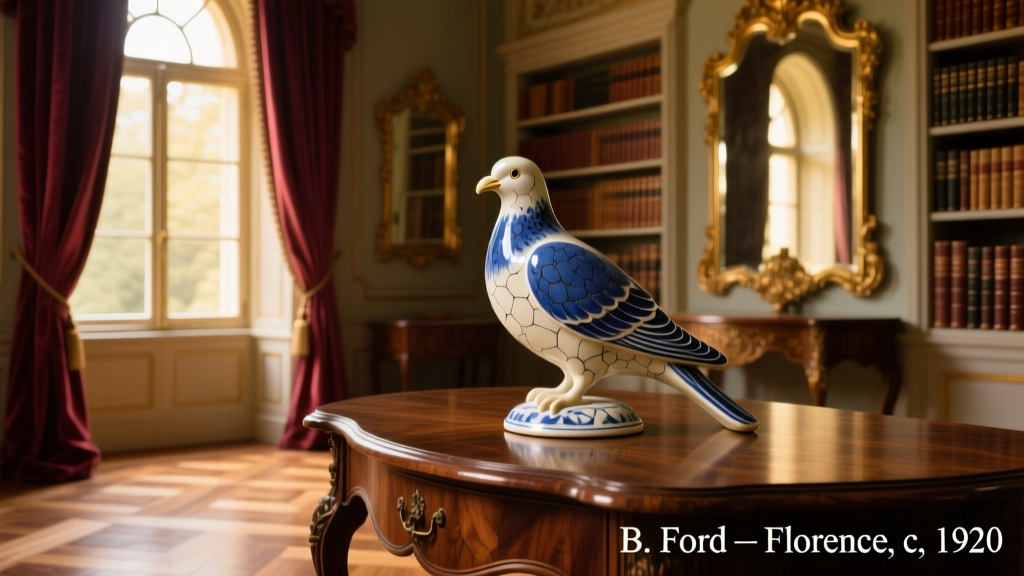
Florence Ceramics Dove Figurine: Identifying, Valuing, and Preserving the B. Ford Signature Piece
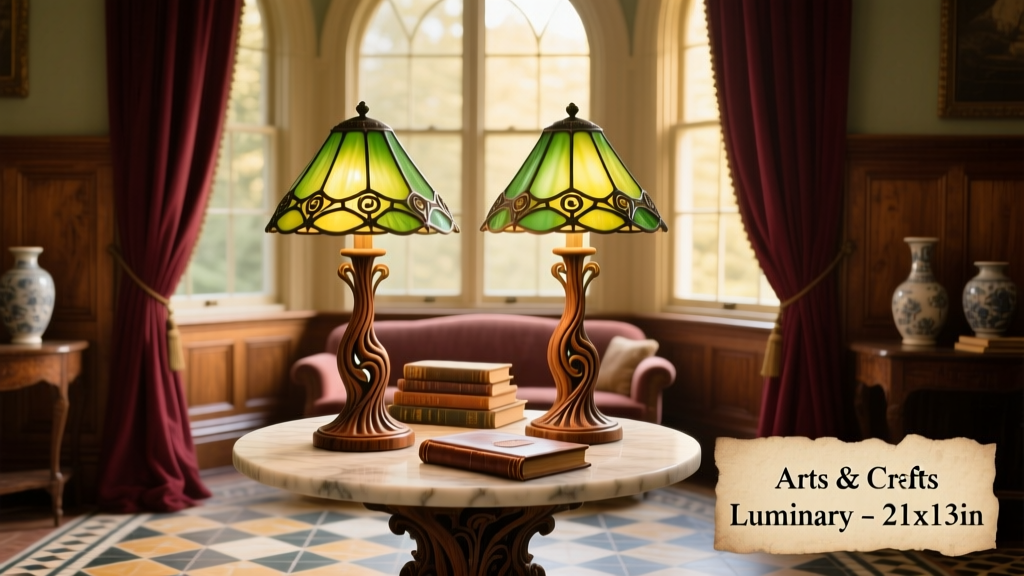
Lamps Electric Oak Green Yellow Slag Flared Base Arts & Crafts 21 × 13 In: Authenticity, Provenance, and Restoration Protocol
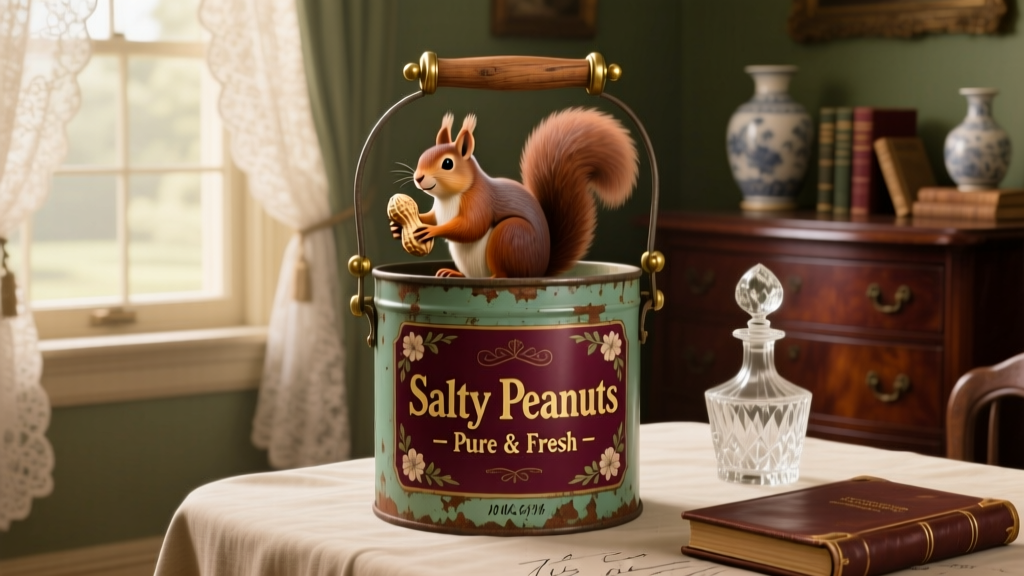
The Squirrel Brand 10-Lb Tin Pail: A Rare Advertising Artifact from the Golden Age of American Nut Marketing (1905–1915)