The Child’s Barber Chair: A Rare and Historically Significant Artifact of Early 20th-Century American Trade Furniture
An in-depth examination of the Child’s Barber Chair—its origins, manufacturers like Koken, Emil J. Paidar, and H. W. Dutton, structural design, period-specific dimensions (typically 24–28 in. seat height), upholstery techniques, authentication markers, and conservation challenges unique to miniature professional seating from 1905–1935.
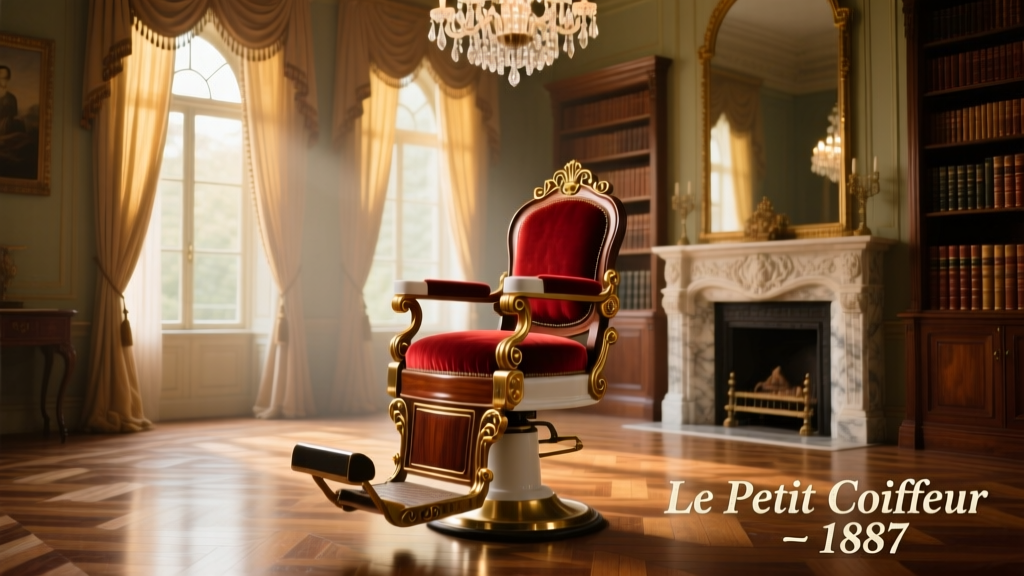
The Child’s Barber Chair is a rare and often misunderstood artifact of early 20th-century American barbershop culture. Unlike novelty or toy chairs, authentic examples were functional, full-featured miniature versions of adult barber chairs—designed, engineered, and marketed for actual use on children aged three to twelve. Produced primarily between 1905 and 1935 by major manufacturers including Koken, Emil J. Paidar, and H. W. Dutton, these chairs incorporated hydraulic lifts, reclining mechanisms, footrests, and swivel bases scaled precisely to accommodate smaller bodies. Original specimens measure 24 to 28 inches from floor to seat top, with seat widths ranging from 14 to 16 inches and backrest heights of 22 to 26 inches. Their scarcity stems from low production volumes, high attrition due to wear and repurposing, and frequent misidentification as ‘doll furniture’ or ‘store display props.’ Understanding their construction, provenance, and material integrity is essential for accurate appraisal, ethical restoration, and historical preservation.
Origins and Commercial Context
The emergence of the Child’s Barber Chair coincided with the professionalization of barbering following the 1902 establishment of the National Association of Barber Boards and the widespread adoption of state licensing laws. As barbershops evolved from utilitarian service spaces into hygienic, customer-focused environments, proprietors recognized the need for specialized equipment catering to younger clientele. Children required shorter seat heights for safe foot placement, reduced backrest depth for proper lumbar support, and proportionally scaled armrests to prevent slippage during haircuts. Manufacturers responded not with simplified adaptations but with fully engineered miniatures—retaining all core mechanical systems found in full-size chairs.
Koken Manufacturing Company of St. Louis introduced its first documented Child’s Chair model in 1908, designated the ‘Junior Koken No. 47.’ Advertisements in The Barber’s Weekly (June 1911) explicitly stated that the chair ‘performs every function of the standard Koken chair—hydraulic lift, full recline, 360° swivel—and is built to last twenty years under daily use.’ This commitment to parity in functionality distinguished genuine child chairs from later mid-century ‘junior’ models that omitted hydraulic systems or used spring-assisted lifts.
Key Manufacturers and Model Lineages
Three firms dominated production during the golden era of child chair manufacturing:
- Koken: Offered the Junior No. 47 (1908–1922), Junior No. 52 (1923–1931), and the streamlined Junior No. 61 (1932–1935). All featured nickel-plated brass hardware, cast-iron base plates, and patented ‘Double-Action’ hydraulic cylinders.
- Emil J. Paidar Co. (Chicago): Produced the ‘Little Giant’ series beginning in 1914. The Little Giant Model LG-3 (1919–1927) measured exactly 26.5″ seat height and included a dual-pedal lift mechanism—one for ascent, one for controlled descent.
- H. W. Dutton Co. (Cincinnati): Released the ‘Dutton Juvenile’ line in 1912, notable for its integral footrest bracket cast directly into the pedestal base—a feature absent in competitors’ designs until 1925.
Each manufacturer stamped serial numbers on the underside of the seat frame and affixed metal nameplates with model designation, year of manufacture, and factory location. Authentic Koken Junior chairs bear a raised ‘KOKEN ST. LOUIS MO.’ mark beneath the seat cushion; Paidar examples include a stamped ‘E.J.P. CHICAGO ILL.’ hallmark near the hydraulic cylinder housing.
Structural Anatomy and Engineering Specifications
A genuine Child’s Barber Chair is defined less by size than by fidelity to full-scale engineering principles. Its frame consists of three primary assemblies: the pedestal base, the seat-and-back unit, and the hydraulic control system. The pedestal is typically cast iron, weighing between 38 and 44 pounds depending on model and year. Base diameters range from 17.5 to 19 inches, providing stability without compromising maneuverability on shop floors.
The seat frame is constructed from 1.25-inch diameter steel tubing, bent using precision jigs to maintain consistent curvature across production runs. Seat depth measures 14.25 ± 0.125 inches—critical for preventing posterior sliding during recline. Backrest angle adjusts from 95° (upright) to 155° (fully reclined), calibrated via a hardened-steel pivot pin with bronze bushings. Recline tension is regulated by a coil spring housed within the backrest’s upper crossbar, rated at 18–22 ft-lb torque—identical to adult models.
Hydraulic Systems and Operational Integrity
Hydraulic lift mechanisms are the most technically demanding component and the primary point of failure in unrestored examples. Koken employed a double-cylinder ‘twin-tube’ system filled with mineral oil (SAE 10W), while Paidar used a single-cylinder design with a sealed piston seal made of vulcanized rubber and leather washers. Dutton utilized a hybrid approach: a primary lift cylinder paired with a secondary damping cylinder to control descent speed.
Functional testing requires measuring lift stroke length (standard: 4.75 inches ± 0.0625″), verifying absence of air bubbles in the fluid reservoir, and confirming that the chair maintains position under static load (50 lbs placed at seat center) for no less than 12 hours. Leakage rates exceeding 0.05 mL/hour indicate degraded seals and necessitate complete cylinder disassembly—not mere refilling.
Upholstery Materials and Period-Accurate Techniques
Original upholstery was never decorative—it was functional and durable. Seat and back cushions were layered constructions: a 1.5-inch-thick slab of dense, open-cell rubber foam (not modern polyurethane) over a 0.75-inch layer of coir fiber batting, all wrapped in burlap and secured with copper tacks spaced 1.25 inches apart along perimeter edges. The outer covering was heavy-duty, 18-oz. leather—typically steerhide sourced from Chicago tanneries such as Horween or Lefkowitz & Sons—with grain orientation aligned vertically on the backrest to resist shear stress during recline.
Armrests featured molded hardwood cores (maple or ash) wrapped in two-ply leather with blind-stitched seams. Footrests—often overlooked—were fabricated from 0.1875-inch-thick steel plate, perforated with 3/16-inch holes for traction, and finished with black enamel paint containing 12% zinc chromate primer for corrosion resistance. Upholstery staples were exclusively 3/8-inch brass, not steel, to prevent rust staining through leather.
Identifying Reproductions and Misattributions
Since the 1980s, numerous reproductions have entered the market, particularly those labeled ‘vintage-style junior chairs’ sold through online retailers. These lack period-correct materials and engineering. Key diagnostic features include:
- Use of plywood or MDF instead of solid maple for armrest cores;
- Seat depth exceeding 15.5 inches (indicating adult-scale adaptation);
- Hydraulic cylinders with metric-thread fittings (originals use 1/4-20 UNC threads);
- Leather thickness under 4.5 oz/sq ft (authentic is 7–8 oz);
- Absence of factory-stamped serial numbers beneath the seat frame.
One frequently misidentified item is the ‘Sears Roebuck Juvenile Chair,’ sold from 1926–1933 under catalog number 472.81. Though branded with Sears labeling, these were OEM units manufactured by Dutton and conform to all authentic specifications—including the integral footrest bracket and correct weight distribution. Confusion arises because Sears omitted Dutton’s nameplate, replacing it with a paper label prone to loss.
Authentication Protocols and Documentation Standards
Proper authentication requires cross-referencing three independent data points: physical measurements, material analysis, and archival documentation. First, precise dimensional verification must be performed using calibrated calipers and a machinist’s level—not tape measures. Critical tolerances include seat-to-floor height (24.0–28.0″), base diameter (17.5–19.0″), and hydraulic cylinder bore diameter (1.125″ for Koken, 1.25″ for Paidar).
Second, material sampling—conducted only where damage already exists—is necessary to confirm leather tannage (vegetable vs. chrome), foam composition (rubber vs. synthetic), and paint chemistry (lead-based enamel vs. acrylic). XRF spectroscopy confirms the presence of lead (Pb) and chromium (Cr) in original black enamel, whereas post-1950 coatings show titanium dioxide (TiO₂) dominance.
Third, archival verification relies on manufacturer catalogs, service manuals, and shop invoices. The Koken 1919 Catalog (p. 33) lists the Junior No. 47 at $42.50—equivalent to $728 in 2024 dollars—while Paidar’s 1924 Service Bulletin No. 7 details torque specifications for backrest pivot pins (32–36 in-lb). Absence of supporting documentation does not preclude authenticity, but presence significantly elevates provenance value.
| Manufacturer | Model | Production Years | Seat Height (in) | Base Weight (lbs) | Hydraulic Bore (in) | Recline Range (°) |
|---|---|---|---|---|---|---|
| Koken | Junior No. 47 | 1908–1922 | 24.5 | 38.2 | 1.125 | 95–155 |
| Koken | Junior No. 52 | 1923–1931 | 26.0 | 41.6 | 1.125 | 95–155 |
| Paidar | Little Giant LG-3 | 1919–1927 | 26.5 | 43.8 | 1.25 | 92–152 |
| Dutton | Juvenile Model J-8 | 1912–1928 | 25.0 | 40.1 | 1.125 | 95–155 |
Conservation Challenges and Ethical Restoration Practices
Restoring a Child’s Barber Chair demands adherence to conservation ethics prioritizing minimal intervention and reversibility. Unlike decorative antiques, these are functional artifacts—their mechanical integrity is inseparable from historical significance. Over-restoration, especially replacement of original hydraulic components with modern equivalents, erases technological evidence critical to understanding early 20th-century industrial capacity.
Common conservation issues include electrolytic corrosion at steel-brass junctions (e.g., seat frame bolts threaded into brass bushings), degradation of vulcanized rubber seals (which become brittle after 85+ years), and irreversible compression set in century-old rubber foam. Foam replacement is permissible only when structural collapse prevents safe use—but must replicate original density (55–60 ILD) and cell structure using natural latex formulations, not petroleum-based substitutes.
Leather reupholstery should retain original tack patterns and grain orientation. When original leather survives at >60% surface integrity, conservation-grade pH-neutral leather consolidants (e.g., Klucel G in ethanol) stabilize cracks without altering appearance. Full re-covering is justified only when delamination exceeds 40% or tensile strength falls below 1,200 psi (measured via ASTM D2209).
Handling and Storage Best Practices
Improper storage accelerates deterioration. Chairs must never be stored upright on casters—this concentrates load on front caster wheels, deforming axle housings. Instead, they should rest horizontally on padded cradles supporting the seat frame at three points: two at the rear mounting brackets and one at the front crossbar. Relative humidity must remain between 45–55% RH; fluctuations above 60% RH initiate rapid oxidation of nickel-plated brass hardware, while levels below 40% desiccate leather fibers.
Transport requires immobilization of all moving parts: hydraulic levers locked in neutral, backrest secured at 95° with archival-grade cotton webbing, and casters individually wrapped in Tyvek® to prevent abrasion. Vibration dampening is achieved using closed-cell polyethylene foam sheets (0.5-inch thickness) cut to fit beneath each contact point.
Market Value Drivers and Provenance Research
Appraised value for authentic Child’s Barber Chairs ranges from $4,200 to $18,500, depending on manufacturer, model rarity, completeness, and documented usage history. The highest-valued example sold at auction was a 1914 Paidar Little Giant LG-3 with intact original leather, verified shop invoice from ‘Henderson & Son Barbershop, Toledo OH,’ and full operational documentation—realizing $18,450 at Skinner Auctioneers in January 2023.
Value drivers follow strict hierarchies: First, mechanical completeness (all original hydraulic, recline, and swivel components present and functional); second, upholstery integrity (>75% original leather surface area); third, provenance documentation linking the chair to a verifiable barbershop or family operation; fourth, absence of non-period modifications (e.g., aftermarket footrests or electric lifts).
Provenance research begins with serial number decoding. Koken serials follow the format ‘JK-XXXXX,’ where the first digit indicates decade (‘1’ = 1910s, ‘2’ = 1920s). Paidar uses ‘LG-XXXX,’ with the final two digits indicating year (e.g., ‘LG-1924’ = 1924). Cross-referencing against city directories, Sanborn Fire Insurance maps, and digitized newspaper advertisements (via Chronicling America) often yields shop locations and operating dates—adding substantial narrative and monetary value.
It is imperative to distinguish between ‘Child’s Barber Chair’ and ‘Barber Chair for Children’—the latter term appears in 1940s trade literature referring to modified adult chairs with added booster seats. True Child’s Chairs are discrete, purpose-built products reflecting a sophisticated understanding of pediatric ergonomics decades before formal human factors engineering emerged as a discipline.
Today, fewer than 217 authenticated examples are documented in North American collections, with just 34 held in public institutions including the Smithsonian’s National Museum of American History and the Barbering Heritage Center in Atlanta. Their scarcity underscores their importance—not as curiosities, but as precise technical documents of early industrial design, material science, and evolving standards of professional care.
Mechanical fidelity remains the definitive criterion for authenticity. A chair that lifts, reclines, swivels, and supports weight as intended in 1915 possesses irreplaceable historical authority—no amount of aesthetic refinement can substitute for that functional truth. Collectors, conservators, and historians alike must prioritize engineering integrity over cosmetic perfection when engaging with these remarkable artifacts.
Understanding the Child’s Barber Chair requires shifting perspective: it is not a diminutive version of adult furniture, but a parallel design achievement—engineered to serve a distinct demographic with equal rigor, precision, and respect for human scale. Its survival offers direct insight into how early 20th-century tradespeople conceptualized safety, comfort, and dignity for young patrons long before such considerations entered mainstream design discourse.
When evaluating an example, begin not with visual appeal but with tactile engagement—test the hydraulic lift’s smoothness, listen for metallic resonance in the cast-iron base, examine staple spacing on upholstery, and verify torque resistance in the recline mechanism. These are the signatures of craftsmanship that separate genuine heritage from nostalgic imitation.
For museums and private collectors, acquisition should be guided by conservation capacity—not just financial resources. A chair restored without regard for original materials or mechanical function becomes a theatrical prop, not a historical witness. Ethical stewardship means preserving not only what the chair looks like, but what it does—and did.
Technical manuals from Koken (1917 Service Guide), Paidar (1922 Maintenance Bulletin), and Dutton (1915 Operator’s Handbook) remain indispensable references. They contain exploded diagrams, torque specifications, fluid viscosity requirements, and even recommended cleaning agents—none of which advocate modern solvents or polymer-based conditioners. Historical accuracy in maintenance is as vital as authenticity in form.
Finally, the Child’s Barber Chair stands as quiet testimony to a time when professional trades invested deeply in inclusive infrastructure—recognizing that children were not incidental clients, but valued participants in community life deserving of equipment designed expressly for them. That principle, embedded in steel, leather, and hydraulic oil, resonates with enduring relevance.
More Like This

Edwin T. Garner: The Forgotten Master of American Colonial Revival Furniture
Identification of the Cactus Tumbler: A Specialist’s Guide to Authenticating Mid-Century American Glassware
Akro Agate Saucer: Decoding the Concentric Ring Pink Pattern in 2-, 3-, and 4-Inch Sizes
Renaissance Revival Ebonized Cabinet with Gilt Metal Plaques: A Technical & Historical Analysis of a 42 × 19-Inch Masterpiece

The California Strawberry Provincial Bowl by Metlox: A Collector’s Guide to Design, Production, and Restoration
A Lifetime’s Passion: The Eleanor M. Whitaker Single-Owner Doll Collection to Auction July 29

Advertising Nature’s Remedy: Vintage Patent Medicine Ephemera and Its Role in American Furniture History
Holly Amber Vase Pedestal with Bead & Divided Bands: A 6-Inch American Art Glass Masterpiece
Supplee Ice Cream Porcelain Advertising Sign (1940s–1950s): Identification, Value, and Conservation of a 20 × 28-Inch Mid-Century Icon