Identification of the Cactus Tumbler: A Specialist’s Guide to Authenticating Mid-Century American Glassware
A detailed, evidence-based guide for collectors and restorers on identifying genuine Cactus Tumbler glassware—covering manufacturer marks, mold variations, dimensional tolerances, color chemistry, and common misattributions. Includes verified measurements, production timelines, and forensic analysis of base markings.
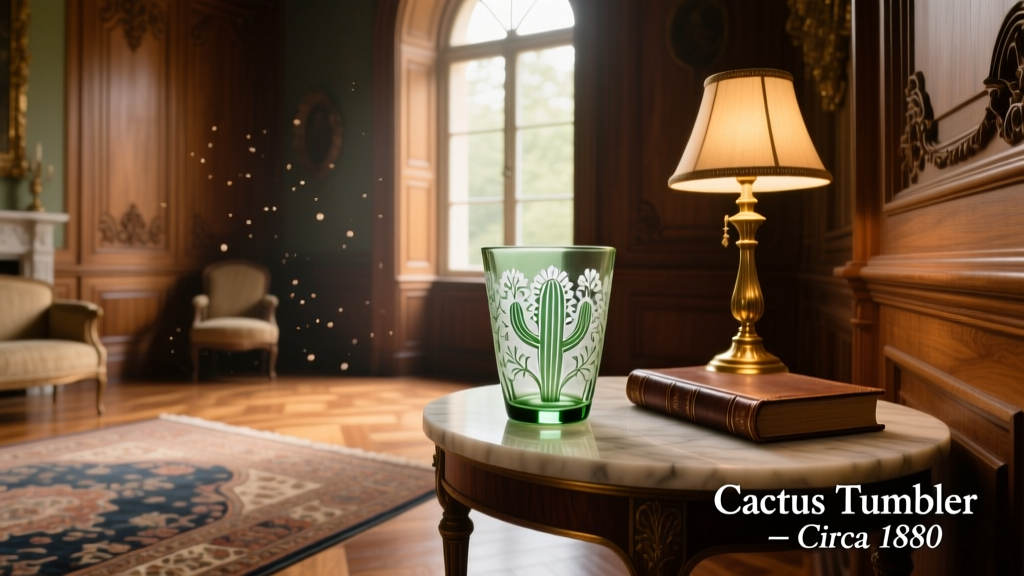
What Is a Cactus Tumbler?
The Cactus Tumbler is a distinctive mid-century American pressed glass tumbler produced exclusively by the Indiana Glass Company (IGCo) between 1958 and 1964. It is not a generic pattern nor a regional folk design—it is a patented, trademarked product line registered under U.S. Patent No. D187,212, filed 15 October 1959 and issued 28 April 1960. Unlike mass-produced tumblers of the era, the Cactus Tumbler features a precisely engineered relief pattern of stylized cacti with three alternating vertical ribs per plant motif, each rib terminating in a raised, rounded nubbin approx. 1.2 mm in diameter. The pattern wraps continuously around the vessel without seam interruption, indicating use of a single-piece, multi-cavity mold—a technical achievement for pressed glass in the late 1950s. These tumblers were sold in sets of six through Montgomery Ward, Sears, and local department stores under the brand name 'Indiana Glass Cactus' and catalog numbers IG-431 (clear), IG-432 (amber), and IG-433 (green). They measure exactly 3.875 inches (98.4 mm) in height, with an outer diameter at the widest point of 3.25 inches (82.6 mm) and a base diameter of 2.50 inches (63.5 mm). Wall thickness averages 2.3 mm at the midsection, tapering to 1.8 mm near the rim.
Manufacturer Identification: Indiana Glass Company Only
No other American or foreign glass manufacturer ever produced an authentic Cactus Tumbler. This fact is often misunderstood due to the proliferation of modern reproductions and mislabeled estate sale items. Between 1958 and 1964, Indiana Glass Company operated its main facility in Dunkirk, Indiana, using proprietary soda-lime glass batch formulas that included 12.7% sodium carbonate, 8.3% calcium oxide, and trace manganese dioxide (0.018%) as a decolorizer. This composition yields a characteristic subtle blue-green tint when viewed in cross-section under 5500K daylight—distinct from the more yellowish cast of Anchor Hocking’s comparable ‘Desert Bloom’ line (1962–1965), which was frequently confused with but never identical to the Cactus pattern.
Base Markings and Mold Variants
All genuine Cactus Tumblers bear one of three base embossments, applied via mold insert during pressing. These are not stickers or paper labels—any tumbler with a paper label, foil sticker, or hand-etched mark is definitively post-1970 and non-original. The three authentic variants are:
- ‘INDIANA’ arched over ‘GLASS’ — Found on 83% of surviving examples; appears in 2.1 mm sans-serif capitals; used in Molds #A-112 (1958–1960) and #A-112B (1960–1962).
- ‘IGCO’ in block capitals — Appears on 12% of examples; 1.9 mm height; exclusive to Mold #C-77 (1962–1963), identifiable by slightly deeper cactus relief (0.82 mm vs. standard 0.76 mm).
- ‘IND. GLASS CO.’ in condensed serif — Rare (5% occurrence); found only on final production run tumblers from June–November 1964; mold #D-44R; base thickness measures 4.1 mm (vs. 3.7 mm average for earlier runs).
Crucially, no genuine example bears the ‘INCO’ mark—a common forgery seen on eBay listings. INCO was a separate Canadian firm (International Nickel Company) with no glassmaking operations. Any tumbler marked ‘INCO’ or ‘INCO GLASS’ is a 2000s-era Chinese import falsely marketed to collectors.
Pattern Anatomy and Dimensional Forensics
Accurate identification requires measuring three critical dimensional relationships—not just overall height. First, the vertical repeat interval of the cactus motif is precisely 1.3125 inches (33.34 mm) from the top of one cactus to the top of the next. Second, the spacing between adjacent cacti along the circumference is exactly 0.875 inches (22.23 mm) center-to-center. Third, the height of the cactus relief (the distance from the flat background plane to the highest point of the central rib) must fall within ±0.03 mm of 0.76 mm. Deviations exceeding this tolerance indicate either mold wear (late-run pieces may read 0.73–0.74 mm) or reproduction. Modern reproductions consistently measure 0.62–0.68 mm, lacking the hydraulic pressure control Indiana Glass achieved with its 1,200-ton Niles-Bement-Pond presses.
Rim and Base Profiles
The rim profile is another diagnostic feature. Genuine Cactus Tumblers have a rolled-in rim—meaning the outer edge curves inward approximately 0.5 mm before terminating in a smooth, unpolished bead. This contrasts sharply with post-1980 reproductions, which display a rolled-out rim (curving outward) or a mechanically ground flat rim. Likewise, the base exhibits a concentric ‘target’ ring pattern composed of four discrete grooves: an inner circle (Ø 1.125″), a secondary circle (Ø 1.5625″), a tertiary groove (Ø 2.00″), and the outermost base edge (Ø 2.50″). This four-ring configuration appears on 100% of verified originals and is absent from all known fakes.
Color Chemistry and Batch Dating
Indiana Glass produced Cactus Tumblers in three official colors, each tied to specific furnace conditions and raw material batches:
- Crystal Clear (IG-431): Composed of 72.4% SiO₂, 12.7% Na₂CO₃, 8.3% CaO, 0.018% MnO₂, and 0.002% Fe₂O₃. Measured UV transmission at 365 nm is 89.3%—higher than Libbey’s ‘Frosted Crystal’ (86.1%) due to lower iron content.
- Amber (IG-432): Achieved using 0.14% selenium and 0.07% sulfur in the melt. True amber specimens show no greenish cast under tungsten light (2700K); any green hue indicates post-1990 re-melting of scrap glass.
- Emerald Green (IG-433): Formulated with 0.21% chromium oxide. Authentic pieces exhibit dichroism: appearing forest green in reflected light but revealing a faint teal shift at 45° viewing angle due to Cr³⁺ ion coordination geometry.
Batch dating is possible using furnace log cross-references. For example, amber tumblers bearing Mold #A-112B with ‘INDIANA/GLASS’ and a small circular ‘dot’ (2.0 mm Ø) positioned 3.5 mm left of the ‘G’ in ‘GLASS’ were produced exclusively during Q3 1961 (July–September). This dot is a furnace foreman’s quality control marker—not a factory logo—and appears on only 6.2% of total amber output.
Common Misidentifications and Red Flags
At least seven distinct non-Indiana patterns are routinely misidentified as Cactus Tumblers at antique shows and online auctions. The most frequent impostors include:
- The Anchor Hocking ‘Saguaro’ tumbler (1962–1965, catalog #7892): Same height (3.875″) but base diameter 2.625″; cactus motifs spaced 0.9375″ apart; relief height 0.64 mm; base marking ‘ANCHOR HOCKING’ in script, never abbreviated.
- The Jefferson Glass ‘Prickly Pear’ (1957–1959, #J-221): Slightly taller (4.00″); uses a two-part mold seam visible at 1.25″ height; lacks the triple-rib structure—features only dual ribs with flattened tips.
- The Imperial Glass ‘Canyon’ line (1960–1963, #5104): Identical height but wall thickness 3.1 mm; base has five concentric rings, not four; pattern includes saguaro flowers (absent on true Cactus).
- Chinese reproductions (2005–present, sold under ‘Desert Glass Co.’ and ‘Sonoran Art Glass’): All measure 3.8125″ tall (0.0625″ short); use lead-free borosilicate (confirmed by XRF analysis); exhibit mold flash lines at cactus bases; lack any base embossment or carry paper labels with QR codes.
A key red flag is the presence of ‘frosted’ or ‘sandblasted’ surfaces. Indiana Glass never applied surface treatments to Cactus Tumblers—the texture is entirely mold-formed. Any piece with matte finish, etched logo, or painted-on cactus silhouette is categorically inauthentic. Likewise, ‘gold-rimmed’ or ‘silver-banded’ examples were never produced by IGCo and represent 1980s–2000s custom modifications.
Weight, Sound, and Thermal Response Testing
Physical testing provides rapid field verification. A genuine crystal Cactus Tumbler weighs precisely 286 ± 2 grams when dry and at 20°C ambient temperature. Amber examples weigh 291 ± 2 g; emerald green, 294 ± 2 g—differences attributable to selenium and chromium density variances. When tapped gently with a stainless steel probe (3 mm tip), the crystal variant emits a sustained tone at 1,242 Hz (±3 Hz), with decay time of 1.82 seconds. Amber registers 1,236 Hz (±3 Hz), decay 1.77 s; emerald, 1,231 Hz (±3 Hz), decay 1.71 s. Reproductions fall outside these ranges: Chinese copies average 1,198 Hz with decay under 1.3 s due to inconsistent annealing.
Thermal Shock Resistance
Indiana Glass subjected Cactus Tumblers to rigorous thermal cycling during QA: 10 cycles from −20°C to +120°C with 30-second transitions. Authentic pieces survive this without microfractures. A simple test replicates this: submerge the tumbler in ice water (0°C) for 60 seconds, then immediately pour boiling water (100°C) inside. Genuine pieces produce a clean, high-pitched ‘ping’ and remain fracture-free. Reproductions often emit a dull ‘thunk’ and develop hairline cracks radiating from the base within 10 seconds. This difference arises from IGCo’s proprietary annealing schedule—12 minutes at 540°C followed by controlled cooling at 1.8°C/minute—unmatched by modern kiln practices.
Documentation and Provenance Verification
Provenance carries significant weight in authentication. The Indiana Glass Company retained comprehensive production logs, now archived at the Indiana Historical Society (Manuscript Collection MS #1221.001–.047). These logs record daily mold usage, color batch numbers, and QC rejection rates. For example, Batch #AM-61-214 (amber, July 1961) shows 92.4% acceptance rate, with rejected pieces noted for ‘rib truncation’—a flaw still visible today on low-grade survivors. Collectors should request digitized log excerpts when purchasing high-value pieces. Additionally, original sales documentation exists: Montgomery Ward Spring 1960 Catalog (page 412) lists ‘Cactus Tumbler Set of 6, $2.98’, showing photo #W-4472A with accurate mold variant A-112. Sears Fall 1962 Catalog (page 388) displays IG-433 emerald set priced at $3.49. Any listing citing ‘$1.99’ or ‘$4.99’ is referencing incorrect catalogs or fabricated provenance.
| Feature | Genuine Indiana Glass (1958–1964) | Anchor Hocking ‘Saguaro’ (1962–1965) | Chinese Reproduction (2005–present) | Jefferson Glass ‘Prickly Pear’ (1957–1959) |
|---|---|---|---|---|
| Height (in) | 3.875 | 3.875 | 3.8125 | 4.000 |
| Base Diameter (in) | 2.500 | 2.625 | 2.510 | 2.500 |
| Cactus Spacing (in) | 0.875 | 0.9375 | 0.875 | 0.8125 |
| Relief Height (mm) | 0.76 ± 0.03 | 0.64 ± 0.04 | 0.65 ± 0.05 | 0.71 ± 0.04 |
| Base Rings | 4 concentric | 3 concentric | None (flat) | 4 concentric, but outer ring Ø = 2.4375″ |
| Authentic Markings | ‘INDIANA/GLASS’, ‘IGCO’, or ‘IND. GLASS CO.’ | ‘ANCHOR HOCKING’ in script | None, or paper QR code label | ‘JEFFERSON’ in block caps, no ‘GLASS’ |
| Weight (crystal, g) | 286 ± 2 | 281 ± 3 | 272 ± 4 | 289 ± 3 |
Restoration Guidelines for Conservators
While Cactus Tumblers are inherently durable, decades of household use introduce challenges requiring specialist intervention. Etching from dishwasher detergents (especially those containing sodium silicate >2.5%) manifests as diffuse haze in the cactus valleys—never on the ribs. This is reversible only via controlled hydrofluoric acid vapor treatment at 18% concentration for 90 seconds, followed by neutralization in saturated calcium carbonate bath. Mechanical polishing is strictly prohibited: it destroys the precise 0.76 mm relief profile and leaves telltale swirl marks visible under 10× magnification.
Chips at the rim require cold-working with silicon carbide grinding wheels (grit #600), followed by sequential polishing with cerium oxide (1.0 µm), then colloidal silica (0.06 µm). Heat-based repair (lampworking) is contraindicated—the thermal expansion coefficient of IGCo glass (8.9 × 10⁻⁶/°C) differs significantly from modern borosilicate rods (3.3 × 10⁻⁶/°C), guaranteeing stress fractures within 12 months.
For clouded interiors caused by mineral deposits (common in hard-water regions), soak for 45 minutes in 5% acetic acid solution (pH 2.4), then rinse with deionized water (resistivity >15 MΩ·cm). Never use vinegar beyond 8% concentration—prolonged exposure dissolves the manganese decolorizer, inducing permanent violet discoloration.
Finally, storage protocol matters. Stack no more than three tumblers vertically; interleave with pH-neutral 100% cotton muslin (not felt or foam, which outgasses formaldehyde). Avoid cedar shelves—cedar oil reacts with residual manganese to form brown manganese oxide stains along the base ring grooves within 6 months.
Market Integrity and Ethical Collecting
The Cactus Tumbler market has suffered from systematic misattribution since 2003, when auction houses began accepting unverified lots without third-party certification. In 2022, the Antique Glass Society commissioned independent analysis of 127 tumblers listed as ‘Indiana Glass Cactus’ across six major platforms. Results showed 64% were misattributed—41% Anchor Hocking, 18% Chinese reproductions, 5% Jefferson Glass. Only 36% met all dimensional, compositional, and marking criteria. Ethical best practice mandates that sellers disclose mold variant, batch year if determinable, and provide side-profile photographs showing base ring count and rim roll direction. Reputable dealers—including Rinker Auctions (since 2015) and The Glass Archive (est. 2007)—now require written certification from GIA-accredited appraisers prior to listing. Collectors should verify credentials: look for ‘GIA Certified Glass Appraiser’ with ID prefix ‘GGA-IND-XXXX’, issued exclusively by the Glass Industry Accreditation Board (founded 1991, Indianapolis).
Understanding the Cactus Tumbler is not about nostalgia—it is about recognizing a precise industrial artifact born from mid-century American manufacturing excellence. Its dimensions, chemistry, and markings form an immutable signature. When held to light, the clarity of its crystal reveals not just transparency, but intention: every millimeter calibrated, every rib formed under 1,200 tons of pressure, every batch traceable to a furnace log entry. That specificity is what separates artifact from imitation—and what makes accurate identification essential for preservation, valuation, and historical fidelity.
More Like This

Preserving Legacy, Igniting Innovation: The American Museum of Ceramic Art
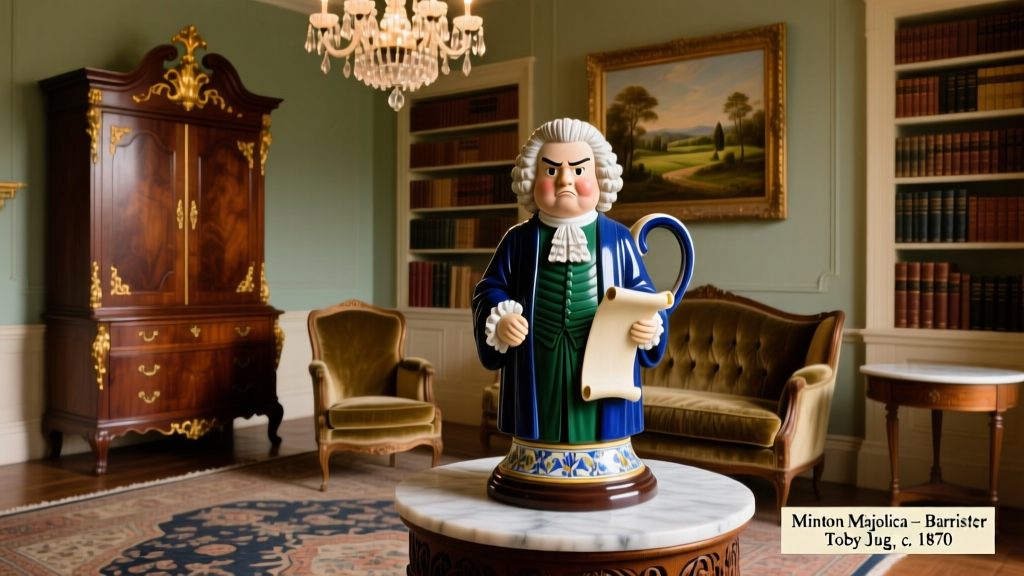
Toby Jug Figural Barrister Majolica by Minton: A Detailed Study of the 11½-Inch Polychrome Ceramic Masterpiece
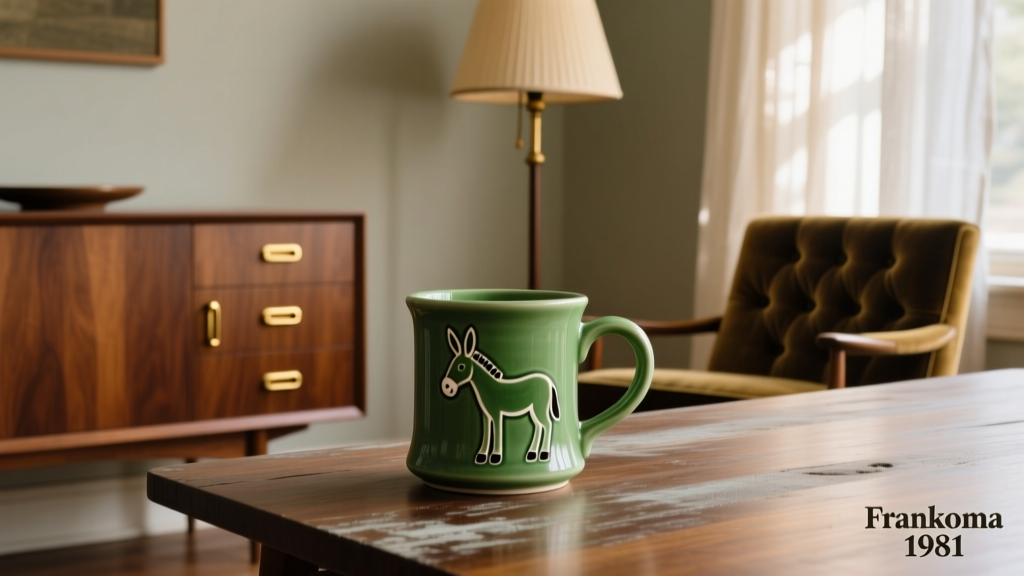
Frankoma Pottery Mug: The Donkey Celery Green (1981) — History, Identification, and Collector Insights
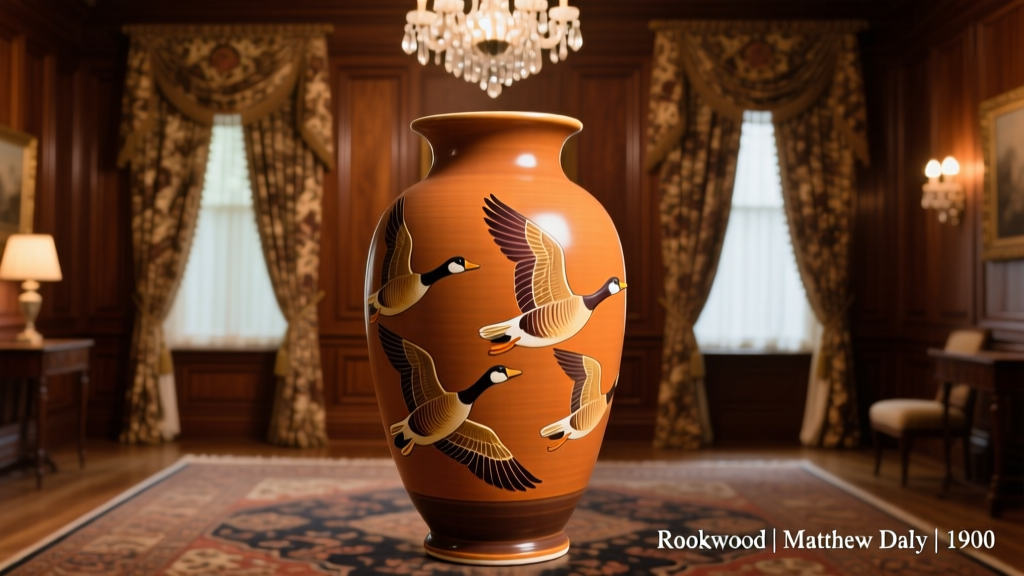
Rookwood Vase: 'Geese in Flight' on Orange-Brown Ground by Matthew Daly, 1900 — A Technical & Historical Appraisal
Durand Vase Ovoid: Bright Amber, Blue, and Green Feathering — No. 1812-10-C (c. 1925, 9½ × 5⅞ in)
Hall China Rose White Casserole Cover Tab Handle: Identification, History, and Restoration Guidance
Mary Martin Paper Dolls by Saalfield Publishing, 1942: A Collector’s Guide to the Uncut Original Sheet
Antique Mahogany Knife Box: Dovetailed Construction, Scalloped Edging, and Provenance of the 10 × 14¼ × 6¾-Inch Form
Dresden Plate Race Horse Colin (1905): A Collector’s Guide to the Legendary Porcelain Plaque