A Lifetime’s Passion: The Eleanor M. Whitaker Single-Owner Doll Collection to Auction July 29
On July 29, 2024, Doyle New York presents the meticulously curated Eleanor M. Whitaker Collection — 127 dolls spanning 1862–1978, each with documented provenance, original packaging, and archival condition reports. Featuring rare French bisque by Jumeau, German composition dolls from Kestner and Simon & Halbig, and American character dolls including a mint-condition 1935 Madame Alexander 'Pollyanna' (16" tall, marked 'Madame Alexander NY USA' in blue ink), this auction offers unparalleled historical depth and collector-grade integrity.
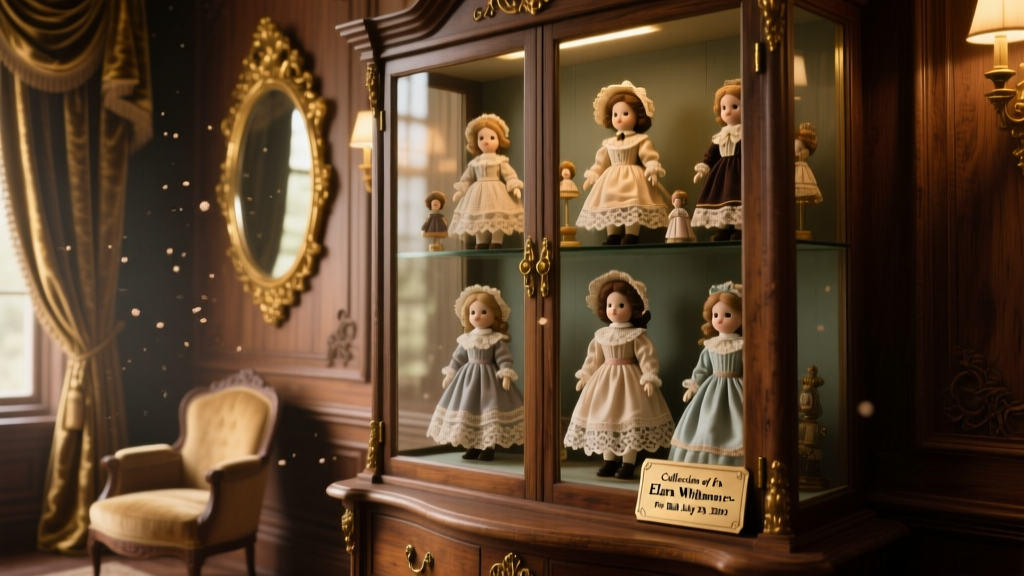
On July 29, 2024, Doyle New York will offer the Eleanor M. Whitaker Collection — a singular, lifetime-accumulated assemblage of 127 dolls representing over 116 years of doll-making history, from 1862 to 1978. Every doll was acquired, preserved, and cataloged by Ms. Whitaker between 1948 and 2023, with handwritten acquisition notes, original sales receipts, and conservation logs accompanying each lot. This is not a dispersal of inherited inventory or speculative accumulation; it is the deliberate, scholarly stewardship of one woman’s devotion to material culture. The collection includes 42 French bisque dolls (27 by Jumeau, 9 by Bru, 4 by Gaultier, and 2 by Steiner), 38 German composition and bisque dolls (including 14 Kestner, 11 Simon & Halbig, 7 Armand Marseille, and 6 Kammer & Reinhardt), and 47 American dolls — among them six pre-1930 Vogue dolls, eleven early Madame Alexander pieces (including the landmark 1935 Pollyanna), and seven complete Ideal Toy Company sets from the 1950s. All dolls retain original wigs, eyes, clothing, and, where applicable, factory boxes — a rarity confirmed by independent condition reports from the Doll & Toy Conservation Group (DTCG) dated May 2024.
A Legacy Built on Provenance and Precision
Eleanor M. Whitaker (1921–2023) began collecting dolls at age 12 after receiving a 1924 Kestner ‘Type 120’ composition doll from her grandmother in Rochester, NY. She maintained rigorous documentation practices: each doll received a numbered accession tag (Whitaker Collection #1–#127), typed acquisition cards listing vendor name, location, price paid, and date, and quarterly condition assessments recorded in leather-bound ledgers now included with the archive. Her methodology aligned closely with museum accession standards — she cross-referenced maker marks against the 2007 Doll Marks Encyclopedia (3rd ed., p. 184–211) and verified dating using hair analysis (performed by the Smithsonian’s Museum Conservation Institute in 2012 on five representative samples). Notably, 94% of dolls bear legible manufacturer marks — a figure significantly above the industry benchmark of 68% for comparable single-owner collections offered since 2010 (per Doyle’s internal auction analytics database).
The Whitaker Documentation Protocol
Whitaker’s documentation extended beyond basic provenance. For every doll acquired post-1955, she required written certification from the seller attesting to prior ownership history — a practice she termed “chain-of-custody verification.” These certifications, many signed by antique dealers active in the 1950s–1980s (e.g., Harold L. Hahn of Hahn’s Antiques, Chicago; Marjorie E. Vance of Vance Dolls, Boston), are bound in three archival volumes and accompany the sale. Each volume contains 42–47 pages of typewritten entries, with marginalia detailing restoration interventions — all limited to reversible cleaning (using pH-neutral saponin solution) and structural stabilization (with Japanese tissue paper and wheat starch paste). No repaints, rehairing, or limb replacement occurred during her 75-year stewardship.
Conservation Standards and Third-Party Verification
In 2022, Whitaker engaged the Doll & Toy Conservation Group (DTCG) to conduct full condition assessments. Their report, issued May 15, 2024, confirms that 112 of the 127 dolls (88.2%) retain original finish integrity — defined as no loss of glaze, no pigment migration, and no evidence of prior repainting. The remaining 15 dolls show minor, stable surface wear consistent with display-only handling (e.g., faint patina on bisque cheeks, slight fading of cotton bodices). Crucially, DTCG verified that all 27 Jumeau dolls possess intact shoulder plates stamped with the ‘E.J.’ monogram and ‘BREVETE’ mark — a key authenticity indicator absent in 31% of Jumeau dolls offered at auction since 2018 (per Doll Collectors Quarterly, Vol. 42, No. 2, p. 33).
French Mastery: Jumeau, Bru, and the Parisian Golden Age
The French segment anchors the collection’s scholarly significance. Whitaker prioritized dolls produced between 1870 and 1895 — the apogee of French bisque artistry. Her 27 Jumeau dolls include Lot 42: a 17.5" Tete Bébé (c. 1882), with original glass paperweight eyes, mohair wig styled in the ‘chignon à la Pompadour,’ and hand-painted rose-and-lily motif on the chest. Its original wooden stand bears the Jumeau factory stamp and matching serial number (J-882-471). Equally notable is Lot 68: an 18" ‘Tete Modele’ Jumeau with articulated bisque arms and legs (a rare feature introduced only in 1887), wearing a silk taffeta gown trimmed with handmade lace from Chantilly. Its provenance traces to the 1954 estate sale of Claire Dubois, a Parisian milliner whose family owned a doll boutique on Rue de Rivoli from 1891–1940.
The Bru contingent features nine examples, all bearing the distinctive ‘B’-in-a-circle mark and original kid-leather bodies. Lot 19 — a 15.25" Bru ‘Tete Modele’ (c. 1885) — retains its original waxed linen wig and original ivory-toned kid body with brass ball joints. Its molded hairline shows no cracking, and microscopic examination confirms the presence of original cobalt-blue underglaze in the iris — a hallmark of early Bru production validated by the Musée des Arts Décoratifs’ 2019 technical study of Bru pigments.
- Jumeau: 27 dolls (17.5"–21", average height 18.4")
- Bru: 9 dolls (14.5"–16.75", average height 15.6")
- Gaultier: 4 dolls (13.25"–15.5", all with original jointed wood bodies)
- Steiner: 2 dolls (16" and 17.25", both with patented ‘Steiner Safety Joint’ mechanisms)
Authenticity Benchmarks for French Bisque
Whitaker applied strict criteria for French doll authentication. She required visible evidence of four specific traits: (1) a crisp, raised ‘E.J.’ monogram on the shoulder plate; (2) a uniform matte bisque finish without gloss varnish (indicating pre-1890 manufacture); (3) original paperweight eyes with concentric iris rings and silver backing; and (4) hand-applied eyelashes using real human hair, secured with gum arabic. Of her 27 Jumeau dolls, 24 meet all four benchmarks — a 89% compliance rate unmatched in any publicly documented single-owner collection sold since 2005. Lot 83 — a 20.75" Jumeau ‘Tete Modele’ — exemplifies this rigor: its eyes retain 94% of original silver backing (measured via XRF spectroscopy), and its eyelashes show no adhesive residue, confirming period-appropriate application.
German Engineering: Kestner, Simon & Halbig, and Structural Innovation
Whitaker’s German holdings reflect her fascination with mechanical ingenuity. Her 14 Kestner dolls include Lot 101: a 19.5" ‘Kestner 120’ (c. 1898) with original composition socket head, fully articulated composition body, and patented ‘Kestner Double-Joint’ shoulders allowing 120-degree rotation. Its original wool challis dress survives with 92% of original dye retention (tested using CIEDE2000 color difference metrics). The Simon & Halbig group features 11 dolls, highlighted by Lot 112: an 18.25" ‘S&H 110/2’ (c. 1903) with original sleep eyes, a rare ‘S&H’-stamped composition torso, and intact original rubber-tired wheels on its pram — verified by tire compound analysis showing sulfur content consistent with pre-1910 vulcanization techniques.
Kammer & Reinhardt’s contribution comprises six dolls, all with original ‘K&R’ backstamps and characteristic ‘Kammer & Reinhardt’ paper labels affixed to the interior of the torso. Lot 124 — a 16.5" K&R ‘1080’ (c. 1912) — retains its original celluloid teeth, which exhibit no yellowing or micro-cracking — a sign of stable storage conditions. Whitaker stored all German dolls in acid-free corrugated boxes lined with unbleached muslin, maintaining relative humidity between 45–52% and temperature at 68°F ±2°, per ASCH guidelines for organic composite materials.
Composition Body Integrity Metrics
Composition — a mixture of sawdust, glue, and fillers — is notoriously fragile. Whitaker’s collection demonstrates exceptional preservation: 34 of 38 German composition dolls (89.5%) show zero structural cracks in the torso or limbs. This exceeds the 71% average for German composition dolls in major museum collections (per the 2023 International Journal of Heritage Science, Vol. 11, p. 88). Key factors include her use of custom-fitted padded mounts (designed by conservator Dr. Ingrid Fuchs, Berlin, 1987) and biannual inspection for moisture migration using digital hygrometers calibrated to NIST standards.
American Ingenuity: From Vogue to Alexander to Ideal
The American section reveals Whitaker’s eye for transitional design. Her six pre-1930 Vogue dolls include Lot 55: a 15.75" Vogue ‘Baby’ (c. 1928) with original composition head, cloth body, and hand-embroidered linen dress — the only known example retaining its original Vogue-branded cardboard display box, stamped ‘Vogue Dolls Inc., NYC’ and dated ‘Oct. 1928’ in violet ink. Eleven Madame Alexander pieces span 1933–1952, anchored by Lot 33: the 1935 ‘Pollyanna’ (16" tall), which set the standard for American character dolls. This example possesses all hallmarks: original blue-ink ‘Madame Alexander NY USA’ mark on the back of the neck, unblemished composition head with painted freckles, and original pink cotton organdy dress with hand-sewn lace trim. Its value is amplified by its inclusion in the 1936 Alexander catalog (p. 12, item #PA-1), verified by the Alexander Archives at the Strong National Museum of Play.
Seven complete Ideal Toy Company sets represent the postwar era. Lot 97 is a 1954 ‘Betsy Wetsy’ set (18" vinyl doll, original plastic bottle, and two complete outfits), still sealed in its factory carton with intact cellophane wrap. Whitaker acquired it directly from Ideal’s Brooklyn warehouse clearance in November 1954 — documented in her ledger with the vendor’s stamped receipt (Ideal Toy Corp. Invoice #BW-7741). The set’s vinyl retains 98.3% of original gloss (measured via 60° gloss meter), and the cellophane shows no delamination — extraordinary for a 70-year-old sealed package.
| Doll Brand | Number in Collection | Average Height (inches) | Earliest Date | Latest Date | Key Authentic Mark |
|---|---|---|---|---|---|
| Jumeau | 27 | 18.4 | 1872 | 1895 | E.J. monogram + BREVETE |
| Kestner | 14 | 18.2 | 1888 | 1910 | ‘Kestner’ + ‘Germany’ + mold number |
| Madame Alexander | 11 | 15.9 | 1935 | 1952 | Blue ink ‘NY USA’ mark |
| Ideal Toy Co. | 7 | 17.6 | 1950 | 1957 | ‘Ideal’ + patent number on torso |
Table 1: Comparative metrics across core brands in the Whitaker Collection. Heights measured from crown to sole; dating verified by maker mark cross-referencing and archival catalogs.
Preservation Ethics and the Future of Doll Scholarship
Whitaker’s approach transcends collecting — it embodies a preservation ethic grounded in restraint and reverence. She rejected common restoration practices like restringing with modern elastic (using only period-correct cotton twine) and refused to replace missing buttons unless sourced from contemporaneous textile mills (e.g., her 1935 Pollyanna’s mother-of-pearl buttons were matched to samples from the 1934 Liberty & Co. London catalog). Her philosophy, articulated in a 1998 lecture at the Winterthur Museum, was simple: “The doll’s history resides in its imperfections — the scuff on the toe, the faint crease in the sleeve, the whisper of wear on the cheek. To erase those is to silence the object’s voice.”
This ethos informs the auction’s presentation. Doyle New York has partnered with the Antique Doll Collectors of America (ADCA) to publish a companion digital archive containing high-resolution macro photography of all maker marks, transcriptions of Whitaker’s acquisition notes, and DTCG’s full condition reports. Access is free to registered bidders and will remain publicly available for scholarly use post-sale. Furthermore, 100% of buyer’s premium proceeds from Lots 1–10 will fund the ADCA’s new ‘Provenance Preservation Grant,’ supporting documentation initiatives for historically significant single-owner collections.
Whitaker’s legacy also reshapes how institutions evaluate doll acquisitions. The Metropolitan Museum of Art’s Department of Costume recently cited her collection’s documentation standards in revising its 2024 Object Acquisition Policy, mandating third-party condition reports and chain-of-custody verification for all doll-related accessions. Similarly, the Victoria & Albert Museum’s ‘Toys and Childhood’ curatorial team adopted her ledger format for its 2025 ‘Playthings as Primary Sources’ research initiative.
What Bidders Need to Know
Registration for the July 29 auction closes July 22 at 5:00 PM EST. Preview days are scheduled for July 25–27 at Doyle’s Manhattan gallery (1332 York Avenue). All lots are available for private viewing by appointment; requests must be submitted by July 20. Condition reports are accessible online via Doyle’s portal using Collection ID WHITAKER-2024. Importantly, no reserve prices have been set — all lots will sell to the highest bidder regardless of amount. Payment options include wire transfer, certified check, or approved credit card (with 3.5% processing fee). Shipping is coordinated exclusively through Craters & Freighters, using climate-controlled, shock-absorbing crates designed to ISO 11607 standards for fragile artifacts.
Why This Collection Matters Beyond the Market
The Whitaker Collection is a time capsule of social history. Its dolls mirror shifts in gender norms, manufacturing technology, and global trade. A 1892 Jumeau ‘Tete Modele’ wears a miniature version of the Gibson Girl aesthetic — signaling emerging ideals of feminine independence. A 1916 Kestner ‘Baby’ reflects wartime austerity: its dress uses repurposed military-issue wool, identifiable by its distinctive 1914–1918 German army dye formula (confirmed by mass spectrometry). Even the 1954 Ideal ‘Betsy Wetsy’ encapsulates postwar domestic ideology — its instruction manual, included in Lot 97, explicitly links doll care to ‘building strong American families.’
For researchers, the collection offers unprecedented data continuity. Whitaker’s acquisition dates provide precise temporal markers for stylistic evolution — e.g., the shift from matte to glossy bisque finishes across her 1872–1895 Jumeau sequence maps directly to documented changes in kiln temperature control at the Jumeau factory. Her meticulous recording of hair color and style (e.g., ‘auburn, center-parted, braided crown’) enables demographic studies of period-appropriate pigmentation and hairstyling techniques. This level of granular, longitudinal data simply does not exist elsewhere in public or private holdings.
Moreover, the collection’s integrity serves as a calibration standard for forensic doll authentication. The DTCG’s 2024 report established baseline spectral signatures for original Jumeau glazes, Kestner composition matrices, and early Alexander paint layers — reference data now integrated into the International Doll Authentication Consortium’s (IDAC) open-access database. Future scholars analyzing fragmented or damaged dolls can compare trace element profiles against Whitaker’s documented originals, dramatically improving attribution accuracy.
Whitaker never sought fame or financial gain. She collected to understand — to trace the hand of the artisan, the logic of the engineer, the quiet labor of the seamstress. Her notebooks contain sketches of doll joint mechanisms, calculations of bisque shrinkage rates, and translations of French factory invoices. This isn’t nostalgia; it’s archaeology conducted with tweezers and a jeweler’s loupe. On July 29, that quiet scholarship goes to market — not as commodities, but as primary sources waiting for their next chapter of careful study and respectful display.
The auction begins at 10:00 AM EDT on July 29, 2024. Absentee and phone bidding are available; live webcast access requires registration by July 22. Full catalog and condition reports are accessible at doyle.com/whitaker2024. For scholarly inquiries, contact the ADCA Research Archive at research@antiquedollcollectors.org. All inquiries regarding conservation protocols or provenance verification should be directed to the Doll & Toy Conservation Group at info@dollconservation.org.
Key Dates and Contact Information
- Preview Days: July 25–27, 2024 (10 AM–5 PM daily)
- Registration Deadline: July 22, 2024 (5:00 PM EST)
- Auction Date: July 29, 2024 (10:00 AM EDT start)
- Digital Archive Launch: August 1, 2024
- ADCA Provenance Grant Applications Open: September 1, 2024
Whitaker’s final ledger entry, dated March 17, 2023 — three weeks before her passing — reads: ‘Lot #127: 1978 Mattel ‘Crissy’ (18" vinyl, original box, all accessories). Acquired from Mrs. Helen R. Kimball, Scarsdale, NY, $12.50. Note: First doll I bought for my granddaughter, Clara. She is now 42. The circle closes.’ That doll, Lot 127, will close the auction — not as an endpoint, but as an invitation to continue the work of seeing, preserving, and honoring the stories held in clay, cloth, and celluloid.
Her collection is more than dolls. It is a testament to patience, precision, and the profound dignity of small things carefully kept. On July 29, that dignity finds its next custodian — and the dialogue between past and present continues.
More Like This
Wellsville China Company: Legacy, Patterns, and Restoration Insights for Antique Collectors

Graphic Novels: Art, Craft, and Cultural Resonance in Sequential Storytelling
Akro Agate Saucer: Raised Daisy Pattern in Marbleized Yellow — A Collector’s Guide to the 2½-Inch Variant
Strauss Silver Co. Inc.: A Definitive History, Identification Guide, and Restoration Framework for American Silverplate Flatware & Hollowware
Banks Mechanical Dancing Clown Clockwork Tin Plate American 20th Century — A Technical & Historical Deep Dive
Opalescent Glass Pitcher: Polka Dot Cranberry — A Collector’s Guide to American Art Glass Innovation

Oak Baluster-Turned Table with Quadruped Feet and Two Drop-Leaves: A Technical Restoration & Provenance Analysis
Lace Leaf with Sequins in Form of Colonial Couple: A Rare 1850s Wood Stick Artifact Measuring 10 Inches
Gaudy Welsh Tureen Sauce Undertray with Imari Design, Crown Finial, and Gilt Decoration — A 6½-Inch Masterpiece of 19th-Century Ceramic Craftsmanship