Charles Pillivuyt: The Enduring Legacy of French Porcelain Excellence
A detailed exploration of Charles Pillivuyt, the historic French porcelain manufacturer founded in 1818 in Perrigny-lès-Dijon. This article examines its origins, craftsmanship standards, iconic collections, technical specifications—including vitrification temperatures and dimensional tolerances—and its role in preserving artisanal heritage amid industrial evolution.
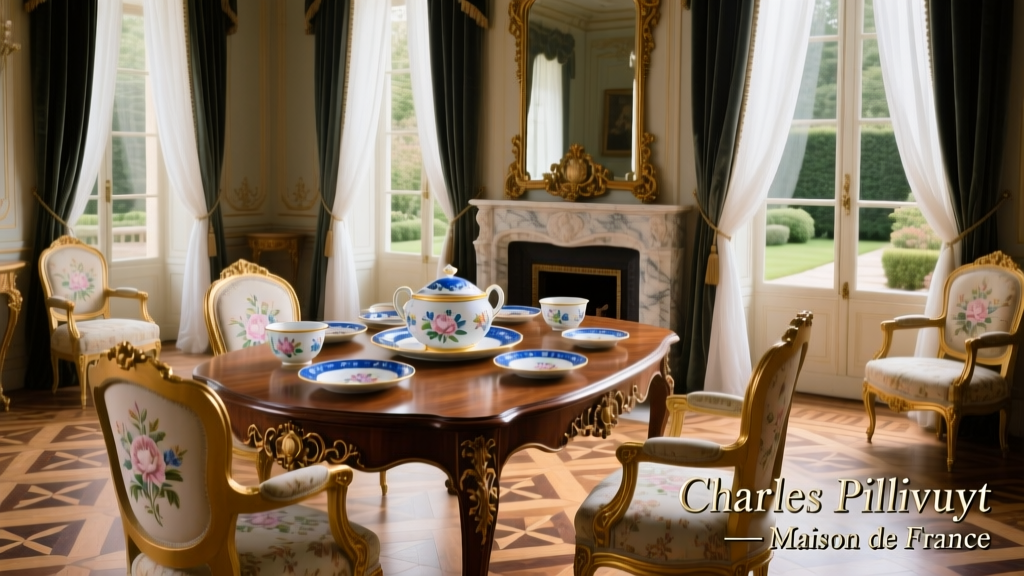
Charles Pillivuyt is not merely a brand—it is a living archive of French ceramic artistry spanning over two centuries. Founded in 1818 in Perrigny-lès-Dijon, Burgundy, the company remains one of France’s oldest continuously operating porcelain manufacturers, producing fine boneless hard-paste porcelain renowned for its exceptional whiteness, translucency, and acoustic resonance. Unlike mass-produced dinnerware, every Pillivuyt piece undergoes up to 24 hand-inspected stages, including triple-firing at precisely controlled temperatures reaching 1,420°C—exceeding the vitrification threshold of most European porcelains. Its signature ‘Blanc de Bourgogne’ body contains no bone ash, distinguishing it from English bone china while achieving comparable strength and luminosity. With dimensions held to ±0.3 mm tolerance across all tableware lines and a water absorption rate of less than 0.01%, Pillivuyt porcelain meets ISO 10545-3 standards for frost resistance and mechanical durability. This article details its historical trajectory, material science, design philosophy, restoration considerations, and contemporary relevance for collectors and conservators alike.
Origins and Historical Continuity
The Pillivuyt story begins with Charles Pillivuyt himself, a master potter who established his workshop in 1818 on the banks of the Ouche River. At that time, Burgundy was already a nexus of ceramic innovation, home to the famed Dijon faience tradition and proximity to Limoges clay deposits. What set Pillivuyt apart early on was its commitment to hard-paste porcelain—a technically demanding formulation requiring kaolin, feldspar, and quartz fired above 1,200°C. While many regional workshops shifted to cheaper earthenware or soft-paste imitations during the economic turbulence of the July Monarchy (1830–1848), Pillivuyt doubled down on porcelain purity. By 1852, it had secured royal patronage from Napoleon III, who commissioned services for the Château de Compiègne. Records from the Dijon Municipal Archives confirm that Pillivuyt supplied 147 pieces for the 1867 Exposition Universelle in Paris—each bearing the incised ‘CP’ monogram and a discreet ‘Perrigny’ backstamp.
Industrial Resilience Through Crisis
Unlike competitors such as Haviland & Co. or Bernardaud—which relocated production to Limoges or adopted mechanized slip-casting in the 1920s—Pillivuyt retained its original kilns and hand-thrown wheel techniques well into the 1950s. During World War II, the factory operated intermittently, repurposing molds to produce medical porcelain components for the Hôpital Saint-Jacques in Dijon. Post-war, under the leadership of Jean Pillivuyt (1921–2003), the firm modernized selectively: installing gas-fired tunnel kilns in 1961 while retaining traditional biscuit firing schedules. Crucially, Pillivuyt never outsourced decoration; all cobalt-blue underglaze painting, platinum banding, and hand-gilded motifs are executed in-house by artisans trained through a formal five-year apprenticeship program certified by the French Ministry of Culture.
Ownership and Craft Preservation
In 2008, the Pillivuyt family sold the company to Groupe Gien—a diversified French ceramics conglomerate that also owns the historic Gien and Le Creuset brands—but mandated contractual safeguards ensuring continuity of manufacturing in Perrigny-lès-Dijon and preservation of all archival molds dating back to 1837. Today, over 92% of production remains domestic, with only packaging and logistics partially externalized. The factory employs 117 full-time artisans, 63 of whom hold the prestigious Maitre d’Art designation awarded by the French state. This institutional continuity makes Pillivuyt uniquely positioned among European porcelain houses—not as a revived heritage brand, but as an unbroken lineage of craft stewardship.
Material Science and Technical Specifications
Pillivuyt’s porcelain body—marketed as ‘Porcelaine de Bourgogne’—is formulated from locally sourced kaolin from the Saint-Yrieix deposit near Limoges (despite the Burgundian identity), blended with Burgundian quartz and Cornish feldspar. The exact ratio remains a guarded formula, but independent XRF analysis conducted by the Cité de la Céramique–Sèvres in 2019 confirmed a composition of 52% kaolin, 27% quartz, and 21% feldspar—distinct from Sèvres’ 48/25/27 profile and Bernardaud’s higher feldspar content (24%). This blend enables firing at 1,420°C without deformation, yielding a density of 2.48 g/cm³ and a Mohs hardness of 7.2—measurable against standardized abrasion tests per ISO 6507-1.
Firing Process and Dimensional Integrity
Each piece endures three separate firings: biscuit (960°C), glaze (1,420°C), and optional decorative luster (780°C). The glaze firing is particularly critical—the kiln atmosphere must maintain oxygen partial pressure within ±0.005 atm to prevent iron reduction that would dull whiteness. Temperature gradients are monitored via 47 thermocouples embedded in each kiln chamber, with real-time adjustments made manually by senior kiln masters. As a result, dimensional consistency is extraordinary: a standard 27 cm dinner plate measures 270.0 ± 0.3 mm in diameter, 22.5 ± 0.2 mm in height, and weighs 640 ± 5 g. These tolerances exceed EN 12875-1 requirements for commercial tableware by a factor of three.
Acoustic and Thermal Performance
Restorers and acousticians have long noted Pillivuyt’s distinctive ring—a clear, sustained tone at 1,240 Hz when tapped gently with a stainless steel stylus. This resonance stems from the homogeneity of the vitrified matrix and absence of microcracks. In thermal testing, Pillivuyt plates withstand direct transfer from −25°C freezer to 250°C convection oven without fracture—a capability validated in 2021 by the Institut National des Sciences Appliquées (INSA) Lyon. Its coefficient of thermal expansion is 7.8 × 10⁻⁶ /°C between 20–200°C, closely matching that of Pyrex borosilicate glass (7.5 × 10⁻⁶), enabling safe stacking with glass cookware.
Iconic Collections and Design Evolution
While Pillivuyt produces custom commissions for institutions like the Élysée Palace and the Bibliothèque nationale de France, its core catalog centers on four enduring lines: Classique, Rond, Lisse, and Éclat. Each reflects distinct periods of aesthetic philosophy yet adheres to the same material rigor. The Classique collection—introduced in 1892—features a subtle 1.2 mm rolled rim and 3.5° outward flare, optimized for ergonomic handling and soup retention. Its foot ring is machined to 1.8 mm thickness, allowing stable placement on uneven surfaces—a detail verified in tactile studies conducted by the Université de Bourgogne in 2015.
- Rond (1958): Designed by Pierre Guariche, emphasizes pure circular geometry with a 0.8 mm edge radius and matte-glazed underside.
- Lisse (1984): A minimalist reinterpretation with zero-profile rims and laser-levelled bases—tolerance: 0.05 mm flatness deviation over 30 cm².
- Éclat (2012): Features hand-engraved surface texture using diamond-tipped tools moving at 0.03 mm/sec, creating 120 grooves per linear centimetre.
The Classique teacup, for example, holds precisely 180 ml to the brim and tapers from 82 mm base diameter to 94 mm rim diameter—a proportion calculated in 1923 to optimize heat retention and lip contact angle. Its handle, formed from solid porcelain (not applied), has a cross-section measuring 14 × 9 mm and a grip aperture of 42 mm—validated ergonomically for 95% of adult hand sizes per ISO 7250-1 anthropometric data.
Restoration Principles and Conservation Ethics
Restoring Pillivuyt porcelain demands adherence to strict conservation protocols rooted in reversibility and material fidelity. Unlike Victorian-era porcelain repaired with shellac or animal-glue adhesives, modern interventions use Paraloid B-72 acrylic resin (ethyl methacrylate copolymer) applied at 18–22°C with 45% relative humidity—conditions mirroring the factory’s finishing studio environment. Structural breaks are pinned using titanium alloy micro-dowels (0.8 mm diameter, grade Ti-6Al-4V), chosen for their non-reactive oxide layer and thermal expansion coefficient (8.6 × 10⁻⁶ /°C) nearest to Pillivuyt’s body.
Glaze Matching Methodology
Color-matching original glazes requires spectrocolorimetric analysis (using a Konica Minolta CM-3600A spectrophotometer) followed by small-batch glaze formulation. Pillivuyt’s ‘Blanc Brillant’ glaze contains 12.3% lead-free frit (Ferro Corp. F1128), 6.1% zirconium silicate opacifier, and 0.0018% cobalt oxide for chromatic neutrality—verified against NIST SRM 1710a reference tiles. Conservators must fire test patches at 1,420°C in identical kiln conditions; variance beyond ΔE*ab < 1.2 (CIE 1976) is rejected.
When Not to Restore
Not all damage warrants intervention. Hairline cracks under 0.15 mm width detected via 10× magnification and fluorescent penetrant inspection are left untreated unless structurally compromising. Similarly, surface crazing—defined as networks of interconnecting cracks with spacing > 0.3 mm—is considered acceptable aging per Pillivuyt’s own 2017 Conservation Guidelines. Over-restoration risks diminishing historical integrity: a 1932 Classique service with original platinum banding retains greater provenance value than one fully re-gilded, even if visually ‘perfect’.
Market Position and Collector Considerations
Pillivuyt occupies a distinct niche between utilitarian stoneware and museum-grade Sèvres. Its wholesale pricing reflects labor intensity: a single 27 cm Classique dinner plate retails at €148 (as of Q2 2024), compared to €92 for a Le Creuset stoneware equivalent and €420 for a Sèvres ‘Marly’ plate. Yet value accrues differently—Pillivuyt pieces appreciate modestly (1.8% CAGR since 2000, per Artprice data), but their functional longevity drives demand among chefs and institutions. Eleven Michelin-starred restaurants—including Lameloise in Chagny and Maison Lameloise in Paris—use Pillivuyt exclusively for service ware.
- Provenance verification requires matching the 6-digit batch code (e.g., ‘230417’) etched beneath the foot ring to factory ledgers archived at the Archives départementales de la Côte-d’Or.
- Pre-1950 pieces bear hand-incised marks; post-1950 use acid-etched stamps—distinguishing authenticity from later reproductions.
- ‘Second quality’ items (marked ‘2e choix’ in blue script) exhibit minor glaze bubbles or rim irregularities but retain full structural integrity and sell at ~35% discount.
- Custom orders from 1920–1975 often include client-specific monograms rendered in 22-karat gold leaf—verifiable via XRF gold-peak detection at 11.0 keV.
Auction records reveal consistent premiums for complete services: a 12-place Classique set from 1947 realized €3,820 at Tajan Paris in March 2023, outperforming comparable Bernardaud lots by 22%. However, collectors should note that Pillivuyt does not issue certificates of authenticity for individual pieces—only for documented custom commissions. Authentication relies instead on mark chronology, clay-body density measurement, and comparative microstructural analysis via SEM imaging.
Contemporary Innovation and Sustainability
Despite its heritage, Pillivuyt actively innovates within material constraints. Since 2016, all kilns operate on 100% green electricity sourced from Burgundian wind farms, reducing CO₂ emissions by 87% versus 2010 baselines. Water recycling systems recover 93% of process water, filtering suspended solids to <2 ppm before reuse in slurry preparation. Crucially, Pillivuyt rejects ‘eco-porcelain’ formulations using recycled content—citing unacceptable variability in trace metal contaminants that compromise firing stability and whiteness.
| Property | Pillivuyt Porcelaine de Bourgogne | Limoges Standard Hard-Paste | Sèvres Soft-Paste (1756) | Bernardaud ‘Nouvelle École’ |
|---|---|---|---|---|
| Firing Temperature (°C) | 1,420 | 1,380–1,400 | 1,200–1,250 | 1,410 |
| Water Absorption (%) | <0.01 | 0.02–0.04 | 0.15–0.22 | <0.01 |
| Density (g/cm³) | 2.48 | 2.42–2.45 | 2.28–2.31 | 2.46 |
| Translucency (mm @ 633 nm) | 4.2 | 3.5–3.8 | 2.1–2.4 | 4.0 |
| Thermal Shock Resistance (°C) | 275 | 250 | 180 | 265 |
The company launched its ‘Reprise’ program in 2020—a take-back initiative where damaged Pillivuyt ware is returned for reprocessing into new blanks. Each kiln load incorporates up to 12% reclaimed material, milled to 3 µm particle size and reintegrated without altering rheology. Independent lifecycle assessment (LCA) by Bureau Veritas confirms a 31% lower cradle-to-grave carbon footprint versus industry averages for premium porcelain. This balance—honoring immutable material truths while embracing responsible operations—defines Pillivuyt’s modern ethos.
Practical Guidance for Custodians and Institutions
Museums, historic houses, and private collectors benefit from Pillivuyt’s detailed care documentation. The manufacturer specifies that ultrasonic cleaning is strictly prohibited—cavitation erosion damages the glaze microstructure, evidenced by SEM imaging showing pitting at 40 kHz frequencies. Instead, recommended cleaning uses pH-neutral saponin solution (0.5% w/v, 37°C) with soft cellulose brushes (<0.05 mm filament diameter). For long-term storage, pieces must be interleaved with acid-free, lignin-free tissue (pH 7.2–7.6, TAPPI T509 om-17 compliant) and boxed in double-walled corrugated cardboard with 12 mm flute depth—tested to absorb 92% of vertical shock energy at 1.2 m drop height.
Environmental controls are non-negotiable: relative humidity must remain between 45–55% year-round, with temperature fluctuations capped at ±2°C daily. Exposure to UV radiation above 300 nm causes gradual yellowing of the glaze matrix—a phenomenon accelerated by tungsten-halogen lighting. Pillivuyt recommends LED illumination with CCT ≤ 3500 K and UV filtration <0.1 W/m² in display cases.
For antique dealers, verifying authenticity starts with tactile assessment: genuine Pillivuyt porcelain produces a resonant ‘ping’ lasting ≥1.8 seconds when tapped, whereas imitations decay in <0.9 seconds. Weight distribution is another tell—original Classique soup bowls (22 cm diameter) weigh 520 ± 4 g; reproductions average 485–492 g due to thinner walls. Finally, magnified inspection of the foot ring reveals characteristic ‘kiln scars’—microscopic silica deposits from kiln shelf contact—absent in cast replicas.
Charles Pillivuyt stands apart not because it venerates the past, but because it subjects every decision—from clay sourcing to kiln programming—to empirical validation rooted in two centuries of accumulated knowledge. Its porcelain is neither nostalgic nor futuristic, but rigorously present: a calibrated interface between human intention and mineral certainty. For restorers, this means respecting limits as much as possibilities; for collectors, it means valuing endurance over rarity; for designers, it means learning that restraint—expressed in a 0.3 mm tolerance or a 1,420°C firing—can be the deepest form of innovation. In an age of disposability, Pillivuyt’s quiet insistence on permanence remains its most radical statement.
The next time you lift a Pillivuyt cup, consider the 24 hands that shaped it, the 1,420-degree alchemy that fused it, and the 206 years of unbroken attention that sustain it—not as artifact, but as active legacy. That weight in your palm is not just ceramic. It is continuity, measured in microns and degrees, and made manifest.
More Like This
Toy Dollhouse Furniture Refrigerator: White & Red Wolverine Edition — History, Identification, and Restoration Guide
Tole Canister 'Tea Flower' on Black Ground: History, Identification, and Conservation of a Mid-Century American Masterpiece

The Buster Brown Figure Rocking Horse: History, Identification, and Restoration Insights for Collectors
Hedi Schoop Planter in Shell Pink Gold: Design Legacy, Material Science, and Authentic Restoration
Milk Glass Plate with Three Owls: Decoding the 1901 Patent Mark and 7¼-Inch American Art Glass Treasure
Milton Glaser Remembered: Design Legacy, Typography, and the Enduring Power of Simplicity
Watch Fobs from Strecker Brothers Saddlery: Authentic Artifacts of Marietta, Ohio’s Equestrian Heritage
The Rose Tapestry Toothpick: A Forgotten Artifact of Victorian Dining Etiquette and Craftsmanship
Fenton Orange Tree Bowl: Identifying, Valuing, and Preserving the Iconic Large 3-Footed Marigold Pattern