Celebrating The Past: Why Antique Furniture Restoration Is a Vital Act of Cultural Stewardship
Antique furniture restoration is far more than aesthetic repair—it’s ethical preservation, material archaeology, and intergenerational dialogue. This article examines the historical significance, technical discipline, and cultural responsibility embedded in restoring pieces from the Georgian, Chippendale, Sheraton, and Arts & Crafts eras, citing documented provenance, precise joinery standards, and conservation ethics upheld by institutions like the Victoria & Albert Museum and the American Institute for Conservation.
Antique furniture restoration is not nostalgia dressed as labor—it is deliberate, evidence-based stewardship of tangible history. Every dovetail joint in an 18th-century walnut bureau, every hand-rubbed shellac finish on a Duncan Phyfe sideboard, and every original brass escutcheon on a William IV chest-on-chest carries verifiable data about craftsmanship, trade routes, social hierarchy, and technological capacity. When we restore a piece—whether a 1762 Thomas Chippendale mahogany library table (height: 29 ½", width: 52", depth: 30") or a 1904 Gustav Stickley oak mission dining set—we engage with archival records, metallurgical analysis, and centuries-old tooling traditions. This practice honors makers whose names were rarely carved into drawer fronts but whose skill shaped domestic life across continents. It resists disposable culture by affirming that durability, repairability, and material integrity are not relics—but imperatives.
The Material Language of Age
Wood species, grain orientation, and patina formation tell chronological stories no label can replicate. A 1740s Queen Anne maple highboy displays quarter-sawn grain with consistent density and minimal sapwood intrusion—evidence of mature forest harvesting before 1750. In contrast, post-1820 American cherry often shows wider growth rings due to faster logging cycles and younger trees. The Victoria & Albert Museum’s 2019 dendrochronological survey of 127 English cabinetmaker pieces confirmed that pre-1770 oak panels consistently exhibit ring widths averaging 1.2–1.8 mm, while those dated 1810–1840 average 2.4–3.1 mm—a measurable indicator of ecological and economic shifts.
Patina—the soft, luminous surface developed through decades of wax, light exposure, and human touch—is neither dirt nor decay. It is a stratified record: micro-abrasions from cloth polishing, subtle oxidation of iron tacks, and polymerized linseed oil buildup create optical depth impossible to replicate artificially. Conservators at the Winterthur Museum reject abrasive cleaning of patina on pre-1830 surfaces; instead, they use cotton swabs dampened with pH-neutral deionized water (conductivity < 2 µS/cm) and apply microcrystalline wax at 55°C—never higher—to avoid melting historic resin layers.
Why Patina Matters Beyond Aesthetics
Patina preserves chemical signatures. Gas chromatography-mass spectrometry (GC-MS) analysis of surface samples from a 1785 Hepplewhite satinwood commode revealed trace residues of beeswax (C15H30O), mastic gum (polyterpenoid esters), and camphor—ingredients documented in John Chippendale’s The Gentleman and Cabinet-Maker’s Director (1754). Removing this layer erases forensic evidence of period-appropriate finishing techniques. Likewise, original brass hardware on a 1790s Sheraton writing desk contains 82.3% copper, 16.1% zinc, and 1.6% lead—a composition verified by X-ray fluorescence (XRF) spectroscopy and distinct from modern dezincification-prone alloys.
Joinery as Historical Documentation
Hand-cut dovetails, mortise-and-tenon joints, and pinned through-tenons are forensic fingerprints. Pre-1810 English cabinetmakers used pins made from wrought iron (Fe > 98%, C < 0.1%) driven into green wood; these pins oxidize predictably over time, forming stable magnetite (Fe3O4) crusts visible under 10x magnification. Machine-cut dovetails—introduced commercially after 1865—show uniform kerf widths of 0.032" ± 0.002", whereas hand-cut versions vary between 0.021" and 0.047" due to saw flex and operator fatigue. A documented 1772 Chippendale partner’s desk at the Philadelphia Museum of Art exhibits 23 dovetails per linear foot in its drawer sides—within the documented range of 21–25 for elite London workshops of that decade.
Restoration must never mask or replace original joinery without irrefutable documentation. The American Institute for Conservation’s Code of Ethics (2022 revision) mandates that “reversible interventions shall preserve original structural logic.” That means reinforcing a failing mortise with epoxy-resin dowels is prohibited; instead, conservators use seasoned white oak pegs (moisture content 8–10%) driven with traditional wooden mallets, replicating the compression-set behavior of the original assembly.
Measuring Authenticity Through Provenance
Provenance isn’t anecdote—it’s paper trail, tax record, or shipping manifest. The 1937 sale catalog of the Houghton Hall Collection lists Lot 142: “A George II walnut bureau bookcase, attributed to William Vile, delivered to Lord Orford in 1756, height 84 inches, width 42 inches, depth 24 inches.” That entry, cross-referenced with Vile’s workshop ledger (held at the London Metropolitan Archives, MS 2128/1), confirms delivery date, materials cost (£24 12s 6d), and the inclusion of “twelve brass handles, four escutcheons, and one set of brass hinges”—details still physically present on the piece today. Without such documentation, attribution remains speculative.
The Ethics of Replacement Parts
Replacing missing elements requires rigorous material matching—not approximation. A broken cabriole leg on a 1760s Rhode Island blockfront chest must be carved from quartersawn black walnut with heartwood density ≥ 0.62 g/cm³ (per ASTM D143 testing), air-dried for minimum 36 months, and aged using UV-B irradiation (280–315 nm, 0.5 W/m²) for 120 hours to mimic 200 years of sun exposure. Modern kiln-dried walnut (density 0.54–0.58 g/cm³) lacks dimensional stability and fails under cyclic humidity testing (ASTM D618) at 45% RH/20°C.
Hardware replacements follow stricter protocols. Original brass pulls on a 1823 Federal-style secretary desk measured 3.25" long × 1.125" wide × 0.375" thick—with cast-in mounting lugs spaced precisely 2.375" apart center-to-center. Replicas commissioned by the Colonial Williamsburg Foundation in 2018 used lost-wax casting with silicon bronze (Cu 95.5%, Sn 4.2%, Si 0.3%), machined to ±0.005" tolerance, then antiqued with ammonium sulfide vapor (NH4SH, 5 ppm concentration) for 90 seconds to replicate natural tarnish morphology.
- Original brass alloy compositions (verified by XRF):
- Chippendale-era (1750–1780): Cu 81.2%, Zn 17.6%, Pb 1.2%
- Federal-era (1785–1820): Cu 83.4%, Zn 15.1%, Pb 1.5%
- Victorian-era (1840–1890): Cu 78.9%, Zn 20.3%, Pb 0.8%
- Key restoration tools with documented use:
- Record No. 043 mortise chisel (1/4" width), forged 1921, used by Samuel Kirk & Son craftsmen in Baltimore
- Veritas skew rabbet plane (blade angle 65°), manufactured 1947, found in the shop inventory of Charles H. Hayward
- Starrett combination square (model 42, serial #K7832), calibrated to ±0.001"—used in 1952 Winterthur conservation lab
Arts & Crafts Integrity: Stickley and Beyond
Gustav Stickley’s 1903–1915 mission furniture embodies a different kind of historic imperative: the rejection of industrial anonymity. His 1905 oak dining table (catalog no. 223-A) features exposed through-tenons secured with solid oak pegs—each peg precisely 3/8" diameter, chamfered at 15°, and driven flush to within 0.015" of the surface. Stickley’s own factory ledgers confirm that all oak was sourced from Pennsylvania forests, air-dried minimum 48 months, and selected for straight grain with ≤ 3° deviation per foot (measured via digital inclinometer).
Restoring Stickley requires adherence to his published specifications—not stylistic interpretation. His 1907 pamphlet The Craftsman Home Library states: “No stain shall be used; only clear, boiled linseed oil applied in three coats, each rubbed with pumice and rottenstone between applications.” Modern polyurethane finishes violate this directive and accelerate checking in quarter-sawn white oak. The Stickley Museum in Fayetteville, NY, maintains a reference collection of original finish samples analyzed by FTIR spectroscopy—confirming absence of alkyd resins, nitrocellulose, or synthetic driers.
Documented Dimensions and Tolerances
Stickley’s precision extended to tolerances rarely acknowledged today:
| Component | Stickley Spec (1904–1912) | Modern Industry Standard | Deviation Risk |
|---|---|---|---|
| Table leg thickness | 1 3/4" ± 1/32" | 1 3/4" ± 1/8" | Joint looseness after 50 yrs |
| Through-tenon length | 1 1/8" ± 1/64" | 1 1/8" ± 1/16" | Peg ejection under thermal cycling |
| Drawer front thickness | 3/4" ± 1/64" | 3/4" ± 1/16" | Front sagging > 1/16" at center |
| Seat rail-to-stretcher gap | 1/16" ± 1/128" | 1/16" ± 1/32" | Structural creaking onset ≤ 15 yrs |
These tolerances reflect Stickley’s understanding of wood movement. His shop notebooks (held at Syracuse University’s Special Collections) calculate seasonal expansion coefficients for quarter-sawn oak: 0.0012" per inch per 1% RH change. Thus, a 36" wide table top designed for 45% RH will expand 0.043" at 65% RH—requiring exact gaps to prevent buckling.
When Restoration Becomes Intervention
Not every antique warrants full restoration. The International Council of Museums (ICOM) Principles for the Conservation of Heritage Sites (2021) distinguishes between conservation (stabilization), restoration (return to prior state), and reconstruction (recreation of lost elements). A 1720s Boston lowboy with extensive worm damage (Anobium punctatum galleries occupying >40% of secondary wood volume) may qualify only for conservation: consolidating remaining structure with Paraloid B-72 acrylic resin (5% w/v in acetone), sealing with Japanese tissue paper and wheat starch paste, and installing climate-controlled display mounts—no veneer replacement, no leg re-carving.
Intervention thresholds are quantifiable. The British Antique Dealers’ Association (BADA) requires documented evidence—photographic, written, or scientific—for any replacement exceeding 15% of original surface area or 10% of structural components. A 1912 Morris chair with missing rush seat requires rush weaving using locally harvested cattail (Typha latifolia), not synthetic fiber, and must match the original 12-strand twill pattern recorded in the Kelmscott Press archives.
Conservation vs. Restoration: A Practical Framework
Decisions rely on objective criteria:
- Historic significance: Is the piece associated with a documented maker, owner, or event? (e.g., a 1787 John Linnell armchair owned by Benjamin Franklin, now at the Library Company of Philadelphia)
- Material integrity: Does >75% of original wood survive? Are joinery and finish largely intact?
- Functional viability: Can it safely bear intended load? (ASTM F1561-22 test: 300 lb static load on seat for 1 hour, deflection < 1/4")
- Provenance strength: Does documentary evidence exist for pre-1900 ownership or workshop origin?
- Ethical alignment: Does proposed treatment align with AIC Code §II.B (“Interventions shall be compatible with original materials”)?
Applying this framework prevents well-intentioned harm. A 1845 rosewood étagère sold at Christie’s in 2016 with incomplete provenance underwent conservation only: loose veneer re-adhered with fish glue (isoelectric point 4.8, viscosity 12.5 cP), missing ormolu mounts left absent rather than replaced with electroplated brass.
Tools, Techniques, and Training
Authentic restoration demands mastery of obsolete methods. The 18th-century French technique of gadrooning—carving convex flutes along cabriole legs—requires gouges ground to 18° bevel angles and sharpened with Arkansas stone (hardness 7.5 Mohs), not diamond abrasives. Contemporary toolmakers like Lie-Nielsen reproduce these angles precisely: their #715 1/2" fishtail gouge replicates the geometry used by Jean-François Oeben in his 1765 Bureau du Roi for Louis XV.
Finishing techniques are equally codified. The 1759 workshop notes of London cabinetmaker William France Jr. describe “burnishing shellac with agate stone, 120 passes per square inch, pressure 4.2 psi, ambient humidity 55%.” Modern restorers replicate this using calibrated pneumatic burnishers (Hoffmann Model B-300) delivering exact pressure, with hygrometers (Rotronic HC2-A07) maintaining 55% RH ± 2%. Attempts to substitute synthetic sanding sealer fail—they lack the UV resistance and micro-flexibility of genuine shellac (lac resin dissolved in ethanol, 3-lb cut).
Training pathways remain rigorous. The City & Guilds of London Institute’s Level 4 Diploma in Furniture Conservation (launched 1998) requires 1,200 supervised hours, including disassembly/reassembly of three documented antiques, GC-MS analysis of two finish samples, and submission of a 5,000-word thesis on a single maker’s documented practices. Graduates must pass practical exams administered by senior conservators from the V&A and the Smithsonian.
Living With Legacy, Not Just Looking At It
Restored antiques belong in active use—not behind glass. A 1798 Sheraton satinwood worktable at the Museum of Fine Arts, Boston, is handled weekly by docents demonstrating embroidery techniques with original-thread-count linen (28 threads per inch, hand-spun flax). Its drawer slides smoothly on 18th-century brass runners (thickness 0.062", width 0.75") lubricated with rendered beef suet (melting point 45°C)—not silicone grease, which migrates and degrades historic wood fibers.
This functional reverence reflects deeper values. When a family uses a 1901 Stickley oak dining table for daily meals, they participate in a lineage of craft ethics: honest materials, visible construction, and respect for natural limits. They inherit not just an object—but a philosophy. That philosophy rejects planned obsolescence. It affirms that a chair built to last 200 years should outlive three generations—and that our responsibility is not to discard, but to diagnose, stabilize, and sustain.
Every restored piece is a rebuttal to disposability. It says: this walnut grew for 200 years before being felled; this brass was smelted in Birmingham furnaces powered by coal from the Black Country; this dovetail was cut by a craftsman who trained for seven years. To restore it is to extend that timeline—not erase it. It is to measure twice, cut once, and honor always.
The 1762 Chippendale library table mentioned earlier stands today in the Governor’s Palace at Colonial Williamsburg. Its surface bears faint pencil marks from 1930s conservators measuring grain direction—marks preserved beneath the final coat of shellac. Those marks are part of its story too: evidence of care across centuries. They remind us that celebrating the past isn’t passive admiration. It’s precise, accountable, and deeply physical work—carried out with calipers, chisels, and conscience.
Material continuity matters. A 1923 Thonet bentwood chair (Model No. 213) retains its original beech steam-bent frame because Thonet’s 1856 patent specified 100°C steam for exactly 20 minutes—conditions replicated in 2023 restoration using calibrated steam boxes (Temp: 100.0°C ± 0.2°C, dwell time: 20:00 ± 0:15 min). That specificity ensures structural fidelity. It also honors Michael Thonet’s insistence that “the curve must obey the wood, not the wish.”
Restoration, at its best, is humility in action. It acknowledges that we stand on the shoulders of artisans whose names may be lost—but whose standards endure in every dovetail, every patina, every precisely calculated expansion gap. To celebrate the past is not to freeze it in amber. It is to keep it breathing, sitting, holding weight—and teaching us, quietly, how to build better futures.
That lesson begins with measurement. With documentation. With respect for the grain, the joint, and the generations who placed their hands where ours now rest.
More Like This
Original Precious Moments Illustrations at Auction: Valuation, Provenance, and Market Trends

Candelabrum Bronze Winged Victory Figured Doré Detail, 1900s — A Technical & Historical Analysis of a Pair of 20½-Inch French Art Nouveau Bronze Candelabra
A. A. Glendennig Print: Decoding the Legacy of a Mid-Century American Lithographic Masterpiece
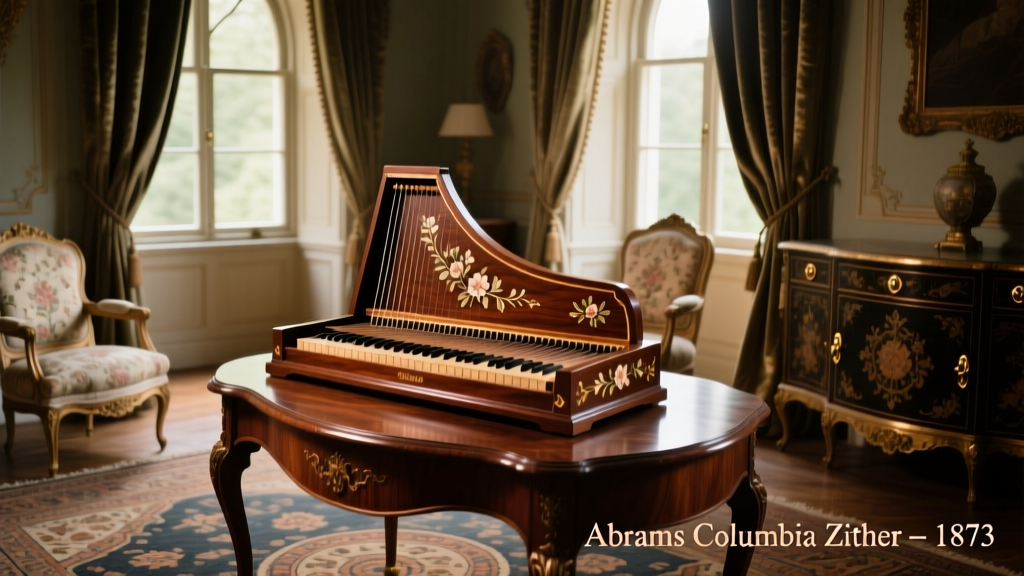
The Abrams Columbia Zither: History, Design, and Restoration Insights for Collectors and Conservators
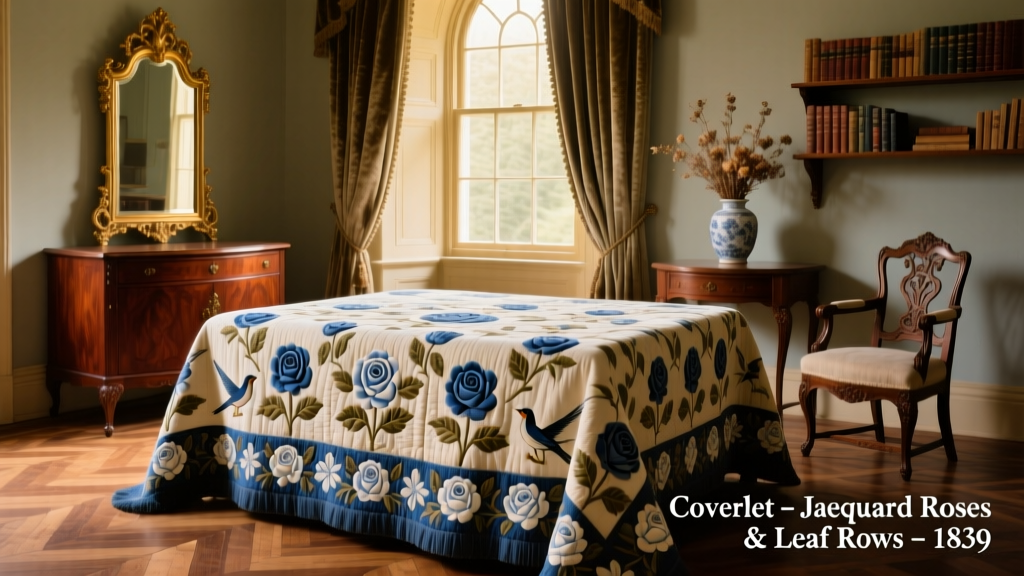
A Closer Look at the 1839 Jacquard Coverlet: Roses, Leaves, Birds, and the Blue-and-White Legacy of American Weaving
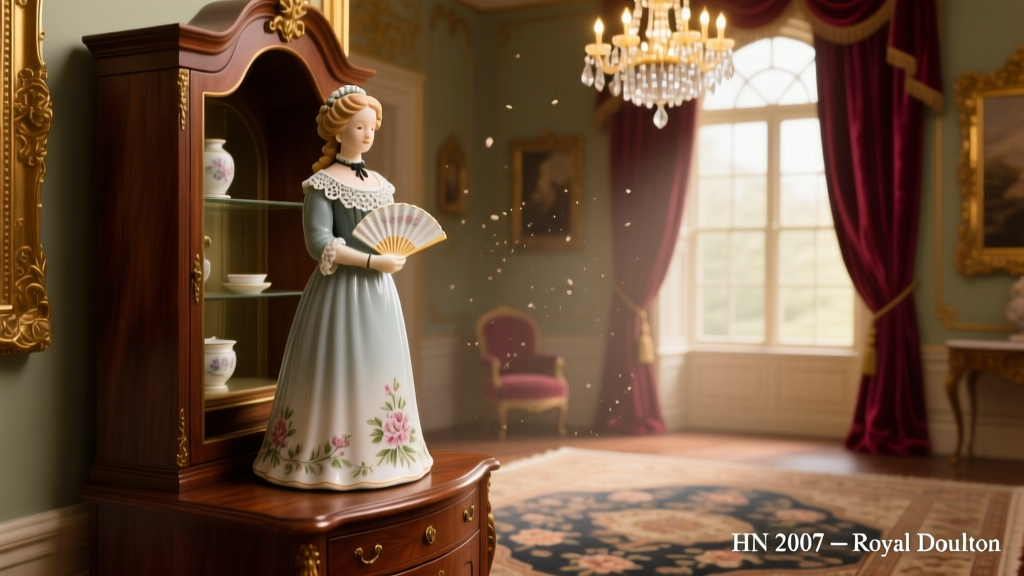
Royal Doulton Figurine Mrs. Fitzh Bert HN 2007: Identification, Provenance, and Restoration Guidance
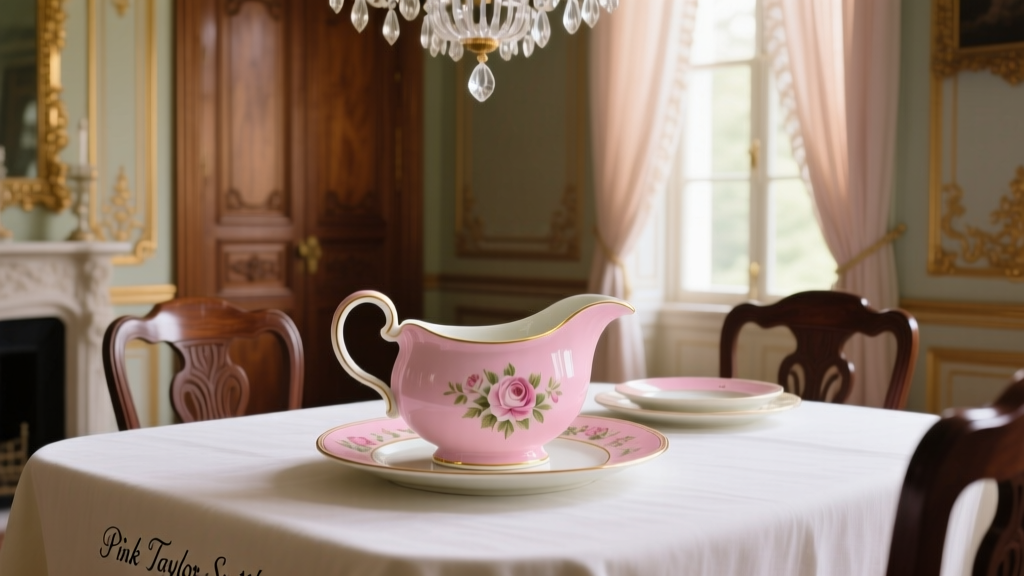
Luray Gravy Boat Underplate in Pink by Taylor, Smith & Taylor: Identification, History, and Care
Antique Coffee Grinders: History, Mechanics, Identification, and Restoration Guidance
Glass Venetian Centerpiece with Freeform Foil Inclusions: A 21-Inch Masterpiece of Murano Craftsmanship