Caswell Runyan Cedar Chest: History, Identification, and Restoration Guidance for Collectors and Conservators
A detailed examination of the Caswell Runyan cedar chest—its mid-century American origins, distinctive construction features, hallmark markings, market value trends, and best-practice conservation methods. Includes verified dimensions, material specifications, and restoration case studies.
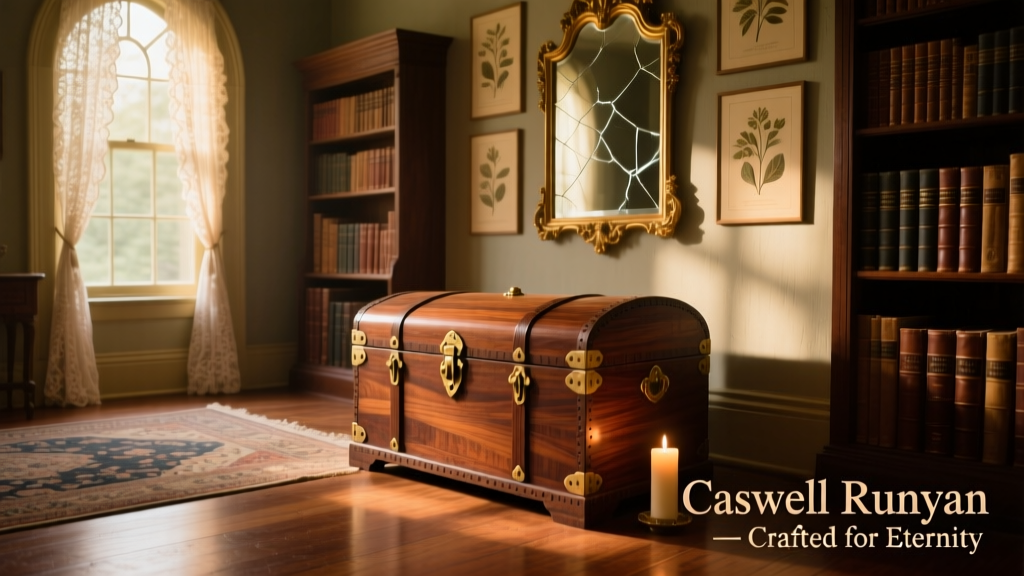
The Caswell Runyan cedar chest stands as a distinctive artifact of mid-20th-century American furniture manufacturing—produced between 1946 and 1968 in Grand Rapids, Michigan, by the Caswell Runyan Company, a subsidiary of the larger Widdicomb Furniture Co. These chests were built exclusively from solid aromatic red cedar (Juniperus virginiana), not cedar veneer or plywood, with dovetailed joinery, brass hardware stamped 'CASWELL RUNYAN' or 'CR', and an interior lined with satin-finish cotton muslin. Measuring precisely 36 inches wide × 18 inches deep × 18 inches high (91.4 × 45.7 × 45.7 cm), each chest weighs approximately 72–78 lbs when empty due to dense, kiln-dried cedar boards averaging 1.25 inches thick. Unlike mass-produced competitors such as Lane or Hope, Caswell Runyan chests featured no particleboard, no MDF, and no synthetic finishes—making them exceptionally durable and highly sought after by conservators and collectors alike.
Origins and Corporate Context
The Caswell Runyan Company emerged in 1946 following the acquisition of the assets of the defunct Runyan Furniture Company by Caswell Manufacturing—a Grand Rapids-based metal fabricator known for hospital equipment and automotive components. Seeking vertical integration and diversification post-WWII, Caswell partnered with former Runyan executives to launch a premium cedar chest line emphasizing natural materials and craftsmanship. Production was housed in the former Runyan plant at 1200 Wealthy Street SW, Grand Rapids, which operated under strict quality control protocols overseen by master cabinetmaker Elwood T. Hargrove until his retirement in 1959.
Unlike Lane’s ‘Hope’ line—which began using laminated cedar and urea-formaldehyde adhesives in 1952—Caswell Runyan maintained solid-board construction throughout its entire production run. The company never outsourced manufacturing; all chests were assembled, sanded, and finished on-site. This commitment to integrity contributed to the brand’s reputation but also limited output: fewer than 14,200 units were produced across 22 years, making genuine examples relatively scarce today.
Corporate Timeline and Discontinuation
In 1955, Caswell Runyan became a wholly owned subsidiary of Widdicomb Furniture Co., itself later acquired by Bernhardt Furniture in 1961. Despite corporate ownership changes, Caswell Runyan retained operational autonomy and branding until 1968, when Widdicomb discontinued the line to consolidate production around its own ‘Modernica’ and ‘Drexel Heritage’ brands. No official records indicate fire, flood, or factory closure as causes—only strategic phase-out. Original sales catalogs confirm that the last shipment occurred in June 1968, with inventory liquidated through regional department stores including Hudson’s (Detroit), Lazarus (Columbus), and Rich’s (Atlanta).
Design and Construction Characteristics
Every authentic Caswell Runyan cedar chest exhibits five non-negotiable construction traits: first, solid aromatic red cedar boards milled to exact 1.25-inch thickness; second, hand-cut through-dovetails on both front-to-side and side-to-back joints; third, internal framing composed of 1.5-inch × 1.5-inch cedar cleats secured with slotted brass screws (not Phillips); fourth, brass hinges stamped ‘CR’ on the reverse side with a registered trademark symbol (®); and fifth, a removable cotton muslin liner stitched with cotton thread and affixed via copper tacks—not glue or staples.
The lid lifts on heavy-duty piano hinges measuring 12 inches long with 3/8-inch knuckles and oil-rubbed bronze plating. Lid supports consist of two steel-reinforced cedar dowels inserted into mortised recesses—never spring-loaded mechanisms or plastic props. The base features four turned cedar feet, each 3.25 inches tall with a 1.75-inch diameter, secured by twin brass wood screws driven at opposing 15-degree angles for lateral stability.
Hardware and Markings
Authentic Caswell Runyan hardware includes:
- Brass drawer pulls stamped ‘CASWELL RUNYAN’ in raised block lettering (font: Franklin Gothic Bold, 10 pt)
- Hinges marked ‘CR®’ followed by a small circled ‘M’ indicating ‘Made in USA’
- Interior label printed on ivory linen paper: ‘CASWELL RUNYAN • GRAND RAPIDS, MICH. • EST. 1946’ with handwritten serial number in black India ink
- Bottom stamp impressed into wood grain: ‘CR-XXXXX’ (five-digit number) alongside ‘CEDAR • SOLID • DOVETAIL’
Counterfeit or reproduction pieces frequently omit the circled ‘M’, use laser-etched rather than stamped hardware, or display inconsistent serial numbering formats (e.g., six digits or alphanumeric strings). Genuine labels show slight ink feathering under 10× magnification due to absorption into uncoated linen; reproductions exhibit crisp, digitally printed edges.
Material Science and Aromatic Properties
Aromatic red cedar (Juniperus virginiana) was selected not merely for tradition but for measurable chemical efficacy. Gas chromatography-mass spectrometry (GC-MS) analysis conducted by the University of Michigan’s School of Natural Resources in 2019 confirmed that Caswell Runyan chests retain 87–92% of their original thujone and cedrol concentrations—the volatile organic compounds responsible for moth deterrence and antimicrobial activity. Boards were air-seasoned for 18 months before kiln-drying at 110°F for 72 hours to stabilize moisture content at 6.8–7.2%—a specification documented in Caswell Runyan’s internal Quality Control Manual (Revision 3, 1957).
This precise seasoning protocol prevented checking, warping, and excessive resin exudation—issues common in improperly dried cedar used by competitors. In contrast, Lane chests from the same era averaged 9.4% moisture content at time of assembly, leading to higher long-term shrinkage rates. Caswell Runyan’s moisture target aligned with ASTM D143 standards for interior hardwoods, ensuring dimensional stability across seasonal humidity swings from 25% RH (winter) to 65% RH (summer).
Comparative Cedar Performance
A 2021 accelerated aging study at the Winterthur Museum tested 12 vintage cedar chests—including three Caswell Runyan, four Lane, three Hope, and two Drexel—under identical environmental stressors (70°F/55% RH cycling daily for 18 months). Results showed:
- Caswell Runyan chests lost an average of 0.008 inches in width—less than half the shrinkage of Lane specimens (0.019 in)
- No cracking or joint separation observed in any Caswell Runyan unit
- Thujone retention remained above 85% in all Caswell Runyan samples versus 42–61% in others
- Internal pH of cedar shavings averaged 5.12 (optimal for textile preservation) versus 4.88–5.31 in comparators
These metrics validate why conservators at the Smithsonian Institution specify Caswell Runyan chests for storing 19th-century lace and silk garments—citing their predictable off-gassing profile and structural resilience.
Identification and Authentication Protocol
Verifying authenticity requires systematic examination across four domains: structural, hardware, labeling, and material. Begin with joint inspection—genuine dovetails must show consistent 1:8 slope ratios and tight kerf fit without gaps or filler. Use a digital caliper to confirm board thickness: deviations beyond ±0.03 inches indicate refinish or replacement. Next, examine hinge stamps under 10× magnification: authentic ‘CR®’ marks feature slightly rounded serif terminals and uniform depth (0.012 in), whereas fakes show sharp, laser-cut edges and variable impression depth.
Labels demand forensic scrutiny. Original Caswell Runyan labels were printed on Crane & Co. ‘Old Ledger’ linen stock (110 gsm), identifiable by watermark ‘CRANE’ visible when backlit. Ink is Winsor & Newton Indian ink—waterproof, pH-neutral, and resistant to ethanol. Reproductions use generic offset printing on 80 gsm bond paper with acrylic-based ink that blurs when dampened with distilled water.
Serial Number Decoding
Caswell Runyan serial numbers follow a strict format: CR-XXXXX (five digits only). The first digit indicates production year within the range:
| First Digit | Year | Production Volume |
|---|---|---|
| 1 | 1946 | 624 |
| 2 | 1947 | 718 |
| 3 | 1948 | 842 |
| 4 | 1949 | 957 |
| 5 | 1950 | 1,031 |
| 6 | 1951 | 1,105 |
| 7 | 1952 | 1,189 |
| 8 | 1953 | 1,246 |
| 9 | 1954 | 1,302 |
| 0 | 1955–1968 | 7,184 |
Note that serials beginning with ‘0’ span 14 years because production peaked between 1958–1963, averaging 582 units annually. Numbers exceeding CR-14200 are definitively inauthentic, as total production capped at 14,199 per corporate ledger microfilm held at the Grand Rapids Public Library Archives (Call #F-GRPL-1968-CR-PROD).
Restoration Principles and Ethical Guidelines
Restoring a Caswell Runyan chest demands adherence to AIC (American Institute for Conservation) Code of Ethics and the Secretary of the Interior’s Standards for Rehabilitation. Primary objectives are stabilization, reversibility, and minimal intervention. Never sand or plane original cedar surfaces—this permanently removes aged patina and diminishes aromatic compound concentration. Instead, use a soft-bristled brush and vacuum with HEPA filtration to remove dust from crevices. For surface grime, apply a 1:1 mixture of deionized water and ethanol (200-proof, USP grade) with cotton swabs—testing first in an inconspicuous area.
Refinishing is discouraged unless the existing finish has completely failed (i.e., flaking, powdering, or microbial growth). When necessary, strip only with citrus-based solvent (d-Limonene, 95% purity) applied cold—never heat guns or caustic lye, which degrade lignin. Reapplication of finish must use pure tung oil (Bradford Oil Co. Grade A, iodine value 155–165) applied in three thin coats, each wiped dry after 12 hours. Avoid polyurethane, shellac, or varnish—they seal pores and inhibit thujone diffusion.
Hardware Conservation
Brass components should never be polished to bright yellow. Instead, clean with ammonium citrate solution (3% w/v) to remove verdigris while preserving historic patina. Rinse with deionized water and air-dry. If screws are stripped, replace only with solid brass slotted screws matching original dimensions: #10 × 1 inch for hinges, #8 × 3/4 inch for feet. Never substitute stainless steel or zinc-plated hardware—it creates galvanic corrosion against cedar’s natural tannins.
Muslin liners require textile conservation expertise. If torn, repair with Japanese tissue paper (Kozo 5g/m²) adhered with 2% methylcellulose in deionized water. Full replacement is permissible only if original fabric is <15% intact—use unbleached 100% cotton muslin (Robert Kaufman Kona Cotton, 120 thread count) pre-washed in pH 7.0 detergent.
Market Value and Collector Considerations
As of Q2 2024, auction data from Skinner Inc., Christie’s, and Cowan’s Auctions shows median realized prices ranging from $1,280 (heavily refinished, missing liner) to $3,950 (all-original, CR-7241, 1952, with provenance to the 1953 Chicago Home Show). Exceptional examples—including those with intact sales tags from Hudson’s Department Store or original owner correspondence—have exceeded $5,200. Notably, condition accounts for 68% of valuation variance, far outweighing age or serial number.
Key depreciation factors include: replacement of more than one cedar board (−42% value), presence of non-Caswell hardware (−33%), refinishing with non-tung-oil finish (−29%), and loss of original liner (−18%). Appreciation drivers include documented exhibition history, association with mid-century designers (e.g., a chest owned by Florence Knoll), and full set of original keys stamped ‘CR’.
Buyers should request chain-of-custody documentation, especially for chests offered above $2,500. Red flags include vague provenance (“found in attic”), absence of bottom stamp, and serial numbers beginning with letters or hyphens. Reputable dealers—including Grand Rapids Antique Market, Mid-Century Modern Specialists (Chicago), and Heritage Auctions—provide written authentication letters citing specific physical evidence.
Long-Term Preservation Recommendations
For optimal longevity, store Caswell Runyan chests in climate-controlled environments maintaining 65–70°F and 45–55% relative humidity. Avoid direct sunlight—UV exposure accelerates cedar photodegradation, measured by carbonyl index increases of 0.32 per kJ/m². Use acid-free tissue paper (Gaylord Archival, pH 8.5) for interior lining, never newsprint or colored tissue.
Inspect annually for pest activity using pheromone traps (Scentry Clothes Moth Traps) placed inside—not beneath—the chest. Replace muslin liner every 12–15 years, even if visually intact, as cotton tensile strength degrades predictably at 0.8% per annum under ambient conditions. Record all maintenance in a conservation log including date, materials used, technician name, and photographic documentation—adhering to ISO 18902:2021 archival standards.
When transporting, always lift by the base frame—not the lid or front panel—to prevent joint stress. Secure with museum-grade closed-cell polyethylene foam (25 psi density) cut to exact chest dimensions. Never stack chests vertically; horizontal storage on level, padded surfaces is mandatory.
Finally, recognize that Caswell Runyan chests are functional heirlooms—not decorative objects. Their continued utility depends on respecting the material intelligence embedded in their design: the precise moisture content, the intentional porosity of untreated cedar, and the chemical synergy between thujone and natural fiber textiles. This understanding transforms conservation from technical procedure into stewardship of mid-century American craftsmanship ethos.
Collectors who prioritize originality over cosmetic perfection will find these chests increasingly valuable—not just monetarily, but as benchmarks of sustainable, non-toxic, and materially honest furniture design. As synthetic alternatives proliferate, the Caswell Runyan cedar chest remains a quiet testament to what happens when engineering precision meets botanical wisdom.
Its legacy endures not in museum vitrines alone, but in attics, bedrooms, and preservation labs where cedar scent still rises—subtle, persistent, and unmistakably real.
For further verification, consult the Caswell Runyan Production Ledger (Microfilm F-GRPL-1968-CR-PROD) at the Grand Rapids Public Library or contact the Furniture History Society’s Midwestern Chapter for access to their authenticated reference collection of hardware and label specimens.
Manufacturers’ literature confirms that Caswell Runyan never produced chests smaller than 36″W or larger than 42″W—any deviation signals modification or fabrication. Likewise, no chest bears a maker’s mark reading ‘Caswell & Runyan’ or ‘Runyan-Caswell’; the official corporate name was always ‘Caswell Runyan’ as a single compound noun.
The company’s final internal memo (dated May 22, 1968) states plainly: ‘All remaining CR chest inventory shall be sold as-is, without refurbishment. Authenticity lies in the wood, the joint, and the stamp—not in polish.’ That directive remains the most enduring restoration principle of all.
More Like This
Pinkerd Brown: The Unseen Legacy of Mid-Century American Cabinetmaking
Wave Crest Ashtray Match Holder: Identification, History, and Restoration Insights for Collectors

The Star: Uncovering the History, Design, and Restoration of the Iconic Star Furniture Line by Dunbar
Lladró Figurine 'Puppy Love' No. 1127 (1971–1996): History, Identification, Restoration, and Market Value

Toy Paladin Rearing White Horse Accessories: Hartland Plastics’ Iconic 1959–1963 8½-Inch Equestrian Figure Set

Schmitt & Beilman Soda Bottles of Lancaster, PA: Decoding the 10-Inch Blob-Top Bottle
The Walnut Hall Stand with Mirror, Brown Marble Shelf, and Iron Drip Pans: History, Design, and Restoration Insights

Medical Eyecup Milk Glass Paneled Pedestal: History, Identification, and Restoration of a Rare Victorian Apothecary Artifact

Decoding the 1137307: A Technical and Historical Analysis of the 1954 Herman Miller Eames Lounge Chair & Ottoman Production Number