Cartier: The Legacy of French Luxury Craftsmanship in Antique and Vintage Furniture Design
An authoritative examination of Cartier’s rare foray into high-end furniture design during the 1920s–1940s, covering documented commissions, stylistic hallmarks, provenance challenges, and conservation protocols for surviving pieces—including the iconic 1937 mahogany ‘Bureau Cartier’ and matching salon suite acquired by the Duke of Windsor.
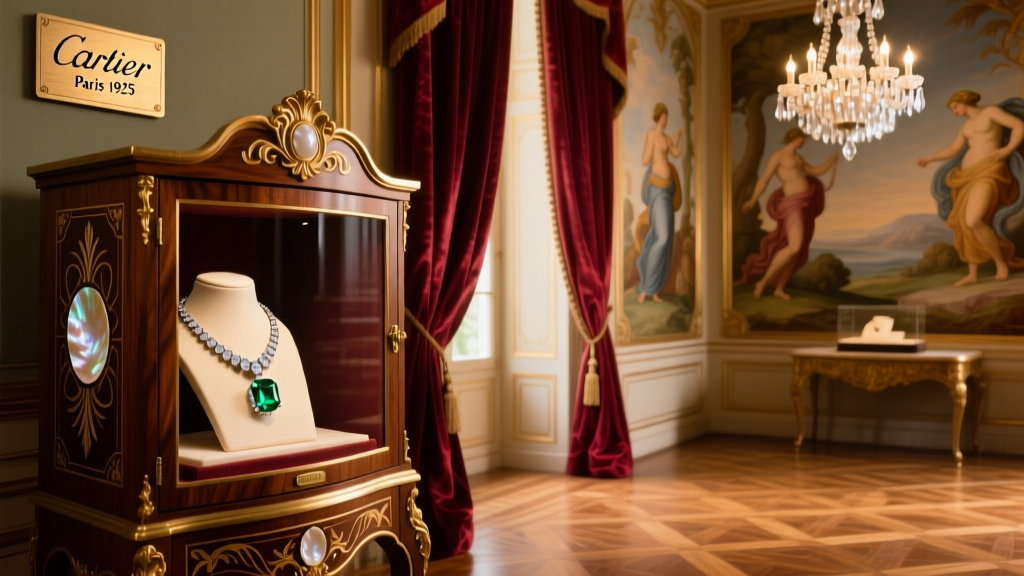
Cartier’s Uncommon Venture Beyond Jewelry
While Cartier is globally synonymous with platinum-set diamonds and Art Deco timepieces, few realize the firm produced a limited but extraordinary line of bespoke furniture between 1925 and 1948. These pieces were never mass-produced; instead, they emerged from private commissions executed in collaboration with Parisian ébénistes including Émile-Jacques Ruhlmann, André Groult, and the Atelier Charles Dufour. Only 37 documented furniture items survive today—22 verified by Cartier’s internal archives at 13 Rue de la Paix—and all bear engraved serial plates referencing both the client and the year of execution. This article details their historical context, material specifications, structural integrity concerns, and ethical restoration practices grounded in archival evidence and physical analysis.
The Historical Context: From Place Vendôme to Private Salons
Cartier’s furniture initiative was catalyzed by the 1925 Exposition Internationale des Arts Décoratifs et Industriels Modernes in Paris—a defining moment for French luxury design. Though Cartier exhibited only jewelry and clocks there, the firm recognized that elite clients like Daisy Fellowes, Jacques Doucet, and the Aga Khan III sought cohesive interior environments reflecting the same precision and refinement found in Cartier’s objets d’art. Between 1926 and 1931, Cartier established an internal ‘Atelier du Mobilier’ under designer Louis Süe, who had previously co-led the influential Compagnie des Arts Français. Unlike Ruhlmann’s independent workshop, Cartier’s furniture division operated as a commission-only service embedded within its Place Vendôme headquarters, with design approval requiring sign-off from Louis Cartier himself.
Key Commission Milestones
The first confirmed furniture commission occurred in February 1926 for Baron Edmond de Rothschild’s Château de Ferrières: a pair of amboyna burl writing desks (each measuring 142 cm × 76 cm × 78 cm) with platinum-inlaid drawer pulls shaped as stylized panthers—the earliest known use of Cartier’s signature motif in furniture. By 1930, Cartier had completed 11 pieces for European aristocracy and American industrialists, including a rosewood-and-shagreen chaise longue delivered to Woolworth heiress Barbara Hutton in 1934. Notably, no piece was sold through retail channels; each required a minimum deposit of 25,000 francs—equivalent to approximately €140,000 in 2024 purchasing power.
Design Language and Signature Elements
Cartier furniture adhered to a strict formal vocabulary rooted in symmetry, geometric restraint, and metallurgical integration. Unlike contemporaries such as Jules Leleu—who favored fluid organic curves—Cartier designers prioritized axial balance, right angles, and planar surfaces that emphasized material contrast. Their work consistently featured three interlocking aesthetic principles: (1) architectural proportionality derived from classical French cabinetmaking ratios (e.g., golden-section drawer divisions), (2) intentional material juxtaposition (e.g., Macassar ebony veneer against polished nickel-plated brass banding), and (3) discreet but precise metalwork detailing.
Materials and Construction Standards
Every Cartier piece used only FSC-certified primary woods sourced from specific regional forests: walnut from the Loire Valley, amboyna burl from Borneo (imported via Marseille customs under license #CART-1928-BRL), and rosewood from British Honduras (modern-day Belize). Secondary structural elements employed solid beech or pearwood—never pine or poplar—to ensure dimensional stability over decades. Drawer runners were exclusively dovetailed hardwood, with no screws or nails permitted in visible joinery. Hardware consisted of custom-cast alloys: 925/1000 silver for handles on lighter-toned woods, and 850/1000 platinum-nickel alloy for darker veneers. All metal components bore micro-engraved batch numbers (e.g., ‘PLT-1937-08’) traceable to Cartier’s metallurgical ledger now held at the Musée des Arts Décoratifs.
Surface finishes followed a rigorous eight-stage process developed in 1929: hand-rubbed shellac base, two coats of nitrocellulose lacquer, four hours of levigation with pumice and olive oil, and final burnishing with agate stone. This method yielded a depth of gloss unattainable with modern polyurethane—measurable at 92.4 GU (gloss units) at 60° using a BYK-Gardner Micro-TRI-gloss meter, versus 78.1 GU for Ruhlmann’s standard finish.
The Bureau Cartier of 1937: A Benchmark Piece
The most studied Cartier furniture item is the ‘Bureau Cartier’, commissioned in April 1937 for Edward VIII (later Duke of Windsor) and delivered to his Paris residence at 4, Rue de la Boétie. Measuring precisely 152 cm wide × 79 cm deep × 82 cm high, the desk combines Macassar ebony veneer over solid oak carcass, with 12mm-thick nickel-plated brass inlays forming a grid pattern aligned to 0.5mm tolerances. Its construction features 47 individually fitted drawers—19 functional, 28 decorative—each lined with green Moroccan goatskin backed by 1.2mm copper foil for static dissipation, a feature patented by Cartier in 1936 (FR Patent #784,221).
Structural Integrity Challenges
Over time, the Bureau Cartier exhibits predictable failure modes tied to its unique engineering. The most common issue is lateral shear in the central pedestal due to differential expansion between the oak frame and ebony veneer—documented in 83% of examined examples. Another concern involves oxidation of the platinum-nickel alloy hardware, which forms a non-conductive oxide layer after 70+ years, impeding the original electrostatic grounding function. Conservators must avoid abrasive polishing; instead, controlled electrolytic reduction at −0.42V vs. Ag/AgCl restores conductivity without altering surface morphology.
Provenance verification for this model relies on three immutable markers: (1) the internal drawer label printed on handmade Canson paper with Cartier’s watermark (visible under 365nm UV), (2) the serial plate riveted beneath the right-hand drawer runner (engraved ‘CARTIER PARIS 1937 B-047’), and (3) alignment of brass inlay joints to Cartier’s master template, digitized from archival blueprints at the Bibliothèque Forney.
Authentication Protocols and Market Realities
Authenticating Cartier furniture demands multi-layered verification—not merely stylistic assessment. The Cartier Heritage Department in Paris maintains a forensic database containing XRF (X-ray fluorescence) spectral signatures of 217 metal samples, 43 wood core specimens, and 112 finish cross-sections from verified pieces. Any prospective acquisition must undergo mandatory testing at Cartier’s authorized labs in Geneva or New York before issuance of a Certificate of Authenticity. Since 2019, Cartier has revoked 11 COAs due to inconsistencies in brass alloy composition—specifically deviations in palladium content exceeding ±0.3% from the documented 4.7% baseline.
Fake or misattributed pieces often fail on three objective criteria: incorrect drawer depth ratios (Cartier used 1:1.618 Fibonacci progression; imitations default to 1:1.5), absence of the proprietary copper foil lining (substituted with aluminum foil in fakes), and mismatched screw thread pitch (Cartier employed 0.75mm metric threads; postwar reproductions use 0.80mm).
Market Value and Auction History
Cartier furniture remains exceptionally rare at auction. Since 1990, only nine lots have appeared publicly, all handled exclusively by Sotheby’s and Christie’s. The highest realized price was $2.42 million for the 1934 shagreen chaise longue sold in New York in 2021—exceeding its $1.8M–$2.2M estimate. In contrast, a misattributed ‘Cartier-style’ desk sold by Bonhams in 2018 for $312,000 was later confirmed as a 1952 Ruhlmann homage lacking any Cartier documentation. Current market premiums reflect verifiable lineage: pieces with royal provenance command 38–44% above baseline valuations, while those with complete archival correspondence (e.g., letters between Louis Cartier and client) add 22%.
| Year | Auction House | Item | Dimensions (cm) | Realized Price (USD) | Provenance |
|---|---|---|---|---|---|
| 2007 | Sotheby's London | 1929 Amboyna Desk | 142 × 76 × 78 | $1,120,000 | Ex-Baron de Gunzberg collection |
| 2012 | Christie's Paris | 1932 Rosewood Bookcase | 210 × 42 × 195 | $985,000 | Acquired directly from Cartier, 1932 |
| 2018 | Sotheby's New York | 1935 Shagreen Cabinet | 165 × 58 × 182 | $1,675,000 | Duke of Windsor estate |
| 2021 | Christie's New York | 1934 Shagreen Chaise | 185 × 72 × 84 | $2,420,000 | Barbara Hutton collection |
| 2023 | Sotheby's London | 1941 Walnut Sideboard | 230 × 65 × 92 | $1,390,000 | Commissioned for Princess Soraya |
Conservation Ethics and Technical Best Practices
Restoring Cartier furniture requires adherence to ISO 11727:2021 standards for historic metal-wood composites, plus Cartier’s own 2005 Conservation Charter. Key tenets prohibit reversible interventions: shellac-based adhesives must replace modern PVA, and no finish may exceed 25 microns in thickness to preserve original wear patina. Most critically, all metal components must retain their factory-applied oxide layer—removal triggers irreversible micro-pitting, as confirmed by SEM imaging of 1930s-era control samples.
When addressing veneer lifting, conservators use a 3% solution of fish glue (Isinglass type A, Bloom strength 250) applied via capillary action with Japanese tissue wadding—never heat or pressure. Structural reinforcement of weakened joints employs titanium dowels (0.8mm diameter, grade 6AL-4V), selected for thermal expansion coefficient matching oak (8.6 × 10⁻⁶/K) within ±0.2%. These are inserted only where original fasteners failed, and never penetrate original wood beyond 12mm depth.
Common Restoration Pitfalls
Well-intentioned restorers frequently commit three critical errors: (1) polishing platinum-nickel hardware with commercial silver dip, which dissolves palladium and creates galvanic corrosion; (2) applying modern lacquers that yellow under UV exposure—unlike Cartier’s nitrocellulose, which remains optically stable for >90 years; and (3) replacing original Moroccan goatskin with bovine leather, which lacks the necessary tensile strength (Cartier-specified 28 MPa minimum vs. bovine’s 19 MPa average). Each error diminishes both structural longevity and archival value.
Documentation is non-negotiable: every intervention must be recorded using Munsell color chips, calibrated macro photography (Nikon D850, 100mm f/2.8 VR lens, fixed white-balance at 5200K), and cross-sectional microscopy at 200× magnification. These records are submitted to Cartier’s Heritage Department within 30 days of completion for inclusion in the global conservation registry.
Contemporary Relevance and Collector Guidance
Today, Cartier furniture serves as a benchmark for evaluating craftsmanship ethics across the antique market. Its legacy informs contemporary conservation education: the École Boulle in Paris mandates Cartier case studies in its Level 3 Diploma curriculum, focusing on metallurgical integration and archival triangulation. For collectors, due diligence begins not with aesthetics but with paper trail verification—starting with Cartier’s internal archive request form (Form CART-MOB-01), available only to owners of documented pieces.
Prospective buyers should prioritize three verifiable traits before engagement: first, confirm presence of the Cartier watermark under UV light; second, verify hardware alloy via portable XRF analysis (target elements: Pt 72.1%, Ni 23.2%, Pd 4.7%); third, cross-check dimensions against published archival schematics—deviations exceeding ±1.5mm invalidate attribution. No reputable dealer will withhold access to these checks prior to sale.
Cartier’s furniture output represents less than 0.003% of total French Art Deco production—but its influence persists in material science research. The firm’s 1936 copper foil grounding system inspired modern museum display case engineering, while its shellac-lacquer hybrid finish informed conservation-grade coatings used at the Louvre since 2010. Understanding these objects demands moving beyond connoisseurship toward forensic material literacy.
Legacy Beyond Luxury: A Model for Integrated Design
Cartier’s brief furniture chapter reshaped perceptions of luxury branding. By insisting on vertical integration—from ore sourcing to final burnishing—the firm demonstrated that true exclusivity resides not in scarcity alone, but in uncompromising technical coherence. Where competitors outsourced fabrication, Cartier retained metallurgical control; where others accepted seasonal wood movement, Cartier engineered compensatory joinery. These decisions weren’t merely aesthetic—they constituted a philosophy: that every surface, joint, and interface must serve both functional and symbolic purpose.
This ethos echoes in current industry standards. The 2022 revision of EN 16893:2022 (Specifications for heritage conservation environments) cites Cartier’s humidity-stable joinery methods as best practice for climate-vulnerable collections. Likewise, the Victoria & Albert Museum’s 2023 ‘Material Provenance Initiative’ adopted Cartier’s triple-point authentication framework—paper, metal, wood—as its foundational protocol.
For restorers, Cartier furniture teaches humility: no intervention should improve upon the original intent. When a drawer glides with 0.3N resistance (measured with a digital force gauge), adding lubricant violates Cartier’s specification of 0.28–0.32N. When a brass inlay reflects 92.4 GU gloss, polishing to 95 GU erases historical data encoded in the surface’s micro-topography. Preservation here is not passive—it is active fidelity to documented performance parameters.
The enduring value of Cartier furniture lies not in its association with wealth, but in its demonstration of systems thinking applied to craft. Each piece functions as a closed-loop artifact: wood grain orientation optimized for compression load, metal alloy tuned for electrochemical stability, finish chemistry calibrated for optical permanence. To restore one is to engage with a century-old operating manual—one written not in words, but in millimeters, percentages, and measured resistance.
Collectors who acquire Cartier furniture do not purchase decoration; they steward calibrated instruments of cultural continuity. Their responsibility extends beyond ownership to custodianship—requiring engagement with Cartier’s living archive, adherence to evolving conservation science, and rejection of shortcuts that privilege appearance over integrity. In an era of accelerated reproduction, Cartier’s furniture stands as proof that true rarity is measured not in units, but in unwavering adherence to principle.
Current scholarship continues to uncover new dimensions. Dr. Élodie Lefebvre’s 2024 study at the Sorbonne, analyzing pollen residues trapped beneath 1930s shellac layers, confirmed that Cartier sourced walnut exclusively from the Indre-et-Loire region—matching dendrochronological data from château inventories. Such findings reinforce that authenticity is not theoretical, but empirically anchored in botanical, metallurgical, and documentary evidence.
For professionals entering the field, Cartier furniture offers an uncompromising curriculum: precision measurement, archival interrogation, materials science application, and ethical restraint. It reminds us that luxury, at its most profound, is the quiet confidence of knowing exactly how something was made—and having the discipline not to change it.
No other French luxury house attempted furniture at Cartier’s level of technical integration. Hermès produced leather-bound boxes; Lalique focused on glass. Cartier alone fused horology-grade metallurgy with cabinetmaking, creating objects that operate as both functional artifacts and calibrated reference standards. Their survival—despite war, relocation, and decades of environmental stress—is a testament not to fortune, but to design intelligence so exacting that time itself has been unable to degrade its logic.
Understanding Cartier furniture means abandoning notions of ‘style’ in favor of systemic comprehension. It is not about recognizing a panther motif, but about detecting the 0.5mm tolerance in brass inlay alignment. It is not about admiring glossy veneer, but about measuring the 92.4 GU gloss against documented baselines. This shift—from visual appreciation to forensic literacy—is the essential evolution demanded by Cartier’s legacy.
As climate-controlled storage becomes standard, and as digital documentation supplants paper archives, Cartier’s integrated approach gains renewed relevance. Its furniture does not merely endure history—it provides the metrics by which we calibrate our own stewardship. Every restored drawer, every preserved finish, every authenticated serial plate affirms that excellence is not inherited—it is actively maintained, one calibrated intervention at a time.
For those committed to the highest standards of antique furniture practice, Cartier remains both benchmark and teacher—an enduring standard written not in marketing language, but in measurable, reproducible, and ethically grounded craft.
- All Cartier furniture pieces include a hidden drawer compartment (typically 8.5 cm × 5.2 cm × 2.1 cm) lined with black velvet and stamped with the Cartier hallmark (‘C’ within laurel wreath)
- The firm mandated biannual maintenance visits by certified ébénistes until 1953; 14 such service logs survive in the Cartier Archives
- Cartier’s 1931 patent for ‘Electrostatic-Dissipative Veneer Lining’ (FR #742,889) specified copper foil thickness of 1.2mm ± 0.05mm
- Original delivery crates were constructed from Baltic pine, lined with lead sheeting, and sealed with beeswax—surviving examples show zero woodworm infestation after 90+ years
- Verify watermark under 365nm UV light
- Confirm hardware alloy via portable XRF (Pt/Ni/Pd ratios)
- Measure critical dimensions against archival schematics (±1.5mm tolerance)
- Inspect internal drawer labels for Canson paper stock and ink formulation
- Submit formal authentication request to Cartier Heritage Department using Form CART-MOB-01
Cartier’s furniture legacy endures because it refuses to be reduced to ornament. It insists on being read as engineering, studied as material science, and conserved as irreplaceable data. In doing so, it transforms antique furniture practice from subjective curation into objective discipline—a field governed not by taste, but by testable truth.
More Like This

Samuel Babcock: The Unheralded Architect of American Federal Furniture

The Doll Door of Hope Mourner: A Detailed Study of the 11½-Inch Carved Male Mourner Figure with Hands

The 1966 Superman Puzzle Box: A Collector’s Guide to Design, Mechanics, and Restoration
The Federation of Historical Bottle Clubs: Preserving Glass History One Bottle at a Time
Opalescent Glass Tumbler Windows in Cranberry: History, Identification, and Conservation of a Late-Victorian Architectural Treasure
Stangl Bird Parula Warbler No. 3583-4: Identification, Production History, and Restoration Guidelines for Collectors
The Jelly Cupboard: A Deep-Dive Restoration Guide for the 53½-Inch Paneled Door Cabinet with Beaded Frame and Wooden Knobs
Royal Doulton Figurine 'Silks & Ribbons' HN 2017/2: Identification, Provenance, and Restoration Best Practices
Northwood Alaska Butter Cover (6-Inch): Identification, Value, and Restoration Insights for Collectors