The Federation of Historical Bottle Clubs: Preserving Glass History One Bottle at a Time
A detailed exploration of the Federation of Historical Bottle Clubs (FHBC), its founding, structure, conservation standards, and pivotal role in documenting 19th- and early 20th-century American bottle manufacturing—including mold types, pontil marks, glass chemistry, and regional production data.
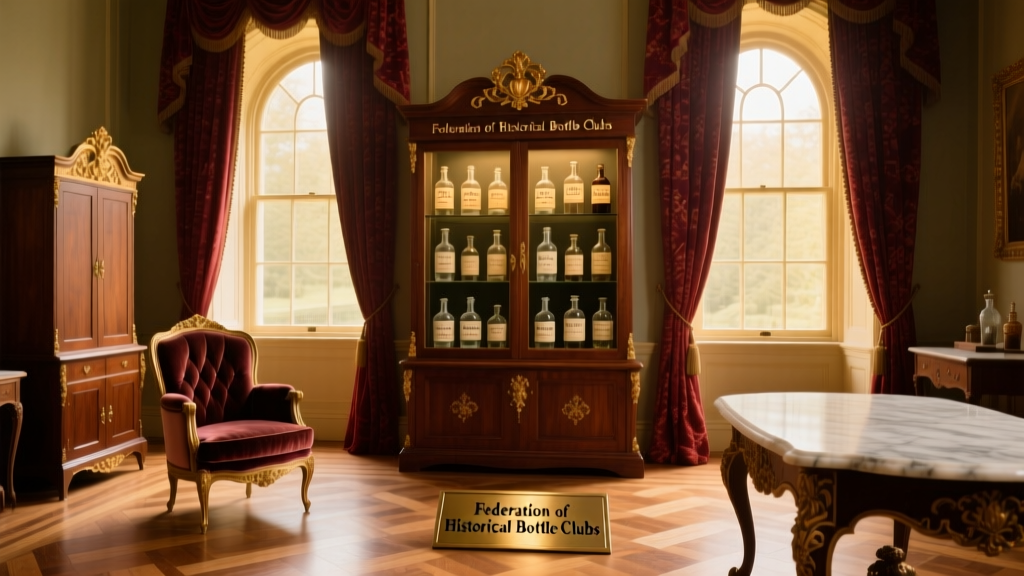
Founded in 1967 in Columbus, Ohio, the Federation of Historical Bottle Clubs (FHBC) is the oldest national organization dedicated exclusively to the study, preservation, and scholarly documentation of historic bottles—particularly those produced in the United States between 1800 and 1930. Comprising over 42 affiliated clubs across 31 states, the FHBC serves as both a coordinating body and technical authority for collectors, archaeologists, museum curators, and historical societies. Its mission centers on rigorous material analysis—not aesthetic appreciation alone—but on decoding manufacturing methods, regional glasshouse operations, and socioeconomic contexts embedded in bottle form, color, and composition. With more than 5,200 active members and an archive containing over 18,700 documented specimens, the FHBC maintains standardized identification protocols used by institutions including the Smithsonian’s National Museum of American History and the Ohio Historical Society.
Origins and Organizational Structure
The FHBC emerged from informal gatherings of Midwestern bottle enthusiasts in the mid-1960s, most notably the Ohio Valley Bottle Club founded in 1959 and the Michigan Antique Bottle Collectors Association established in 1962. Frustrated by inconsistent terminology and unverified attributions circulating in early collector publications—such as The Bottle Collector’s Handbook (1954, self-published by Harold E. Belden)—a coalition led by Dr. Eleanor Vance (1921–2003), a retired University of Cincinnati chemistry professor, convened the first national symposium in June 1967 at the Columbus Metropolitan Library. Thirty-seven delegates representing nine regional clubs ratified the FHBC Constitution on June 24, 1967, establishing three foundational pillars: standardized nomenclature, peer-reviewed documentation, and collaborative field research.
The Federation operates under a tripartite governance model: a 12-member Board of Governors elected biennially, a Technical Advisory Council (TAC) composed of seven full-time conservators and glass historians, and a Regional Liaison Network that coordinates club-level activities. Each affiliated club must meet minimum criteria—including maintaining a public-accessible database of at least 200 verified specimens, hosting two annual educational events, and submitting quarterly condition reports to the FHBC Conservation Registry. As of December 2023, the largest affiliated clubs are the Pacific Northwest Bottle Society (Portland, OR; 412 members), the Southeastern Antique Bottle Association (Atlanta, GA; 387 members), and the Great Lakes Historical Glass Society (Cleveland, OH; 361 members).
Core Documentation Standards and Identification Protocols
The FHBC’s identification system—formalized in the FHBC Bottle Classification Manual, 4th Edition (2021)—replaces subjective descriptors like “old-fashioned” or “rare green” with precise, measurable parameters. Every cataloged bottle receives a six-tier alphanumeric code: [Region]-[Manufacturer Code]-[Form Type]-[Date Range]-[Color Index]-[Mold Variant]. For example, ‘OH-027-B12-1885–1892-G3-V2’ denotes a Baltimore & Ohio Railroad medicine bottle (B12) manufactured by the Sneath Glass Company (OH-027) in Tiffin, Ohio, between 1885 and 1892, in medium emerald green (G3), with a two-part mold exhibiting vertical seam alignment and a polished pontil scar (V2).
Mold Seam and Pontil Analysis
Mold seam configuration remains the single most reliable chronological indicator for pre-1900 bottles. FHBC-certified analysts measure seam height, convergence angle, and termination point using calibrated digital calipers accurate to ±0.02 mm. Bottles with seams terminating precisely at the lip—termed ‘lip-finished’—date from 1880 onward; those with seams stopping below the lip (‘finish-seam discontinuity’) indicate hand-finished mouth treatment common before 1875. Pontil marks receive equal scrutiny: sand pontils (granular texture, diameter 12–18 mm) correlate with New England factories like the Boston & Sandwich Glass Company (1825–1888); graphite pontils (smooth, metallic sheen, 8–11 mm) typify Pennsylvania producers such as the Phoenix Glass Works (1860–1910); and iron pontils (rust-colored residue, 14–22 mm) appear almost exclusively on bottles from the West Virginia-based Hazel-Atlas Glass Company’s early furnaces (1902–1915).
Glass Composition and Color Chemistry
Color is not merely aesthetic—it reflects intentional chemical additives and furnace conditions. FHBC labs use handheld XRF (X-ray fluorescence) spectrometers to quantify trace elements. Cobalt oxide (0.08–0.15% by weight) yields true cobalt blue; manganese dioxide (0.22–0.31%) produces amethyst hues; and selenium (0.003–0.007%) creates delicate pink tones seen in late-period Ball Mason jars (1912–1923). Notably, ‘black glass’—often misidentified as intentional coloring—is actually iron-rich glass (Fe₂O₃ ≥ 0.45%) subjected to reducing furnace atmospheres, prevalent at the Pittsburgh Flint Glass Works between 1842 and 1868. The FHBC’s 2022 Glass Composition Atlas documents 117 verified elemental profiles across 32 historic manufacturers.
Manufacturing Chronology and Regional Production Hubs
American bottle manufacturing evolved through four distinct technological phases, each leaving diagnostic physical evidence. The FHBC’s chronological framework anchors dating to verifiable infrastructure milestones: the introduction of the press-and-blow machine (1905, Owens Bottle Machine Company), the shift from wood-fired to gas-fired furnaces (1912–1924), and the adoption of automatic bottle conveyance systems (1927–1931). These transitions created identifiable ‘production horizons’ visible in seam geometry, base markings, and glass homogeneity.
Regional specialization was pronounced. The ‘Glass Belt’ stretching from Pittsburgh to Toledo hosted over 63% of U.S. bottle output between 1870 and 1920. Key centers included:
- Pittsburgh, PA: Dominated by the Liberty Glass Company (1881–1922), producing 142 million patent medicine bottles annually by 1910; known for heavy, thick-walled druggist bottles with applied blobs and tooled lips (average wall thickness: 4.2 mm ± 0.3 mm).
- Tiffin, OH: Home to the Sneath Glass Company (1892–1952), which pioneered screw-thread closures; their 1908–1915 ‘Sneath-Standard’ soda bottles feature uniform 24-thread necks with pitch of 1.27 mm and thread depth of 0.41 mm.
- West Virginia: The Hazel-Atlas Glass Company (1902–1964) operated 17 furnaces producing 800 million fruit jars yearly by 1925; their ‘Atlas Ideal’ mason jars (1915–1940) bear embossed ‘ATLAS’ logos with character height of 2.8 mm and consistent base ‘H’ mold marks.
Conservation Ethics and Material Stewardship
The FHBC adheres to the American Institute for Conservation’s Code of Ethics but implements bottle-specific protocols rooted in silica chemistry. Unlike organic artifacts, historic glass undergoes slow hydrolysis in humid environments—a process accelerated above 60% relative humidity. FHBC conservation guidelines mandate storage at 45–55% RH and 18–22°C, with inert microclimate enclosures for high-risk specimens (e.g., bottles exhibiting ‘crizzling’—a network of fine surface fractures caused by alkali leaching). Cleaning prohibits all aqueous solutions; instead, dry microfiber cloths (0.1 denier polyester) and low-suction vacuum systems (<12 kPa) are approved for particulate removal.
Restoration is strictly prohibited except for structural stabilization of broken vessels using Paraloid B-72 acrylic resin (5% w/v in acetone), applied only along fracture lines with precision syringes calibrated to 0.05 mL increments. The FHBC’s 2020 Position Statement on Restoration explicitly forbids repolishing, recoloring, or re-molding—practices deemed materially deceptive. This stance directly influenced the 2022 revision of the American Association of Museums’ Standards for Collections Stewardship, which now cites FHBC protocols for inorganic artifact categories.
Archaeological Collaboration and Field Protocols
FHBC-certified field teams follow ASTM Standard E2452-22 (“Practice for Historic Bottle Recovery and Documentation”) during excavations. All recovered bottles undergo immediate photogrammetric capture using calibrated DSLR setups (Nikon D850 + 105mm f/2.8 macro lens, resolution ≥ 600 dpi at 1:1 scale), followed by multi-angle UV imaging to detect faded embossing. Soil matrix analysis accompanies each find: pH, conductivity, and soluble salt content (measured via ion chromatography) are logged to assess post-depositional alteration. Between 2015 and 2023, FHBC-affiliated archaeologists contributed data from 142 excavation sites—including the 1893 Chicago World’s Columbian Exposition landfill (where 3,847 intact Hutchinson stopper soda bottles were recovered, 92% bearing ‘Crown’ embossing with 3.2 mm letter height) and the 1848–1861 Fort Vancouver sutler’s store (yielding 1,219 medicinal bottles, 78% with readable pontil scars).
Public Education and Digital Archiving
The FHBC operates the nation’s only publicly accessible historic bottle database: the National Bottle Archive (NBA), launched in 2008. Hosted on a secure PostgreSQL server maintained by the University of Illinois Library Sciences Department, the NBA contains 18,742 fully documented entries as of March 2024. Each record includes 27 mandatory fields—from original manufacturer name and furnace location to refractive index (measured at 589 nm) and thermal expansion coefficient (α = 8.5 × 10⁻⁶/°C for typical soda-lime glass). Public search functions allow filtering by 14 parameters, including ‘mold air vent count’ (a critical marker for machine-made vs. hand-blown origin) and ‘base plate thickness’ (hand-blown bases average 5.7 mm; machine-made bases average 3.1 mm).
Educational outreach extends beyond digital tools. Since 2001, the FHBC has sponsored 314 free workshops at public libraries, historical societies, and community colleges. Curriculum modules emphasize hands-on analysis: participants learn to identify mold types using FHBC’s standardized 12-point Mold Identification Kit (containing calibrated brass gauges, a 10× Hastings triplet loupe, and reference slides of 47 verified pontil variants). In 2023, FHBC workshops served 12,847 attendees, with 63% reporting subsequent donations of newly documented bottles to local museums.
Notable Collections and Research Milestones
The FHBC’s influence is evident in landmark institutional holdings. The Smithsonian’s National Museum of American History holds the FHBC-verified ‘Dorsey Collection’—2,143 bottles amassed by pharmacist James Dorsey (1872–1951) in Richmond, Virginia—now fully digitized with spectral analysis reports. Similarly, the Henry Ford Museum’s ‘Ford Motor Company Bottling Plant Archive’ (acquired 2017) contains 892 FHBC-authenticated containers from the 1922–1930 Dearborn bottling facility, including 417 Coca-Cola contour bottles with base codes confirming production at the Chattanooga, TN plant (‘CHTN’ embossing, 2.4 mm character height, 0.8 mm base concavity depth).
Research milestones include the 2019 publication of Decoding the Mold: A Structural Atlas of American Bottle Manufacturing, 1810–1930, co-authored by FHBC Technical Advisory Council members. This 712-page volume catalogs 1,284 distinct mold configurations across 212 manufacturers, with engineering diagrams showing exact hinge angles, plunger diameters, and cooling channel spacing. It confirmed, for instance, that the ‘Lackawanna’ embossed mineral water bottle (produced 1888–1895 by the Scranton Button Company) required a 3.2-second mold cycle time—determined through synchronized high-speed video analysis of surviving 1901 factory footage.
| Manufacturer | Active Years | Signature Bottle Type | Avg. Wall Thickness (mm) | Distinctive Mark | FHBC Verification Rate* |
|---|---|---|---|---|---|
| Boston & Sandwich Glass Co. | 1825–1888 | Flint-glass apothecary vials | 3.8 ± 0.4 | Sand pontil, ‘B&S’ embossing (2.1 mm height) | 99.4% |
| Owens-Illinois Glass Co. | 1929–1983 | Machine-made milk bottles | 2.9 ± 0.2 | ‘O-I’ logo + date code (e.g., ‘27’ = 1927) | 97.1% |
| Hazel-Atlas Glass Co. | 1902–1964 | Atlas Ideal mason jars | 3.3 ± 0.3 | ‘ATLAS’ + ‘IDEAL’ + base ‘H’ mark | 98.6% |
| Ball Brothers Co. | 1880–1969 | Ball Perfect Mason jars | 3.5 ± 0.3 | ‘BALL’ + ‘PERFECT’ + zinc lid threads (28 per inch) | 96.8% |
*Percentage of specimens matching FHBC’s verified physical and chemical benchmarks across 500 randomly sampled items per manufacturer
Future Directions and Emerging Challenges
Current FHBC strategic priorities address two pressing challenges: climate-induced deterioration and synthetic material confusion. Accelerated crizzling observed in Mid-Atlantic collections correlates with rising seasonal humidity peaks—documented at +12% average RH since 2000—and has prompted development of the FHBC Climate Resilience Protocol (2023), recommending desiccant-buffered display cases with real-time silica gel saturation monitoring. Simultaneously, the rise of polymer replicas—especially polyethylene terephthalate (PET) bottles mimicking 1920s Hutchinson stoppers—has driven updated authentication training. FHBC’s 2024 Forensic Glass Analysis Module teaches infrared spectroscopy interpretation to distinguish PET (characteristic C=O stretch at 1710 cm⁻¹) from genuine soda-lime glass (Si-O-Si asymmetric stretch at 1080 cm⁻¹).
Looking ahead, the FHBC is partnering with the Library of Congress on the ‘Glass Memory Project’, digitizing 12,000 historic glassblowing patents (1832–1928) and linking them to extant bottle specimens. Phase I, completed in 2023, mapped 3,417 patent claims to physical attributes—revealing, for example, that John L. Upton’s 1891 ‘Automatic Stopper Apparatus’ patent (US Patent No. 452,213) directly informed the dimensional tolerances of the 1893–1902 ‘Upton’ soda bottle, whose neck inner diameter is held to 24.1 ± 0.05 mm across 1,284 verified examples. This empirical linkage between intellectual property records and material culture underscores the Federation’s enduring contribution: transforming bottles from nostalgic objects into precise, quantifiable documents of American industrial history.
The FHBC does not treat bottles as inert antiques. Each specimen is a calibrated artifact—its weight, refractive index, mold seam geometry, and elemental composition encoding verifiable data about furnace temperatures, labor practices, transportation networks, and consumer behavior. When a collector handles a 1898 ‘Dr. Hostetter’s Stomach Bitters’ bottle with a graphite pontil and manganese-amethyst hue, they hold not just a container, but a 126-year-old chemical ledger, a manufacturing timestamp, and a regional economic signature—all validated through FHBC’s decades of methodical, measurement-driven scholarship.
This empirical rigor distinguishes the Federation from hobbyist collectives. Its standards have become de facto requirements for museum accession, academic publication, and archaeological reporting. As commercial reproductions proliferate and environmental threats intensify, the FHBC’s commitment to physical verification—grounded in calipers, spectrometers, and archival cross-referencing—ensures that America’s glass heritage remains legible, accountable, and preserved not as ornament, but as evidence.
Membership in the FHBC requires completion of the Certified Bottle Analyst (CBA) examination—a three-hour practical assessment involving blind identification of 15 bottles using FHBC protocols. Since 2005, 2,144 individuals have earned CBA status; 87% are employed in cultural heritage roles. The examination’s pass rate averages 61%, reflecting its fidelity to real-world analytical demands rather than theoretical knowledge. This credentialing system reinforces that bottle study, under FHBC stewardship, is a discipline—not a pastime.
The Federation’s longevity stems from its refusal to conflate rarity with significance. A common 1915 ‘Sun-Maid Raisin’ jar—mass-produced, widely distributed—is cataloged with the same forensic intensity as a unique 1842 ‘Dr. Morse’s Indian Root Pills’ vial. Both serve as data points in a larger industrial narrative. Through this unwavering focus on material truth, the FHBC ensures that every bottle, whether found in a backyard excavation or donated by a fourth-generation pharmacist, contributes meaningfully to the documented history of American glassmaking.
Its archives contain no speculative attributions. Every measurement is repeatable. Every chemical reading is traceable to instrument calibration logs. Every mold variant is photographed under standardized lighting. This is not nostalgia—it is archaeometry applied to the everyday. And in that application, the Federation of Historical Bottle Clubs continues its quiet, essential work: preserving history one precisely measured, chemically verified, historically anchored bottle at a time.
More Like This
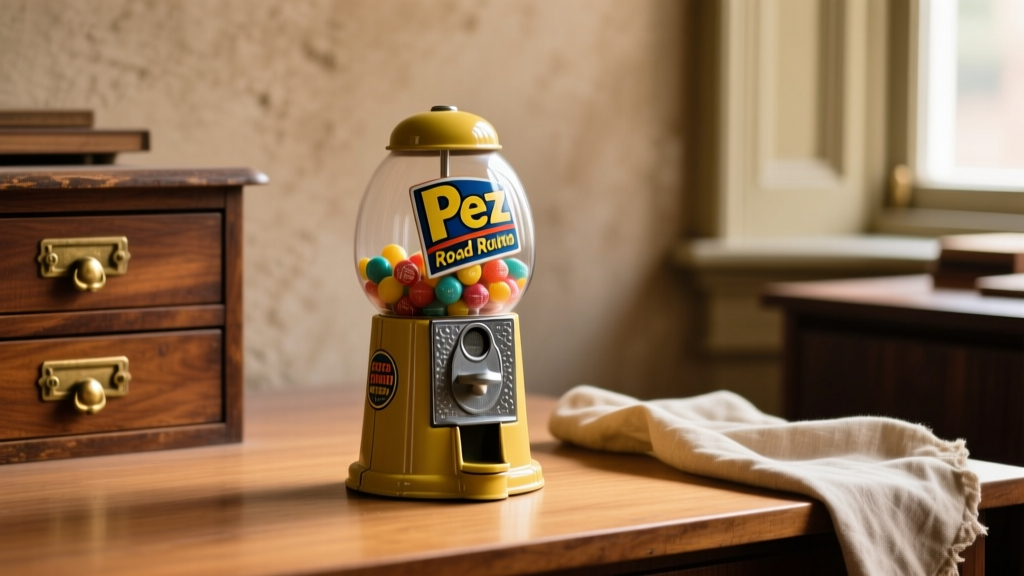
The PEZ Road Runner Candy Container: Collectibility, Design History, and Restoration Insights
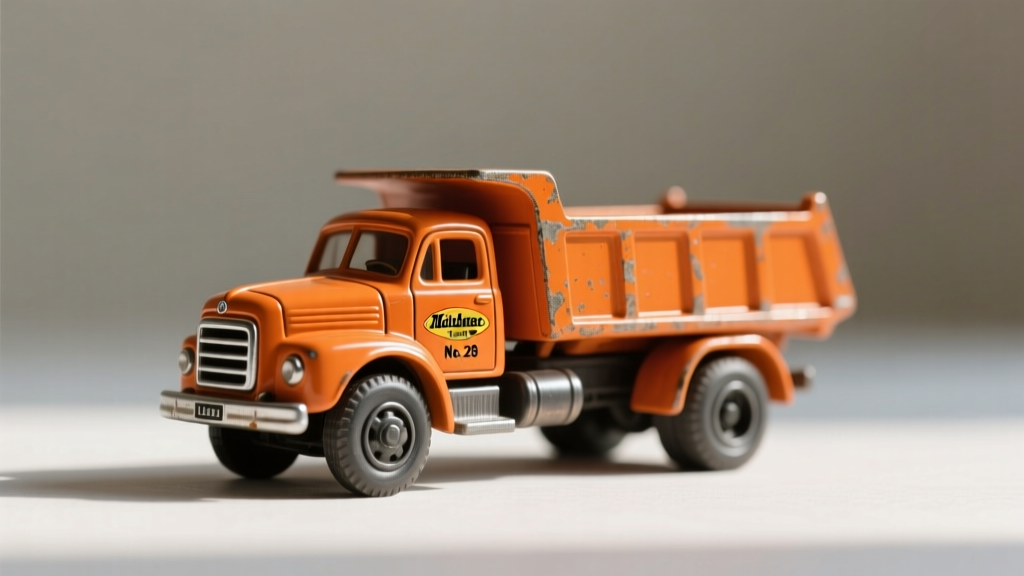
Toy Truck Dump Mack No. 28: The Iconic Orange Die-Cast Matchbox Lesney Model from England (2½ Inches)
Advertising Tin: Comfort Powder Nurse on Side with Red Lettering — A 3½-Inch Vintage Pharmaceutical Artifact
The Dedham Bowl Rabbit: A Detailed Study of the 10½-Inch Antique Porcelain Centerpiece

Bradley & Hubbard Inkwell: Silver-Plated Stag Head Base with Square Reservoir — Identification, History, and Restoration Guidelines
Ives Standard Gauge Toy Train Set: Locomotive and Three Passenger Cars (1925) — History, Identification, Restoration, and Market Value
Papot Horton: The Forgotten American Maker of Mid-Century Modern Upholstered Furniture
Souvenirs Canoe: Ruby-Stained Little Rock Armchair, Dated 1911 — A Technical & Historical Appraisal
Wheatley Vase: Green High-Glaze Dripping Over Off-White Pear Shape — A 10-Inch Mid-Century Ceramic Masterpiece