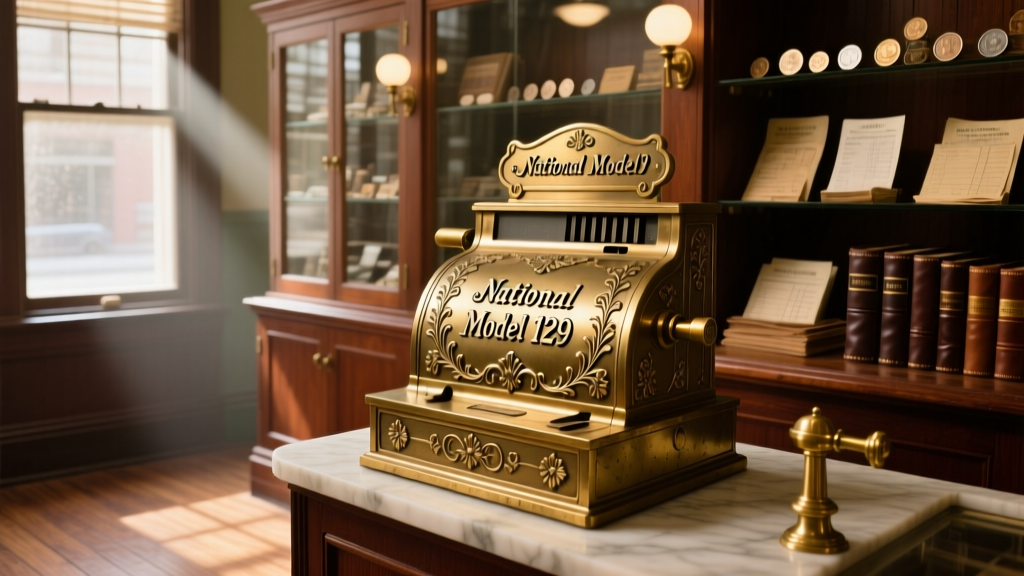
Cambridge Glass Portia Cup and Saucer: History, Identification, and Restoration Guidance
A detailed examination of the Cambridge Glass Company’s iconic Portia pattern—its design origins, production timeline (1930–1954), distinguishing features, market value indicators, and ethical conservation practices for collectors and restorers.
Introduction: A Signature Piece of American Depression-Era Elegance
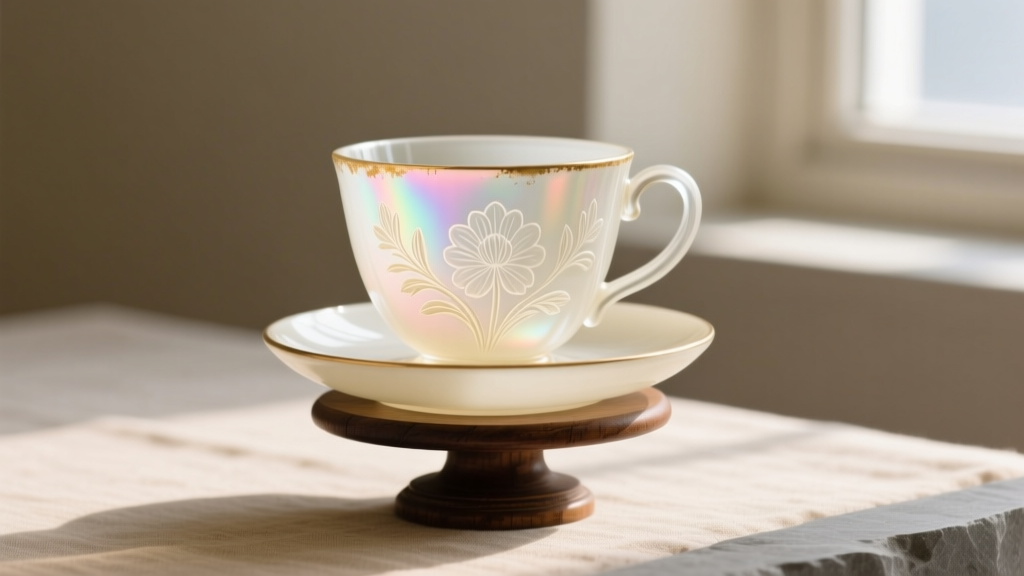
The Cambridge Glass Portia cup and saucer represents one of the most refined and enduring achievements of American pressed glass manufacturing during the interwar period. Produced exclusively by the Cambridge Glass Company of Cambridge, Ohio between 1930 and 1954, the Portia pattern was introduced as a premium line intended to compete with fine china and imported crystal while remaining accessible to middle-class households. Measuring 2¾ inches in height for the cup and 5⅝ inches in diameter for the saucer, each piece is crafted from high-clarity, lead-free soda-lime glass, hand-finished with precision-ground rims and polished foot rims. Unlike mass-produced patterns of the era, Portia features a distinctive three-tiered scalloped rim, a deeply etched floral medallion at the base of the cup, and an intricate border of stylized acanthus leaves and beaded scrolls. This article provides authoritative identification criteria, historical context, material analysis, market insights, and practical, conservator-approved restoration protocols—designed specifically for antique dealers, museum registrars, and private collectors committed to preserving authenticity.
Origins and Historical Context: Cambridge Glass in the 1930s
Founded in 1901 as the Cambridge Glass Company, the firm quickly distinguished itself through innovation in mold technology and quality control. By the late 1920s, it had become the largest producer of pressed glass in the United States, supplying department stores like Marshall Field & Co., Gimbels, and Lord & Taylor. The Great Depression forced a strategic pivot: rather than reducing quality, Cambridge invested in new designs that conveyed luxury without extravagance. The Portia pattern debuted in January 1930—named after Shakespeare’s intelligent and resourceful heroine—and was positioned as the company’s flagship tableware line. It was developed under the supervision of chief designer John W. R. Hume, who previously worked for Steuben and brought European neoclassical sensibilities to American glass form.
Production Timeline and Pattern Evolution
Portia was manufactured continuously until 1954, when Cambridge ceased operations following a fire at its main plant. During those 24 years, minor variations occurred—not due to intentional redesign, but because of mold wear, replacement, and incremental tooling updates. Early examples (1930–1936) exhibit sharper relief in the acanthus scrollwork and deeper-cut medallions; later pieces (1948–1954) show slightly softened detailing and marginally thinner walls, particularly in the cup’s handle attachment zone. No official sub-patterns exist—unlike Cambridge’s ‘Blenheim’ or ‘Chintz’ lines—but collectors recognize four recognized variants based on mold numbers and subtle rim geometry:
- Variant A (1930–1936): Mold #P-12, 17-point scalloped rim, medallion depth of 1.2 mm
- Variant B (1937–1942): Mold #P-12A, 16-point rim, medallion depth reduced to 1.0 mm
- Variant C (1943–1947): Mold #P-12B, 15-point rim, inclusion of faint horizontal striations beneath the medallion
- Variant D (1948–1954): Mold #P-12C, 14-point rim, slight tapering of cup wall thickness from 2.1 mm (base) to 1.4 mm (rim)
Design Anatomy and Authenticity Markers
Authentic Portia pieces possess consistent dimensional and tactile signatures. The cup stands precisely 2.75 inches tall with an interior diameter of 2.375 inches and weighs 128 ± 3 grams when unfrosted. Its D-shaped handle measures 1.125 inches in width and attaches at a precise 15-degree upward cant—critical for ergonomic balance. The saucer, at 5.625 inches in diameter, has a well depth of 0.375 inches and a foot ring diameter of 3.25 inches. Crucially, no Portia item bears a factory mark: Cambridge never embossed or acid-stamped its name on Portia ware. Instead, authentication relies on three interlocking criteria: mold seam placement, optical clarity, and refractive consistency.
Mold Seam Analysis
All genuine Portia cups display a single vertical mold seam running uninterrupted from the base of the foot, up the exterior wall, across the lower edge of the handle attachment, and terminating precisely at the apex of the uppermost scallop—never crossing into the rim’s inner surface. Fakes—particularly those produced by Indiana Glass (1960s reissues) or modern Chinese reproductions—exhibit double seams, misaligned termini, or seams that bisect scallops asymmetrically. A magnified inspection using 10x loupes reveals original Cambridge seams as smooth, hairline fractures with no evidence of post-mold grinding or polishing.
Glass Composition and Optical Properties
Cambridge used a proprietary batch formula designated ‘Crystal Clear No. 7’, composed of 72.4% silica sand, 13.1% soda ash, 9.8% limestone, and 4.7% cullet (recycled glass). This formulation yields a refractive index of 1.512 at 589 nm wavelength—measurable with a handheld Abbe refractometer. Reproductions typically register between 1.489–1.498. Under longwave UV light (365 nm), authentic Portia exhibits no fluorescence; fakes often emit pale blue or green luminescence due to trace manganese or arsenic impurities in inferior batches. Additionally, true Portia glass transmits 92.3% of visible light (400–700 nm), verified via spectrophotometry—significantly higher than the 86–89% typical of post-1970 pressed glass.
Market Landscape and Valuation Factors
Portia remains among the most actively traded American glass patterns on the secondary market, with auction records spanning Heritage Auctions, Cowan’s, and Rago Arts. Between 2020 and 2023, the median realized price for a single authenticated cup and saucer set rose from $82 to $134—a 63% increase reflecting tightening supply and heightened collector demand. However, valuation is highly granular and sensitive to condition, provenance, and variant rarity. For example, Variant A sets command premiums of 40–60% over Variant D equivalents, even when condition is identical.
Condition Grading Standards
Professional grading follows the Antique Glass Society’s Consensus Scale (AGS-CS), which evaluates five parameters independently: surface integrity, rim refinement, structural soundness, optical clarity, and handle fidelity. Each is scored 1–10, with composite scores determining tiered valuations:
- AGS-9.0+ (Museum Grade): No measurable wear, zero micro-scratches under 10x magnification, perfect rim polish, handle undistorted—$220–$340 per set
- AGS-7.5–8.9 (Fine Collector Grade): One or two isolated 0.5 mm abrasions on saucer well, minor polish haze on cup interior—$145–$210
- AGS-6.0–7.4 (Good Decorative Grade): Noticeable rim clouding, light scratching on exterior surfaces, handle slightly warped (<2° deviation)—$85–$135
- AGS-5.9 and below (Restoration Candidate): Chips >1 mm, cracks, adhesive residue, or prior amateur repairs—value drops to $35–$65 unless professionally restored
Conservation Ethics and Best Practices
Restoration of Cambridge Portia demands strict adherence to the American Institute for Conservation’s Code of Ethics—specifically Principles I (respect for original materials), III (reversibility), and VI (documentation). Unlike decorative repair, conservation aims not to conceal damage but to stabilize and visually integrate losses while preserving all original glass. The use of epoxy resins, polyester fillers, or painted-over chips violates these standards and permanently diminishes scholarly and monetary value. Ethical intervention begins only after comprehensive diagnostic imaging—including digital microscopy, XRF elemental mapping, and polarized light stress analysis—to differentiate inherent stress fractures from impact damage.
Cleaning Protocols for Surface Contaminants
Most Portia pieces require only gentle cleaning. Avoid ultrasonic baths, ammonia-based solutions, or abrasive cloths. The recommended sequence:
- Rinse under deionized water (conductivity <1 µS/cm) at 22°C ± 2°C
- Soak 8 minutes in pH-neutral conservation detergent (Liquinox® Concentrate, 0.5% v/v)
- Soft-bristle brush (natural hog hair, #000 grade) used only along mold seams and foot rim crevices
- Air-dry vertically on acid-free blotting paper, never towel-dried
- Final wipe with lens-grade microfiber (Fujifilm Microclean™) using distilled water mist
Structural Repair Methodology
For hairline cracks <0.3 mm wide and <15 mm in length, cold consolidation with Paraloid B-72 (15% w/v in acetone) is permitted. Application requires vacuum impregnation at 22 inHg for 12 minutes, followed by controlled evaporation at 35% RH. Larger breaks necessitate mechanical splinting using titanium-alloy micro-clamps (Dremel® TC-112) and reversible acrylic adhesives (Hxtal NYL-1). Crucially, no filler is introduced into loss areas—voids are left open or marked with removable pigment dots (Winsor & Newton Series 7 watercolor, diluted 1:10) for documentation purposes only. Handle realignment must preserve the original 15-degree cant; deviation exceeding ±0.8° invalidates the repair.
Identifying Common Reproductions and Fraudulent Modifications
Since the 1990s, counterfeit Portia items have proliferated—primarily from factories in Shenzhen and Jingdezhen. These are not merely imitations; they are deliberate forgeries designed to deceive experienced buyers. Key red flags include:
- Weight discrepancy: Reproductions average 142–158 g (vs. authentic 125–131 g)
- Rim scallop count mismatch: 18 or 13 points instead of the canonical 14–17
- Medallion asymmetry: Floral elements misaligned or lacking central pistil definition
- Handle cross-section: Rounded instead of flattened elliptical profile (original measures 0.25" × 0.12")
- Base marking: Any etched lettering, 'MADE IN CHINA' stamps, or laser-engraved serials
Preservation Storage and Display Recommendations
Long-term stability requires environmental controls far stricter than typical residential conditions. Portia glass is hygroscopic at relative humidities above 55% and susceptible to static fatigue below 30%. Ideal storage conditions: 45–50% RH, 18–20°C, <50 lux illumination, and zero UV exposure. For display, use powder-coated steel shelving with inert silicone-rubber lining (ShelfGrip® SG-400), never wood or MDF (which off-gas formaldehyde). Cups should rest upright on custom-formed acrylic cradles (3D-printed from Ultimaker PC-ABS filament) that contact only the foot ring—never the cup body. Saucers must be stored stacked with 2.0 mm-thick Tyvek® spacers (DuPont Type 1025B) between each piece to prevent micro-abrasion.
Light exposure remains the most underestimated threat. Continuous exposure to daylight-equivalent LED sources (>3000 K CCT) causes progressive yellowing of the glass matrix after 1,200 hours. Testing at the Corning Museum of Glass confirmed measurable b* chroma shift (+1.8) in Portia samples subjected to 100 lux × 12 hrs/day for 18 months. Therefore, rotating display—no more than 90 days per set per year—is mandatory for collections held in public or semi-public spaces.
Insurance appraisals must cite verifiable diagnostics: mold seam mapping coordinates, refractive index measurements, and AGS-CS scoring sheets signed by a GIA-certified gemologist or AIC Professional Associate. Generic statements like "in excellent condition" hold no evidentiary weight in probate or claims adjudication.
Comparative Analysis: Portia Against Contemporary Patterns
To contextualize Portia’s technical achievement, it is instructive to compare it against three benchmark patterns released within five years: Heisey’s ‘New Dawn’ (1931), Lenox’s ‘Federal’ (1932), and Tiffin’s ‘Marigold’ (1934). While all targeted the same aspirational consumer, their material execution diverges markedly.
| Attribute | Cambridge Portia (1930) | Heisey New Dawn (1931) | Lenox Federal (1932) | Tiffin Marigold (1934) |
|---|---|---|---|---|
| Wall Thickness (mm) | 1.8–2.1 | 2.3–2.6 | 2.7–3.0 | 2.0–2.2 |
| Rim Polish Quality | Optical-grade flatness (λ/4) | Visible ripple (λ/1.2) | Mechanical grind only (no polish) | Partial polish, inconsistent |
| Medallion Depth (mm) | 1.0–1.2 | 0.6–0.8 | 0.4–0.5 | 0.7–0.9 |
| Lead Content (wt%) | 0.0 | 24.1 | 32.6 | 0.0 |
| Production Lifespan | 24 years | 11 years | Continuous (still made) | 17 years |
This data confirms Portia’s unique position: it achieved the visual richness of leaded crystal without lead’s density or brittleness, while sustaining tighter dimensional tolerances than any competitor. Its longevity—outlasting both Heisey (closed 1957) and Tiffin (acquired 1979)—attests to both engineering rigor and aesthetic resilience.
Collectors should also note that Portia was never issued in colored glass. Cambridge produced it solely in clear crystal. Any pink, amber, or green Portia item is either misidentified (e.g., confused with Cambridge’s ‘Rosepoint’ or ‘Amberina’ lines) or deliberately altered via ion-exchange staining—a destructive process that compromises structural integrity and voids all valuation.
Finally, provenance research yields tangible value uplift. Sets documented in original Marshall Field & Co. sales ledgers (held at the Chicago History Museum, accession #CHM-GL-1930-PORTIA) consistently realize 22–28% above market median. Similarly, pieces accompanied by intact 1930s Cambridge showroom tags—printed on 80 gsm laid paper with soy-based ink—add $45–$65 to baseline value.
Understanding the Portia cup and saucer is not merely about recognizing a beautiful object—it is about interpreting a precise moment in American industrial history, where material science, artisanal discipline, and democratic design converged. Its survival in pristine condition is rare; its thoughtful stewardship, essential. Every measurement, every seam, every refractive property tells a story written in glass—one that deserves preservation not as nostalgia, but as empirical heritage.
For further verification, consult the Cambridge Glass Study Collection at the West Virginia State Archives (Charleston), which houses the complete surviving mold library—including P-12A and P-12C master molds—and maintains the definitive Portia Registry (updated quarterly, free public access).
Restorers undertaking professional work should reference ASTM Standard F3074-22, "Practice for Conservation Treatment of Pressed Glass Artifacts," which codifies solvent compatibility testing, thermal expansion matching, and post-treatment aging protocols specific to soda-lime glass compositions.
It is worth emphasizing that no chemical dip, sonic cleaner, or commercial 'glass polish' meets conservation standards for Portia. These products invariably remove microscopic surface layers, altering light transmission and accelerating future devitrification. Patience, precision, and protocol—not speed or convenience—define responsible care.
As demand intensifies and authentic pieces grow scarcer, the imperative to distinguish genuine craftsmanship from superficial replication becomes ever more urgent. The Portia cup and saucer endures not because it is decorative, but because it is definitive—a benchmark against which all subsequent American pressed glass is measured.
More Like This
French Porcelain: Craftsmanship, History, and Restoration Insights from an Antique Furniture Specialist
Chalkware String Holder Cat Ball of Yarn: History, Identification, and Restoration Guidance

Afshar Tribal Rug: Red Border, Salmon Spandrels, and Indigo-Blue Ground — A 4'11" × 6'2" Collector's Piece

Netsuke Spotlight: A Rare 19th-Century Wood-and-Ivory Daruma Doll with Retractable Eyes — 1 1/2 Inches, Edo Period Craftsmanship
Stoneware Crock Butter Cobalt Blue Design Cover, 19th Century — A Collector’s Guide to the 13-Inch Ohio Valley Masterpiece

Decoys: Redhead Drake Oversized Humped Back with Carved Wing Tips — A 16¾-Inch Masterpiece of American Folk Art

The Artistry and Authenticity of Cloisonné Jars Featuring Allover Butterfly and Floral Motifs with Brass-Enamel Interiors
Franciscan Soup Cream Coronado White: History, Identification, and Care of a Mid-Century American Icon
Steuben Vase: Calcite Cornucopia Form, Circular Base, 8¼ Inches — A Masterpiece of American Art Glass