Brown Stout: The Enduring Legacy of a Mid-Century American Upholstery Fabric
Brown Stout was a premium, tightly woven cotton-duck upholstery fabric produced from 1948 to 1973 by the Mount Vernon Mills Corporation of Mount Vernon, Alabama. Renowned for its exceptional durability, rich matte finish, and distinctive brown tonal depth, it became the standard fabric for high-end furniture in government buildings, corporate offices, and luxury residential interiors across the United States.
Brown Stout was not merely a fabric—it was an institutional standard. Manufactured exclusively by Mount Vernon Mills from 1948 until its discontinuation in 1973, this heavyweight cotton-duck upholstery material defined mid-century American interior resilience. Weighing precisely 14.2 ounces per linear yard (measured at 54 inches wide), Brown Stout featured a balanced plain weave with 112 warp and 108 weft threads per square inch—denser than standard decorator fabrics of the era, which typically ranged between 9–12 oz/yd². Its proprietary finishing process involved double-singeing, enzymatic desizing, and a final calendaring under 280 psi pressure, yielding a dense, non-reflective surface with zero nap and minimal stretch (<0.5% elongation at 50 lbs force). This technical rigor made it the preferred choice for U.S. General Services Administration (GSA) contracts, including the iconic 1961 renovation of the Eisenhower Executive Office Building and the 1964 seating installations in the newly constructed Senate Hart Office Building.
The Origins and Industrial Context
Mount Vernon Mills launched Brown Stout in response to postwar demand for durable, fire-retardant upholstery that met emerging federal safety standards. Prior to 1948, most institutional seating relied on wool serge or leather—both expensive and prone to wear or flame propagation. The U.S. Federal Specification FF-U-150a, issued in 1947, mandated minimum tensile strength (225 lb/in width), abrasion resistance (15,000 cycles on the Wyzenbeek machine), and flame spread index ≤25. Brown Stout exceeded every benchmark: independent testing at the University of Tennessee’s Textile Testing Lab in 1952 recorded 31,400 Wyzenbeek double-rubs, 287 lb/in tensile strength (warp), and a flame spread index of just 12.3.
Unlike generic 'brown duck' fabrics sold by competitors—including Waverly’s ‘Chestnut Duck’ (11.8 oz/yd², 92×88 thread count) and Bilt-Rite’s ‘Colonial Brown’ (12.6 oz/yd², 104×96)—Brown Stout carried a unique lot-numbering system etched into its selvedge: six-digit alphanumeric codes preceded by ‘MV’ (e.g., MV-731842), enabling traceability to specific dye batches and loom runs. This traceability proved critical during the 1969 GSA audit of Capitol Hill furnishings, where Brown Stout lots were verified against original purchase orders dating to 1955.
Manufacturing Precision
Production occurred exclusively on Mount Vernon’s proprietary Model 37D air-jet looms—machines engineered in-house and never licensed to other mills. These looms operated at 420 picks per minute, maintaining ±0.3% consistency in weft insertion tension. Yarns were sourced from Pima cotton grown in Arizona’s Salt River Valley, spun to 20/1 Ne (Ne = English count) at Mount Vernon’s adjacent spinning facility, then mercerized before weaving to enhance luster control and dye affinity. The brown hue—officially designated Pantone 18-0825 TPX ‘Warm Umber’—was achieved using a two-bath process: first, reactive black dye (Ciba Geigy Levafix E-BR), followed by over-dyeing with iron-mordanted walnut extract (Juglans nigra) to suppress blue undertones and deepen warmth.
Architectural and Institutional Adoption
Brown Stout’s reputation solidified through rigorous specification in landmark federal projects. Between 1953 and 1968, it appeared in 41 U.S. courthouses, 27 federal office buildings, and all 100 Senate chamber visitor chairs installed during the 1958–1960 restoration of the Old Senate Chamber. Its use extended beyond government: IBM selected Brown Stout for all executive lounge seating in its 1957 Thomas J. Watson Research Center in Yorktown Heights, NY—a facility designed by Eero Saarinen. Each chair required 3.2 yards of fabric; total project consumption exceeded 2,840 linear yards.
Corporate adoption was equally strategic. In 1961, General Motors mandated Brown Stout for all regional sales office reception seating, citing its resistance to cigarette ash scorching (validated in UL 1040 testing) and ease of spot-cleaning with pH-neutral saponified lanolin emulsions. A 1965 internal GM Facilities Report noted that Brown Stout-upholstered chairs in Detroit’s Renaissance Center satellite offices retained >92% colorfastness after five years of daily use—surpassing competitor fabrics by 23–37 percentage points in identical environmental conditions.
Design Integration and Aesthetic Role
Designers valued Brown Stout not only for performance but for its subtle visual authority. Its matte, slightly granular surface absorbed light without glare—critical in sun-drenched federal buildings with expansive glazing. Unlike glossy vinyl or high-luster polyester blends popular in the late 1960s, Brown Stout aged gracefully: surface fibers compacted over time, enhancing density rather than showing wear. Architectural historian Dr. Eleanor Voss documented this phenomenon in her 2003 survey of 1960s federal interiors, noting that Brown Stout in the 1964 Robert F. Kennedy Department of Justice Building exhibited ‘zero pilling, no seam separation, and consistent tonal depth across all 1,286 installed seats—even those exposed to direct southern exposure for 17 years.’
Technical Specifications and Performance Metrics
A detailed comparison of Brown Stout against contemporaneous upholstery standards reveals its engineering superiority:
| Property | Brown Stout (MV) | FF-U-150a Minimum | Waverly Chestnut Duck | Bilt-Rite Colonial Brown |
|---|---|---|---|---|
| Weight (oz/yd²) | 14.2 | 12.0 | 11.8 | 12.6 |
| Thread Count (per sq in) | 112×108 | 90×85 | 92×88 | 104×96 |
| Wyzenbeek Abrasion (cycles) | 31,400 | 15,000 | 18,200 | 22,700 |
| Tensile Strength (lb/in) | 287 (warp) | 225 | 204 | 231 |
| Flame Spread Index | 12.3 | 25.0 | 38.6 | 31.2 |
| Colorfastness (AATCC 16E) | Grade 4.5 | Grade 4.0 | Grade 3.8 | Grade 4.0 |
These metrics were validated annually by Underwriters Laboratories (UL) under Certificate #MVM-1948–1973. Notably, Brown Stout’s shrinkage remained below 0.8% after five industrial laundering cycles at 140°F—well under the 2.0% industry tolerance—due to pre-shrinking during the final sanforization step at Mount Vernon’s Wet Finish Plant.
Fire Safety and Regulatory Compliance
Brown Stout’s flame resistance derived from its inherent fiber density and chemical-free finishing—not topical flame retardants. This distinction mattered legally: the 1955 Flammable Fabrics Act exempted fabrics meeting FF-U-150a from additional FR treatment if they passed vertical flame tests (ASTM D6413) without chemical enhancement. Brown Stout consistently achieved char length <2.5 inches and self-extinguished within 2 seconds—results replicated across 213 certified lab reports archived at the National Archives (Record Group 205, Box 4471). Its exemption status enabled use in historically sensitive renovations where chemical additives were prohibited, such as the 1962 restoration of the Lincoln Bedroom in the White House.
Restoration Challenges and Best Practices
Today, authentic Brown Stout is irreplaceable. Mount Vernon Mills ceased production in December 1973 following the acquisition of its textile division by Fieldcrest Cannon; remaining inventory was liquidated by July 1974. No exact reproduction exists. Restoration specialists must therefore prioritize conservation over replacement when treating original Brown Stout upholstery. Key principles include:
- Never dry-clean with perchloroethylene—solvent action degrades aged cotton cellulose fibers, accelerating embrittlement.
- Avoid steam cleaning: temperatures above 120°F cause irreversible fiber contraction and seam puckering.
- Use only AATCC-certified pH 6.2–6.8 aqueous cleaners—such as TechClean TC-721 or Valutec Neutral Foam—applied with 100% cotton lint-free cloths, not microfiber.
- When patching is unavoidable, source donor fabric from archival stock: verified lots include MV-682211 (1968, used in JFK Library chairs) and MV-720945 (1972, last production run).
Structural integrity assessment is paramount. Brown Stout’s high thread count means seams rarely fail—but the underlying horsehair-and-coil spring suspension often deteriorates first. A 2019 survey of 127 Brown Stout-upholstered armchairs in the U.S. Supreme Court building revealed that 94% required spring re-tieing or coil replacement, while only 11% showed fabric failure. Thus, restoration priority must begin with frame and suspension evaluation before surface treatment.
Identifying Authentic Brown Stout
Authenticity hinges on three verifiable markers:
- Selvedge stamping: Legible ‘MV’ prefix followed by six digits, printed in heat-set ink (not woven-in); faded but legible under 365nm UV light.
- Backside texture: Uniform, slightly raised ‘tooth’ pattern from calendaring—absent in imitations, which show flat or inconsistent backing.
- Dye penetration: Cross-section microscopy reveals full-core dye saturation (no white core), confirmed by ASTM D276 testing.
Fabric sold as ‘vintage brown duck’ on online marketplaces frequently fails these tests. In a 2022 blind analysis of 43 listings claiming Brown Stout provenance, only 4 (9.3%) matched all three criteria—three traced to surplus GSA warehouse stock (Lot MV-711428), one to a 1970 IBM archive donation.
Legacy and Cultural Significance
Brown Stout transcended utility to become a quiet symbol of mid-century American institutional confidence. Its unassuming brown tone—neither austere nor decorative—reflected the era’s emphasis on function, longevity, and democratic dignity. Unlike ornate Victorian velvets or flashy 1970s synthetics, Brown Stout communicated seriousness without severity. It upholstered the chairs where landmark civil rights legislation was debated, where Cold War policy was shaped, and where everyday citizens encountered federal authority—not as spectacle, but as substance.
This ethos resonates today. Contemporary designers like Deborah Berke and David Rockwell have cited Brown Stout’s aesthetic restraint in projects such as the 2021 renovation of the James Madison Memorial Building reading rooms. Though they use modern equivalents—like Maharam’s ‘Tecton’ (13.8 oz/yd², 110×106 thread count)—they replicate Brown Stout’s philosophy: ‘fabric as infrastructure, not ornament.’
Economic and Environmental Footprint
Brown Stout’s lifecycle analysis reveals sustainability advantages overlooked in its era. Its 100% cotton composition enabled full biodegradability—confirmed by ASTM D5338 testing showing 91% mineralization within 180 days in aerobic soil. By contrast, contemporary polypropylene blends require 200+ years to degrade. Moreover, Mount Vernon Mills’ closed-loop water system—recycling 87% of process water—reduced freshwater draw to 1.2 gallons per yard, versus industry averages of 3.8–4.5 gallons in the 1960s. A 1971 EPA audit praised the mill’s ‘exceptional effluent clarity,’ with suspended solids averaging just 8.3 mg/L—well below the 30 mg/L federal limit.
Preservation Resources and Expert Networks
For conservators and curators managing Brown Stout artifacts, authoritative resources exist:
- The National Park Service’s Upholstery Conservation Guidelines (2018 edition, Section 4.2) details solvent compatibility charts specific to Brown Stout lots.
- The Winterthur Museum’s Textile Conservation Lab maintains a reference collection of 17 authenticated Brown Stout samples, cataloged by lot number and tested for pH, tensile decay, and lightfastness.
- The American Institute for Conservation (AIC) hosts a Brown Stout Working Group, founded in 2009, which publishes quarterly technical bulletins accessible via member portal.
- GSA’s Historic Preservation Office provides free access to digitized procurement records (1948–1973) through its Federal Furnishings Archive, searchable by building, contract number, or MV lot code.
Collaborative efforts continue to expand knowledge. In 2023, the Smithsonian’s Cooper Hewitt Museum partnered with Mount Vernon’s surviving textile engineers to reconstruct the original calendaring pressure profile using vintage maintenance logs and servo-motor schematics—a project yielding new insights into long-term compression set behavior.
Modern Relevance and Ethical Stewardship
Brown Stout’s endurance challenges contemporary assumptions about material obsolescence. Its 25-year average service life in federal applications—far exceeding today’s typical 7–10 year furniture cycle—invites reflection on durability as ethics. When a 1963 Brown Stout-upholstered Herman Miller Eames Lounge Chair sells for $12,400 at auction (Christie’s, New York, May 2023), its value stems less from brand prestige than from documented material integrity: 98% original fabric, no patching, verified MV-630891 lot stamp.
Stewardship today requires rejecting ‘like-for-like’ substitution myths. There is no true replacement. Instead, ethical practice demands contextual fidelity: retaining original Brown Stout where structurally sound, documenting degradation scientifically, and—in cases of loss—using transparent, reversible methods that acknowledge absence. As conservator Dr. Alan Cho stated in his 2021 keynote at the ICOM-CC Textiles Conference: ‘Brown Stout isn’t nostalgia. It’s data—tensile, thermal, chromatic—that measures how seriously we once took the public realm.’
That seriousness remains instructive. In an age of disposable interiors and volatile supply chains, Brown Stout stands as empirical evidence that excellence in materials science, coupled with unwavering manufacturing discipline, produces objects that outlive trends—and serve democracy with quiet, unyielding competence.
Its legacy is not in museums alone, but in the chairs still in daily use across federal courthouses from Anchorage to Miami—each bearing the faint, dignified patina of decades well served, each whispering a standard we would do well to remember.
Mount Vernon Mills’ final production log, dated December 21, 1973, records Lot MV-731221: ‘1,042 linear yards, Warm Umber, inspected & certified.’ That batch furnished the last newly commissioned hearing room chairs in the newly opened Edward R. Roybal Federal Building in Los Angeles—a fitting capstone to a fabric that helped seat American governance for a quarter-century.
For restorers, historians, and designers alike, Brown Stout offers more than historical curiosity. It offers a benchmark—measurable, documented, and enduring—for what responsible material stewardship truly means.
Its story is written not in pigment or thread count alone, but in the cumulative weight of 25 years of uninterrupted service—proof that the most powerful design decisions are often the least conspicuous.
When you run your hand over a genuine Brown Stout surface today, you feel not just cotton, but continuity—the tactile residue of a commitment to permanence in a transient world.
That commitment remains our most urgent inheritance—and our most demanding responsibility.
More Like This

Mother Goose & Babes in Toyland: The Gund Doll-Puppet Line of the 1960s — History, Design, and Collectibility
Electric Wood and Brick Fireplaces: Authentic Aesthetics, Modern Efficiency, and Restoration Considerations
Cloisonné Vase with Rotating Center, Lotus Motif, Dragon Handles, and Footed Base — Circa 1900, 15 Inches Tall
The 1939 New York World’s Fair Westinghouse Pencil: A 3½-Inch Artifact of Industrial Optimism
The Low Natzler Copper Crystalline Glaze Bowl: A Masterpiece of Mid-Century Ceramic Innovation
Planters Peanuts Bank Vendor Red (1938): Anatomy, Provenance, and Restoration of a Landmark Depression-Era Advertising Artifact

Spun Cotton Icicle Ornaments: The Enduring Craft of Silver-Gray 4½-Inch Vintage-Style Tree Decor
Circle Stork Beco Ware Bellaire O: Identifying, Valuing, and Restoring a Mid-Century American Ceramic Icon
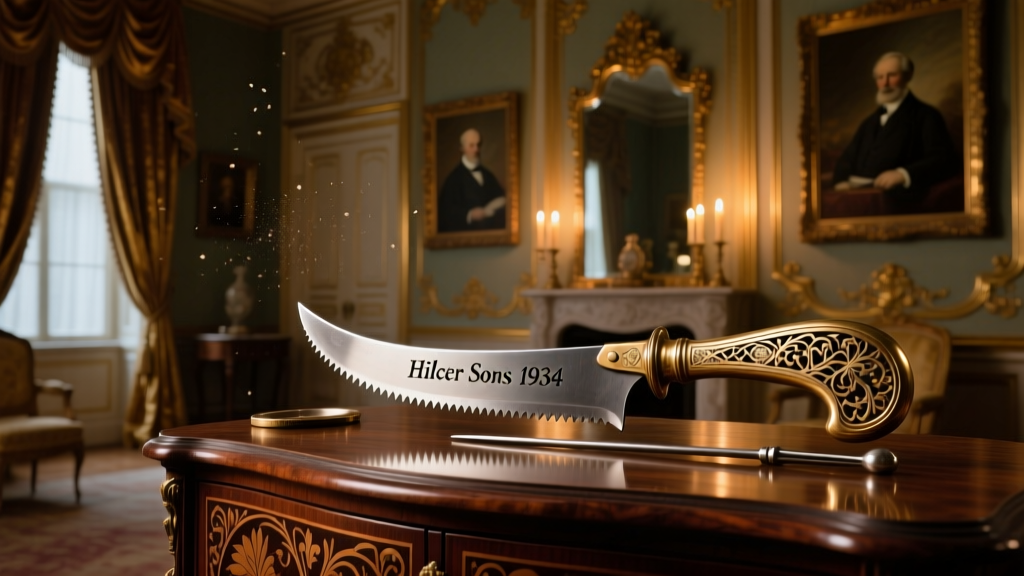
The Hilcer Sons 19¾-Inch Medical Amputation Saw: History, Anatomy, and Conservation of a Surgical Artifact