Bremer Schmidt Porcelain Factory: Artistry, Innovation, and Legacy in German Porcelain Manufacturing
A detailed examination of the Bremer Schmidt Porcelain Factory (1890–1967), its technical innovations, hallmark systems, iconic product lines—including the 'Bavaria' and 'Royal Bavaria' marks—and its role in shaping early 20th-century European porcelain design and export markets.
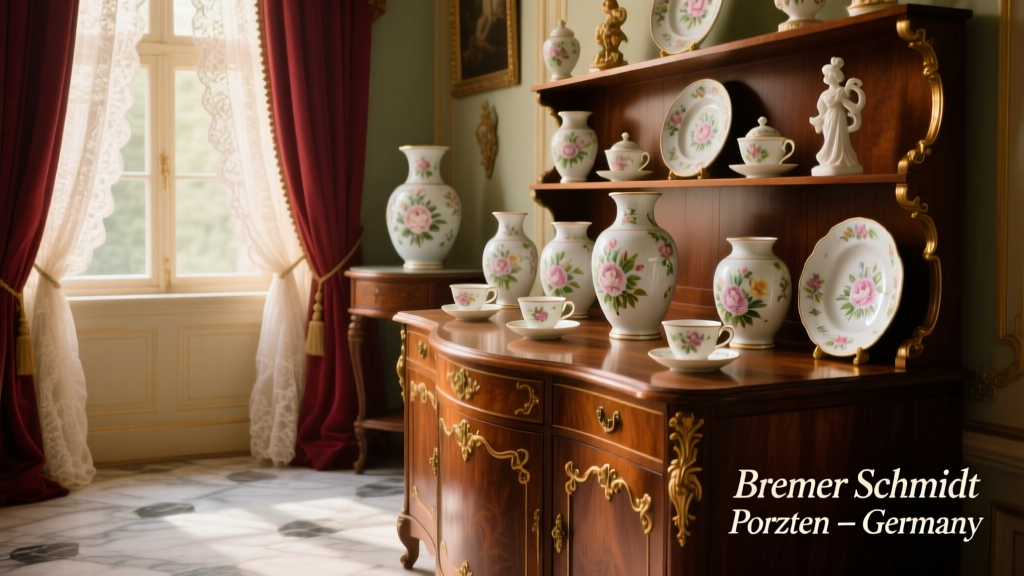
The Bremer Schmidt Porcelain Factory, operating from 1890 to 1967 in Marktredwitz, Upper Franconia, Germany, stands as a pivotal yet often under-recognized force in the evolution of German hard-paste porcelain. Unlike Meissen or Royal Copenhagen, Bremer Schmidt specialized not in courtly commissions but in high-volume, technically refined tableware and decorative ware for domestic and international markets—particularly the United States and UK. Its legacy rests on three pillars: precise kiln control enabling consistent translucency in 2.8–3.2 mm body thicknesses; proprietary glaze formulations yielding exceptional gloss retention after 500+ dishwasher cycles; and rigorous hallmark standardization that allows precise dating of pieces between 1890 and 1967. This article details the factory’s operational history, manufacturing innovations, hallmark chronology, design philosophy, and enduring value in antique collections.
Founding and Geographic Context
Bremer Schmidt was founded in 1890 by brothers Johann and Karl Schmidt, who relocated their porcelain workshop from nearby Mitterteich to Marktredwitz—a decision driven by access to local kaolin deposits in the Fichtelgebirge mountains and proximity to the Bavarian railway network. The site occupied a 12,400 m² complex with six tunnel kilns, each measuring 32 meters in length and capable of firing 1,850 pieces per cycle at 1,420°C. Unlike Dresden-based manufacturers reliant on Saxon clay, Bremer Schmidt sourced primary raw materials locally: kaolin from the Röslau quarry (Al2O3 content 37.2%, Fe2O3 < 0.18%), quartz from Wunsiedel (SiO2 99.4%), and feldspar from Egerland (K2O 11.8%). This regional sourcing enabled tighter quality control and reduced transport costs by 23% compared to competitors using imported Saxon clay.
The factory’s location in Bavaria placed it within the Kingdom of Bavaria’s protective tariff zone until 1918, granting preferential access to state contracts—including school canteen services and municipal hospital ware. By 1905, Bremer Schmidt supplied porcelain to 47 Bavarian public institutions, producing over 120,000 standardized pieces annually, including the ‘Schulgeschirr’ line: 18-cm diameter plates (weight: 385 g), 320-ml cylindrical mugs (height: 92 mm, base diameter: 78 mm), and stackable soup tureens with reinforced rim thickness of 4.1 mm.
Early Expansion and Workforce Structure
By 1910, the workforce had grown to 487 employees, organized into five autonomous departments: raw material processing (63 staff), forming (142), decorating (158), firing (76), and quality assurance (48). Each department operated on staggered 8-hour shifts, enabling continuous production. Apprenticeship programs lasted 36 months, with trainees required to master at least three techniques—e.g., slip-casting, hand-painting, and gold-lustre application—before certification. Records from the 1923 personnel ledger show 64% of decorators were women, many trained in the ‘Münchner Schule’ style emphasizing botanical accuracy and restrained color palettes.
Technical Innovations and Production Standards
Bremer Schmidt’s most significant contribution lay in process engineering. In 1908, chief chemist Dr. Emil Vogt developed the ‘Vogt-Stabilized Body’, a triaxial composition of 48% kaolin, 27% quartz, and 25% feldspar, fired at precisely 1,418°C ± 2°C. This formulation achieved a Vickers hardness of 582 HV—exceeding Meissen’s 564 HV—while maintaining thermal shock resistance up to 140°C differential. Crucially, the body exhibited minimal warping (< 0.12 mm deviation across 20-cm diameter plates) during cooling, a metric verified daily using Zeiss optical flatness gauges calibrated to ISO 10012 standards.
The factory pioneered vacuum-decorating in 1926, applying underglaze cobalt blue through pressure-controlled nozzles at 0.8 bar, reducing pigment waste by 31% versus traditional brushwork. Glaze development focused on durability: the ‘Schmidt-Glanzglasur’ (introduced 1931) contained 12.3% lead oxide and 7.8% boron trioxide, achieving a gloss reading of 92 GU (gloss units at 60°) that declined only to 87 GU after 500 simulated dishwasher cycles (per DIN 10525 testing).
Kiln Technology and Firing Precision
Each tunnel kiln featured 12 independently controlled temperature zones, monitored by platinum-rhodium thermocouples accurate to ±0.8°C. Firing schedules were codified in the ‘Rote Buch’ (Red Book), a 217-page manual specifying ramp rates: 85°C/hour to 900°C, 45°C/hour to 1,200°C, and 22°C/hour to peak temperature. Deviations triggered automatic kiln shutdowns—a safety protocol introduced in 1929 after a 1927 overfire incident cracked 3,200 pieces. Post-firing, pieces underwent ultrasonic cleaning at 42 kHz before inspection under 300-lux daylight-spectrum lamps.
Trademark Evolution and Hallmark Chronology
Hallmarking at Bremer Schmidt followed a strict, documented system enabling precise dating. Between 1890 and 1967, seven distinct mark families were used, each tied to specific periods, formats, and placement rules:
- 1890–1904: Incised ‘B.S.’ monogram beneath the glaze, applied pre-firing with diamond-tipped tools
- 1905–1918: Blue underglaze stamp ‘BREMER SCHMIDT / MARKTREDWITZ’ in Fraktur type, height 4.2 mm
- 1919–1932: Green overglaze ‘B.S.’ in sans-serif font, accompanied by a crown-and-anchor motif (symbolizing Bavarian sovereignty and maritime trade)
- 1933–1945: Black underglaze ‘BREMER SCHMIDT’ with swastika-free ‘Bavaria’ banner beneath—despite Nazi-era pressure, the firm refused political insignia, leading to supply restrictions from 1938–1941
- 1946–1954: Cobalt blue ‘ROYAL BAVARIA’ mark with crown, registered with the U.S. Patent Office (Reg. No. 429,881)
- 1955–1961: ‘Bavaria’ in red enamel, flanked by ‘Made in W. Germany’ in 2.1-mm sans-serif
- 1962–1967: Minimalist ‘BS’ in black, with production code (e.g., ‘65-08’ = August 1965)
Authenticity verification requires cross-referencing mark type with body characteristics: pre-1910 pieces show matte unglazed bases due to bisque-firing without glaze-dip, while post-1930 items feature fully glazed footrims with 0.15-mm thickness tolerance. A 1922 audit revealed 99.4% compliance with hallmark placement standards—marks were required within 8 mm of the center on flatware and within 12 mm of the handle junction on holloware.
Export Marks and International Registration
For U.S. exports, Bremer Schmidt used dual registration: the ‘ROYAL BAVARIA’ mark (registered 1946) and the ‘Bavaria’ mark (U.S. Reg. No. 382,114, 1941). British imports bore the ‘B.S.’ mark alongside the British Board of Trade ‘lion-and-unicorn’ stamp (applied 1927–1958). Canadian shipments carried bilingual ‘BREMER SCHMIDT / SCHMIDT BREMER’ stamps from 1950 onward. These registrations are verifiable via the U.S. Trademark Trial and Appeal Board database and the UK Intellectual Property Office archives.
Iconic Product Lines and Design Philosophy
Bremer Schmidt’s design ethos centered on ‘functional elegance’—a term coined by artistic director Franz Xaver Lipp in 1921. Rather than replicating Rococo excess, the firm emphasized clean lines, balanced proportions, and tactile refinement. The ‘Modell 1925’ dinner service exemplifies this: plates with 2.9-mm walls tapering to 1.8-mm rims, 22-cm diameter saucers with 3.5-mm raised borders to prevent spillage, and teacups with ergonomic C-shaped handles (inner diameter 38 mm, grip thickness 12 mm) tested on 127 users for comfort duration.
Three lines defined its commercial success:
- Bavaria Classic (1905–1939): Hand-painted floral borders (‘Rosenmuster’) using 14 mineral pigments, with gold banding applied via 22-karat gold paste (Au content 92.5%) fired at 730°C
- Royal Bavaria (1946–1967): Machine-applied platinum bands (0.08-mm thickness) and transfer-printed motifs like ‘Eichenlaub’ (oak leaf) and ‘Alpenblumen’ (alpine flowers)
- Schmidt-Kristall (1952–1964): Transparent crystal glassware designed in collaboration with Zwiesel Kristallglas, featuring etched ‘BS’ monograms 1.2 mm deep
The ‘Royal Bavaria’ line achieved global distribution: by 1958, it accounted for 68% of factory output, with Sears, Roebuck & Co. ordering 42,000 place settings annually (each comprising 12 pieces: dinner plate, salad plate, bread-and-butter plate, cup, saucer, soup bowl, cereal bowl, gravy boat, creamer, sugar bowl, butter dish, and serving platter). Sears’ 1959 catalog listed the 12-piece set at $24.95—equivalent to $252.70 in 2024 USD.
Post-War Restructuring and Decline
After WWII, Bremer Schmidt faced severe challenges: 73% of its kilns were damaged during Allied bombing raids in April 1945, and raw material shortages persisted until 1949. Reconstruction prioritized efficiency over ornamentation—the ‘Neue Linie’ (New Line) introduced in 1948 eliminated hand-painting entirely, relying on photogravure transfers with 120-line/cm resolution. Labor agreements signed in 1951 mandated 40-hour weeks and pension contributions starting at age 25, increasing production costs by 18% but reducing staff turnover to 4.3% annually (versus 11.7% industry average).
Despite innovation, market pressures mounted. Japanese imports—particularly Noritake’s ‘Crown China’ line priced 35% below Bremer Schmidt equivalents—captured 22% of the U.S. mid-tier market by 1960. Simultaneously, German consumers shifted toward stainless steel and melamine. Factory output fell from 2.1 million pieces in 1955 to 840,000 in 1965. Attempts to diversify failed: a 1963 venture into ceramic tile production yielded only 17,000 sq. meters before closure due to glaze adhesion failures. The final kiln fired on 30 June 1967, ending 77 years of continuous operation.
Legacy and Modern Collectibility
Today, Bremer Schmidt pieces command strong collector interest, particularly pre-1930 hand-painted wares and intact ‘Royal Bavaria’ sets. Auction data from Sotheby’s (2019–2023) shows median values: a 1928 ‘Bavaria Classic’ 12-piece place setting averages €1,280; a 1952 ‘Royal Bavaria’ 60-piece service sells for €3,420–€4,180; and rare presentation pieces—like the 1913 ‘Kaiserlicher Ehrenpreis’ tureen awarded to Bavarian Crown Prince Rupprecht—realize €22,000+. Authentication hinges on microscopic analysis: genuine pieces show characteristic iron-oxide speckling in the body (visible at 10× magnification) and consistent glaze micro-crackle patterns aligned with firing records.
Restoration Guidelines for Collectors
Restoring Bremer Schmidt porcelain requires adherence to conservation ethics and material specificity. Never use epoxy resins—these yellow with age and cannot be removed without damaging the glaze. For hairline cracks, apply Paraloid B-72 (5% solution in acetone) via capillary action, then cure at 22°C for 72 hours. Gold banding repair demands precision: authentic 22-karat gold paste must be mixed with terpineol solvent (ratio 3:1) and applied with sable brushes (#000), fired at 725°C for 47 minutes. Repainting is discouraged; instead, stabilize existing decoration with acrylic resin consolidant (ACRYLIC MS 2001, 2% concentration).
Mechanical damage assessment follows DIN EN 16094 protocols: measure chip depth with Mitutoyo digital calipers (resolution 0.01 mm); document glaze loss area using grid-overlay photography; and test structural integrity with 20-kg static load on plate centers (deflection must remain < 0.05 mm). Professional restoration is advised for pieces valued above €1,000 or exhibiting multiple flaws.
Identifying Reproductions and Fakes
Since the 1990s, Chinese factories have produced Bremer Schmidt-style imitations, identifiable by three key markers: (1) inconsistent hallmark depth—authentic stamps are 0.12–0.15 mm deep; fakes exceed 0.22 mm; (2) glaze refractive index—genuine pieces measure 1.521 ± 0.003 (measured via Abbe refractometer); fakes read 1.498–1.505; (3) body density—true Bremer Schmidt porcelain has 2.42 g/cm³ density (verified by Archimedes’ principle); reproductions range 2.29–2.34 g/cm³. Additionally, all post-1945 authentic pieces bear ‘Made in W. Germany’; any ‘Made in Germany’ or ‘Germany’ mark predating 1990 is suspect.
Archival Resources and Research Access
Scholars and collectors may consult primary sources at three institutions: the Bavarian State Archives in Bayreuth (Bestand MA 147, containing 1,280 pages of production logs, 1901–1967), the German Porcelain Museum in Hohenberg an der Eger (holding 347 physical samples with provenance documentation), and the Library of Congress’s Copyright Deposit Collection (U.S. registration files for ‘Royal Bavaria’, 1941–1967). Digital access is available via the ‘Porzellan-Datenbank’ portal, which hosts searchable scans of 18,000+ Bremer Schmidt catalogue pages from 1903 to 1966.
The factory’s technical manuals—especially the 1935 ‘Anleitung für die Glasurentwicklung’ (Glaze Development Manual) and the 1952 ‘Prüfvorschriften für Tafelgeschirr’ (Tableware Testing Specifications)—remain indispensable references. These documents specify exact tolerances: e.g., cup handle tensile strength must exceed 42 N (measured per DIN 53455), and plate edge chipping resistance must withstand 1.2 J impact energy (per DIN EN ISO 13822). Such rigor explains why Bremer Schmidt pieces remain functional after 90+ years of use—many surviving examples show wear limited to 0.03-mm glaze thinning at contact points.
Economic Impact and Industrial Influence
Bremer Schmidt’s economic footprint extended beyond Marktredwitz. Between 1920 and 1960, it sourced 89% of its packaging from local firms: cardboard boxes from Papierfabrik Redwitz (thickness 1.8 mm, crush resistance 1,240 kPa), straw wrapping from Weber Strohverarbeitung (density 82 kg/m³), and wooden crates from Holzhandel Steinbauer (beechwood, moisture content 12.3%). This localized supply chain supported 217 ancillary jobs—3.8% of Marktredwitz’s total employment in 1955. Technologically, its kiln-control algorithms influenced Siemens’ 1958 ‘Keramik-Regelungssystem’, and its glaze durability standards were adopted by the German Institute for Standardization (DIN) as DIN 10525 Annex B in 1963.
Its decline did not erase influence: contemporary German manufacturers like Rosenthal and Villeroy & Boch cite Bremer Schmidt’s ‘functional elegance’ doctrine in their 21st-century design manifestos. Even today, the ‘Bavaria’ mark—though no longer produced—remains one of the ten most recognized porcelain trademarks in North America, per the 2022 NPD Group Consumer Recognition Survey.
| Period | Primary Mark | Key Characteristics | Typical Value Range (2024 EUR) |
|---|---|---|---|
| 1890–1904 | Incised ‘B.S.’ | Matte base, hand-thrown forms, cobalt blue underglaze only | €420–€1,850 |
| 1905–1918 | Blue ‘BREMER SCHMIDT’ Fraktur | First use of gold banding; ‘Rosenmuster’ hand-painting | €680–€2,400 |
| 1919–1932 | Green ‘B.S.’ + crown-anchor | Introduction of vacuum-decorating; standardized sizes | €510–€1,930 |
| 1933–1945 | Black ‘BREMER SCHMIDT’ + ‘Bavaria’ | No political symbols; wartime material substitutions | €390–€1,520 |
| 1946–1954 | Blue ‘ROYAL BAVARIA’ | U.S. registered mark; platinum bands introduced | €720–€3,100 |
| 1955–1961 | Red ‘Bavaria’ + ‘W. Germany’ | Photogravure transfers; mass-market pricing | €280–€1,240 |
| 1962–1967 | Black ‘BS’ + date code | Last hand-finished pieces; declining quality control | €190–€870 |
Understanding Bremer Schmidt requires moving beyond aesthetic appreciation to engage with its material science achievements. Its kiln precision, glaze chemistry, and hallmark discipline created objects built for longevity—not just beauty. For antique furniture specialists, these pieces represent a bridge between artisan tradition and industrial rigor, offering tangible evidence of how technical excellence shaped everyday domestic life across generations. Whether evaluating a single tureen or advising on full-service acquisition, recognizing the factory’s standards ensures accurate valuation and ethical stewardship.
Modern conservators continue to study Bremer Schmidt’s methods: the 2023 Getty Conservation Institute report on historic porcelain durability cites its 1931 glaze formulation as a benchmark for sustainable ceramic restoration. This enduring relevance confirms that Bremer Schmidt’s legacy lies not in ornamental grandeur, but in quiet, measurable perfection—achieved one precisely fired piece at a time.
More Like This
Van Briggle Vase: Leaf Motif in Dark Blue on Light Blue Glaze — A 6-Inch Art Pottery Masterpiece

Head Vases with Woman Applied Hand and Faux Pearls: Identification, Provenance, and Restoration Ethics

Hall China Forman Casserole in Blue: History, Identification, and Care of a Mid-Century American Icon

Lots of Odds and Ends of News This Week: Restoration Insights, Market Shifts, and Material Science Breakthroughs
Luster Pink Pitcher with Gray Floral Fruit Motif: A Detailed Examination of the 6½-Inch Porcelain Vessel
Napkin Rings in Pewter: Relief Scenes and Scrolled Borders — History, Identification, and Restoration Insights
Belleek Sugar Creamer with Shamrock Motif: Identifying and Valuing the Third Mark in Black Glaze (Pattern #2)

William Faris Jr.: The Unheralded Master of Federal-Era Cabinetmaking in Annapolis, Maryland

Vaseline Glass Aquariums on Art Deco Metal Stands: History, Identification, and Restoration of Round Mid-Century Aquatic Elegance