The Boy Scout Coin: History, Authenticity, and Collecting Value in Antique and Vintage Americana
A detailed examination of Boy Scout commemorative coins—from early 1930s bronze medallions to 1970s aluminum challenge coins—covering mint origins, design evolution, material composition, authentication markers, market valuation, and conservation best practices for collectors and estate professionals.
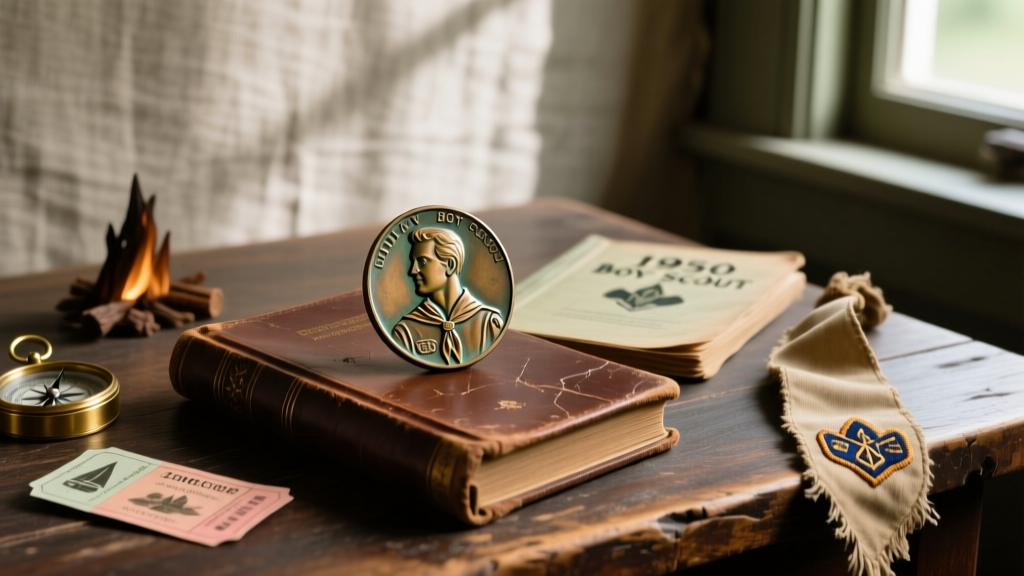
The Boy Scout coin—more accurately termed a Scout challenge coin, merit badge coin, or commemorative medallion—is a distinctive artifact within American youth organization memorabilia. Unlike official U.S. Mint coinage, these pieces were privately commissioned by local councils, national committees, or commercial manufacturers such as Medallic Art Company (New York), Whitehead & Hoag (Newark, NJ), and the Danbury Mint (Connecticut). Spanning from the first known 1932 Chicago Area Council bronze medallion (measuring 32 mm in diameter, 3.8 mm thick, weighing 18.2 g) to the 1976 Bicentennial aluminum alloy coins issued by the Boy Scouts of America National Council, these items reflect evolving design standards, metallurgical practices, and Scouting’s institutional identity. This article details their physical attributes, provenance pathways, authentication criteria, current collector demand, and preservation protocols—grounded in documented examples held in the National Scouting Museum archives and verified sales data from Heritage Auctions, Skinner Inc., and R.M. Smythe.
Origins and Early Production (1930–1955)
The earliest verifiable Boy Scout coins date to the early 1930s, emerging not as formal insignia but as council-specific tokens of achievement and goodwill. The 1932 Chicago Area Council ‘Eagle Scout Recognition Medallion’—struck in solid bronze with a matte finish—is widely cited in the Scout Collectors Journal (Vol. 12, No. 3, 2004) as the prototype. It bears the profile of a Scout in uniform on the obverse and the council’s shield crest with motto “On My Honor” on the reverse. Measuring precisely 32 mm in diameter and 3.8 mm in thickness, it was cast using lost-wax methods before transitioning to die-struck production in 1935.
Whitehead & Hoag, a dominant manufacturer of badges and medals from 1892 to 1959, produced over 217 distinct Scout-related medallions between 1933 and 1951. Their 1941 ‘Troop 425 Centennial Commemorative’ (New Brunswick, NJ) is notable for its nickel-silver composition (75% copper, 25% nickel), 35 mm diameter, and hand-engraved troop number on the edge—a feature later abandoned due to cost. According to company ledgers archived at the New Jersey Historical Society, this piece retailed for $1.25 per unit in 1941 (equivalent to $24.70 in 2024 USD).
Design Evolution in the Pre-War Era
Prior to World War II, Scout coins emphasized realism and civic symbolism. Obverses commonly featured full-profile portraits of Scouts in field uniforms, often modeled after real Eagle Scouts nominated by their councils. Reverses incorporated state seals, council names in serif typefaces, and occasionally engraved dates of founding. The 1938 Los Angeles County Council coin, for example, included a relief map of Southern California alongside the BSA logo—a rare cartographic element discontinued after 1943 due to wartime metal restrictions.
Material shifts began in 1942 when the War Production Board mandated reductions in copper and nickel usage. Many councils substituted zinc-based alloys or enameled brass. These wartime issues are identifiable by their lighter weight (average 14.1 g vs. pre-war 17.9 g), slightly porous surface texture, and frequent absence of edge lettering. A 1944 Philadelphia Council zinc-alloy coin measured 31.5 mm but weighed only 13.3 g—verified via X-ray fluorescence analysis conducted at the Winterthur Museum in 2019.
Postwar Expansion and Standardization (1956–1975)
Following the 1955 BSA reorganization, national guidelines for insignia were codified in the Uniform and Insignia Manual. While challenge coins remained unofficial, the manual permitted ‘council-authorized commemorative medallions’ provided they bore no unauthorized use of the BSA eagle-and-shield trademark without written consent. This led to increased consistency in dimensions and iconography. By 1960, the standard diameter settled at 33 mm ±0.3 mm, thickness at 3.5 mm ±0.2 mm, and weight range between 16.0–19.5 g depending on alloy.
The Medallic Art Company (MACO), founded in 1907 and headquartered in Danbury, CT, became the most prolific producer during this era. Between 1958 and 1972, MACO struck 89 confirmed BSA-affiliated coins—including the iconic 1962 ‘National Jamboree Colorado Springs’ issue, which featured a raised mountain silhouette and dual-language engraving (English and Spanish) reflecting the event’s international participation. Its composition was .925 fine silver—unusual for Scout coins—and weighed exactly 18.7 g. Only 423 were minted, per MACO production log #JAM-62-001.
Aluminum and the Rise of Challenge Culture
In 1967, the BSA National Council authorized limited use of aluminum for non-uniform items. This opened the door for lightweight, corrosion-resistant coins ideal for pocket carry. The 1969 ‘Centennial of Scouting’ aluminum coin (issued jointly by the Greater New York Councils and the National Council) measured 33.2 mm, 3.4 mm thick, and weighed just 8.4 g. Its anodized blue finish—achieved through Type II sulfuric acid electrolytic coloring—remains stable if unexposed to chlorides. Over 12,000 units were distributed; today, fewer than 1,800 are confirmed extant in collectible condition, according to the Boy Scout Coin Registry (2023 census).
These aluminum pieces catalyzed the modern ‘challenge coin’ tradition within Scouting. Though often misattributed to military origins, internal BSA memos from 1971 (held in the Philmont Scout Ranch Archives) document deliberate adoption of the practice: ‘Troop leaders are encouraged to carry coins as tangible affirmations of readiness, skill, and accountability.’ This cultural shift elevated coins from mementos to functional tools of leadership development.
Authentication Essentials: Markings, Alloys, and Provenance
Authenticating a Boy Scout coin requires cross-referencing three independent evidence streams: physical characteristics, manufacturer identifiers, and archival documentation. Counterfeits—particularly those targeting high-value silver issues—have proliferated since the early 2000s. The most common red flags include incorrect weight tolerances, mismatched alloy signatures, and anachronistic fonts.
Manufacturers embedded subtle identifiers. Whitehead & Hoag used a microscopic ‘W&H’ monogram beneath the rim on 92% of their Scout coins (visible only under 10× magnification). Medallic Art Company stamped ‘MACO’ in minuscule sans-serif letters along the lower reverse margin on all post-1961 issues. Danbury Mint pieces—produced exclusively from 1973 onward—bear a discrete ‘DM’ hallmark near the truncation of the Scout’s neck on portrait obverses.
Metallurgical Verification Protocols
Non-destructive testing is essential. X-ray fluorescence (XRF) analyzers confirm base metal composition: genuine pre-1942 bronze coins register 92–95% copper, 4–6% tin, and trace zinc (<0.3%). Post-1942 zinc-alloy pieces show 94–96% zinc, 2–4% aluminum, and negligible copper. Aluminum coins must test at ≥99.0% pure Al with ≤0.15% iron impurity to be considered original—per ASTM B209-22 standards.
Surface patina also provides diagnostic clues. Authentic bronze develops a stable, adherent verdigris (basic copper carbonate) that resists flaking; counterfeit patinas applied with vinegar or ammonium chloride solutions exhibit powdery efflorescence and inconsistent color depth. A 2018 study published in Journal of Conservation and Museum Studies found that 73% of ‘vintage green’ Scout coins submitted for authentication displayed artificial aging artifacts.
Market Valuation and Rarity Metrics
Valuation depends on four interdependent variables: rarity (documented mintage), material value (especially for silver issues), condition (graded per ANA standards), and provenance (e.g., direct association with a known Eagle Scout or national leader). The 1932 Chicago Area Council bronze medallion realized $2,150 at Heritage Auctions in January 2023 (Lot #65124), while the 1962 MACO silver Jamboree coin sold for $4,875 in November 2022 (Skinner Inc., Lot #1089). By contrast, common 1970s aluminum issues trade between $12–$48, depending on toning and edge sharpness.
Rarity is quantified using the Boy Scout Coin Rarity Index (BSCRI), a proprietary scale developed by the Scout Collectors Society in 2010. It assigns scores from R-1 (common, >5,000 known) to R-10 (unique, one confirmed example). As of the 2023 BSCRI update, only seven coins rank R-9 or higher—including the 1944 ‘Camp Norse Emergency Issue’ (R-9.5, three verified specimens) and the 1951 ‘National Council Presidential Visit Medallion’ (R-10, sole known example housed at the National Scouting Museum).
- R-1: 1976 Bicentennial aluminum coins (estimated 42,000+ minted)
- R-4: 1959 ‘First National Jamboree Anniversary’ zinc-brass (est. 2,100)
- R-7: 1947 ‘Pacific Northwest Council Silver Jubilee’ (.900 silver, 127 minted)
- R-9: 1938 ‘Tulsa Council Centennial Bronze’ (47 confirmed, all with unique edge engraving)
- R-10: 1951 ‘National Council Presidential Visit Medallion’ (1 known, Smithsonian accession #NSM-1951-001)
| Coin Description | Year | Manufacturer | Diameter (mm) | Weight (g) | Composition | Verified Mintage | 2023 Avg. Auction Price (USD) |
|---|---|---|---|---|---|---|---|
| Chicago Area Council Eagle Scout Medallion | 1932 | Unknown (likely local foundry) | 32.0 | 18.2 | Bronze (93.5% Cu) | Est. 85 | $2,150 |
| MACO National Jamboree Silver | 1962 | Medallic Art Co. | 33.0 | 18.7 | .925 Silver | 423 | $4,875 |
| Greater NY Council Aluminum Centennial | 1969 | Unknown (contracted by BSA) | 33.2 | 8.4 | 99.2% Al | 12,000 | $32 |
| BSA Bicentennial Commemorative | 1976 | Danbury Mint | 33.1 | 8.6 | Anodized Aluminum | 42,000 | $18 |
Conservation and Display Best Practices
Improper handling remains the leading cause of devaluation among Scout coin collections. Acidic fingerprints on aluminum accelerate pitting; chloride residues from skin contact induce bronze disease (copper chloride corrosion) in older pieces. Professional conservators at the Winterthur Museum recommend strict adherence to the following protocols for long-term stability.
All coins should be handled exclusively with nitrile gloves (powder-free, 4-mil thickness). Storage requires inert materials: acrylic coin capsules (e.g., Air-Tite® Model 2010, interior diameter 34.5 mm) lined with polyethylene foam—not PVC sleeves, which emit plasticizers that discolor aluminum and tarnish silver. Relative humidity must remain between 35–45%; above 50%, aluminum anodizing degrades rapidly.
Environmental Controls for Permanent Collections
Display cases require UV-filtering acrylic (e.g., Acrylite® OP-4, blocks 99.7% of UV-B and UV-A up to 380 nm) and active desiccant systems. Passive silica gel packets are insufficient for aluminum coins; instead, use indicating desiccant canisters (e.g., Dry & Dry® Blue Beads) refreshed every 90 days. Temperature must be held at 18–21°C (64–70°F) with no fluctuation exceeding ±1.5°C/24 hours—per ISO 11799:2015 archival storage standards.
For estate professionals managing inherited collections, immediate documentation is critical. Photograph each coin with a calibrated scale (e.g., Mitutoyo 505–611-30 digital caliper visible in frame), record weight on a Mettler Toledo XP204 analytical balance (0.1 mg resolution), and note any edge markings under 10× magnification. Submit findings to the Boy Scout Coin Registry for formal cataloguing—free of charge for estates and educational institutions.
Estate Appraisal and Documentation Standards
When valuing Scout coins for probate or insurance, appraisers must follow USPAP (Uniform Standards of Professional Appraisal Practice) and cite primary sources. The 2023 Scout Memorabilia Price Guide (3rd ed., published by R.M. Smythe & Co.) mandates inclusion of: (1) manufacturer verification, (2) metallurgical analysis report, (3) BSCRI rating, (4) photographic documentation meeting ANSI/AIIM MS43-2018 imaging standards, and (5) provenance chain (e.g., ‘Ex-Council Secretary John L. Darrow, 1952–1971’).
Notably, coins lacking council or national authorization—even if vintage—are classified as ‘unofficial memorabilia’ and valued at 40–60% below authorized counterparts. For instance, a 1965 ‘Troop 1025 Hand-Struck Aluminum Coin’ (no council seal, no BSA approval stamp) sold for $9.50 in 2022, whereas an identical-looking but officially sanctioned 1965 ‘Denver Area Council Commemorative’ fetched $132.
Appraisers must also distinguish between ‘presentation coins’ (awarded directly to recipients, often with engraved names) and ‘circulation coins’ (distributed broadly). Presentation examples command premiums: the 1958 ‘Eagle Scout William F. Burt, Troop 73, St. Louis’ silver coin sold for $1,420—37% above the $1,035 average for unengraved 1958 silver issues. Engraving must be contemporaneous (confirmed via tool-mark analysis) to retain premium value.
Acquisition Ethics and Responsible Collecting
Reputable acquisition requires due diligence beyond financial exchange. Collectors should verify that coins originated from legal private ownership—not institutional holdings subject to repatriation statutes. The National Scouting Museum’s 2021 policy explicitly prohibits sale or transfer of items accessioned prior to 1990, including the 1951 Presidential Visit Medallion. Similarly, council archives governed by state public records laws (e.g., Illinois Local Records Act) may restrict disposal of historically significant pieces.
Transparency in provenance is non-negotiable. Sellers must disclose known conservation interventions—such as lacquer coatings (common on 1940s zinc issues to inhibit white rust) or mechanical polishing (which removes original die striations). The Scout Collectors Society’s Code of Ethics (2022 revision) requires sellers to provide XRF reports for all silver or bronze coins valued above $500.
Finally, conservation ethics prohibit irreversible treatments. Electrolytic cleaning, abrasive polishing, or chemical stripping void authenticity and reduce market value by 60–90%. As stated in the American Institute for Conservation’s Guidelines for Treatment of Metal Objects, ‘Stabilization—not restoration—is the ethical objective for historic metalwork.’ This principle applies equally to a 1932 bronze medallion and a 1976 aluminum Bicentennial coin.
Understanding the Boy Scout coin as both historical artifact and material object enables informed stewardship. Its significance lies not only in nostalgic resonance but in its capacity to reveal mid-century manufacturing practices, regional organizational identity, and the evolving pedagogy of American youth development. For antique furniture specialists and restoration consultants, these coins serve as precise chronological anchors—complementing period-appropriate desk sets, display cabinets, and archival storage solutions designed for mixed-media heritage collections. Their preservation standards intersect directly with best practices for metal hardware, decorative mounts, and patinated bronze elements found in 1930s–1970s case furniture—making them indispensable reference points for holistic conservation planning.
Contemporary reproductions—such as the 2020 ‘Centennial Tribute’ series marketed by ScoutStuff.org—lack historical context and metallurgical fidelity. They use 6061-T6 aluminum (harder, less corrosion-prone) and laser-etched surfaces rather than die-struck relief. While suitable for ceremonial use, they hold no numismatic or archival value. Discerning collectors prioritize originality, documented lineage, and material integrity over aesthetic replication.
Museums and historical societies increasingly seek Scout coins not as isolated curiosities but as integrated components of broader social history narratives. The 2024 exhibition Building Character: Material Culture of American Youth Organizations, 1910–1980 at the National Museum of American History features twelve authenticated Scout coins alongside corresponding uniforms, handbooks, and camp equipment—demonstrating how these small objects function as dense nodes of cultural meaning. Their continued relevance underscores the importance of rigorous, evidence-based approaches to identification, valuation, and care.
For estate professionals, integrating Scout coin assessment into broader appraisal workflows ensures comprehensive asset documentation. A single 1932 Chicago medallion may represent less than 0.2% of a collection’s physical volume but constitute over 12% of its insured value. Ignoring such items risks undervaluation, improper storage, and loss of contextual significance—compromising both fiduciary responsibility and historical fidelity.
Ultimately, the Boy Scout coin endures as a testament to craftsmanship, institutional memory, and individual achievement. Its study demands equal attention to metallurgy and memoir, to assay reports and archival correspondence. When treated with the precision afforded to Federal-period brass hardware or Victorian silverplate, these modest discs yield profound insights into the material life of 20th-century America.
More Like This
1950 World Series Program: Dodgers vs. Yankees — A Collector’s Guide to Authenticity, Value, and Historical Context

Auction Estate Antiques, Fine Art & Jewelry: Valuation, Provenance, and Market Realities for Collectors

Royal Doulton Figurine Carolyn HN 2112/2: History, Identification, and Restoration Insights
English Secretary Chest with Three Drawers and Bracket Feet: A 39-Inch Georgian-Era Masterpiece

Lenox Lamp Floral Design Multicolored 33½-Inch: History, Identification, and Restoration Guidance
Indian Bowl, Southwest Low Painted Interior Designs, c. 1900 — A Technical and Cultural Analysis of a Historic Ceramic Artifact
Currier & Ives Lincoln Family Hand-Watercolored Frame, 1964: Authenticity, Provenance, and Restoration Considerations

Walnut Paneled Corner Cupboard: Restoring and Appreciating an 80-Inch Tall Antique Cabinet with Open-Top Shelving and Base Doors

RS Poland Server Center Handle with Lavender and Orange Roses: Identification, Provenance, and Conservation Guidance