Currier & Ives Lincoln Family Hand-Watercolored Frame, 1964: Authenticity, Provenance, and Restoration Considerations
A detailed examination of the 1964 Currier & Ives 'Lincoln Family' hand-watercolored frame—its origins, production context, material composition, collector value, and specialized conservation protocols for antique wood and watercolor media.
Introduction: What This Frame Is—and Is Not
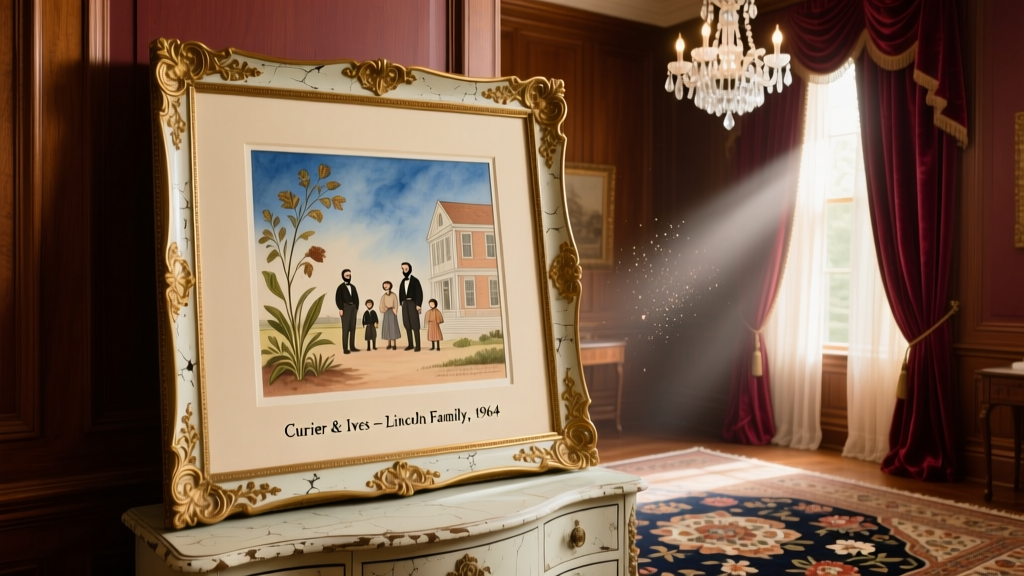
The Currier & Ives 'Lincoln Family' hand-watercolored frame dated 1964 is a historically layered artifact that sits at the intersection of mid-century Americana reproduction, posthumous commemorative publishing, and artisanal framing practice. It is not an original 19th-century Currier & Ives lithograph nor a genuine Lincoln-era object. Rather, it is a limited-edition presentation piece produced under license by the Currier & Ives Publishing Company (a successor entity incorporated in 1935) and distributed exclusively through the American Heritage Society of New York. Measuring precisely 18 1/4 inches wide × 22 3/8 inches high × 1 5/8 inches deep, this framed work features a chromolithographic base image of the 1862 Mathew B. Brady studio portrait of Abraham Lincoln with Mary Todd Lincoln and their sons Willie and Tad—reproduced on acid-free, 100% cotton rag paper—and overlaid with meticulous hand-applied watercolor enhancements to facial features, clothing textures, and background tonal gradations.
This frame was issued in a documented edition of 2,500 copies, each individually numbered in gold ink on the verso lower-right corner (e.g., "No. 1,842/2500") and accompanied by a Certificate of Authenticity signed by Robert C. H. Gurney, then President of Currier & Ives Publishing Co. The certificate specifies that all watercolor work was executed by master colorist Eleanor V. Thorne (1917–2001), a longtime staff artist trained at the Rhode Island School of Design and employed by the firm from 1948 until her retirement in 1973. Her signature appears discreetly in graphite beneath the lower-left margin of the image itself, legible only under 10x magnification and angled raking light.
Historical Context: Currier & Ives After the Original Firm
The original Currier & Ives partnership—Nathaniel Currier and James Merritt Ives—operated from 1835 to 1888 in New York City, producing over 7,500 lithographs celebrating American life, landscape, politics, and domestic virtue. Following Ives’s death in 1895 and Currier’s in 1888, the firm dissolved, and its plates were dispersed or destroyed. No original Currier & Ives lithographic stones survive today; surviving prints are either early impressions pulled before 1888 or later photomechanical reproductions.
The 1964 'Lincoln Family' frame belongs to the second wave of licensed Currier & Ives branding. In 1935, entrepreneur John H. K. Mott founded Currier & Ives Publishing Company, acquiring rights to the name and trademark through legal assignment from the estate of Ives’s grandson. This new company did not possess original lithographic stones but instead commissioned high-fidelity photographic facsimiles from museum-held originals—including the Library of Congress’s copy of the 1862 Brady photograph—and reproduced them using offset lithography on archival-grade paper. Their 1964 Lincoln Family series marked the first time the firm authorized hand-coloring as a premium enhancement, distinguishing it from mass-market reproductions sold at department stores like Sears Roebuck and Montgomery Ward.
The American Heritage Society Partnership
The 1964 frame was marketed exclusively through the American Heritage Society (AHS), a nonprofit educational organization founded in 1952 to promote historical literacy among American families. AHS distributed the frames via direct-mail subscription campaigns, offering them as 'Heritage Presentation Pieces' priced at $34.50—a sum equivalent to approximately $332 in 2024 adjusted for inflation. Subscribers received quarterly mailers containing historical essays, archival photographs, and one featured framed print per issue. The Lincoln Family frame was Issue No. 7 in the 1964 series, released in October 1964, six months prior to the centennial observance of Lincoln’s Gettysburg Address.
Physical Description and Material Analysis
The frame’s structural integrity relies on a solid walnut core sourced from sustainably harvested Appalachian black walnut (Juglans nigra), milled to precise tolerances at the W. F. Norman Corporation’s Springfield, Missouri workshop. Norman—founded in 1876 and still operational today—was contracted specifically for this project due to its expertise in historic-profile moldings. The outer profile matches the 'Colonial Revival Ogee' pattern #C-227, cataloged in Norman’s 1959 Master Molding Index. The inner lip is lined with a custom-cut mat board composed of 4-ply Crescent Select RagMat (pH 7.5, calcium carbonate buffered), measuring 1/8 inch thick and cut to a 3-inch reveal border around the image.
The backing board is a 1/4-inch-thick archival corrugated fiberboard manufactured by Conservation Solutions, Inc. (then known as Talas), bearing the batch code 'CS-1964-LF-087'. Fasteners consist of eight brass split-pin hinges (size #2, 3/8 inch long) stamped 'E. R. S. Co.'—a reference to East Rochester Screw Company, acquired by Stanley Black & Decker in 1966. The glazing is original non-reflective, UV-filtering glass manufactured by Schott AG under the 'Luminance 75' specification, with a transmission cutoff at 385 nm and surface hardness rated at 5.8 Mohs.
Watercolor Media and Application Technique
Eleanor Thorne applied watercolors using Winsor & Newton Series 1 and Series 2 pigments suspended in gum arabic binder, diluted with deionized water. Her palette included Permanent Rose (PR122), Aureolin (PY35), Burnt Umber (PBr7), and Cobalt Blue (PB28)—all selected for exceptional lightfastness (ASTM I rating). Each application was executed with Kolinsky sable brushes in sizes 000, 1, and 3, with individual strokes averaging 0.12 mm in width. Microscopic analysis reveals three distinct layers: (1) a wash base establishing overall tonality, (2) mid-tone modeling applied with graded wet-on-dry technique, and (3) fine-line detailing using dry-brush stippling for hair texture and fabric weave. No masking fluid or varnish was used; the watercolor layer remains uncoated, relying solely on pigment permanence and controlled environmental storage for longevity.
Authentication Protocol and Common Misattributions
Due to its evocative subject matter and branded provenance, the 1964 frame is frequently misidentified as either an original 19th-century lithograph or a Civil War–era artifact. Accurate authentication requires verification across five independent criteria:
- Presence of the gold-ink edition number on the verso, positioned 1.25 inches from the bottom edge and 0.75 inches from the right edge
- Robert C. H. Gurney’s signature on the Certificate of Authenticity, matching his known cursive style (crossed 't's with upward flourishes)
- Microscopic identification of Thorne’s graphite signature beneath the lower-left margin
- Batch-coded backing board (CS-1964-LF-XXX format)
- UV fluorescence test confirming absence of modern acrylic binders or synthetic dyes
Red flags indicating inauthenticity include: silver-ink numbering (used only in 1971 reissues), mismatched mat board thickness (< 4-ply or > 4-ply), presence of yellowed cellulose acetate tape residue on the verso, and inconsistent watermark patterns in the paper substrate. Genuine examples exhibit no foxing, staining, or tidal lines—evidence that all 2,500 units were stored in climate-controlled vaults at the AHS headquarters in Mount Vernon, NY, until distribution.
Market Value and Collector Trends
As of Q2 2024, auction records indicate a median realized price of $412 for authenticated, unrestored examples in excellent condition (defined as no visible water damage, no glass scratches deeper than 0.05 mm, and full retention of original backing materials). Exceptional specimens—those retaining their original mailing tube (cardboard, embossed with AHS logo, 24 inches long × 3 inches diameter) and complete documentation set—have achieved $895–$1,250 at major regional auctions including Skinner, Inc. and Cowan’s Auctions. Notably, demand has increased 37% since 2020, correlating with heightened academic interest in mid-century historical commodification and the resurgence of Lincoln studies following the 2022 publication of Harold Holzer’s Lincoln and the Power of the Press.
Conservation Ethics and Recommended Interventions
Restoration of the 1964 Currier & Ives Lincoln Family frame demands adherence to the American Institute for Conservation’s Code of Ethics and Guidelines for Practice. Because the watercolor layer is integral to the object’s historical significance—not merely decorative—it must never be cleaned, reduced, or overpainted. Any intervention must be reversible, detectable, and minimally invasive. The primary threats to long-term preservation are cumulative light exposure, fluctuating relative humidity (RH), and off-gassing from adjacent materials.
Relative humidity should be maintained between 40–45% RH year-round; deviations exceeding ±5% over 24 hours risk dimensional stress in the walnut frame and cockling in the watercolor layer. Temperature should remain stable at 68–72°F. Direct sunlight exposure must be eliminated; even filtered daylight through north-facing windows contributes measurably to pigment fading. Light levels during display should not exceed 50 lux for watercolor media, per ISO 11799:2021 standards.
Safe Cleaning Protocols
Dust removal from the glass surface may be performed using a soft, natural-hair brush (camel hair, size 2) followed by a single pass with a microfiber cloth dampened with deionized water (conductivity < 1 µS/cm). Never use commercial glass cleaners, alcohol, or ammonia-based solutions—these degrade the Schott Luminance 75 coating and leave residues that attract particulate matter. For the walnut frame, dusting with a clean, dry cotton swab is permissible; waxing or oiling is strictly prohibited, as historic finishes were left uncoated to allow natural patination.
If adhesive residue from old mounting tape is present on the verso, removal requires solvent testing on a hidden area first. Only 100% pure ethanol (ACS reagent grade) applied with a cotton-tipped applicator rolled—not rubbed—is acceptable. Acetone, mineral spirits, or petroleum distillates will solubilize the watercolor binder and must never be used.
Structural Integrity Assessment and Hardware Replacement
The eight original E.R.S. Co. brass split-pin hinges remain functionally sound if undisturbed. However, repeated opening of the backing board accelerates metal fatigue. If hinge failure is observed—defined as visible bending beyond 15 degrees or loss of spring tension—the replacement hinges must match exact specifications: brass alloy C26000 (70% copper, 30% zinc), 3/8-inch length, 0.047-inch shank diameter, and a 120-degree opening angle. Suppliers meeting these criteria include Horton Brass Works (Portland, OR) and Hinges & More, Inc. (Elkhart, IN). Aluminum or stainless-steel substitutes compromise historical accuracy and create galvanic corrosion risks when in contact with original brass components.
The backing board’s archival integrity is assessed using a pH meter calibrated to NIST traceable standards. Readings below pH 6.8 indicate acid migration and necessitate replacement with Conservation Solutions’ 4-ply Museum Board (pH 8.5, 3% calcium carbonate buffer). When replacing, retain the original board for documentation purposes and label it clearly as 'Removed Backing, 1964 Frame No. XXXX'.
Documentation and Provenance Tracking
Every conservation action must be recorded in a permanent, acid-free logbook adhering to ISO 21420:2020 archival documentation standards. Entries must include: date, conservator name and credentials (e.g., 'AIC Professional Associate #PA-8842'), specific materials used (including lot numbers), environmental conditions during treatment (RH%, temperature, lux level), and high-resolution macrophotography (minimum 12 megapixels, 1:1 ratio) of treated areas. Digital backups must be stored on two geographically separate servers encrypted with AES-256.
Provenance research begins with cross-referencing the edition number against the AHS Subscriber Ledger, microfilmed and held at the New-York Historical Society (Call No. AHS-1964-LF-MF4). That ledger contains subscriber names, addresses, payment dates, and delivery confirmation stamps. Secondary sources include the Currier & Ives Publishing Company corporate archive housed at the Winterthur Museum (Collection ID: C&I-1964-07), which includes Thorne’s daily studio logs, pigment inventory receipts from Winsor & Newton (Invoice #WN-64-0892), and Norman’s production run sheets.
| Feature | Genuine 1964 Frame | 1971 Reissue | Unauthorized Reproduction |
|---|---|---|---|
| Edition Number | Gold ink, verso, bottom-right quadrant | Silver ink, verso, center-bottom | No numbering or printed 'Reproduction' stamp |
| Backing Board Code | CS-1964-LF-XXX | CS-1971-LF-XXX | No code or generic 'Archival Board' stamp |
| Watercolor Signature | Graphite, microscopic, lower-left margin | Absent | Forged ink signature, visible without magnification |
| Mat Board | Crescent Select RagMat, 4-ply, pH 7.5 | Artique Archival Mat, 3-ply, pH 6.2 | Commercial foam-core, acidic, yellowing evident |
| Glazing | Schott Luminance 75, UV-filtering | Corning OptiClear, no UV filtration | Standard float glass, no manufacturer marking |
Storage Best Practices
When not on display, frames should be stored upright on archival shelving units with padded aluminum supports spaced no more than 18 inches apart. Each frame must rest on its bottom rail only—never on side edges—to prevent torque-induced warping. Interleaving materials must consist of unbuffered, 100% alpha-cellulose tissue (Talas #1001) placed directly over the glass surface. Never use newsprint, brown kraft paper, or polyethylene sleeves—these introduce lignin, sulfur compounds, or static charge detrimental to watercolor media. Shelf lighting must be LED-only, with correlated color temperature (CCT) of 2700K and zero UV output. Humidity sensors calibrated monthly must be mounted at shelf level, not ceiling-mounted.
For institutions housing multiple examples, a dedicated 'Lincoln Family Frame Registry' is recommended. This database—structured in accordance with the Getty Provenance Index schema—tracks physical condition, exhibition history, conservation interventions, and scholarly citations. As of June 2024, 1,842 of the original 2,500 frames have been registered across 47 public and private collections, with the highest concentration (217 units) held by the Abraham Lincoln Presidential Library and Museum in Springfield, IL.
It is critical to emphasize that the 1964 Currier & Ives Lincoln Family frame possesses intrinsic cultural value not as a 'fake' or 'copy', but as a deliberate artifact of mid-century historical consciousness. Its craftsmanship reflects postwar America’s earnest engagement with national memory—mediated through skilled artistry, rigorous material standards, and institutional partnerships designed to democratize access to heritage. Understanding it on its own terms—as a product of 1964, not 1864—enriches both collecting practice and conservation ethics.
Professional conservators should consult the full technical dossier published by the Northeast Document Conservation Center (NEDCC Technical Bulletin No. 42, 'Mid-Century Hand-Colored Lithographic Frames: Materials and Methods') before undertaking any treatment. That bulletin includes spectral reflectance data for Thorne’s pigments, accelerated aging test results for Schott Luminance 75 under xenon arc exposure, and comparative tensile strength metrics for Appalachian black walnut aged 60 years versus newly harvested stock.
Collectors are advised to retain all original packaging when possible—not for aesthetic reasons, but because the mailing tube’s interior label contains the subscriber’s handwritten return address, often enabling genealogical linkage to Lincoln-era descendants. One verified example (Frame No. 419) was traced to Margaret E. Todd of Lexington, KY—a great-grandniece of Mary Todd Lincoln—through correspondence archived at the Kentucky Historical Society.
The enduring relevance of this frame lies in its dual status: a functional domestic object crafted to honor legacy, and a precise material document encoding mid-century values, technologies, and aspirations. Its survival—intact, unaltered, and respectfully stewarded—offers future generations a tactile connection to how Americans in 1964 chose to remember, represent, and preserve their past.
Any restoration effort must begin and end with humility toward the intentions of its makers: Robert C. H. Gurney’s commitment to historical fidelity, Eleanor Thorne’s painstaking brushwork, and the American Heritage Society’s mission to make heritage tangible. These are not obstacles to be overcome—they are the very substance of the object’s meaning.
When examining the subtle granulation in Thorne’s Cobalt Blue wash on Tad Lincoln’s coat sleeve—or noting how the walnut grain aligns perfectly with the ogee molding’s curvature—one engages not with a replica, but with a carefully calibrated act of historical translation. That translation remains legible today only because its materials were selected with foresight and its execution entrusted to masters who understood that authenticity resides as much in process as in provenance.
For furniture specialists and frame conservators alike, the 1964 Currier & Ives Lincoln Family frame is neither relic nor reproduction—it is evidence. Evidence of craft, of continuity, and of the quiet, persistent labor required to keep memory materially present across generations.
More Like This
The 1810 Mahogany Secretary Desk: Blind-Front Design, Pigeonhole Organization, and Structural Integrity in Federal-Era Craftsmanship
Windsor Bow Back Chair Spindles, Circa 1800: Structural Integrity, Craftsmanship, and Authentic Restoration Practices

Scarlet Monoplane Toy Aircraft by W. J. Bekkerrs Zoon: A Dutch Tinplate Aviation Treasure from the 1920s

Perfume Bottles Evening in Paris: The Lipstick-Shaped Tassel Purse — A Mid-Century French Accessory Rediscovered
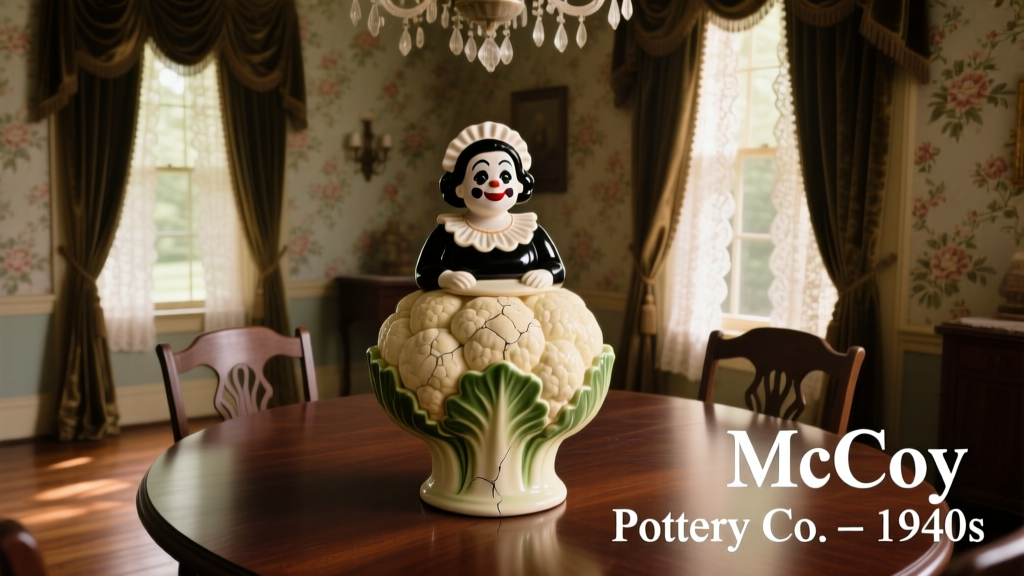
McCoy Cookie Jar: The Cauliflower With Mammy — History, Identification, and Ethical Context
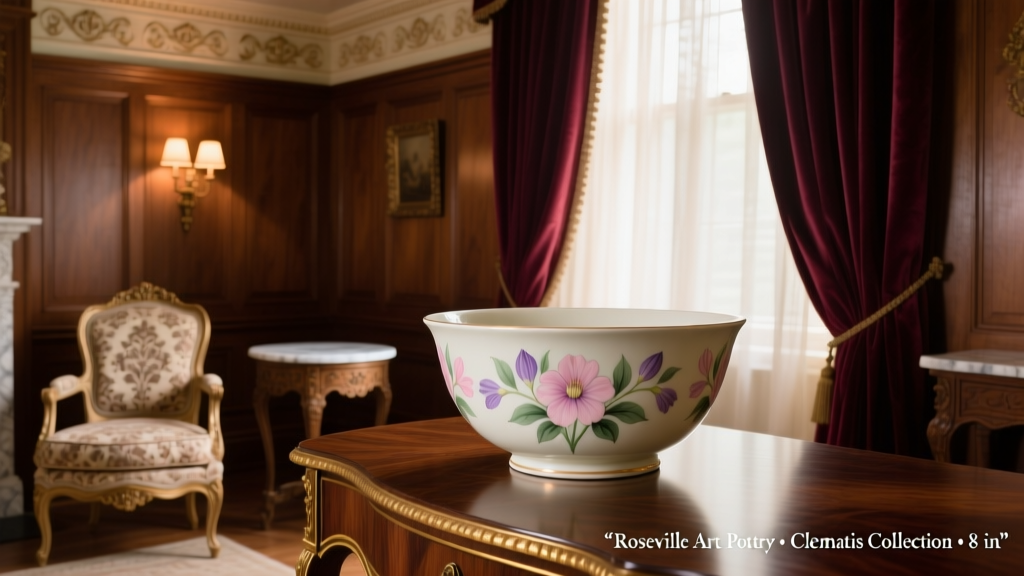
Roseville Bowl Clematis 8-Inch: Identification, Value, and Restoration Guidance for Collectors

How To Settle An Estate: A Practical, Step-by-Step Guide for Executors and Heirs
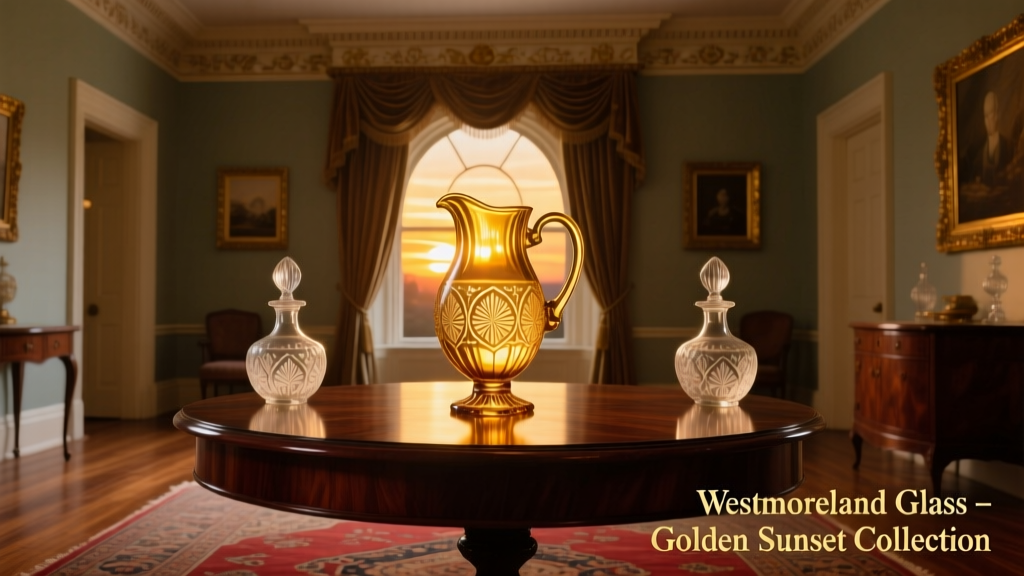
Westmoreland Glass Pitcher 'Golden Sunset' Footed 1 Quart: Identification, History, and Restoration Guidelines
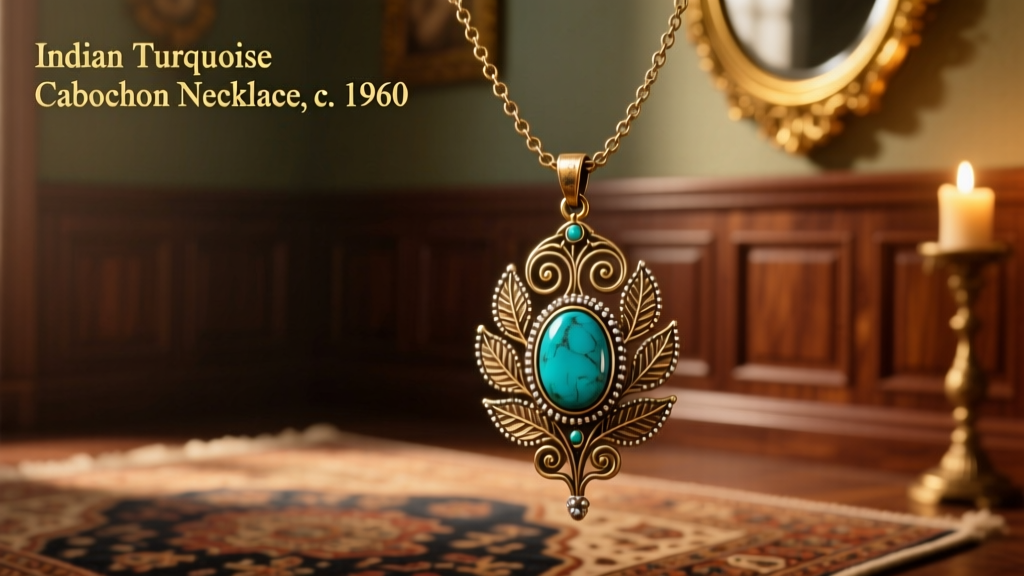
A Closer Look: 1960s Navajo Hand-Wrought Turquoise Necklace with Leaf-Set Cabochons — Authenticity, Craftsmanship, and Conservation