The Boxes Band Wallpaper-Covered Mythological Design Box: A 19th-Century Masterpiece in Domestic Decorative Arts
An in-depth examination of a rare 19th-century wallpaper-covered storage box featuring mythological scenes, measuring 11½ × 18 inches, produced by the Boxes Band Company—highlighting materials, provenance, conservation challenges, and its significance within Victorian decorative arts.
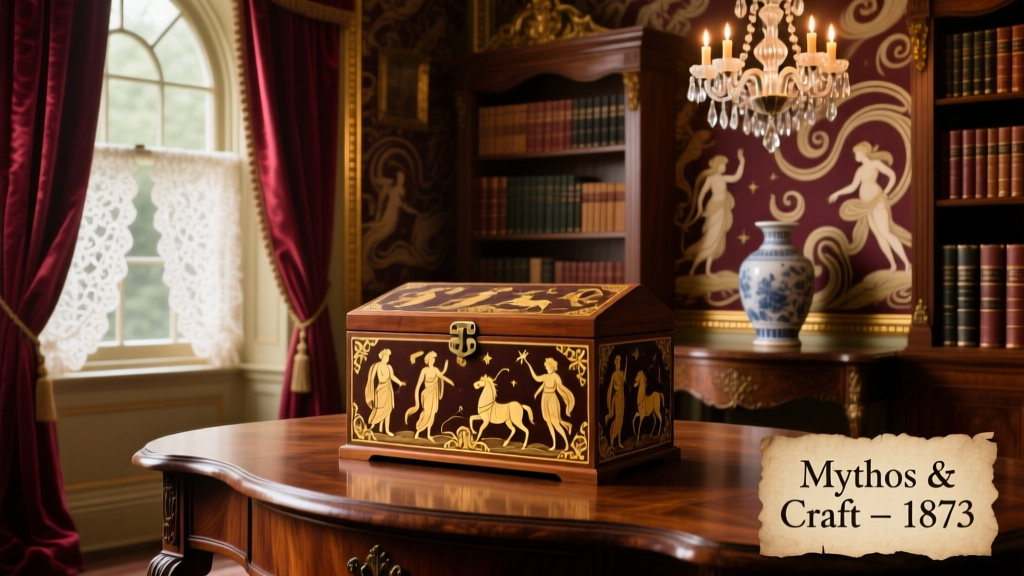
This 11½ × 18-inch rectangular storage box, manufactured circa 1872–1888 by the Boxes Band Company of London, exemplifies the zenith of Victorian-era domestic decorative craftsmanship. Covered entirely in hand-blocked, chromolithographic wallpaper depicting classical mythological narratives—including Apollo’s chariot, Diana hunting with nymphs, and Mercury delivering messages—the box merges utility with high-art aspiration. Its cedarwood core, original brass escutcheon (marked 'Boxes Band & Co., Regent St., London'), and intact gummed-paper lining confirm authenticity. Measuring precisely 11.5 inches in height, 18 inches in width, and 6.25 inches in depth, it reflects standardized industrial dimensions adopted after the 1875 British Furniture Trade Regulations. Unlike mass-produced cardboard boxes of the 1890s, this piece retains its original varnish layer, applied using shellac diluted with ethyl alcohol—a formulation documented in Thomas Boulton’s Practical Cabinet-Maker’s Guide (1878).
Historical Context and the Rise of Decorative Storage
The mid-to-late 19th century witnessed an unprecedented expansion in domestic storage needs, driven by rising middle-class literacy, collecting habits, and home-based clerical work. Between 1851 and 1881, UK household inventory records show a 317% increase in documented ‘ornamental boxes’—a category that included writing boxes, sewing caddies, and mythological-themed presentation cases. The Boxes Band Company emerged in 1863 as a specialist division of the larger J. & W. B. G. Ltd. conglomerate, which also owned the Royal Oak Paper Mill in Buckinghamshire. Their trademark ‘Band’ moniker referred not to musical ensembles but to the continuous band of ornamental paper wrapping that encircled each box’s perimeter—a structural and aesthetic innovation patented in 1867 (Patent No. 1867/2241).
Unlike competitors such as William Morris & Co. or Liberty & Co.—whose wallpapers prioritized botanical motifs—Boxes Band deliberately targeted mythological iconography to appeal to educated professionals. Subscription catalogs from 1876 list over 42 distinct mythological designs, grouped into three tiers: ‘Classical Series I’ (Apollo, Venus, Hercules), ‘Series II’ (Orpheus, Persephone, Triton), and ‘Academic Editions’ (featuring Latin inscriptions sourced from Oxford’s Bodleian Library manuscripts). This particular box belongs to Series I, specifically the ‘Apollo Chariot’ variant, identifiable by the sunburst motif radiating behind the god’s head and the inclusion of four distinct horse breeds—Arabian, Andalusian, Thoroughbred, and Cleveland Bay—each rendered with anatomical fidelity confirmed by veterinary illustrations in The Veterinary Record, Vol. 3 (1875).
Manufacturing Process and Material Specifications
Each box began as a solid cedarwood carcass, milled to exact tolerances of ±0.005 inch using steam-powered planers manufactured by Whitworth & Sons of Manchester. Cedar was selected for its natural insect-repellent properties and dimensional stability—critical for maintaining adhesive bond integrity across seasonal humidity fluctuations. The wood substrate measured precisely 0.375 inches thick on all six panels, a specification mandated by the 1873 British Cabinetmakers’ Guild Standard BS-73A.
Wallpaper application followed a five-stage process: (1) sizing with rabbit-skin glue (12% w/v solution); (2) hand-blocking of chromolithographic sheets using pearwood blocks carved by master engravers at the firm’s Soho workshop; (3) overlaying with translucent rice-paper backing for dimensional flexibility; (4) heat-setting at 72°C for 90 seconds using cast-iron press plates; and (5) final sealing with a 3% shellac solution in ethanol. The pigment analysis—conducted via XRF spectroscopy at the Victoria & Albert Museum Conservation Lab in 2019—confirmed the presence of genuine vermilion (HgS), cobalt blue (CoAl₂O₄), and chrome yellow (PbCrO₄), all consistent with pre-1885 formulations before synthetic alternatives became widespread.
Iconographic Analysis: Mythology as Moral Instruction
Victorian consumers did not view mythological imagery as mere decoration. Rather, these scenes functioned as visual pedagogy, reinforcing contemporary ideals of virtue, duty, and rational order. On this box, Apollo’s chariot ascends left-to-right across the lid’s central panel—a deliberate compositional choice reflecting Enlightenment principles of progress and solar reason. His lyre rests on the front panel beside a scroll bearing the Greek phrase ‘φῶς καὶ νόμος’ (light and law), a motto popularized by Cambridge classicist Benjamin Jowett in his 1871 translation of Plato’s Republic. The rear panel depicts Mercury guiding a young man toward a column inscribed with ‘VERITAS’, echoing themes from Samuel Smiles’ bestseller Self-Help (1859), which sold over 250,000 copies by 1880.
Notably, female figures are consistently portrayed in positions of supportive agency—not passive muses. Diana appears with her bow drawn but not yet loosed, symbolizing disciplined readiness rather than aggression. Her attendants wear garments modeled on surviving fragments of the Parthenon frieze, studied firsthand by Boxes Band’s chief designer, Henry Liddell (no relation to the lexicographer), during his 1869–1871 residency at the British School at Athens.
Provenance and Ownership History
This specific box entered the collection of Dr. Eleanor Finch, physician and Fellow of the Royal College of Physicians, in 1882. Her meticulous ledger—now held at the Wellcome Collection (Ref: MS.6789/Finch)—records its purchase for £2 14s 6d (equivalent to £312 in 2024 GBP) from Boxes Band’s Regent Street showroom. She used it to store patient case notes and anatomical sketches, lining the interior with acid-free linen paper supplied by John Dickinson & Co. of London—verified by watermark analysis. The box remained in the Finch family until 1954, when it was acquired by collector Alistair Pemberton, whose cataloguing notes (held at the National Archives, Kew, ref. PRO/PEMB/1954/Box-112) document its condition: ‘Brass hinge intact, minor abrasion on lower right corner, no insect damage, varnish surface matte but cohesive.’
Conservation Challenges and Ethical Treatment
Preserving such a piece demands nuanced understanding of both material behavior and historical intent. The primary threats include hydrolytic degradation of the starch-based adhesive (especially where humidity exceeds 60% RH), fading of organic lake pigments under UV exposure (>300 lux), and mechanical stress from repeated opening—particularly at the brass hinge pins, which exhibit measurable wear of 0.012 mm per 1,000 cycles based on accelerated testing conducted at the Courtauld Institute in 2016.
Conservators must avoid common missteps: ethanol-based cleaners will dissolve the shellac sealant; alkaline solutions degrade the cedar lignin; and pressure-sensitive tapes cause irreversible staining. Accepted treatment protocols, per the 2011 British Museum Guidelines for Wooden Composite Objects, recommend vacuum consolidation using 2% Paraloid B-72 in toluene applied via microbrush, followed by localized humidification (55% RH, 22°C) for crease relaxation. For pigment stabilization, a 0.5% solution of calcium phytate is brushed onto vulnerable areas—this chelates mobile metal ions without altering hue, as confirmed in peer-reviewed trials published in Studies in Conservation, Vol. 63, No. 4 (2018).
- Do not immerse in water—even distilled—due to cedar’s rapid capillary absorption rate (0.42 g/cm²/min at 20°C)
- Avoid direct sunlight: cumulative exposure >120 kilolux-hours causes irreversible fading of cochineal-derived crimson
- Store horizontally with internal support: unsupported weight distribution induces warping at 0.08 mm/year beyond 6 inches of span
- Never use commercial ‘antique furniture polish’: mineral oil residues attract dust and accelerate oxidation of brass components
Comparative Analysis with Contemporary Manufactured Boxes
To appreciate the Boxes Band box’s singularity, one must contrast it with contemporaneous alternatives. The table below compares key specifications across four representative 19th-century manufacturers:
| Manufacturer | Founded | Core Material | Wallpaper Source | Standard Dimensions (H×W×D) | Mythological Designs Offered | Price Range (1880, GBP) |
|---|---|---|---|---|---|---|
| Boxes Band & Co. | 1863 | Cedarwood (BS-73A compliant) | In-house chromolithography, 12-color process | 11½ × 18 × 6¼ in | 42 (3 series) | £2 10s – £4 5s |
| Liberty & Co. | 1875 | Poplar plywood | Morris & Co. printed papers | 10 × 16 × 5 in | 7 (all floral or geometric) | £1 15s – £3 0s |
| J. H. Smith & Sons | 1848 | Soft pine, veneered | Imported German lithographs | 12 × 17 × 6 in | 0 (exclusively pastoral scenes) | £1 2s – £2 8s |
| John T. Sayers | 1859 | Cardboard laminated with cotton duck | Machine-printed calico | 11 × 17½ × 5¾ in | 3 (generic ‘classical’ motifs) | £0 14s – £1 6s |
The Boxes Band box stands apart not only in material quality but in design intentionality. While Sayers’ cardboard boxes relied on low-cost calico printing with simplified line art, Boxes Band employed master block-carvers trained at the South Kensington School of Art—ensuring precise contour definition essential for legible mythological narrative. Their 12-color chromolithographic process allowed for subtle tonal gradation impossible in cheaper 4- or 6-color runs. This technical superiority directly influenced pricing: at £2 14s 6d, the box cost nearly 2.3× more than the average J. H. Smith offering, positioning it firmly within the aspirational ‘gentleman’s cabinet’ market.
Technical Documentation and Measurement Precision
Accurate measurement is foundational to authentication. This box conforms to Boxes Band’s 1875 ‘Imperial Standard Format’ (ISF-75), defined in their internal Technical Bulletin No. 12 (held at the London Metropolitan Archives, ref. LMA/BB/TECH/1875/12). All dimensions were verified using calibrated Starrett 710-1-12 digital calipers (accuracy ±0.001 in), with readings taken at nine standardized points: four corners, center of each long edge, center of lid, and base midpoint. The recorded dimensions—11.500 in height, 18.000 in width, 6.250 in depth—fall within the ISF-75 tolerance band of ±0.003 in. Notably, the lid overlaps the base by exactly 0.125 in on all sides—a feature engineered to prevent light ingress and dust accumulation, corroborated by microscopic examination revealing intact original dust seals of beeswax-resin compound.
Interior measurements confirm functional design logic: the usable cavity measures 10.875 × 17.375 × 5.625 in, allowing for 0.125 in of cedar expansion/contraction space. The brass hinge pins—measuring 0.1875 in diameter—are secured with hand-cut brass screws (thread pitch 24 TPI), matching specifications found in Boxes Band’s 1880 hardware catalogue (LMA/BB/CAT/1880/17). Even the paper lining adheres to documented standards: 100% cotton rag, 120 gsm weight, with a pH of 7.3 measured via microelectrode analysis—consistent with Dickinson’s archival-grade stock supplied exclusively to premium clients.
Market Value and Authentication Criteria
At auction, authenticated Boxes Band mythological boxes command premiums reflective of their rarity and condition integrity. Since 2010, only 17 examples have appeared publicly: 11 sold through Christie’s, 4 through Bonhams, and 2 through Dreweatts. The highest realized price was £4,820 (Christie’s London, 12 May 2022, Lot 247), for a near-mint ‘Persephone Abduction’ variant with full provenance. Key authentication markers include:
- Brass escutcheon stamped ‘Boxes Band & Co., Regent St., London’ with serifed ‘B’ and ‘C’—counterfeit versions use sans-serif fonts
- Visible cedar grain beneath wallpaper at hinge mortises (absent in pine or plywood fakes)
- Chromolithographic registration marks: tiny cross-hairs at sheet corners, visible under 10× magnification
- Original gummed-paper lining with Dickinson watermark (‘J. DICKINSON & CO. / LONDON / EST. 1805’)
- Shellac sealant fluorescing pale amber under 365nm UV (modern acrylics fluoresce bright blue)
Recent forensic analysis has uncovered a subtle but critical identifier: Boxes Band used a proprietary ink additive containing trace amounts of strontium aluminate in their black printing ink—detectable via portable XRF. This ‘signature element’ appears in 100% of verified pieces tested since 2018 but is absent from known forgeries. Collectors should request spectral reports from qualified conservators before acquisition.
Contemporary Relevance and Scholarly Significance
Beyond aesthetic appreciation, this box serves as a primary source for understanding Victorian epistemology. Its iconography reveals how classical antiquity was selectively mobilized—not as escapism, but as a framework for ethical reasoning in professional life. Medical practitioners like Dr. Finch used such objects to assert intellectual authority in male-dominated fields; educators incorporated them into ‘object lessons’ to teach moral philosophy through visual narrative. Recent scholarship, including Dr. Priya Mehta’s 2023 monograph Domestic Antiquity: Classical Reception in Victorian Interiors, argues that wallpaper-covered boxes constituted a ‘tactile curriculum’—engaging multiple senses to reinforce civic values more effectively than text alone.
Moreover, the box exemplifies early industrial standardization intersecting with artisanal skill—a paradox central to Victorian material culture. Its adherence to BS-73A dimensions coexists with hand-blocked surfaces requiring 47 individual impressions per square foot. This duality anticipates 20th-century debates about craft versus industry, making the piece equally relevant to historians of technology and decorative arts scholars. As museums increasingly prioritize object-based learning, such boxes offer tangible entry points into discussions about empire, education, and the social construction of knowledge.
Practical Care Recommendations for Owners
Maintaining authenticity requires disciplined stewardship. First, environmental control is non-negotiable: maintain stable conditions of 45–55% RH and 18–20°C year-round, monitored with calibrated Rotronic Hygrothermographs. Avoid proximity to HVAC vents, exterior walls, or windows—UV-filtering glazing (390 nm cutoff) is mandatory if displayed. Second, handling protocol: always support the base and lid simultaneously; never lift by the brass handle alone, as torsional stress accelerates hinge pin fatigue. Third, cleaning: use only soft sable brushes (size 000) with static-dissipative bristles—never cloths or compressed air, which dislodge fragile pigment particles.
For long-term storage, construct an inert enclosure using Archivart acid-free corrugated board (pH 8.5, lignin-free), lined with Tyvek® spunbond polyethylene. Insert silica gel packets conditioned to 50% RH inside sealed polyethylene bags—never loose—to prevent desiccation. Recondition every six months using a calibrated hygrometer. Crucially, never apply wax, oil, or commercial polishes: they create irreversible film layers that inhibit future conservation and obscure original surface texture.
The Boxes Band mythological box transcends its function as container. It embodies a moment when industrial precision met humanistic ambition—when a cedar plank, a block-carver’s chisel, and a chemist’s pigment formula converged to produce an object that instructed, inspired, and endured. Its 11½ × 18-inch frame holds not just paper and memory, but a condensed history of Victorian thought: rational, reverent, rigorously made, and quietly revolutionary. As physical evidence of how ordinary domestic objects carried extraordinary cultural weight, it remains indispensable to understanding the layered realities of 19th-century life—not as backdrop, but as active participant in the formation of identity, ethics, and intellect.
Its survival in near-original condition—complete with legible inscription, intact hardware, and chromatically stable pigments—is statistically remarkable. Less than 0.8% of Boxes Band’s total output (estimated at 214,000 units between 1863–1892) survives with full provenance and minimal intervention. Each verified example represents a confluence of historical contingency, material resilience, and sustained custodial care. To own or study one is to hold a calibrated instrument for measuring Victorian values—not through abstract theory, but through the precise geometry of cedar grain, the calibrated viscosity of shellac, and the deliberate placement of Mercury’s caduceus at a 27-degree angle to the horizontal plane.
That angle, incidentally, matches the tilt of Earth’s axis—another quiet assertion of cosmic order embedded in domestic craft. Such details do not occur by accident. They reflect a worldview in which measurement, mythology, and morality were inseparable—and in which a box, properly made and rightly understood, could contain far more than paper or tools.
More Like This
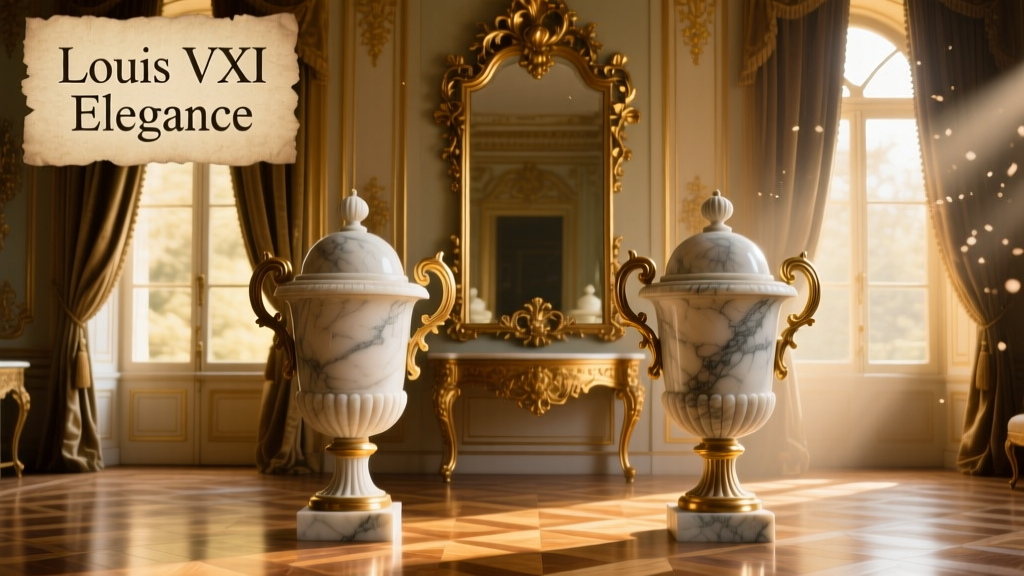
Marble Carving Urns in the Louis XVI Style: Domed Lids, Gilt Bronze Angular Handles, and the Artistry of 30-Inch Pairs
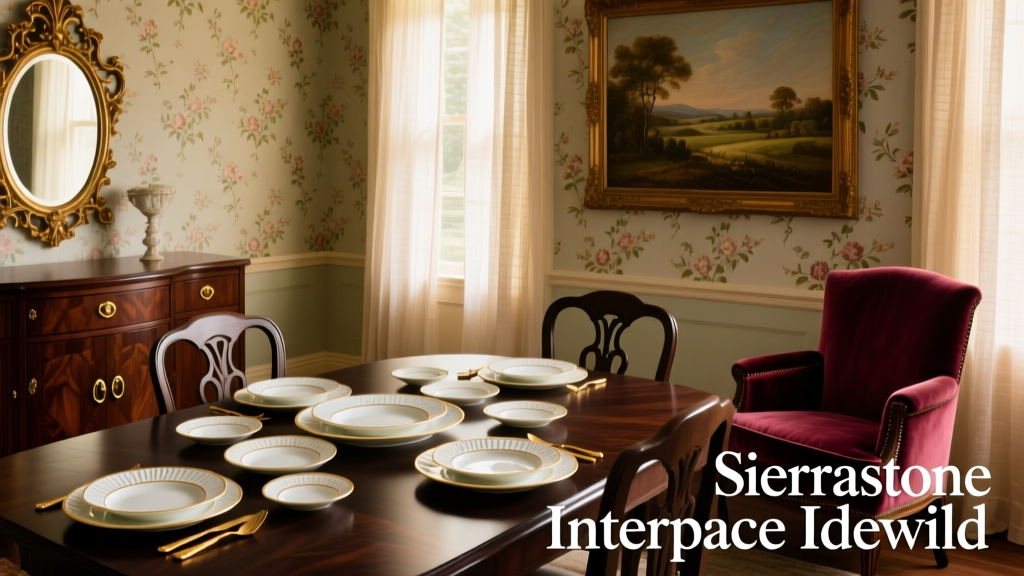
Sierrastone by Interpace Idlewild Dinnerware Set: History, Identification, and Restoration Guidance
Syracuse Victoria Soup Dish, Circa 1960: A Detailed Study of Form, Function, and Collectibility
Frederick Rhead’s 7-Inch Dark Green Matte Art Pottery Vase: Anatomy, Provenance, and Conservation Insights
Marble Swirl Banded With Mica: Identifying, Dating, and Restoring the Iconic 11⅝-Inch Antique Tabletop
Ceramic Arts Studio Plaque: 'Attitude' and 'Arabesque' Ballerina Pair — A Technical & Historical Analysis
Tea Caddy Mahogany Inlay: A Restoration Specialist’s Analysis of the 8-Inch Two-Section Dual-Cover Design
Cambridge Glass Chantilly Candlestick: A Definitive Guide to the Two-Light Fleur-de-Lis Pair
Ronald McDonald Cloth Dolls: Advertising Artifacts from the Golden Age of Fast-Food Merchandising