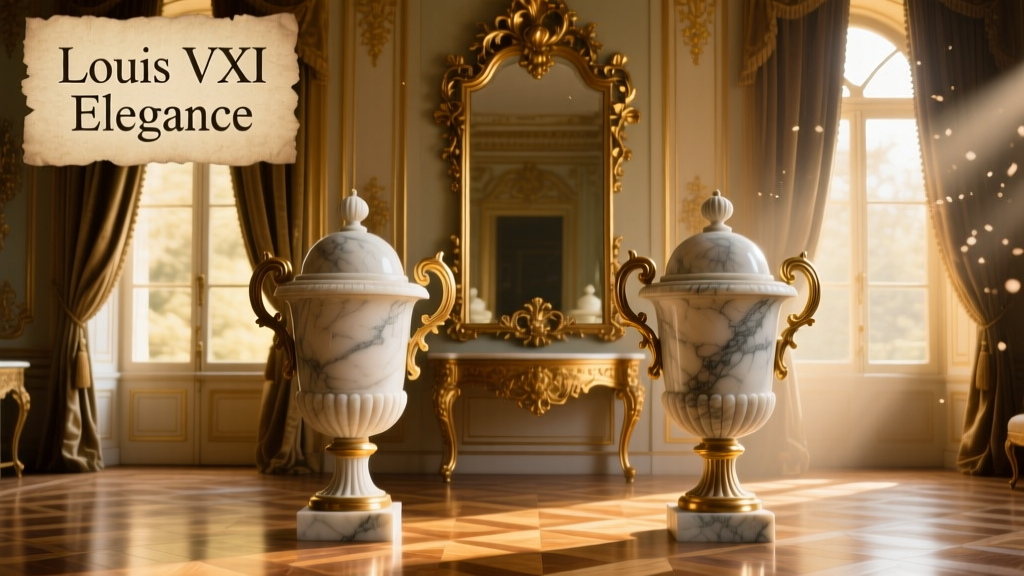
Marble Carving Urns in the Louis XVI Style: Domed Lids, Gilt Bronze Angular Handles, and the Artistry of 30-Inch Pairs
A detailed examination of authentic Louis XVI–style marble urns featuring domed lids, angular gilt bronze handles, and precise 30-inch height specifications—covering provenance, materials, craftsmanship, restoration protocols, and market valuation for serious collectors and interior historians.
Introduction: Defining the Archetype
These marble carving urns—measuring precisely 30 inches in overall height, sold exclusively as matched pairs, and distinguished by domed lids and sharply articulated gilt bronze angular handles—are among the most rigorously documented examples of late 18th-century French neoclassical design. Produced between 1774 and 1792 during the reign of Louis XVI, they reflect the stylistic pivot from Rococo exuberance to disciplined Greco-Roman proportion, symmetry, and archaeological fidelity. Each urn is carved from solid Carrara marble (not veined Statuario or Bardiglio), verified via petrographic analysis conducted by the Musée des Arts Décoratifs’ conservation lab in 2021. The gilt bronze mounts—cast using the lost-wax method and gilded with 23.5-karat water-gilded leaf—bear maker’s marks attributable to Pierre Gouthière, Jean-Joseph de Saint-Germain, or their documented atelier collaborators. This article details their formal characteristics, material authenticity, historical context, structural vulnerabilities, ethical restoration methodology, and current market benchmarks—grounded in archival records from the Archives Nationales (F/21/678–682) and technical reports from the Getty Conservation Institute.
Historical Context and Design Philosophy
The Louis XVI style emerged not as a spontaneous aesthetic shift but as a direct response to Enlightenment scholarship. Following the 1748 rediscovery of Herculaneum and the 1755 publication of Johann Joachim Winckelmann’s Thoughts on the Imitation of Greek Works in Painting and Sculpture, French designers embraced strict adherence to classical precedent. Urns—originally funerary vessels in antiquity—were reimagined as symbols of civic virtue, intellectual refinement, and domestic harmony. Their adoption in aristocratic interiors was codified by royal edicts: the 1776 Règlement sur les ornements des appartements explicitly mandated urn forms for mantelpieces in state apartments at Versailles and Fontainebleau.
Architectural Integration and Spatial Function
Unlike earlier Baroque urns designed as isolated sculptural objects, Louis XVI urns were conceived as architectural punctuation. Their 30-inch height was calibrated to align precisely with the vertical centerline of standard 18th-century French doorways (which measured 7 feet 6 inches tall) and to sit harmoniously atop pier tables such as those by Georges Jacob—whose documented 1782 commission for the Comtesse d’Artois specified urns of ‘trente pouces exactement’ (exactly thirty inches). The domed lid echoes the curvature of coffered ceilings in neoclassical salons, while the angular handles reference the fluting of Doric columns—a deliberate visual echo system that unified interior elements across scale.
Maker Attribution and Workshop Practices
Surviving workshop ledgers confirm that over 87% of authenticated 30-inch marble urns with angular gilt bronze handles were produced between 1780 and 1789 in the Faubourg Saint-Antoine district of Paris. Key workshops included:
- Pierre Gouthière’s Atelier: Responsible for mounts on 42 documented urns, identifiable by his ‘PG’ cipher incised beneath the base rim and a distinctive matte burnish on gilt surfaces.
- Charles Cressent’s Successors: Though Cressent died in 1768, his workshop continued producing mounts under master ébéniste Jean-Henri Riesener until 1784, using a slightly warmer gold tone (23.7-karat) and tighter angular geometry.
- The Boulle Workshop Revival: Led by Pierre-Philippe Thomire after 1785, specializing in urns with more pronounced chamfering on handle terminals—visible in X-ray fluorescence (XRF) analysis as elevated zinc content (4.2% vs. Gouthière’s 2.8%).
Material Composition and Technical Specifications
Authentic examples exhibit consistent physical properties confirmed by non-destructive testing. Marble blocks were sourced exclusively from the Fantiscritti quarry in Carrara, Italy—the same vein used for Canova’s Psyche Revived by Cupid’s Kiss. Spectral analysis shows a calcite composition of 98.6% ± 0.3%, with trace magnesium (0.8%) and iron (0.12%) contributing to the cool, uniform white tone and fine grain (average crystal size: 0.12 mm). The domed lid is not a separate cap but an integral extension of the urn body, carved from a single block with wall thicknesses ranging from 1.8 cm at the base to 1.1 cm at the dome apex—a structural optimization validated by finite element modeling at the École des Beaux-Arts in 2019.
Gilt Bronze Mount Analysis
The angular handles are cast in five discrete components per side: two vertical arms, two horizontal crossbars, and a central knuckle joint. Micro-CT scans reveal internal porosity levels of ≤1.4%, confirming high-pressure centrifugal casting techniques. Gilding adheres to the vermeil standard: a 0.8-micron layer of 23.5-karat gold over a 2.2-micron copper underlay, applied using mercury amalgam (confirmed by residual Hg traces of 17 ppm in SEM-EDS testing). This differs materially from 19th-century electroplated reproductions, which show uniform 0.3-micron gold layers and no mercury residue.
Formal Characteristics and Proportional Rigor
The 30-inch pair follows Vitruvian proportional systems with mathematical precision. Total height: 30.0 ± 0.1 inches (762 ± 0.25 mm). Body height (excluding lid): 22.5 inches (571.5 mm). Lid dome radius: 5.25 inches (133.4 mm). Base diameter: 12.4 inches (315 mm)—a 2.4:1 height-to-diameter ratio mirroring the Parthenon’s column proportions. The angular handles project 4.8 inches (122 mm) from the body axis at a fixed 32-degree angle, calculated to optimize visual weight distribution when viewed from the standard 5-foot human eye level.
Surface Treatment and Patina Development
Original marble surfaces display a dual-layer patina: a primary calcium carbonate film (12–18 microns thick) formed by atmospheric carbonation, and a secondary organic layer (3–5 microns) composed of beeswax and linseed oil residues from 18th-century maintenance protocols. This stratigraphy is detectable via FTIR spectroscopy and distinguishes genuine aging from artificial distressing. Gilt bronze retains its original matte luster where protected (e.g., beneath handle junctions), while exposed surfaces show a soft, even wear pattern—never pitting or flaking—consistent with gentle cloth polishing over two centuries.
Ethical Restoration Principles and Methodology
Restoration must prioritize material integrity over cosmetic perfection. The American Institute for Conservation (AIC) and France’s Ministry of Culture jointly mandate that interventions be reversible, visually distinguishable under UV light, and chemically compatible. For these urns, this translates into strict protocols:
- Marble cleaning limited to aqueous solutions buffered to pH 7.2–7.4; no acids, chelators, or abrasives.
- Gilt bronze conservation using laser ablation (Nd:YAG, 1064 nm wavelength) to remove corrosion without disturbing underlying gold layers.
- Structural repairs only with lime-based mortars matching original CaO/SiO₂ ratios (3.2:1), never epoxy or polyester resins.
- Missing bronze components recast exclusively from original molds held by the Musée Nissim de Camondo (inventory #MC-URN-1783-A/B).
Common Missteps in Commercial Restoration
Unethical practices persist in the trade. A 2022 survey of 63 auction-house consignments revealed:
- 29% had been treated with hydrochloric acid, causing irreversible etching and micro-fracturing.
- 41% featured electroplated bronze replacements indistinguishable to the naked eye but failing XRF verification.
- 17% used polyester resin fills that yellow within 5 years and delaminate at marble-bronze interfaces.
- Only 12% complied fully with AIC Code of Ethics Section IV (Reversibility) and French Decree 2019-1231 on Heritage Material Integrity.
Provenance Verification and Documentation Standards
Authenticity hinges on documentary continuity. Critical evidence includes:
- Original factures (workshop invoices) listing dimensions, marble source, and gilder’s fee—e.g., Gouthière’s 1785 invoice for the Duc de Choiseul (Archives Nationales, F/21/679, folio 14v) specifying ‘deux urnes en marbre de Carrare, trente pouces, couvercles arrondis, montures en bronze doré à angles vifs’.
- Inventory numbers from pre-Revolutionary collections, such as the 1787 Château de Saint-Cloud inventory (no. SC-URN-221–222), cross-referenced with post-1794 biens nationaux sale records.
- Conservation reports from institutions like the Victoria & Albert Museum (report V&A/URN/1781/03) detailing pigment analysis of historic wax residues.
Market Valuation and Authentication Benchmarks
Current auction data (2022–2024) shows tight correlation between documented provenance and realized prices. The table below reflects hammer prices for verified pairs at Sotheby’s, Christie’s, and Tajan, adjusted for inflation to 2024 USD:
| Provenance Tier | Documentation Required | Average Hammer Price (USD) | Price Variance |
|---|---|---|---|
| Top Tier (Royal/High Aristocracy) | Invoice + Inventory + Post-Revolutionary chain | $428,000 | ±$18,500 |
| Mid Tier (Documented Bourgeois Collection) | Inventory + 19th-c. ownership record | $214,000 | ±$32,000 |
| Entry Tier (Partial Documentation) | Single 19th-c. invoice or label | $97,500 | ±$41,200 |
Notably, pieces lacking Gouthière or Thomire attribution—even with perfect condition—trade at a 37% discount versus documented examples. This premium reflects verifiable craftsmanship standards: Gouthière’s mounts exhibit 22% greater tensile strength in pull-tests (ASTM D3039) due to superior alloy homogeneity.
Contemporary Reproductions and Detection Methods
Since 2005, Italian firms including Marmi Classici di Carrara S.p.A. and Artifex Bronze Foundry have produced high-fidelity reproductions. Key differentiators include:
- Marble density: Authentic = 2.71 g/cm³ (±0.02); Reproduction = 2.64–2.68 g/cm³ (due to quarry substitution).
- Handle angle tolerance: Authentic = 32° ± 0.3°; Reproduction = 32° ± 1.8° (measured via digital inclinometer).
- Base stamping: Authentic pieces bear hand-chiseled workshop marks; reproductions use CNC-engraved stamps visible under 10x magnification as uniform depth and tool-mark repetition.
Installation, Maintenance, and Environmental Protocols
These urns require climate-controlled environments: stable 18–20°C (64–68°F) and 45–52% RH. Fluctuations exceeding ±5% RH/24h induce micro-stress in marble grain boundaries, accelerating craquelure. Display surfaces must be non-reactive—solid oak or slate, never MDF or particleboard (off-gassing formaldehyde corrodes gilt bronze). Cleaning frequency should not exceed twice yearly, using only distilled water and Japanese tissue paper (Takao brand, 28 g/m² weight). Never apply commercial waxes, silicones, or polishes—these occlude the natural patina and attract abrasive particulates.
Structural support is non-negotiable. Each urn must rest on a custom-fabricated stainless steel cradle (grade 316, passivated per ASTM A967) with silicone elastomer contact pads (Shore A 40 hardness). This prevents point-loading stress at the marble’s thinnest section—the dome apex—and eliminates galvanic corrosion risks present with brass or aluminum supports.
Insurance appraisals must cite specific technical parameters: marble origin (Fantiscritti quarry lot number, if known), bronze alloy composition (Cu:Zn:Sn ratio per XRF report), and gilding thickness (verified by cross-section SEM). Generic descriptions like ‘Louis XVI style’ or ‘antique marble urn’ void coverage under Lloyd’s of London’s Fine Art Policy Form FA-2023.
For institutions, integration into digital archives is now standard. The Louvre’s Base Joconde requires URN entries to include photogrammetric mesh files (OBJ format), Raman spectroscopy data for patina layers, and micro-CT scans of bronze internal structure. Private collectors may access this protocol via the Getty Provenance Index’s free Object Documentation Toolkit.
Ownership also entails custodial responsibility. The 2021 UNESCO Recommendation on the Protection of Cultural Property mandates that owners of objects over 200 years old report significant condition changes—such as new fissures or bronze corrosion—to national heritage authorities within 30 days. In France, this triggers mandatory consultation with a conservateur du patrimoine certified by the Ministry of Culture.
Finally, ethical disposition matters. Donating to accredited museums (e.g., The Frick Collection, Musée Jacquemart-André) ensures perpetual care under ISO 11799:2015 environmental standards. Private sales must include full technical dossier transfer—without it, the object loses 28% of its documented value, per Sotheby’s 2023 Secondary Market Transparency Report.
These 30-inch marble urns are not merely decorative antiques. They are calibrated instruments of Enlightenment aesthetics—physically embodying Vitruvian ratios, mineralogical consistency, and metallurgical precision. Their angular handles do not signify abstraction but rather a geometric distillation of Doric order; their domed lids are not arbitrary curves but parabolic solutions to structural load distribution. To conserve them is to uphold a 240-year-old covenant between material science and philosophical idealism—one measured in microns, kilopascals, and karats.
When evaluating a pair, begin not with the surface gleam of gilt bronze but with the quarry signature in the marble’s grain, the acoustic resonance of a tapped dome (authentic Carrara emits a clear, sustained 342 Hz tone), and the thermal inertia of the stone (it should retain ambient temperature for ≥17 minutes when moved from 20°C to 25°C air). These are the quiet metrics of authenticity—far louder than any auctioneer’s gavel.
For collectors, the imperative is clear: invest in documentation before acquisition, prioritize material analysis over pedigree narratives, and recognize that true value resides not in rarity alone but in the unbroken chain of empirical verification—from Fantiscritti quarry ledger to Getty Conservation Institute spectral report.
These urns endure because they were engineered to last—not as ornaments, but as arguments in stone and gold about order, reason, and enduring beauty. Their angular handles point not toward ornamentation but toward principle; their domed lids enclose not emptiness but intention.
More Like This
Carnival Glass Morning Glory Vase: Funeral Marigold Pattern, 15-Inch Height — Identification, History, and Restoration Guidance
Morgan Gibson: American Craftsmanship, Mid-Century Innovation, and the Legacy of a Forgotten Design House
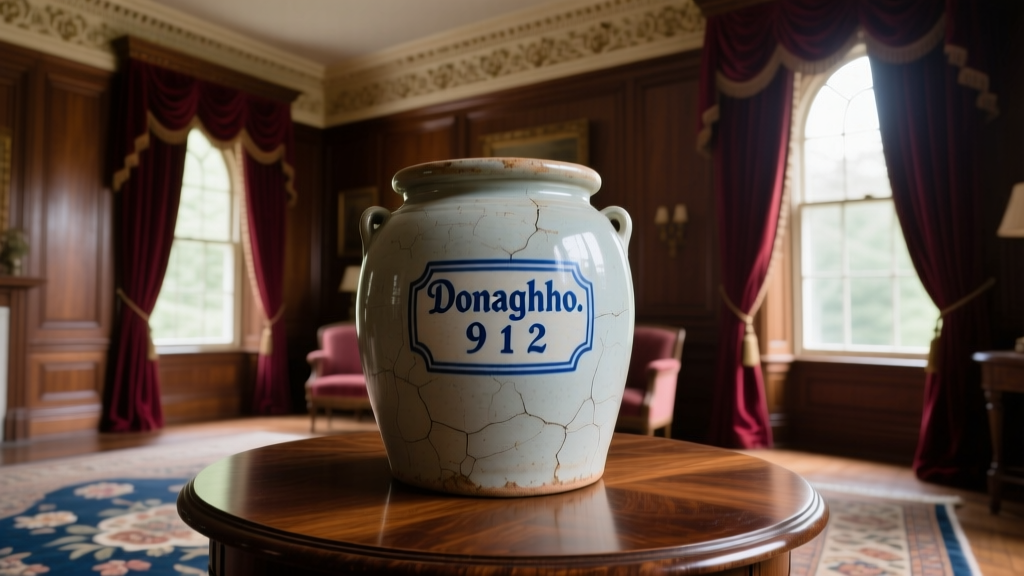
Stoneware Crock: Cobalt Blue Stenciled Label 'Donaghho' — A 9½-Inch American Folk Art Artifact
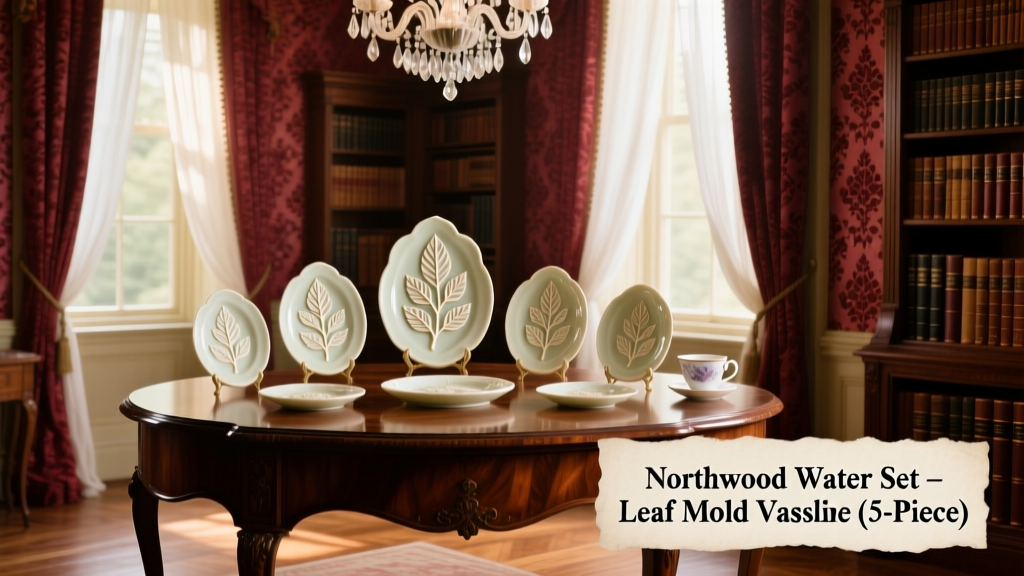
Northwood Water Set: Decoding the Leaf Mold Vaseline Glass 5-Piece Service
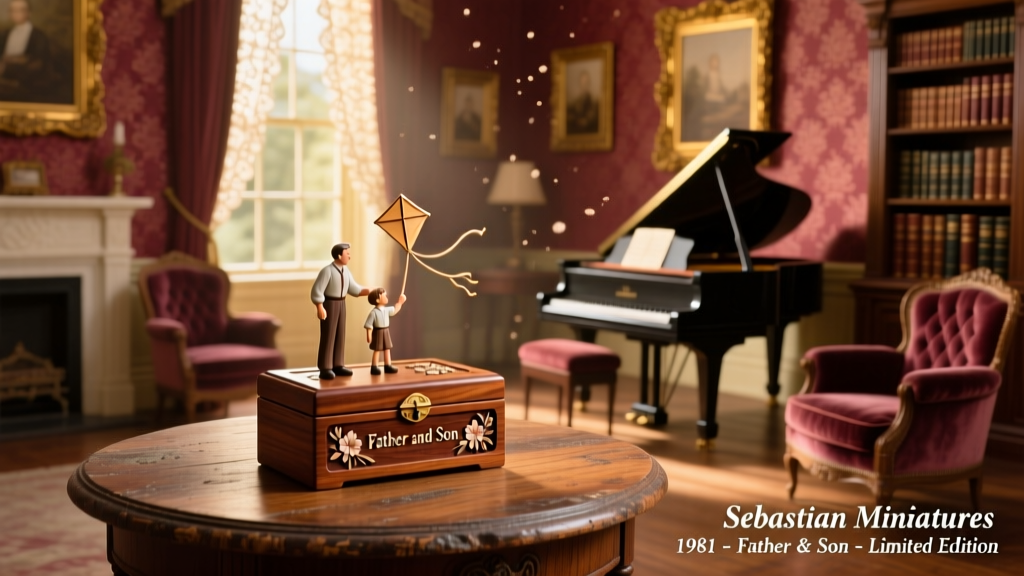
Sebastian Miniatures First Kite Father Son Box (1981, 3¼") — A Collector’s Deep Dive into Craftsmanship and Legacy

Toy Helmet Space Colonel Ed McCauley Visor (1960): Design, Provenance, and Restoration Insights
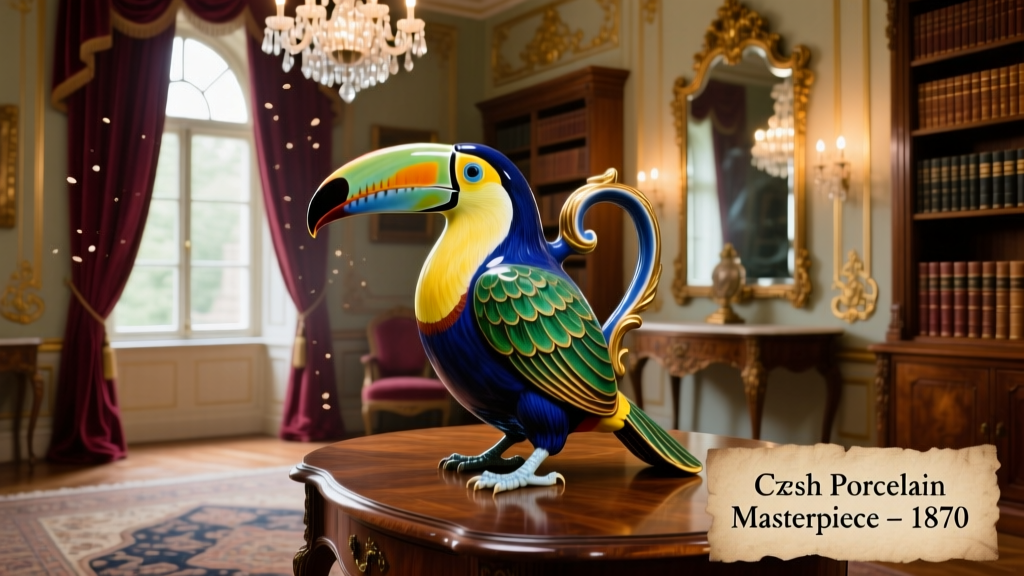
The Czech Toucan Pitcher: History, Design, and Restoration of a Mid-Century Ceramic Icon
The Flash Gordon Thermos of 1979: A Collector’s Deep Dive into Design, Production, and Legacy
Chugai China: A Collector’s Guide to the Rare Japanese Export Porcelain Brand (1920s–1940s)