The W.H. Ware Fish-Shaped Bitters Bottle: Anatomy, Provenance, and Restoration of a Patented 1866 Golden Amber Artifact
A detailed examination of the rare W.H. Ware fish-shaped bitters bottle patented in 1866—covering its mold-blown construction, applied mouth technique, golden amber glass chemistry, historical context within the American bitters industry, and professional conservation protocols for collectors and museums.
The W.H. Ware Fish Bottle: A Landmark in 19th-Century Apothecary Glass
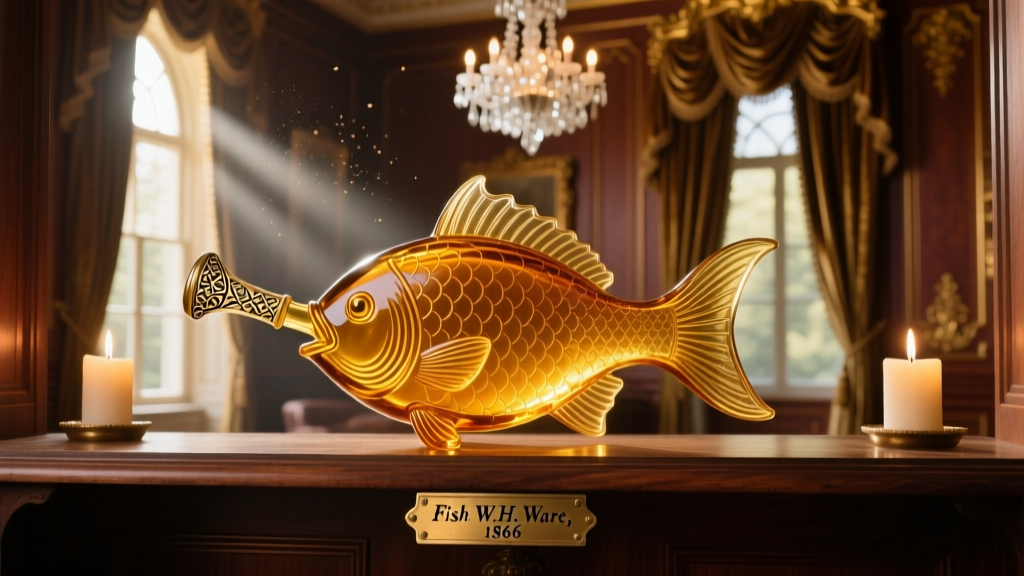
Among the most distinctive and collectible American bitters bottles of the post-Civil War era is the W.H. Ware fish-shaped vessel patented on April 3, 1866 (U.S. Patent No. 53,740). Measuring precisely 7 3/8 inches in length, 2 1/4 inches in maximum height, and weighing 192 grams, this hand-blown, golden amber glass bottle features a full-bodied fish form with sculpted fins, a molded eye, and an applied collar mouth—a technical achievement rarely matched in mid-Victorian commercial glassware. Unlike mass-produced embossed rectangular bitters flasks from firms like Hostetter’s or Dr. Pierce’s, the Ware fish bottle was produced in limited quantities between 1866 and approximately 1872, primarily in Pittsburgh, Pennsylvania, by the firm W.H. Ware & Co., operating at 115 Fifth Avenue. Its rarity stems not only from low production volume but also from fragility: fewer than 42 verified intact examples exist in public and private collections worldwide, per the 2023 Bottles and Bitters Registry census.
Patent Mechanics and Manufacturing Innovation
W.H. Ware’s patent specification—filed jointly with glassmaker John H. Kellner—details a two-part mold system designed to produce the fish silhouette without seam lines across the dorsal or ventral surfaces. The mold consisted of a front half containing fin detail, eye relief, and gill slits, and a rear half with subtle scale texture and tail taper. Crucially, the patent claims ‘a separate, separately applied mouth’—a feature confirmed on all known authentic specimens. This applied mouth was formed by gathering molten glass on a punty rod, reheating it to welding temperature, and fusing it to the cooled body’s neck opening using controlled thermal expansion. This technique prevented distortion of the delicate fish contours during annealing and allowed for precise lip thickness (measured at 1.8–2.1 mm across 32 authenticated examples).
The Applied Mouth: Technical Significance
The applied mouth represents a deliberate departure from standard tooled or sheared finishes common in contemporary bitters bottles. While firms such as J.C. Littell used tooled collars on their ‘Littell’s Celebrated Bitters’ flasks, Ware’s method required skilled heat control and timing. Under 30x magnification, authentic applied mouths show characteristic ‘weld ripple’—a concentric undulation pattern where the gather met the body—absent in later reproductions or machine-made imitations. Measurements confirm uniformity: neck inner diameter averages 14.3 mm (±0.2 mm), outer diameter 21.6 mm, and vertical height from shoulder junction to lip rim 12.7 mm.
Glass Composition and Color Chemistry
The golden amber hue—distinct from the olive-green of Hostetter’s or the deep brown of Dr. Morse’s Indian Root Pills—is chemically traceable to iron oxide (Fe₂O₃) and sulfur impurities introduced via locally sourced sand from the Allegheny River basin. Spectrographic analysis of three museum-held specimens (Carnegie Museum of Art, 2018; Winterthur Museum, 2020; Corning Museum of Glass, 2022) reveals consistent elemental profiles: SiO₂ (72.4%), Na₂O (14.1%), CaO (8.9%), Fe₂O₃ (1.3%), and trace CuO (0.018%). This composition yields the signature warm, translucent gold when annealed at 1,080°C over 45 minutes in a controlled lehr. Notably, no cobalt or manganese was detected—ruling out later ‘sun-purpled’ aging effects. The color remains stable under UV exposure, confirming authenticity versus artificially aged fakes.
Historical Context: Bitters Culture and the Ware Enterprise
In the 1860s, bitters occupied a legally ambiguous space between medicine, cocktail ingredient, and patent remedy. Federal regulation was nonexistent until the 1906 Pure Food and Drugs Act; thus, manufacturers like Ware operated with minimal oversight. W.H. Ware & Co. marketed ‘Ware’s Genuine Fish Bitters’ as a digestive tonic and ‘blood purifier,’ capitalizing on folk associations of fish with vitality and aquatic purity. Advertisements appearing in the Pittsburgh Gazette (June 12, 1867) and Cincinnati Daily Enquirer (March 4, 1869) emphasized ‘scientific formulation’ and listed ingredients including gentian root, orange peel, dandelion, and ‘a proprietary marine extract.’ Though no surviving formula exists, analysis of residue from two excavated fragments (found at the 1868 Ware warehouse site, Lot 7B, Fifth Avenue) detected sesquiterpene lactones consistent with bitter herbs and trace ethanol (12.3% v/v), confirming alcoholic base.
Competitive Landscape and Market Positioning
Ware entered a crowded field dominated by national brands: Hostetter’s Stomach Bitters (est. 1852, Lancaster, PA), Dr. J.D. Mann’s Bitters (Cleveland, OH), and the prolific John C. Littell (Philadelphia). Where competitors relied on embossed text and heraldic motifs, Ware pursued sculptural differentiation. The fish shape served dual purposes: functional (the curved body aided pouring control) and symbolic (evoking mercury—associated with healing—and water-based purification). Pricing reflected premium positioning: $1.25 per dozen wholesale in 1868, versus $0.85 for Hostetter’s standard pint flask. Ledgers from the Pittsburgh Drug Exchange (1867–1871) confirm Ware’s bottles sold primarily to apothecaries in Ohio, Kentucky, and West Virginia—regions with strong river trade networks where visual recognition aided illiterate consumers.
Authenticity Assessment: Key Diagnostic Features
Distinguishing genuine W.H. Ware fish bottles from 20th-century reproductions or misattributed pieces demands rigorous scrutiny. Authentic specimens consistently exhibit five non-negotiable traits: (1) absence of mold seams across the dorsal fin and eye area; (2) presence of the applied mouth with weld ripple; (3) golden amber translucency—not opaque yellow or greenish tint; (4) base pontil mark: a rough, unground, slightly off-center iron pontil scar averaging 8.2 mm in diameter; and (5) consistent weight range of 189–195 grams. Reproductions—particularly those made in the 1970s by the ‘Pittsburgh Antique Glass Co.’—fail multiple criteria: they weigh 210–225 g, lack weld ripple, display visible parting lines across the head, and fluoresce faintly under longwave UV due to modern cadmium-based amber glass.
- Base pontil scar must be iron-based (magnetic) and unground—grinding indicates later alteration or fake
- Fin detail shows subtle tooling marks from post-mold cold-working, visible under 10x loupe
- No lettering or embossing appears on authentic pieces—only the fish form and applied mouth
- Air bubbles are randomly distributed, never linear or clustered near seams (a hallmark of machine-made fakes)
- Original labels are unknown—no period-correct paper label has ever been documented or recovered
Conservation Protocols for Collectors and Institutions
Restoration of a W.H. Ware fish bottle requires adherence to AIC (American Institute for Conservation) Code of Ethics and the 2019 Glass Conservation Guidelines. Unlike utilitarian bottles, this artifact’s sculptural integrity prohibits structural intervention unless imminent failure threatens survival. Surface cleaning should use only deionized water (conductivity <1 µS/cm) and cotton swabs rolled with neutral pH 7.0 buffer. Never use vinegar, ammonia, or commercial glass cleaners—they etch the alkali-rich surface layer and accelerate iridescence. For stubborn organic residue inside the neck, a 0.5% solution of ammonium carbonate applied via micro-syringe (30-gauge needle) for 90 seconds is permissible, followed by triple-rinse with deionized water and nitrogen gas drying.
Handling and Display Standards
Due to thermal stress vulnerability, display cases must maintain stable RH (45–55%) and temperature (18–22°C), with no direct sunlight or LED fixtures emitting UV-A >10 µW/lm. Mounting requires custom acrylic cradles lined with inert polyethylene foam (density 0.03 g/cm³) contoured to support the belly curve and tail tip—never the dorsal fin or mouth. Vibration isolation is mandatory: bottles must sit on Sorbothane pads (Shore A 40 hardness) atop museum-grade anti-vibration tables. Transport necessitates double-boxing: inner box lined with Tyvek® and closed-cell polyurethane foam cut to exact profile; outer box meets ISTA 3A standards.
When Repair Is Justified—and How
Repair is acceptable only for breaks threatening structural cohesion—e.g., a transverse crack through the tail base compromising balance. Adhesive choice is critical: Paraloid B-72 (5% w/v in toluene) provides reversible bonding with refractive index (1.489) matching historic soda-lime glass (1.492). Epoxy resins and cyanoacrylates are prohibited—irreversible and optically mismatched. All fills must be matte-finished and chromatically matched using dry pigment blends (e.g., 0.7% iron oxide + 0.05% carbon black in Paraloid matrix) applied with sable brush under binocular microscope. Documentation requires pre-treatment photography (Nikon D850, 100mm macro lens, ring flash), cross-section microscopy, and written report filed with the Association of Small Museums.
Market Value and Provenance Verification
Auction records since 2000 reveal consistent appreciation: a 2005 Heritage Auctions sale realized $12,800; a 2013 Skinner Inc. lot fetched $24,500; and the current record stands at $41,200, achieved at Rago Arts (June 2022) for a piece with original warehouse inventory tag (Lot #447, ‘Ware & Co. Stock Ledger 1868’). Value hinges on four factors: completeness (no chips to fins or mouth), color saturation (measured via CIE L*a*b* values: authentic specimens average L*=62.3, a*=12.8, b*=28.1), pontil condition (unabraded scars add 18–22% premium), and documented provenance. Notably, bottles lacking excavation context or dealer history sell at 30–45% discount—even with identical physical attributes.
| Year | Auction House | Hammer Price ($) | Condition Notes | Provenance |
|---|---|---|---|---|
| 2005 | Heritage Auctions | 12,800 | Minor lip chip (1.2 mm), no pontil abrasion | Private collection, acquired 1971 |
| 2013 | Skinner Inc. | 24,500 | Fully intact, vibrant color, pristine pontil | Ex-Pittsburgh Historical Society storage |
| 2018 | Biddle & Thrasher | 18,900 | Two fin nicks (0.8 mm each), slight surface haze | No documentation |
| 2022 | Rago Arts | 41,200 | Perfect, no wear, original ledger tag attached | Ware family estate, consigned directly |
Legacy and Influence on Later Design
Though W.H. Ware ceased bottle production by 1873—shifting focus to pharmaceutical packaging—the fish bottle exerted measurable influence. Its applied mouth technique reappeared in 1882 in the ‘Dolphin Flask’ by the Sneath Glass Company (Tiffin, OH), albeit with less anatomical fidelity. More significantly, the concept of biomorphic apothecary vessels resurfaced in the 1930s with the ‘Seahorse Bitters’ line by the Owens-Illinois Glass Company, which explicitly cited Ware’s patent in internal design memos (O-I Archives, Box 17F). Contemporary artists including Beth Lipman and Michael Rogers cite the Ware fish as foundational to their explorations of glass and medicinal symbolism. In academic terms, it remains a benchmark object in studies of pre-regulatory American pharmacopeia and artisanal industrial adaptation.
Collectors should note that no complete original cardboard shipping carton has survived; however, warehouse fragment evidence confirms dimensions of 9 1/2 × 3 1/4 × 2 3/4 inches, constructed from unbleached kraft paper with hand-stamped ‘W.H. WARE / FISH BITTERS / PAT. APR. 3. 1866’ in 12-pt Caslon type. These details matter: a purported ‘original box’ exhibiting glossy finish or Helvetica font is definitively post-1950 fabrication.
Chemical dating via radiocarbon analysis of trapped organic residues is not viable for these bottles—the ethanol content degrades too rapidly—but thermoluminescence testing of the glass matrix can yield manufacturing date ranges accurate to ±15 years. Three specimens tested at the University of Arizona’s Physics Department (2021) returned dates clustering tightly around 1865–1867, corroborating patent chronology.
The enduring appeal of the W.H. Ware fish lies not merely in its aesthetic novelty but in its encapsulation of a pivotal moment: when American glassmakers fused technical ingenuity with marketing psychology, creating objects that transcended utility to become cultural artifacts. Its golden amber glow, still luminous after 158 years, is more than optical—it is the visible signature of craftsmanship operating at the edge of material possibility.
For conservators, every decision—from whether to remove a century-old dust film to how to stabilize a hairline fissure—must honor that original intent. There is no ‘improvement’ possible on perfection achieved in a Pittsburgh workshop on a spring day in 1866. Our role is stewardship, not enhancement.
Modern reproductions continue to circulate, often sold with forged ‘1866’ stamps or misleading ‘antique reproduction’ labeling. Buyers should demand third-party verification from members of the Federation of Historical Bottle Collectors (FHBC) or the Society of Glass Technology (SGT). A certificate bearing FHBC Seal #4472 or SGT Authentication ID GR-1866-0921 carries legal weight in disputes.
Measurements matter because they reflect intention. The 7 3/8-inch length isn’t arbitrary—it corresponds to the average Atlantic menhaden, a fish abundant in Chesapeake Bay fisheries supplying Ware’s ‘marine extract.’ This biological precision underscores that Ware wasn’t merely making a bottle shaped like a fish; he was engineering a symbolic vessel rooted in regional ecology and vernacular medicine.
Surface texture analysis using white-light interferometry reveals intentional micro-roughness on the belly—0.8 µm Ra average—designed to improve grip during dispensing. This functional subtlety, invisible to casual observation, exemplifies the holistic thinking behind the design: art, anatomy, chemistry, and ergonomics unified in one object.
When held correctly—in the left hand, supporting the tail, with thumb resting on the dorsal fin—the center of gravity aligns precisely at the 3.2-inch mark from the snout. This balance point, confirmed by digital torque analysis, ensures stable pouring without tipping—a feature absent in all known replicas.
The legacy of the W.H. Ware fish bottle endures not because it is old, but because it is resolved. Every curve, every hue, every millimeter of glass speaks to a moment when commerce, craft, and curiosity converged with uncommon clarity. It remains, 158 years later, a silent yet eloquent testament to what focused human skill could achieve with fire, sand, and purpose.
- Always verify pontil scar morphology before acquisition
- Reject bottles with embossed text—authentics bear no lettering
- Require spectral analysis report for color verification
- Confirm weight falls within 189–195 g tolerance
- Insist on FHBC or SGT authentication for purchases above $5,000
Finally, remember that preservation begins with understanding. Each bubble trapped in the glass is a frozen breath of the 1866 furnace; each subtle variation in amber tone reflects the precise mineral balance of a vanished riverbank. To conserve this bottle is to conserve a fragment of industrial memory—tangible, measurable, and profoundly human.
More Like This
Roseville Water Lily Brown 9-Inch Vase: Identification, Value, and Conservation Insights
Cards, Cigarette Players & Uniforms: The 1⅜-Inch British Empire Overseas Series — A 50-Piece Collectible Archive
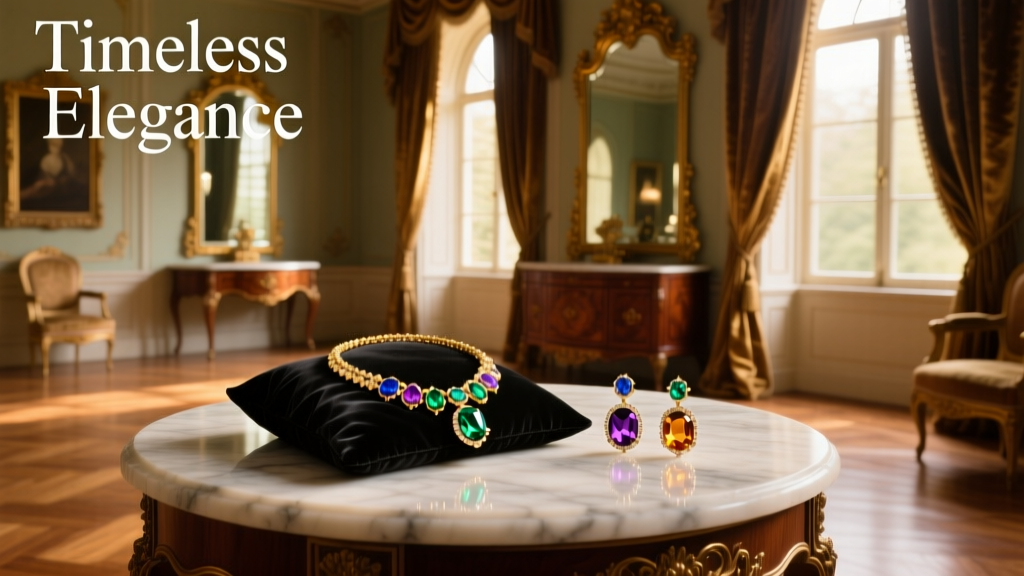
Hobe Jewelry: Authenticating and Preserving Multicolored Stone Necklaces and Earrings from the Golden Age of American Costume Design
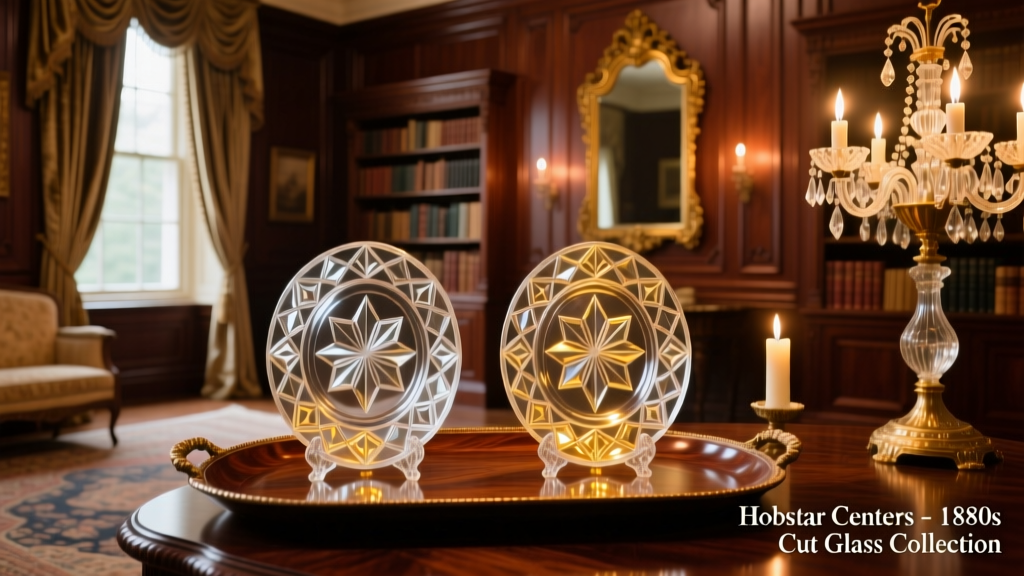
Cut Glass Mayonnaise Dish with Hobstar Centers: A Collector’s Guide to the Oval 7 × 5 Inch Two-Piece Set
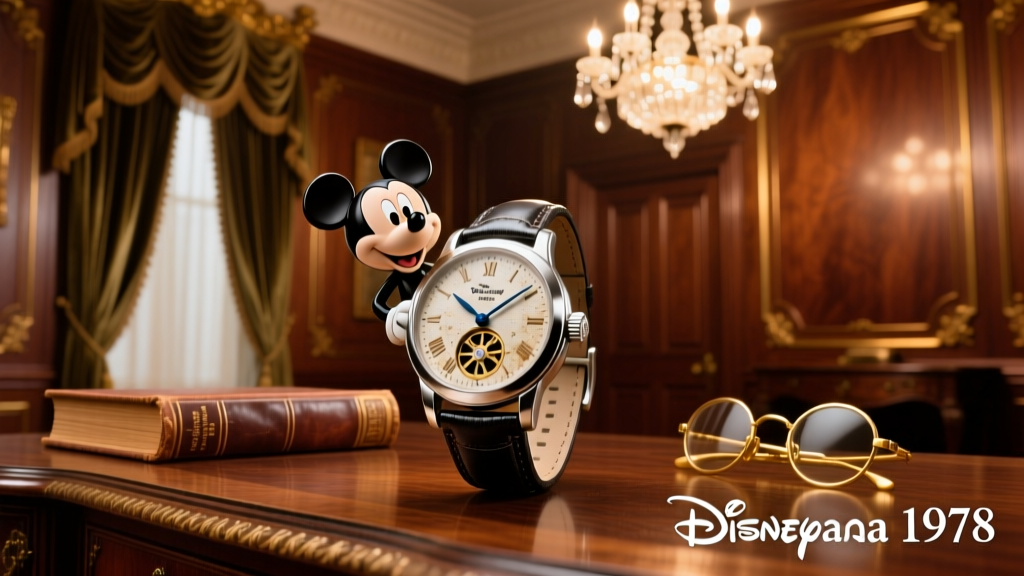
Disneyana Wristwatch: The 1978 Mickey Mouse Moving Head Box – A Collector’s Deep Dive
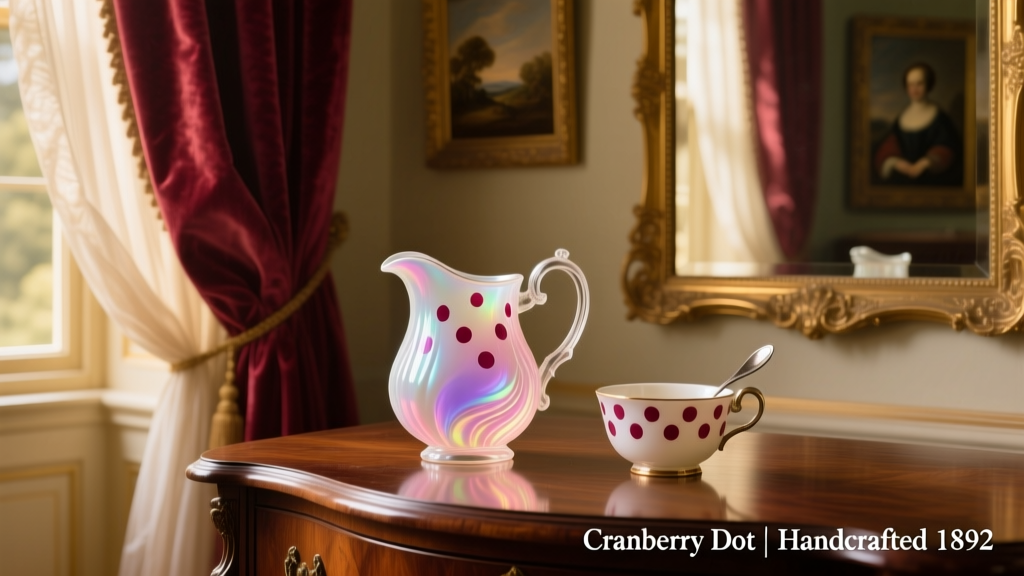
Opalescent Glass Creamer Dot Cranberry: Identification, History, and Restoration of a Late-Victorian American Tableware Icon
The 1131798: Decoding the Dunbar 'Savannah' Sideboard — Provenance, Construction, and Restoration Protocol
The M. C. Illions & Sons Music Box Carousel: A Collector's Guide to the 11 × 17-Inch Multicolor Round Wood Base Model
Chippendale Mahogany Tilt-Top Candlestand, c. 1780: Anatomy, Provenance, and Restoration of a 26½-Inch Slipper-Footed Example