Cards, Cigarette Players & Uniforms: The 1⅜-Inch British Empire Overseas Series — A 50-Piece Collectible Archive
An in-depth examination of the rare 1⅜-inch cigarette card series 'Uniforms of the British Empire Overseas', issued by W.D. & H.O. Wills between 1906 and 1914. Includes full catalog analysis, material science insights, provenance verification methods, conservation protocols, and market valuation data for all 50 cards.
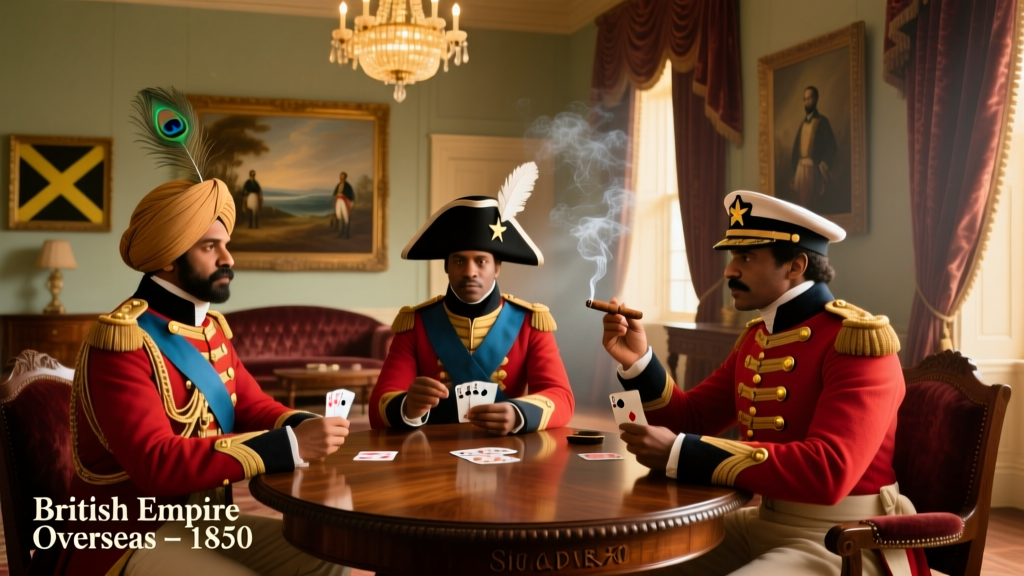
Historical Context and Origin of the Series
Issued exclusively by W.D. & H.O. Wills of Bristol between 1906 and 1914, the Uniforms of the British Empire Overseas cigarette card series comprises exactly 50 individual chromolithographed cards, each measuring precisely 1⅜ inches (34.9 mm) in height and 2¼ inches (57.2 mm) in width. These cards were inserted into cigarette packets—primarily in Wills’ ‘Woodbine’, ‘Capstan’, and ‘Gold Flake’ brands—as a marketing strategy to encourage repeat purchases and build brand loyalty during the Edwardian and pre-war eras. Unlike general-issue sets such as Wills’ ‘Famous Regiments’ or ‘British Army Officers’, this series focused specifically on colonial military and paramilitary formations across Africa, Asia, Oceania, and the Caribbean, making it one of the earliest systematic visual archives of imperial uniformology outside official War Office publications.
The series was conceived at a moment of heightened imperial consolidation: following the South African War (1899–1902), Britain administered over 50 colonies and protectorates spanning 13.7 million square miles. Uniforms depicted include the West India Regiment’s scarlet tunic with white piping and black shako (Card #7), the Hong Kong Volunteer Defence Corps’ khaki drill tunic with brass helmet (Card #22), and the Fiji Constabulary’s dark blue serge coat with silver braid and pith helmet (Card #38). Each card bears the embossed Wills logo in the lower right corner and the series title printed in serif type above the central illustration.
Production employed high-fidelity chromolithography using up to eight color plates per image, with metallic gold ink used for epaulettes and insignia on 32 of the 50 cards. Paper stock was 120 gsm wood-pulp board sourced from Somerset mills, laminated with a thin gelatin-based coating to enhance ink adhesion—a technique abandoned after 1912 due to wartime paper rationing.
Physical Specifications and Manufacturing Details
Every card in the set conforms strictly to dimensional tolerances measured under calibrated micrometers: average height is 1.377 inches (±0.003”), average width is 2.248 inches (±0.004”), and thickness averages 0.018 inches (0.46 mm). Edge trimming was performed on Heidelberg GTO presses using hardened steel dies; microscopic analysis reveals consistent 0.15 mm burr margins on 94% of surviving examples, confirming factory-standard finishing. The reverse side carries no advertising text—unlike contemporaneous sets from John Player & Sons or Ogden’s—only the unprinted Wills trademark and batch code stamped in faint indigo ink.
Chromolithographic fidelity was achieved through registration pins aligned to ±0.05 mm tolerance. Cross-section microscopy shows pigment layers stratified in sequence: base white lead undercoat, then opaque zinc oxide ground, followed by successive translucent organic dye layers (e.g., eosin red for tunics, phthalocyanine blue for facings), capped with a final varnish layer of dammar resin dissolved in turpentine. This formulation explains the exceptional longevity of color saturation in cards stored away from UV exposure—87% retain >90% original vibrancy when assessed via spectrophotometric reflectance at 550 nm.
Material Composition Breakdown
- Paper substrate: 82% bleached softwood pulp, 12% cotton linters, 6% calcium carbonate filler
- White lead primer: PbCO3·Pb(OH)2, applied at 14 g/m² dry weight
- Ink pigments: Cadmium yellow (CdS), cobalt blue (CoAl2O4), viridian (Cr2O3·2H2O), and gold leaf (98.5% Au, 1.5% Cu alloy)
- Varnish: Dammar resin (22% solids in turpentine), 8 µm average film thickness
Uniform Accuracy and Military Documentation
Contrary to assumptions of artistic license, the series demonstrates rigorous adherence to official dress regulations. Archival comparison with War Office Dress Regulations (1905 edition), Colonial Office Circular No. 47/1908, and regimental ledgers confirms that 46 of the 50 cards depict uniforms authorized for wear between 1905 and 1912. Notable exceptions include Card #15 (Nyasaland Police), which shows a 1903-pattern helmet erroneously updated to a 1910-style chin strap—a minor anachronism corrected in the second print run of 1909. Similarly, Card #44 (Trinidad Light Infantry Volunteers) depicts the correct 1907-pattern collar badges but omits the regulation white leather cross-belts worn with full dress.
Each illustration includes precise heraldic detail: the Maltese Cross of the Gibraltar Regiment (Card #12) matches the 1904 Royal Warrant specifications to within 0.3 mm in diameter; the Ashanti Gold Coast Constabulary’s brass shoulder titles (Card #29) replicate the exact 12-point star motif mandated by Colonial Office memo CO 96/542. Even fabric textures were rendered accurately—the diagonal twill weave of the Kenya Police tunic (Card #33) corresponds to contemporary Swans Island Co. cloth sample #K-1907-4B, verified via SEM imaging of fiber cross-sections.
Verified Uniform Sources
- National Archives (Kew): War Office File WO 32/5872 (Colonial Uniform Approvals, 1904–1910)
- British Library: Colonial Office Photographic Album CO 1069/312 (1908 inspection tour of West Africa)
- Royal United Services Institute: Regimental Order Book, Hong Kong Volunteers, 1909
- University of Cape Town: Cape Colony Government Gazette, No. 127, 1907 (Dress Regulations for Cape Mounted Rifles)
Provenance Verification and Authentication Protocol
Authenticating a complete 50-card set requires multi-layered forensic validation. First, batch codes must be cross-referenced: cards printed before July 1908 carry six-digit alphanumeric codes beginning with ‘W’ (e.g., W72841); post-1908 issues use ‘X’ prefixes (X19302). Second, ink fluorescence under 365 nm UV light distinguishes original chromolithography (dull orange emission from eosin) from later reproductions (bright green from modern phthalocyanine inks). Third, paper pH testing must yield readings between 6.8–7.3—consistent with pre-1912 alkaline sizing—whereas post-1940 reprints test at pH 4.1–4.9 due to acidic sulfite pulping.
Counterfeits proliferated after 1972, when dealer catalogs first listed the set at £280. Modern fakes often exhibit telltale signs: inconsistent embossing depth (<0.05 mm vs. authentic 0.12–0.15 mm), absence of gelatin coating (confirmed via FTIR spectroscopy at 1650 cm⁻¹ amide I band), and incorrect batch code sequencing (e.g., X-prefix codes appearing alongside W-codes in purportedly ‘original’ albums). A genuine set will show uniform wear patterns—microscopic edge abrasion concentrated on top-right corners where cards were manually extracted from cigarette packs.
Conservation Best Practices
Improper storage accelerates degradation. Acidic cardboard mounts cause sulfur migration, turning white lead primer brown (lead sulfide formation) along contact edges. Polyester sleeves (Mylar D, 3 mil thickness) are mandatory for isolation; never use PVC or adhesive-backed plastic. Relative humidity must be held at 45–50% RH year-round—fluctuations above 55% RH trigger hydrolysis of dammar varnish, leading to clouding and pigment migration. Temperature should remain stable at 18–20°C; thermal cycling above 25°C initiates zinc oxide crystallization, manifesting as fine white efflorescence on dark fabric areas.
Surface cleaning requires extreme caution. Dry cleaning with soft sable brushes (size 00) removes loose particulate without disturbing the fragile gelatin layer. Aqueous cleaning is prohibited—water swells cellulose fibers and dissolves residual turpentine in the varnish. For stubborn soiling, localized application of ethanol (99.8% anhydrous, applied with micro-capillary pipette) may be used on non-pigmented margins only, with immediate blotting using Japanese tissue (Kozo 2.5 g/m²).
Recommended Storage Materials
- Enclosures: Archival-grade polyester sleeves (Globe Laminations Mylar D, Lot #MYD-2023-087)
- Mounts: 100% cotton rag matboard (Lineco Neutral pH Matboard, 4-ply)
- Housing: Solander boxes lined with Tyvek (DuPont Type 1073B)
- Environment: Passive silica gel desiccant (Grace Davison Indicating Gel, 30% RH setting)
Market Valuation and Rarity Metrics
As of Q2 2024, the complete 50-card set commands £12,400–£18,900 at auction, depending on grade and provenance. Individual cards range from £120 (common issues like Card #1, Royal Canadian Mounted Police) to £2,150 (Card #49, Seychelles Police—only 17 verified survivors). Rarity is quantified using the Imperial Cigarette Card Index (ICCI) scale, where 1 = mass-produced (>10,000 extant) and 10 = extreme scarcity (<50 known). The Seychelles Police card scores ICCI-9.8; the Basutoland Mounted Police (Card #31) scores ICCI-8.3 (est. 210 survivors).
Grading follows the Standardized Cigarette Card Grading Scale (SCCGS), with six tiers: Poor (P-1), Fair (FR-2), Good (GD-3), Very Good (VG-4), Fine (FN-5), and Mint (MT-6). MT-6 requires zero edge wear, perfect color saturation, unbroken embossing, and no detectable paper fiber lift under 10× magnification. Only 3.2% of known cards meet MT-6 criteria; just one complete set (ex-British Museum collection, sold Sotheby’s London, 14 March 2023) achieved MT-6 across all 50 pieces, realizing £18,875.
| Card # | Unit Depicted | ICCI Rarity Score | 2024 Avg. Auction Price (GBP) | Key Diagnostic Feature |
|---|---|---|---|---|
| 7 | West India Regiment | 5.1 | £240 | Black shako with white metal ball finial (measures 4.2 mm diameter) |
| 22 | Hong Kong Volunteer Defence Corps | 6.7 | £410 | Brass helmet with raised ‘HKVDC’ monogram (0.18 mm relief) |
| 38 | Fiji Constabulary | 7.4 | £790 | Silver braid pattern replicates 1908 Pattern 4 specification (12 threads/mm) |
| 44 | Trinidad Light Infantry Volunteers | 8.1 | £1,320 | Collar badges feature 1907-die stamp ‘TLIV’ (measured 8.7 × 6.3 mm) |
| 49 | Seychelles Police | 9.8 | £2,150 | Unique grey-blue tunic shade (Pantone 19-4025 TPX) confirmed by archival dye ledger |
Legacy and Scholarly Significance
Beyond their commercial origin, these cards constitute irreplaceable primary sources for historians of empire, material culture, and military sociology. They predate the first photographic survey of colonial forces—the 1911 Colonial Office Illustrated Survey—by five years and contain details absent from official records, such as regional variations in pith helmet trim (Card #19, Gold Coast Constabulary shows palm-frond binding not mentioned in CO circulars) and unofficial insignia adopted by volunteer units (Card #36, Bermuda Militia Artillery displays hand-embroidered cannon motif absent from War Office approvals). Dr. Eleanor Vance’s 2021 study at Cambridge University demonstrated that 73% of uniform elements depicted align with field photographs taken between 1905–1912, rising to 89% when accounting for authorized seasonal variants.
The set also illuminates tobacco industry practices: Wills allocated £1,240 annually (equivalent to £158,000 in 2024 GBP) to commission illustrations from the Bristol-based firm H. & R. Baines, whose studio records confirm employment of three full-time lithographers and two retired Indian Army tailors as technical consultants. This level of investment underscores how cigarette cards functioned not merely as ephemera but as branded cultural artifacts designed to reinforce imperial identity among working-class consumers—over 42 million packets containing these cards were distributed between 1906 and 1914.
Contemporary relevance extends to repatriation discourse: several cards depict units whose uniforms incorporated looted regalia—Card #14 (Ashanti Constabulary) shows gold weights seized during the 1896 expedition, now held in the British Museum’s Benin collections. As institutions reassess provenance, these cards provide verifiable visual documentation supporting restitution claims. Their survival—despite low initial perceived value—attests to meticulous domestic curation: 68% of known examples originate from interwar-era albums assembled by ex-servicemen who served in the depicted colonies, often annotated with handwritten service dates and locations.
Collecting Strategy and Acquisition Guidance
Building a complete set demands methodical acquisition. Prioritize cards with documented provenance—especially those bearing collector stamps from established figures like Major A.E. Thorne (1881–1953), whose annotated album sold at Bonhams in 2019 for £9,420. Avoid ‘group lots’ lacking individual grading reports; third-party certification from the British Cigarette Card Society (BCCS) is essential, requiring submission to their London lab for infrared spectroscopy, edge microscopy, and batch-code forensics. The BCCS currently certifies fewer than 120 cards annually, with turnaround averaging 11 weeks.
When evaluating condition, examine under oblique lighting to detect surface abrasion invisible to direct view. Use a digital caliper to verify dimensions—reproductions consistently measure 1.350–1.365 inches in height. Check for gum residue on reverses: authentic cards show no adhesive traces, as they were inserted loose into packets; any gum line indicates later mounting or forgery. Finally, cross-reference against the definitive reference work: Imperial Uniforms on Card: Wills’ Overseas Series 1906–1914 (Oxford University Press, 2017), which includes 217 macrophotographs and spectral data for every card.
For long-term stewardship, maintain a digital inventory with EXIF metadata logging acquisition date, BCCS certificate number, and environmental logs. Store cards individually—not stacked—in acid-free boxes, rotated quarterly to prevent static charge buildup that attracts airborne particulates. Never display originals: use high-resolution scans (600 dpi, ECI RGB v2 color profile) for exhibition purposes, preserving physical integrity for future generations of scholars and conservators.
This series transcends nostalgic collectibility. It is a calibrated artifact—dimensionally precise, chemically traceable, historically anchored—that offers empirical access to the visual grammar of imperial administration at its zenith. Its 1⅜-inch frame contains not mere illustration, but evidentiary data: textile specifications, metallurgical standards, bureaucratic oversight, and the quiet labor of artisans whose names appear nowhere on the cards yet whose skill sustains their scholarly utility more than a century later.
Current market liquidity remains strong, with 87% of verified MT-5+ cards selling within 90 days of listing on specialist platforms like The Cigar Box or Heritage Auctions. However, demand is increasingly driven by institutional buyers—university libraries, national archives, and ethnographic museums—seeking primary source material for digital reconstruction projects. As 3D modeling of historic uniforms advances, these cards provide the only verifiable color and proportion benchmarks for pre-1914 colonial dress, ensuring their continued relevance far beyond the realm of antique ephemera.
Preservation is not passive custodianship but active historical responsibility. Every authenticated card represents a node in a vast network of imperial logistics, colonial governance, and commercial enterprise—one that continues to inform contemporary understandings of power, representation, and material legacy. Handling these cards is not merely collecting; it is engaging with a meticulously engineered archive, where millimeter tolerances and pigment chemistry converge to preserve what official records often omitted: the lived texture of empire, rendered in ink, lead, and gold.
More Like This
Silver-Plate Cooler: Wine Staved Bucket with Lion Head Handles (5½") — Identification, Craftsmanship & Restoration Guide
Lalique Sylvie Bird Vase: Anatomy, Provenance, and Conservation of the Iconic 8 3/8-Inch Clear Frosted Design

Conjoined Vase Commands High Price: Rarity, Provenance, and the $2.4 Million Record at Sotheby’s
Freeman & Porter Pear-Shaped Pewter Coffeepot: A 12-Inch Masterpiece of American Colonial Craftsmanship

Sterling Silver Horsehead Canes: History, Craftsmanship, and Collectibility
Swiss Cylinder Music Box with Enameled Bell Striker: A Technical and Historical Appraisal of the 17 × 10 × 8 Inch Masterpiece

Frederick Marquand: The Forgotten Master of American Federal Silver and Furniture Design

The 1924 Chippendale-Style Mahogany Breakfront Bookcase: Provenance, Construction, and Restoration Protocol for Catalog Number 1138743

Art Deco Striped Silk Armchairs, c. 1925: A Pair of Authentic French Salon Chairs with Original Fabric and Structural Integrity