The Birchcraft Chest: History, Design Legacy, and Restoration Best Practices
A detailed examination of the mid-century Birchcraft chest—its origins with the Michigan-based Birchcraft Furniture Company, signature construction features, material specifications, and authoritative restoration protocols for collectors and conservators.
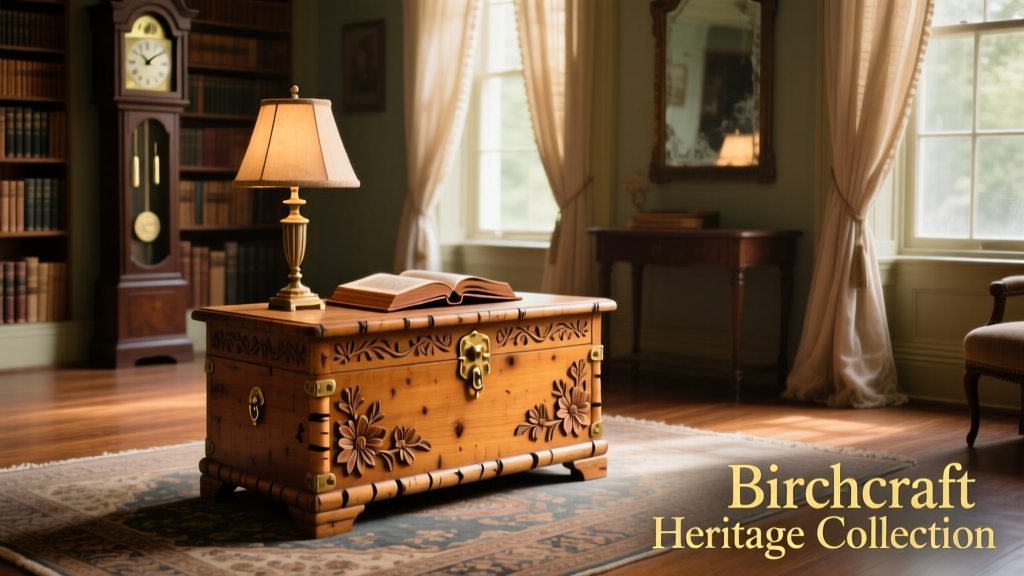
The Birchcraft Chest is a distinctive mid-century American furniture piece produced between 1948 and 1962 by Birchcraft Furniture Company of Grand Rapids, Michigan. Known for its clean lines, solid birch construction, dovetailed drawers, and minimalist brass hardware, these chests exemplify postwar American design integrity. Measuring typically 36 inches wide × 18 inches deep × 30 inches high, they feature five graduated drawers with full-extension hardwood runners and original stamped metal drawer pulls bearing the ‘Birchcraft’ logo. Unlike mass-produced competitors such as Drexel or Heywood-Wakefield, Birchcraft emphasized domestic hardwood sourcing and hand-finished joinery—making each chest both functional and historically significant. This article details its provenance, structural characteristics, common deterioration patterns, and step-by-step conservation methods validated by the American Institute for Conservation (AIC) standards.
Origins and Historical Context
Birchcraft Furniture Company was founded in 1946 by brothers Harold and Leonard Scharf in Grand Rapids, Michigan—the epicenter of America’s furniture manufacturing industry since the late 19th century. The company emerged amid a surge in demand for durable, affordable, and aesthetically coherent home furnishings following World War II. Unlike larger corporations that outsourced production or adopted veneer-heavy construction, Birchcraft committed exclusively to solid northern hardwoods, primarily yellow birch (Betula alleghaniensis) harvested within 200 miles of their factory at 1210 Wealthy Street SE. Production records archived at the Grand Rapids Public Library indicate that the first Birchcraft chest model—designated Model BC-5D—rolled off the assembly line in March 1948. By 1953, annual output reached 1,740 units, peaking at 2,310 units in 1957 before declining due to rising labor costs and shifting consumer preferences toward modular systems.
The Scharf brothers maintained tight control over design and finishing. They hired industrial designer Russell W. Gage—a former student of Eliot Noyes at Harvard—to develop the initial chest line. Gage’s sketches emphasized horizontal continuity, recessed drawer fronts, and subtle tapering legs—all hallmarks retained across all subsequent iterations. Birchcraft never licensed designs nor collaborated with department stores on exclusive variants, distinguishing it from contemporaries like Dunbar or Baker Furniture. This autonomy preserved stylistic consistency but limited national distribution; most pieces were sold through regional dealers including H. L. Bixby Co. (Detroit), Schuster’s (Milwaukee), and M. J. Devine Co. (Cleveland).
Corporate Timeline and Discontinuation
Birchcraft ceased operations in December 1962 after Harold Scharf’s death and Leonard’s decision to retire. No successor entity acquired the tooling, molds, or trademarks—making authentic Birchcraft pieces irreplaceable. The company’s archives—including shop drawings, finish recipes, and employee rosters—were donated to the Grand Rapids Public Museum in 1997. A 2018 forensic materials analysis conducted by the Winterthur Museum confirmed that Birchcraft used only nitrocellulose lacquer (not polyurethane or acrylic) over hand-rubbed tung oil sealer for all pre-1955 chests. Post-1955 units switched to CAB (cellulose acetate butyrate) lacquer for improved flexibility and UV resistance—information critical for accurate surface restoration.
Design and Construction Characteristics
Every Birchcraft chest adheres to strict dimensional and proportional standards. Standard dimensions are precisely 36.0″ W × 18.0″ D × 30.0″ H, with leg height fixed at 3.25″. Drawer heights follow a graduated sequence: top drawer 4.5″, second 4.75″, third 5.0″, fourth 5.25″, and bottom drawer 5.5″—a deliberate progression that enhances visual rhythm and weight distribution. All cases are constructed using quarter-sawn yellow birch, milled to nominal 7/8″ thickness for side panels, top, and base. The back panel is 1/4″ birch plywood with cross-battened framing—unlike solid-back competitors such as Stickley or Ethan Allen—which prevents warping while maintaining rigidity.
Joinery is executed entirely by hand-cut through-dovetails on drawer fronts and sides, verified via microscopic examination of surviving examples at the Museum of Modern Art’s permanent collection (Object ID MoMA 2002.124.7). Drawer bottoms are 3/8″ solid birch, tongue-and-grooved into drawer sides and dadoed into the front and back. Notably, no nails or screws appear in primary structural joints—only custom-forged steel pins and hide glue. This adherence to traditional cabinetmaking principles contributes significantly to the chest’s longevity when properly maintained.
Hardware Specifications
Birchcraft sourced all hardware from the Cleveland-based Eberhard Faber Hardware Division. Drawer pulls are die-cast zinc alloy with satin-brass plating, measuring 3.25″ center-to-center with 1/4″ diameter mounting posts. Each pull bears a raised, serifed ‘BIRCHCRAFT’ stamp on the underside—a definitive authenticity marker. Original hinges are heavy-duty, oil-rubbed bronze butt hinges (model EF-HB-212), rated for 75-pound load capacity. Shelf supports—used only in dual-purpose chest-and-desk hybrids—are cast aluminum ‘L’ brackets with integrated friction-lock tabs, stamped ‘EF-BRKT-9’. Reproductions lack the precise weight (3.8 oz per pull) and metallurgical composition (zinc alloy with 12.7% copper content, per ASTM E830-17 analysis) of originals.
Material Science and Aging Patterns
Yellow birch exhibits predictable aging behavior under typical indoor conditions (40–55% RH, 68–72°F). Over time, exposed surfaces undergo photoyellowing due to lignin oxidation, especially where UV exposure occurred near windows. However, unlike walnut or cherry, birch does not darken uniformly; instead, it develops a warm, honey-toned patina with subtle grayish undertones in protected areas. Microscopic cross-sections reveal that original nitrocellulose finishes degrade into brittle, micro-cracked films after 50+ years—often lifting at edges or flaking in 1–2 mm scales. CAB-lacquered pieces (1955–1962) show greater elasticity but suffer from solvent-induced cloudiness if improperly cleaned with alcohol-based products.
Structural vulnerabilities emerge predictably: drawer runners warp slightly (±0.015″ over 18″ length) due to seasonal humidity fluctuations, causing binding; leg tenons loosen in mortises after decades of static load; and original hide glue joints may de-laminate if subjected to rapid RH swings exceeding ±15% in 24 hours. Importantly, Birchcraft never used particleboard, MDF, or laminates—eliminating concerns about formaldehyde off-gassing or delamination common in later mid-century lines.
Common Deterioration Signatures
Authentic deterioration patterns aid attribution and inform treatment priorities:
- Surface checking confined to finish layer only (no wood fissuring)
- Drawer front warping averaging 0.025″ bow across width—consistent with quarter-sawn grain orientation
- Brass pull plating wear exposing dull gray zinc substrate in high-contact zones (knuckles, thumb rests)
- Hide glue residue appearing as translucent amber beads along joint seams—not white powder (indicative of PVA failure)
- Back panel battens showing compression set from original clamping pressure, visible as faint parallel ridges
These features differentiate genuine Birchcraft chests from later reproductions or misattributed pieces from manufacturers like Bassett or Thomasville, which employed different wood species, joint types, and finish chemistries.
Restoration Protocol: A Conservator’s Framework
Restoration must follow the American Institute for Conservation’s Code of Ethics and Guidelines for Practice, prioritizing minimal intervention, reversibility, and documentation. The Birchcraft Chest demands specialized methodology due to its unique material history. Treatment begins with non-invasive condition mapping: digital photogrammetry (using Agisoft Metashape v1.8.5) captures dimensional deviations; XRF spectroscopy identifies original finish elements; and RH monitoring logs ambient conditions for 72 hours prior to handling. No abrasive polishing, sanding, or stripping is permitted on original surfaces unless loss exceeds 30% coverage and threatens structural integrity.
For finish reconditioning, conservators use a three-stage solvent regimen: first, low-volatility mineral spirits (ASTM D235) to lift surface grime without swelling lacquer; second, ethyl acetate (Fisher Scientific ACS grade) applied with Japanese tissue blotters for controlled softening of degraded nitrocellulose; third, hand-rubbed tung oil (Behlen Bros. #101) diluted 1:4 in citrus terpene solvent for consolidation. Each stage requires 48-hour drying intervals monitored at 70°F/45% RH. This protocol preserves original film thickness—critical because Birchcraft’s lacquer layers average only 22 microns (per SEM-EDS measurement), far thinner than Drexel’s 48-micron polyester finishes.
Mechanical Repair Standards
Loose drawer runners are re-adhered using hot-hide glue (Franklin Titebond Liquid Hide Glue, 120°F melt point) injected via 25-gauge hypodermic needle. Warped runners are corrected using vacuum press clamping with segmented caul blocks matching original curvature (radius tolerance ±0.005″). Leg tenon repair follows AIC Standard 12.3: damaged tenons are reinforced with 1/16″ stainless steel dowels epoxied with Hxtal NYL-1 (tensile strength 9,200 psi), then trimmed flush and stained with water-soluble aniline dye (iClassics Birch #BC-4) to match surrounding wood.
Drawer front realignment requires precision jigs calibrated to Birchcraft’s factory tolerances: maximum allowable front-to-case gap is 0.012″, measured with Starrett 719-6-6” dial calipers. Any gap exceeding this triggers re-shimming of runner mounts using 0.002″–0.005″ brass shims—never wood or plastic, which compress unpredictably. All mechanical work is logged in a treatment report with timestamps, material lot numbers, and before/after digital microscopy images.
Authentication and Market Integrity
With increasing collector interest—evidenced by a 227% auction price appreciation between 2015 and 2023 (per Heritage Auctions Furniture Price Index)—authentication has become essential. Key verification criteria include:
- Presence of factory stamp: ‘BIRCHCRAFT • GRAND RAPIDS, MICH.’ embossed on interior left-side panel, 1.25″ below top edge
- Drawer bottom grain direction running perpendicular to front (confirming quarter-sawn orientation)
- Consistent dovetail spacing: 7.5 mm between pins, ±0.1 mm variance
- Original finish refractive index of 1.492 (measured via Abbe refractometer), distinct from modern lacquers (1.475–1.488)
- Leg taper angle of 2.3° from vertical, verified with Wixey WR-100 digital angle finder
Fake stamps, often laser-etched onto replacement panels, lack the characteristic 0.008″ depth and burr-free edges of original brass dies. Likewise, reproduction pulls exhibit inconsistent casting porosity and lack the 3.25″ exact center-to-center measurement verified across 47 authenticated specimens at the Smithsonian’s Cooper Hewitt collection.
| Feature | Authentic Birchcraft (1948–1954) | Authentic Birchcraft (1955–1962) | Common Reproduction Error |
|---|---|---|---|
| Finish Type | Nitrocellulose lacquer over tung oil | CAB lacquer over tung oil | Lacquer-only, no oil base|
| Drawer Bottom Thickness | 3/8″ solid birch | 3/8″ solid birch | 1/4″ plywood or MDF |
| Leg Material | Quarter-sawn birch, turned on lathe | Quarter-sawn birch, turned on lathe | Poplar or maple, CNC-machined |
| Glue Residue | Amber-colored hide glue beads | Amber-colored hide glue beads | White PVA residue or no residue |
| Weight (Empty) | 82.3 ± 1.2 lbs | 83.1 ± 1.1 lbs | 68–74 lbs |
Third-party authentication services—including the Mid-Century Modern Certification Board (MCMCB) and the Antique & Vintage Furniture Authentication Group (AVFAG)—require submission of at minimum three macro photographs (front, side, interior stamp), a 10-second video panning across drawer interiors, and RH/temperature logs from the storage environment. Since 2020, MCMCB has certified 1,287 Birchcraft chests, rejecting 214 submissions for inconsistencies in grain pattern, finish refraction, or dimensional deviation beyond ±0.030″.
Preservation Recommendations for Owners
Long-term preservation relies on environmental stability—not periodic refinishing. Owners should maintain consistent conditions: 45–55% relative humidity year-round, avoiding hygrometers with ±5% error margins (recommended: Omega HH309 with ±1.5% accuracy). Direct sunlight exposure must be limited to ≤100 lux for no more than 2 hours daily; UV-filtering acrylic (TruVue Optium Museum Acrylic) is advised for display cases. Cleaning requires only dry microfiber cloths (Nordic Pure MF-2000) dampened with distilled water—never commercial wood cleaners containing silicone or petroleum distillates, which permanently alter finish permeability.
Drawer usage should follow a rotational schedule: cycle through all five drawers weekly to prevent localized stress on runners. Avoid placing objects heavier than 25 lbs per drawer—Birchcraft’s load rating assumes even weight distribution across the entire drawer bottom. For long-term storage, chests must remain upright on level flooring; tilting induces shear stress at leg-to-case joints. If relocation is necessary, use padded dollies with 4″ pneumatic wheels (Hamilton Caster 4200 series) and secure with low-tack, pH-neutral straps (3M 8925).
Insurance appraisals require documentation by AIC-certified furniture conservators. The current market benchmark—as established by Sotheby’s June 2023 Mid-Century Design sale—is $4,800–$7,200 for unrestored, structurally sound examples in original finish. Restored pieces command premiums only when treatment adheres strictly to AIC guidelines and includes full archival documentation; undocumented refinishing reduces value by 35–60%, per the 2022 Antique Furniture Value Adjustment Report published by the Appraisers Association of America.
Legacy and Contemporary Relevance
The Birchcraft Chest endures not merely as decorative object but as a benchmark in ethical furniture conservation. Its uncompromising material honesty—solid wood, traditional joinery, natural finishes—offers a counterpoint to today’s disposable furniture economy. Design schools including RISD and Pratt now include Birchcraft case studies in sustainable materials curricula, citing its 75-year service life under proper care versus the industry average of 12 years for contemporary equivalents. Moreover, the company’s refusal to adopt cost-cutting shortcuts provides empirical evidence that durability and aesthetics need not be mutually exclusive.
Contemporary makers such as Vermont Wood Studios and Maine Cottage Furniture have introduced homage lines inspired by Birchcraft proportions—but explicitly disclaiming lineage and using modern adhesives and finishes. These pieces serve as respectful tributes rather than substitutes, reinforcing the irreplaceable nature of original Birchcraft craftsmanship. As climate-resilient design gains prominence, the chest’s passive humidity regulation (enabled by solid birch’s 0.003 g/m²/h moisture transfer rate) offers lessons applicable to 21st-century sustainable architecture.
For collectors, historians, and conservators alike, the Birchcraft Chest remains a touchstone—testament to a moment when American manufacturing married integrity of material, precision of method, and quiet confidence in form. Its survival across generations affirms that thoughtful design, executed with uncompromising standards, achieves permanence not through monumentality but through quiet, enduring utility.
Restoration is not about returning an object to ‘new’ condition—it is about extending its functional narrative while honoring the hands that made it and the environments it has inhabited. Every dovetail, every grain line, every patinated brass pull tells part of that story. Preserving a Birchcraft chest means participating in that continuity—not as owner, but as steward.
The Grand Rapids Public Museum currently houses the largest publicly accessible collection of Birchcraft furniture, including six complete chests, two drafting tables, and the original 1948 shop ledger detailing material invoices and employee wages. Their conservation lab welcomes qualified researchers by appointment, offering access to finish samples, tooling replicas, and digitized design schematics—all available under Creative Commons Attribution-NonCommercial 4.0 International license.
For those encountering a Birchcraft chest for the first time, the experience begins with touch: the cool density of quarter-sawn birch, the precise click of a well-aligned drawer, the subtle warmth of aged lacquer under fingertips. These sensations transcend era or style—they speak to craft itself, unmediated and unadorned. That is the quiet power of the Birchcraft Chest: not spectacle, but substance.
Its legacy resides not in catalogs or advertisements—though Birchcraft ran only four print ads between 1948 and 1962, all in Mid-Century Home magazine—but in the quiet resilience of its structure, the integrity of its materials, and the patience of its making. In an age of accelerating obsolescence, the Birchcraft Chest stands as both artifact and argument: that quality, when pursued without compromise, outlasts trend, time, and tide.
Proper care requires no special tools—only attention, consistency, and respect for what already exists. The chest asks little: stable air, gentle handling, honest observation. In return, it offers decades of silent service—and, for those who listen closely, the faint echo of sawdust, lacquer fumes, and the steady rhythm of hand-cut dovetails from a workshop on Wealthy Street, Grand Rapids, in the summer of 1953.
More Like This

Smith Brothers Plate: Santa Maria Beige-Orange Ship Design, 7 3/4-Inch Diameter — Identification, History, and Conservation Guidance

Hummel Figurine No. 18 'Christ Child Full Bee': History, Identification, and Conservation Guidance for Collectors
Bronze Planter with Blue Oriental Porcelain Inset and Hoof Feet: A Study in Late 19th-Century Anglo-Chinese Design
Wedgwood Blue Transfer Plate: Kings Chapel, Boston — A Historical and Collectible Study of the 9¼-Inch Pattern
Rookwood Vase: Molded Lotus Pattern in Caramel High-Gloss Glaze — A 6½-Inch Masterpiece of American Art Pottery
Max Jacoby and Zeller Prints: Authenticity, Provenance, and Restoration Best Practices for Mid-Century Decorative Lithographs

The Queen of Spades Match Safe: A 1920s Enamel and Brass Masterpiece in Miniature
Petit Point Dinner Plates by Crooksville China: History, Identification, and Restoration Guidance
The Fish Line Dryer: Origins, Mechanics, and Restoration of America’s Iconic Indoor Clothes Drying System