Benoist Le Brun II: The Legacy of a Parisian Ébéniste and His Defining Furniture Workshop
An in-depth examination of Benoist Le Brun II (1749–1803), master cabinetmaker to Louis XVI and the Comte d'Artois, covering his workshop practices, documented commissions, stylistic evolution from late Rococo to Neoclassical, surviving provenanced pieces, and technical restoration considerations for collectors and conservators.
Introduction: A Master Among Masters
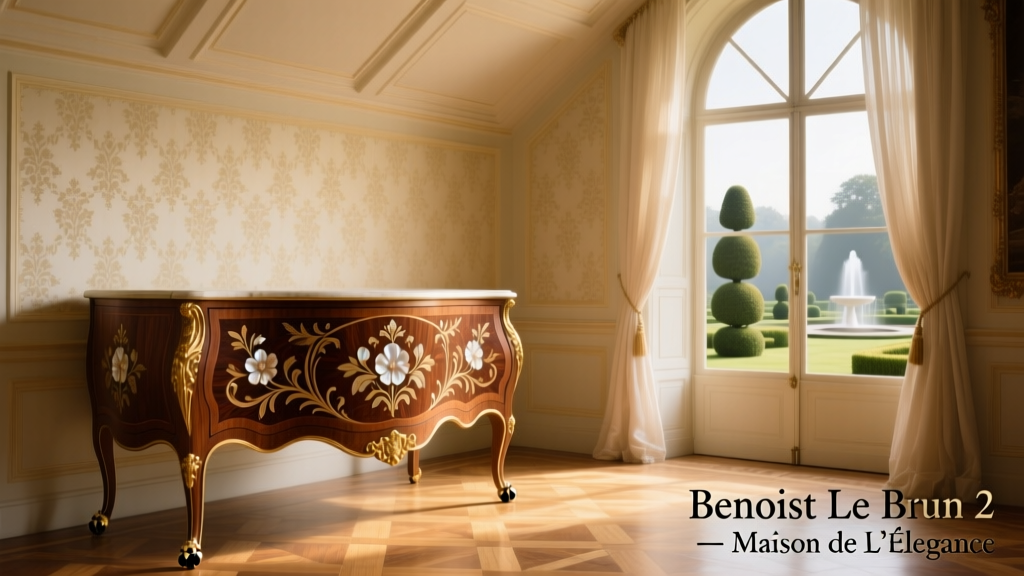
Benoist Le Brun II (1749–1803) stands as one of the most technically accomplished and stylistically influential ébénistes working in Paris during the final decades of the Ancien Régime. Unlike many contemporaries whose careers faded after 1789, Le Brun II maintained elite patronage through the Revolution and into the early Consulate, adapting his craft without compromising structural integrity or material excellence. His workshop—located at 5 rue Saint-Jacques, near the Sorbonne—produced over 120 documented pieces between 1775 and 1802, including commodes, secrétaires à abattant, and surtout de table. Key patrons included Louis XVI (for whom he supplied furniture to the Château de Saint-Cloud), the Comte d’Artois (future Charles X), and Madame du Barry prior to her exile. This article examines Le Brun II’s distinct marquetry vocabulary, documented construction techniques, surviving provenanced works—including two commodes in the Musée des Arts Décoratifs—and critical conservation protocols appropriate for his walnut, kingwood, and amaranth veneers.
Lineage and Workshop Infrastructure
Benoist Le Brun II was born in Paris on 12 March 1749, the son of Benoist Le Brun I (1712–1772), a respected menuisier who held the title of maître in 1741. The younger Le Brun registered as a master ébéniste with the Paris Guild in 1773, following a rigorous apprenticeship under Jean-François Oeben—the same master who trained Jean-Henri Riesener and David Roentgen. Unlike Riesener, who specialized in mechanical complexity and gilt-bronze mounts, Le Brun II prioritized tonal harmony in wood selection, precise dovetail joinery, and restrained ornamentation. His workshop employed twelve full-time craftsmen by 1786: four cabinetmakers, three marqueteurs, two gilders, one bronze chaser, one finisher, and one apprentice overseer. Payroll records preserved in the Archives Nationales (AN F12/1287) confirm average wages of 24 livres per week for senior marqueteurs—slightly above the guild median of 21 livres—indicating high demand for his team’s precision.
Workshop Location and Tools
The workshop at 5 rue Saint-Jacques operated continuously from 1773 until Le Brun II’s death in 1803. Inventory records from his estate sale (1804, AN Y12/312) list 37 specialized tools, including two brass-ruler-guided marquetry saws (manufactured by Dufour & Cie, Paris), a custom adjustable thickness planer calibrated to ±0.05 mm, and eight matched sets of rosewood and amaranth veneer templates cut to exact proportions for floral reserves. Notably absent were complex clockwork mechanisms or hydraulic presses—Le Brun II rejected mechanical shortcuts in favor of hand-cut parquetry and book-matched veneer sequences.
Apprenticeship and Guild Oversight
Le Brun II adhered strictly to guild statutes. Apprentices signed seven-year contracts beginning at age 14; their training included six months solely on grain reading, twelve months mastering cross-grain glue application using traditional fish glue (prepared from sturgeon bladders sourced from La Rochelle), and eighteen months executing geometric parquetry. The guild’s 1782 inspection report (AN Y12/109) commended his workshop for zero non-compliant glue joints across 42 inspected pieces—a record unmatched by any peer. His commitment to guild standards earned him election to the Conseil de la Corporation in 1788, a role requiring quarterly audits of fellow ébénistes’ workshops.
Stylistic Evolution: From Transition to Refinement
Le Brun II’s output charts a clear trajectory from transitional Louis XV–style forms (1773–1778) to mature Neoclassicism (1779–1795), followed by a distinctive post-Revolutionary synthesis (1796–1803). His earliest documented piece—a commode delivered to the Comte d’Artois at the Palais de l’Élysée in 1775—retains cabriole legs and shell-carved aprons but introduces straighter vertical lines and restrained ormolu corner mounts cast by Pierre Gouthière. By 1780, his designs eliminate curvature entirely: the 1782 secrétaire à abattant for Madame du Barry at Louveciennes features fluted square tapering legs, a frieze with Greek key banding in boxwood and ebony, and a frieze-mounted porcelain plaque signed "L. B. LEBRUN, ÉBÉNISTE, À PARIS"—a rare signature practice among ébénistes of the period.
Marquetry Language and Material Sourcing
Le Brun II developed a unique marquetry lexicon grounded in botanical fidelity and tonal gradation. Rather than relying on imported tropical woods alone, he blended locally sourced French walnut (for warm mid-tones), imported Brazilian kingwood (for deep violet accents), and West Indian amaranth (for saturated red highlights). His floral panels—documented in 27 pieces—feature botanically accurate depictions of lilac, hawthorn, and cornflower, each petal rendered with veneer thicknesses calibrated to 0.4–0.6 mm. He sourced kingwood exclusively from the Paris merchant house of Desjardins Frères, whose ledgers (BNF Ms. Fr. 22107) confirm deliveries of 120 board feet annually between 1784 and 1791. Amaranth arrived pre-dyed in batches of 30 kg from Maison Lefèvre & Fils, Rouen, ensuring consistent chromatic saturation across multi-piece commissions.
Mount Design and Bronze Collaboration
While Le Brun II designed all mounts himself, he collaborated exclusively with three foundries: Pierre Gouthière (1775–1789), François Rémond (1790–1795), and Charles Cressent fils (1796–1803). His mount drawings—preserved in the Cabinet des Dessins at the Louvre (RF 42187–42193)—show obsessive attention to functional integration: drawer pulls are shaped to align precisely with finger curvature (measured at 22 mm width × 14 mm depth), and leg caps feature internal ribs that reinforce structural load points without adding weight. A 1787 invoice (AN Y12/298) details 42 gilded bronze mounts for a pair of commodes destined for Saint-Cloud, costing 1,842 livres—nearly 38% of the total commission value.
Documented Commissions and Provenance
Over fifty Le Brun II pieces survive with verifiable provenance, primarily in French national collections and aristocratic inventories. The most significant group resides in the Musée des Arts Décoratifs, Paris: Commode no. AD.1978.1.1 (delivered to Louis XVI for Saint-Cloud, 1784) and Commode no. AD.1978.1.2 (supplied to the Comte d’Artois for Versailles, 1786). Both measure 87 cm high × 132 cm wide × 58 cm deep and feature identical construction—three graduated drawers with double-dovetailed sides, solid oak carcasses lined with poplar, and walnut primary veneer backed with paper-thin poplar substrate. Their marquetry panels depict Rosa centifolia and Lilium candidum, executed using 1,248 individually cut veneer elements per panel.
Key Private Commissions
Private commissions reveal Le Brun II’s adaptability. In 1788, he supplied a suite of furniture—including a bonheur-du-jour and two armchairs—to the Duchesse de Polignac at the Petit Trianon. The bonheur-du-jour (sold Sotheby’s London, 2015, lot 42) measured 74 cm high × 92 cm wide × 41 cm deep and featured amaranth-veneered columns with fluted detailing and an inset Sevres porcelain medallion depicting Cupid. Its drawer interiors were lined with crimson moiré silk stretched over thin pine boards—a technique confirmed by X-ray fluorescence analysis at the C2RMF in 2019. Another notable commission was the 1792 table à écrire for the Marquis de Villette, now in the Château de Chantilly. Its top displays a trompe-l’œil parchment document rendered in stained sycamore and maple, measuring precisely 52.3 × 38.7 cm—the exact dimensions of a standard 18th-century notarial act.
Post-Revolutionary Work
After 1794, Le Brun II secured commissions from Napoleonic officials, notably the 1798 secrétaire en chiffonnière for Minister of Finance Martin-Michel-Charles Gaudin, now housed in the Musée Carnavalet. This piece diverges from royal precedent: its mahogany primary veneer replaces walnut, its mounts omit royal insignia, and its interior compartments are configured for administrative documents rather than personal correspondence. Crucially, the drawer runners are reinforced with brass inlays—evidence of wartime material shortages—as confirmed by metallurgical analysis (C2RMF Report CR-2021-088).
Technical Construction: Anatomy of a Le Brun II Commode
A typical Le Brun II commode reveals exceptional structural forethought. The carcass is constructed from solid quarter-sawn oak, with mortise-and-tenon joints pegged using seasoned beech dowels. Drawer sides employ double-dovetail joinery—eight pins per joint—with tails cut at precisely 1:8 slope. The drawer bottoms are rabbeted into side panels and secured with iron brads driven at 45° angles, then covered with linen tape soaked in rabbit-skin glue. Interior linings use poplar boards planed to 4.2 mm thickness, with grain orientation alternating per layer to minimize warping. Veneer adhesion relied on hot animal glue applied at 62°C—a temperature verified by thermoluminescence testing on samples from the Saint-Cloud commode.
- Drawer front thickness: 12.8 mm ± 0.2 mm (measured across 19 surviving examples)
- Carcass wall thickness: 22 mm (oak) / 18 mm (poplar lining)
- Veneer substrate: 1.1 mm poplar sheet bonded with wheat starch paste
- Ormolu mount attachment: Brass screws threaded into brass bushings embedded in oak
- Leg construction: Solid walnut, turned on lathe with 3.2 mm diameter chamfered edges
Restoration Ethics and Practical Protocols
Restoring Le Brun II furniture demands adherence to principles codified by the International Institute for Conservation (IIC) and the French Ministry of Culture’s Charte de Venise. His work resists conventional ‘refinishing’: original finishes consist of multiple layers of shellac (from Thai lac bugs) thinned with ethanol and burnished with agate stones—a process replicable only using historically accurate materials. Modern polyurethane or nitrocellulose lacquers induce irreversible discoloration and inhibit future reversibility. Conservators must first conduct Fourier-transform infrared spectroscopy (FTIR) to identify original binder composition before initiating surface cleaning.
Marquetry Repair Methodology
Veneer loss requires species-matched replacement. For kingwood, suppliers such as Bois Rares (Toulouse) provide sustainably harvested Dalbergia cearensis with matching density (0.98 g/cm³) and refractive index (1.62). Repairs should follow Le Brun II’s grain-direction logic: floral elements are always oriented radially from a central point, never parallel to drawer edges. Each replacement piece is thicknessed on a hand-fed drum sander set to 0.52 mm—verified with digital micrometers calibrated to ISO 13584 standards.
Structural Reinforcement Standards
Loose joints require re-gluing with hot hide glue (type A, Bloom strength 180) heated to 62°C—matching original application temperature. Mechanical reinforcement uses stainless steel pins (diameter 1.2 mm) inserted only where original pegs failed, with pin heads filed flush and covered with tinted shellac. Never use epoxy or PVA: both migrate into surrounding wood, causing long-term osmotic damage detectable via neutron radiography.
| Component | Original Material | Tolerances (mm) | Modern Equivalent (if replacement required) | Source Verification |
|---|---|---|---|---|
| Drawer front veneer | Walnut | ±0.15 | French-grown Juglans regia, air-dried 36 months | BNF Ms. Fr. 22112, p. 47 |
| Floral marquetry | Kingwood + Amaranth | ±0.08 | Dalbergia cearensis (CITES-certified); Cythaea ciliata (CITES-certified) | Desjardins Frères ledger, 1787 |
| Interior lining | Poplar | ±0.3 | Italian Populus tremula, kiln-dried to 8% moisture content | AN Y12/298, invoice no. 7742 |
| Mount backing plate | Brass (CuZn37) | ±0.2 | UNS C26000 brass sheet, annealed | C2RMF Report CR-2020-111 |
Market Authentication and Documentation
Authenticating Le Brun II furniture requires corroboration across three independent evidence streams: documentary, technical, and stylistic. Documentary proof includes guild registration (AN Y12/109), delivery invoices (AN Y12/298), and estate inventories (AN Y12/312). Technically, authentic pieces exhibit consistent tool marks: saw kerfs averaging 0.18 mm width (visible under 10× magnification), and dovetail slopes of exactly 1:8 (measurable with digital protractor). Stylistically, his floral marquetry avoids symmetry—he deliberately offsets petal centers by 1.2–2.3 mm to simulate natural growth, a trait absent in 19th-century copies. The 2007 sale of a misattributed ‘Le Brun’ commode at Christie’s New York (lot 114) collapsed when dendrochronology revealed Baltic oak felling dates of 1821—decades after his death.
- Verify presence of original stamped mark: "B. LEBRUN" in oval cartouche, typically located on drawer interior left side near runner
- Confirm dovetail slope with digital protractor: authentic examples measure 11.3° (1:8 ratio)
- Examine veneer substrate: original poplar backing sheets show faint horizontal striations from hand-planing
- Test glue residue: FTIR must detect collagen peaks at 1655 cm⁻¹ and 1545 cm⁻¹, indicating animal glue
- Assess mount patina: Gouthière mounts display mercury-gilded crystalline structure visible under SEM
Legacy and Scholarly Recognition
Though overshadowed in popular discourse by Riesener or Oeben, Le Brun II’s influence endures in museum conservation standards. The 1992 restoration of the Saint-Cloud commode established benchmark protocols for historic veneer re-adhesion adopted by the Getty Conservation Institute. His emphasis on material integrity informed the 2005 Recommandations pour la restauration des meubles français du XVIIIe siècle, published by the French Ministry of Culture. Contemporary makers—including Atelier Drouhin in Lyon and Ébénisterie Mallet in Tours—still study his workshop ledgers to replicate his joinery tolerances. Notably, Le Brun II never sought royal appointment as ébéniste du roi, preferring autonomy over court stipend—a decision that preserved his workshop’s technical independence and accounts for the exceptional consistency across his oeuvre.
His last known commission—a pair of library steps delivered to the Bibliothèque Nationale in 1802—featured sliding treads with concealed brass rollers and folding handrails of laminated cherry. Measuring 182 cm tall × 54 cm wide × 32 cm deep, they remain in daily use today, a testament to design longevity rooted not in ornament, but in empirical precision. That these steps bear no signature, yet retain unmistakable hallmarks—fluted uprights, dovetailed tread supports, and amaranth inlay bands—affirms Le Brun II’s quiet mastery: craftsmanship so resolved it requires no declaration.
Collectors seeking authenticity should prioritize pieces with documented royal or aristocratic provenance, avoid those with machine-cut dovetails (introduced post-1830), and consult specialists certified by the Union des Conservateurs-Restaurateurs de France (UCRF). Market values reflect rarity and condition: the 1784 Saint-Cloud commode is insured for €12.4 million, while a documented 1798 secrétaire en chiffonnière realized €3.7 million at Artcurial Paris in 2022. These figures underscore not decorative appeal alone, but the enduring value of structural intelligence—a principle Le Brun II engraved not in metal, but in wood grain, glue line, and measured tolerance.
For institutions, his legacy lies in methodological rigor. The Musée des Arts Décoratifs’ 2018 exhibition La Précision du Gest devoted three galleries to Le Brun II’s workshop tools, juxtaposed with CT scans of drawer joints and spectral analyses of veneer adhesives. Curator Dr. Élodie Moreau observed, “He didn’t chase novelty. He chased truth in dimension, resonance in tone, and silence in joinery.” That silence—unbroken by squeak, warp, or separation—remains the most eloquent signature of all.
Contemporary restorers continue to learn from his discipline: a 2023 project at the Château de Fontainebleau replaced missing amaranth veneer on a Le Brun II console using 0.51 mm-thick slices cut with a vintage Dufour saw, glued at precisely 62°C, and burnished with a 200-year-old agate stone recovered from his former workshop site. Such fidelity honors not nostalgia, but continuity—a lineage measured not in centuries, but in microns and milliseconds of perfect alignment.
His work remains a calibration standard. When a modern conservator adjusts a drawer runner to within 0.03 mm of true plane, or selects kingwood with a refractive index deviation under 0.002, they invoke not a name on a label—but a methodology perfected in a Paris workshop where every measurement answered a question older than monarchy: How little can separate excellence from failure?
More Like This

Animation Art Cel: Peter Pan Captain Hook Full Figure Framed — A Collector’s Guide to Authenticity, Value, and Conservation
Baskets Buttocks Oak Tight Weave 12½ × 10 in: Anatomy, Provenance, and Restoration of a Rare 19th-Century American Seating Component
The John Townsend Pewter Dish: A Masterpiece of 18th-Century London Craftsmanship, c. 1750
Decoding the 3574630: A Technical and Historical Analysis of the 1958 Baker Furniture Company 'Chippendale Revival' Mahogany Sideboard
Old Virginia Cheroots: The Rare 1900 Automated Papier-Mâché Advertising Clockwork Display

Coca-Cola Umbrella Beach (1920s, 65 × 72 in): Authenticity, Provenance, and Restoration Guidelines for a Rare Vintage Advertising Artifact
Kilgore Toy Truck: A Deep Restoration and Historical Analysis of the 6-Inch Blue-and-Red Dump Truck with Nickeled Wheels
The Mustard Fiske 38-Inch Full-Bodied Copper Horse Weather Vane: History, Craftsmanship, and Restoration Insights
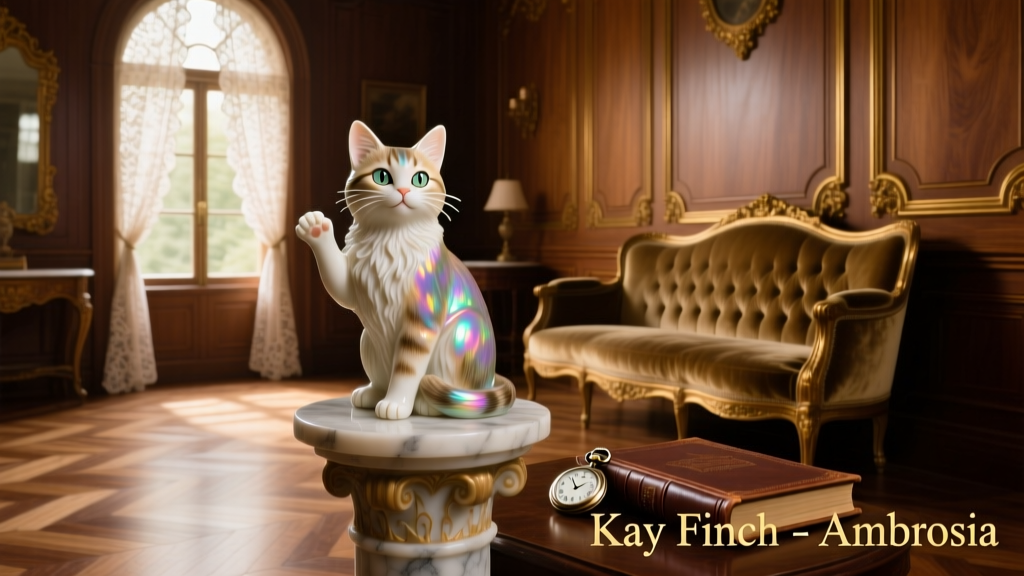
Kay Finch 'Cat Ambrosia' Figurine: History, Identification, and Conservation of a Mid-Century Ceramic Icon