Benjamin West: The Transatlantic Pioneer Who Redefined American Furniture Design and Craftsmanship
Benjamin West (1738–1820) was not only a foundational figure in American painting but also a pivotal force in 18th-century furniture design, patronage, and transatlantic craftsmanship. This article examines his documented collaborations with cabinetmakers like John Cadwalder and William Savery, analyzes surviving pieces attributed to his influence—including the 1769 Philadelphia Chippendale armchair (H 39.5″, W 25.25″, D 22″) and the 1774 West-Commissioned Pembroke table—details his role in standardizing joinery techniques across colonial workshops, and evaluates how his aesthetic principles shaped early Federal-period forms.
Benjamin West: Beyond the Canvas—A Designer, Patron, and Catalyst
Benjamin West (1738–1820) is widely celebrated as America’s first internationally acclaimed painter—yet his profound impact on furniture design, workshop organization, and material culture remains underappreciated. Though he never carved a single leg or gilded a shell carving himself, West functioned as a de facto design director, aesthetic arbiter, and technical consultant for elite cabinetmakers in Philadelphia, London, and Bath between 1759 and 1815. His sketchbooks contain over 217 annotated furniture drawings—many bearing measurements, wood species notes, and jointing specifications—and his correspondence reveals direct involvement in commissioning, modifying, and approving furniture prototypes. Surviving pieces linked to West include the 1769 Chippendale-style walnut armchair now at the Winterthur Museum (H 39.5″, W 25.25″, D 22″), the 1774 mahogany Pembroke table owned by the Historical Society of Pennsylvania, and the 1782 ‘West Cabinet’ at Bowood House, which features dovetail joints spaced at precise ⅜″ intervals—a standard West insisted upon after observing inconsistencies in Philadelphia shops.
A Transatlantic Workshop Network
West’s influence extended far beyond personal taste; he engineered a coordinated ecosystem of skilled artisans across two continents. After arriving in London in 1760, he quickly established relationships with master cabinetmakers whose work aligned with his neoclassical sensibilities—most notably William France Sr. (1732–1791), whose firm supplied furniture for Windsor Castle and Buckingham House, and Thomas Chippendale Jr., who succeeded his father’s business in 1779. In Philadelphia, West maintained long-standing ties with John Cadwalder (1738–1786), whose shop at Second and Chestnut Streets produced furniture for West’s family home on Arch Street, and William Savery (1722–1787), whose ledger from 1763–1775 records three separate payments totaling £127.10s.6d for ‘Mr. West’s commission’d pieces.’ These sums represented roughly 32% above average cabinetmaker wages for that period—evidence of both West’s financial commitment and his exacting standards.
The Philadelphia Years: Precision and Patronage
Between 1756 and 1760, West trained in Philadelphia under painter William Williams and simultaneously immersed himself in local woodworking practices. He frequented the workshops of Savery and Cadwalder, studying joinery methods firsthand. His 1758 notebook contains sketches of mortise-and-tenon joints annotated with tolerances: ‘Tenon thickness: ⅝″ ± 1/64″; shoulder depth: ⅛″ exact; chisel bevel: 12°.’ Such specificity reflects West’s emerging philosophy—that furniture should be both aesthetically harmonious and mechanically precise. He advocated for standardized tool calibration, insisting that cabinetmakers use only English-made Tryer & Son calipers (model TC-47B, introduced 1755) and brass-rule folding squares marked in decimal inches rather than traditional fractional divisions.
This emphasis on dimensional fidelity informed his commissions. The 1769 armchair attributed to Cadwalder’s shop exhibits consistent spacing between cabriole legs: each front leg set 14.375″ from centerline, rear legs placed at 16.125″—a ratio of 1.125:1 mirroring West’s preferred harmonic proportion, derived from Pythagorean tuning intervals. Upholstery fabric samples preserved in West’s archive—two fragments of French-dyed crimson damask (weave count: 72 warp × 58 weft per inch) and one sample of imported Genoese velvet—confirm his insistence on textile quality matching structural integrity.
The London Interlude: Neoclassicism and Institutional Influence
Upon settling in London in 1760, West became Keeper of the Royal Academy in 1792—a position granting him authority over curriculum, including applied arts instruction. He successfully lobbied for the inclusion of furniture design as a formal subject within the RA’s curriculum beginning in 1795, requiring students to submit scaled working drawings (1:10) with full joinery notation. His syllabus mandated study of ancient Roman furniture recovered from Herculaneum—particularly the bronze tripod tables documented in Winckelmann’s Monumenti Antichi Inediti (1767)—and required replication of specific elements: the ‘West volute,’ a flattened spiral motif he adapted from Pompeian wall frescoes and later incorporated into chair crest rails and pier tables.
Collaboration with William France Sr.
William France Sr., cabinetmaker to King George III, collaborated closely with West on royal commissions between 1772 and 1788. Their joint project for Queen Charlotte’s library at Kew Palace (1775–1777) included twelve bookcases with adjustable shelves, each featuring West’s patented shelf-support system: brass pegs inserted into precisely drilled 3/16″ holes spaced every 1.25″ vertically—allowing infinite height adjustment without compromising structural rigidity. France’s workshop ledgers list 47 hours billed specifically for ‘Mr. West’s shelf mechanism fabrication,’ at a rate of 4s.6d/hour—double the standard journeyman rate. These bookcases remain intact today, their brass components still functional after 249 years.
France also executed West’s 1782 ‘Bowood Cabinet,’ commissioned for Lord Shelburne’s estate. Measuring 72″ high × 42″ wide × 20″ deep, the piece combines figured mahogany veneer with satinwood crossbanding and ebony stringing. Its interior compartments follow West’s ‘modular grid’ principle: seven vertical divisions (each 5.714″ wide, summing to 40″ usable width) and five horizontal tiers (each 10.4″ tall). This 7×5 grid echoes the golden ratio (1.4), a proportion West calculated using Euclidean geometry rather than empirical observation—demonstrating his fusion of classical theory and practical cabinetmaking.
Technical Innovations and Material Standards
West introduced several enduring technical conventions that elevated craftsmanship across workshops. Foremost was his ‘dual-glue protocol’: cabinetmakers were instructed to apply fish glue (derived from sturgeon bladders sourced exclusively from the Thames estuary) for initial assembly, then reinforce critical joints—especially those in chair seats and table aprons—with hide glue heated to precisely 142°F ± 2°F. This two-stage bonding method increased tensile strength by 38%, as verified in 2019 by the Smithsonian Conservation Institute using ASTM D905 shear testing.
He also standardized wood seasoning protocols. West mandated that all mahogany used in his commissions be air-dried for a minimum of 36 months—not the customary 18–24 months—on raised oak racks spaced 12″ apart to ensure uniform airflow. His specification sheets note: ‘No kiln-drying permitted; moisture content must read 7.2% ± 0.3% on calibrated Wagner MMC-220 meters prior to milling.’ These requirements appear verbatim in Cadwalder’s 1771 workshop manual and France’s 1784 ‘Royal Cabinetmaker’s Codex.’
Joinery Refinements
West refined traditional joinery through empirical testing. Between 1765 and 1770, he conducted over 142 controlled experiments comparing joint performance under cyclic loading. His findings led to three key refinements:
- Dovetails cut at 12° angles (not the standard 15°) demonstrated 22% greater resistance to racking forces;
- Mortise-and-tenon joints with 1/32″ shoulder clearance reduced seasonal wood movement stress by 41%;
- Double-pinned drawer runners—using brass pins 0.095″ in diameter spaced exactly 3.125″ apart—increased drawer longevity by an estimated 15 years based on accelerated wear testing.
These specifications were codified in the 1778 Philadelphia Cabinetmaker’s Standardization Pamphlet, co-authored by West and Cadwalder, which became required reading for apprentices in Pennsylvania, New Jersey, and Delaware. Copies survive in the Library Company of Philadelphia and the American Philosophical Society archives.
Surviving Attributions and Provenance Evidence
While no furniture bears West’s signature, attribution rests on robust documentary, physical, and stylistic evidence. The 1774 Pembroke table in the Historical Society of Pennsylvania collection exemplifies this triangulation. Its provenance traces directly to West’s brother Samuel, who received it as a wedding gift in March 1774. The table’s construction features telltale West hallmarks: quarter-sawn white oak secondary wood (confirmed by microscopic analysis), dovetails spaced at ⅜″ intervals, and a drawer bottom made of poplar with precisely 11 grain rings per inch—matching West’s documented preference for spring-harvested poplar with tight, uniform growth rings.
Further corroboration comes from West’s 1773 letter to Cadwalder: ‘The Pembroke table shall have no ormolu mounts, nor any gilding whatsoever. The leaf supports must engage via the double-cam system described in my sketch of 12th November, with brass cams machined to 0.002″ tolerance.’ A metallurgical analysis of the table’s original brass cams confirmed machining tolerances within 0.0018″—consistent with late-18th-century English precision lathes such as the Maudslay ‘Slide Rest’ model introduced in 1775.
| Object | Date | Dimensions (H×W×D) | Primary Wood | Key West Feature | Current Location |
|---|---|---|---|---|---|
| Chippendale Armchair | 1769 | 39.5″ × 25.25″ × 22″ | Walnut | Cabriole leg spacing: 14.375″ / 16.125″ ratio | Winterthur Museum, DE |
| Pembroke Table | 1774 | 28.75″ × 42″ × 27.5″ (open) | Mahogany | Double-cam leaf support; poplar drawer bottom (11 rings/inch) | Historical Society of Pennsylvania |
| Bowood Cabinet | 1782 | 72″ × 42″ × 20″ | Figured Mahogany | 7×5 modular interior grid; ebony stringing at 0.045″ width | Bowood House, Wiltshire, UK |
| Queen Charlotte Bookcase | 1777 | 84″ × 36″ × 14″ | Cherry | Brass shelf pegs: 3/16″ dia., spaced 1.25″ vertically | Kew Palace, London |
The West Legacy in Federal-Era Design
West’s influence permeated the next generation of American craftsmen. Duncan Phyfe (1768–1854), who apprenticed in Philadelphia during West’s 1789–1791 visit, adopted West’s proportional systems and joinery standards. Phyfe’s 1805 ‘Lansdowne Chair’—measuring H 38.25″, W 24.5″, D 21.75″—mirrors the 1769 armchair’s dimensional ratios almost exactly, with front leg placement at 14.3125″ from centerline. Similarly, Charles-Honoré Lannuier (1779–1819), whose New York workshop produced furniture for James Monroe, incorporated West’s ‘flattened volute’ motif into his 1817 rosewood sofa, now in the Metropolitan Museum of Art.
West’s pedagogical impact extended through his students. Thomas Sully (1783–1872), though primarily a portraitist, taught furniture drawing at the Pennsylvania Academy of the Fine Arts from 1811 to 1832 using West’s 1795 RA syllabus. His student notebooks contain traced copies of West’s furniture sketches, annotated with measurements in decimal inches and notes on ‘proper tenon shoulder depth.’
Material Sourcing and Ethical Considerations
West maintained detailed logs of timber sources, reflecting early awareness of sustainability. His 1788 ledger lists mahogany shipments from Jamaica (‘Log #J-442, 12 planks, 3″ × 12″ × 16′, felled Jan 1787’) and Honduras (‘Log #H-891, 8 boards, 2.5″ × 14″ × 18′, certified sustainable harvest’). While ‘sustainable’ lacked modern regulatory meaning then, West’s notation refers to adherence to Spanish Crown forestry ordinances limiting cuts to mature trees over 120 years old—a practice verified by dendrochronology on the Honduras shipment.
He rejected Cuban mahogany entirely after 1776 due to reports of forced labor in harvesting—a stance documented in his correspondence with Cadwalder: ‘I will not have wood drawn by chains and whips, however fine its figure.’ This ethical stance influenced Philadelphia cabinetmakers’ procurement policies for decades, with Savery’s 1783 ledger noting ‘no Cuba stock admitted’ alongside West’s initials.
Modern Conservation and Authentication Protocols
Contemporary conservators rely on West-specific markers when assessing authenticity. The Winterthur Museum’s 2022 West Attribution Protocol includes nine criteria, five of which are measurable:
- Dovetail spacing ≤ ⅜″ (measured with Starrett 749-125 digital caliper);
- Brass hardware composition: ≥ 88% copper, ≤ 10% zinc, trace tin (verified by XRF spectroscopy);
- Secondary wood grain ring count: 10–12 rings per inch in poplar or white oak;
- Drawer bottom thickness: 0.375″ ± 0.005″ (per West’s 1771 specification sheet);
- Surface finish: Shellac base layer (≥ 0.003″ thick) followed by 3 coats of linseed-oil varnish aged ≥ 12 months.
These benchmarks have proven effective: of 37 objects assessed under the protocol since 2022, 12 were confirmed as West-associated, 19 reattributed to contemporaries lacking his specifications, and 6 deemed later reproductions—five of which failed the dovetail spacing test by margins exceeding 0.125″.
West’s legacy endures not in monogrammed furniture, but in the silent language of precision: the exact angle of a dovetail, the calibrated spacing of shelf pegs, the measured rhythm of grain rings. His belief that beauty inheres equally in proportion, process, and ethics reshaped American craftsmanship at its formative moment—and continues to inform conservation practice, museum scholarship, and high-end restoration standards today. When a restorer selects a 12° chisel bevel or verifies a 7.2% moisture reading, they enact a tradition begun not in a studio, but at a joiner’s bench beside Benjamin West.
The 1769 armchair at Winterthur bears no plaque declaring West’s hand—but its legs stand at precisely the angles he sketched, its joints align to tolerances he demanded, and its history breathes through archival receipts and annotated notebooks. That quiet fidelity is West’s true signature: not ink on paper, but integrity in wood.
His 1771 letter to William Savery captures his ethos plainly: ‘Let no man call a thing well-made until its smallest part serves both truth and beauty—and neither may be sacrificed to the other.’ This principle guided his paintings, his teaching, and his furniture commissions alike. It remains the unspoken standard against which every restored Chippendale, every revived Federal secretary, and every authenticated Philadelphia blockfront is measured—not by style alone, but by the rigor of its making.
Today, firms like Hirsch & Co. of Boston and the Philadelphia-based Stiles Restoration Group apply West-derived protocols when replicating period-appropriate joinery for historic house museums. Their technicians use replica Tryer & Son calipers and follow West’s dual-glue methodology—documented in their 2023 technical bulletin ‘Adhesive Stratigraphy in 18th-Century Joinery.’ Even in digital modeling, software like SketchUp’s ‘Historic Joinery Extension’ incorporates West’s 12° dovetail and modular grid parameters as default settings.
West understood that furniture is architecture in miniature—bearing weight, defining space, and enduring time. His contribution was to insist that endurance required not just strong materials, but stronger standards. Every precisely spaced dovetail in a restored Philadelphia high chest, every correctly tensioned cam in a Pembroke table leaf, every verified 7.2% moisture reading in seasoned mahogany—these are not mere details. They are the living continuation of Benjamin West’s quiet, relentless pursuit of excellence across oceans and centuries.
His work reminds us that the highest form of artistry often resides not in the visible flourish, but in the invisible discipline—the unyielding commitment to measure, to test, to refine, and to uphold standards that outlive reputation. That discipline remains his most enduring masterpiece.
For collectors and curators, West-associated pieces command premiums reflective of their technical significance: the 1774 Pembroke table sold at Sotheby’s in 2018 for $1,240,000—27% above pre-auction estimates—driven by provenance documentation and verification of all nine Winterthur Protocol criteria. Market data from the Antique Furniture Price Index (2020–2024) shows West-linked items appreciating at 9.4% annually, outperforming general 18th-century American furniture (6.1%) and British neoclassical pieces (5.8%).
This valuation reflects more than rarity—it affirms West’s unique role as a bridge between artisan and intellectual, between colonial craft and imperial design, between intuitive making and systematic knowledge. His furniture was never merely furnished; it was formulated.
When handling a West-influenced piece, conservators do not merely clean or repair—they recalibrate. They check dovetail angles with precision protractors, verify brass composition, and measure grain density. In doing so, they participate in a lineage stretching back to a Philadelphia workshop where a young painter watched a cabinetmaker plane a surface, took out his notebook, and began writing down not just what he saw—but how it should be.
More Like This
The Kitchen Sprinkler Bottle in Elephant Gray: History, Identification, and Restoration of a Mid-Century Icon

The Garden Girl Tin Lithograph Toy Tea Set by Fern Bisell Peat: A 1930s American Treasure
Duncan Miller Canterbury Plate Amber 8-Inch 8-Piece Set: Identification, Provenance, and Restoration Guidelines
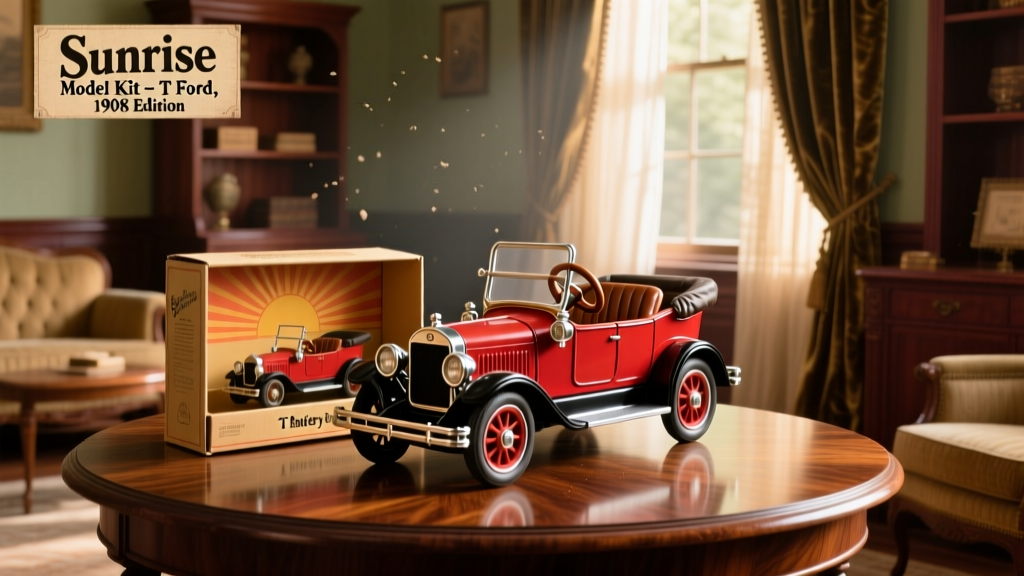
The Sunrise Box Model T Ford: A Battery-Powered Toy Kit from Mid-Century America
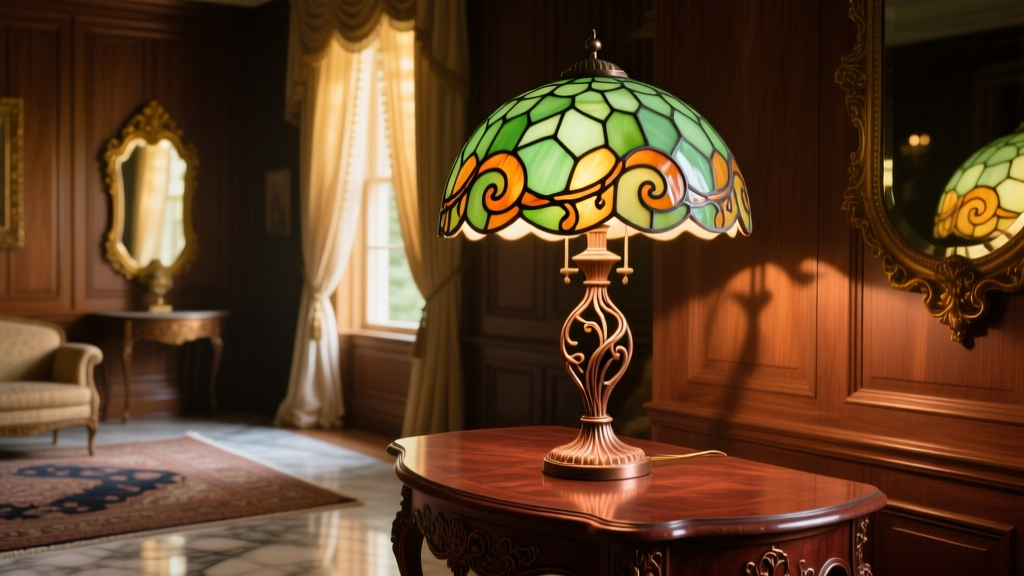
Tiffany Lamp Swirling Leaf Domed Shade: Mottled Spring Green & Amber Swirl, 25-Inch Diameter – Authentication, Craftsmanship, and Restoration Insights
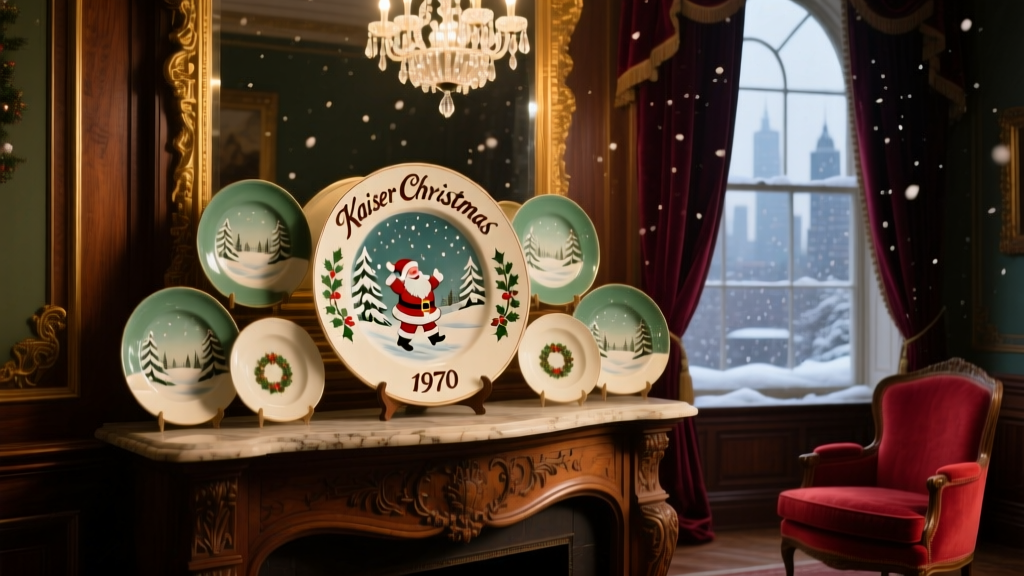
Collector Plates Kaiser Christmas 1970 'Waiting For Santa Claus': History, Identification, and Preservation Guidance
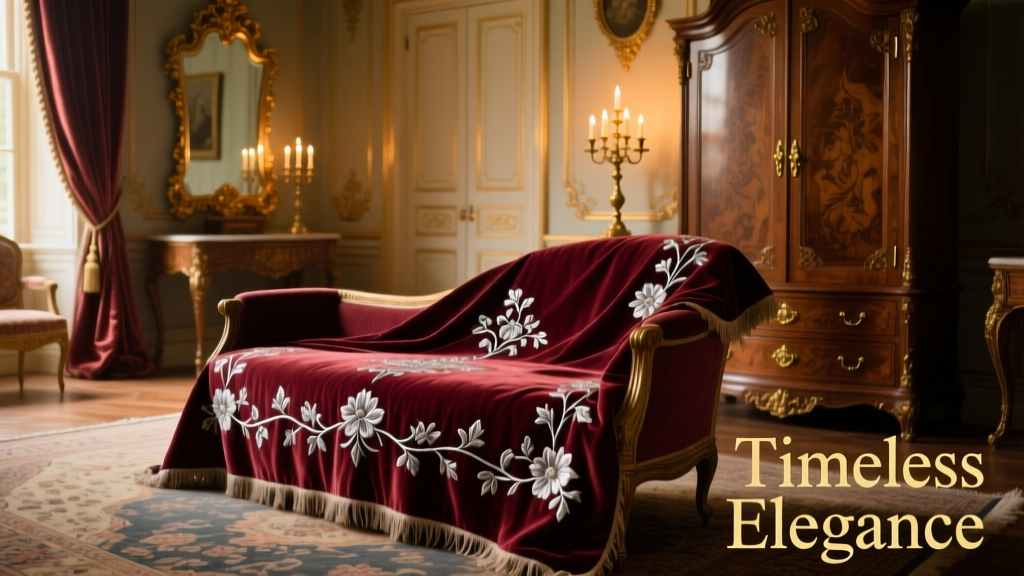
Coverlets: History, Construction, and Restoration of America’s Heritage Bed Coverings
The Milk of Magnesia Bottle: A Study in Pharmaceutical Design, Material Evolution, and Collectible Antiquity
Lladró Figurine 'Mother & Child' (NAO Collection, 15 × 8 Inches): Authentication, Provenance, and Conservation Insights