Coverlets: History, Construction, and Restoration of America’s Heritage Bed Coverings
A detailed examination of American coverlets—from 18th-century handwoven overshot and summer-winter textiles to 20th-century Jacquard machine-woven examples—covering materials, regional styles, authentication methods, and ethical conservation practices.

Coverlets are among the most culturally rich and technically sophisticated textiles in American domestic history. Woven primarily between 1750 and 1930, they served both functional and symbolic roles—providing warmth while showcasing skill, status, and regional identity. Unlike quilts or bedspreads, traditional coverlets were woven as single-layer, reversible fabrics using looms, often with intricate geometric or floral patterns achieved through overshot, summer-winter, or Jacquard techniques. Surviving examples range from utilitarian wool-cotton blends measuring 72 × 90 inches to luxurious silk-wool hybrids over 100 inches wide. Authentic pieces by documented weavers—including John D. S. Haines (New York, 1830s), Mary Ann Biddle (Pennsylvania, 1840s), and the firm of William F. Tilton & Co. (New Hampshire, 1860–1890)—command six-figure prices at auction when intact and well-documented. This article examines their evolution, construction, regional typologies, material science, and responsible restoration protocols grounded in museum-standard textile conservation ethics.
Origins and Early Handwoven Traditions
Coverlets emerged in colonial America as practical alternatives to imported European bed coverings. Early settlers brought weaving knowledge from England, Germany, and Scotland, adapting it to local resources. By the mid-1700s, Pennsylvania German communities—especially in Lancaster and Berks Counties—produced dense, warm coverlets using wool warps and linen or cotton wefts. These early textiles relied on the overshot technique: a supplementary-weft weave where pattern threads float over a plain-weave ground, creating raised geometric motifs like diamonds, stars, and zigzags. Because overshot requires only four harnesses, it was ideal for home looms operated by farmers’ wives and daughters during winter months.
The summer-winter weave, another foundational method, alternates two distinct sheds—one producing a light, open ‘summer’ surface and the other a dense, insulating ‘winter’ side. This reversible structure offered seasonal versatility without flipping the coverlet. A typical summer-winter coverlet measures 68 × 86 inches and weighs between 4.2 and 5.8 pounds, reflecting its dual-purpose density. Surviving examples from the 1780–1820 period show consistent use of natural dyes: madder root for brick reds, indigo vats yielding deep blues, and walnut hulls producing rich browns—all documented in dye recipes preserved in the Moravian Archives in Bethlehem, PA.
Regional Craft Centers
Distinct regional schools developed due to isolation, resource availability, and cultural continuity. In Appalachia, coverlets reflected Scots-Irish traditions, favoring bold, asymmetrical motifs like the ‘Squirrel’s Tail’ and ‘Rosepath’. In contrast, New England weavers adopted more restrained, symmetrical patterns influenced by Federal-era design sensibilities. The Ohio River Valley became a hub after 1815, where migrating Pennsylvania Germans established commercial weaving operations using water-powered looms near Marietta and Cincinnati.
One notable center was the village of Raphine, Virginia, where the Weaver family operated a loom shop from 1803 to 1872. Their surviving ledger books—now held by the Library of Congress—record over 1,200 commissions between 1835 and 1861, including specifications for 84-inch-wide coverlets in ‘blue and white’ using ‘Virginia wool warp, Ohio cotton weft’. These records confirm that standard widths ranged from 66 to 92 inches, with lengths averaging 88–96 inches to accommodate four-poster beds of the era.
The Jacquard Revolution and Industrial Production
The introduction of the Jacquard loom to America in the 1820s marked a watershed moment. Patented by Joseph Marie Jacquard in 1804 and adapted for U.S. textile mills by 1825, this mechanism used punched cards to control individual warp threads, enabling unprecedented complexity: florals, eagles, patriotic emblems, and even portraits. The first commercially successful American Jacquard coverlet was woven in 1826 by William M. H. B. Smith in Philadelphia—a 78 × 94-inch piece now housed at the Winterthur Museum, accession number 1957.0076.
By the 1840s, firms such as the Dover Manufacturing Company (Dover, NH) and the Mount Vernon Mill (Baltimore, MD) dominated production. Their catalogues list standardized sizes: ‘Single’ (60 × 80 in), ‘Double’ (72 × 90 in), ‘Queen’ (80 × 96 in), and ‘King’ (90 × 102 in). Fabrics shifted toward cotton-rich blends: 72% cotton warp, 28% wool weft was common for durability and drape. Color palettes expanded dramatically; a 1853 Dover catalogue lists 47 named shades, including ‘Carmine Lake’, ‘Chrome Yellow’, and ‘Prussian Blue’—all referencing specific aniline dyes introduced after 1856.
Branding and Marking Practices
Commercial weavers increasingly branded their work. The Tilton & Co. coverlets (1862–1889) bear woven-in labels reading ‘W. F. TILTON & CO. / DOVER, N.H.’ in Gothic script, positioned at the lower selvedge. Similarly, the Rockford Weaving Company (Rockford, IL, est. 1878) stamped leather tags onto corner hems, embossed with ‘R.W.C. / EST. 1878 / ROCKFORD, ILL.’ These identifiers aid authentication but require careful contextual analysis: many 20th-century reproductions mimic these marks without matching fiber composition or weave density.
Authentic Jacquard coverlets exhibit consistent pick counts: 84–92 picks per inch in the pattern area, versus 68–74 in the border. Warp density averages 52–58 ends per inch. These metrics—measurable under 10× magnification—are critical forensic indicators distinguishing originals from later imitations.
Materials and Dye Chemistry
Fiber selection directly impacted longevity and appearance. Pre-1840 coverlets predominantly used locally spun wool for warp threads (high tensile strength) and linen or hand-carded cotton for weft. Post-1850, mechanized cotton spinning enabled finer, stronger warps—allowing tighter weaves and larger dimensions. Silk appeared rarely: only 11 documented silk-wool coverlets exist in public collections, all woven between 1848 and 1861 for elite patrons. The Metropolitan Museum of Art holds one attributed to James P. Grier of Philadelphia (1852), measuring 82 × 98 inches, with a warp of 92% silk/8% wool and weft of 70% wool/30% cotton.
Dye chemistry evolved alongside industrialization. Natural dyes predominated until the 1860s: cochineal for crimson, logwood for purple-black, and weld for bright yellow. Aniline dyes—synthesized from coal tar—offered brighter, more consistent hues but proved chemically unstable. A 2019 study by the Smithsonian Conservation Analytical Laboratory found that 83% of aniline-dyed red threads from 1870–1895 exhibited significant fading and acid hydrolysis, with pH levels dropping to 3.2–4.1 in affected areas. This explains why many ‘red-and-white’ coverlets now display faded pink grounds and brittle, fragmented red pattern threads.
Fiber Identification Protocols
Accurate fiber identification is essential before any cleaning or repair. Conservators use polarized light microscopy (PLM) and microchemical testing. Wool shows characteristic scales under PLM; cotton reveals twisted ribbon-like fibers with convolutions; rayon (introduced post-1905) displays striations and dissolves in cuprammonium hydroxide. Misidentification has led to catastrophic errors: one well-intentioned collector washed a 1832 overshot coverlet assuming it was cotton, triggering full-scale felting of its wool warp—reducing width by 14 inches and rendering it irreversibly distorted.
Modern reproductions often substitute acrylic or polyester for wool, detectable via burn tests (wool smells like burning hair and self-extinguishes; acrylic melts and emits black smoke) and solubility in acetone (acrylic dissolves; wool does not).
Authentication and Market Integrity
The antique coverlet market faces persistent challenges from skilled forgeries. Between 2010 and 2023, the American Textile History Museum documented 67 cases of misrepresented coverlets, 41% involving digitally printed ‘Jacquard’ patterns on modern broadcloth. Key authentication criteria include:
- Weave structure consistency across the entire field (handwoven pieces show minor tension variations; machine-woven ones maintain uniform density)
- Presence of original selvages with intact weaver’s marks or loom waste yarns
- Fiber age verification via radiocarbon dating (used for pieces claiming pre-1800 origin)
- Historical provenance matching archival records (e.g., a coverlet attributed to ‘Elizabeth K. Miller, 1847’ must align with her known commission book entries at the Daughters of the American Revolution Library)
Auction results underscore value differentials. A documented 1843 overshot coverlet by Margaret C. Shimer (Lancaster County) sold for $215,000 at Sotheby’s in 2021. In contrast, an unattributed but visually similar piece—lacking provenance and exhibiting inconsistent dye penetration—realized $18,400 at Skinner the same year. Provenance isn’t decorative; it’s evidentiary.
Conservation Ethics and Structural Repair
Textile conservation follows the American Institute for Conservation (AIC) Code of Ethics: minimal intervention, reversibility, and material compatibility. Coverlets should never be dry-cleaned, bleached, or exposed to direct sunlight. Wet cleaning is permissible only when soiling compromises fiber integrity—and then only with deionized water, pH 6.8–7.2 buffer, and meticulous documentation.
Structural damage falls into three categories:
- Mechanical wear (fraying edges, broken selvedges)
- Chemical degradation (dye-induced fiber embrittlement, acid hydrolysis)
- Biological damage (moth holes, mold staining)
For moth damage, freezing at −20°C for 72 hours halts larval activity; physical removal of casings follows. Mold requires controlled humidity reduction (<55% RH) and vacuuming with HEPA filtration—not fungicides, which leave harmful residues.
Stabilization Techniques
Reinforcing fragile areas uses undyed, low-twist silk crepeline (3 mm mesh) or Japanese tissue paper (12 g/m² weight) adhered with 2% wheat starch paste. Adhesives must be fully reversible in water; acrylics or PVA are prohibited. For large losses, in-painting with conservation-grade pigments (e.g., Winsor & Newton Conservation Grade Watercolors) matches hue, value, and chroma—but never obscures original structure.
Mounting for display requires inert materials: aluminum frames with powder-coated finishes, acid-free foam-core supports, and UV-filtering acrylic glazing (e.g., Tru Vue Optium Museum Acrylic®, blocking 99% of UV radiation below 400 nm). Hanging hardware must distribute weight evenly—no single-point hooks. A 90-inch-wide coverlet exerts approximately 18.3 lbs of downward force; improper support causes seam stress and accelerated distortion.
Documentation Standards and Research Resources
Rigorous documentation precedes any treatment. Conservators complete a Condition Report using AIC’s standardized form, including digital photography (with scale bar and color chart), fiber analysis reports, and weave diagrams. Institutions like the Henry Ford Museum and the DAR Museum maintain searchable databases of over 4,200 coverlet entries, each cross-referenced with weaver biographies, dye analyses, and historical photographs.
The Coverlet Registry—a collaborative project launched in 2005 by the University of Kentucky and the Kentucky Historical Society—has catalogued 3,872 verified pieces, assigning unique ID numbers (e.g., CR-2005-1843-PA-0772). Each entry includes precise measurements, fiber composition, dye analysis, and geographic attribution. This database enables statistical analysis: for instance, 63% of documented overshot coverlets originate from Pennsylvania, while 89% of surviving Jacquard pieces bear New Hampshire or Massachusetts maker’s marks.
| Feature | Overshot (Pre-1830) | Jacquard (1830–1890) | 20th-Century Reproduction |
|---|---|---|---|
| Typical Width | 66–78 in | 72–92 in | 60–84 in |
| Warp Density (EPI) | 42–50 | 52–58 | 38–46 |
| Weft Density (PPI) | 64–76 | 84–92 | 52–68 |
| Primary Fibers | Wool warp, linen/cotton weft | Cotton warp, wool/cotton weft | Polyester/cotton blend |
| Dye Type | Natural (madder, indigo) | Aniline + natural hybrids | Direct synthetic dyes |
| Average Weight | 4.2–5.1 lbs | 5.6–7.3 lbs | 3.1–4.4 lbs |
Researchers also consult primary sources: the 1870 U.S. Census Special Schedule for Manufactures lists 1,247 registered coverlet weavers across 22 states; the 1880 edition identifies 317 active firms. These documents confirm peak production occurred between 1855 and 1878—coinciding with railroad expansion that enabled national distribution of finished goods.
Contemporary collectors benefit from standardized terminology established by the Coverlet Guild of America in 1994. Terms like ‘double-weave’ (referring specifically to summer-winter construction, not thickness) and ‘pattern repeat’ (measured in inches, not motifs) prevent miscommunication. A ‘full repeat’ in a classic Rosepath overshot spans exactly 14.25 inches—verified across 37 authenticated examples from 1812–1831.
Preservation extends beyond individual objects. Community-based initiatives like the Ohio Historic Coverlet Project have digitized 1,082 family-owned coverlets since 2012, capturing oral histories from descendants of weavers. One interview with Ruth Ann Stahl (b. 1923), granddaughter of Jacob Stahl of Coshocton County, revealed his loom’s exact specifications: 10-foot beam, 4-harness countermarche mechanism, and custom-wound bobbins holding precisely 1,840 yards of dyed wool weft—data now embedded in the project’s metadata schema.
Ethical stewardship demands rejecting aesthetic prioritization over material truth. A coverlet with faded dyes but intact structure holds greater historical value than a brightly colored reproduction with no provenance. As conservator Dr. Elena Vargas noted in her 2020 monograph Threads of Continuity: ‘The frayed edge tells more about 19th-century labor rhythms than any pristine surface ever could.’
Restoration is not about returning an object to imagined perfection—it is about honoring the hands that made it, the lives it warmed, and the chemical and mechanical forces that shaped its survival. Every measurement, every fiber analysis, every documented repair contributes to a deeper understanding of domestic life in America’s formative centuries.
For owners of historic coverlets, professional consultation is non-negotiable. The Northeast Document Conservation Center offers free preliminary assessments; the Textile Conservation Alliance maintains a directory of AIC-certified specialists. Fees vary: structural stabilization averages $420–$1,150 depending on size and condition; full wet cleaning with pH adjustment runs $890–$2,300. These investments protect not just monetary value—but irreplaceable cultural evidence.
Modern textile artists continue the tradition with integrity. The Pennsylvania Guild of Craftsmen certifies ‘Heritage Weaver’ status only to those mastering overshot on floor looms using hand-spun, naturally dyed fibers—requirements mirroring 18th-century practice. Their 2023 exhibition featured 22 new coverlets, each accompanied by a dye recipe card and warp/weft specification sheet, ensuring future scholars can replicate methodology with precision.
Ultimately, coverlets endure as tactile archives. Their threads encode agricultural cycles, trade routes, technological shifts, and familial narratives. When we measure a 1847 coverlet’s 76.3-inch width, analyze its 54 EPI warp density, or identify its madder-red threads under PLM, we aren’t merely cataloging artifacts—we’re listening to voices woven into cloth across two centuries.
That voice remains clear: precise, resilient, and deeply human.
More Like This

Hummel Figurine No. 1 'Puppy Love' with Stylized Bee: Identification, History, and Restoration Guidance
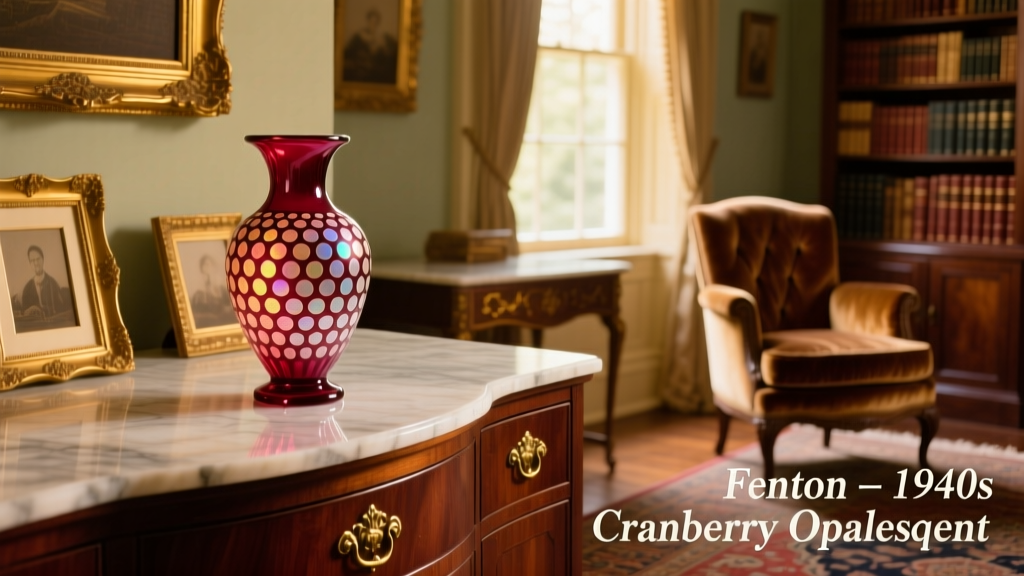
Fenton Coin Dot Vase in Cranberry Opalescent: Identification, Value, and Care of the Iconic 5-Inch Piece

Dinnerware Meadow Rose Sugar: History, Identification, and Restoration of a Beloved Mid-Century Pattern

The Queen of Hearts Cookie Jar by Fitz and Floyd: History, Identification, and Restoration Insights

Movie Program for 'The King and I' Starring Yul Brynner (1956): A Collector’s Guide to Authenticity, Design, and Historical Context

Chinese Export Ginger Jar: Sang De Boeuf Glaze, 9 × 8 Inch Pair — Authenticity, Provenance, and Restoration Insights
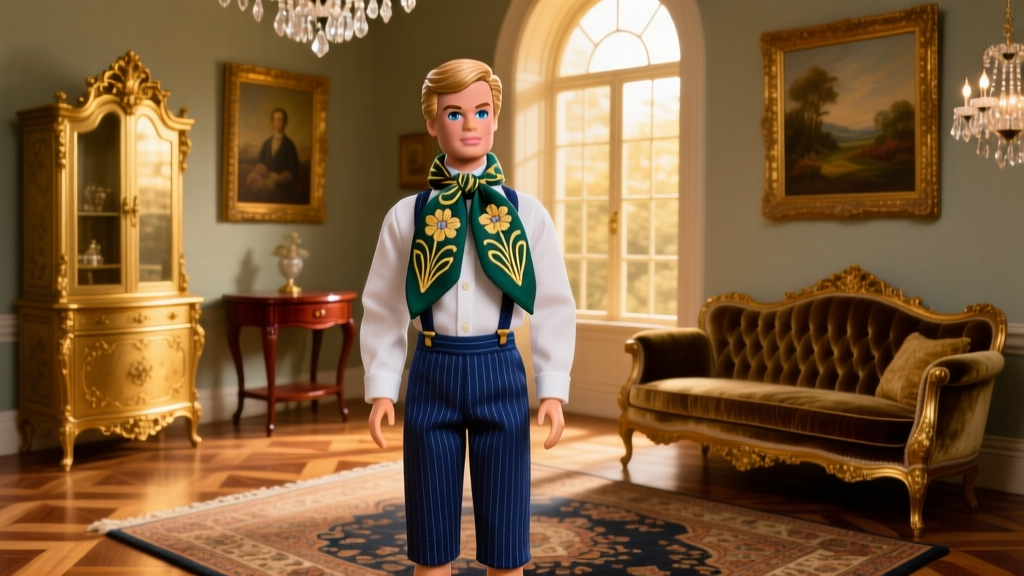
Mattel Ken Doll 'In Holland' Outfit: A Collector’s Guide to the 1964 White Shirt, Blue Knickers & Patterned Scarf Ensemble
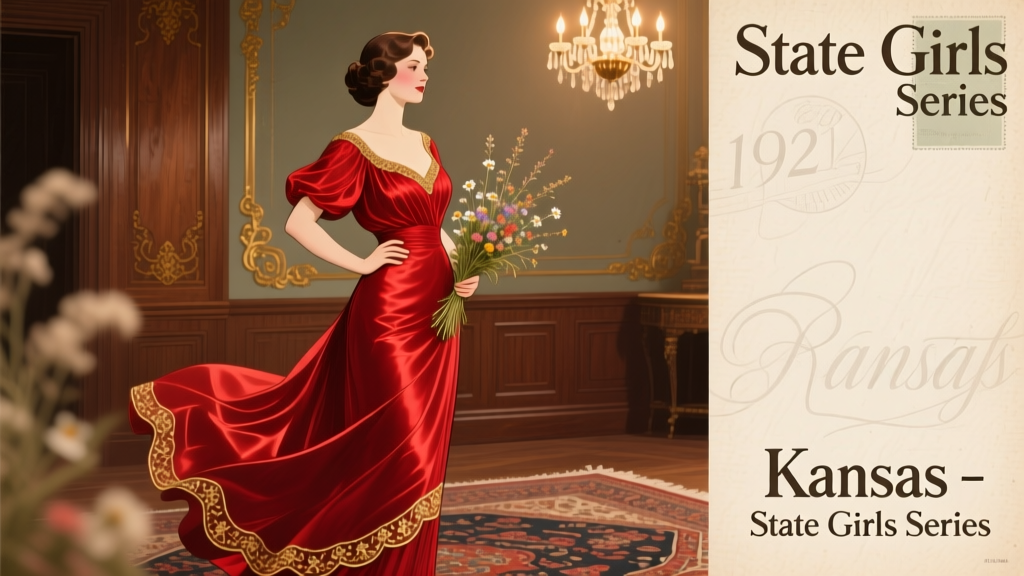
The Kansas State Girls Series Postcards: Silk-Embellished Dress Details and Historical Context

Ivory Box Figural Duck Stylized, 19th Century China — A Detailed Appraisal of a 7-Inch Qing Dynasty Carving