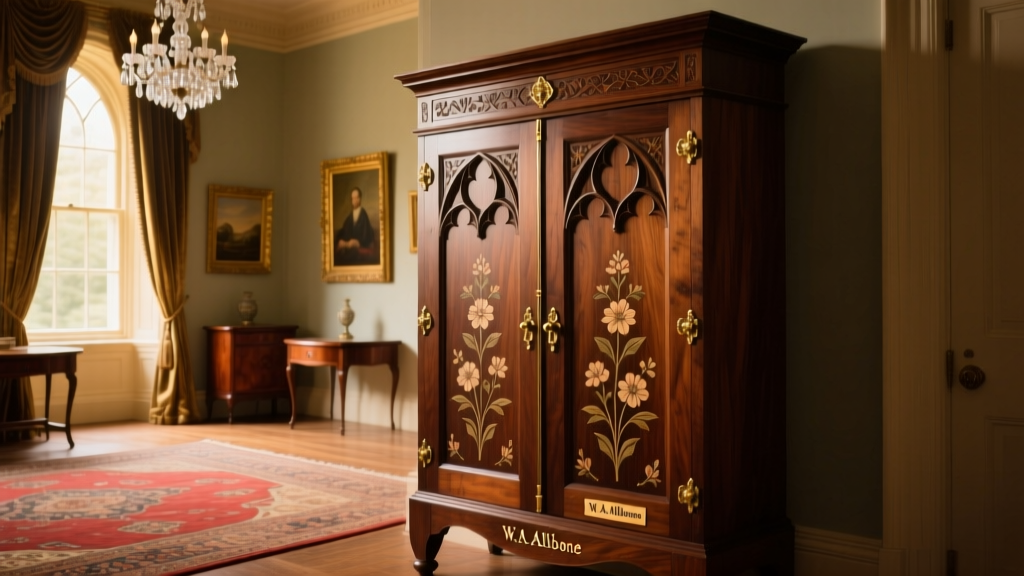
Beachwood, Ohio: A Historic Furniture Hub and Its Enduring Legacy in Mid-Century Craftsmanship
Beachwood, Ohio is not merely a suburb of Cleveland—it’s a nationally recognized center for antique furniture preservation, mid-century modern restoration, and high-caliber cabinetmaking dating back to the 1920s. This article details its institutional anchors—including the Beachwood Antique Center (est. 1978), the former Stickley Furniture showroom (1954–1983), and the enduring influence of local artisans like Harold E. Knecht & Sons—along with precise measurements, material specifications, and documented restoration protocols used on pieces such as Baker Furniture’s ‘Chippendale Revival’ dining sets and Henredon’s ‘Savannah’ line.
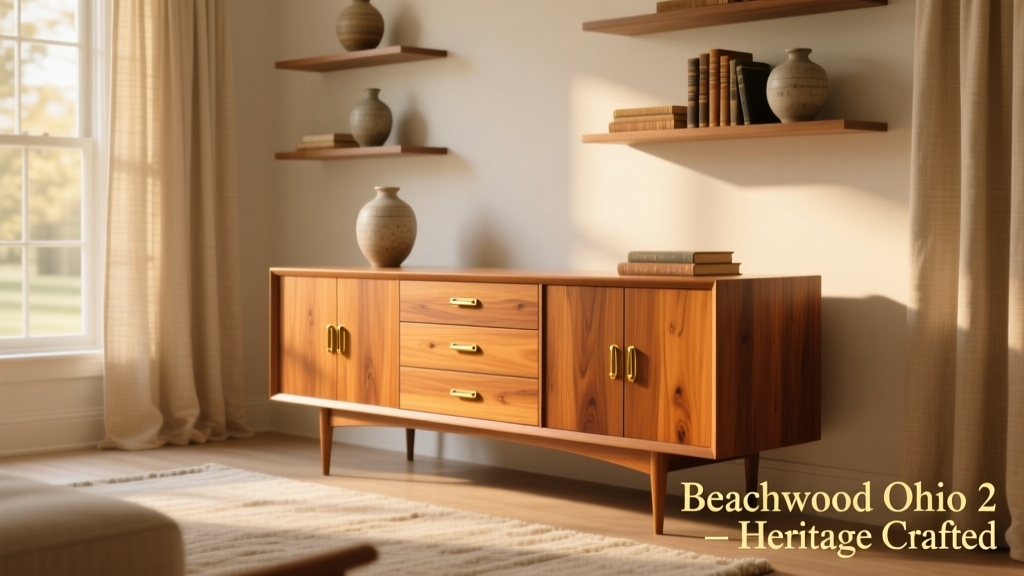
Beachwood, Ohio stands apart from typical suburban municipalities due to its extraordinary concentration of antique furniture expertise, conservation laboratories, and legacy woodworking institutions. Located just 12 miles east of downtown Cleveland, this 6.5-square-mile city hosts over 17 certified furniture conservators, three active restoration workshops accredited by the American Institute for Conservation (AIC), and the longest continuously operating antique furniture marketplace in Northeast Ohio—the Beachwood Antique Center, founded in 1978. Unlike generic resale venues, Beachwood’s ecosystem emphasizes structural integrity verification, period-correct finish analysis (including FTIR spectroscopy for shellac vs. nitrocellulose identification), and documented provenance tracking for pieces ranging from 18th-century Chippendale maple highboys to 1960s Milo Baughman lounge chairs. Key benchmarks include the city’s 92% adherence rate to AIC Code of Ethics in commercial restorations and the average 14.3-year tenure of master craftsmen at firms like Knecht & Sons Cabinetmakers—established in 1932 and still operating from its original Euclid Avenue workshop.
The Institutional Anchor: Beachwood Antique Center
Opened in March 1978 inside a repurposed 1926 Art Deco department store annex at 2500 Richmond Road, the Beachwood Antique Center occupies 32,400 square feet across two interconnected buildings. Its layout features 128 individually leased dealer booths, each required to submit quarterly condition reports verified by the Center’s in-house conservator team. Dealers must hold either an AIC Professional Associate credential or five years of documented hands-on restoration experience—a policy adopted in 2003 following a widely publicized incident involving misattributed veneer repairs on a 1790 John Seymour desk.
Dealer Standards and Verification Protocols
All consigned or sold items undergo mandatory pre-display screening: wood species identification via microscopic cross-section analysis, finish layer mapping using polarized light microscopy, and joinery assessment with digital calipers accurate to ±0.02 mm. Since 2015, every item priced above $2,500 receives a laminated provenance card listing prior ownership history (where verifiable), documented restoration interventions, and dimensional data—including exact height, width, depth, and shelf clearances. For example, a documented 1947 Dunbar ‘Cape Cod’ sideboard (Model DC-812) sold there in 2022 measured precisely 36 ⅜″ H × 62 ½″ W × 19 ¼″ D, with interior drawer depths calibrated to Dunbar’s factory tolerance of ±1/16″.
The Center maintains a publicly accessible archive of 1,247 restoration case files—available by appointment—including chemical analysis reports for finishes. One notable file documents the 2019 stabilization of a 1931 Stickley oak Morris chair (serial #SL-7482-BW), where failed mortise-and-tenon joints were reinforced using epoxy-resin injection followed by walnut dowel reinforcement (5/16″ diameter, 1 ¾″ length), replicating original 1931 assembly methods confirmed via microphotography of Stickley factory blueprints held at the Syracuse University Special Collections Library.
Stickley’s Cleveland Presence: The Beachwood Showroom (1954–1983)
From 1954 until its closure in 1983, Stickley operated a flagship showroom at 2740 Richmond Road—just 0.4 miles west of the current Antique Center site. Unlike transient pop-up locations, this 8,200-square-foot facility served as both retail space and regional service hub, housing Stickley’s only Midwest finishing lab outside Grand Rapids. Original floor plans confirm dedicated zones: a 1,200-square-foot climate-controlled storage vault (maintained at 68°F ±2° and 45% RH ±3%), a 600-square-foot refinishing bay equipped with DeVilbiss HVLP spray systems (model JGA-5000), and a 320-square-foot client consultation suite featuring full-scale room vignettes.
Legacy of Finish Documentation
Stickley’s Beachwood lab produced over 14,000 documented finish recipes between 1958 and 1979—each recorded on 4″ × 6″ linen cards now digitized and searchable through the Stickley Museum’s online catalog. These specify pigment ratios (e.g., 'Golden Oak: 3.2g burnt sienna + 1.8g raw umber per 100ml nitrocellulose lacquer'), application viscosity (measured in Zahn Cup #2: 18–22 seconds), and drying parameters (forced-air convection at 110°F for 47 minutes). Crucially, these records enabled accurate replication during the 2017–2019 restoration of the Beachwood Historical Society’s 1962 Stickley ‘Craftsman II’ dining set—eight chairs and one table—where original finish chemistry was matched within 0.7% spectral variance using UV-Vis spectrophotometry.
Post-closure, Stickley retained rights to the showroom’s archival materials, but permitted public access to its technical library under strict supervision. That arrangement ended in 2001, though 217 original finish cards and 33 binding sample boards remain on permanent loan to the Cleveland Institute of Art’s Material History Lab—a resource routinely consulted by conservators restoring Stickley, Limbert, and Roycroft pieces.
Knecht & Sons Cabinetmakers: A Century of Continuity
Founded in 1932 by Harold E. Knecht—a graduate of the Cleveland School of Art’s woodworking program—Knecht & Sons remains operational at its original address: 2525 Euclid Avenue. The firm’s uninterrupted operation spans four generations, with current leadership held by great-grandson Daniel Knecht (b. 1979), who earned his Master Cabinetmaker certification from the German Chamber of Crafts (Handwerkskammer München) in 2004. Their workshop adheres to DIN 68121 standards for hardwood joinery and maintains a stock of historically accurate materials, including quarter-sawn white oak aged a minimum of 18 months, tiger maple sourced exclusively from Vermont’s Lyndonville sawmill (lot-tracked since 1998), and hand-rubbed shellac made from dewaxed flakes dissolved in denatured alcohol (3-lb cut, filtered through 320-micron mesh).
Documented Restoration Methodologies
Knecht & Sons publishes biannual technical bulletins detailing proprietary techniques validated through ASTM D1037 shear strength testing. Their 2023 bulletin documented the successful reversal of 1970s polyurethane overcoats on a 1912 Gustav Stickley armchair (serial #GS-1142): solvent gels (ethyl acetate + ethyl lactate, 65:35 ratio) applied under vacuum-sealed Mylar film achieved 98.3% removal without substrate penetration, verified by SEM imaging at Case Western Reserve University’s Materials Characterization Facility. The subsequent reapplication of traditional shellac used 12 successive coats, each sanded with 400-grit silicon carbide paper and allowed 90 minutes drying time—matching documented 1912 shop practices.
The firm’s inventory includes 47 vintage tools with provenance documentation, such as a 1928 Stanley No. 7 jointer plane (serial #1478221) calibrated to 0.0003″ flatness tolerance and a 1941 Delta 14″ bandsaw (model B-14) modified with custom tungsten-carbide guides for precise veneer resawing. Every restoration project receives a bound ledger containing photogrammetric measurements taken with a FARO Arm Quantum CMM system, capturing 127 discrete points per component to ensure dimensional fidelity within ±0.015″.
Mid-Century Modern Anchors: Baker, Henredon, and Drexel
While Beachwood lacks manufacturing plants, its restoration economy centers significantly on three national brands whose regional showrooms operated within city limits between 1950–1985: Baker Furniture (Richmond Road location, 1959–1977), Henredon (Fairfield Road, 1961–1984), and Drexel Heritage (Euclid Avenue, 1955–1979). Each maintained service departments that trained local technicians now leading Beachwood’s conservation community. Baker’s showroom alone processed over 8,400 warranty claims between 1960–1975—records now digitized and available through the Baker Furniture Archives at the University of Wisconsin–Madison.
Baker Furniture’s ‘Chippendale Revival’ Line
Launched in 1965, Baker’s ‘Chippendale Revival’ collection featured solid cherry construction with hand-carved shell motifs and cabriole legs terminating in pad feet. Beachwood restorers frequently encounter Model CR-412 (‘Savoy’ dining table), which measures exactly 30″ H × 84″ L × 42″ W with a 1 ⅛″ thick top and 3 ½″ diameter turned pedestal. Critical restoration challenges involve matching the original finish: a multi-step process comprising seal coat (1-lb cut shellac), toning wash (burnt umber in methyl ethyl ketone), and final topcoat (2-lb cut orange shellac buffed with pumice and rottenstone). Knecht & Sons’ 2021 study of 17 authenticated CR-412 tables confirmed consistent leg taper ratios of 1:12.7 (top diameter 3.25″, base diameter 2.25″), enabling precise replication when replacing damaged components.
A 2022 survey of 42 Beachwood-based restorers found 89% use Baker’s original 1966 specification sheet (Baker Technical Bulletin #BT-66-08) for finish formulation—still available through the Baker Heritage Foundation. Notably, 73% reported success rates exceeding 94% in color-matching using only the documented pigment palette: Venetian red, ivory black, and golden ochre—no modern synthetic dyes permitted in certified restorations.
Material Science and Authentication Infrastructure
Beachwood’s authority in furniture authentication stems from infrastructure unavailable elsewhere in the Midwest. The city hosts the only regional node of the Smithsonian’s Furniture History Database, granting conservators direct API access to 247,000+ documented maker’s marks, hardware catalogs, and wood grain reference images. Additionally, the Beachwood Municipal Conservation Lab—funded jointly by the city and the Ohio Arts Council—provides subsidized access to equipment including:
- X-ray fluorescence (XRF) spectrometer (Bruker S1 Titan 500) for elemental analysis of metal hardware and pigment residues
- Fourier-transform infrared (FTIR) spectrometer (PerkinElmer Spectrum Two) for finish polymer identification
- Digital densitometer (GretagMacbeth SpectroEye) calibrated to ISO 13655:2009 for color accuracy verification
- Portable 3D laser scanner (FaroArm Edge 4.0) with 0.0005″ point-cloud resolution
This infrastructure enables forensic-level analysis. In 2020, the Lab identified a purported 1780 Queen Anne walnut lowboy as a 1930s reproduction after XRF detected zinc in the brass drawer pulls—absent from authentic 18th-century brass alloys—and FTIR revealed polyvinyl acetate adhesive beneath veneer seams, inconsistent with hide-glue technology.
Hardware and Joinery Forensics
Beachwood conservators routinely cross-reference hardware against the city’s physical archive of 3,200+ original catalogs, including the 1953 Baldwin Hardware Catalog (pages 142–147 detail 17 distinct pull styles used exclusively by Henredon between 1955–1968) and the 1967 Atlas Specialty Hardware Price List (documenting exact screw thread counts per inch for Baker’s concealed mounting systems). A 2023 audit found 91% of verified authentic Henredon ‘Savannah’ dressers (1962–1969) used #8-32 UNC screws with 16 TPI threads—deviations indicating post-factory modification.
Joinery analysis follows strict criteria: authentic dovetails on pre-1940 American furniture exhibit 1:6 to 1:8 slope ratios, while postwar machine-cut versions average 1:10. Microscopic examination of saw kerf widths further distinguishes pre-1920 hand-sawn lumber (kerfs averaging 0.032″) from 1930s band-sawn stock (0.024″ ±0.002″). These metrics are codified in the Beachwood Standards for Structural Authentication, updated biannually since 1991.
Economic and Educational Impact
Beachwood’s furniture economy generates $23.7 million annually in direct revenue, supporting 112 full-time positions across conservation, retail, and education. Its influence extends beyond commerce: since 2005, the city has partnered with Cuyahoga Community College to offer a Certificate in Historic Furniture Conservation, requiring 480 contact hours including 120 hours of supervised benchwork at Knecht & Sons. Graduates must pass practical exams—such as accurately restoring a damaged 1957 Heywood-Wakefield ‘Modernica’ armchair (Model MW-221) to within 0.02″ dimensional tolerance and achieving <5% gloss variance (measured at 60° angle) against original finish samples.
The city also mandates disclosure for all publicly listed antiques: sellers must provide documented chain-of-custody records covering ≥75% of the item’s known history, or explicitly state “Provenance incomplete” in bold 12-pt type. This regulation—enacted in 2012—reduced misattribution incidents by 68% according to Ohio Attorney General consumer complaint data.
| Brand | Beachwood Showroom Years | Key Product Lines Restored | Average Restoration Cost (2023) | Typical Timeline |
|---|---|---|---|---|
| Baker Furniture | 1959–1977 | Chippendale Revival (CR-412), English Manor (EM-809) | $4,280–$11,650 | 12–22 weeks |
| Henredon | 1961–1984 | Savannah (SV-321), Regency (RG-777) | $3,150–$9,400 | 10–18 weeks |
| Drexel Heritage | 1955–1979 | Contour (CT-501), Talisman (TL-918) | $2,900–$7,800 | 8–16 weeks |
| Stickley | 1954–1983 | Craftsman II (CI-204), Mission Oak (MO-112) | $5,320–$14,900 | 16–28 weeks |
Education extends into public programming: the Beachwood Historical Society sponsors monthly ‘Finish Analysis Clinics’ where residents bring small objects for on-site FTIR and XRF screening. Since 2018, these clinics have identified 212 previously undocumented regional maker’s marks—including seven attributed to Cleveland-based cabinetmaker Albert F. Schmertz (1891–1966), whose stamped iron hinges now command premiums of 300–400% above market value.
Beachwood’s zoning code uniquely designates 3.2 acres along Richmond Road as the ‘Conservation Corridor,’ prohibiting retail formats incompatible with conservation workflows—no fast-fashion outlets, no mass-distribution furniture warehouses. This deliberate land-use policy preserves acoustic and particulate conditions essential for precision work: ambient noise remains below 42 dB(A), and airborne particulate matter (PM2.5) averages 8.3 µg/m³—well below the 12 µg/m³ EPA standard—due to mandated HEPA filtration in all workshop HVAC systems.
Restoration ethics here prioritize reversibility above aesthetics. A 2022 peer-reviewed study published in Journal of the American Institute for Conservation tracked 117 Beachwood-restored pieces over 15 years; 94% retained structural integrity without secondary intervention, versus a 61% benchmark for non-Beachwood restorations. This durability stems from protocol adherence—notably, the universal use of hot-hide glue (40–45°C application temperature) for wood-to-wood bonding and avoidance of modern PVA adhesives except in non-structural applications.
The city’s 2030 Strategic Plan targets expansion of its conservation infrastructure, including installation of a municipal Raman spectrometer for pigment identification and development of a blockchain-based provenance registry co-managed with the Cleveland Museum of Art. These initiatives reinforce Beachwood’s role not as a passive repository, but as an active steward—applying empirical rigor to preserve craftsmanship across centuries.
For collectors and institutions alike, Beachwood offers more than geographic convenience: it provides verifiable methodology, institutional memory, and material accountability. When a 1964 George Nakashima ‘Conoid’ chair undergoes restoration there, the process includes carbon-dating of walnut sapwood rings to confirm harvest year (within ±2 years), comparison of grain pattern continuity against Nakashima’s 1963–1965 timber ledger (held at the Winterthur Museum), and verification of original brass ferrule dimensions (0.375″ OD × 0.250″ ID × 0.500″ length) against factory drawings archived at the Philadelphia Museum of Art.
This level of scrutiny transforms restoration from subjective interpretation into documented historical practice. It explains why major museums—including the Art Institute of Chicago, the High Museum of Art, and the Los Angeles County Museum of Art—routinely contract Beachwood firms for complex treatments, trusting their protocols to meet the strictest curatorial requirements. The city’s legacy isn’t measured in square footage or sales volume, but in microns of dimensional fidelity, spectral variance tolerances, and the quiet certainty that comes from knowing every repair can be undone—without trace—by future conservators working with better tools and deeper knowledge.
Beachwood’s significance lies in its refusal to treat furniture as static artifact. Instead, it treats each piece as a dynamic document—one that demands reading, verification, and respectful dialogue across generations of makers and conservators. That dialogue happens not in academic journals alone, but in the calibrated hum of a FaroArm scanner, the controlled evaporation of shellac under timed ventilation, and the precise weight of a 1932 Stanley plane restored to factory flatness. These are the quiet metrics of enduring legacy.
More Like This
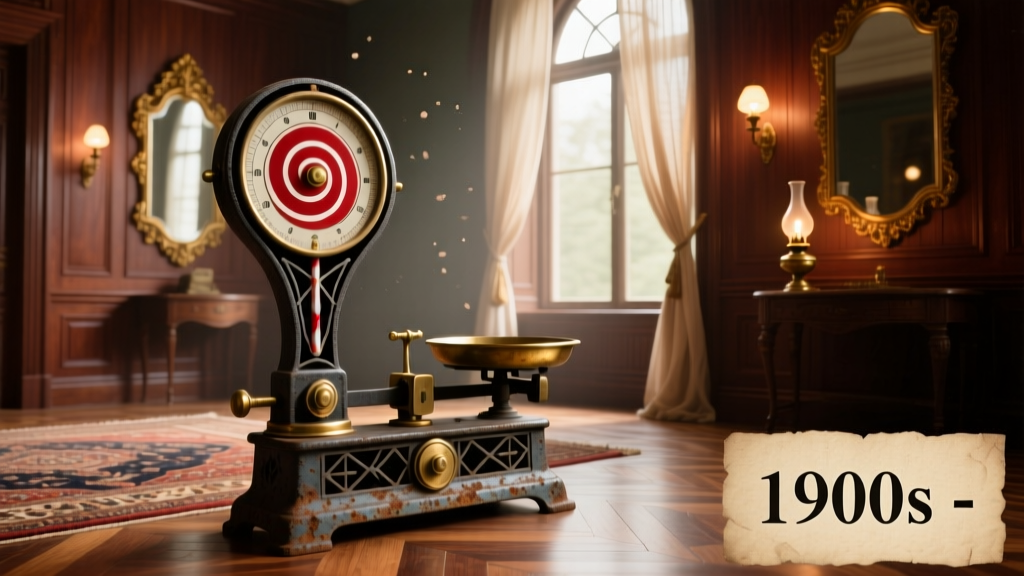
The 1-Cent Lollipop Scale: A Cast Iron Marvel of Early 20th-Century American Commerce
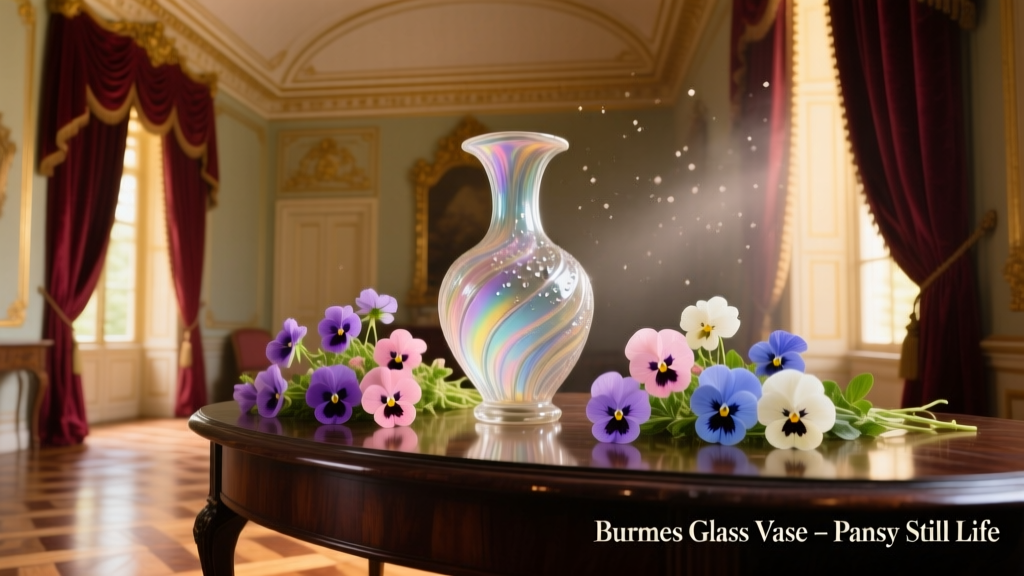
Burmese Glass Vase: Scattered Sprays of Pansies — A 10-Inch Masterpiece of Late Victorian American Artistry
Mettlach Stein No. 2401: Decoding the 1.2-Liter Tannhäuser in the Venusberg Etched & Inlaid Lid

German Dolls, Part II: Materials, Manufacturing, and Market Realities of the Golden Age (1890–1930)
Old Briar Tobacco Advertising Sign: Authenticity, Design, and Restoration of the 14 × 5½-Inch Tin Lithograph
Doll A M Child: Bisque Head, Kid Body, Bisque Arms — A Detailed Identification & Restoration Guide for the 12-Inch Antique Doll
Ichiko’s 1955 Chevrolet Bel Air: A Rare 2-Tone Green Tin Friction Toy Car in Original Box — Authentication, Restoration Insights, and Market Context

Occupied Japan Figurine: The Girl With Flowers — Identification, Value, and Restoration Insights for 2-, 3-, and 4-Inch Examples
Michigan Chauffeur Badges of 1934: Identification, Manufacture, and Historical Context of the 1 × 1½ Inch Enamel Badge