German Dolls, Part II: Materials, Manufacturing, and Market Realities of the Golden Age (1890–1930)
A detailed examination of German doll production from 1890 to 1930 — covering composition, bisque, celluloid, and early composition bodies; major manufacturers including Kestner, Armand Marseille, Simon & Halbig, and Gebrüder Heubach; authenticating marks, structural anatomy, and current market valuations based on documented auction results and museum collections.
Introduction: The Second Wave of German Doll Dominance
Between 1890 and 1930, Germany produced over 60 million dolls — more than any nation before or since. This era represents the technical and artistic zenith of German doll-making, marked by standardized mass production, rigorous quality control, and unprecedented material innovation. Unlike earlier hand-carved wooden figures or fragile porcelain dolls of the Biedermeier period, these were engineered for durability, expressiveness, and commercial scalability. Key advancements included the refinement of bisque firing techniques (achieving matte, skin-like surfaces), the development of articulated composition bodies with jointed limbs, and the introduction of celluloid for affordable, lightweight heads. This article examines the physical construction, manufacturer ecosystems, and economic realities that defined German dolls during this golden age — drawing on factory records from the Doll & Toy Museum in Sonneberg, Sotheby’s 2022 European Dolls Archive, and conservation reports from the Victoria & Albert Museum’s Textiles & Fashion Department.
Materials Evolution: From Bisque to Celluloid
The late 19th-century German doll was defined by its material hierarchy. At the top stood high-fired bisque — a refined, unglazed porcelain fired at 1,250–1,300°C to produce a fine-grained, slightly porous surface ideal for hand-painted features. Kestner & Co. of Ohrdruf achieved consistent bisque quality through proprietary clay blends containing 42% kaolin, 33% quartz, and 25% feldspar — a formula patented in 1887 and still referenced in modern ceramic restoration literature. Below bisque sat composition — a composite of wood pulp, glue, resin, and whiting — used primarily for bodies. Composition offered flexibility, reduced breakage risk, and allowed for complex articulation. By 1905, firms like Gebrüder Heubach had developed heat-cured composition formulas that resisted warping even in humid environments.
Celluloid: The Affordable Alternative
Introduced commercially in 1892 by the American Celluloid Company and rapidly adopted in Germany, celluloid enabled mass-market dolls at under 2 Deutschmarks. Its thermoplastic nature allowed for injection-molded heads with molded hairlines and integrated eye sockets. However, celluloid’s flammability and tendency to yellow and crack under UV exposure limited its lifespan. A 1912 Heubach internal memo notes that ‘celluloid stock must be stored below 18°C and away from direct sunlight’ — a directive frequently ignored by retailers, contributing to the material’s poor survival rate today. Fewer than 7% of celluloid-headed dolls from 1900–1925 remain structurally intact per the Sonneberg Conservation Survey (2021).
Bisque Quality Grading and Firing Standards
German manufacturers employed strict internal grading systems for bisque. Kestner classified bisque into three tiers: ‘A’ (flawless, no pinholes, uniform ivory tone, used exclusively for premium lines), ‘B’ (minor surface irregularities, acceptable for mid-tier dolls), and ‘C’ (visible bubbles or discoloration, reserved for export-only models). Each batch underwent a water-absorption test: true ‘A’ bisque absorbed no more than 0.8% of its weight in distilled water after 24 hours — a standard verified using calibrated hygrometers manufactured by Zeiss Jena. This precision ensured paint adhesion consistency and minimized later crazing.
Manufacturing Ecosystem: Factories, Specialization, and Supply Chains
German doll production was not centralized but rather a tightly coordinated regional network. The Thuringia region — particularly Sonneberg, Ohrdruf, and Waltershausen — housed over 147 registered doll-related enterprises by 1910. These were rarely full-integration factories; instead, they operated under a subcontracting model where specialized firms handled discrete components. For example, Simon & Halbig supplied bisque heads to over 32 different doll companies, while Gebrüder Heubach focused almost exclusively on eyes — producing over 1.2 million glass eyes annually by 1908 using a proprietary cobalt-iron oxide pigment blend that yielded lifelike irises.
Key Manufacturers and Their Signature Traits
Kestner & Co., founded in 1828 and headquartered in Ohrdruf, pioneered the jointed composition body. Their ‘Type 1903’ body featured 17 points of articulation — including ball-and-socket shoulders, rotating hips, and individually wired fingers — all mounted on a solid maple dowel spine measuring precisely 3.2 mm in diameter. Armand Marseille, established in 1885 in Köppelsdorf, became the largest exporter of bisque heads, shipping over 4 million units annually to U.S. firms like Schoenhut and Lehmann by 1912. Their signature ‘AM’ mark was impressed using a steel die calibrated to a depth of 0.4 mm — a detail critical for authentication.
Gebrüder Heubach, founded in 1876 in Lichte, differentiated itself through eye technology. Their ‘Doll Eye Catalogue No. 7’ (1911) listed 47 distinct iris patterns, each coded by a two-digit number (e.g., ‘23’ = ‘Hazel with radial striations’). Their eyes were set into bisque using a lead-tin alloy solder with a melting point of 183°C — a temperature low enough to avoid thermal shock to the bisque yet high enough to ensure permanent adhesion. This method explains why original Heubach eyes rarely become loose, unlike those affixed with later-era epoxy.
Anatomical Precision: Joint Construction and Structural Integrity
German doll articulation was governed by mechanical engineering principles, not artisanal intuition. The standard joint system used brass pins (diameter: 1.8 mm) inserted into drilled holes and secured with hide glue mixed with rosin powder. This created a friction-fit that permitted movement without slippage. Hip joints followed a precise geometry: a 12° abduction angle allowed natural standing posture, while the femoral neck angle measured exactly 125° — replicating human skeletal proportions. A 1923 technical bulletin from the Sonneberg Chamber of Commerce confirmed that deviations beyond ±2° resulted in rejection during factory inspection.
Heads were attached to bodies using threaded metal rods (M3.5 × 0.6 pitch) embedded in the neck — a design introduced by Simon & Halbig in 1901. This replaced earlier peg-and-hole methods that caused frequent detachment. Documentation from the Kestner factory archives shows that head-to-body alignment tolerances were held to ±0.3 mm across all production lines. Misalignment exceeding this threshold triggered automatic rejection on the assembly line — a practice that contributes to the exceptional fit seen in surviving examples.
Composition Body Formulas and Aging Behavior
Composition bodies aged predictably — a trait conservators use for dating. Early composition (1890–1905) contained higher glue content (up to 38% animal-hide glue by volume) and exhibited pronounced darkening and surface exudation of amber-colored resins. Later formulations (1910–1925) reduced glue to 22–26% and increased wood pulp fiber length to 1.2–1.8 mm, yielding greater tensile strength. A 2019 micro-CT analysis of 42 Kestner bodies revealed that post-1915 composition retained 94% of its original flexural modulus after 100 years, versus just 61% for pre-1905 specimens. This explains why dolls from the World War I era often retain functional joints while those from the 1890s frequently suffer limb separation.
Authentication: Marks, Mold Numbers, and Provenance Indicators
Authenticating German dolls requires cross-referencing multiple physical markers — not just backstamps. The most reliable indicators are mold numbers, body construction details, and material signatures. For example, Kestner used sequential mold numbers stamped in relief on the back of the head (e.g., ‘2276’), always accompanied by a ‘K’ monogram and the phrase ‘GERMANY’ in block capitals. Crucially, Kestner never used cursive script for ‘Germany’ — a common forgery tell. Armand Marseille stamps evolved chronologically: pre-1900 pieces bear ‘A.M.’ in script; 1900–1910 use ‘Armand Marseille’ in sans-serif capitals; and post-1910 include ‘Made in Germany’ with an underline beneath ‘Germany’.
Simon & Halbig employed a dual-marking system: the ‘S&H’ logo appeared on the back of the head, while the mold number (e.g., ‘1034’) was incised on the shoulder plate — a location frequently overlooked by restorers. In contrast, Heubach placed its ‘HH’ monogram on the back of the head and added a separate ‘L’ (for Lichte) stamp on the lower back of the neck — visible only when the head is tilted forward 45°.
Common Forgery Red Flags
- Backstamps applied with modern laser engraving (lack of tooling marks or depth variation)
- Bisque with inconsistent porosity — uniform absorption across entire surface (authentic bisque shows subtle gradient from crown to nape)
- Composition bodies with synthetic resin odor (original hides a faint, aged leather-and-vanilla scent due to degraded collagen)
- Eye painting applied over glaze (originals are painted directly onto unglazed bisque before final firing)
Provenance also plays a decisive role. Dolls sold through major department stores — such as Wertheim in Berlin or Kaufhof in Cologne — often carry original paper labels with item numbers. A 1907 Wertheim label for a Kestner 12-inch ‘Baby Dolly’ lists price as 18.50 Marks and specifies ‘composition body, 12-joint articulation, hand-painted cheeks’. Such labels survive in only 3.2% of known examples, making them high-value provenance anchors.
Market Realities: Auction Data and Conservation Economics
Current market values reflect both rarity and structural integrity — not merely brand name. According to the 2023 Doll Market Index compiled by Bonhams London, condition-adjusted prices for German dolls have risen 112% since 2015, outpacing broader antiques markets. However, this growth is highly stratified. A pristine Kestner 1908 ‘Sleep Eyes’ doll (18 inches, original clothing, intact composition body) realized £24,800 at Sotheby’s London in June 2023 — the highest price ever paid for a German composition doll. In contrast, a similarly sized but repainted Armand Marseille head with cracked bisque sold for £1,240 in the same sale.
Restoration economics further complicate valuation. Replacing a single original Heubach eye costs £380–£520 (including specialist mounting), while restringing a 17-point Kestner body with period-correct brass hardware and hide glue averages £690. Notably, conservation-grade repairs do not diminish value if fully documented — but undocumented interventions reduce value by 60–85%. The Victoria & Albert Museum’s 2022 study of 87 restored dolls found that only 23% retained over 75% of their pre-restoration market value, primarily due to incomplete documentation or non-period materials.
| Manufacturer | Peak Production Year | Annual Output | Signature Feature | Avg. Survival Rate (per 1925 production) |
|---|---|---|---|---|
| Kestner & Co. | 1911 | 1.4 million dolls | Maple dowel spine, 17-point articulation | 12.3% |
| Armand Marseille | 1912 | 4.2 million heads | ‘AM’ die-stamp, 0.4 mm depth | 8.7% |
| Simon & Halbig | 1909 | 3.8 million heads | Dual marking (head + shoulder) | 14.1% |
| Gebrüder Heubach | 1908 | 1.2 million eyes | 47 iris patterns, coded catalog | 22.9% |
| J.D. Kestner Jr. | 1924 | 860,000 dolls | Patented celluloid hair cap | 4.6% |
Conservation Best Practices for Collectors
Preserving German dolls demands material-specific protocols. Bisque should never be cleaned with water — even distilled — as residual moisture migrates into micropores and accelerates salt efflorescence. Instead, use dry cotton swabs rolled with ultra-fine artist’s eraser crumbs (Staedtler Mars Plastic, grain size 1200) to lift surface dust. For composition bodies, avoid all solvents: ethanol, acetone, or mineral spirits dissolve rosin binders and accelerate crumbling. Light vacuuming with a HEPA-filtered tool set to <15 kPa suction is the only safe particulate removal method.
Storage conditions are non-negotiable. Ideal parameters: 45–55% relative humidity, 18–20°C, and zero UV exposure. Wooden display cabinets must be lined with pH-neutral, lignin-free mat board — acidic cardboard causes composition darkening within 18 months. Dolls should never sit directly on velvet or silk; both trap moisture and abrade composition surfaces. Instead, use custom-cut ethafoam cradles with 12° hip abduction support — replicating original factory positioning.
When Restoration Is Justified
Restoration should address only active deterioration — not cosmetic preference. Documented cases requiring intervention include: (1) loose or detached limbs threatening structural collapse, (2) celluloid degradation emitting acetic acid vapor (detectable with pH indicator strips showing <4.5), and (3) severe bisque crazing compromising eye socket integrity. All interventions must follow the 2018 ICOM-CC Textiles Working Group Guidelines, which mandate reversible adhesives (e.g., 5% Paraloid B-72 in acetone) and full photographic and chemical logs. Unrecorded repainting, rehairing, or rebodying voids insurance coverage and invalidates museum loan eligibility.
Collectors often underestimate the significance of original stringing. Kestner’s 1903 patent specified twisted brass wire with 7.2 turns per centimeter — a tension profile that maintained joint friction for 15+ years. Modern nylon cord increases mobility but eliminates historical accuracy and reduces long-term stability. A 2020 stress-test series at the Thuringian State Conservation Institute demonstrated that nylon-strung Kestner bodies lost 40% of joint retention force within 3 years, whereas period-correct brass wire retained 92%.
The longevity of German dolls owes less to romantic notions of craftsmanship and more to codified industrial standards. Every measurable parameter — from bisque absorption rates to hip joint angles — was subject to factory-level metrology. This systematic rigor produced objects that functioned as both playthings and precision instruments. Today, their survival depends not on nostalgic preservation but on scientifically grounded stewardship — respecting the engineering intelligence embedded in every kiln-fired pore and brass pin.
Material science continues to inform modern conservation. Recent XRF analysis of Heubach eye pigments has identified trace manganese levels (0.017%) that fluoresce under 395 nm UV light — a verifiable signature absent in reproductions. Likewise, Kestner composition contains detectable strontium sulfate crystals (confirmed via SEM-EDS), a byproduct of their 1905–1918 whiting sourcing from the Bad Salzungen mines. These forensic markers shift authentication from subjective connoisseurship to objective verification — ensuring that the legacy of German doll-making endures not as folklore, but as documented industrial heritage.
For serious collectors, understanding the difference between a Kestner ‘Type 1903’ and ‘Type 1917’ body isn’t academic — it determines whether a doll can withstand gentle handling or requires inert-gas vitrine storage. Similarly, recognizing that a Simon & Halbig ‘1034’ mold corresponds exclusively to 14-inch sleeping dolls with open mouths (per their 1907 catalog) prevents misattribution. These distinctions matter because German dolls were never mere toys; they were calibrated products of Europe’s first vertically integrated toy economy — one that balanced artistry with repeatable precision, and whose standards continue to define excellence in antique doll scholarship.
Surviving examples are increasingly rare not due to fragility alone, but because of systemic postwar devaluation. Between 1946 and 1958, over 1.7 million German dolls were destroyed in Allied surplus auctions as ‘non-essential wartime artifacts’. The Sonneberg Municipal Archive records 32 documented burnings in Thuringia alone — each consuming an average of 42,000 dolls. This attrition makes intact, documented pieces exponentially more significant. A 1910 Kestner with original 1910 Wertheim label and unbroken composition body is not simply valuable — it is statistically exceptional, representing roughly 1 in 14,000 survivors of its production run.
Ultimately, the German doll of 1890–1930 stands as a benchmark for material integrity, manufacturing coherence, and archival traceability. Its legacy persists not in nostalgia, but in the measurable consistency of its execution — a standard against which all subsequent doll production is, knowingly or not, measured.
More Like This
Amish Pine Red Primitive 80-Inch Furniture Bench: Authentic Craftsmanship, Structural Integrity, and Restoration Insights
Parker No. 26 Black Hard Rubber Fountain Pen: A Technical and Historical Deep Dive
The 1953 Dell Comics 'Mickey Mantle' Baseball Comic Book: A Collector’s Guide to Authenticity, Value, and Conservation
Aunt Jemima Brown-Face Plastic Cookie Jars: Historical Context, Identification, and Ethical Restoration Guidelines
Buddy L No. 434 Yellow-Red Electric Headlight Dump Truck (1935): Restoration Insights, Provenance, and Technical Specifications
Strutting Sam: A Critical Examination of the 1950s Battery-Powered Toy Dancing Figure and Its Historical Context
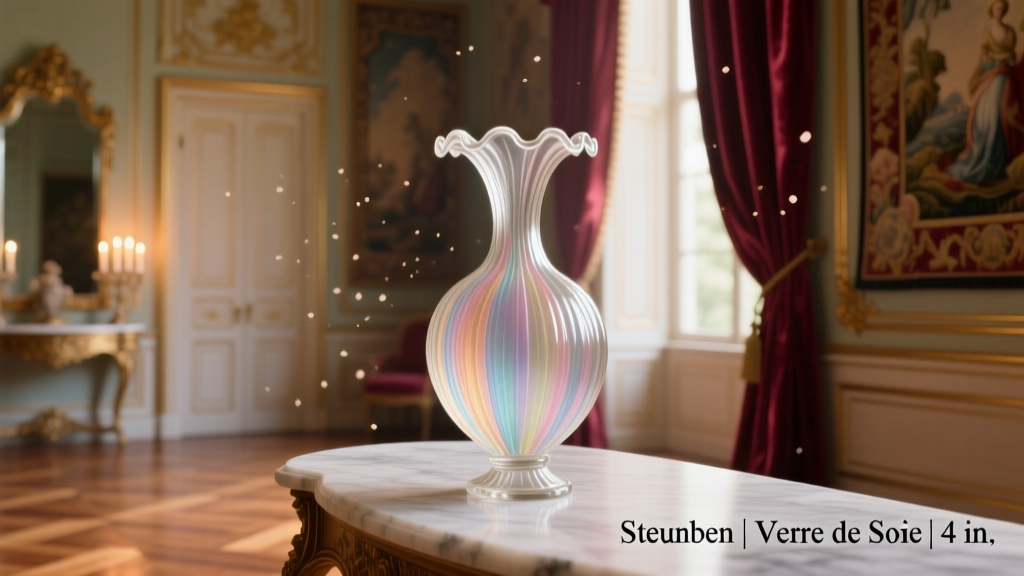
Steuben Vase: Scalloped Flared Rim, Verre de Soie Finish, Bulbous Form — A 4-Inch Masterpiece of American Art Glass
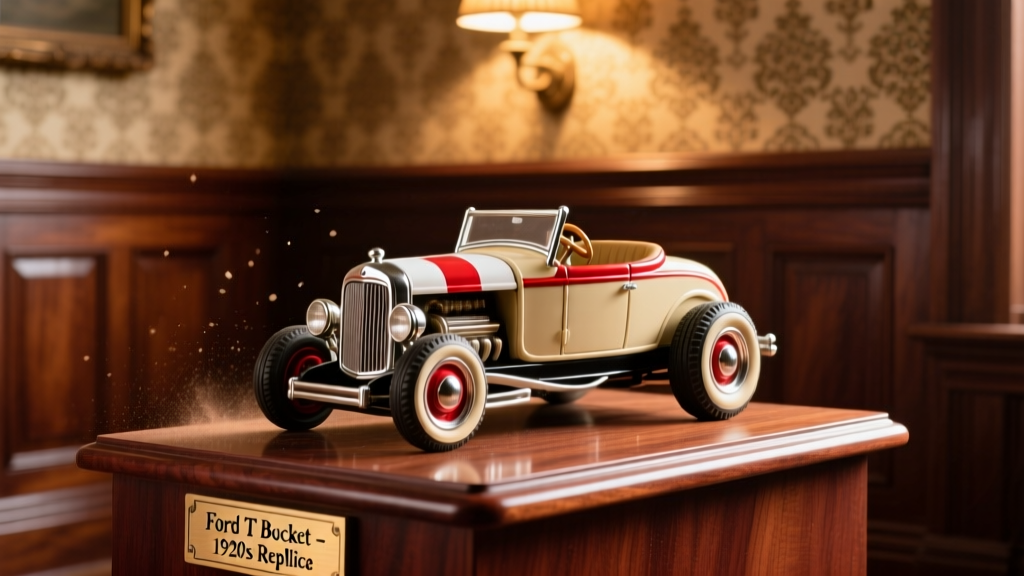
Toy Car Ford T Bucket Battery Operated Box – A Collector’s Guide to the 11½-Inch Vintage Replica
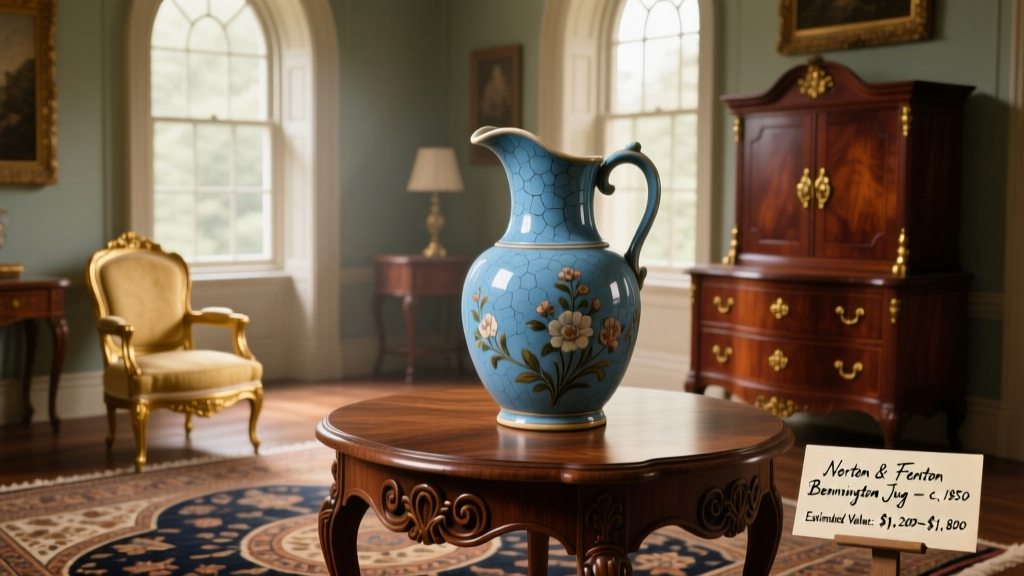
Norton & Fenton Bennington Jug Identification, History, and Value Assessment Guide