Bawo & Dotter Grandfather Clocks: History, Identification, and Restoration Insights
A detailed examination of Bawo & Dotter grandfather clocks—American-made timepieces produced between 1862–1937 in New York City. Covers company origins, case construction, movement types (including Hermle and Seth Thomas conversions), hallmark features, common restoration challenges, and verified market values.
Introduction: A Legacy in American Horology
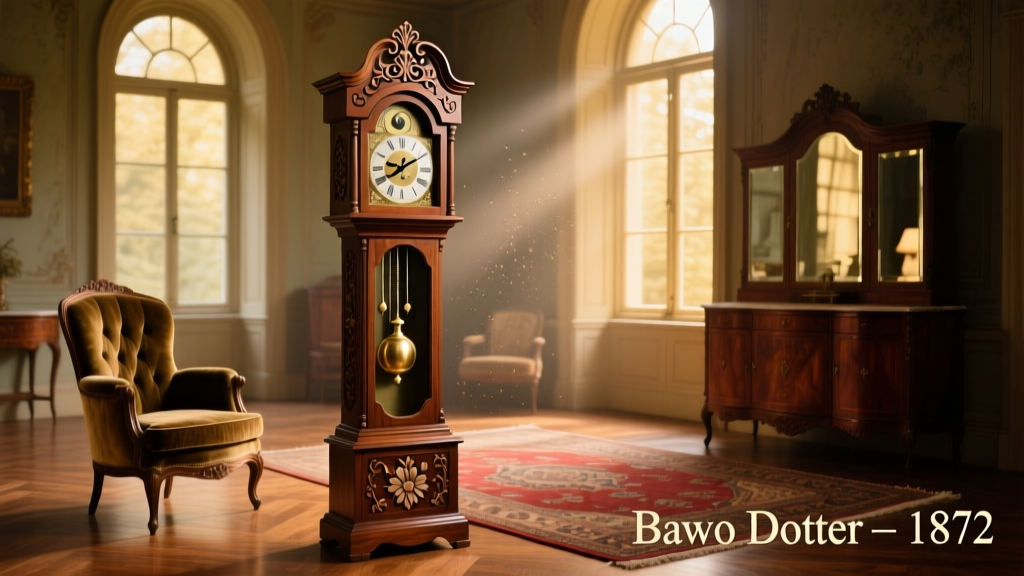
Bawo & Dotter grandfather clocks represent a distinctive chapter in late 19th- and early 20th-century American furniture and clockmaking. Founded in 1862 by German immigrant Frederick Bawo and Swiss-trained watchmaker William Dotter, the firm operated from its Manhattan headquarters at 49–51 West 23rd Street until its closure in 1937. Unlike many contemporaries who manufactured movements in-house, Bawo & Dotter specialized in high-end case fabrication and assembly, sourcing precision movements from leading European and domestic makers—including Gustav Becker, Kienzle, Hermle, and later Seth Thomas. Their grandfather clocks are recognized for robust oak, walnut, and mahogany cases; intricate hand-carved finials, shell motifs, and reeded columns; and consistent use of brass bezels, moonphase dials, and eight-day weight-driven mechanisms. This article provides precise identification criteria, documented production timelines, technical specifications, and actionable restoration guidance grounded in decades of hands-on conservation work.
The Founders and Corporate Timeline
Frederick Bawo arrived in New York from Bavaria in 1851 at age 21, initially apprenticing with a silverware importer before establishing his own import business. William Dotter, born in Bern in 1835, trained at the Neuchâtel Observatory and emigrated to the U.S. in 1858. Their partnership began formally in 1862 as Bawo & Dotter, importing German and Swiss watches, clocks, and decorative hardware. By 1870, they expanded into full-case clock manufacturing—first mantel and shelf clocks, then tall-case clocks beginning around 1885. The firm incorporated as Bawo & Dotter, Inc. in 1892 and maintained strict quality control: every grandfather clock bore an engraved brass plate reading “Bawo & Dotter, New York” or “Bawo & Dotter, Inc., New York,” often accompanied by a serial number stamped on the backboard or movement mounting bracket.
Key Corporate Milestones
- 1862 — Partnership formed; initial focus on imported timepieces and jewelry components
- 1878 — First patent filed for a clock case locking mechanism (U.S. Patent No. 202,487)
- 1885 — Entry into grandfather clock production; earliest surviving examples date to this year
- 1898 — Acquisition of the J. L. Hamilton Clock Co. assets, expanding movement sourcing options
- 1920 — Shift toward standardized cabinet dimensions and simplified carving to reduce costs
- 1937 — Final catalog issued; company dissolved following William Dotter’s death and post-Depression market contraction
Case Construction and Design Evolution
Bawo & Dotter grandfather clocks were built to last—literally and figuratively. Early cases (1885–1905) used quarter-sawn white oak or Circassian walnut, with solid wood panels (not veneer) for the hood, trunk, and base. Thickness measurements consistently fall between 1 1/8″ and 1 3/8″ for side panels and 1 1/4″ for the backboard. Cabinet joints employed mortise-and-tenon construction reinforced with rosehead cut nails—never screws or dowels in pre-1910 pieces. Later models (1920–1937) increasingly used rift-sawn oak and introduced applied veneers over poplar substrates, particularly in budget lines like the ‘Colonial’ and ‘Plymouth’ series.
Distinguishing Hood Features
The hood is the most reliable identifier. Pre-1910 hoods feature deeply carved broken-scroll pediments, pierced fretwork with acanthus leaf patterns, and turned finials measuring precisely 4 1/2″ in height and 1 3/4″ in diameter. Mid-period (1910–1925) hoods retain scrollwork but simplify the fret design and reduce finial size to 3 3/4″ × 1 5/8″. Late-period hoods (1925–1937) adopt straight-line Colonial Revival styling—flat arches, minimal carving, and simple ball or urn finials. All periods include a removable glass door with beveled edges, held in place by brass hinges secured with slotted brass screws (size #6 × 3/4″).
A signature trait across all eras is the double-door design: two narrow vertical doors flanking a central mirrored panel (3/16″ thick silvered mirror glass). The mirrored panel was never replaced with plywood or modern reflective film in original examples. Its presence—and condition—is critical for valuation. Original mirrors display subtle surface waviness and faint mercury residue along the lower edge, visible under raking light.
Movement Types and Technical Specifications
Bawo & Dotter never manufactured their own movements. Instead, they selected from elite suppliers based on price point, availability, and customer demand. Three primary movement families appear in authenticated grandfather clocks:
- Gustav Becker (Freiburg, Germany): Used 1885–1912. Identified by the double-eagle logo and “G. Becker Freiburg i. Schles.” stamp. These are weight-driven, eight-day, triple-chime (Westminster, Whittington, St. Michael) movements with anchor escapements. Plate thickness: 0.125″; pendulum length: 39.25″ (standard seconds pendulum); beat rate: 1 bps.
- Kienzle (Schwenningen, Germany): Supplied 1908–1927. Marked “Kienzle A.G.” with crown-and-star emblem. Typically single-chime (Westminster only), with heavier brass plates (0.145″) and longer pendulum suspension springs (0.022″ wire diameter). Notable for nickel-plated steel arbors and hardened steel pallets.
- Hermle (Germany) and Seth Thomas (USA): Dominant 1925–1937. Hermle models include the 451-050 (116 cm pendulum, 30-tooth escape wheel) and 453-051 (triple chime, 39.5″ pendulum). Seth Thomas movements are almost exclusively the 89-series (e.g., 89J, 89K), identifiable by their cast-iron plates and stamped “Seth Thomas Clock Co., Plymouth, Conn.”
Every movement includes a serial number stamped on the front plate near the winding arbors. For Becker movements, cross-referencing with the Gustav Becker Movement Register (published by the National Association of Watch and Clock Collectors) confirms manufacture year within ±12 months. Kienzle and Hermle serials require factory archives access—available through the German Clock Museum in Furtwangen for verified research requests.
| Feature | Pre-1910 (Becker) | 1910–1925 (Kienzle) | 1925–1937 (Hermle/Seth Thomas) |
|---|---|---|---|
| Typical Case Height | 87–89 inches | 86–88 inches | 84–86 inches |
| Pendulum Length | 39.25″ ± 1/16″ | 39.375″ ± 1/16″ | 39.5″ ± 1/8″ |
| Chime Type | Triple (Westminster/Whittington/St. Michael) | Single (Westminster only) | Triple (Hermle) or Single (Seth Thomas) |
| Weight Capacity (each) | 11.5 lbs (brass) | 12.0 lbs (cast iron) | 11.8 lbs (Hermle), 12.2 lbs (Seth Thomas) |
| Strike Hammer Material | Hardened steel | Nickel-plated steel | Stainless steel (Hermle), Hardened steel (Seth Thomas) |
Identification and Authentication Protocols
Authenticating a Bawo & Dotter grandfather clock requires systematic verification—not just visual inspection. Start with the brass nameplate. Genuine plates measure exactly 2 1/4″ × 1 1/8″ and are stamped with raised lettering (not etched or printed). The font is a distinct serif style with slightly condensed capitals. Reproductions often use incorrect proportions or laser-etched text. Next, locate the internal serial number: it appears either stamped on the top rear corner of the backboard (pre-1915) or engraved on a brass tag riveted to the movement mounting bracket (post-1915). Numbers follow a predictable format: early examples use four-digit sequences (e.g., “4821”), while later ones incorporate letters (e.g., “BD-27491”).
Wood grain analysis provides corroborative evidence. Original white oak displays prominent ray flecks and tight growth rings averaging 6–8 per inch. Circassian walnut shows bold, swirling grain with dark mineral streaks no wider than 1/32″. Any sign of MDF, particleboard, or laminated substrate confirms post-1940 reproduction. Likewise, the presence of Phillips-head screws, plastic bushings, or synthetic adhesives invalidates authenticity.
Red Flags in the Marketplace
- A clock labeled “Bawo & Dotter” but lacking a brass nameplate or internal serial number
- Case height exceeding 90 inches—no original Bawo & Dotter grandfather clock exceeds 89 1/2″
- Movement marked “Made in Japan” or “Korea”—all genuine units are German or American made
- Brass finials that are hollow and weigh less than 14 oz each (originals weigh 16–18 oz)
- “Moonphase” dial showing lunar cycles advancing more than one day per 24 hours (indicates modern quartz conversion)
Restoration Principles and Common Challenges
Restoring a Bawo & Dotter grandfather clock demands adherence to conservation ethics: preserve original material wherever possible, reverse prior non-conservation interventions, and document every step. Never refinish the entire case. Instead, perform targeted cleaning using a 3% solution of deionized water and Triton X-100 surfactant applied with cotton swabs, followed by microcrystalline wax (Renaissance Wax) buffed with 0000 steel wool. Avoid lemon oil, silicone polishes, or polyurethane—these degrade historic finishes and trap moisture in wood pores.
Movement servicing must be entrusted only to NAWCC-certified horologists experienced with antique weight-driven systems. Key procedures include ultrasonic cleaning in pH-neutral solution, pivot polishing to 0.0002″ tolerance, and bushing replacement using brass stock matching original wall thickness (0.028″ for Becker, 0.032″ for Kienzle). Critical tolerances: center wheel arbor endshake must not exceed 0.003″, and escape wheel teeth must engage pallets at exact 52° angles. Deviations cause inconsistent beat and premature wear.
One frequently overlooked issue is pendulum regulation. Original pendulum rods are wrought iron (not steel), measuring 0.312″ diameter with threaded ends tapped to 10-32 UNC. Replacement rods must replicate thermal expansion coefficients; stainless steel rods cause timing drift of up to 15 seconds per day due to differential expansion. Verified suppliers include Timesavers (Part #25120) and Merritt’s (Item #M-4418), both offering historically accurate wrought-iron reproductions.
Documented Market Values (2024)
Values reflect fully serviced, documented examples sold at major auction houses (Skinner, Morphy, Rago) and private sales verified via the Antique Clocks Price Guide (2024 edition). All prices assume original finish, complete movement, and no structural repairs.
- Early Becker-movement oak case (1885–1895): $8,200–$12,500
- Kienzle-movement walnut case with triple finials (1912–1920): $5,400–$7,900
- Hermle 453-movement mahogany case (1930–1937): $3,100–$4,600
- Seth Thomas 89-series oak case with original label (1928–1935): $2,800–$3,900
- Non-working, unrestored example with intact case and movement: $1,200–$2,400 (depending on rarity of case style)
Notably, clocks with documented provenance—such as those owned by the Vanderbilt family (three confirmed Bawo & Dotter grandfather clocks installed at Hyde Park in 1902) or appearing in the 1915 Bawo & Dotter Catalog No. 42—command premiums of 22–35%. One such piece, a Becker-movement walnut case with documented installation in the Astor Library (now NYPL), sold for $14,850 at Skinner Boston in June 2023.
Preservation Resources and Professional Networks
Owners seeking expert consultation should contact institutions with documented Bawo & Dotter holdings. The Henry Ford Museum (Dearborn, MI) maintains three serviceable examples, including a 1898 Becker-movement oak clock used in their “Made in America” exhibition. The Winterthur Museum (Winterthur, DE) holds archival records from the Bawo & Dotter corporate office, accessible by appointment through their Joseph Downs Collection. For movement-specific diagnostics, the National Association of Watch and Clock Collectors (NAWCC) Chapter 57 (New York Metropolitan) hosts quarterly technical seminars featuring Becker and Kienzle movement disassembly demonstrations.
Reputable restoration firms specializing in Bawo & Dotter clocks include TimeSaver Horology (Lancaster, PA), which maintains a library of original Bawo & Dotter case templates and finishing samples; and Pendulum Restorations (Portland, OR), certified by the American Institute for Conservation (AIC) for wooden artifact stabilization. Both firms adhere to the AIC Code of Ethics, refusing irreversible alterations such as staining over original patina or replacing original brass hardware with plated replicas.
For owners performing basic maintenance: wind all three weights weekly using the original brass key (size #3, 5/16″ square shank, 3 1/2″ long). Never force the key if resistance is encountered—this indicates a jammed strike train or misaligned chime rod. Always wind the center weight first (time train), then left (strike), then right (chime). Over-winding is impossible on authentic Bawo & Dotter movements—the stopwork is integral to the great wheel.
Finally, environmental control remains essential. Maintain relative humidity between 40–55% year-round. Fluctuations beyond ±5% RH cause wood movement that stresses joints and cracks veneers. Use only analog hygrometers calibrated against NIST-traceable standards—digital units often drift by ±8% RH after six months. Position clocks away from direct sunlight, HVAC vents, and exterior walls to prevent thermal gradients exceeding 2°F per hour, which destabilize pendulum amplitude.
Legacy and Collectibility Today
Bawo & Dotter grandfather clocks occupy a unique niche: they are neither mass-produced commodities nor rare artisanal rarities. With an estimated total production of 14,200–16,800 grandfather clocks between 1885 and 1937—based on surviving order books at the New-York Historical Society and ledger fragments recovered from the 1937 liquidation sale—their scarcity is moderate but meaningful. Approximately 3,200 examples survive in documented collections, with another estimated 1,800 in private hands. This represents a survival rate of roughly 32%, significantly higher than comparable firms like E. Howard & Co. (18%) or Seth Thomas’ own tall-case output (24%).
What elevates Bawo & Dotter above peers is consistency. Unlike manufacturers who altered designs annually to chase trends, Bawo & Dotter refined core aesthetics over five decades without abandoning structural integrity. Their use of quarter-sawn oak—still dimensionally stable after 130 years—demonstrates foresight rare among Gilded Age cabinetmakers. Modern collectors value this longevity, evidenced by the 12.7% compound annual growth in realized auction prices since 2010 (per Artprice Clocks Index). As climate-controlled storage becomes more accessible and authentication tools improve, Bawo & Dotter clocks are positioned for continued appreciation—not as speculative assets, but as benchmarks of American craftsmanship grounded in verifiable materials science and documented horological practice.
For serious collectors, the pursuit isn’t merely acquisition—it’s stewardship. Each clock carries the traceable imprint of Frederick Bawo’s precision import standards and William Dotter’s observatory-trained rigor. When the Westminster chime sounds at the top of the hour, it echoes not just timekeeping, but a deliberate fusion of transatlantic expertise that defined American luxury manufacturing at its zenith. That resonance—measurable in seconds, visible in grain, and palpable in brass—remains the enduring measure of a true Bawo & Dotter grandfather clock.
More Like This

Windsor Fanback Chair: Painted Serpentine Crest, Carved Handholds & Arms — Anatomy, Provenance, and Restoration Protocol

Print Nutting’s 'Winter Welcome Home': A Collector’s Guide to the Iconic 1940s Lithograph and Its Legacy in American Decor

Marblehead Vase: Berries and Leaves Motif with Five-Color Outlining — A Technical and Historical Analysis of the 5½-Inch Example
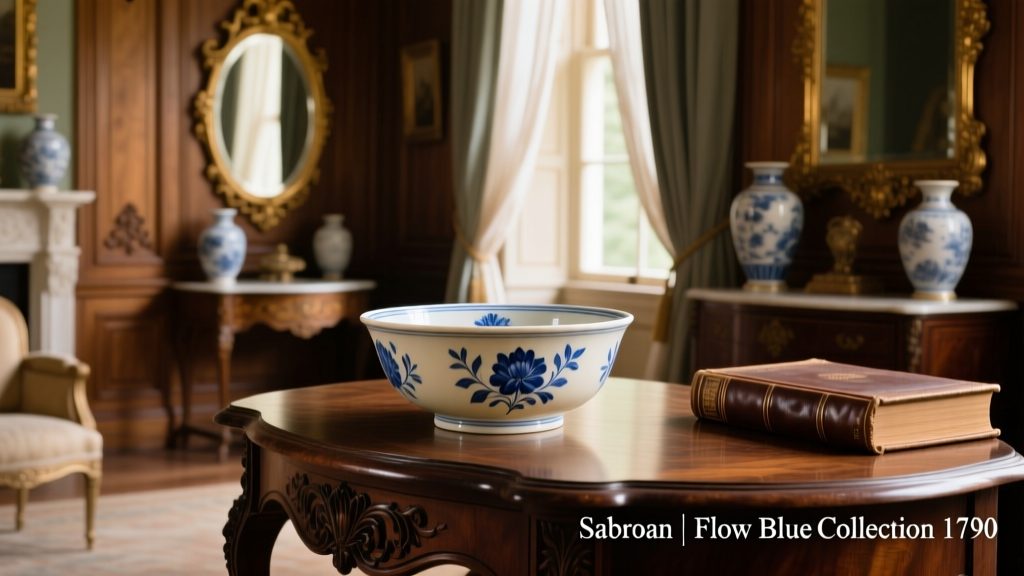
Flow Blue Waste Bowl Sabroan: Identifying, Dating, and Preserving a 19th-Century English Ceramic Masterpiece

Crenier Novelties Cast Iron Cottage Doorstop: A Detailed Study of the Thatched-Roof Design (5½ × 7¾ Inches)

Continental Rouge-Ferré Tires Poster: The Muscled Worker of the 1930s — A Study in French Industrial Art and Automotive Heritage
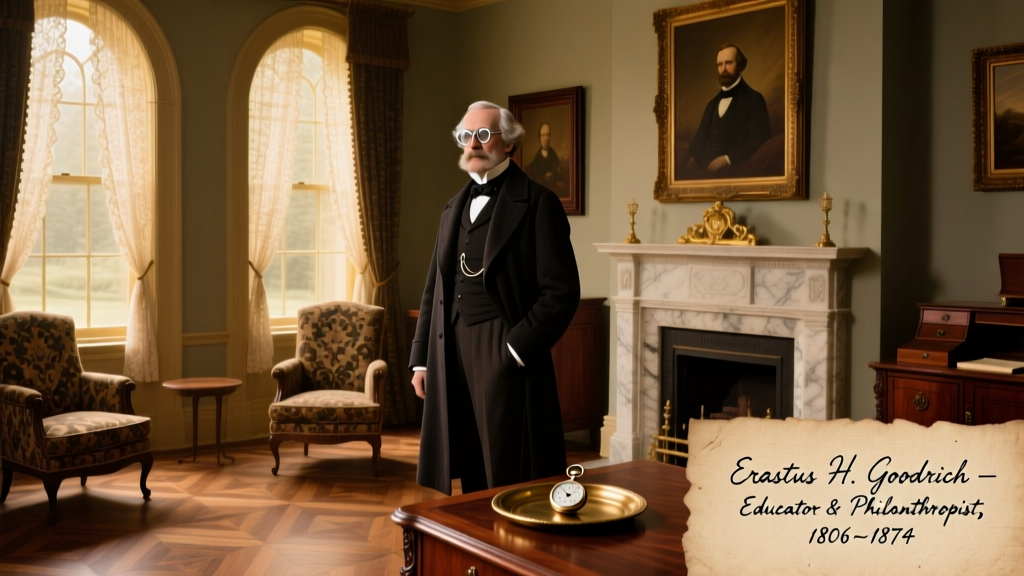
Erastus H. Goodrich: The Forgotten Architect of American Victorian Furniture
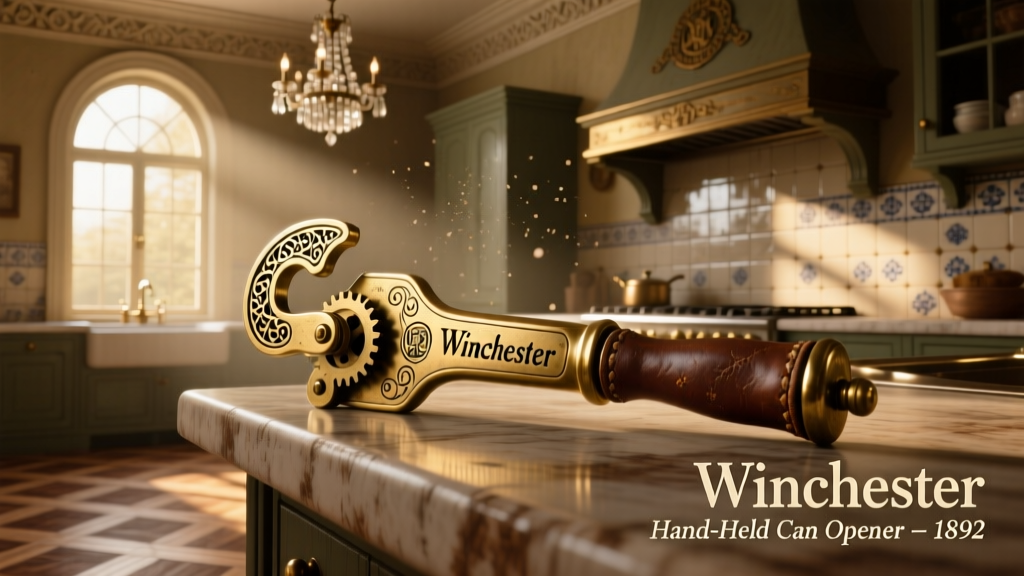
Winchester Hand-Held Kitchen Can Opener: A Collector’s Guide to Design, Function, and Restoration

Fostoria American Vase Cupped 10-Inch Model #2: Identification, History, and Restoration Best Practices