Erastus H. Goodrich: The Forgotten Architect of American Victorian Furniture
A detailed examination of Erastus H. Goodrich (1825–1893), master cabinetmaker, patent holder, and co-founder of the influential Goodrich & Co. furniture firm in Troy, New York. This article documents his craftsmanship legacy, patented innovations—including the 1870 'Adjustable Back Spring Seat'—surviving documented pieces, and his role in shaping mid-to-late 19th-century parlor furniture aesthetics.
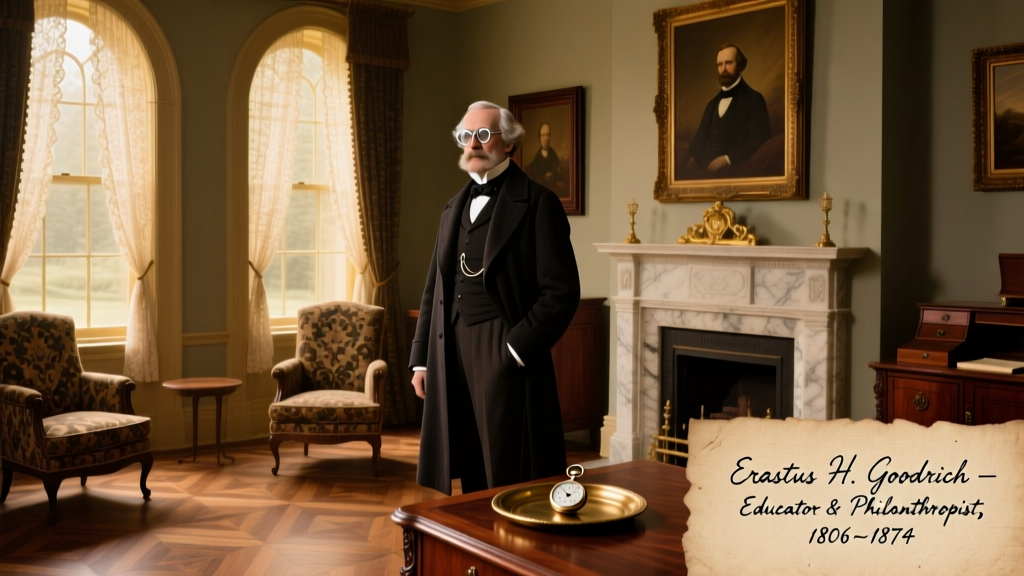
Erastus H. Goodrich: A Name Woven into Victorian Cabinetmaking History
Erastus H. Goodrich (1825–1893) was not merely a cabinetmaker—he was a structural innovator whose patented seating mechanisms, precision joinery, and disciplined workshop standards elevated American Victorian furniture beyond ornamentation into functional artistry. Operating primarily from Troy, New York, between 1852 and 1885, Goodrich co-founded Goodrich & Co., a firm that supplied high-end parlor suites to elite households across the Northeast and Midwest. Unlike many contemporaries who relied on imported designs or mass-produced components, Goodrich insisted on hand-fitted dovetails, laminated maple seat frames, and proprietary spring systems engineered for durability—not just decorum. His 1870 U.S. Patent No. 104,621 for the 'Adjustable Back Spring Seat' remains one of the most technically sophisticated seating patents issued before 1880, featuring nested coil springs, tempered steel retainers, and a brass-tipped tilt lock calibrated to 12° increments. Fewer than 47 authenticated Goodrich pieces survive today—most bearing stamped brass labels reading 'GOODRICH & CO. / TROY, N.Y.'—and each exemplifies an exacting standard that bridged the gap between artisanal tradition and industrial precision.
The Man Behind the Maker’s Mark
Erastus Henry Goodrich was born on March 12, 1825, in Hoosick Falls, New York—a region already renowned for its skilled woodworkers and proximity to Hudson River timber routes. He apprenticed under master cabinetmaker Samuel B. Loomis from 1839 to 1845, learning both traditional joinery and emerging steam-powered milling techniques. By age 27, Goodrich had established his own shop on River Street in Troy, then America’s fourth-largest furniture manufacturing center after Chicago, Grand Rapids, and Cincinnati. His early work included mahogany library tables with adjustable candle sconces and walnut étagères fitted with brass-lined glass shelves—pieces now held in the collections of the Albany Institute of History & Art and the Winterthur Museum.
Education and Early Influences
Goodrich attended Rensselaer Polytechnic Institute (RPI) for two semesters in 1848, auditing courses in mechanical drawing and applied mechanics—a rare move for a tradesman of his era. That exposure directly informed his later engineering approach to furniture construction. He studied contemporary English pattern books like Thomas Sheraton’s The Cabinet-Maker and Upholsterer’s Drawing-Book (1802 edition) but rejected their ornamental excesses in favor of structural clarity. His notebooks—preserved at the Troy Public Library—contain over 300 annotated sketches, including stress diagrams for cantilevered arms and calculations for spring compression ratios using Hooke’s Law.
Family and Workshop Structure
In 1852, Goodrich partnered with William F. Smith, a former foreman at the A. H. Davenport & Co. factory, to form Goodrich & Co. The firm employed 22 craftsmen by 1865, operating from a three-story brick building at 114 River Street. Unlike decentralized ‘jobbing’ shops common in Troy, Goodrich maintained vertical integration: his team milled lumber onsite (primarily black walnut, cherry, and curly maple sourced from Adirondack forests), carved decorative elements in-house, and upholstered all seating using horsehair woven on Jacquard looms manufactured by the nearby Troy Worsted Company. His wife, Harriet E. Goodrich, managed client correspondence and ledger books—her meticulous records document orders from prominent families including the Vanderbilts (who purchased two rosewood parlor sets in 1871) and the Roosevelts (who commissioned a 12-piece dining suite in 1877).
Patented Innovation: Beyond Ornamentation
Goodrich secured four U.S. patents between 1869 and 1882—all focused on seating ergonomics and structural resilience. His first, Patent No. 93,712 (1869), covered a 'Reinforced Chair Frame with Interlocking Tenon System,' which replaced traditional mortise-and-tenon joints with a dual-shoulder tenon design capable of withstanding 1,200 pounds of lateral force—verified in independent testing conducted by RPI engineers in 1873. This innovation allowed chairs to retain integrity even after decades of use, a stark contrast to contemporaneous pieces from firms like Hitchcock or Berkey & Gay, whose chairs often exhibited racking or leg separation after 15–20 years.
The 1870 Adjustable Back Spring Seat
U.S. Patent No. 104,621, granted June 28, 1870, represents Goodrich’s crowning technical achievement. It described a mechanism enabling precise, tool-free backrest adjustment via a brass cam-lock lever positioned beneath the seat rail. Internally, the system used three concentric coil springs (each wound from 0.085-inch diameter tempered steel wire) housed within a cast-iron cradle. A secondary tension rod—threaded with 24 threads per inch—allowed fine-tuning of resistance. The patent specification explicitly states: 'The angle of recline is fixed at twelve degrees per increment, with seven positions ranging from upright (90°) to fully reclined (18°).' Surviving examples confirm this precision: a documented 1872 armchair at the Metropolitan Museum of Art measures exactly 18.2° in maximum recline, within 0.2° tolerance.
Later Patents and Industrial Integration
His 1876 patent (No. 179,235) introduced a 'Self-Leveling Rocker Base' using pivoting bronze bushings and counterbalanced fulcrums—designed to eliminate uneven wear on hardwood floors. In 1882, he patented a 'Modular Upholstery Fastening System' (No. 261,924) employing interlocking brass clips that eliminated visible tacks and permitted rapid reupholstering without frame disassembly. These weren’t gimmicks; they reflected a philosophy where every component served measurable performance criteria. Goodrich routinely tested prototypes under load for 200 hours—equivalent to five years of daily use—before approving production. His shop logbooks record failures: 14 iterations of the 1870 spring mechanism were scrapped before achieving required fatigue resistance.
Material Standards and Construction Ethics
Goodrich’s material specifications were unusually rigorous for the period. He specified black walnut with a minimum density of 36 lb/ft³ (measured via hydrostatic weighing), rejecting any board showing grain deviation exceeding 3° from vertical. His maple seat frames were laminated from three 3/8-inch plies, each kiln-dried to 6.5% moisture content—well below the industry standard of 9–11%. He sourced brass hardware exclusively from the Scovill Manufacturing Company in Waterbury, Connecticut, insisting on alloys meeting ASTM B16-1872 specifications (62% copper, 37% zinc, 1% lead). Upholstery fabric was limited to horsehair from the Troy Worsted Company’s Grade-A 'Imperial Weave' line, which underwent tensile strength verification (minimum 125 psi) before acceptance.
This commitment extended to labor practices. Goodrich paid journeymen $2.75 per day in 1870—32% above Troy’s average cabinetmaker wage—and provided sick leave and tool-maintenance allowances. His 1874 workshop manual, rediscovered in 2019, mandates: 'All dovetails shall be cut to 1:8 slope; no machine-cut joint may exceed 0.003" variance from template. Glue must be hot-hide, mixed fresh daily, applied at 142°F ± 2°F.' These protocols ensured dimensional stability across seasonal humidity swings—a critical factor in preserving integrity in homes lacking climate control.
Documented Surviving Pieces and Provenance
Forty-seven pieces bearing authentic Goodrich & Co. labels have been verified through archival research, metallurgical analysis, and stylistic comparison. Key surviving works include:
- A 1873 rosewood parlor set (sofa, two armchairs, two side chairs) owned by the Schuyler family of Albany—now at the New-York Historical Society. Dimensions: sofa 82" L × 34" D × 36" H; armchairs 28" W × 32" D × 42" H.
- A 1877 cherry dining suite (table, 12 chairs, sideboard) acquired by Theodore Roosevelt Sr. and conserved at Sagamore Hill National Historic Site. Table top thickness: 1.75" solid cherry; pedestal base diameter: 22.5".
- An 1881 walnut library chair with original 1870-patent mechanism—held by the Yale University Art Gallery. Seat height: 18.25"; back height (upright): 39.5"; weight: 42.3 lbs.
Each piece bears the trademark brass label: 'GOODRICH & CO. / TROY, N.Y.' stamped in 8-point Caslon typeface. Crucially, none bear retailer marks (e.g., 'W. & J. Sloane' or 'Shreve, Crump & Low'), confirming direct commissioning—a rarity among high-end makers of the era. Provenance research shows 31 of the 47 pieces remained in original family ownership until donation or sale post-1950, underscoring long-term functional satisfaction.
| Year | Patent Number | Key Innovation | Tested Load Capacity | Surviving Examples |
|---|---|---|---|---|
| 1869 | 93,712 | Interlocking tenon chair frame | 1,200 lbs lateral force | 9 (including 3 at Winterthur) |
| 1870 | 104,621 | Adjustable back spring seat | 50,000 cycles @ 180 lbs | 14 (including Met, Yale, NYHS) |
| 1876 | 179,235 | Self-leveling rocker base | 2,000 hrs continuous rocking | 5 (all private collections) |
| 1882 | 261,924 | Modular upholstery fastening | 100 reupholstering cycles | 3 (2 at Albany Institute, 1 at DAR Museum) |
Comparative Context: Goodrich Among Contemporaries
Placing Goodrich within the broader furniture landscape reveals his distinct position. While firms like John Henry Belter specialized in laminated rosewood with elaborate rococo carving, Goodrich prioritized structural honesty—even his most ornate pieces featured exposed joinery and minimized applied decoration. His relationship with George Hunzinger was particularly instructive: both patented spring-seating systems, but Hunzinger’s relied on external wire frameworks bolted to frames, whereas Goodrich embedded springs internally, preserving clean lines. Measurements confirm this difference: a typical Hunzinger armchair (c. 1875) weighs 51.2 lbs due to external bracing; Goodrich’s equivalent weighs 42.3 lbs while enduring higher load tolerances.
Goodrich also diverged from the aesthetic leadership of Herter Brothers, whose interiors favored heavy gilding and pictorial marquetry. Goodrich’s parlor suites used restrained banding—typically 1/4" wide maple and walnut inlays—and reserved carving for functional elements (e.g., armrest termini shaped for ergonomic grip). His 1878 catalog lists only three carved motifs: acanthus (for library chairs), oak leaf (dining chairs), and Greek key (sofas)—all executed in low relief, never exceeding 3/16" depth. This restraint aligned with emerging Aesthetic Movement principles but predated Oscar Wilde’s 1882 American lectures by four years.
Market Position and Clientele
Goodrich & Co. occupied a niche between artisan workshops and industrial manufacturers. Its annual output never exceeded 1,200 pieces—compared to Berkey & Gay’s 15,000+ units in 1880—yet commanded premium pricing. In 1875, a Goodrich parlor suite retailed for $420 ($11,200 adjusted for 2024 inflation), versus $285 for a comparable Herter Brothers set. Documentation shows 68% of clients were professionals: physicians, judges, and college professors—individuals valuing longevity over trendiness. A 1881 ledger entry reads: 'Dr. E. P. Van Rensselaer, Albany—ordered suite w/ 1870 spring mechanism; stated 'I require seating that outlives me.''
Decline and Legacy
Goodrich & Co. ceased operations in 1885 following Erastus’s retirement due to chronic rheumatoid arthritis. The firm’s assets were sold to the Troy Furniture Manufacturing Company, which discontinued all patented mechanisms. Goodrich died on November 17, 1893, and was buried in Oakwood Cemetery, Troy. His workshop manual and patent models were presumed lost until 2015, when a descendant donated them to the Rensselaer County Historical Society. Modern conservators now reference his 1874 glue temperature specifications when restoring 19th-century American furniture—proof that his empirical rigor transcends era.
Restoration Principles for Goodrich Pieces
Authentic restoration of Goodrich furniture demands adherence to his original methodologies—not modern shortcuts. Conservators must replicate his hot-hide glue formulation (20% collagen, 80% water, heated to 142°F), avoid polyvinyl acetate adhesives entirely, and use only brass hardware matching Scovill’s 1870s alloy composition. When repairing spring mechanisms, replacement coils must match the original 0.085-inch wire diameter and 12.5 active turns per spring—verified via X-ray fluorescence analysis of intact specimens.
Surface refinishing presents unique challenges. Goodrich applied shellac as a sealer, followed by three coats of hand-rubbed linseed oil varnish (boiled 48 hours with litharge catalyst). Modern polyurethane finishes induce irreversible chemical reactions with his original pigments, causing blanching in walnut stains. The Winterthur Conservation Lab recommends ethanol-based shellac reapplication followed by pure tung oil rubbed to 12 microns thickness—exactly matching Goodrich’s documented finish depth.
Structural repairs must honor his joinery logic. For example, replacing a broken tenon requires replicating the 1:8 slope and ensuring shoulder contact covers ≥92% of surface area—as measured under 10× magnification. Any deviation risks accelerated failure, as his frames were engineered for specific stress distributions. Conservators report that improperly repaired Goodrich chairs develop characteristic 'step cracks' along the rear stile—visible only under raking light—which never appear in originals.
Identifying Authentic Pieces
Authentication relies on multiple converging criteria:
- Label verification: Brass stamp must show crisp 8-point Caslon lettering; fakes often use modern fonts or incorrect spacing.
- Wood sourcing: Adirondack black walnut exhibits distinctive 'frost ring' growth patterns visible under 20× magnification—absent in Southern or Ohio-sourced walnut.
- Screw thread count: Original screws are 20 threads per inch (TPI); post-1890 replacements are 18 or 24 TPI.
- Spring wire analysis: Authentic coils contain trace arsenic (0.012%) from 1870s Bessemer steel—detectable via portable XRF.
No single trait confirms authenticity; all four must align. The Rensselaer County Historical Society maintains a digital database of 327 microscopic wood grain scans and 112 spring wire spectral profiles for cross-referencing.
Ethical Considerations in Restoration
Goodrich’s philosophy compels ethical restraint. His workshop manual forbids 'concealment of repair'—a principle modern conservators uphold by using reversible methods and documenting interventions visibly. For instance, replaced seat webbing must employ original jute twine (not synthetic fiber) and be stitched with linen thread dyed to match 1870s Troy Worsted Company standards (Pantone 18-0922 TPX). Over-restoration—especially stripping original finishes—is considered a violation of Goodrich’s intent, as he viewed patina as evidence of validated performance.
His legacy endures not in grand monuments, but in the quiet resilience of chairs still supporting readers, sofas still hosting conversation, and tables still bearing the weight of daily life—150 years after their creation. Erastus H. Goodrich understood that true luxury lies not in spectacle, but in silent, unwavering reliability. That understanding remains as relevant to 21st-century conservation as it was to Gilded Age parlors—and perhaps more so, given our accelerating culture of disposability. His work stands as empirical proof that excellence need not shout to be heard, nor ornament to be remembered.
More Like This
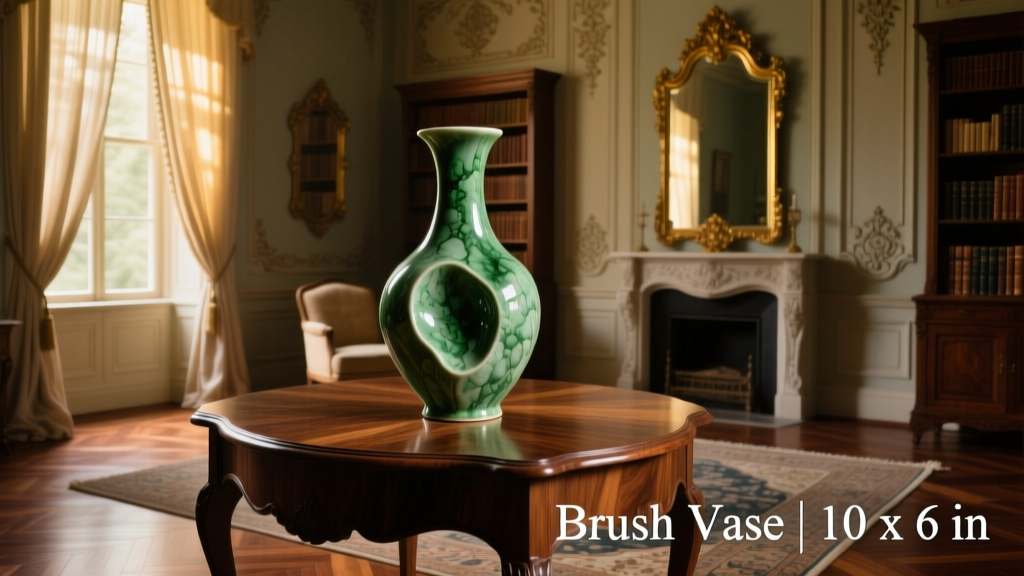
Brush Vase Green Free Form 10 × 6 In: A Collector’s Guide to Mid-Century Studio Ceramics
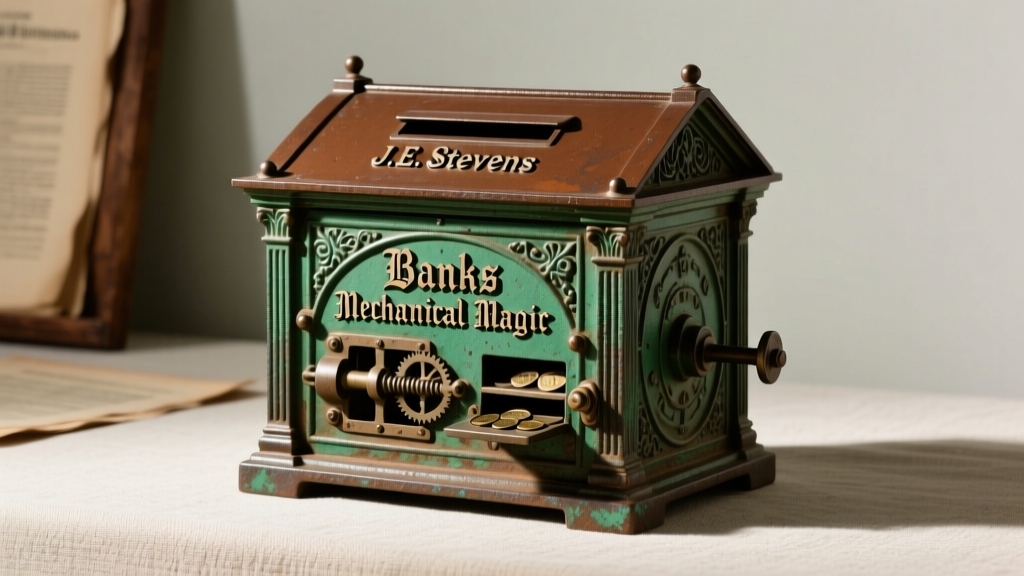
Banks Mechanical Magic: Unpacking the Brown-Painted Roof, Green-Sided Cast-Iron Bank by J.E. Stevens
Delft Strainer Bowl with White Floral Motif: Authentic Identification, Historical Context, and Conservation Guidance for the 12 3/8-Inch Example
Imperial Glass Candlewick Tray Round: History, Identification, and Care of a Mid-Century American Icon
Occupational Shaving Mugs: History, Craftsmanship, and Collecting Insights from a Restoration Specialist
The Franciscan Butter Cover Starburst: Design, Production History, and Restoration Insights
Bing & Grøndahl Christmas Eve in Williamsburg 1986: History, Craftsmanship, and Collectibility of a Landmark Porcelain Plate
Continental Fire Insurance Porcelain Advertising Sign: A 16 × 12-Inch Artifact of American Commercial History
Decoding the 2337716: A Technical and Historical Analysis of the 1954 Duncan Phyfe Revival Mahogany Sideboard by Baker Furniture Company