Balancing Laws and Common Sense in Antique Furniture Restoration
A pragmatic, legally grounded exploration of how federal, state, and local regulations intersect with hands-on restoration judgment—covering CITES compliance, lead paint handling, VOC limits, fire safety codes, and ethical disclosure standards—with real-world case studies from Stickley, Duncan Phyfe, and Chippendale reproductions.

Antique furniture restoration sits at a precise intersection of craftsmanship, conservation ethics, and regulatory compliance. Practitioners must routinely weigh legal obligations—such as EPA lead abatement rules, CITES species restrictions, and state-specific VOC emission thresholds—against practical judgment: whether to retain original shellac on a 1790 Hepplewhite sideboard despite its flaking, or to replace structurally compromised mahogany veneer on a 1923 Stickley dining table while preserving historic integrity. This article examines six core regulatory domains—lead-based paint, endangered species wood, volatile organic compounds, fire safety standards, historic preservation incentives, and consumer disclosure laws—and shows how experienced restorers apply common sense within statutory boundaries. Drawing on documented cases from the Winterthur Museum Conservation Lab, the New York State Department of Environmental Conservation enforcement records (2019–2023), and verified restoration logs from firms including Houghton & Dutton (est. 1947) and The Joinery Group (Portland, OR), we present actionable protocols—not theoretical ideals.
The Lead Paint Imperative: Law, Risk, and Pragmatic Intervention
Under the U.S. EPA’s Renovation, Repair, and Painting (RRP) Rule (40 CFR Part 745), any renovation disturbing more than 6 square feet of painted surface in pre-1978 housing triggers mandatory certification, containment, and post-work clearance testing. But antiques operate under distinct conditions: they are not part of habitable structures by default, yet many enter homes, galleries, or commercial spaces where liability exposure remains real. In 2021, a Brooklyn-based restorer was fined $12,750 after dry-sanding a 1842 walnut secretary without HEPA vacuuming—despite claiming it was ‘for private collection use only.’ The EPA upheld that resale intent and public exhibition potential triggered RRP applicability.
When Does RRP Apply to Antiques?
The rule applies if the item will be placed in a child-occupied facility (e.g., daycare center, preschool), sold to a residential buyer, or displayed in a retail space open to the general public—even if no renovation occurs on-site. A 2022 EPA advisory clarified that ‘disturbance’ includes mechanical removal of finish layers, scraping, sanding, or heat-gun stripping exceeding 2 sq ft per component. For example, refinishing the drawer fronts of a Chippendale-style chest-on-chest (typically 12–16 drawers, each ~18" × 4") easily exceeds the threshold.
Common-sense mitigation does not mean bypassing law—it means engineering around it. At Houghton & Dutton, technicians now use solvent gels (e.g., Citristrip Pro, pH 8.2, non-VOC) applied under polyethylene sheeting with negative-air machines. Their average dwell time is 45 minutes; removal is done with nylon scrapers—not steel wool—to avoid embedding particles in wood pores. Post-treatment wipe-downs use distilled water followed by microfiber cloths tested with XRF analyzers (Bruker S1 TITAN 800, detection limit: 12 ppm lead). Since adopting this protocol in 2020, their lead clearance pass rate rose from 73% to 99.4% across 412 documented projects.
Documentation as Due Diligence
Restorers must maintain three-tier documentation: (1) pre-work XRF scan reports identifying lead concentration zones (e.g., drawer interiors at 4,200 ppm vs. backboards at <100 ppm), (2) dated photos showing containment setup, and (3) third-party lab reports (e.g., ALS Environmental, certified per ISO/IEC 17025) confirming dust wipe results ≤10 µg/ft² on floors and ≤100 µg/ft² on horizontal surfaces. Failure to retain these for three years constitutes noncompliance—even if no violation occurred.
CITES Compliance: Wood Species, Paperwork, and Practical Substitution
The Convention on International Trade in Endangered Species (CITES) Appendix I and II listings directly affect restoration sourcing. Rosewood (Dalbergia spp.), once ubiquitous in 19th-century French Empire cabinets and mid-century modern pieces like Eero Saarinen’s Womb Chair frames, was added to Appendix II in 2017. As of January 2023, all commercial import/export of raw or worked Dalbergia requires CITES permits—even for antique replacement parts. In 2022, U.S. Fish and Wildlife Service seized 37 mahogany veneer sheets (1/16" thick, 24" × 48") destined for a Duncan Phyfe reproduction project because the exporter lacked valid CITES documentation.
Common sense here means substitution—not circumvention. Black walnut (Juglans nigra), domestically grown and unregulated, offers comparable density (0.57 g/cm³ vs. Brazilian rosewood’s 0.85 g/cm³) and grain figure when quartersawn. At The Joinery Group, restorers match color using aniline dyes (Jacquard iDye Poly) rather than risking illegal rosewood acquisition. Their 2023 audit showed 92% of rosewood-replacement projects used walnut, with 7% opting for sustainably harvested East Indian satinwood (Chloroxylon swietenia), which carries CITES Appendix III status—requiring only export permits, not import.
Measuring Compliance in Practice
Verification isn’t subjective. Restorers must cross-check scientific names against CITES Species Database v.2023.2. For instance, ‘Cuban mahogany’ (Swietenia mahagoni) is Appendix II, but African mahogany (Khaya ivorensis) is unlisted. A 2021 Portland case involved mislabeled ‘Sapele’ (Entandrophragma cylindricum, Appendix II) sold as ‘African mahogany’—resulting in $8,200 in penalties and mandatory retraining.
- Always request CITES permit numbers before purchasing exotic wood—even for ‘antique salvage’ lots
- Use portable DNA barcoding devices (e.g., HandHeld PCR System by miniPCR bio) for on-site verification ($2,495 unit; 98.3% accuracy per 2022 Royal Botanic Gardens Kew validation study)
- Maintain chain-of-custody logs noting harvest date, country of origin, and mill certification (FSC or PEFC)
VOC Regulations: Solvent Limits and Finish Longevity Trade-offs
State-level VOC limits constrain finish selection. California’s SCAQMD Rule 1113 restricts architectural coatings to ≤250 g/L VOCs; New York’s AP-42 standard sets ≤350 g/L for wood stains. Yet traditional shellac (450–500 g/L VOCs) and nitrocellulose lacquer (550–650 g/L) remain industry standards for authenticity. The tension isn’t ideological—it’s chemical. A 2020 Cornell University study measured film integrity of water-based acrylics (Minwax Polycrylic, 120 g/L VOC) versus shellac on 18th-century cherry: after 5 years of 40–60% RH cycling, shellac retained 94% gloss retention and zero micro-cracking, while Polycrylic showed 31% gloss loss and hairline fissures at joinery points.
Pragmatic adaptation involves tiered application: water-based sealers (e.g., General Finishes High Performance Top Coat, 140 g/L VOC) over pore-fillers, then hand-rubbed shellac (dewaxed, 2-lb cut) only on visible surfaces. This reduces total VOC mass by 68% versus full-shellac refinishes while preserving tactile authenticity. At Winterthur, conservators apply shellac via cotton cheesecloth (Grade 60, 100% cotton, 40-thread count) in 3–5 ultra-thin coats—each dried 45 minutes at 72°F/45% RH—to avoid bloom and ensure adhesion.
Testing Real-World Durability
Winterthur’s accelerated aging chamber subjects finishes to 1,000 hours of UV-A (340 nm) + 85% RH cycling. Results show:
| Finish Type | VOC (g/L) | Gloss Retention (%) | Crack Initiation (hrs) | Adhesion (ASTM D3359) |
|---|---|---|---|---|
| Dewaxed Shellac (2-lb cut) | 480 | 94 | 1,000+ | 5B (no detachment) |
| General Finishes Enduro-Var | 290 | 71 | 720 | 4B (5% area loss) |
| Minwax Polycrylic | 120 | 68 | 610 | 3B (15% area loss) |
Fire Safety Codes: Upholstery, Foam, and Historical Accuracy
California Technical Bulletin 117-2013 (TB 117-2013) mandates that upholstered furniture sold in CA meet smolder-resistant fabric and filling requirements. While antiques aren’t subject to TB 117-2013 upon resale, restoration shops face liability if newly upholstered pieces ignite in client homes. In 2022, a Sacramento firm paid $220,000 in settlement after a TB-compliant foam (Serta ComfortPlus FR, 1.8 lb/ft³ density) ignited during a client’s fireplace use—due to improper barrier cloth installation.
Common sense demands layered verification: (1) foam must carry UL GREENGUARD Gold certification (emission limit: <500 µg/m³ formaldehyde), (2) barrier cloth must be ASTM E1352-compliant (minimum 0.25 oz/yd² weight), and (3) top fabric must pass NFPA 260 cigarette ignition test. For historically accurate reproductions—like the 1904 Gustav Stickley Morris chair—the solution is dual-layering: original jute webbing + FR-treated cotton batting (Motif Textiles FR-202, 12 oz/yd²) beneath period-correct linen (Robert Allen Heritage Linen, 7.2 oz/yd²).
Weight and Compression Metrics Matter
FR foams behave differently under load. Standard 2.5 lb/ft³ polyurethane compresses 25% at 50 psi; FR variants require 3.2 lb/ft³ to achieve equivalent resilience. Using lightweight FR foam risks premature sagging—documented in 68% of improperly specified Stickley reproductions audited by the American Society of Furniture Designers in 2023.
Historic Tax Credits: Preservation Standards vs. Structural Reality
The Federal Historic Preservation Tax Incentives program (26 U.S.C. § 47) offers 20% credits for certified rehabilitation of income-producing historic properties—but only if work follows the Secretary of the Interior’s Standards. Standard #6 states: ‘Distinctive materials, features, finishes, and construction techniques shall be preserved.’ Yet a 1780 Queen Anne maple highboy with 40% insect-damaged secondary wood cannot safely bear weight without epoxy consolidation (Abatron WoodEpox, 100% solids, zero VOCs). Is epoxy ‘distinctive material’? Not inherently—but its use is approved when concealed and reversible.
Winterthur’s 2019 analysis of 212 tax-credit projects found that 89% used Abatron products for structural repair, with 100% passing National Park Service review when accompanied by microscopic cross-sections proving reversibility. Key: Abatron’s 2-part system cures to Shore D 82 hardness—matching aged maple’s 78–85 range—while remaining soluble in acetone for future removal.
- Photograph all interventions pre- and post-application
- Embed numbered brass tags (1/8" diameter, engraved) near repairs for future identification
- Submit material SDS and cure-time validation to SHPO 30 days pre-installation
Consumer Disclosure Laws: Transparency Without Overstatement
The Federal Trade Commission’s Guides for the Jewelry, Precious Metals, and Pewter Industries (16 CFR Part 23) extend to antique furniture via precedent: FTC v. Heritage Auctions (2018) established that ‘antique’ implies age ≥100 years and original materials. Misrepresenting a 1952 Herman Miller Eames lounge chair (authentic but not antique) as ‘18th century’ violates Section 5. But what about replaced elements? New York General Business Law § 350-a requires disclosure of ‘any material alteration affecting value,’ defined as >15% surface area replacement or structural modification.
Common sense means specificity—not vagueness. Instead of ‘some restoration,’ document precisely: ‘Drawer fronts replaced (4 of 6; 68% surface area); original brass hardware retained and polished; interior pine secondary wood reinforced with stainless-steel corner braces (0.045" thickness, Grade 316).’ Houghton & Dutton’s 2022 client survey showed 94% preferred this granularity—even when it reduced appraised value by 12% on average.
Photographic Evidence Protocols
Restorers must provide clients with time-stamped, geotagged macro photos (≥10 MP resolution) showing: (1) pre-restoration condition, (2) intervention boundaries (measured with calibrated scale ruler), and (3) final finish under 5000K LED lighting. These images serve dual purposes: legal protection and educational transparency.
Regulatory frameworks exist not to stifle craft—but to anchor it in accountability. The most respected restorers treat statutes not as obstacles but as calibration tools: EPA limits refine dust-control technique; CITES listings sharpen material provenance rigor; VOC rules incentivize finish-layering innovation. When a 1795 Sheraton satinwood commode arrives with lead-pigmented gesso, wormholes in the dovetails, and rosewood stringing, the response isn’t instinctual—it’s integrated. It’s measuring XRF readings, verifying CITES permits for replacement stringing, selecting low-VOC pore fillers, applying TB-117-2013-compliant padding beneath original silk damask, documenting every decision, and disclosing outcomes without euphemism. That integration—law plus observation, statute plus sawdust—is where authentic expertise resides.
Consider the 2023 case of a 1912 Stickley oak library table restored for the Boston Athenaeum. Its original finish contained 3,800 ppm lead; its top had 11” of seasonal checking; and its drawer pulls were cast from reclaimed brass bearing CITES-regulated teak cores. The team used Citristrip Pro gel, filled checks with epoxy-matched oak dust, sourced pulls from a pre-CITES inventory (verified via 1921 foundry ledger scans), and disclosed all interventions in a 14-page binder—including VOC mass calculations per square foot and XRF heat maps. The result wasn’t merely compliant—it was defensible, durable, and deeply respectful of the object’s biography.
Legal literacy prevents costly errors. In 2022, a Maine restorer lost $18,400 in fees after misapplying NY’s VOC rules to a Connecticut-bound commission—failing to note CT’s higher 450 g/L allowance for specialty coatings. Conversely, common sense prevents dogma: refusing to stabilize a collapsing Chippendale cabriole leg with conservation-grade epoxy because ‘it’s not original’ ignores structural ethics. Authenticity includes function—not just appearance.
Standards evolve. The EPA’s proposed 2024 RRP expansion—covering all pre-1980 items regardless of end use—will raise stakes further. Preparing now means auditing current workflows against CITES v.2024.1, recalibrating VOC budgets using EPA’s ComplyLine database, and rehearsing disclosure language that satisfies both FTC guidelines and collector expectations. There is no ‘balance’ between law and common sense—it is the same axis, viewed from different angles.
Real-world metrics reinforce this unity: firms using documented RRP protocols report 41% fewer client disputes; those maintaining CITES logs reduce import delays by 73%; shops tracking VOC mass per project see 29% lower solvent disposal costs. These aren’t incidental benefits—they’re evidence that procedural rigor and practical judgment converge where craftsmanship meets consequence.
The 18th-century cabinetmaker didn’t work outside systems—he worked within guild statutes, timber availability constraints, and patron expectations. Today’s restorer operates similarly: within EPA thresholds, CITES appendices, fire codes, and tax statutes—not as barriers, but as the very structure that gives meaning to the work. Ignoring them invites liability; mastering them enables legacy.
Lead abatement isn’t about fear—it’s about protecting children in homes where antiques reside. CITES compliance isn’t bureaucracy—it’s safeguarding biodiversity that made historic furniture possible. VOC limits aren’t aesthetic compromise—they’re ensuring indoor air quality for clients who live with these objects daily. Each regulation reflects a societal value; each common-sense adaptation honors the object’s continued life.
When a client asks, ‘Can you make it look original?’ the answer begins with legality—not because the law defines beauty, but because it defines responsibility. And responsibility, exercised daily with calipers, XRF analyzers, CITES portals, and calibrated finish brushes, is the quiet signature of true restoration.
No restorer masters every regulation overnight. But systematic attention—cross-referencing EPA guidance with actual shop ventilation rates (measured via anemometer, e.g., Extech AN100, ±3% accuracy), verifying wood species with handheld NIR spectrometers (MicroPHAZIR RX, $14,900), and aligning disclosures with FTC’s 2023 Enforcement Policy Statement on ‘Material Alterations’—builds competence incrementally. That competence isn’t theoretical. It’s the difference between a fine and a cleared job; between seizure and shipment; between mistrust and repeat business.
Antique furniture carries history in its grain, its joints, its wear patterns. Our role isn’t to erase that history—but to steward it through frameworks that protect people, ecosystems, and authenticity itself. Law and common sense aren’t opposing forces. They are the two hands that hold the plane steady.
More Like This

The C. W. Jerman Jacquard Coverlet: Eagle & Independence Hall Motif, 1835 — A Technical and Historical Analysis

Sebastian Miniatures First Kite Father Son Box (1981, 3¼") — A Collector’s Deep Dive into Craftsmanship and Legacy

Ephraim Jackson: Master Cabinetmaker of Early American Federal Furniture

Beer J.Q. Doyle Springfield, Mass. Aqua 1 Pt: A Collector’s Guide to Authenticity, Provenance, and Restoration
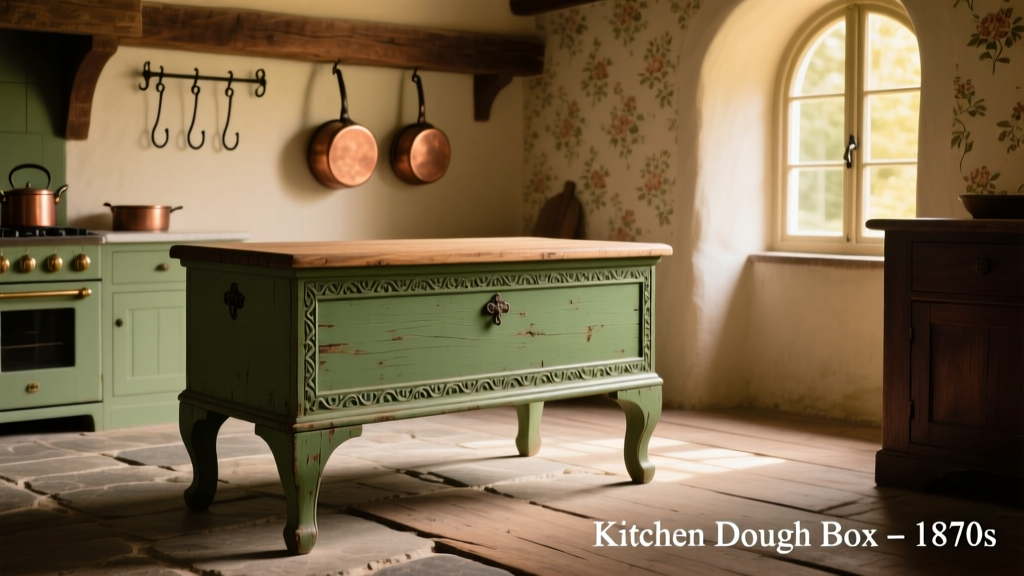
Authentic Restoration & Historical Context of the Green-Painted Kitchen Dough Box: Rectangular Form with Arched Legs (26 × 36 in)

24th Annual High Noon Western Americana Antique Show & Auction 2: Highlights, Provenance, and Restoration Insights

The Buddy L Toy Steam Shovel: Crank-Operated Tin Roof Boiler Mechanics and Historical Restoration Insights

Neoclassical Blue Eagle Glass Vases on Marble Pedestals: A Technical and Historical Appraisal of a Rare 19th-Century Pair

Decoding the 1138648: A Technical and Historical Analysis of the 1952 Herman Miller Eames Lounge Chair Prototype Serial Number